
15 Timeless Vintage Entryway Table Ideas for a Stunning First Impression
Discover 15 timeless vintage entryway table ideas that instantly elevate your home's aesthetic. Learn how to source, style, and integrate antique consoles for an unforgettable first impression.
May 13, 2026 · Linda Wise
15 min readThe foyer serves as the literal handshake of your home. It”™s the very first spatial encounter your guests have, dictating the mood, aesthetic, and narrative of the rooms that follow. I”™ve personally found that relying on mass-produced, flat-pack furniture for this crucial transition space is a missed opportunity. You want a piece that whispers of history, exhibits unparalleled craftsmanship, and anchors your space with genuine character.
Enter the vintage entryway table.
Whether you are hunting through dusty estate sales, scouring high-end antique dealerships, or looking for masterful reproductions, incorporating a vintage-inspired console is an architectural game-changer. The temporal juxtaposition of an old-world piece against modern drywall creates a fascinating visual friction.
Before we dissect the nuanced world of period furniture, let”™s look at a few highly-rated pieces you can acquire right now if your local antique market is running dry.
The Enduring Magnetism of Vintage Form
Why do we gravitate toward the old when outfitting the new? It boils down to tactile resonance. Contemporary minimalist pieces certainly have their place, but a vintage table offers patination—the physical manifestation of time. A nicked corner here, a subtly faded veneer there; these aren’t flaws. They are pedigree markers.
When curating your foyer, the goal is to balance visual weight with spatial economy. You need a drop zone for keys and mail, but you also need a sculptural element that arrests the eye.
Let”™s tear down the boundaries of standard interior design and analyze 15 distinct, historically rich vintage entryway table ideas that guarantee a stunning first impression.
1. The Mid-Century Modern Tapered-Leg Teak Console
There is a profound, architectural brilliance in Danish design from the 1950s and 60s. A genuine mid-century teak console introduces a warm, honey-toned luminosity to an entryway. You’ll notice that the iconic tapered, “cigar” legs create a floating illusion, making the table appear virtually weightless. This is an absolute necessity if your foyer is starved for square footage.
Pair a teak table with a bold, geometric runner rug and a sleek brass catch-all tray. The organic oil finish of old-growth teak requires occasional hydration, but the resulting luster is strong by modern polyurethane seals.
2. The 1970s Waterfall Burl Wood Stunner
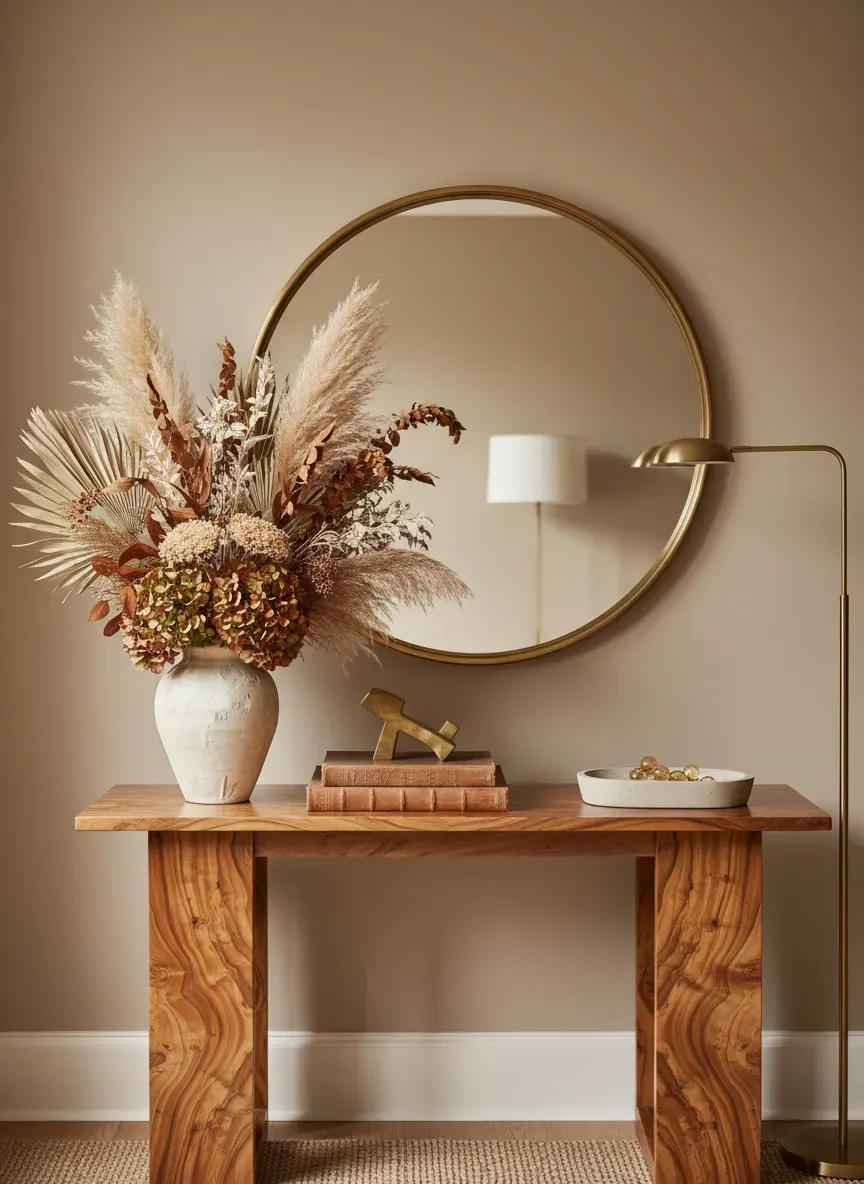
Burl wood is currently experiencing a massive renaissance, but the original 1970s waterfall designs remain the gold standard. Burl is harvested from tree deformities, resulting in swirling, Rorschach-like grain patterns that serve as natural art. The “waterfall” edge—where the wood grain continues seamlessly over the curve of the table down to the floor—offers a monolithic, museum-quality presence.
Because burl is so visually loud, you must exercise restraint with your styling. A simple, oversized clear glass vase holding a single Monstera leaf allows the kinetic energy of the wood to dominate the space.
3. The Wrought Iron French Provincial Baker’s Rack
If your home leans toward the romantic or the European rustic, repurposing a French Provincial baker”™s rack or iron washstand is a brilliant maneuver. Forged iron features an undeniable permanence. Look for pieces boasting delicate scrollwork and a naturally oxidized, rusty patina.
To soften the heavy metallurgy, I recommend topping the iron base with a custom-cut piece of honed Carrara marble or reclaimed limestone. This juxtaposition of cold, dark iron and soft, veined stone establishes an immediate air of effortless Parisian chic.
4. The Bauhaus Tubular Steel Stand
For the avant-garde homeowner, the 1920s Bauhaus movement offers a masterclass in functionalism. Influenced heavily by Marcel Breuer, a tubular steel console table reflects light beautifully, which is a strategic way to brighten a notoriously dark corridor.
The chrome framing paired with black lacquered wood or opaque glass shelves screams industrial sophistication. Here”™s the real kicker: because Bauhaus design was predicated on the phrase “form follows function,” these tables are incredibly durable and easy to maintain. A quick wipe with a microfiber cloth keeps the chrome gleaming.
5. The Demilune Fluted Mahogany
“Demilune” translates to half-moon, and it is arguably the most spatially intelligent design in furniture history. Originating in 18th-century France, the semi-circular back sits flush against your wall while the curved front prevents bruised hips in narrow hallways.
Seek out a solid mahogany demilune with fluted (grooved) legs and perhaps some subtle string inlay. The rich, reddish-brown hue of antique mahogany demands a regal setting. Hang a heavily antiqued, gold-leaf mirror directly above it to reflect ambient light and visually double the depth of your entryway.
6. The Reclaimed Apothecary Cabinet
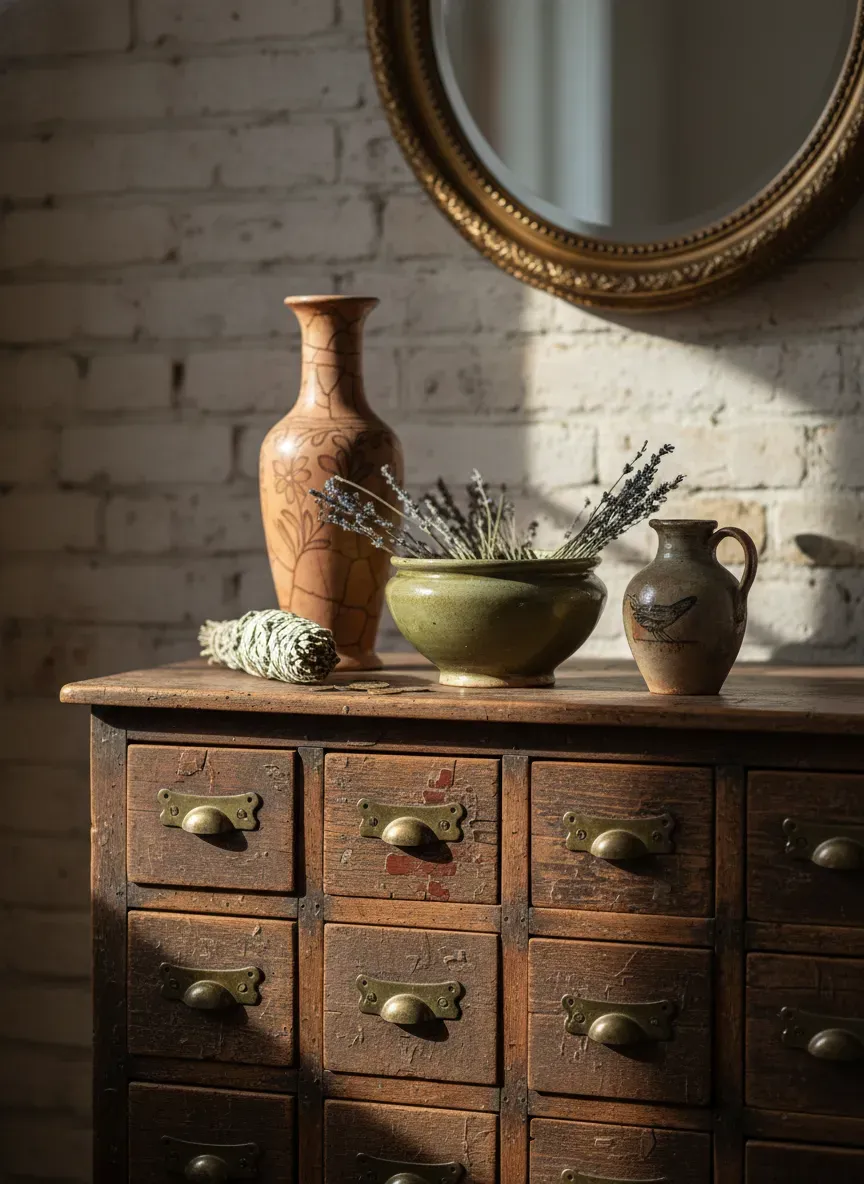
Do you crave organization? An authentic apothecary or library card catalog cabinet is a textural masterpiece that doubles as a hyper-functional storage unit. Originally used by pharmacists to sort herbs and powders, these wooden cabinets are characterized by dozens of tiny, individual drawers, each often retaining its original brass label holder.
While you might not need forty drawers for your keys, the visual repetition is deeply satisfying. They inject a slightly academic, steampunk aesthetic into the home.
Pro Tip: If the original drawers are too small to be practical, many furniture restorers will modify the interior, attaching multiple drawer fronts to a single, larger, modern sliding drawer box behind the antique facade.
7. The Cast Iron Singer Sewing Machine Conversion
This is the ultimate homage to the industrial revolution. Antique Singer sewing machine bases, cast with intricate logos and featuring the original foot treadles, make virtually indestructible table bases.
I”™ve personally found that crowning these cast-iron bases with a thick slab of live-edge walnut or reclaimed barn wood creates a bespoke, rustic-industrial masterpiece. The heavy iron anchors the room, ensuring the table won’t wobble, even in the highest-traffic drop zones of a busy family home.
8. The Weathered Gustavian Washstand
If you are drawn to the airy, muted palettes of Scandinavian design but want something older than mid-century, look to the Gustavian era. Emerging in Sweden during the late 18th century, this style is defined by pale, chalky painted finishes—often in soft greys, muted blues, or creamy whites.
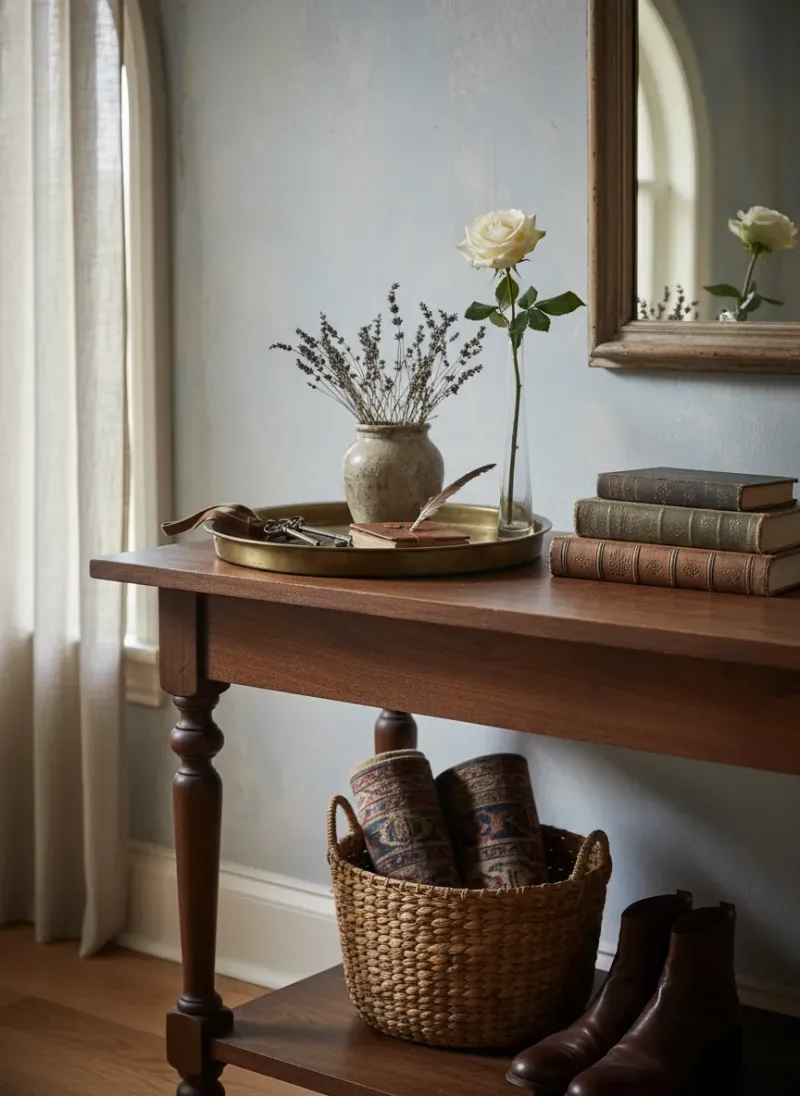
A Gustavian washstand or writing desk typically features subtle neoclassical carvings that have been softened by centuries of wear. The distressed, chipped paint reveals layers of history. This style pairs immaculately with fresh greenery and woven baskets tucked underneath for shoe storage.
9. The Industrial Factory Cart Upcycle
For urban lofts or modern farmhouses, a vintage factory cart offers raw, unfiltered character. Originally used to transport textiles or machinery parts across warehouse floors, these carts feature heavy-duty cast-iron wheels and deeply scarred, oil-stained wooden decks.
Because they are typically quite low to the ground, they work best in entryways with expansive widths rather than tight corridors. The authentic stenciled typography often found on the sides of these carts serves as built-in artwork.
10. The Butcher Block Drafting Table
Vintage drafting tables, constructed with heavy cast-iron tilt mechanisms and massive, knife-scarred butcher block tops, are architectural marvels. While originally designed to be angled for architects, locking the top into a flat, horizontal position transforms it into a breathtaking, substantial entryway console.
The sheer thickness of an antique butcher block top commands respect. It exudes a warm, culinary history that makes a home feel instantly lived-in and welcoming.
11. The Gilded Rococo Pier Table
Sometimes, minimalism is entirely the wrong approach. If your home features high ceilings and ornate crown molding, a Gilded Rococo pier table is an assertion of grand maximalism.
Characterized by asymmetrical C-scrolls, carved acanthus leaves, and heavy gold-leafing, these tables were originally designed to stand between two tall windows in European palaces. They are unabashedly dramatic. To keep the piece from feeling like a museum relic, style it with aggressively modern, abstract art leaning against the wall behind it. The clash of 18th-century opulence and 21st-century abstraction is breathtaking.
12. The Campaign Style Brass-Bound Chest
Campaign furniture was originally manufactured for British military officers on the march. It needed to be durable, modular, and elegant. The defining characteristics are flush, recessed brass drawer pulls and heavy brass corner brackets designed to protect the wood during transit.
A campaign chest or folding desk repurposed as an entryway table brings a sense of worldly travel and rugged sophistication. The warm brass hardware against dark teak or mahogany is a timeless combination that bridges the gap between masculine utility and refined elegance.
13. The Chinoiserie Lacquer Console
During the 18th and 19th centuries, Europe became obsessed with Asian art and design, leading to the Chinoiserie movement. A vintage console featuring traditional Japanning—a heavy, glossy lacquer finish decorated with intricate, hand-painted gold leaf scenes of pagodas, willow trees, and exotic birds—is a showstopper.
These pieces are highly reflective and bring a sense of exotic mystery to a foyer. Because the table itself is a highly detailed piece of art, keep the surrounding wall color dark and moody—think deep navy or emerald green—to make the gold leaf truly pop.
14. The Carved Gothic Revival Hall Tree Base
Gothic Revival furniture is heavy, imposing, and structurally fascinating. Look for dark oak consoles featuring pointed architectural arches, carved quatrefoils, and linen-fold paneling.
Often, you can find the base of a disassembled Victorian hall tree that serves perfectly as a standalone table. The dense, dark wood benefits from warm, amber lighting. A pair of vintage brass wall sconces flanking this type of table will highlight the deep relief carvings and cast dramatic, moody shadows in your entryway.
15. The Victorian Marble-Topped Credenza
The Eastlake movement of the late Victorian era produced heavily carved, geometric walnut furniture often topped with pristine, cold white Carrara marble. This combination is incredibly practical for an entryway. The marble top is virtually impervious to water rings from wet keys or damp mail, while the walnut base provides vital hidden storage behind cabinet doors.
The ornate burled wood veneers typical of this era add a layer of sophisticated complexity that modern, flat-front cabinets simply cannot replicate.
Sourcing the Right Piece for Your Space
Finding these pieces requires patience. Estate sales on the final day of the weekend often yield the best prices, as liquidators are desperate to clear the house. LiveAuctioneers and 1stDibs are excellent digital resources, though the latter commands a premium for curated perfection.
If the thrill of the hunt isn’t for you, there is no shame in leaning into high-quality modern reproductions. A piece like the Safavieh Vintage French Console mimics the distressed, chalky patina of a Gustavian piece without the structural anxieties of 200-year-old wood. Similarly, the Walker Edison Mid Century Entry Table captures the clean, tapered geometry of Danish design perfectly. If your architecture demands something heavier, the Ashley Antique Finish Foyer Table provides that grounding, traditional heft.
Practical Applications and Spatial Economy
You must critically evaluate the dimensions of your entryway before falling in love with a piece of furniture. A common pitfall I see constantly is homeowners buying a deeply profound, gorgeous Victorian credenza, only to realize it blocks 40% of their hallway clearance.
If you are dealing with a tight, urban corridor, you have to prioritize spatial economy. You should thoroughly explore narrow console storage options that offer a depth of 12 inches or less. Demilune tables, or simple floating vintage shelves mounted on antique cast-iron corbels, can provide the historical aesthetic without the suffocating footprint.
The Lighting Equation
A vintage table dies in the dark. The intricate carvings of a Gothic piece or the swirling grain of burl wood require deliberate illumination.
- Sconces over Lamps: If your console is narrow, do not consume precious tabletop real estate with a bulky table lamp. Hardwire wall sconces on either side of a mirror.
- Temperature Matters: Vintage wood requires warm light. Ensure your bulbs are in the 2700K to 3000K range. Anything cooler (like a stark 4000K LED) will make antique wood look sickly, grey, and artificial.
The Danger of Over-Cluttering
There is a fine line between “curated collection” and “garage sale.” When styling a heavily detailed vintage table, you must embrace negative space.
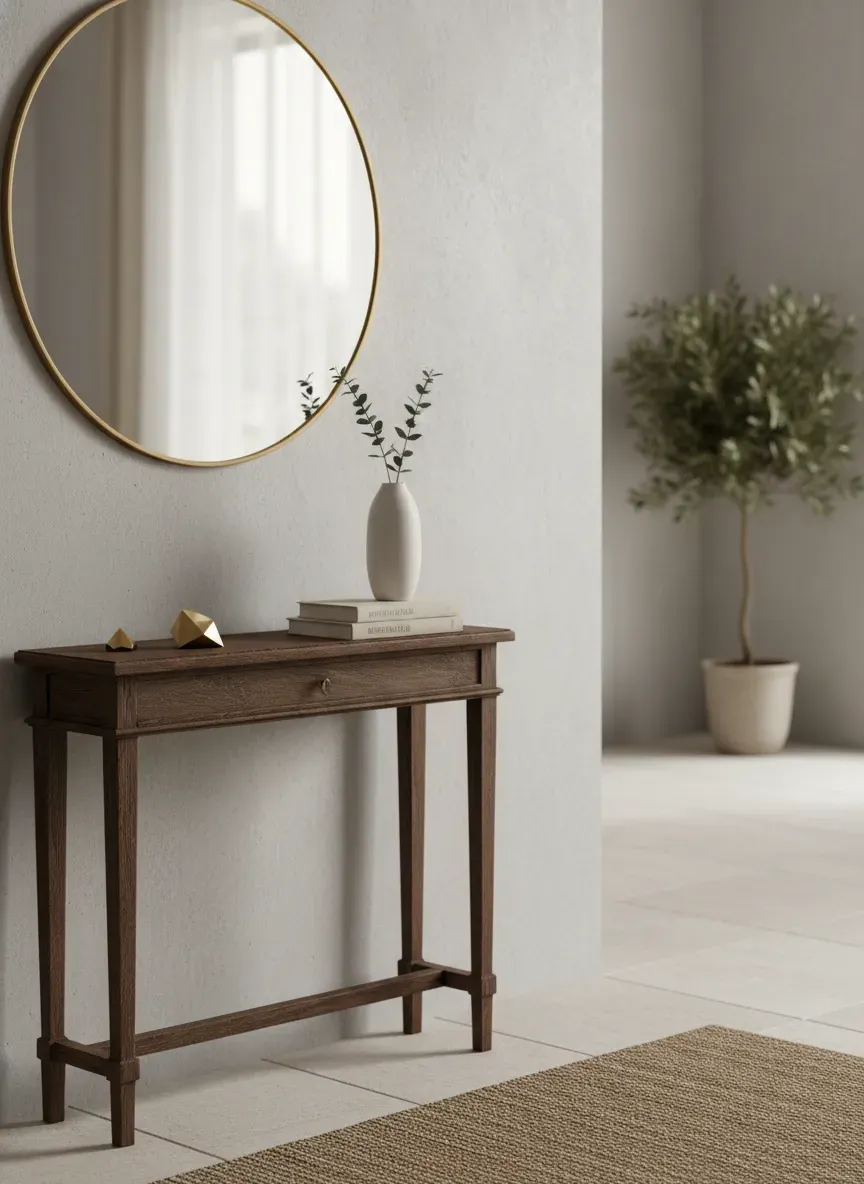
Pro Tip: Utilize the “Rule of Three” when styling your console. Group items in odd numbers—for instance, a tall vase, a medium-height stack of vintage books, and a low, wide brass bowl for keys. This creates a visual triangle that is naturally pleasing to the human eye, preventing the table from looking like a chaotic dumping ground.
The Structural Integrity of Antiques
When buying true vintage, inspect the joinery. You are looking for hand-cut dovetails on the drawers and wooden dowel pegs rather than modern factory staples and wood glue.
If a piece wobbles slightly, it doesn’t mean it’s garbage. Wood expands and contracts over decades. A qualified furniture restorer can easily inject hide glue into loose mortise-and-tenon joints, clamping them back into perfect, rigid alignment. However, avoid pieces with active woodworm (look for tiny, fresh sawdust piles beneath small holes) or severe veneer peeling, as these are incredibly costly to remediate.
Key Takeaways for the Vintage Aficionado
- Scale is Paramount: Measure your foyer depth before you shop. Leave an absolute minimum of 36 inches of clear walking space past the table.
- Mix Eras Fearlessly: Don’t feel trapped into buying a vintage lamp for a vintage table. A sleek, matte black modern lamp on a 19th-century mahogany table looks deliberate and highly designed.
- Protect the Patina: Never use harsh chemical cleaners on antique wood. A high-quality beeswax polish applied twice a year is all that is required to maintain the luster.
- Anchor with Art: A vintage table needs a visual anchor above it to pull the eye upward. A large, oxidized mirror or a highly textured piece of contemporary canvas art works perfectly.
The Bottom Line: Your entryway is the prologue to your home’s story. By bypassing generic, mass-produced furniture in favor of a vintage or antique table, you immediately establish an environment of curated sophistication. It takes a bit more effort to source, measure, and style a piece with historical weight, but the arresting visual impact it delivers to every person who walks through your front door is undeniably worth the chase.
