

Linda Wise
How Much Should an Entryway Bench Cost in 2026? Quality Checks
Realistic entryway bench budget 2026: $60-$600 tiers, quality signals to check before buying, weight ratings and materials that last.
entryway-benches buying-guide
Whether you're tackling a tiny apartment hallway, a narrow foyer with no closet, or a full mudroom makeover — the right entryway storage ideas make all the difference. Browse practical guides covering storage benches, wall-mounted hooks, vertical shoe racks, hall trees, and mudroom lockers — with honest measurements, budget options, IKEA hacks, and product comparisons.
Your entryway is the hardest-working space in your home. It takes the daily beating of wet boots, school bags, dog leashes, and armfuls of groceries — yet it's the first thing guests see and the last thing you touch before leaving. Getting the storage right transforms that chaos into a calm, welcoming threshold. This library covers every entryway storage category in depth, from the simplest Command hook arrangement to full custom built-in mudroom locker systems.
An entryway bench with storage is the single most useful piece of furniture you can add to a foyer. The seat lets you put on and take off shoes comfortably, while the cubbies, drawers, or lift-top storage underneath keep footwear, bags, and seasonal accessories out of sight. Our guides cover wooden benches, upholstered benches, narrow benches for tight hallways, heavy-duty benches for families, and budget builds you can make from IKEA parts or basic lumber over a weekend.
Shoe pile-up at the door is the number-one entryway complaint. The right shoe storage system depends on your household size, shoe count, and hallway depth. Open slatted racks improve airflow and keep pairs visible. Closed shoe cabinets hide the clutter and often double as console tables. Wall-mounted tilted shelves take zero floor space. Rotating towers work in corners. We cover all styles — including hidden solutions built behind mirrors, under stairs, and inside benches.
Wall-mounted coat hooks are the fastest way to add entryway storage without spending much money or losing floor space. A single row of sturdy hooks screwed into a stud can handle coats, bags, scarves, umbrellas, and dog leads for an entire family. Our guides cover the correct hook height for adults and children (typically 60–66 inches from the floor for adults, 36–48 inches for children), hook spacing, weight ratings, and how to install hooks on plaster, drywall, and brick walls without damaging the surface.
Hall trees and mudroom lockers are the premium tier of entryway storage. A hall tree combines hooks, a mirror, a bench, and often lower storage into one freestanding unit — ideal for foyers where a built-in is not an option. Mudroom lockers go further: individual cubbies assigned to each family member, deep shelves for sports gear, hooks at multiple heights, and optional doors for a clean look. Our locker guides include full dimension specs, DIY build plans with cut lists, and comparisons of popular flat-pack systems.
Not every entryway is a grand foyer. Millions of homes have a narrow strip of hallway — sometimes just 24 to 36 inches wide — that still needs to handle all the same clutter. Our small-space guides focus on vertical storage (floating shelves above door frames, tall narrow shoe cabinets, wall-mounted fold-down benches), multi-functional furniture (mirror-front storage cabinets, storage ottomans), and renter-friendly solutions that require no drilling and no permanent changes to walls.
Building your own entryway storage is often cheaper and always more customizable than buying off-the-shelf. Our DIY guides range from beginner-friendly weekend projects (a simple wall-mounted hook rail takes about two hours) to advanced built-in locker systems that transform an entire wall. Every project includes a full materials list, cut plan, step-by-step instructions, and finishing tips. We cover working with plywood, dimensional lumber, MDF, pocket-hole joinery, and even pallet wood upcycling.
Realistic entryway bench budget 2026: $60-$600 tiers, quality signals to check before buying, weight ratings and materials that last.

Hall tree with bench vs coat rack + bench: footprint, storage, cost and which fits small entryways. Dimensions and buying verdict.

Narrow console table depth guide: what is it, standard dimensions, what depth works in hallway under 4ft, and storage vs decor picks.

Storage bench vs accent bench: pros, cons, costs and which is better value for entryways. Capacity, durability and when decorative seating wins.

Standard coat hook height: 60-66in adults, ADA 15-48in, kids heights, above-bench clearance and spacing. Exact measurements that pass.

Discover how a key holder for wall can end lost keys for good. Compare wood, metal, magnetic and cabinet styles, plus placement, installation and small-space ideas.

Discover how a key hook and shelf transforms your entryway with smart storage for keys, mail, wallets and decor. Learn types, placement, install tips and styling ideas.

Discover how a keychain holder for wall ends lost keys for good. Expert organizer guide covers types, placement height, no-drill install, styling and maintenance for busy entryways.

Discover what makes a modern key holder essential for entryway organization. Compare materials, magnetic vs minimalist types, placement, installation and Japandi styling tips.

Discover how a vertical key holder saves space in small entryways. Compare tall rail, stacked & magnetic designs, height, installation & styling tips.
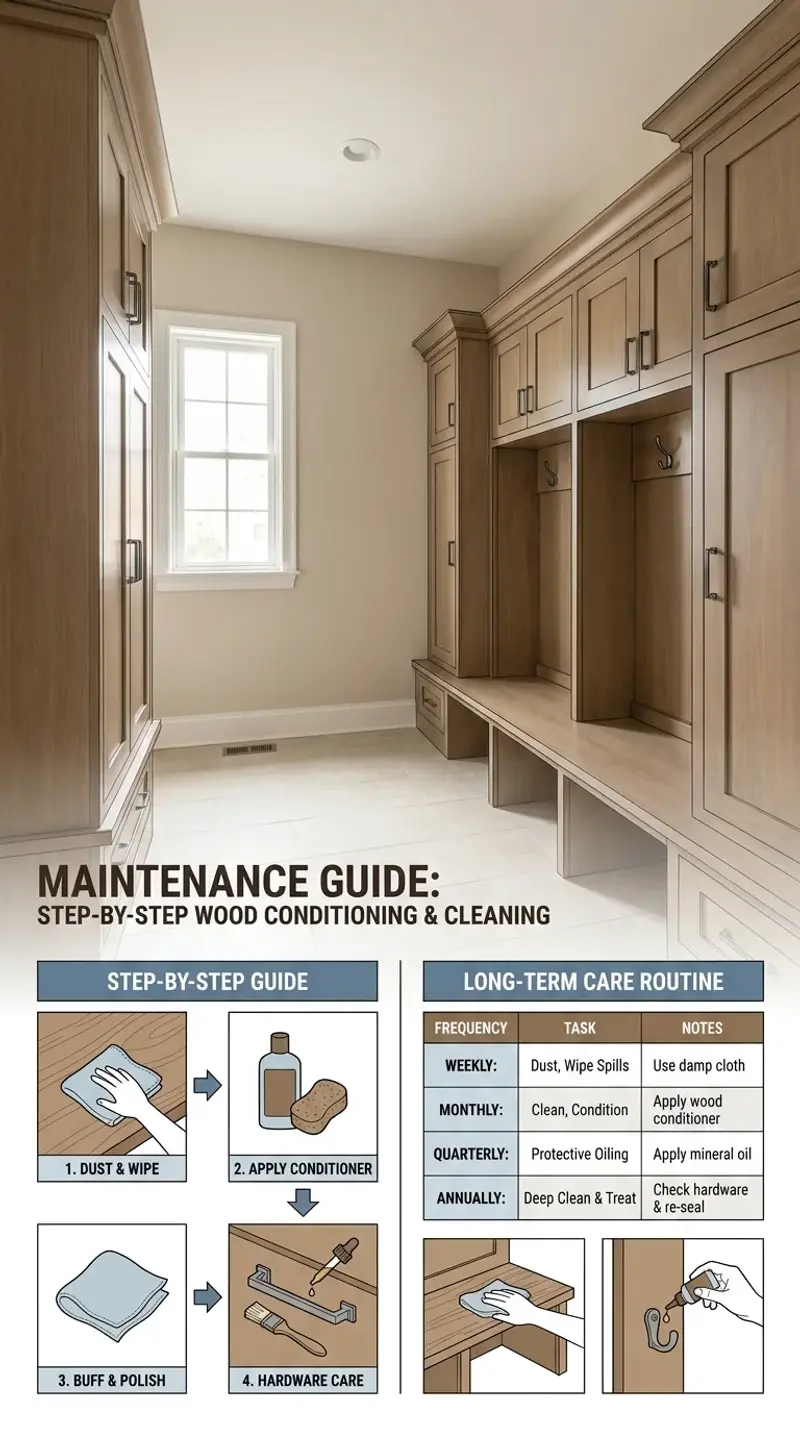
A practical planning guide to mudroom cabinets and benches: load capacities, material grades, and humidity mitigation for busy families.
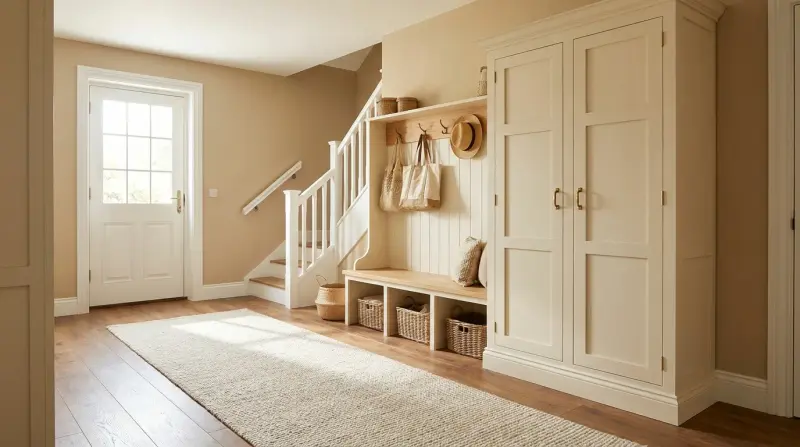
Comprehensive guide to hall trees with closed storage: solid hardwood vs MDF 10-year cost, hinge mechanics, weight limits, and moisture resistance.
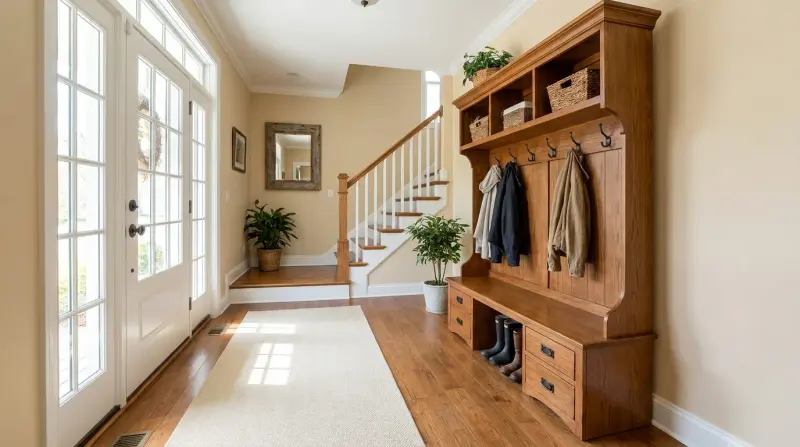
Hall trees with doors hide clutter only if the hinges survive: bench weight ratings, hinge durability, clearance planning, and the top 3 picks compared.
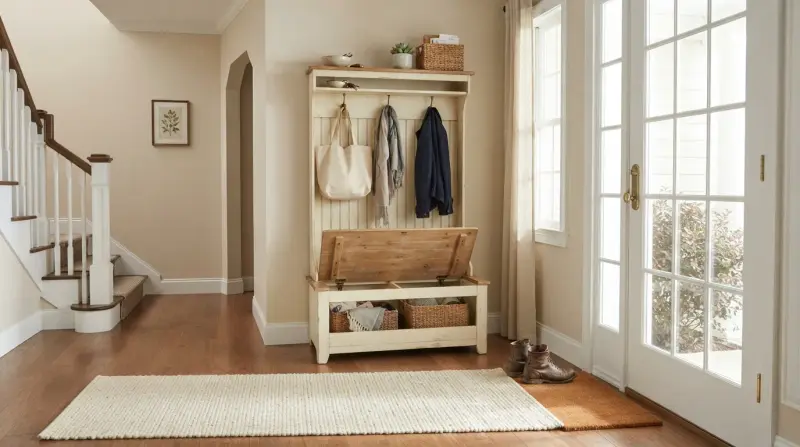
Architectural dimensions and clearance guide for hall trees with drawers: 36 to 60 inch entryways, door swing math, drawer extension clearance & bench weight limits.
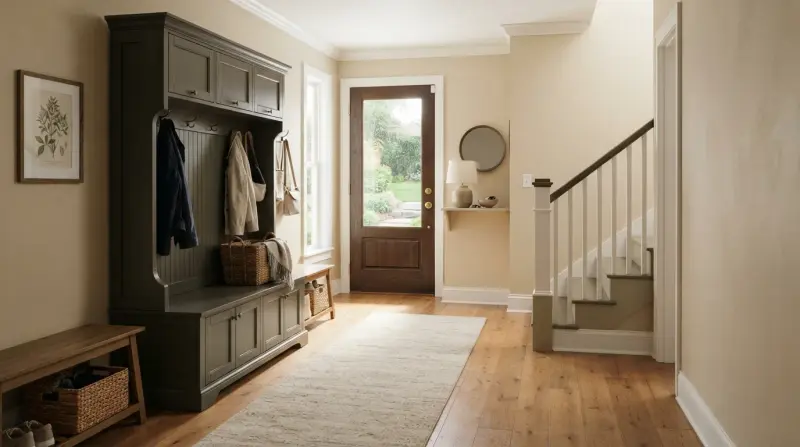
Hall tree with storage drawers compared by depth (12.6 vs 18.5 in), manufacturer bench limits (220-300 lbs), drawer slide types and anti-tip anchoring.
The best entryway storage system is the one that fits your specific hallway dimensions, household size, and daily routine. Before buying anything, measure your entryway carefully: note the width of the hallway, the height from floor to ceiling, and the distance from the door swing to the nearest wall. These three numbers will determine whether you can accommodate a freestanding bench, a built-in locker system, or just a narrow wall-mounted solution.
For a household of one or two adults with minimal outdoor gear, a simple hook rail and a slim shoe cabinet are usually sufficient. For families with children, you need individual storage zones — a hook and cubby per person prevents the daily pile-up of everyone's belongings in the same spot. Assigned lockers, labelled baskets, or colour-coded hooks work well for households of three or more.
Material choice matters more in an entryway than anywhere else in the house because this space takes the most abuse. Solid wood and plywood hold up well to daily use and are easy to clean. MDF is affordable but swells when wet, so avoid it near the door in wet climates. Powder-coated steel is nearly indestructible and suits industrial and modern styles. Wicker and rattan look beautiful but require more maintenance and are not ideal for mudrooms that handle muddy boots.
Finally, think about your entryway's traffic flow before placing any furniture. The door should be able to open fully without hitting the bench or coat rack. There should be at least 36 inches of clear walkway past any storage furniture. If you have a very narrow hallway, wall-mounted solutions are almost always the right answer — they keep the floor clear and make the space feel larger.
For small entryways, the most effective storage ideas combine vertical space with multi-functional furniture. A slim entryway bench with under-seat storage, a wall-mounted hook rack, and a floating shelf above the door can triple your storage without eating floor space. Mirror-front cabinets are another favorite — they add depth while hiding clutter.
Budget-friendly entryway storage ideas include Command hooks (around $5–$15) for coats and bags, a repurposed wooden crate or vintage chest as a shoe bench, and IKEA KALLAX units repurposed vertically as cubbies. A $20 over-door organizer can replace a $200 hall tree for small households.
A well-organized entryway should have: (1) hooks or a hall tree for coats and bags, (2) a tray or basket for keys and mail, (3) shoe storage — a bench with cubbies, a rack, or a shoe cabinet, and (4) a mirror. These four elements handle most everyday entryway clutter and make a strong first impression.
An entryway bench should be 14–18 inches deep for comfortable seating and to fit most shoes underneath. Standard depth is 16 inches. If you plan to store boots or larger footwear, aim for 18 inches. The seat height should be 17–19 inches to allow easy sitting and standing.
A hall tree is a freestanding unit typically combining a coat rack, mirror, bench, and hooks — designed for foyers and smaller entryways. A mudroom locker is a larger, more robust storage system (often built-in) with individual cubbies, deeper shelves, and sometimes doors — designed for family mudrooms that need to handle sports gear, school bags, and heavy outdoor equipment.
