
Keychain Holder for Wall: Complete Entryway Organization Guide for Families and Renters (2026)
Discover how a keychain holder for wall ends lost keys for good. Expert organizer guide covers types, placement height, no-drill install, styling and maintenance for busy entryways.
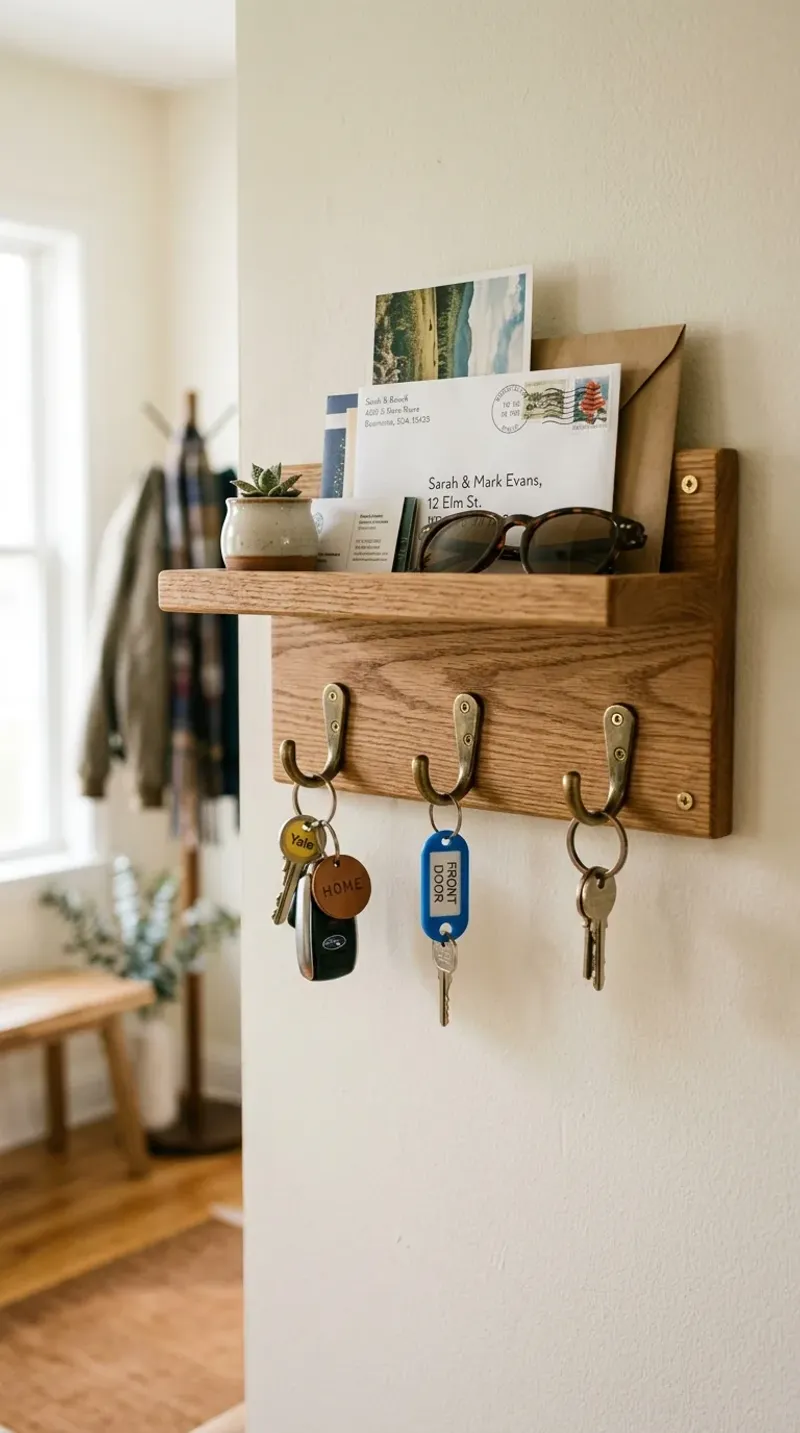
Sep 18, 2026 · Linda Wise
12 min readAs a professional organizer, I can tell you lost keys are rarely about forgetfulness. They are about missing systems. A well-chosen keychain holder for wall gives every ring a visible, grab-and-go home and ends the morning scramble for good.
It is 7:52 a.m. You have one shoe on, backpack half-zipped, dog whining at the door, and your car fob has vanished into yesterday’s jacket, a kitchen drawer, or the crack between couch cushions. I have seen this exact scene in more than 200 homes across New England. The fix is almost never a better memory. It is a dedicated vertical drop zone mounted where your momentum naturally stops.
Quick Answer: A keychain holder for wall is a wall-mounted rail, board or cabinet with hooks, pegs or magnets that keeps key rings separated, visible and paired with mail storage. For most families, choose a 6-hook solid wood or metal rail with an upper tray, mount it 54-60 inches high on the latch side of the door, and give each adult two hooks. Renters should start with a high-strength adhesive model. To compare proven designs, see our picks for the best wall mounted key holder, our full breakdown of the best wall mounted key organizer, and our budget-friendly best wall-mounted key organizer picks.
Table of Contents
- Quick Answer
-
- What Is It and How It Works
-
- Holder vs Hook - Key Differences
-
- Types and Materials Compared
-
- How to Choose for Your Household
-
- Placement and Mounting Height
-
- Installation - No-Drill vs Screws
-
- Styling Ideas for Any Decor
-
- Mistakes to Avoid and Maintenance
-
- Conclusion
- FAQ
- Related Guides
Our Top Keychain Holder for Wall Deals Today
These in-stock keychain holder for wall picks combine strong mounting, family-ready hook spacing, and limited-time discounts:
| Our Pick | Why It Wins | Sale Price | Direct Link |
|---|---|---|---|
| Adhesive 6-Hook with Mail Tray | Best overall keychain holder for wall with mail storage | 14.53, -53%) | Check Price → |
| Adhesive No-Drill Container | Best no-drill keychain holder for wall for renters | 5.81, -39%) | Check Price → |
| Walnut Self-Adhesive Hooks | Best minimalist keychain holder for wall (74% off) | 4.32, -74%) | Check Price → |
| House-Shape 5-Hook Wood | Best wooden keychain holder for wall silhouette (70% off) | 31.85, -70%) | Check Price → |
| Metal Iron Art 5-Hook | Best metal keychain holder for wall (71% off) | 15.61, -71%) | Check Price → |
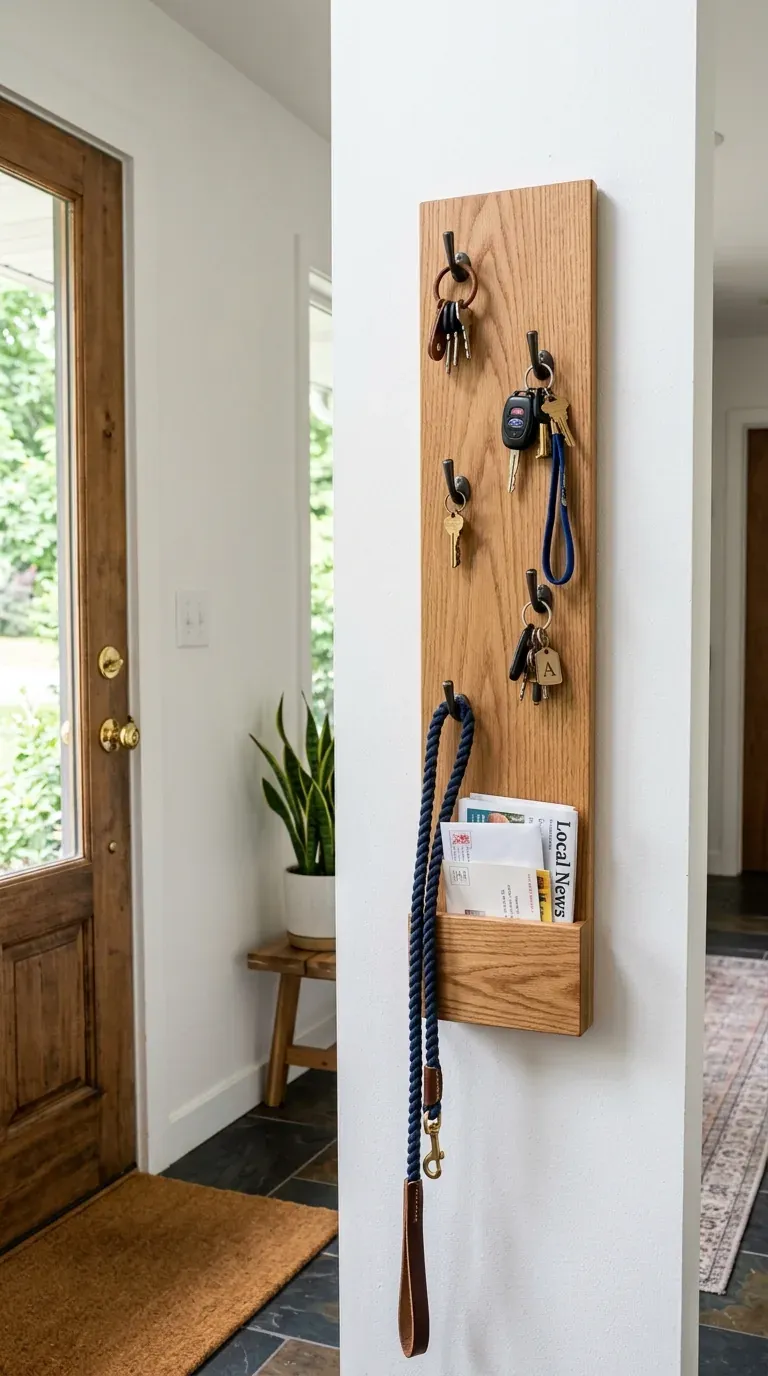
What Is a Keychain Holder for Wall?
A keychain holder for wall is a compact entryway station screwed or adhered to drywall, wood or tile that stores keychains vertically on hooks, pegs or magnets, often with a small shelf or mail slot on top.
Unlike a bowl or drawer where rings pile and tangle, a vertical station separates each set in open air at eye level. You see in two seconds whether house keys, car fob, mail keys and dog leash are home. You grab with one motion without digging. You return with one motion without thinking. That low friction is why wall stations stick as habits when bowls fail.
In my client work, the shift happens fast. Families who swore they were just disorganized discover they were perfectly capable of hanging keys when the target was large, obvious and exactly on the path from door to kitchen. Kids as young as six can reliably use a low rail. Older adults with arthritis prefer large J-hooks over small cabinet knobs because they do not require pinching or precise alignment.
A good station does three jobs at once:
- Visibility: Every ring hangs apart, not stacked. You audit from six feet away.
- Protection: Fobs do not rattle in drawers, get crushed under mail, or slide behind furniture.
- Pairing: Top ledge or pocket holds sunglasses, wallet, transit card and incoming envelopes so your full daily carry lives in one 12-inch-wide zone.
If you are building a full drop zone around your rail, start with our guides on dedicated mail and key drop stations and key and mail management for small entryways. They show how to combine hooks, trays and charging in tight foyers.
Keychain Holder for Wall vs Standard Key Hook: What’s the Difference?
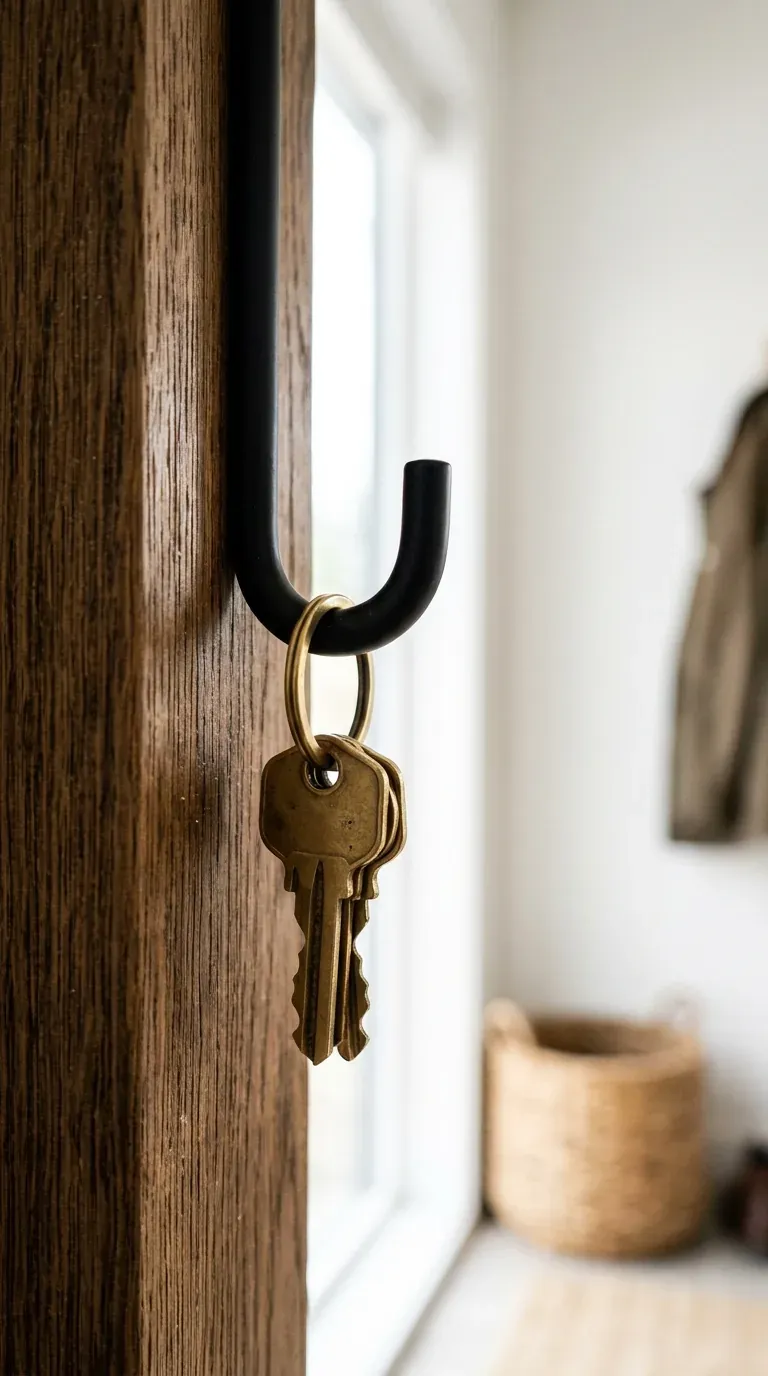
A keychain holder for wall looks similar to a single key hook, but it is designed as a system while a hook is just hardware.
A standard single hook or peg holds one item. It has no backplate to distribute load, no spacing plan for multiple fobs, and no place for mail or wallets. One peg by the door works for a solo minimalist with one slim ring. Add a partner, kids, a dog leash, spare sets and guest keys, and single pegs scattered randomly create the same chaos as a bowl - just вертикально on the wall.
A full wall station, by contrast, includes:
- Engineered backplate: A wood board, metal rail or cabinet 7 to 16 inches wide that spreads pull force across two anchors instead of one.
- Planned spacing: 4 to 8 hooks set 2.5 to 3 inches apart center-to-center so bulky fobs do not knock neighbors off.
- Hook geometry: Deep J-curves with 0.5 to 0.75-inch upturned lips, angled pegs, or strong magnets that retain rings when the door slams.
- Integrated storage: Upper ledge, mail sorter, small drawer or magnetic strip for non-hanging essentials.
Think of it this way: hooks are ingredients, the station is the recipe. You can absolutely build your own station from individual solid walnut pegs if you love minimalism. Just mount them on a measured layout with consistent spacing and add a floating shelf above for mail. For most busy households, a pre-built rail with tray is faster and more forgiving.
For hardware details like hook depth and spacing math, see our ultimate guide to choosing entryway hooks and our curated picks for the best wall mounted key holder for families.
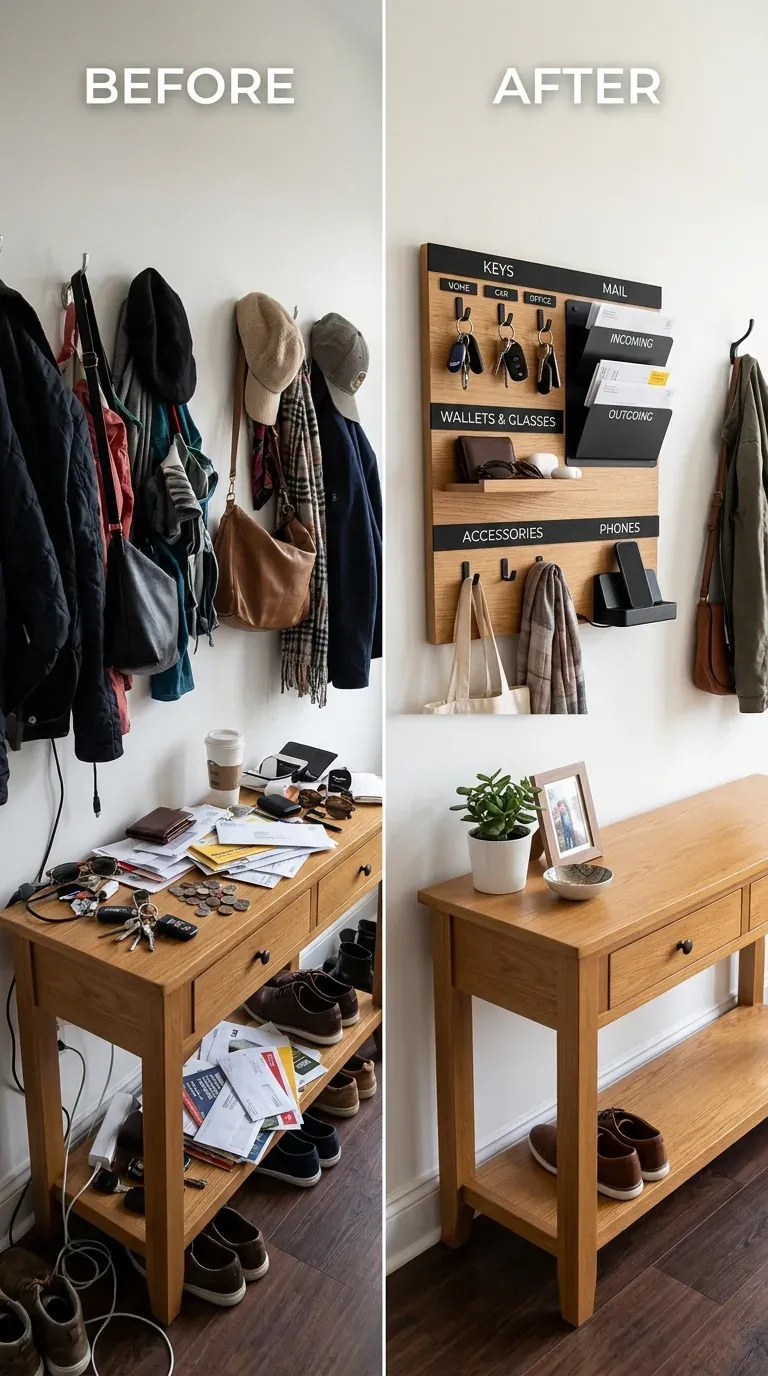
Types and Materials: Wood, Metal, Magnetic, Cabinet and Combo Designs
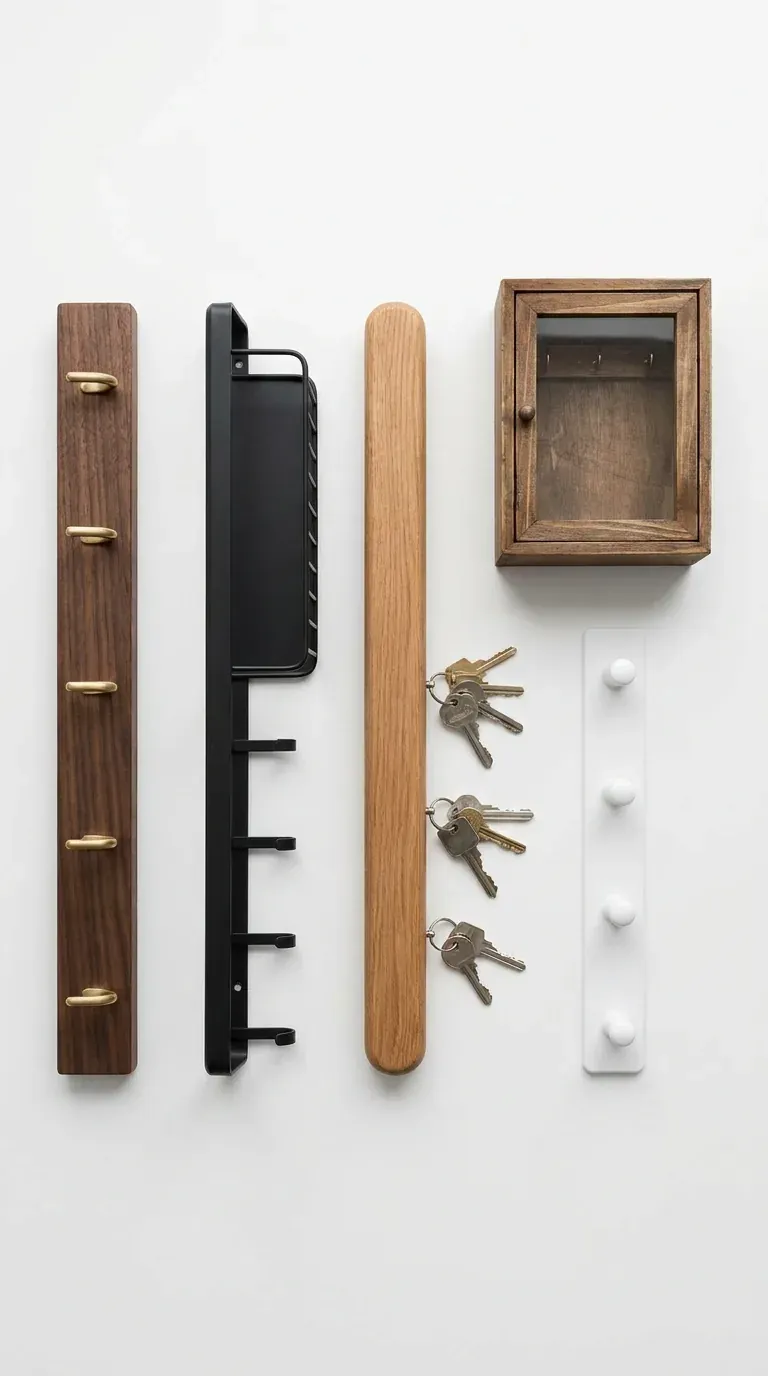
Once you understand the system concept, choosing becomes easier. All wall key stations fall into five families. Each suits a different load, style and household.
1. Solid Wood Rail with Hooks and Shelf
This is the workhorse I specify most. A kiln-dried pine, oak, walnut or acacia board 12 to 14 inches wide, with 5 to 6 forged metal hooks and a 2.5 to 3.5-inch-deep top ledge.
Pros: Warm, forgiving, strong. Holds 10 to 15 pounds per hook when screwed into studs or quality anchors. Ledge displays a small plant or frame while corralling wallets. Scratches can be sanded and re-oiled.
Cons: Heavier than plastic. Needs two solid anchors. Very cheap soft pine can dent under heavy brass rings.
Best for: Family entryways, farmhouse, Scandinavian, transitional and Japandi foyers. If you want one station that handles keys plus coats, totes and backpacks, this is it.
A quality keychain holder for wall in solid timber bridges function and decor because the wood itself becomes part of your trim palette.
2. Cast Metal and Industrial Rail
Forged iron, powder-coated steel or brushed brass rails with 4 to 7 integrated hooks. Often 10 to 12 inches wide with an antique or matte black finish.
Pros: Nearly indestructible. Slim profile only 1.5 inches deep, ideal for narrow hallways where a shelf would block the walkway. Wipes clean.
Cons: Bare metal can clink and micro-scratch fob casings. Look for silicone tips, lacquer coating or wood-lined contact points. Can feel cold in cozy interiors unless paired with wood or textiles.
Best for: Industrial lofts, garages, utility rooms, rental hallways and homes with heavy winter gear.
3. Magnetic Bar and Magnetic Board
A hardwood or powder-coated bar with embedded N52-grade neodymium magnets. You simply toss keys and they stick. No loops to thread in the dark.
Pros: Fastest drop-off, cleanest look. No hooks to snag sleeves. Great for 2 to 4 light to medium sets.
Cons: Weak ferrite magnets drop heavy fobs when doors slam. Not ideal for 6+ sets or bulky lanyards. Requires metal key rings - leather-only fobs need a split ring added.
Best for: Minimalist apartments, modern condos, and anyone who hates fumbling with hooks while carrying groceries.
4. Enclosed Cabinet and Hideaway Box
A shallow walnut or painted box 12 to 16 inches wide that looks like wall art but opens to reveal hooks inside. Some cover unsightly alarm panels or thermostats.
Pros: Total visual calm. Hides clutter, protects fobs from dust, deters opportunistic grab-through-mail-slot theft.
Cons: Adds an extra step - open door, hang, close. Households that struggle with consistency sometimes abandon cabinets and revert to counters. Measure interior clearance; deep lanyards need 6 to 8 inches below hooks.
Best for: Luxury foyers, formal front entries, and small spaces where visual noise must disappear.
5. Combo Mail and Key Station with Tray or Sorter
My top recommendation for most homes. A lower hook rail plus an upper tray, pocket or vertical sorter for envelopes, phones and sunglasses. Width 9 to 13 inches, depth under 2.5 inches.
Pros: Solves the two biggest foyer pain points at once - loose keys and paper piles. Keeps counters clear. Dual-mount models offer adhesive plus screw options.
Cons: Tempting to overload tray with junk mail. You still need a weekly 2-minute paper triage.
Best for: Busy parents, roommates, small apartments and anyone whose keys currently drown under catalogs.
To see how these types perform in real foyers with pricing and load ratings, browse our tested best wall mounted key organizer for small spaces and our detailed decorative wall key holder buying guide.
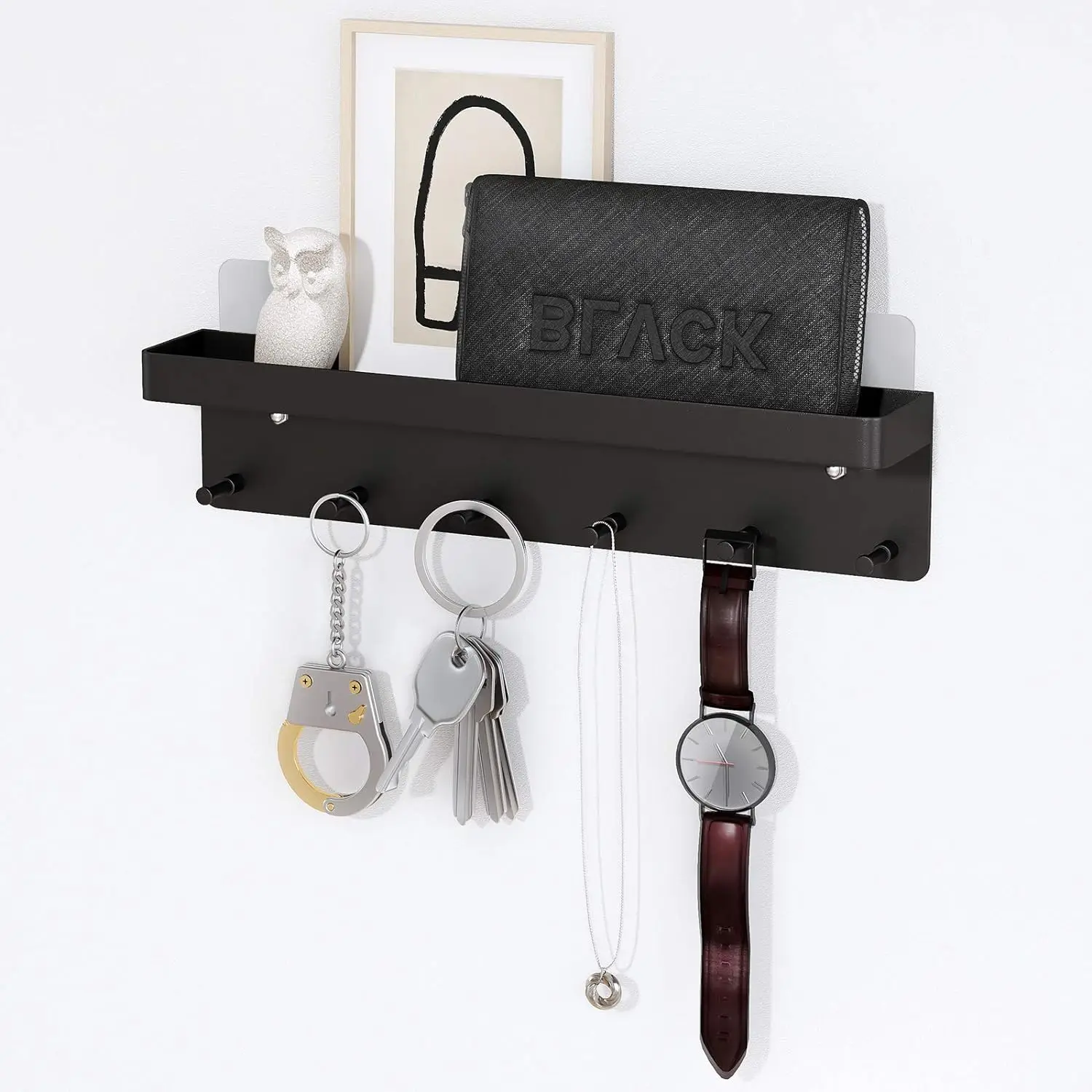
Adhesive 6-Hook Keychain Holder for Wall with Mail Tray
The best all-in-one keychain holder for wall for busy families: upper tray for mail, phones and sunglasses plus 6 sturdy J-hooks below. Dual-mount adhesive for renters plus screws for heavy daily use.
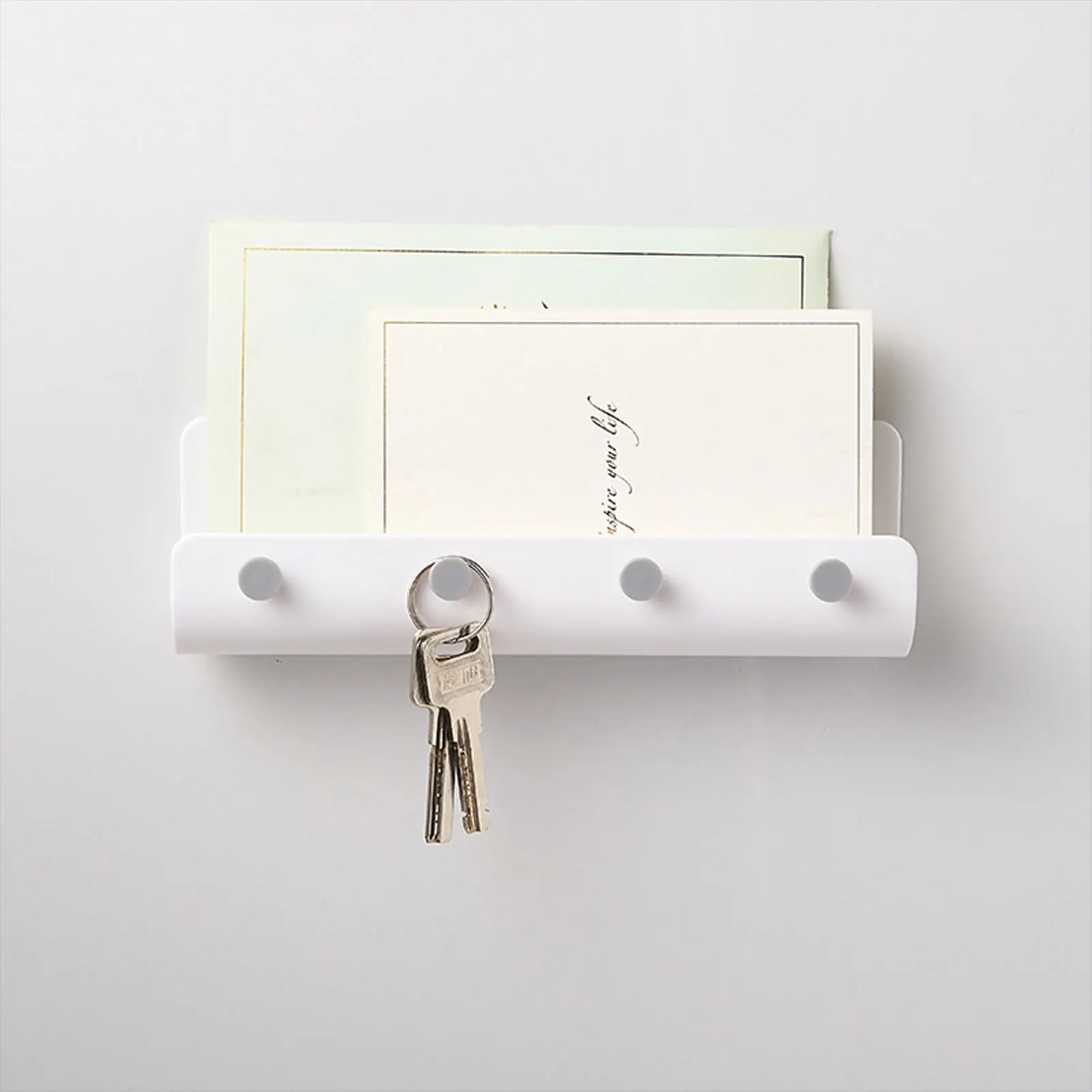
Adhesive No-Drill Keychain Holder for Wall Container
Compact damage-free keychain holder for wall with integrated container for phones, mail keys and sunglasses. Peel-and-stick install, ideal for rentals, dorms and narrow hallways.
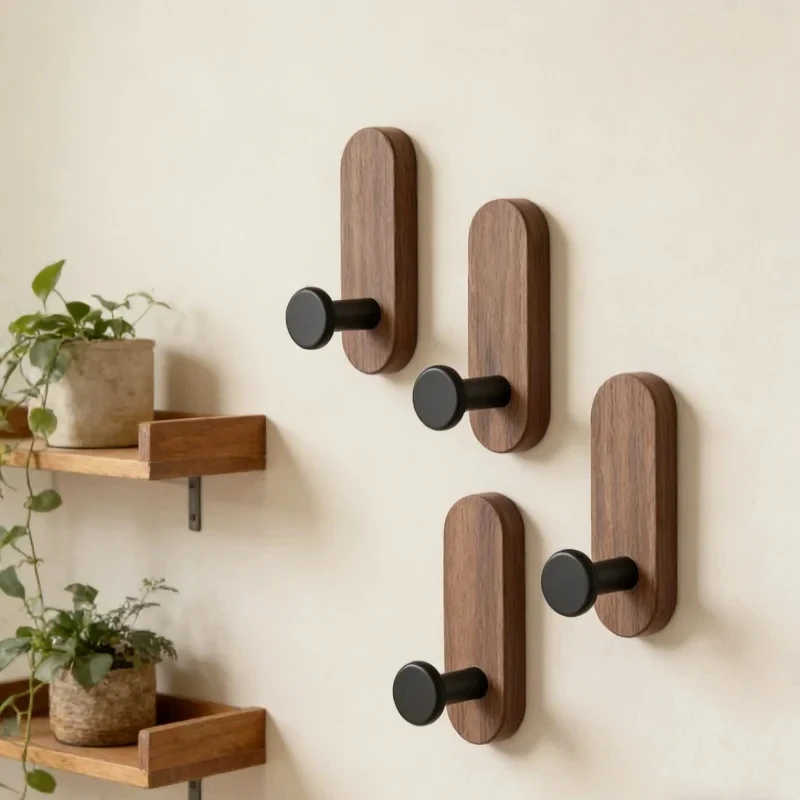
Walnut Self-Adhesive Keychain Holder for Wall Hooks
Solid walnut minimalist keychain holder for wall with self-adhesive backing. Warm wood pegs disappear into Scandinavian and Japandi trim while keeping daily rings visible and tangle-free.
How to Choose the Right Keychain Holder for Wall for Family, Renters and Small Entryways
Choosing the right keychain holder for wall comes down to three variables: who uses it, how much weight it must hold, and whether you can drill.
I use this simple audit with every client. Walk to your front door right now and count.
Step 1: Count Hooks by Person, Not by Guess
Do not buy a cute 3-hook plaque and hope it stretches. Use this formula:
- 2 hooks per adult: one for daily car and house set, one for spare, work badge or second vehicle
- 1 hook per school-age child with own house key or bus pass lanyard
- 1 hook for shared dog leash
- 1 spare for guests and mail keys
A couple with a dog needs 6 hooks. A family of four with a dog needs 7 to 8. Spacing matters more than raw count. Insist on at least 2.5 inches center-to-center. Modern fobs are 1.5 to 2 inches wide; tighter spacing means every grab knocks the neighbor off.
If you regularly carry gym tags, AirTags, hand sanitizer bottles and decorative charms, size up. Those accessories double effective ring diameter.
Step 2: Match Load Rating to Real Life
Empty key rings weigh ounces. Loaded daily sets weigh more than you think. A typical bundle with car fob, house keys, mail key, grocery tag and metal carabiner is 6 to 10 ounces. Add a leather lanyard and winter glove clip and you hit 12 ounces. Six such sets plus a 1-pound dog leash equals 5 to 6 pounds of static load, plus dynamic yank force every morning.
Light duty (adhesive, 5 to 8 pounds total): Fine for 2 to 4 light sets, no bags. Perfect for renters and dorms.
Medium duty (adhesive plus screws or small anchors, 10 to 20 pounds): Handles family keys, mail, sunglasses and phones. My sweet spot for most apartments.
Heavy duty (studs or 50-pound-rated toggle anchors, 25+ pounds): Needed if you also hang tote bags, backpacks, umbrellas or winter coats on the same rail. Choose solid wood or cast metal, never thin MDF.
When in doubt, over-anchor. A rail pulling out of weak drywall and dumping keys at midnight destroys trust in the system.
Step 3: Renters, Drilling Rules and Small Footprints
If your lease bans holes, you still have excellent options. Modern damage-free adhesives hold far more than old foam tape. Look for:
- Industrial acrylic adhesive backing rated for painted drywall, glass, tile and sealed wood
- Nano-suction pads that release with dental floss and warm air, no paint peel
- Dual-mode designs that ship with both adhesive and screws so you can start damage-free and upgrade later
Avoid adhesives on flat matte paint, fresh paint under 30 days old, brick, raw concrete or textured wallpaper. Those surfaces shed. Test in a closet first.
For studios and narrow halls under 36 inches wide, choose depth under 2 inches and width under 10 inches. A slim rail with 5 hooks beats a deep shelf that blocks shoulders. Pair it with a wall-mounted mail sorter above rather than beside to preserve horizontal space.
Our renter-tested favorites are rounded up in our apartment-friendly wall organizer roundup and our rental-friendly entryway storage ideas.
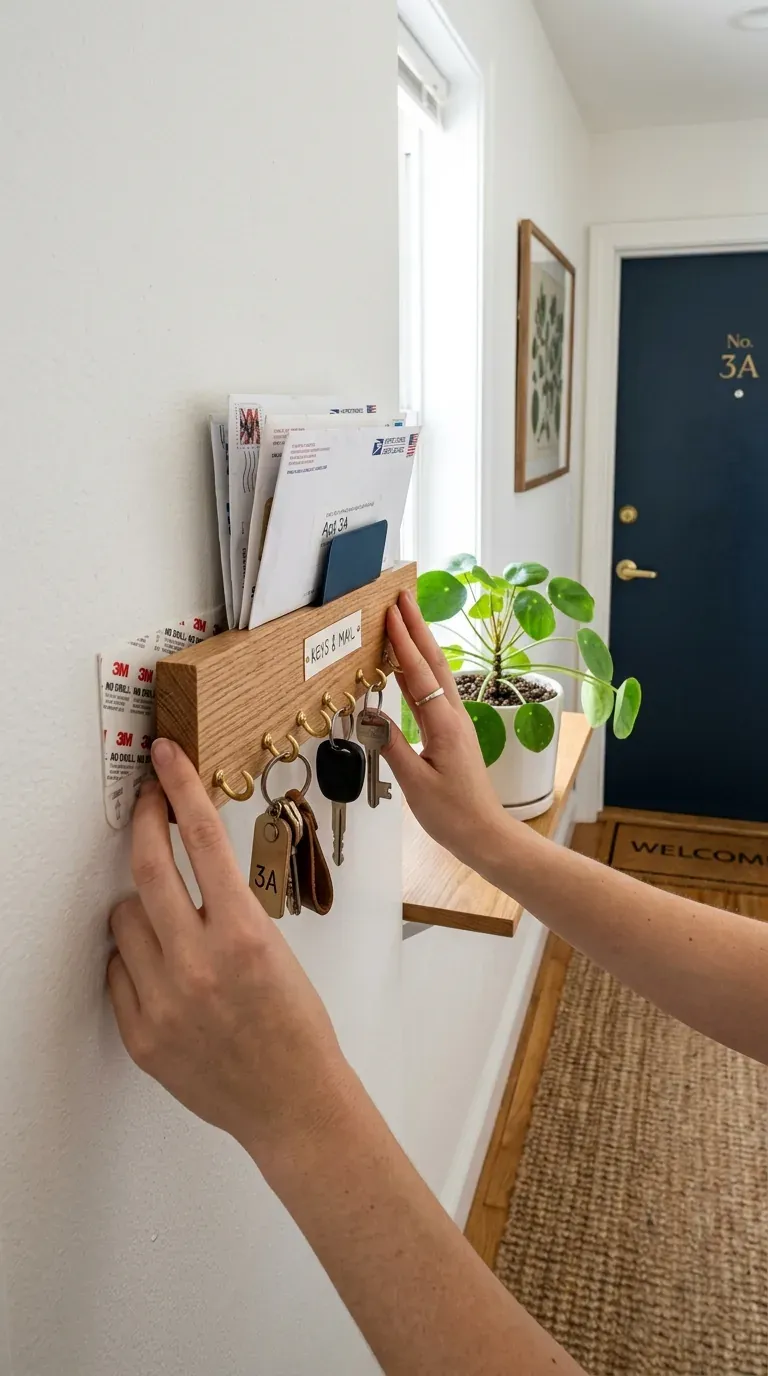
Best Placement and Ideal Mounting Height
Even the best hardware fails if mounted in the wrong spot. Placement is behavioral design, not decoration.
The Latch-Side Rule
Always mount on the latch side of your primary entry door - the side with the doorknob, opposite hinges. That is where your hands naturally are as you push the door closed and turn into the house. Mounting on the hinge side forces you to backtrack around the open door, an extra three steps your brain will refuse to take when hands are full.
Keep the unit 8 to 12 inches clear of the door’s full 90-degree swing. Have someone slowly open the door while you mark with painter’s tape. Door handles chip wood rails fast when clearances are tight.
In open-plan entries without a defined foyer, anchor to the first uninterrupted wall segment past the door swing, ideally within 3 to 6 feet of the threshold. Beyond 10 feet, usage drops sharply - people dump on the nearest sofa or counter instead.
Height Benchmarks That Actually Get Used
Through dozens of installs, these heights consistently win:
- Main adult rail: 54 to 60 inches from finished floor to hook centerline. This is eye to chest level for most adults 5’2” to 6’1”. You see rings without bending or reaching overhead with grocery bags.
- Secondary kids and pet tier: 40 to 44 inches. Low enough for ages 6 to 10 to hang independently, plus dog leashes and short lanyards. Mount 12 to 16 inches below main rail for a deliberate two-tier look.
- Above-bench clearance: If mounting above a bench or shoe cabinet, leave 16 to 20 inches from bench top to lowest hook so lanyards do not pool onbindust, wallets or plants below.
Too low (under 48 inches for adults) puts keys out of sightline; family members revert to counters. Too high (over 64 inches) strains shoulders and excludes shorter household members. When household heights vary widely, favor 56 inches as the universal compromise and add the low tier for kids.
Use a magnetic torpedo level and painter’s tape to mock up before drilling. Live with tape outlines for 24 hours. Open the door, carry laundry through, watch sightlines from kitchen. A two-degree tilt looks crooked forever, so level twice.
For full foyer ergonomics including bench and mirror heights, see our guides on optimal height for entryway fixtures and where to place entryway organizers.
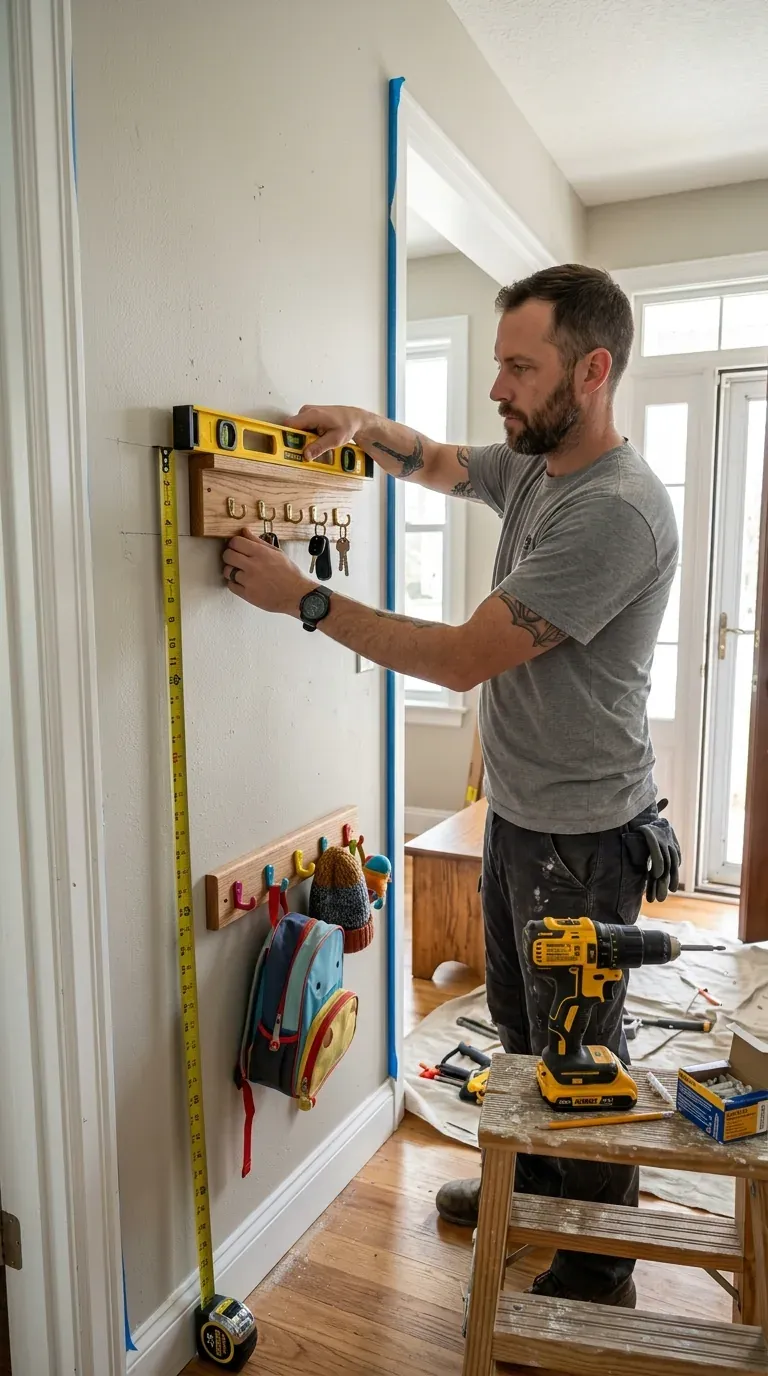
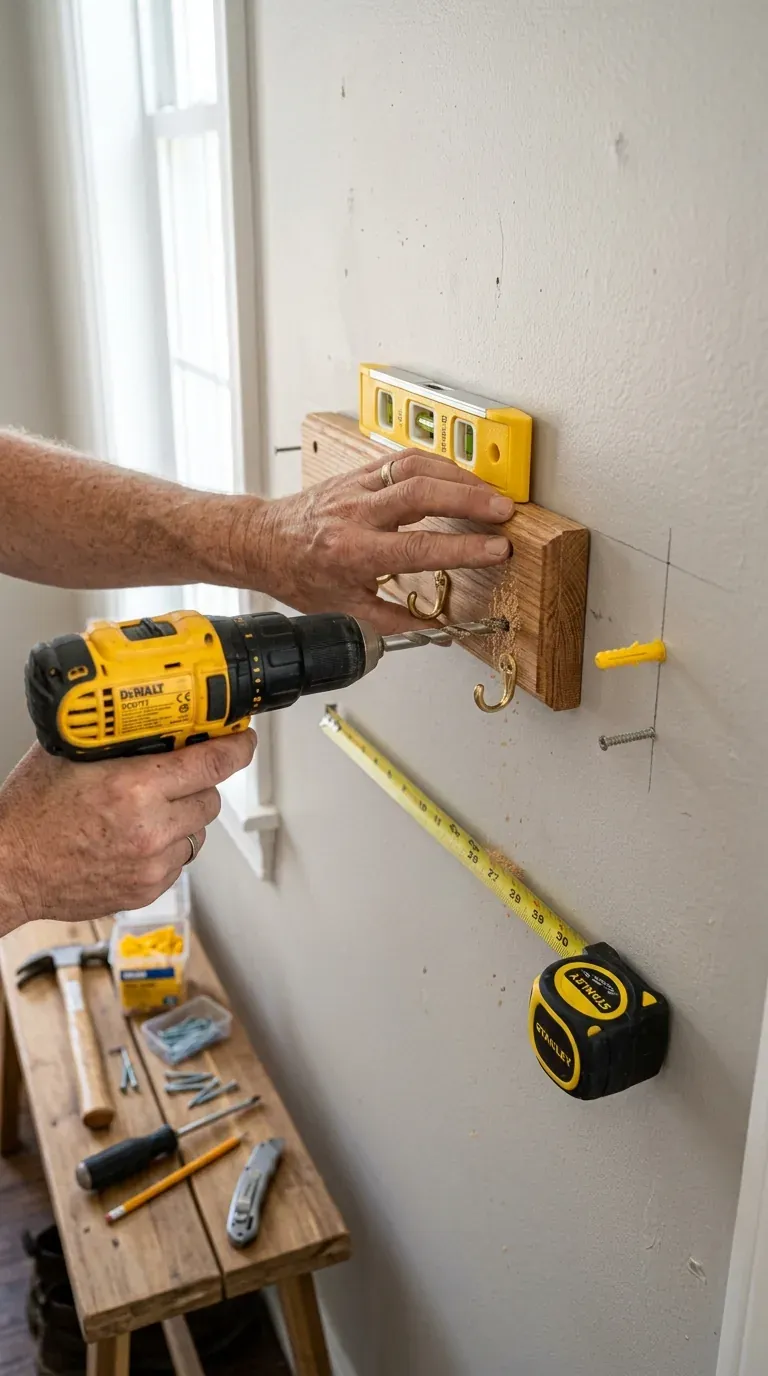
Installation: No-Drill vs Screws and Anchors
Installation determines whether your station feels rock-solid for years or wobbles loose in three months. Choose method by wall type and load, not just convenience.
No-Drill Adhesive Method - Best for Renters and Light Loads
Modern acrylic adhesives and nano-suction mounts reliably hold 5 to 15 pounds on smooth, clean surfaces. I have adhesive rails in client rentals still solid after three years.
Process that works:
- Choose location using latch-side and height rules above. Mark with light pencil and level.
- Clean wall with 70 percent isopropyl alcohol, not household cleaners that leave residue. Let dry fully two minutes.
- If paint is glossy or semi-gloss, lightly scuff with fine 220-grit pad behind backplate area only, then re-clean. Skip this on flat rental paint.
- Peel backing, align, press firmly across entire backplate for 30 to 60 seconds. Use body weight, not fingertips.
- Wait full 24 hours before hanging anything. Adhesive needs cure time to reach rated strength.
- Load gradually - keys first day, add mail and heavier items day two.
Removal: Warm with hair dryer 30 seconds, slide dental floss behind plate, pull adhesive strips slowly parallel to wall, never outward. Touch up with magic eraser.
Limitations: Do not use adhesive for heavy bags, coats, or on brick, raw wood, dusty concrete or fresh paint. In humid bathrooms-turned-mudrooms, screws win.
See step-by-step renter methods in our no-drill wall mounting guide and our plaster and drywall mounting tips.
Screws, Anchors and Studs - Best for Families and Heavy Loads
A family rail with mail, fobs and leashes experiences repeated dynamic pull. Screws are worth the two holes.
Tools: stud finder, level, pencil, drill, 1/4-inch bit, Phillips driver, and quality anchors. Throw away the tiny plastic plugs included in many kits. Buy self-drilling zinc anchors or toggle bolts rated for 50+ pounds shear.
Process:
- Find studs with electronic finder. If one mounting hole hits a stud at 16-inch spacing, drive a 1.5-inch wood screw there for primary strength.
- For hollow drywall holes, pre-drill, thread in zinc anchor flush, then drive machine screw through backplate into anchor. Do not overtighten and spin the anchor.
- For plaster and lath, pre-drill with masonry bit on low speed to avoid cracking, use toggle bolts.
- For tile or concrete, use carbide bit, plastic expansion plugs and stainless screws. Seal with silicone to block moisture.
- Mount backplate, check level, tug-test with 10 pounds downward force. It should feel like part of the wall, zero wobble.
Pro detail: Add small clear bumper pads behind bottom corners of wood boards. They prevent rocking on slightly uneven walls and protect paint.
If you pair hooks with seating below, coordinate heights with our entryway bench storage picks so bags on benches do not snag hanging rings.
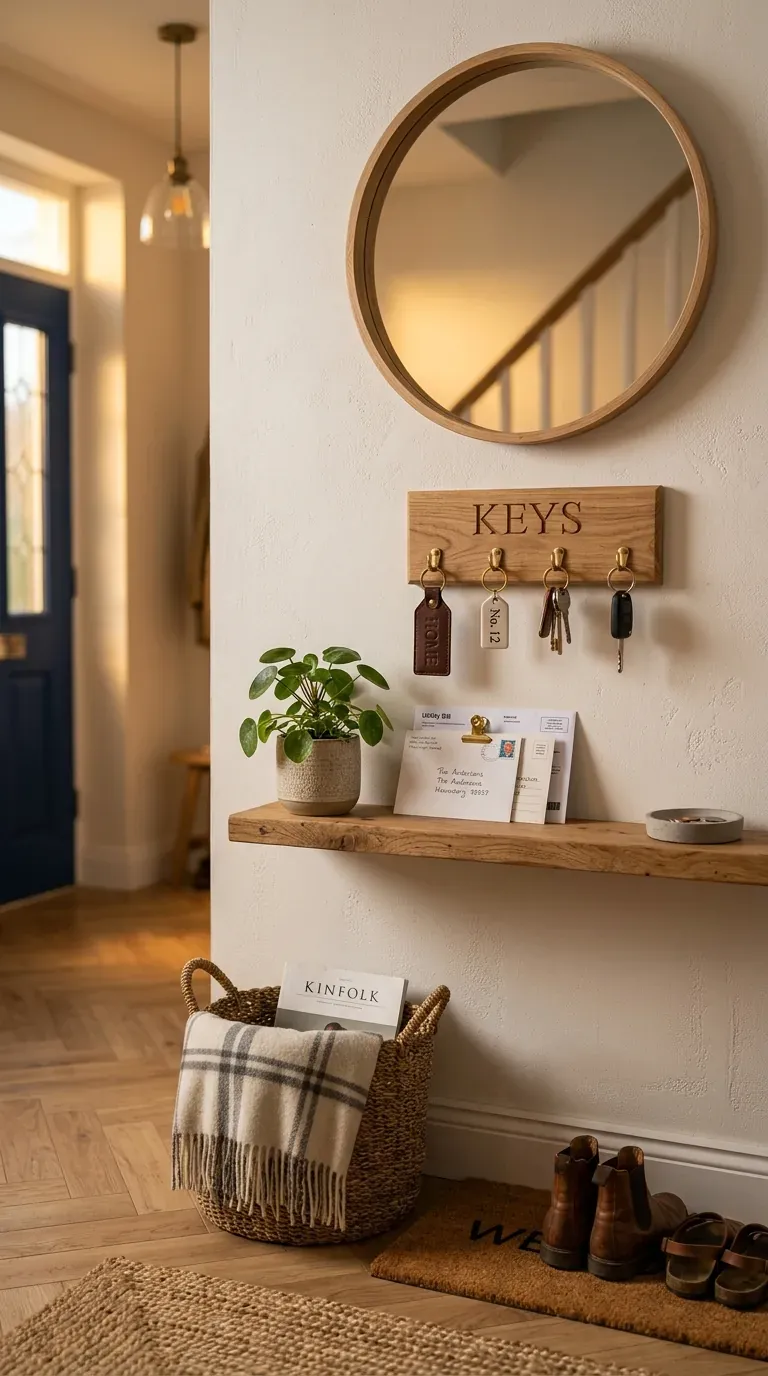
Styling Ideas to Make It Look Built-In, Not Bolted-On
Function gets used, beauty gets kept. A rail that looks intentional survives decluttering purges. A plastic strip that screams dorm room gets ripped out during the next refresh.
Match Finish to Existing Trim
The fastest upgrade: stain or paint your board to match baseboards, interior doors or picture frames. White oak rail with matte black hooks disappears into modern farmhouse trim. Walnut with brass hooks elevates mid-century and traditional foyers. Matte black metal with oak pegs suits industrial and Scandinavian spaces.
Keep hook finish consistent within six feet. If door levers are brushed nickel, choose nickel or stainless hooks. Mixing black, chrome and brass in one sightline reads chaotic even when organized.
Create a Vertical Vignette
Do not float a tiny 7-inch plaque alone on a vast blank wall. Anchor it:
- Center rail 6 to 8 inches above a narrow console or floating shelf, with a mirror or art 8 to 10 inches above rail. This 3-part stack reads as one built-in moment.
- Flank with a small framed print on one side and a wall sconce or trailing pothos on the other. Leave 4 to 6 inches breathing room so keys do not snag frames.
- Add a 2-inch-deep picture ledge above for rotating seasonal art. It draws the eye up and makes the station feel architectural.
In narrow halls, go vertical, not wide. Stack mail sorter above hooks, small art above that. You use 10 inches of width and 30 inches of height instead of spreading sideways into the walkway.
Label Without Looking Childish
Shared rails fail when territories blur. Instead of plastic labels, assign ownership elegantly:
- Numbered brass tags 1 to 4 looped on end hooks
- Different leather key lanyard colors per person - cognac for you, black for partner, natural for teen
- Small round wood discs with burned initials hung on each hook’s base
For Airbnb or guest suites, add a tiny engraved plate: Keys, Leash, Spares. Guests return rings without asking.
For more foyer styling formulas, explore our ideas for aesthetic hooks that match your decor and floating shelves versus wall hooks.
Common Mistakes to Avoid Plus Care, Maintenance and Long-Term Durability
After organizing hundreds of entries, I see the same five failures repeat. Avoid them and your station will work for a decade.
Mistake 1: Buying Too Small to Save Wall Space
A 3-hook plaque looks tidy online but forces double-hanging in real life. Rings bind, grab time triples, someone gives up and uses the counter. Measure once: count sets today, add two for growth. Six hooks with correct spacing beats eight cramped hooks every time.
Mistake 2: Shallow Hooks and Smooth Pegs With No Lip
Flat dowels and shallow L-hooks drop keys when the front door slams or a tote brushes past. Insist on deep J-hooks with at least 0.5-inch upturned tips, 30 to 40-degree angled pegs, or verified N52 magnets. Test in store with your heaviest fob: yank sideways lightly. If it slides off easily, pass.
Mistake 3: Ignoring the Mail Pile
Keys stay organized for two weeks, then incoming catalogs bury the tray and overflow onto hooks. Solve paper at the same time. Add vertical sorters, not flat trays, so envelopes stand and remain visible. Adopt a 10-second triage: recycle junk immediately, action slot for bills, file slot for office. Empty weekly on trash night.
Our full paper system is detailed in our mail clutter solutions and our wall-mounted mail sorter guide.
Mistake 4: Mounting With Weak Anchors or Wrong Height
Wobbly rails train families not to trust them. If the board flexes, people revert to tables. Use proper anchors rated well above static load, hit a stud when possible, and respect 54 to 60-inch adult height. A level, solid mount signals permanence.
Mistake 5: Overloading With Coats and Bags
Key rails are precision tools, not coat racks. Hanging a 12-pound winter parka plus tote on a 6-hook key board bends hooks and pulls anchors. If you need coat storage, install a separate heavy-duty coat rail 12 to 18 inches away or lower, rated for 30+ pounds. Keep the key station sacred for small daily carry only.
Simple Maintenance That Doubles Lifespan
Good hardware needs almost no care, but these 5-minute habits prevent 90 percent of issues:
- Monthly: Tighten screws quarter-turn, wipe wood with dry microfiber, check adhesive edges for lift in humid months.
- Quarterly: Oil solid wood with mineral oil or hardwax to prevent drying and hairline cracks. Tighten magnetic mounts. Declutter spare keys - return borrowed sets, remove dead gym tags.
- Yearly: Touch up paint chips, replace worn adhesive strips proactively before failure, re-level if house settling shifted alignment.
For metal rails, wipe with damp cloth and dry immediately to prevent spotting. For magnetic bars, dust magnet faces - grit reduces pull strength and scratches fobs. For cabinets, wax hinges yearly so doors close softly without slamming rings inside.
With correct sizing, solid mounting and light upkeep, a quality wood or metal station easily lasts 8 to 12 years of daily family use. That is thousands of calm departures for the cost of two takeout dinners.
Conclusion: Give Every Key a Home at Eye Level
You do not need a bigger foyer, better memory or stricter rules. You need one deliberate vertical home where keys live every single time. Size it for real hook count, mount it solidly at eye level on the latch side, pair it with simple mail triage, and style it to match your trim so it feels permanent.
Start today: count your rings, tape an outline at 57 inches, live with it 24 hours, then mount. In one weekend you replace years of couch-cushion searches with a single confident reach. Your future late-for-work self will thank you every morning.
For next steps, compare load ratings and current deals in our best wall mounted key holder roundup, then map your full drop zone with our dedicated mail and key station planner and our small entryway mail management guide.
Frequently Asked Questions
What is the best height to mount a wall key organizer?
Mount the hook centerline 54 to 60 inches from the floor for adults, centered around 57 inches if heights vary. Add a secondary low rail at 40 to 44 inches for kids ages 6 to 10 and dog leashes. Keep 16 to 20 inches clearance above any bench so long lanyards do not pool.
Can you install a wall key rack without drilling?
Yes. Use industrial acrylic strips or nano-suction mounts on clean, smooth drywall, tile, glass or sealed wood. Clean with isopropyl alcohol, press 30 to 60 seconds, wait 24 hours before loading, and stay under 8 to 10 pounds total. For bags or coats, switch to studs or 50-pound-rated toggle anchors.
How many hooks does a family entryway need?
Use two per adult plus one per key-carrying child plus one each for dog leash and spares. Most couples with a pet need six hooks; families of four need seven to eight. Space hooks at least 2.5 inches apart so wide fobs do not knock neighbors off when grabbed quickly.
Wood, metal or magnetic: which lasts longest?
Solid hardwood and forged metal last longest - 8 to 12 years - when properly anchored. They handle dynamic yank force and heavy winter sets. Magnetic bars excel for minimalists with two to four light sets but require true N52 neodymium and regular dusting to maintain grip and protect fob finishes.
Where should you place a key station in a small apartment?
Place it on the latch side of the front door, 8 to 12 inches outside the door swing, within 3 to 6 feet of the threshold. Choose a slim model under 2 inches deep and stack mail storage vertically above hooks to preserve walkway width. Pair with a narrow bench or wall pocket for wallets and transit cards.
Related Guides
Frequently Asked Questions
What is the best height to mount a wall key organizer?
Mount the center of your wall key organizer 54 to 60 inches from the finished floor for adults, and 40 to 44 inches for a secondary kids tier. Keep it 8 to 12 inches clear of the door swing on the latch side.
Can you install a wall key rack without drilling?
Yes. High-strength adhesive strips and nano-suction mounts hold 5 to 15 pounds on smooth drywall, tile, glass or sealed wood. Clean with alcohol, press 30 seconds, and wait 24 hours before loading.
How many hooks does a family entryway need?
Plan for 2 hooks per adult plus 1-2 spares for guests, dog leashes and mail keys. A family of four does best with 6 to 8 well-spaced hooks at least 2.5 inches apart.
Wood, metal or magnetic: which wall organizer lasts longest?
Solid wood and cast metal last longest for daily family use. Magnetic bars are sleek for 2-4 light key sets but choose N52 neodymium and wood-lined faces to protect fobs.
Where should you place a key station in a small apartment?
Place it on the latch side of the front door, just outside the swing path, at eye level. In studios add a combined mail tray on top to handle letters, sunglasses and wallets in one vertical zone.
