
Aesthetic Entryway Hooks: Decorative Coat Hooks for Wall
Match aesthetic entryway hooks to home decor: decorative coat hooks in wood, brass, matte black, and rattan, plus spacing, height, and the best hook sets.
Feb 5, 2026 · Linda Wise
15 min readAesthetic entryway hooks turn a functional rail into the first piece of your home people actually look at — matching them to your entryway style is the whole job.
Most entryways get the hardware they deserve, which is a generic two-hook rail from the big-box aisle. Then the owners wonder why the foyer feels like a service entrance. The fix is not more hooks or fewer hooks; it is hooks with an opinion. A decorative hook rail is the first thing a visitor registers when they walk in, before they see the sofa or the art — because it is at eye level, next to their coat, within the first second of arrival. Match it to your home’s style and the entryway reads as designed. Mismatch it and the door reads as clutter.
Style-first, then function, then install — that is the order this guide follows, with the good news up front: the hook can be a sculpture. The coat on it will still be a wet parka. Plan for both.
Aesthetic Entryway Hooks: Matching by Style (farmhouse, modern, boho, minimalist)
Every design language has a hook dialect. Getting yours right is ninety percent of the aesthetic.
- Farmhouse. Double-prong schoolhouse hooks in matte black or oil-rubbed bronze, mounted on a reclaimed-wood board or beadboard backing. Substantial, sturdy, and the sealed workhorse of the mudroom style. The two prongs are there for a reason: coat on the top, bag or hat on the bottom.
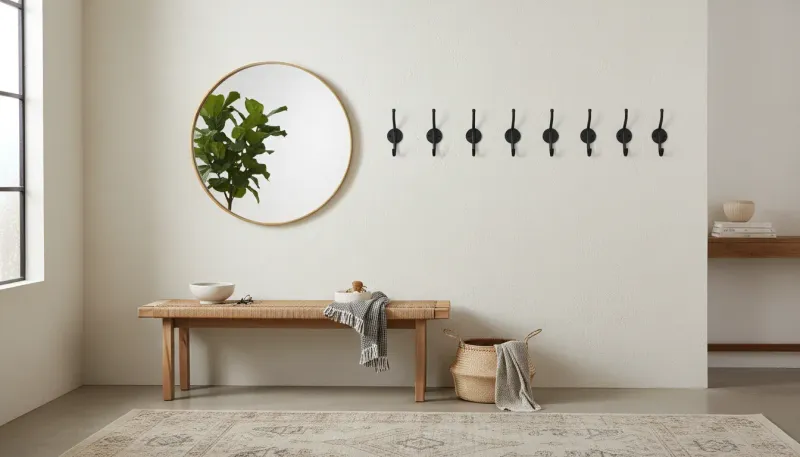
- Modern. Geometric metal shapes — hexagons, half-circles, slim cylinders — in matte black, brushed nickel, or unlacquered brass. Less is more: four hooks in a strict level line, generous wall space around each one. The hardware should feel like jewelry for the wall.
- Boho. Rattan, natural wood, and mixed-media pieces with visible handcraft: rattan rounds, carved wood, terracotta glazes, woven cord wrapped around wood cores. Warm, organic, slightly imperfect. Pair with a macrame basket or dried botanicals for the full effect.
- Minimalist. Dot and button hooks: circular turned-wood or matte-white pegs that screw directly into the wall with no visible backplate. Staggered at different heights, they read as an art installation when empty and disappear under coats when full.
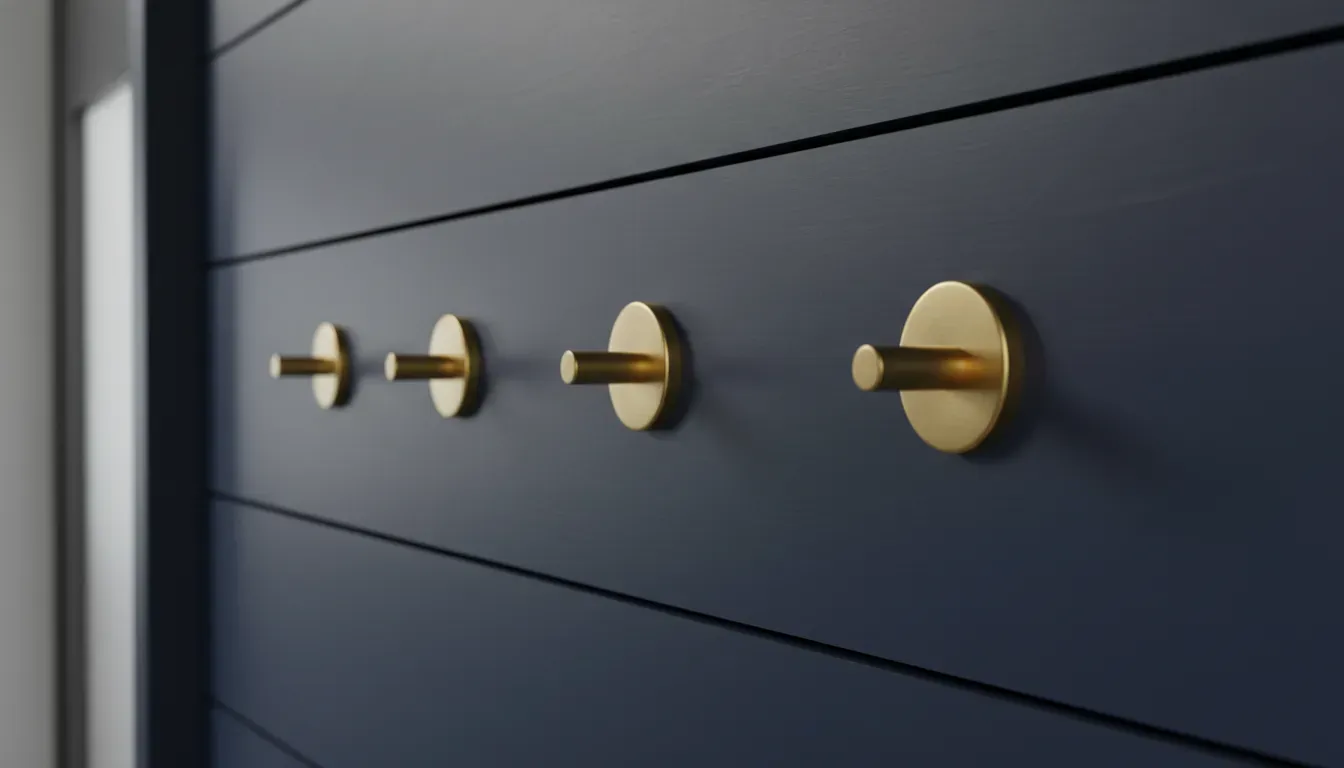
If your home mixes languages, pick one material and vary the shapes — a row of mixed wood knobs or a set of three brass orbs at different heights reads as intentional. Same material, varied form, always works.
Coat Hooks for Wall: Materials & Finishes (wood, brass, matte black, rattan)
Beyond style, the material and finish decide both the look and the lifespan of coat hooks for wall mounting.
- Wood. Warmth, organic texture, and the gentlest touch on fabric — rounded wooden pegs will not stretch collars or snag knits. Light woods (ash, beech, birch) lean Scandinavian; walnut and stained oak lean mid-century and traditional. Sealed finishes survive wet coats; bare raw wood will gray and stain.
- Brass. The luxury finish. Unlacquered brass develops a patina that suits traditional and transitional homes; polished brass stays bright and reads contemporary. Solid brass is heavier and pricier; brass-plated is fine for light use but chips where the plating is thin.
- Matte black. The default for farmhouse, industrial, and modern. Powder-coated matte black resists scratches and moisture far better than painted black, which chips at the first contact with a metal buckle.
- Rattan. The boho signature. Light, textured, and warm, rattan hooks are genuinely decorative — but they are not the hook for heavy parkas. Use rattan for hats, scarves, and light bags, and keep a sturdier hook nearby for the wet wool coat.
- Cast iron and steel. The workhorses. Cast iron is heavy, textured, historic; powder-coated steel gives the same presence at half the weight. Both handle a soaked winter coat without complaint.
The rule: decorative warmth comes from wood, rattan, and brass; daily abuse gets handled by matte black steel and cast iron. Rooms that need both get both, on the same rail.
Decorative Coat Hooks That Still Handle a Wet Parka
Here is where style meets the wet parka test. A hook can be gorgeous and still fail its only real job — holding a soaked wool coat off the floor — in three ways: weak mounting, weak material, or a shape that lets the coat slip.
The wet parka requirements:
- Anchor into a stud. A stud-mounted hook takes 50+ pounds without argument. A drywall-anchor hook pulls out the first winter when a family member grabs a coat by the sleeve instead of the collar. This one step makes decorative hooks functional.
- Check the hook’s own rating. A ceramic or rattan hook might be rated for 5 pounds; a cast-iron or steel hook for 35. Match the rated capacity to the actual coat, still dripping at the end of a commute.
- Choose a shape that hangs, not decorates. Rounded knobs are charming and useless for coats with a sewn-in collar loop — the loop slips off the curve. Double prongs, geometric profiles with a return at the tip, and wide flat bars hold a hanging load honestly. Coats hang on the straight section of the hook, not the ornament.
- Add a hook-style drip tray below. An umbrella drip tray or boot mat under a loaded rail saves the floor and the finish. The parka can be as wet as it wants; the hook rail and floor stay dry.
The hook can be a sculpture. The coat on it will still be a wet parka. Plan for both — a beautiful hook, anchored to a stud, rated for the load, placed over a tray. That arrangement is the entire aesthetic-minus-drama method.
Spacing & Height (12–16 inches apart, 60-inch height)
Installation is where good hooks become a good entryway:
- Spacing: 12–16 inches between hooks. Below 12 inches, bulky winter coats overlap and fight for the wall; above 16 inches, the rail starts to look sparse and underloaded. 12–16 inches is the band that keeps loaded coats separate and the row looking deliberate.
- Height: 60 inches is the standard for the main coat row — out of reach of toddlers, within easy reach of adults, and high enough that long coats clear the floor. Add a second row at 40–48 inches for kids’ coats and backpacks if the household needs it.
- A 4–6 inch gap from the top hook to the ceiling keeps the row from feeling wedged, and a level line is non-negotiable — nothing reads as “unfinished” like a rail that slopes.
- Line or stagger it. A strict level line for modern and farmhouse; a staggered constellation for boho and minimalist. Both work if the spacing between hooks stays in the 12–16-inch band.
The Best Aesthetic Hook Sets (picks + prices)
Ready to shop? These are the hook families worth buying, with price bands rather than single prices, because finishes move:
| Set | Material | Style | Typical Price (4–5 hooks) |
|---|---|---|---|
| Schoolhouse double-prong set | Matte black powder-coated steel | Farmhouse | $20–35 |
| Wooden dot set | Sealed light oak or beech | Minimalist | $15–30 |
| Brass orb set | Solid brass or brass-plated | Modern/transitional | $25–60 |
| Rattan round set | Natural rattan over wood core | Boho | $20–40 |
| Cast-iron coat rail | Single rail, 4–6 hooks, iron | Rustic/industrial | $35–70 |
| Geometric mixed set | Matte black steel, varied shapes | Modern | $25–45 |
Choosing between the styles of hook sets you cannot go wrong with, per entryway:
- Farmhouse: schoolhouse double-prongs win — two prongs carry a coat plus a bag, and matte black reads correct on shiplap.
- Modern: brass orbs or slim geometric profiles, 4 hooks in a level line, wall space as the luxury.
- Boho: rattan rounds with one sturdy double-prong hidden at the end of the rail for the real coats.
- Minimalist: wooden dots staggered at 12–16-inch spacing; empty, they are the art.
For more on hook shapes, load ratings, and the practical differences between rail systems, our ultimate guide to choosing entryway hooks covers the buying decision in full — and our guide on using entryway hooks as a daily system covers the habits that keep a styled wall from turning back into a pile.
Conclusion
Aesthetic entryway hooks are the cheapest design upgrade in the home — twenty dollars and a stud finder buys a first impression. Match the material to your style language (wood and brass for warmth, matte black for presence, rattan for texture), hold the spacing at 12–16 inches and the height at 60 inches, and anchor everything into a stud so the sculpture actually survives the wet parka.
Style and structure are not in competition here. The hook that matches your home and holds a soaked coat is the hook that gets used, and a used hook is the one that keeps the entryway looking styled instead of staged.

Stop Guessing Measurements. Build Your Dream Entryway with Confidence.
Transform awkward hallways, cramped foyers, and cluttered mudrooms into organized sanctuaries. Includes 20 CAD floor plans, facing real-home photo spreads, the 36-Inch Clearance Rule, the Shoe Pairs Formula, and 7 printable worksheets.
Core Edition ($17.99) · Flagship Photo Edition v5 ($39.99)
