
Modern Key Holder: Sleek Entryway Organization for Contemporary Homes (2026 Guide)
Discover what makes a modern key holder essential for entryway organization. Compare materials, magnetic vs minimalist types, placement, installation and Japandi styling tips.
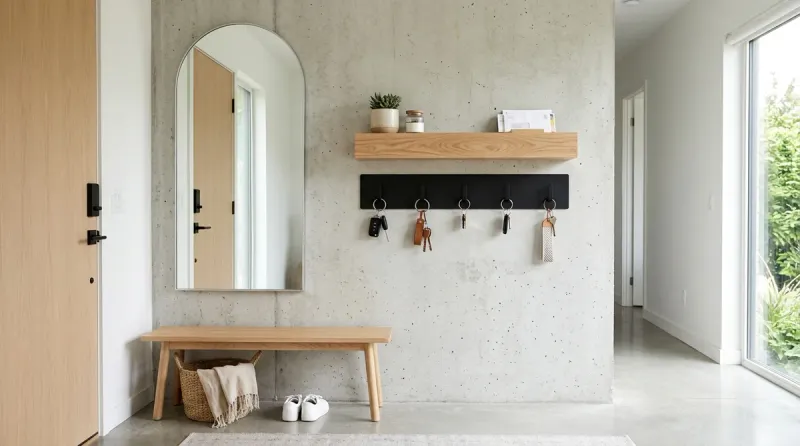
Sep 18, 2026 · Linda Wise
15 min readA modern key holder is a wall-mounted entryway station designed with clean lines, compact proportions, and intentional storage for keys, mail, and daily carry. Unlike a bulky traditional rack, this type of modern key holder pairs slim silhouettes with durable materials to keep fobs visible, separated, and ready to grab.
If you have ever sprinted out the door only to realize your car fob is buried under mail, inside yesterday’s tote, or lost between couch cushions, you already understand the problem this guide solves. After designing more than 200 residential foyers, I can tell you the issue is rarely forgetfulness. It is the absence of a defined landing zone. A designated wall station creates muscle memory: walk in, hang keys, sort mail, move on.
Quick Answer: A modern key holder works best when mounted at 54 to 60 inches high with 4 to 6 well-spaced hooks plus a small tray or magnetic bar. Choose solid wood or powder-coated steel for durability, add a lower rail for kids, and keep it 8 to 12 inches clear of the door swing. For proven layouts with mail storage, see our roundup of the best wall mounted key holder options.
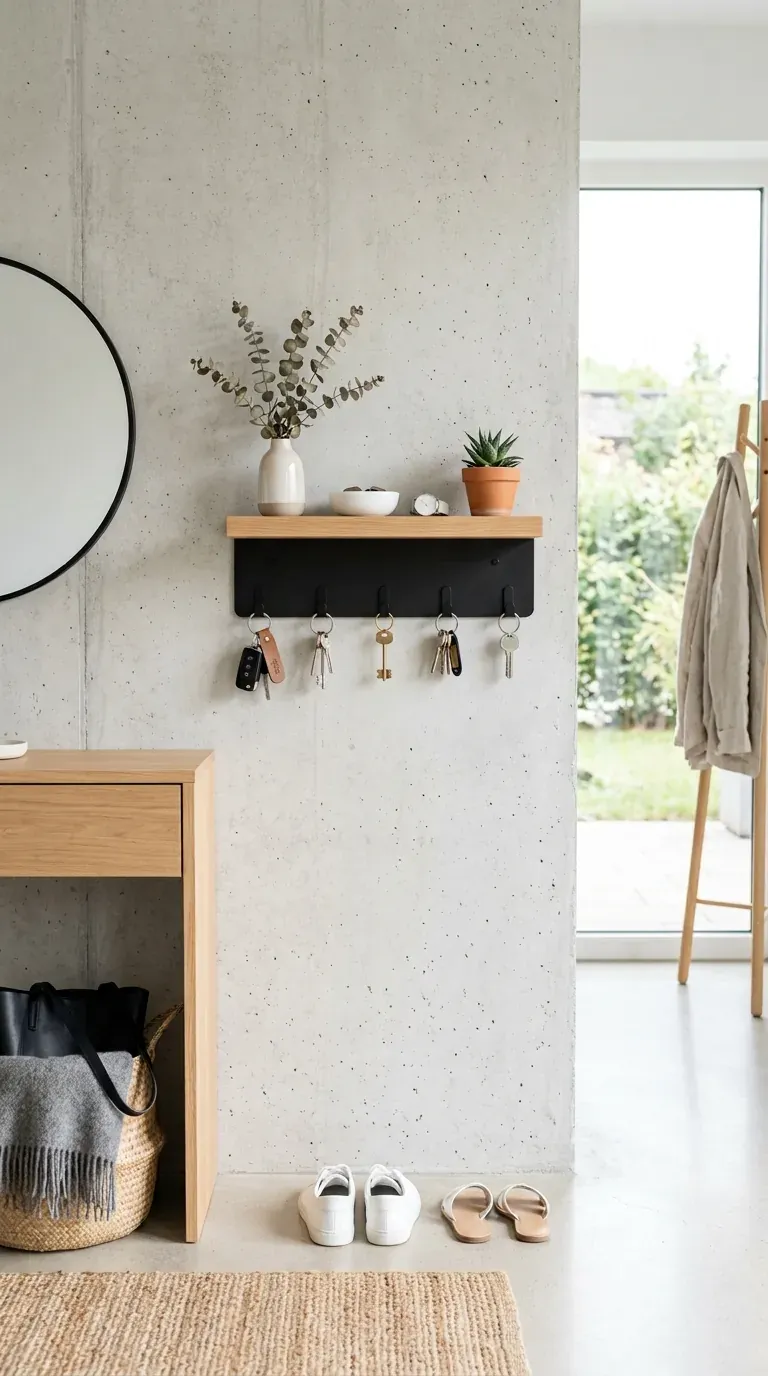
Table of Contents
- Quick takeaway
- What makes it different?
- Contemporary vs classic compared
- Best materials and finishes
- Magnetic, minimalist and smart options
- Choosing size and capacity
- Where to mount and how to install
- Styling for calm interiors
- What not to do
- Final verdict
- Frequently asked questions
- Related guides
Our Top Modern Key Holder Picks Today
These are in-stock modern key holder designs picked for reliable hardware, smart proportions, and substantial limited-time discounts:
| Our Pick | Why It Wins | Sale Price | Direct Link |
|---|---|---|---|
| House-Shape 5-Hook Wood Modern | Best Scandinavian modern key holder silhouette | 31.85, -70%) | Check Price → |
| Walnut Self-Adhesive Minimalist Hooks | Best minimalist modern key holder pegs | 4.32, -74%) | Check Price → |
| Metal Iron Art Modern | Best vintage cast metal modern key holder | 15.61, -71%) | Check Price → |
| 6-Hook Wooden Open Shelf Modern | Best open-shelf modern key holder with ledge | 16.11, -49%) | Check Price → |
| Walnut Concealed Cabinet Luxury | Best luxury concealed modern key holder cabinet | 55.17, -25%) | Check Price → |
What Defines a Modern Key Holder?
A modern key holder is defined less by a single look and more by a set of design principles: visual lightness, honest materials, precise function, and concealed engineering. Where older racks advertise themselves with scrollwork and oversized backboards, contemporary pieces recede into the wall. Edges are crisp. Screws are hidden. Proportions are slim enough for narrow hallways yet strong enough for real daily loads.
Scale is the first tell. Most current designs measure 7 to 14 inches wide and project only 1.2 to 3.2 inches from the wall. That shallow depth matters in tight foyers where a deep shelf would block the door swing or catch a shoulder bag. Despite the slim profile, weight ratings have improved. A well-built modern key holder uses threaded inserts, welded pegs, or high-grade neodymium magnets rather than simple friction pegs that loosen over time.
Function is layered. The best pieces do more than hold rings. They combine one primary key zone with a secondary zone for mail, sunglasses, or a wallet. That might be an upper ledge with a raised lip, a felt-lined tray, a magnetic strip for fob rings, or a pair of deep hooks for a dog leash. The goal is a complete drop ritual in one vertical footprint, so you never need a separate bowl on the console.
Aesthetic restraint is the final marker. Matte black, brushed brass, natural oak, walnut, white powder-coat, and clear acrylic dominate. There is little ornament. Beauty comes from material contrast — for example, blackened steel pegs set into pale oak — and from perfect alignment. When mounted level with consistent spacing, even a simple rail looks architectural.
If you want reference points for hook counts and tray layouts that work in real homes, browse the best wall mounted key holder comparison to see how 5- and 6-hook configurations balance capacity and spacing.
Modern Key Holder vs Traditional Key Rack: What’s Different?
Traditional key racks were built for display. Think pine plaques with painted slogans, cast-iron fleur hooks, or brass letterbox plates with four tight double hooks. They work, but they were designed when households carried two slim brass keys. Today we carry bulky proximity fobs, chunky carabiners, Tile trackers, gym tags, and house keys on oversized rings. Spacing that felt generous in 1995 now causes constant tangling.
A modern key holder solves this with wider hook spacing and smarter geometry. Look for 2.2 to 3.0 inches center-to-center between hooks, plus deep J-curves with a 0.5 to 0.75 inch upturned lip. Shallow L-pegs let rings slide off when you brush past with groceries. Deep J-hooks cradle the ring even during a hurried grab. This single detail separates frustrating organizers from ones you will actually use for years.
Mounting philosophy has also shifted. Older boards often relied on a single sawtooth hanger or two small brass nails. Contemporary wall mounts use keyhole slots, French cleats, or dual adhesive plus screw options. The result sits flush without wobble. Anti-spin construction matters too: pegs welded to a steel spine or threaded into hardwood inserts will not rotate downward after repeated tugs, while single-screw friction hooks inevitably loosen.
Visual weight is another divide. A traditional oak plaque with six ornate hooks can look heavy in a 36-inch-wide hallway. Contemporary alternatives float. A 9-inch magnetic bar, three solid walnut pegs, or a slim rail with flip-down hooks provides the same utility with far less visual mass. For renters, damage-free adhesive versions now hold 5 to 8 pounds on smooth drywall or tile, which was unthinkable a decade ago.
That does not mean traditional styles have no place. In farmhouse or vintage interiors, a distressed wood shelf with large hooks adds warmth. But for apartments, new builds, Scandinavian schemes, and small foyers, the lighter footprint wins. To compare tray depths and hook spreads side by side, check the wall mounted key organizer guide with measured dimensions.
Materials and Finishes: Wood, Metal, Acrylic and Leather
Material choice determines how a wall station feels, how long it lasts, and how it cleans. The most successful contemporary pieces use one primary structural material plus one accent, rather than mixing three or four finishes.
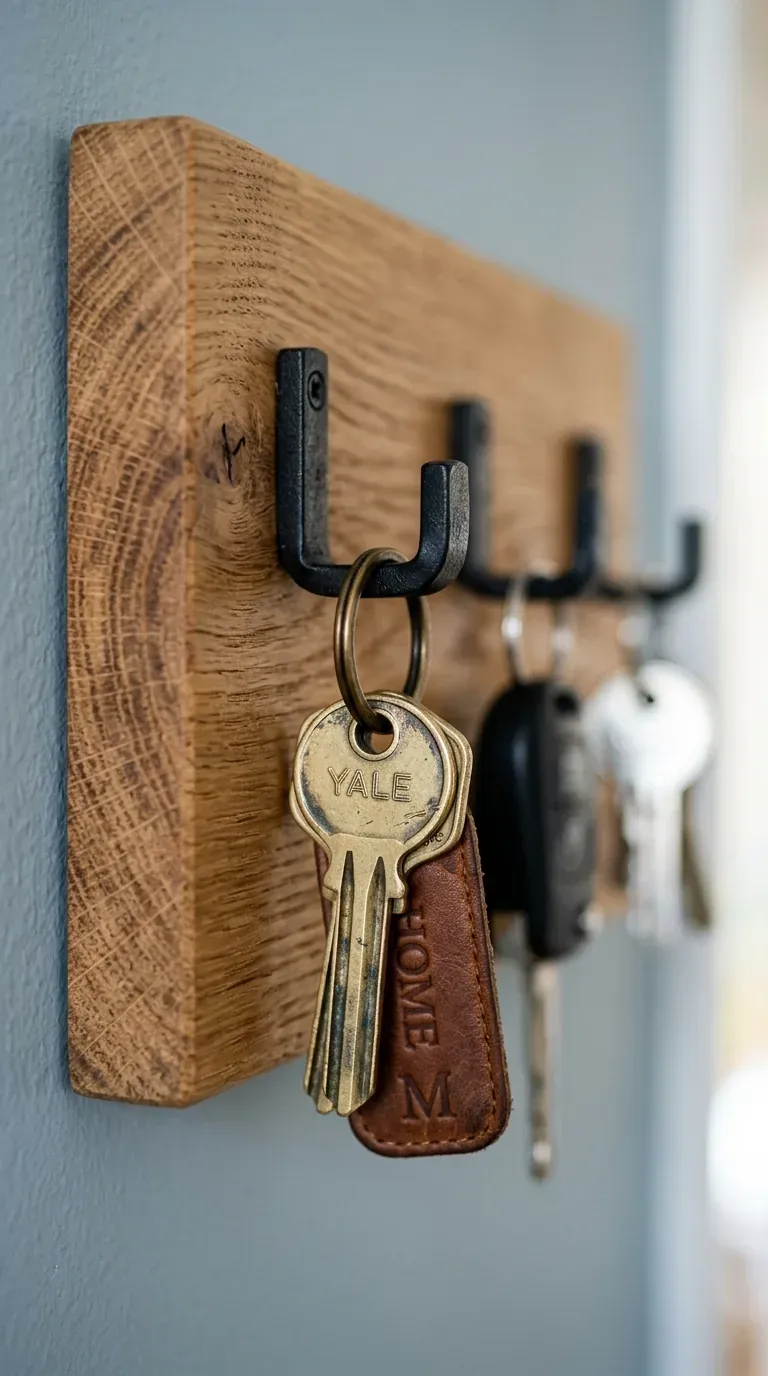
Solid wood remains the warmest option. White oak, walnut, ash, and beech offer tight grain that resists splintering and takes oil or matte lacquer beautifully. A well-sealed modern key holder in oak will shrug off damp rain keys and daily handling. Look for kiln-dried stock at least 0.6 inches thick to prevent warping near exterior doors where humidity swings. End-grain should be sealed, and pegs should be threaded into inserts rather than simply glued. Oiled walnut pairs especially well with matte black pegs for a Japandi contrast.
Powder-coated steel and aluminum deliver the slimmest profiles. A folded steel tray only 1.5 inches deep can hold mail, while welded pegs support 10 to 15 pounds each without bending. Matte black hides fingerprints, white blends into trim, and brushed brass or champagne adds a jewelry-like accent in neutral foyers. Check that edges are deburred and coated on all sides; raw cut edges will chip and rust near wet jackets.
Acrylic and solid surface suit ultra-small spaces. Clear 0.4-inch acrylic virtually disappears on white walls, bouncing light instead of blocking it. It scratches more easily than wood or steel, so reserve it for keys and mail rather than heavy bags. Frosted versions hide micro-scratches better.
Leather, felt, and silicone appear as liners rather than structures. A leather loop can silence clinking fobs, while a silicone sleeve over a magnetic bar prevents paint chips on car remotes. These soft details elevate daily touch points. For coordinated entryway palettes, see our notes on aesthetic entryway hooks matching your decor to pair wood tones with wall paint.
Types of Modern Key Holder Designs: Magnetic, Minimalist and Smart
Contemporary wall stations fall into four practical families. Understanding them helps you match form to habit rather than buying on looks alone.
Magnetic bars are fastest for grab-and-go. A timber batten with embedded N52 neodymium magnets holds split rings directly — no hook alignment needed. You simply toss the ring toward the bar and it snaps into place. This type of modern key holder excels for single occupants or couples with two to three sets. Verify pull force: cheap ferrite strips drop fobs when the front door slams. Look for specified N52 grade, wood or silicone facing to prevent scratches, and at least 9 inches of length for three sets without overlap. Magnets do not harm automotive RFID transponders, but keep them away from magnetic stripe hotel cards.
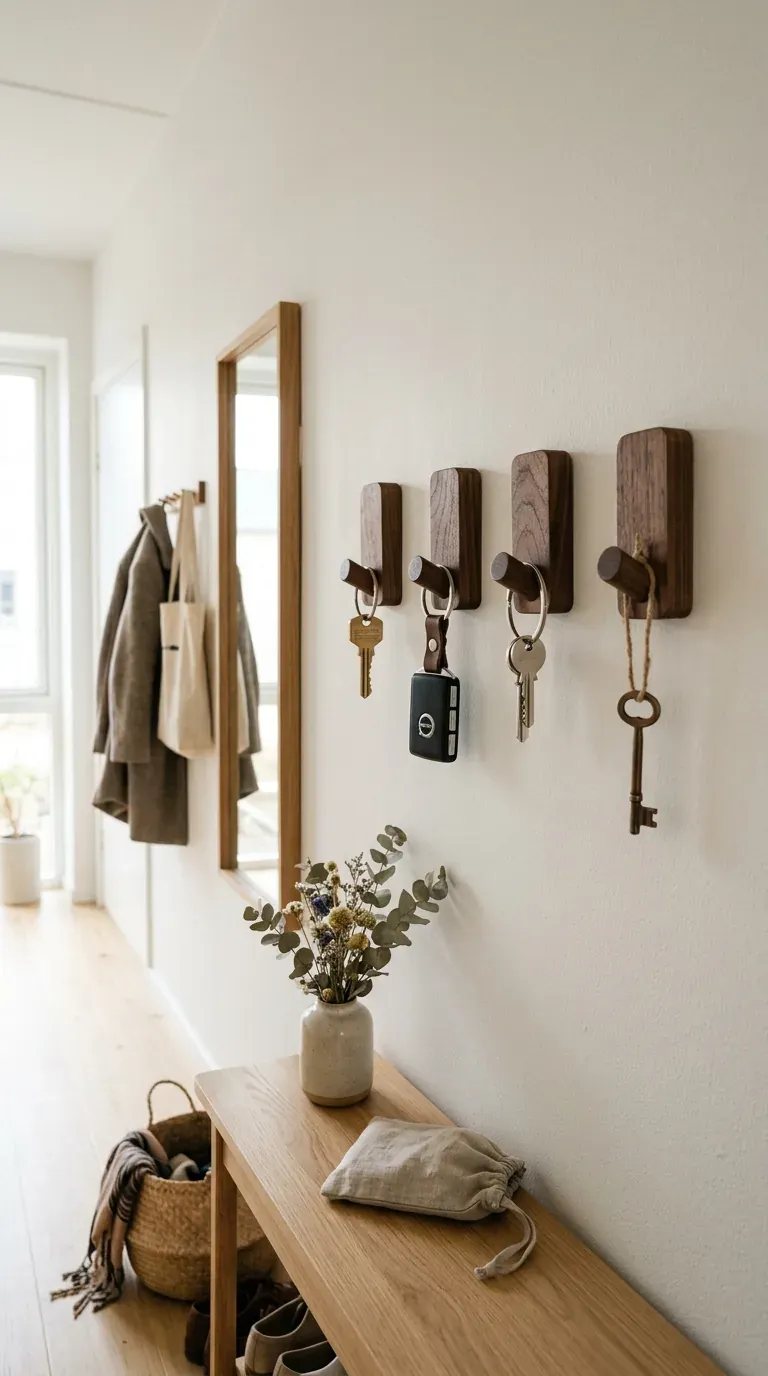
Minimalist pegs and rails suit narrow halls. Three to five individual solid wood or brass pegs, spaced 4 to 8 inches apart, create a custom spread that follows your wall. Retractable flip hooks are clever: they lie flush when empty and fold down under load, preserving a flat wall plane. This approach is ideal when you also need to hang a tote or scarf without visual clutter. For broader lessons on keeping walls calm, read minimalist entryway organizers achieving clean lines.
Tray and shelf hybrids solve mail chaos. A 2- to 3-inch-deep upper ledge with a 0.5-inch front lip corrals envelopes, while lower J-hooks keep keys separated below. The best versions add a phone notch or small divider so sunglasses do not slide. Total projection should stay under 3.5 inches to clear door trim. If you process a lot of paper, pair the wall unit with a dedicated station as described in dedicated mail and key drop ideas.
Smart and concealed cabinets serve design-driven foyers. These look like a floating art frame or slim walnut box; the front pivots open to reveal hooks, a charging slot, and sometimes a mirror inside. They hide visual noise completely and can cover alarm panels or thermostats. Allow 3 to 4 inches of depth and check hinge swing so the door does not hit adjacent trim.
For load-tested examples across these categories, compare the top-rated wall mounted key holder picks with sale pricing and dimensions.
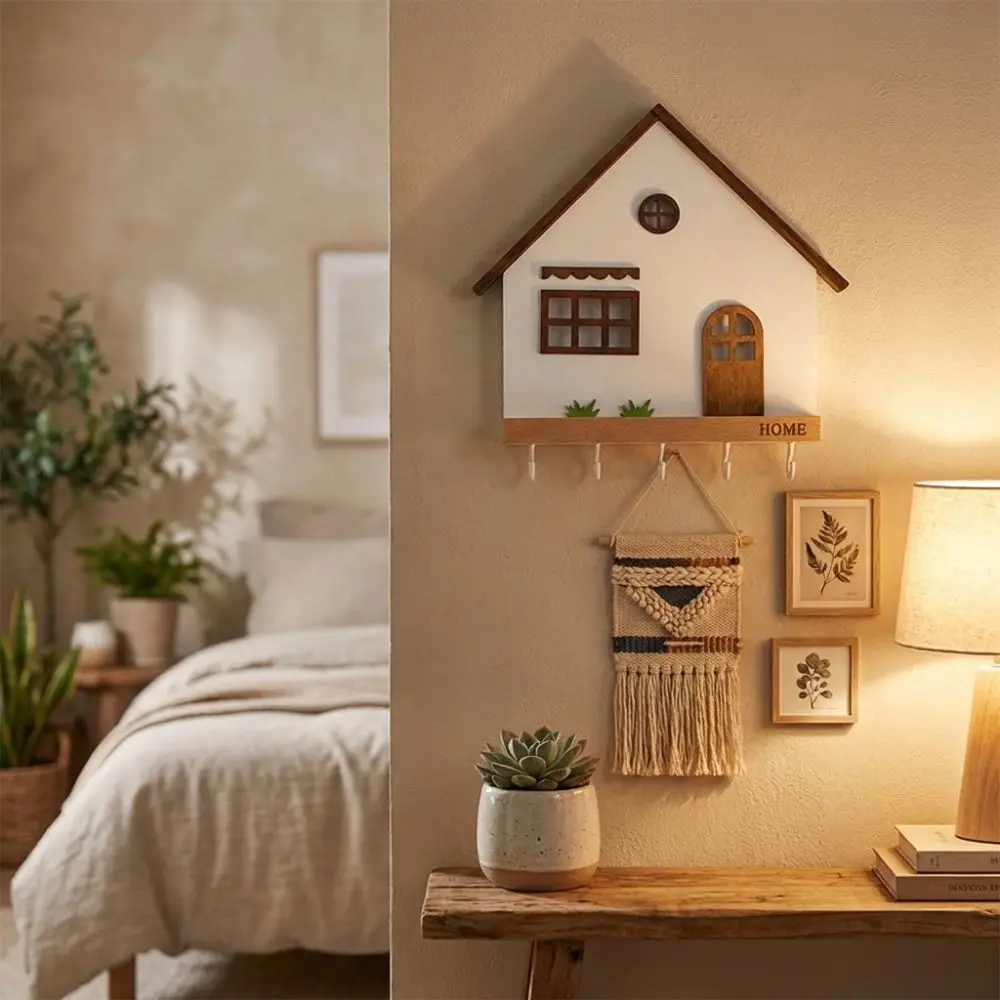
House-Shape 5-Hook Wood Modern Key Holder
Charming house-silhouette modern key holder in solid wood with 5 angled pegs to keep keys from slipping. Compact architectural profile suits Scandinavian, Japandi and contemporary entryways.
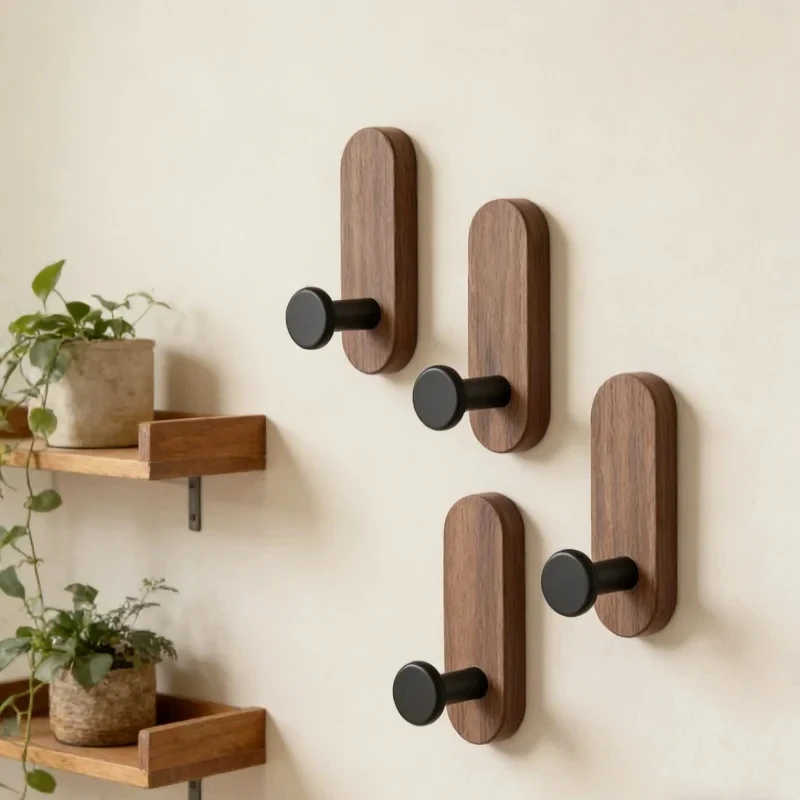
Walnut Self-Adhesive Minimalist Hooks Modern Key Holder
Ultra-clean solid walnut modern key holder pegs with self-adhesive mounting for drill-free install. Ideal for narrow halls, renters, and minimalist drop zones for keys and lanyards.
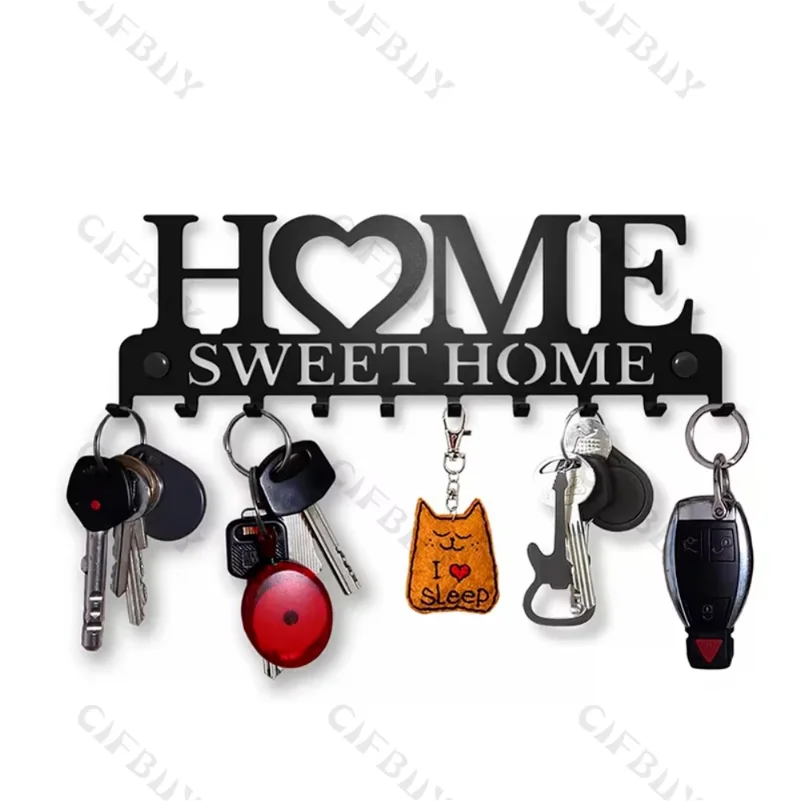
Metal Iron Art Modern Key Holder
Forged iron art modern key holder with heavy-duty hooks for keys, coats and leashes. Matte black enamel resists corrosion in busy foyers and pairs with industrial and contemporary decor.
How to Choose the Right Size and Capacity
Start with an honest count. List every daily set: primary car fob, partner car fob, house and mailbox set, office fob, dog-walking carabiner, guest set, and kids’ lanyards. Most two-adult households need 4 to 6 hooks minimum. Assign two hooks per adult plus one spare. Overloading one peg with three rings guarantees tangles and wall scuffs. If your count exceeds six, add a second rail or a lower tier rather than cramming.
Measure your wall, not just the product. In hallways under 42 inches wide, keep organizer width under 12 inches and projection under 2.5 inches. In wider foyers with a console, you can go up to 16 inches wide with a 3-inch shelf. Always map the door swing with painter’s tape: mark an 8- to 12-inch exclusion zone from the fully opened door edge, including the handle radius. A beautiful rail installed inside the swing path will be hit within a week.
Weight rating is more important than hook count. Sum your heaviest realistic load: two fobs at 3 ounces each, a brass house set at 5 ounces, a leather lanyard, plus a 1.5-pound tote you will inevitably hang there. Choose hardware rated for at least double that static load to handle dynamic yanks. A quality modern key holder lists individual hook capacity and total capacity separately. Prefer steel or hardwood over hollow plastic for any hook that will hold bags.
Think in zones. Top zone for mail and sunglasses should have a lip. Middle zone for adult keys at 54 to 60 inches. Lower zone for kids and leashes at 40 to 44 inches. One compact unit can cover two zones if it has staggered peg lengths; otherwise plan two small pieces rather than one oversized board. Our breakdown of floating shelves vs wall hooks helps decide when a ledge plus hooks beats hooks alone.
Finally, match mounting to your lease and wall type. Drywall without studs needs toggle or threaded zinc anchors rated for 50 pounds shear. Plaster needs pre-drilling and masonry-style plugs. Tile and glass suit adhesive or suction mounts. Brick and concrete need a hammer drill and sleeve anchors. Never rely on the tiny plastic plugs included in the box for heavy family loads.
Placement and Installation: Height, Location and Mounting Methods
Placement determines whether your wall station becomes habit or wall decor. The research on entryway behavior is consistent: visibility plus reach equals use. If keys sit below sightline or behind the door, people revert to the tabletop bowl.
Mount the primary hook centerline 54 to 60 inches from finished floor. This hits natural eye level for most adults and keeps fobs clear of console decor below. In homes with kids who carry their own keys, add a secondary rail at 40 to 44 inches. That lower height also works perfectly for dog leashes and reusable shopping totes. Keep at least 12 inches of clear space above a console surface so tall mail does not jam against the organizer.
Choose the latch side of the entry door — the side with the handle, opposite the hinges. Stand inside with the door fully open at 90 degrees. Your organizer should sit outside that arc with 8 to 12 inches to spare. In galley entries where the door opens against a perpendicular wall, shift the station to the first clear wall segment past the swing, ideally within three steps of the threshold. You should be able to hang keys without setting down bags.
For installation, gather a stud finder, level, pencil, drill, correct bit, and proper anchors. Mark, level, then pre-drill. If you hit a stud, drive a 1.5-inch wood screw for at least one fixing point. This type of modern key holder feels rock solid when at least one screw bites lumber, with the second point secured by a high-load drywall anchor. For hollow drywall, skip bargain expansion plugs and use threaded zinc or snap-toggle anchors rated for 50-plus pounds. Vacuum dust from the hole so the anchor seats fully.
No-drill renters have solid options. Clean smooth paint, tile, or sealed wood with 70 percent isopropyl alcohol, dry completely, press adhesive plates for 30 seconds, then wait a full 24 hours before loading. Do not mount adhesive on flat matte paint, textured plaster, or dusty brick — bond will fail. Test with your heaviest set plus a firm downward tug. For full product-specific mounting demos, see the best wall-mounted key organizer installation notes.
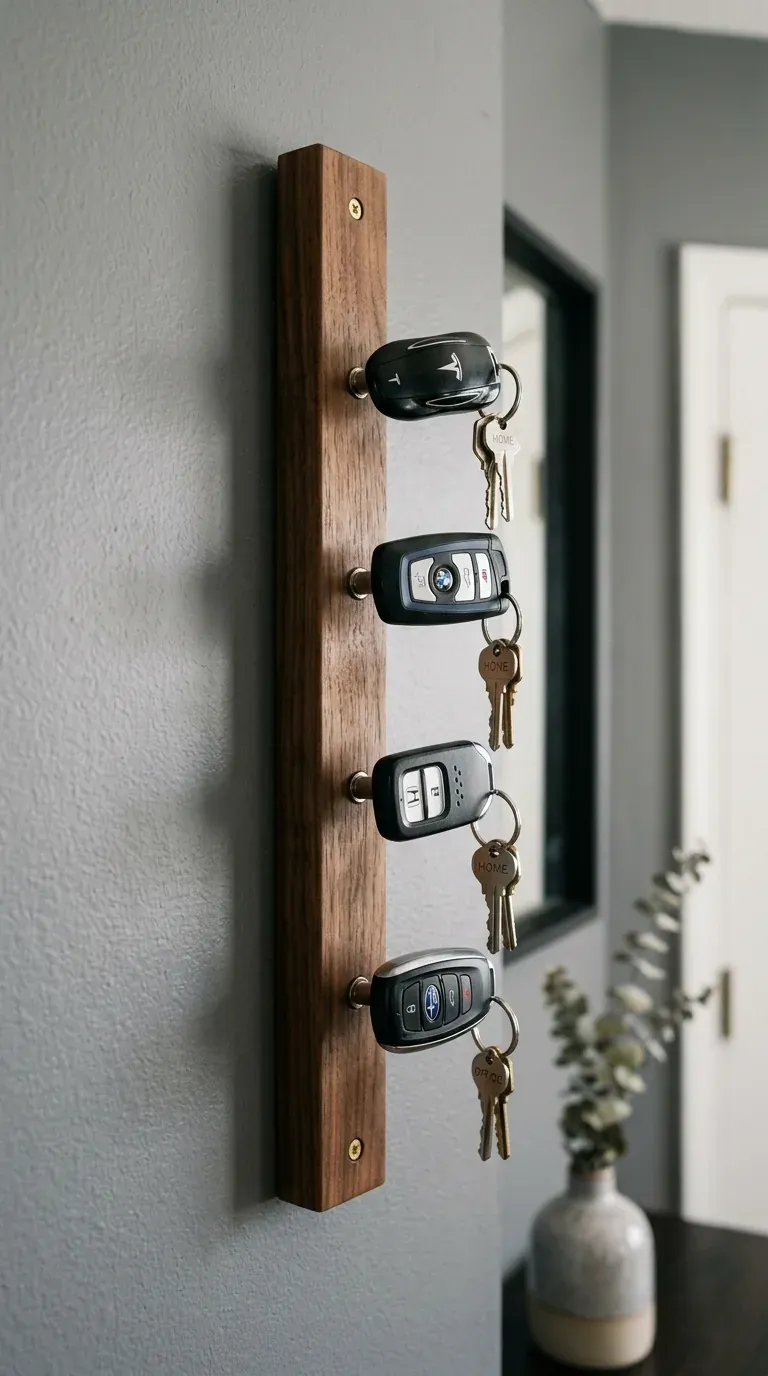
Styling Ideas for Japandi, Scandinavian and Contemporary Entryways
Great hardware still needs styling to feel intentional. The goal is calm, not empty. Think gallery wall discipline: fewer pieces, consistent finishes, breathing room.
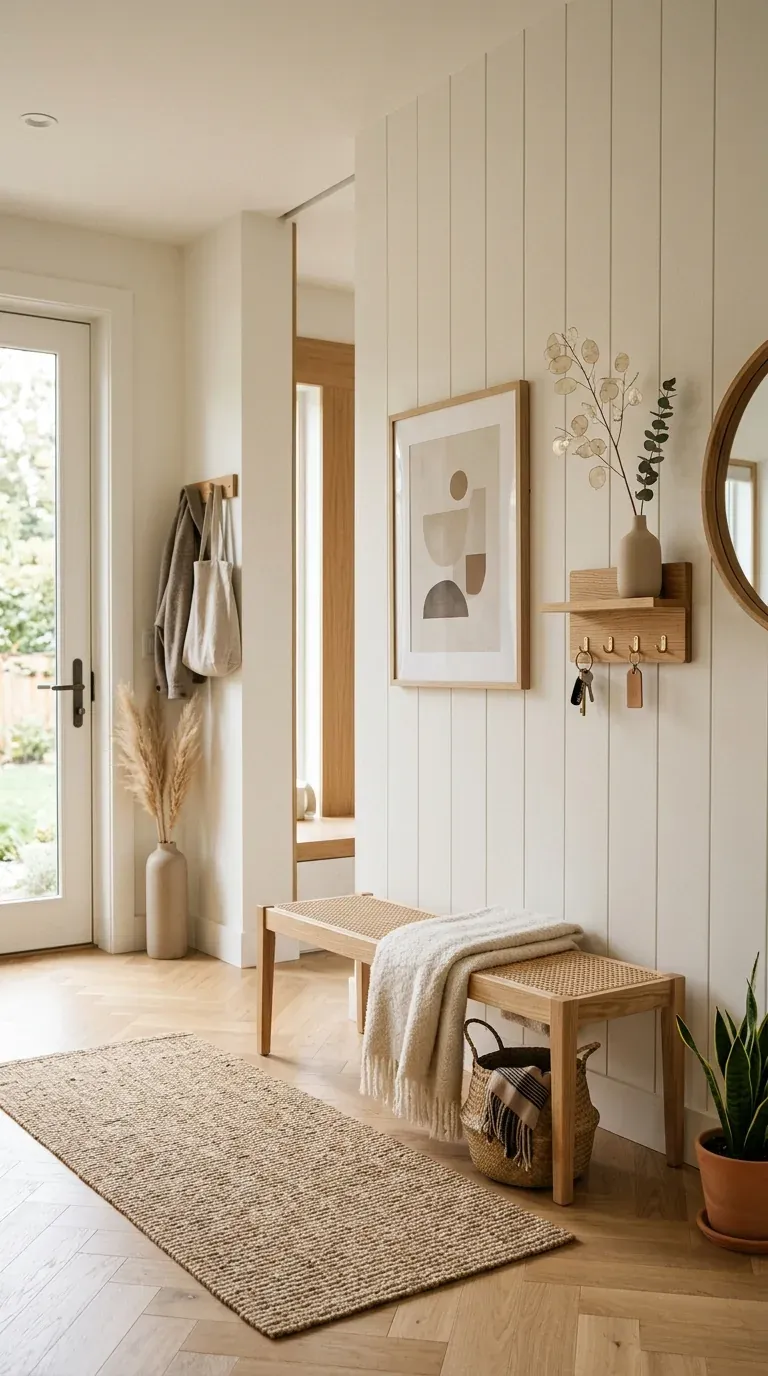
For Japandi, pair pale oak or ash with matte black and one organic accent. Mount a slim oak rail with three black pegs at 57 inches. Below, place a low bench in matching oak with a single boucle cushion. On the rail’s upper ledge, style only two items: a small ceramic dish for coins and a trailing pothos in a stoneware pot. Leave at least 40 percent of the ledge empty. Texture does the work — boucle, raw ceramic, and oiled wood — so color can stay quiet in warm whites and clay.
Scandinavian styling favors white, light grey, and blonde wood with high contrast graphics. Try a white powder-coated rail with natural leather loops against a soft grey wall. Add a round mirror 6 inches above to bounce hallway light and to give a last look before leaving. Keep hooks half empty to signal hospitality; a fully loaded rail reads as storage stress. A striped flat-weave runner in undyed wool grounds the vignette without adding bulk.
Contemporary and transitional foyers can handle bolder contrast. A champagne brass peg rail on deep forest or ink walls looks jewelry-like, especially with clear acrylic trays that do not interrupt the color. If your foyer includes a console, align the organizer’s center with the console’s center and leave 14 to 16 inches between console top and hook line. That gap accommodates tall vases while keeping keys reachable.
Lighting completes the scene. A picture light or slim sconce 8 to 10 inches above the unit washes the wall and makes keys easy to find at night. Where hardwiring is impossible, a rechargeable motion LED strip tucked under the shelf provides task light without cords. Conceal one cable channel if you charge a phone on the ledge; visible cables undo minimalism instantly.
Seasonal editing keeps any style fresh. Rotate heavy wool scarves and parkas to closets in spring, leaving only light jackets. Use identical baskets or bins if you need closed storage nearby — mismatched containers create visual noise. For hook finish coordination, revisit aesthetic entryway hooks matching your decor.
Common Mistakes to Avoid
The most frequent failure is buying for looks without checking hook geometry. Shallow pegs, tightly packed hooks, and spinning single-screw mounts look tidy in product photos but fail under daily yanks. Always confirm deep J-curves, 2.5-inch minimum spacing, and anti-spin fixings. If a listing does not specify spacing or magnet grade, assume the worst.
Second is ignoring the door swing. Measure twice. I have replaced dozens of cracked acrylic ledges and dented cabinet corners because the organizer sat inside the handle arc. Tape the swing on the floor and wall before drilling. Include the handle projection, not just the door slab.
Third is overloading. A five-hook rail holding nine sets plus two totes will pull from drywall, scar paint, and tangle daily. Respect total ratings. Distribute bags to a dedicated coat hook or bench peg. Give each adult a named zone — left two pegs for one person, right two for another — to prevent drift.
Fourth is mounting too high or too low. Above 64 inches, shorter household members stop using it. Below 48 inches, keys disappear behind console styling and mail piles on top. Stick to 54 to 60 inches for adults, with a separate low tier for kids rather than compromising the main height.
Fifth is mismatched anchors. The included hardware is often the cheapest part of the kit. In drywall, upgrade to metal toggles. In plaster and lath, pre-drill with a masonry bit and use appropriate plugs to avoid cracking. In tile, use adhesive or drill with a diamond bit and seal to prevent moisture ingress. A ten-minute hardware upgrade prevents a wall repair later.
Finally, do not forget maintenance. Tighten screws seasonally, wipe magnetic faces to maintain pull, re-oil oak yearly in dry climates, and purge spare keys quarterly. A wall station only saves time if everything on it earns its place. If you need deeper troubleshooting, the wall mounted key holder with mail tray FAQ covers adhesive failures and spacing fixes.
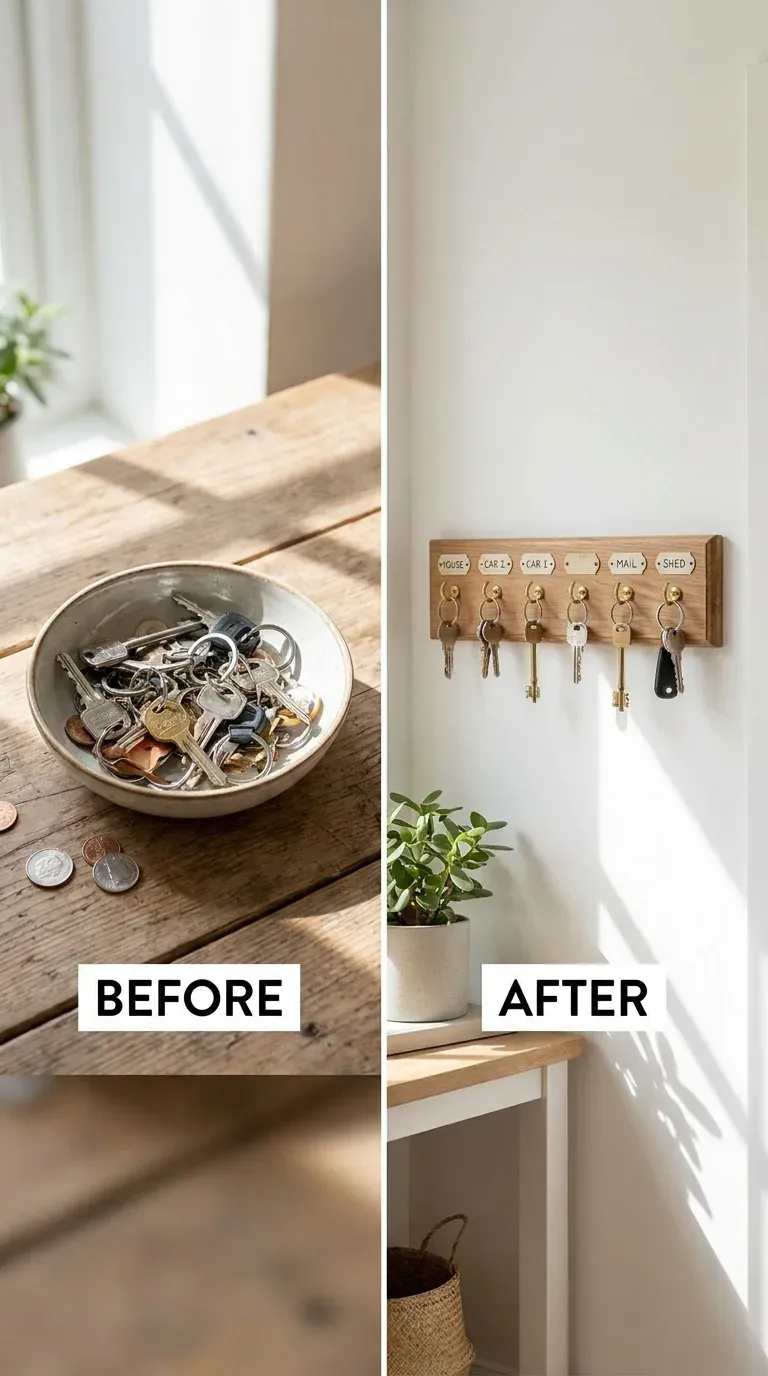
Conclusion: A Small Upgrade With Daily Impact
You do not need a renovation to end the morning key hunt. A compact wall station, mounted at eye level with room to breathe, turns dead drywall into the hardest-working square foot in your home. Choose honest materials, respect spacing and anchors, style with restraint, and give every set a named home.
Start this weekend: count your sets, tape your door swing, and mount one rail at 57 inches. Live with it for two weeks, then add a lower tier or tray only if needed. Small, well-placed upgrades compound into calm departures and welcoming arrivals.
Frequently Asked Questions
What is the most durable material for a busy family entryway? Powder-coated steel and solid hardwood lead for longevity. Steel pegs resist bending under totes, while 0.7-inch oak or walnut backplates resist warping near exterior doors. Look for threaded inserts and sealed end grain, and avoid hollow plastic if you hang bags daily.
Magnetic bar vs hooks: which is better? Magnets win for speed with two to three sets — just toss and snap. Hooks win for capacity and mixed loads like leashes and lanyards. Many households combine both: a short magnetic strip for daily fobs plus two J-hooks for spares and dog gear. Confirm N52-grade magnets and 2.5-inch hook spacing.
How do I choose a modern key holder for a small entryway? For halls under 42 inches wide, pick a unit under 12 inches wide projecting less than 2.5 inches, with 4 hooks and a lipped ledge. Mount at 57 inches outside the door swing. Three individual pegs or a 9-inch magnetic bar often beat a wide board in tight footprints.
Can I install a wall organizer without damaging walls? Yes on smooth surfaces. High-bond adhesive strips hold 5 to 8 pounds on semigloss paint, tile, glass, or sealed wood after proper alcohol prep and 24-hour cure. For textured walls, plaster, or heavy loads, use screws with correct anchors and patch later with spackle.
How high should keys hang if I have kids? Keep the adult line at 54 to 60 inches and add a kid tier at 40 to 44 inches. Assign lower pegs by color or label, keep school lanyards there, and reserve upper hooks for car fobs out of small hands’ reach.
Related Guides
Frequently Asked Questions
What defines a contemporary key organizer?
A contemporary key organizer is defined by clean geometry, concealed mounting, durable materials like powder-coated steel, solid oak or acrylic, and intentional spacing that keeps fobs visible and untangled.
How is a contemporary design different from a traditional rack?
Traditional racks use ornate cast hooks and bulky boards, while contemporary designs use slim profiles, magnetic bars, minimalist pegs, and integrated trays for mail and daily carry.
Which material lasts longest in a busy foyer?
Powder-coated steel and solid walnut or white oak last longest. Steel resists bending, hardwood resists chipping, and both pair well with Scandinavian and Japandi interiors.
Where should you mount an entryway organizer?
Mount at 54 to 60 inches from the floor on the latch side of the front door, 8 to 12 inches clear of the swing, with a lower tier at 40 to 44 inches for kids.
Can you install without drilling?
Yes. High-bond adhesive strips and nano-suction mounts hold 5 to 8 pounds on smooth surfaces. Use screws into studs or toggle anchors for heavier loads with bags and coats.
