
What's the Difference Between Floating Wall-mounted Shelves and Regular Wall Shelves?
Discover the key differences between floating wall-mounted shelves and regular wall shelves. Explore wood options like oak and mahogany, edge styles, corner designs, cable management, and load capacities.
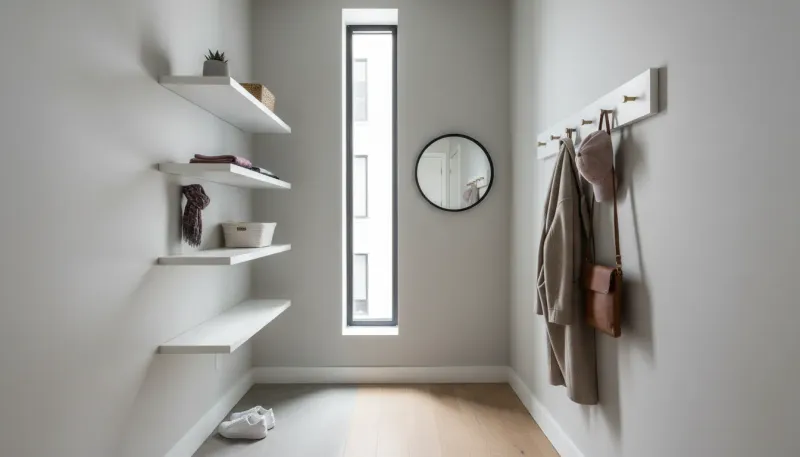
Feb 2, 2026 · Linda Wise
21 min readWhat’s the Difference Between Floating Wall-Mounted Shelves and Regular Wall Shelves?
Wall storage is the backbone of practical interior design. Whether you are staging an organized entryway, setting up an open-concept kitchen display, or curating books in a study, the style of shelving you select profoundly dictates both the room’s aesthetic aura and its functional utility.
Homeowners constantly grapple with a fundamental design choice: should you install floating wall-mounted shelves, or opt for traditional regular wall shelves supported by visible brackets?
While both fixtures serve the essential purpose of elevating items off floor surfaces, their underlying engineering, spatial footprints, load dynamics, and stylistic impressions diverge dramatically.
In this comprehensive architectural guide, we dissect every nuance separating floating wall-mounted shelves from regular bracketed shelves. We explore premium timber options including solid oak and rich mahogany, examine specialty sculpted profiles, detail corner and cable-ready systems, and provide actionable criteria to help you specify the ideal shelving system for your home.
Key Differences Between Floating and Regular Wall Shelves
To make an informed decision for your walls, you must first understand how floating shelves and regular wall shelves contrast in core structural, aesthetic, and mechanical criteria.
Floating Shelves vs. Regular Wall Shelves at a Glance
The defining boundary lies in hardware visibility and support architecture:
- Floating Wall-Mounted Shelves: Utilize hidden internal mounting hardware—such as heavy steel backplates with solid welded support prongs or internal French cleats. When slid over the concealed armature, the shelf appears to project magically from the drywall without visible external means of support.
- Regular Wall Shelves: Feature visible brackets (typically triangular L-brackets, heavy-gauge steel J-brackets, or ornamental carved corbels) fastened directly underneath or flanking the shelf board. The shelf plank simply rests upon or screws into these external supports.
Installation and Support Mechanisms
The mechanical installation process represents one of the starkest contrasts between the two styles:
- Floating Shelf Engineering: Installation demands high precision. A steel mounting bracket is leveled and driven into wall studs using heavy lag bolts or cabinet screws. The shelf itself—either solid hardwood milled with precision blind boreholes or a lightweight hollow torsion-box—slides snugly over the steel prongs. Internal set-screws underneath lock the shelf body to the prongs, preventing forward slide.
- Regular Shelf Engineering: Regular shelves offer a more forgiving installation workflow. Two or more brackets are aligned on the wall, leveled, and secured into studs or drywall anchors. The wooden plank is then placed across the top of the brackets and fastened from underneath with short wood screws.
Appearance and Visual Appeal
Visual weight fundamentally alters the perceived volume of a room:
- Floating Shelves: Yield a crisp, minimalist, and uncluttered silhouette. Without downward-extending brackets, sightlines remain open, making rooms feel larger, cleaner, and architecturally cohesive.
- Regular Shelves: Contribute physical presence and visual framing. The brackets themselves act as decorative accents—whether matte black industrial steel, polished brass, or hand-carved classical corbels.
Weight Capacity and Durability
Structural physics dictate weight limits. A regular shelf supported by triangular brackets benefits from mechanical triangulation: downward loads are directed downward along the wall surface. As a result, a well-bracketed shelf anchored into studs easily supports 100 to 250+ pounds.
Floating shelves, by comparison, operate on a cantilever principle. Every pound placed near the front edge of the shelf creates rotational torque that levers the internal support prongs downward. A high-end solid wood floating shelf anchored into studs holds 40 to 60 pounds reliably, while hollow drywall-anchored budget units should rarely exceed 15 to 25 pounds.
Space-Saving Design and Wall Utilization
In tight quarters—such as narrow entryway corridors, powder rooms, or compact kitchen nooks—floating shelves reign supreme. Because there are no brackets protruding 6 to 10 inches below the shelf line, you can mount floating shelves closer to furniture, over door frames, or stacked tightly above one another without hardware crowding.
Size, Shape, and Design Flexibility
Because floating shelves can be fabricated as internal torsion boxes, they accommodate avant-garde geometric shapes (such as hexagons, rhombuses, and triangles) where external brackets would look chaotic. Regular shelves, however, excel in continuous long runs (spanning 8 to 12 feet) where intermediary support brackets can be placed every 16 or 32 inches without structural sag.
Cost, Materials, and Accessibility
Regular shelves are generally more economical and accessible:
- A basic regular shelf can be assembled for as little as $15 to $35 using off-the-shelf lumber and stamped metal brackets from a local home center.
- Floating shelves require specialized blind-shelf hardware kits, precise routered cavities, or torsion-box joinery, typically running from $40 to upwards of $180+ for heirloom-grade solid oak or mahogany slabs.
Styling and Decorating Versatility
- Floating Shelves: Excel as stages for modern art, trailing indoor plants, minimalist pottery, framed photography, and curated collections.
- Regular Shelves: Are preferred for dense utilitarian storage—such as heavy cookbooks, tool storage, pantries, and laundry detergent bottles—where load security outranks minimalist restraint.
Modern vs. Traditional Design
- Floating shelves naturally complement contemporary, mid-century modern, Scandinavian, and warm minimalist interiors.
- Regular bracketed shelves align effortlessly with rustic farmhouse, industrial, transitional, Craftsman, and Victorian historical aesthetics.
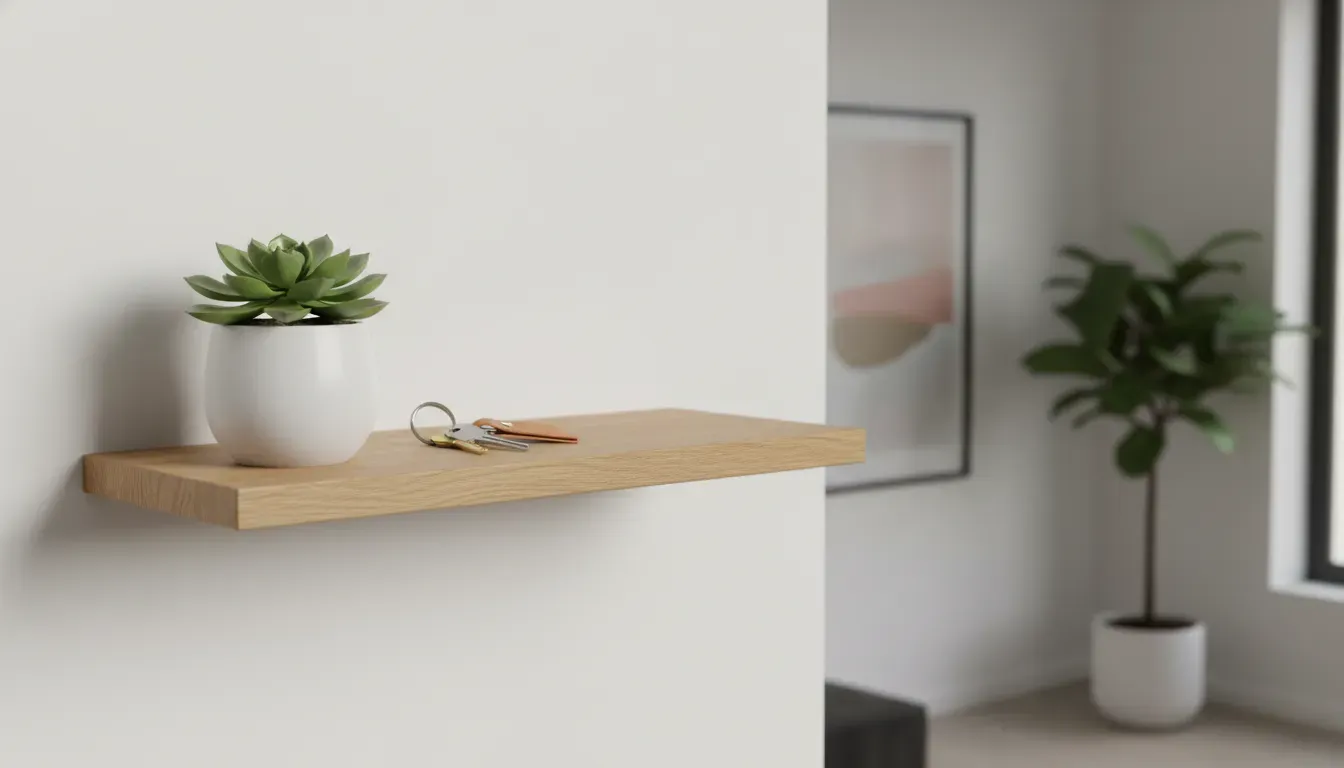
Floating Shelf Styles and Wood Options
The species and thickness of timber you specify determine the structural rigidity, tactile warmth, and longevity of your floating shelf installation. Two premier hardwoods dominate the high-end architectural shelving sphere: Oak and Mahogany.
Thick Oak Floating Shelves in Multiple Lengths
Thick oak floating shelves—typically milled between 1.75 inches and 2.5 inches in thickness—offer an authoritative, grounded presence. Milled from solid American White Oak (Quercus alba) or Red Oak (Quercus rubra), these substantial slabs feature prominent, expressive grain patterns and distinctive medullary rays.
- Common Lengths: 24”, 36”, 48”, 60”, and 72”.
- Structural Advantage: The thick timber profile provides ample internal depth to house heavy 3/4-inch diameter steel support prongs without compromising the structural integrity of the surrounding wood.
- Best Settings: Modern farmhouse living rooms, open kitchen open-shelf pantries, and substantial foyer drop zones.
Thick Mahogany Floating Shelves in Multiple Lengths
For environments demanding deep warmth and timeless luxury, thick mahogany floating shelves (1.75” to 2.25” thick) deliver unmatched elegance. Sourced predominantly from Genuine Mahogany (Swietenia macrophylla) or African Mahogany (Khaya), these shelves exhibit a close, interlocking grain that glows with rich reddish-amber undertones.
- Common Lengths: 24”, 36”, 48”, 60”, and 72”.
- Visual Impact: Thick mahogany absorbs light softly, aging into a deep, lustrous patina over years of indoor exposure.
- Best Settings: Formal dining rooms, executive studies, moody library alcoves, and warm minimalist bedrooms.
Thin Oak Floating Shelves for Smaller Spaces
When ceiling heights are modest or hallway corridors measure under 40 inches wide, thick timber slabs can feel visually overbearing. Thin oak floating shelves (measuring 3/4 inch to 1 inch in thickness) provide the legendary scratch resistance of oak while maintaining an airy, featherweight profile.
- Engineering Note: Thin floating shelves require low-profile, high-tensile steel backplates with flat mounting tangs rather than thick cylindrical prongs to prevent blowing out the wood veneer.
- Best Settings: Powder rooms, bedside reading ledges, and compact hallway key drops.
Thin Mahogany Floating Shelves for Smaller Spaces
Slim-profile mahogany shelves offer refined, delicate lines. The inherent dimensional stability of mahogany makes it exceptionally resistant to warping, cupping, or bowing, even when milled down to a 3/4-inch slender profile.
- Aesthetic Pairings: Complements brass lighting fixtures, cream-colored lime-washed plaster walls, and mid-century modern furniture.
- Best Settings: Compact gallery walls, bathroom perfume staging, and small home office niches.
Choosing Between Oak and Mahogany Floating Shelves
When selecting between these two legendary cabinet timbers, weigh the following structural and aesthetic parameters:
| Criteria | Solid Oak (White / Red) | Genuine / African Mahogany |
|---|---|---|
| Janka Hardness | 1,290 – 1,360 lbf (Extremely Hard) | 830 – 1,070 lbf (Medium-Hard) |
| Grain Texture | Coarse, pronounced, open-grain ring porous | Fine, interlocking, smooth ribbon grain |
| Natural Color Range | Light wheat, honey beige, pale straw | Deep amber, reddish-cinnamon, rich brown |
| Moisture Stability | Moderate (Requires thorough sealing) | Superior (Minimal seasonal expansion) |
| Design Language | Organic modern, Scandinavian, Farmhouse | Mid-century, Classic luxury, Contemporary moody |
Floating Shelves With Rounded and Sculpted Edges
Sharp 90-degree square shelf corners can look stark and pose a hazard in high-traffic hallways. Specifying rounded and sculpted edge profiles softens the physical silhouette and elevates a basic plank into fine millwork.
+-------------------------------------------------------------------+
|               FLOATING SHELF EDGE PROFILES COMPARED               |
+-------------------------------------------------------------------+
| [1] SQUARE RECTILINEAR EDGE  : Sharp 90-degree crisp lines        |
| [2] ROUNDED CORNER RADIUS    : Softened 1" to 2" corner curves    |
| [3] BULLNOSE FULL RADIUS     : Semi-circular smooth front edge    |
| [4] CHAMFERED SCULPTED EDGE  : 45-degree architectural bevel      |
| [5] DOUBLE-CURVE WAVE PROFILE: Flowing organic kinetic silhouette |
+-------------------------------------------------------------------+
Thick Oak Floating Shelves With Rounded Corners
By routing a gentle 1-inch to 2-inch radius curve onto the two front corners of a 2-inch thick solid oak slab, you eliminate sharp edges. In narrow entryways or children’s bedrooms, rounded corners prevent painful hip and shoulder collisions while accentuating the end-grain growth rings of the oak.
Thick Mahogany Floating Shelves With Rounded Corners
Mahogany’s dense, uniform fiber structure machines with buttery smoothness under a carbide router bit. Rounded corners on thick mahogany shelves reflect ambient room light gracefully along the curved perimeter, highlighting the wood’s shimmering chatoyancy.
Thin Oak Floating Shelves With Rounded Corners
Slim oak shelves with softened corners present a modern, organic tablet aesthetic reminiscent of contemporary Scandinavian furniture design. They pair beautifully above curved accent benches and minimalist consoles.
Thin Mahogany Floating Shelves With Rounded Corners
A thin mahogany shelf featuring eased and rounded corners feels lightweight, sleek, and delicate. It acts as an elegant wall-mounted jewelry or fragrance staging ledge in master dressing suites.
Floating Shelves With Sculpted Edges
Beyond simple corner rounding, sculpted edges alter the entire front face of the timber:
- Beveled / Chamfered Edges: A crisp 45-degree angle routed along the top and bottom front perimeter slims the visible face of the wood, tricking the eye into seeing an ultra-thin shelf.
- Ogee and Thumbnail Profiles: Traditional neoclassical contours that harmonize with ornate crown molding and historic baseboards.
- Live-Edge Undersides: Retaining the natural cambium contour of the tree slab along the front edge creates a biophilic, organic modern centerpiece.
Double-Curve Thick Oak Floating Shelves
A double-curve (or serpentine wave) profile features a flowing, subtle S-curve sculpted along the front edge of the oak slab. This kinetic contour introduces organic movement into rectilinear rooms dominated by square doors and flat walls.
Double-Curve Thick Mahogany Floating Shelves
Sculpted double-curve mahogany shelves evoke mid-century Danish craftsmanship. The sculpted curves catch natural daylight at varying angles, creating shifting amber and burgundy highlights across the shelf’s polished surface.
Corner Floating Shelves
Room corners are frequently neglected spaces that harbor dead air. Installing corner floating shelves converts an awkward 90-degree intersection into a high-capacity vertical display hub without consuming any walkable floor space.
+-------------------------------------------------------------------+
|             CORNER FLOATING SHELF DUAL-STUD MOUNTING              |
+-------------------------------------------------------------------+
|  WALL A (Left Plane)            WALL B (Right Plane)              |
|                                                                   |
|      STUD #1                            STUD #2                   |
|        ||                                 ||                      |
|  ======||=================================||====== (Corner Meet)  |
|  \     [INTERNAL PRONG A]       [INTERNAL PRONG B]     /         |
|   \                                                   /           |
|    \               CORNER SOLID WOOD SHELF           /            |
|     \                                               /             |
|      ===============================================              |
+-------------------------------------------------------------------+
Oak Corner Floating Shelves With Rounded Edges
Corner units shaped with a quadrant wedge design and a curved, convex front face soften sharp room corners. Made from solid white oak, these shelves provide durable staging for trailing pothos plants, ceramic mugs, or audio speakers.
Mahogany Corner Floating Shelves With Rounded Edges
A convex-front mahogany corner shelf introduces rich warmth to formal spaces. When stacked in a tiered series of three to five units, they create a bespoke vertical library corner in a study or dining nook.
Oak Corner Shelves With Straight Edges
For minimalist modern aesthetics, straight pentagonal corner shelves fit snugly into 90-degree walls while projecting forward with a clean, flat diagonal front face. Oak’s pale grain keeps corner alcoves looking bright and open.
Mahogany Corner Shelves With Straight Edges
Straight-edged mahogany corner shelves lend architectural gravity to reading nooks. The deep wood tones anchor the corner, creating an intimate, cozy atmosphere.
Corner Floating Shelves With Visible Brackets
While true floating corner shelves conceal their hardware entirely within rear blind holes, hybrid designs pair thick corner timber with low-profile industrial metal corner rails. These supports provide peace of mind when supporting heavy hardcover book collections.
Corner Floating Shelves With Sculpted Edges
Sculpted corner shelves feature scalloped, bullnose, or routed flute designs along their exposed outward perimeter, providing an artisanal touch that softens sterile drywall corners.
Corner Floating Shelves With Cord Holes
Corners are the most logical location for smart home hubs, security cameras, smart speakers (like Sonos or Echo units), and charging stations. Specifying a corner shelf with a 1-inch to 1.5-inch circular cord pass-through hole drilled directly into the rear corner apex allows power cables to drop down cleanly along the interior wall crease.
Floating Shelves With Brackets and Corbels
While “floating” traditionally implies entirely hidden hardware, the transitional interior design movement has popularized hybrid configurations that marry floating shelf slabs with distinctive visible braces, steel strapping, and classical corbels.
Thick Oak Shelves With Black Steel J-Brackets
Heavy 2-inch solid oak planks cradled by matte black steel J-brackets represent the quintessential modern industrial look:
- Mechanical Structure: The steel bracket drops down the wall, travels underneath the shelf, and curls upward 1 to 2 inches along the front face in a “J” hook shape.
- Safety Benefit: The front upward lip prevents heavy items from shifting or vibrating off the shelf.
Thick Mahogany Shelves With Black Steel J-Brackets
The juxtaposition of deep, lustrous reddish-brown mahogany with stark matte black industrial steel creates a sophisticated urban aesthetic that works brilliantly in transitional and contemporary lofts.
Deep Wood Shelves With Black Steel L-Brackets
When shelf depth expands to 12 or 14 inches (common in utility rooms and kitchen open pantries), pure internal floating rods struggle with downward leverage. Installing heavy-gauge steel L-brackets mounted above or below the wood slab provides the triangulation needed to support stacks of heavy ceramic dinnerware or small kitchen appliances.
Solid Oak Shelves With Decorative Corbels
For French country, farmhouse, or classic Craftsman residences, solid oak shelves paired with carved timber corbels honor traditional architectural millwork. The corbels distribute downward force over 8 to 12 vertical inches of wall stud framing.
Solid Mahogany Shelves With Decorative Corbels
Carved mahogany corbels—featuring neoclassical acanthus leaf motifs, traditional scrolled volutes, or clean stepped mission lines—elevate a floating shelf into an heirloom architectural mantelpiece.
Floating Shelves for Cables, Electronics, and Displays
In contemporary homes, wall shelving frequently hosts electronic devices: streaming hubs, gaming consoles, soundbars, Wi-Fi routers, projectors, and digital art displays. Standard shelves leave messy black cables dangling down walls; modern electronics-ready floating shelves integrate precision cable routing channels.
+-------------------------------------------------------------------+
|               ELECTRONICS SHELF CABLE MANAGEMENT                  |
+-------------------------------------------------------------------+
| [TOP SURFACE: Device Landing Pad]                                 |
|                                                                   |
|   ( O ) <-- Rear Centered Grommet Hole (1.5" - 2" Diameter)       |
|     |                                                             |
|     v  [INTERNAL HOLLOW DROP NOTCH]                               |
|  ===|===========================================================  |
|     |                                                             |
|     +---> Power Cable Concealed Down In-Wall Conduit or Raceway   |
|                                                                   |
+-------------------------------------------------------------------+
Oak Floating Shelves With Grommet Holes
Featuring a circular 2-inch opening fitted with a brushed nickel, matte black, or color-matched wood grommet cap, these oak shelves allow power cords and HDMI cables to pass through the top surface without pinching against the drywall.
Mahogany Floating Shelves With Grommet Holes
Rich mahogany shelves equipped with brass or dark bronze grommet inserts offer a refined docking station for wireless charging pads, designer desk lamps, and luxury audio equipment in home offices.
Oak Floating Shelves With Rounded Corners and Grommet Holes
Combining softened corner geometry with electronic cable cutouts results in an ideal nursery, bedroom, or living room media shelf that protects against sharp impacts while keeping baby monitors and streaming devices neatly powered.
Mahogany Floating Shelves With Rounded Corners and Grommet Holes
The premier choice for mounting underneath wall-mounted OLED televisions. The rounded corners soften the horizontal plane, while the grommet hole channels cable clutter into in-wall power kits.
Oak Floating Shelves With Cord Holes
Instead of large round grommets, small discrete cord drop holes (3/8” to 1/2” diameter) are engineered specifically for slim USB-C phone charger cables, keeping bedside tables and entryway drop stations clutter-free.
Mahogany Floating Shelves With Cord Holes
A luxury bedside floating nightstand solution. A discrete rear cord channel lets you charge smartphones and smartwatches without visible wires snaking over the front edge of the timber.
Floating Shelves With Cord Management for Electronics
Advanced floating electronics shelves feature a two-piece torsion box construction. The hollow interior accommodates power strips, surge protectors, and extra cable slack, turning the shelf itself into an invisible cable-concealment vault.
Small Floating Shelves for Entryways and Everyday Items
The foyer is your home’s highest-friction transition zone. Small floating shelves dedicated to pocket essentials (keys, wallets, transit passes, sunglasses) prevent flat surfaces throughout the home from succumbing to clutter.
Oak Key Holder Shelves With Hooks
A compact oak floating shelf (measuring 12 to 18 inches in length and 4 inches deep) fitted with three to five under-mounted brass or forged iron key pegs provides both a flat staging ledge for mail and dedicated hanging hooks for vehicle key fobs.
Mahogany Floating Shelves for Keys
Deep mahogany key ledges installed at elbow height (54 to 58 inches above the floor) create an executive drop station near the entrance, offering a smooth landing pad for pocket knives, sunglasses, and leather card wallets.
Oak Octagon Shelves With Key Hooks
Geometric eight-sided oak shelves with hooks installed across the lower facets combine sculptural wall art with everyday utility, making your entryway drop zone visually captivating.
Mahogany Octagon Shelves With Key Hooks
An artistic focal point for entryway walls. The deep red mahogany octagon contrasts sharply against light neutral paint colors, offering organized hook points for keys and dog leashes.
Small Oak Square Display Shelves
Square cubby shelves (measuring 8” x 8” or 10” x 10”) mounted in staggered groupings create compartmentalized display bays for framed polaroids, small succulents, and travel curios.
Small Mahogany Square Display Shelves
Compact mahogany shadow-box cubes add rich color and architectural depth to stairwells, hallways, and powder rooms.
Magnetic Oak Square Shelves
An ingenious modern innovation: powerful rare-earth neodymium magnets are embedded invisibly inside the bottom face of the oak shelf. Simply hold your metal key ring near the bottom of the wood, and it snaps securely into place—leaving zero visible hooks when not in use.
Magnetic Mahogany Square Shelves
The ultimate minimalist entryway design trick. The bottom of the rich mahogany wood slab holds multiple sets of heavy keys magnetically, preserving clean, uninterrupted horizontal lines.
Decorative Floating Shelves in Unique Shapes
Breaking free from traditional rectilinear lines, geometric floating shelves transform empty walls into dynamic three-dimensional art installations.
+-------------------------------------------------------------------+
|               GEOMETRIC FLOATING SHELVES GALLERY                  |
+-------------------------------------------------------------------+
|      /\              +------+            /----------\             |
|     /  \             |      |           /            \            |
|    /    \            |      |          /              \           |
|   /------\           +------+         /----------------\          |
|  [TRIANGLE]          [SQUARE]            [TRAPEZOID]              |
|                                                                   |
|      /\                 /\                                        |
|    /    \              /  \               /------------\          |
|   |      |            /    \             /              \         |
|    \    /             \    /             \              /         |
|      \/                \  /               \------------/          |
|   [OCTAGON]          [RHOMBUS]              [HEXAGON]             |
+-------------------------------------------------------------------+
Small Oak Octagon Display Shelves
Eight equal facets of kiln-dried white oak joined with precision mitered spline joints. Ideal for holding crystals, tea-light candles, or tiny potted cacti.
Small Mahogany Octagon Display Shelves
The rich tones of mahogany accentuate the crisp geometric angles of octagonal shelving, creating an eye-catching shadow-box effect on accent walls.
Small Oak Trapezoid Display Shelves
Tapered trapezoidal shelves provide a wide, stable lower base for heavier objects while narrowing at the top to preserve visual lightness.
Small Mahogany Trapezoid Display Shelves
A mid-century modern staple. Stacking trapezoidal mahogany units in alternating upward and downward orientations generates a kinetic wall sculpture.
Small Oak Triangle Display Shelves
Equilateral triangle shelves provide high structural rigidity. The lower horizontal tier supports display objects, while the converging upper diagonals draw the viewer’s eye upward.
Small Mahogany Triangle Display Shelves
A striking contrast piece against modern light-colored drywall. The warm burgundy hues of mahogany triangles frame small brass figurines or essential oil diffusers.
Small Oak Rhombus Display Shelves
Angled diamond (rhombus) floating shelves introduce energetic diagonal lines into static rooms, creating dynamic display grids when mounted in modular clusters.
Small Mahogany Rhombus Display Shelves
Crafted with precision compound angles, mahogany rhombus shelves turn open wall spaces in dining rooms and lounges into custom mosaic-style display features.
Small Floating Shelf Sets for Wall Displays
Curated sets combining varied geometric shapes—such as two hexagons flanking an octagon and a horizontal ledge—allow homeowners to create customized gallery wall arrangements tailored to their exact space.
Picture Ledges and Shelves With Lips
A frequent frustration with traditional flat floating shelves is that leaned picture frames, books, and vinyl records can easily slide off the front edge. Picture ledges solve this problem with specialized retaining rims.
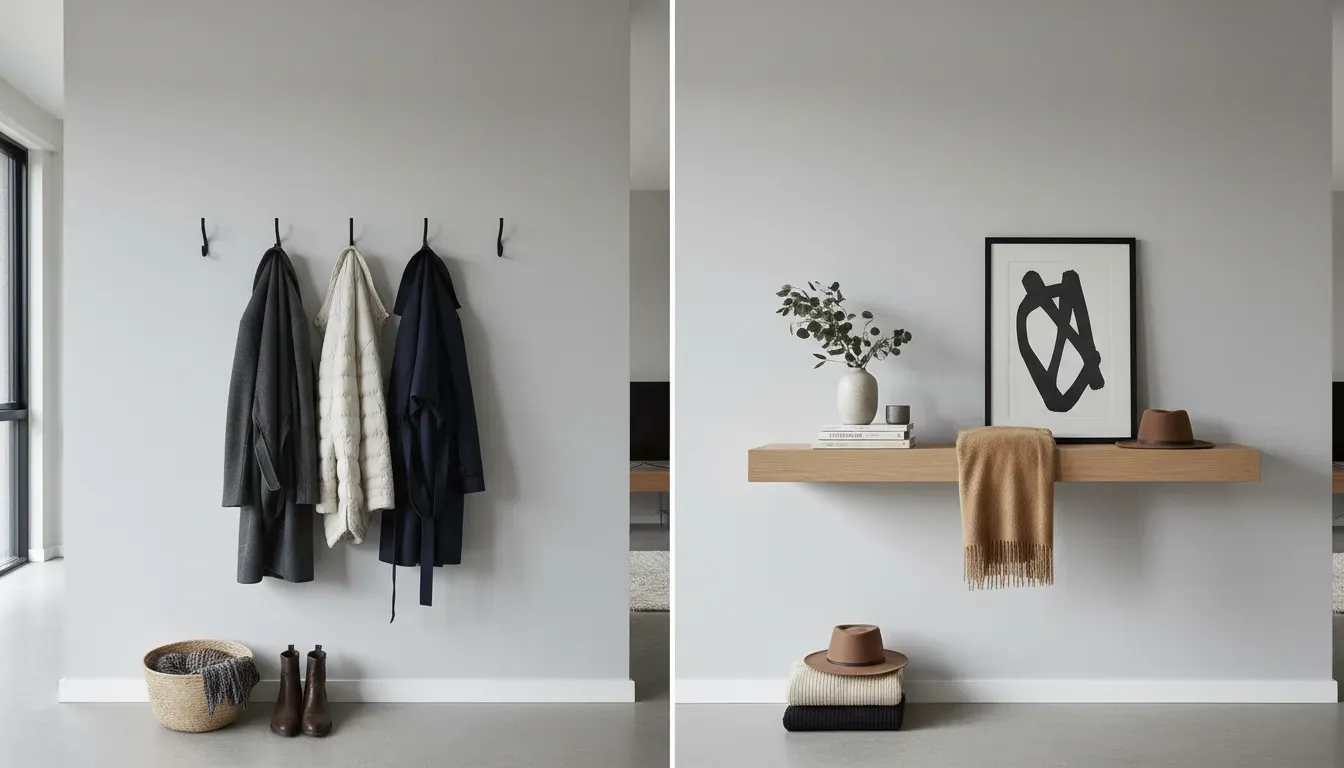
Picture Ledge Display Shelves for Photos and Artwork
Measuring between 3.5 and 5 inches in total depth, picture ledges are designed specifically for layered displays of framed photography, canvas art, and postcards. By overlapping frames of varying heights and widths, you can curate a rotating art gallery without driving dozens of nails into your drywall.
Thick Floating Shelves With a Raised Lip
Combining the robust presence of a 2-inch thick floating shelf with a 1/2-inch raised perimeter lip, this design safely holds decorative pottery, cylindrical spice jars, or luxury perfume bottles that might otherwise vibrate off in high-traffic zones.
Floating Shelves With Lips for Preventing Items From Falling
In children’s bedrooms and nurseries, lipped shelves are indispensable. Displaying picture books facing outward (cover forward) encourages reading while ensuring books stay upright and secure. They are equally vital in bathrooms for shampoo bottles and in kitchens for olive oil and seasoning cruets.
Choosing the Right Floating Shelf
Selecting the perfect floating shelf requires balancing five critical variables: thickness, length, depth, timber species, and load capacity.
How to Choose the Right Shelf Thickness
- 1.75” to 2.5” (Thick / Chunky): Mandatory for lengths over 48 inches or when staging heavy books and pottery. Thick profiles house larger steel mounting rods and provide visual proportion on expansive walls.
- 1.0” to 1.5” (Standard): The versatile middle ground for living rooms, bedrooms, and home offices. Supports everyday decorative loads comfortably.
- 0.75” (Slim / Minimalist): Reserved for shallow picture ledges, compact key docks, and small geometric frames where physical bulk must be minimized.
How to Choose the Best Shelf Length
- Match Anchor Architecture: Align shelf length with your wall’s framing layout. Standard stud bays are spaced 16 inches on center (or 24 inches in some modern framing). Choosing lengths like 36”, 48”, or 60” ensures the mounting bracket hits at least two (and up to four) wall studs for maximum safety.
- The Two-Thirds Furniture Rule: When mounting a floating shelf above a piece of furniture (like a sofa, credenza, or bed headboard), the shelf should span roughly 60% to 75% of the furniture’s total width to maintain balanced visual weight.
How Deep Should a Floating Shelf Be?
- 3” to 5” (Ultra-Shallow): Best for picture ledges, key holders, and spice racks in narrow corridors.
- 6” to 8” (Standard Display): Ideal for novels, small plants, framed photos, and glassware.
- 10” to 12” (Deep Utility): Suitable for large art books, vinyl records, and dinnerware.
- Caution: Depths exceeding 12 inches are not recommended for floating shelves due to severe downward lever-arm forces on the internal wall brackets.
Oak vs. Mahogany: Which Wood Is Better?
- Choose Oak if you need maximum surface scratch resistance, prefer lighter natural Scandinavian tones, or want an organic grain texture that complements farmhouse and contemporary spaces.
- Choose Mahogany if your priority is extreme dimensional stability (minimal moisture movement), seamless fine-grained texture, and luxurious warm red-amber tones for formal or mid-century settings.
When to Choose a Floating Shelf Over a Regular Shelf
- Choose a Floating Shelf when preserving open sightlines, creating a modern minimalist look, or mounting above furniture in compact rooms.
- Choose a Regular Bracketed Shelf when storing heavy utilitarian loads (over 75 pounds), staging continuous long spans over 8 feet, or complementing industrial or historic rustic aesthetics.
How Much Weight Can a Floating Shelf Hold?
- Drywall Anchor Mounting (No Studs): 10 – 20 lbs maximum (risk of progressive sagging).
- Two Wood Studs (Steel Rod Backplate): 45 – 60 lbs.
- Three Wood Studs (Heavy-Duty Solid Hardwood Slab): 80 – 100 lbs.
Which Floating Shelf Works Best for Small Spaces?
In cramped quarters, choose a slim 4-to-6-inch deep oak floating shelf with rounded corners. The shallow depth prevents hallway shoulder collisions, the rounded corners eliminate sharp impact hazards, and the light oak timber reflects light to keep the space feeling open.
Which Floating Shelf Style Works Best for an Entryway?
The ultimate entryway setup is an all-in-one lipped oak floating shelf equipped with under-mounted key hooks and an integrated mail slot. Mounted at 54 to 60 inches high, it catches daily pocket clutter without consuming a single square inch of floor area.
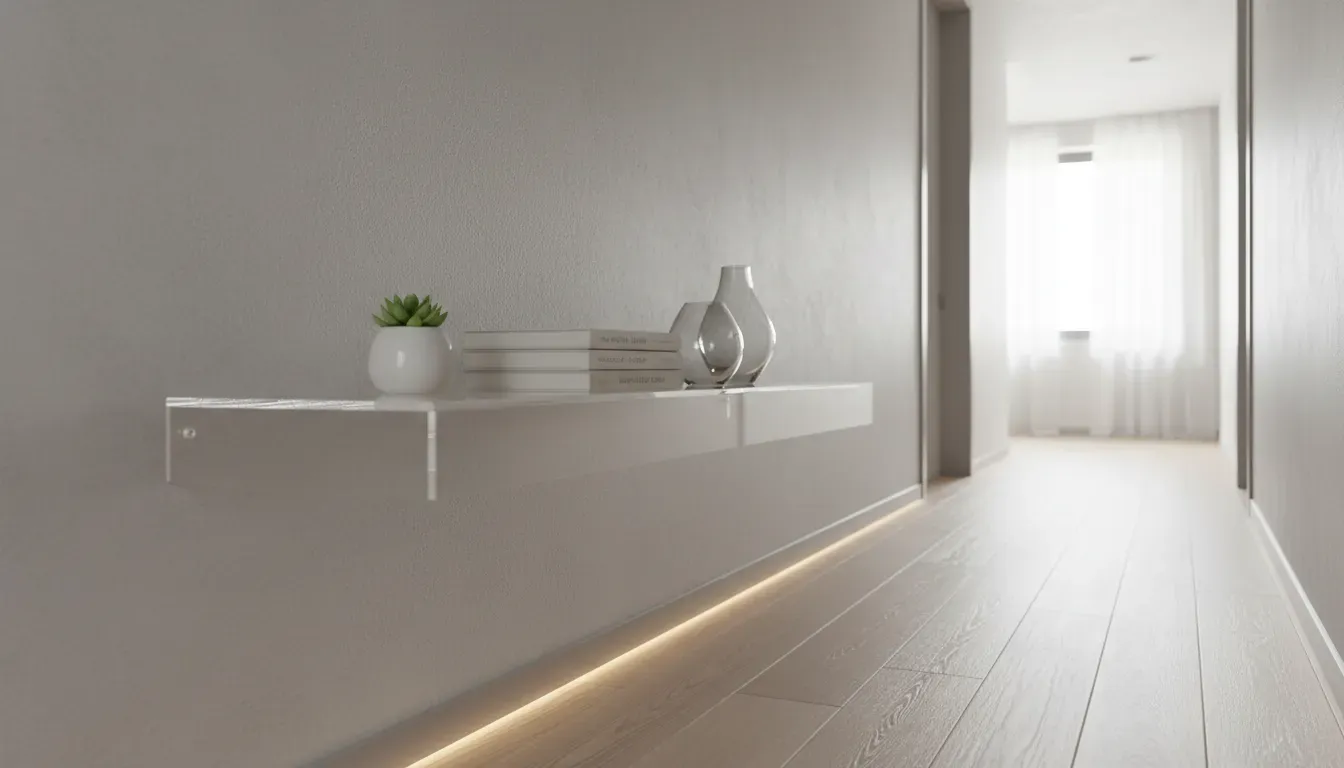
Floating Wall-Mounted Shelves vs. Regular Wall Shelves: Comparison Table
| Feature | Floating Wall-Mounted Shelves | Regular Wall Shelves |
|---|---|---|
| Support system | Hidden or concealed support | Visible brackets or hardware |
| Appearance | Clean, minimalist look | More traditional appearance |
| Space efficiency | Excellent for compact spaces | Depends on bracket design |
| Design options | Wide range of shapes and finishes | Wide range of styles |
| Weight capacity | Depends on mounting system and wall structure | Depends on brackets and installation |
| Best for | Modern displays, storage, and decor | General-purpose storage |
| Installation | Requires careful wall mounting | Usually straightforward |
| Style | Minimalist and contemporary | Traditional to modern |
Frequently Asked Questions About Floating Wall Shelves
Are floating shelves stronger than regular wall shelves?
No, regular wall shelves supported by visible triangular L-brackets or heavy corbels are generally stronger because the external brackets provide direct mechanical triangulation beneath the shelf, transferring downward load straight down the wall. Floating shelves rely on internal blind rods or backplate cleats, which experience high cantilever torque.
How much weight can a floating shelf hold?
A high-quality solid wood floating shelf anchored into two wooden wall studs typically supports 40 to 60 pounds. Lightweight hollow-core floating shelves installed with drywall anchors generally hold only 15 to 25 pounds. In contrast, heavy-duty regular bracketed shelves can support 100 to 250+ pounds.
Are oak floating shelves durable?
Yes, oak is exceptionally durable. With a Janka hardness rating between 1,290 and 1,360 lbf, solid oak resists dents, scratches, and sag. Its dense ring-porous grain makes it one of the longest-lasting hardwoods available for floating shelves.
Is mahogany a good wood for floating shelves?
Mahogany is an outstanding timber for floating shelves. Known for exceptional dimensional stability, fine interlocking grain, and rich reddish-brown tones, mahogany resists seasonal swelling and warping even in variable humidity environments.
What is the best depth for a floating shelf?
For narrow hallways and entryways, an optimal shelf depth is 4 to 6 inches (such as picture ledges). For living room displays and books, 8 to 10 inches is ideal. Depths greater than 12 inches are rarely recommended for floating shelves because excessive depth creates extreme rotational lever-arm force on internal brackets.
Are floating shelves good for small spaces?
Yes, floating shelves excel in compact rooms because they have no downward-projecting brackets. This preserves open sightlines, allows furniture to sit flush beneath the shelf, and makes tight rooms feel lighter and more spacious.
Can floating shelves be installed in corners?
Yes. Corner floating shelves utilize two intersecting wall planes, allowing fasteners to anchor into studs on perpendicular walls. This dual-wall support makes corner floating shelves structurally rigid and resistant to sagging.
Can floating shelves hide cables and cords?
Yes, floating shelves designed for electronics feature integrated grommet cutouts, rear perimeter cord notches, or hollow internal routing channels that guide power cables down behind wall cavities or channel covers.
What is the difference between a picture ledge and a floating shelf?
A picture ledge is shallow (typically 3 to 5 inches deep) and features a raised lip or groove on the front edge to prevent framed artwork and photographs from sliding off. A standard floating shelf has a flat, open surface without front borders, intended for general display and object storage.
Are floating shelves difficult to install?
Floating shelves require more installation precision than regular shelves. Because the mounting bracket is concealed inside the shelf body, the backplate must be installed dead level and anchored solidly into wooden wall studs. Minor out-of-level errors cannot be compensated for after the shelf slides over the bracket.
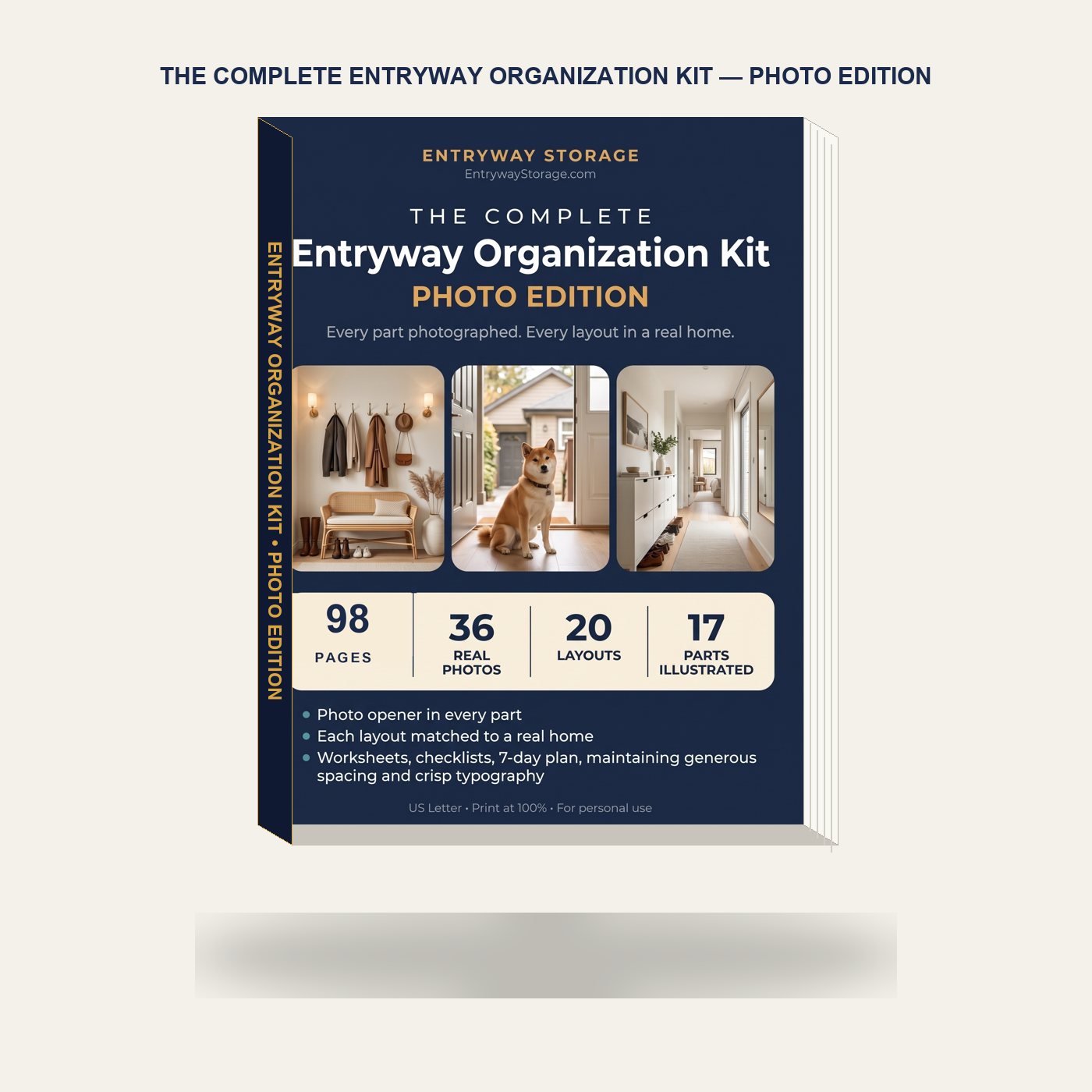
Stop Guessing Measurements. Build Your Dream Entryway with Confidence.
Transform awkward hallways, cramped foyers, and cluttered mudrooms into organized sanctuaries. Includes 20 CAD floor plans, facing real-home photo spreads, the 36-Inch Clearance Rule, the Shoe Pairs Formula, and 7 printable worksheets.
Core Edition ($17.99) · Flagship Photo Edition v5 ($39.99)
Frequently Asked Questions
Are floating shelves stronger than regular wall shelves?
No, regular wall shelves supported by visible triangular L-brackets or heavy corbels are generally stronger because the external brackets provide direct mechanical triangulation beneath the shelf, transferring downward load straight down the wall. Floating shelves rely on internal blind rods or backplate cleats, which experience high cantilever torque.
How much weight can a floating shelf hold?
A high-quality solid wood floating shelf anchored into two wooden wall studs typically supports 40 to 60 pounds. Lightweight hollow-core floating shelves installed with drywall anchors generally hold only 15 to 25 pounds. In contrast, heavy-duty regular bracketed shelves can support 100 to 250+ pounds.
Are oak floating shelves durable?
Yes, oak is exceptionally durable. With a Janka hardness rating between 1,290 and 1,360 lbf, solid oak resists dents, scratches, and sag. Its dense ring-porous grain makes it one of the longest-lasting hardwoods available for floating shelves.
Is mahogany a good wood for floating shelves?
Mahogany is an outstanding timber for floating shelves. Known for exceptional dimensional stability, fine interlocking grain, and rich reddish-brown tones, mahogany resists seasonal swelling and warping even in variable humidity environments.
What is the best depth for a floating shelf?
For narrow hallways and entryways, an optimal shelf depth is 4 to 6 inches (such as picture ledges). For living room displays and books, 8 to 10 inches is ideal. Depths greater than 12 inches are rarely recommended for floating shelves because excessive depth creates extreme rotational lever-arm force on internal brackets.
Are floating shelves good for small spaces?
Yes, floating shelves excel in compact rooms because they have no downward-projecting brackets. This preserves open sightlines, allows furniture to sit flush beneath the shelf, and makes tight rooms feel lighter and more spacious.
Can floating shelves be installed in corners?
Yes. Corner floating shelves utilize two intersecting wall planes, allowing fasteners to anchor into studs on perpendicular walls. This dual-wall support makes corner floating shelves structurally rigid and resistant to sagging.
Can floating shelves hide cables and cords?
Yes, floating shelves designed for electronics feature integrated grommet cutouts, rear perimeter cord notches, or hollow internal routing channels that guide power cables down behind wall cavities or channel covers.
What is the difference between a picture ledge and a floating shelf?
A picture ledge is shallow (typically 3 to 5 inches deep) and features a raised lip or groove on the front edge to prevent framed artwork and photographs from sliding off. A standard floating shelf has a flat, open surface without front borders, intended for general display and object storage.
Are floating shelves difficult to install?
Floating shelves require more installation precision than regular shelves. Because the mounting bracket is concealed inside the shelf body, the backplate must be installed dead level and anchored solidly into wooden wall studs. Minor out-of-level errors cannot be compensated for after the shelf slides over the bracket.
