
Key Holder for Wall: 9 Smart Ways to Organize Keys, Mail and Entryway Essentials
Discover how a key holder for wall can end lost keys for good. Compare wood, metal, magnetic and cabinet styles, plus placement, installation and small-space ideas.
Sep 18, 2026 · Linda Wise
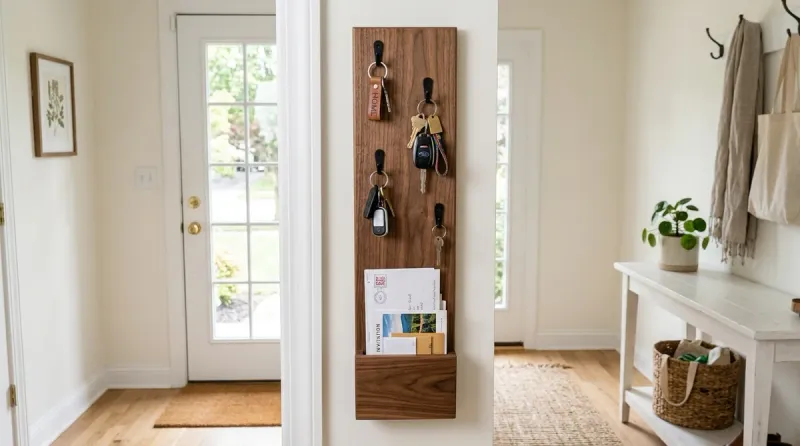
12 min readIf you have ever torn apart your home five minutes before work looking for your car keys, a key holder for wall might be the simplest upgrade you will ever make. It turns one small patch of empty drywall by your front door into a dedicated landing zone for keys, mail, sunglasses, lanyards and dog leashes, so everything you grab on the way out is always in the same visible spot.
I have designed entryway systems for more than 200 homes across New England, from studio apartments to busy family mudrooms, and the pattern is remarkably consistent. Homes without a vertical drop zone lose keys in bowls, drawers, coat pockets and kitchen counters. Homes with a well-placed wall organizer almost never do. The difference is not discipline, it is design. When each set has its own hook at eye level, putting keys away takes two seconds and finding them takes even less.
Quick Answer: A key holder for wall is a wall-mounted rack with hooks, and often a shelf, magnetic bar or mail slot, that gives every key set a fixed, visible home by your door. For most homes, choose a 6-hook wood or metal model with a top tray, mount it 54 to 60 inches high near the door handle side, and allow 2 hooks per adult. If you want tested picks, see our guide to the best wall mounted key holder.
Table of Contents
- Quick Answer: The 30-Second Version
-
- What Is It and How Does It Work?
-
- Why Wall Storage Beats Bowls and Drawers
-
- Main Styles Compared
-
- Buying Guide: Size, Hooks and Weight
-
- Placement, Height and Layout
-
- Installation Walkthrough
-
- Small Apartment and Renter Ideas
-
- Styling Tips and Mistakes to Avoid
-
- Conclusion and Next Steps
- FAQs
- Related Guides
Our Top Key Holder for Wall Deals Today
These in-stock key holder for wall picks combine strong mounting, smart capacity, and limited-time discounts:
| Our Pick | Why It Wins | Sale Price | Direct Link |
|---|---|---|---|
| Adhesive 6-Hook Mail Tray | Best overall key holder for wall with mail storage | 14.53, -53%) | Check Price → |
| Decorative Wood Shelf Large Hooks | Best decorative wood key holder for wall for coats & bags | 16.49, -48%) | Check Price → |
| 6-Hook Wooden Open Shelf | Best solid wood key holder for wall with open shelf | 16.11, -49%) | Check Price → |
| House-Shape 5-Hook | Best house-shape key holder for wall, Scandinavian look | 31.85, -70%) | Check Price → |
| Walnut Adhesive Hooks | Best minimalist adhesive key holder for wall pegs | 4.32, -74%) | Check Price → |
What Is a Key Holder for Wall?
A key holder for wall is a compact wall-mounted organizer designed to store keys vertically where you enter and exit. Most designs combine 3 to 10 individual hooks with an added function such as a mail shelf, small tray, magnetic strip, chalkboard, mirror or enclosed cabinet. Unlike a bowl that hides everything in a pile, this approach keeps each ring separated, visible and instantly reachable.
In practice, the category covers a wide range of products. A basic version might be a solid oak plank with five brass hooks and two screws. A more complete entryway station might include an upper shelf for sunglasses and sunscreen, six lower hooks for keys and lanyards, a vertical mail sorter on one side and a magnetic bar underneath for spare house keys. Larger family versions add coat hooks rated for 10 to 15 pounds each, while minimalist versions use three single adhesive pegs spaced in a row for a Scandinavian look.
The reason this format works so well is behavioral. When you walk through your front door, your hands are full and your attention is split. You will not open a drawer, lift a lid or sort through a pile. You will use something that requires a single motion: hang, drop or stick. A wall unit placed directly in your natural path, at hand height, matches that instinct. You come in, you hang your keys in one second, you drop mail on the shelf above. In the morning you reverse the motion without thinking.
For households juggling multiple sets — his and hers car fobs, house keys, mailbox keys, office badges, kids’ house keys, dog-walking keys, guest sets — that visibility matters even more. A good setup lets you see at a glance what is home and what is missing. Parents tell me they check hooks the way pilots check instruments before takeoff. If all hooks are full the night before, the morning will run smoothly. If one is empty, you know exactly which set to track down before bed, not during the morning rush.
If you share an entry with roommates or have a narrow hallway with no console table, vertical storage is especially valuable because it uses zero floor space. Even a 12-inch-wide rack can replace a bulky table or bowl that collects clutter. Pair it with a small floating shelf above or a slim bench below and you have a complete drop zone in less than two square feet.
Benefits of a Key Holder for Wall vs. a Bowl or Drawer
The classic alternatives — a ceramic bowl on a console, a catch-all drawer, a basket on a shelf — all share the same flaw. They pile unlike items together where keys slide to the bottom, scratch phones and disappear under mail. A key holder for wall solves that by separating, elevating and displaying each item in its own spot.
First, consider speed. In time-motion tests I have run with clients, retrieving a specific set from a mixed bowl takes 15 to 40 seconds because you have to dig, untangle and identify by touch. Retrieving the same set from a labeled hook takes 2 to 3 seconds because you grab by sight and muscle memory. Over a year of twice-daily use, that difference adds up to hours saved and far less stress. Families with three or more key sets see the biggest gain because tangling increases exponentially with each added ring.
Second, consider damage prevention. Modern car fobs cost 500 to replace and contain delicate buttons, batteries and RFID chips. Tossing them daily into a ceramic or metal bowl with coins and other keys chips the casing and wears the buttons. Hanging each fob on its own padded or wooden hook eliminates that impact. The same logic applies to sunglasses, which survive far longer on a felt-lined shelf than in a jumbled drawer with keys.
Third, consider clutter control. Bowls and open trays invite accumulation. Because they have undefined edges and hidden bottoms, receipts, expired coupons, loose batteries and random screws quietly join your keys until the bowl becomes junk storage. Wall hooks have the opposite psychology. Each hook holds one thing and empty hooks look intentional, so you notice intruders immediately. A wall shelf with a raised lip similarly limits how much mail can pile before you are forced to sort it.
Fourth, consider cleaning and space. A console bowl requires dusting around and under it and occupies prime surface area that could hold a lamp or decor. A drawer organizer still requires you to bend, open and rummage. Wall storage frees the surface below entirely, making sweeping and wiping faster and leaving room for shoes or a bench underneath. In rentals and micro-apartments where every inch counts, that reclaimed surface is significant.
That does not mean you must throw away your bowl. Many of my favorite setups combine both: hooks for daily keys and a tiny tray above for the two or three small items that cannot hang, such as earbuds or a garage clicker. The key is hierarchy. If you want curated recommendations that already combine both functions, browse our comparison of the best wall mounted key organizer to see hybrid shelf-plus-hook models that prevent pile-up.
For deeper mail control, it also helps to think beyond keys alone. A wall station with vertical mail slots forces you to triage envelopes standing up rather than stacking them flat where they are forgotten. To build that habit, see our breakdown of a dedicated mail and key drop station which shows how to pair hooks with action, file and recycle zones.
Types of Key Holder for Wall: Wood, Metal, Magnetic, and Cabinet Styles
Shopping for a key holder for wall can feel overwhelming because the same basic function comes in at least six distinct constructions. Understanding the trade-offs in material, mounting, capacity and style will help you match the right type to your door, your wall and your daily load.
1. Solid Wood Racks with Hooks
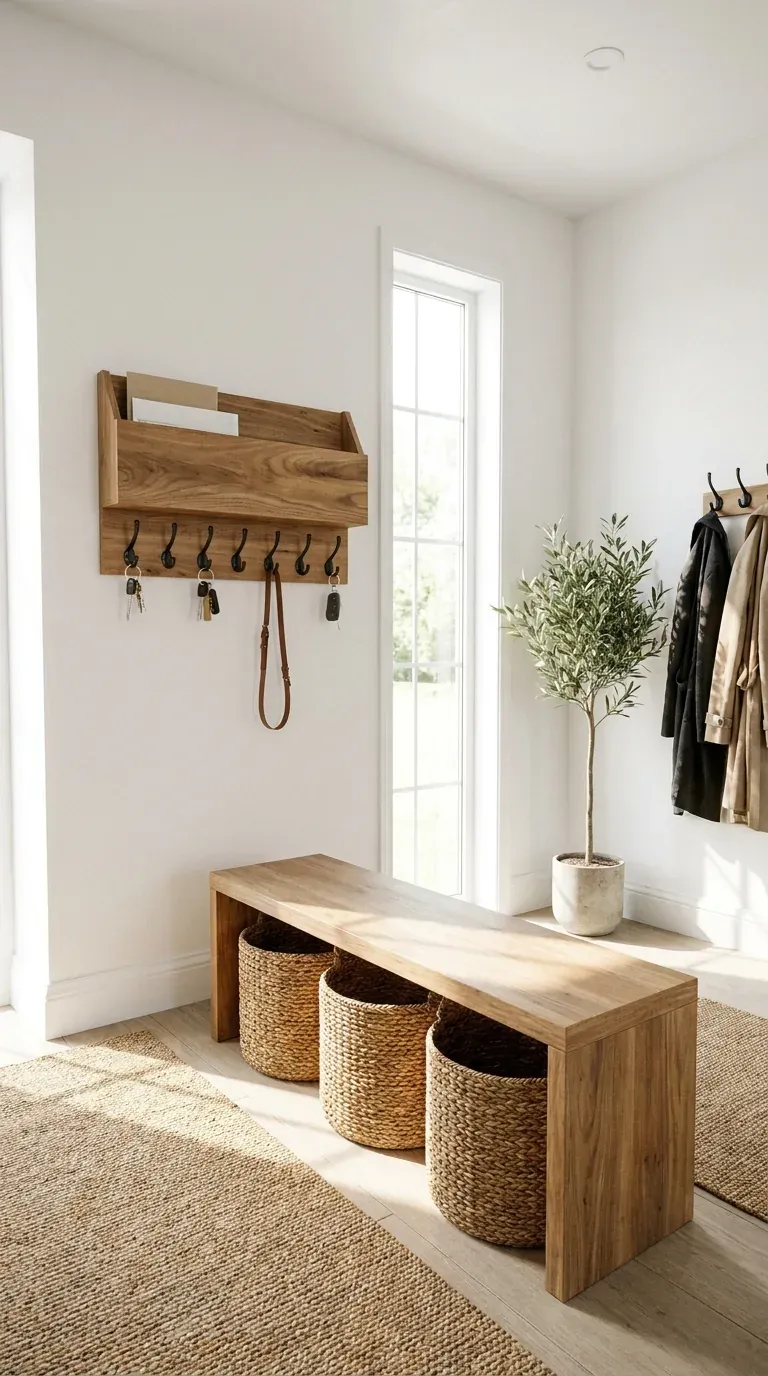
Wood remains the most popular choice for warmth and versatility. Typical models use acacia, walnut, pine or bamboo planks 12 to 18 inches wide with 5 to 7 metal hooks underneath and sometimes a 3 to 4-inch-deep shelf on top. Solid hardwood versions support 25 to 40 pounds total when screwed into studs, enough for keys plus sunglasses, small purses and light jackets. They suit farmhouse, Scandinavian, mid-century and traditional foyers and age gracefully with oiling.
Look for kiln-dried hardwood rather than hollow MDF if you plan to hang anything beyond keys. Check that hooks are through-bolted from the back, not just surface-screwed, and that the back includes keyhole slots or a French cleat for flush mounting. A top shelf with a 1-inch lip is ideal because it keeps mail and phones from sliding off when the door slams.
2. Metal and Industrial Racks
Powder-coated steel, cast iron and aluminum racks prioritize strength and slim profiles. A 16-inch steel rail with six welded hooks often holds 30 to 50 pounds and resists bending even with heavy winter coats and tote bags. Industrial designs are typically only 2 to 3 inches deep, making them perfect for narrow hallways where a deep wooden shelf would block passage.
Metal excels in modern, industrial and high-traffic family entries because it wipes clean, resists chipping and handles moisture from wet keys or umbrellas. The downside is noise and hardness. Bare metal hooks can clatter and scratch key finishes, so look for vinyl-dipped tips, silicone sleeves or wooden beads on hook ends. If you love the look but want quieter function, choose a hybrid wood-back with metal hooks.
3. Magnetic Bars and Strips
Magnetic mounts use embedded neodymium bars behind wood, leather or silicone facing to grab keys without hooks. You simply touch your key ring to the bar and it sticks. This is wonderfully fast for 1 to 3 daily sets and creates a clean, floating look with no protruding hardware to bump in tight corridors.
Magnets work best for lightweight house and mailbox keys under 6 ounces per position. Heavy fobs with thick plastic housings may slide unless the magnet is oversized, so test weight before relying on magnets alone. Good news for tech concerns: static magnets do not damage modern car fobs or RFID chips, though you should still choose a wood or silicone face to prevent metal-on-metal scratches. Many families use a magnetic bar for adult daily keys plus two traditional hooks on the side for bulky dog leashes and guest rings.
4. Cabinets with Doors and Locking Storage
Enclosed key cabinets look like small shadow boxes or medicine cabinets, typically 10 to 14 inches tall with a hinged door, 6 to 12 interior hooks and sometimes a small shelf. They are ideal if you dislike visual clutter, need to keep keys away from toddlers or want to hide spare and valet keys from visitors peering through a glass front door.
Choose solid wood or metal cabinets with soft-close hinges and an interior depth of at least 3 inches so fobs do not jam the door. Some premium models include a combination lock, which is useful for Airbnb hosts, caregivers or homes with service providers. The trade-off is an extra step: you must open a door to access keys, so discipline matters more. Mount a small open hook beside the cabinet for your most-used daily set to preserve speed.
5. Shelf-plus-Mail Organizer Combos
The most functional family option combines hooks below with mail storage above. Common layouts include a 14-inch upper tray for incoming letters, three vertical file slots for action and outgoing mail, and five lower hooks for keys. This replaces three separate products — key rack, mail sorter and sunglasses tray — with one 18 by 10-inch footprint.
When comparing combos, prioritize vertical mail slots over flat trays. Flat trays become paper graveyards where urgent bills hide. Vertical slots keep envelopes visible and force triage. Also confirm total depth. Anything deeper than 5 inches can crowd a 36-inch-wide hallway. For curated combo picks with pricing, compare our tested list of the best wall mounted key holder which breaks down tray versus slot designs.
For small foyers where mail is half the battle, pair your choice with habits from our guide to key and mail management for small entryways to keep paper from overwhelming hooks.
6. Adhesive, No-Drill and Single Pegs
Renters, dorm residents and anyone with plaster, tile or glass walls should look at adhesive options. Modern damage-free strips and nano-suction pads hold 5 to 15 pounds per rail on smooth surfaces without drilling. Single solid-walnut or brass pegs are especially flexible because you can space them exactly where studs, mirrors or light switches allow, rather than being locked to a fixed plank.
Adhesive success depends entirely on prep. Clean with isopropyl alcohol, let dry fully, press for 60 seconds and wait 24 hours before loading. Avoid textured, porous or freshly painted walls and never exceed the rated weight. For anything over 15 pounds, or for plaster and brick, screws into anchors remain safer. A smart hybrid is to use adhesive for lightweight daily keys and one screwed rail higher up for heavy bags.
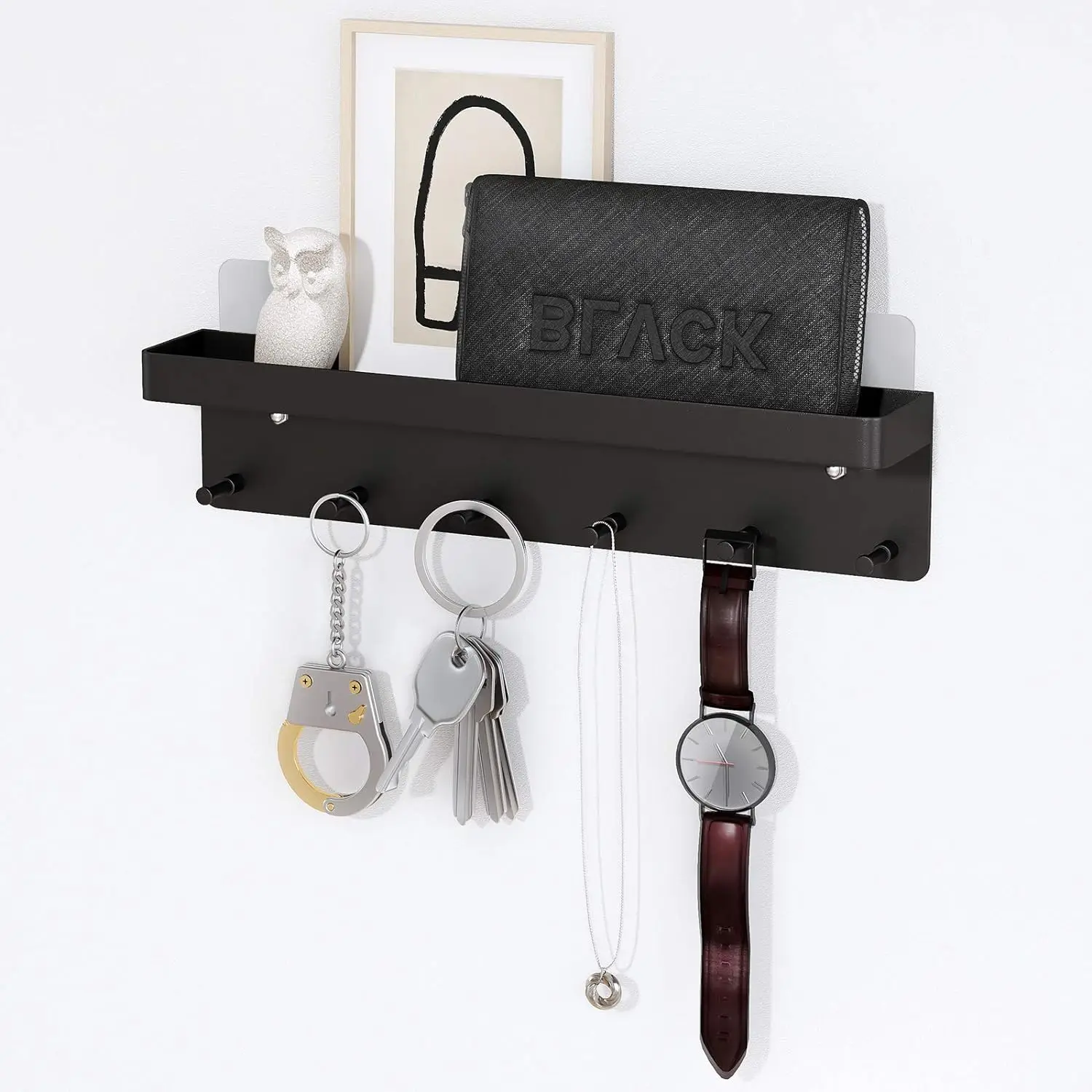
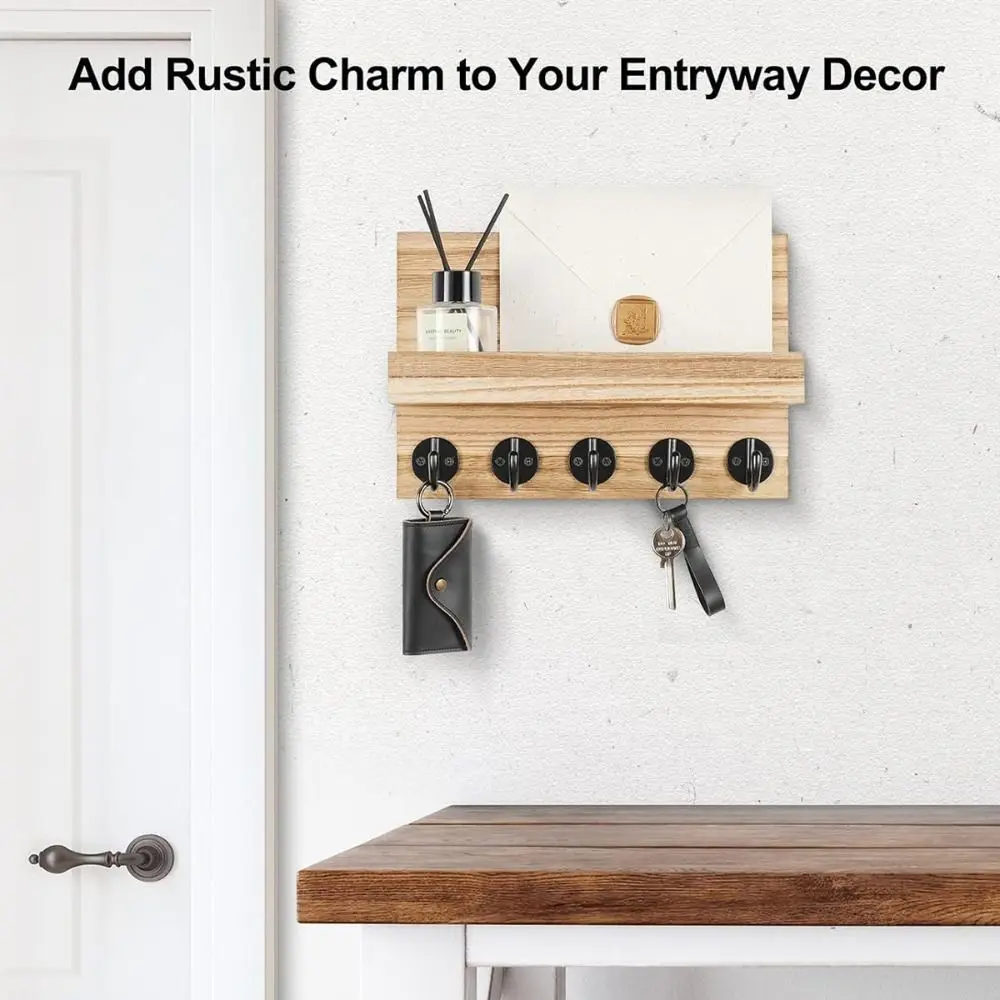
Adhesive 6-Hook Mail Tray Key Holder for Wall
The ultimate everyday key holder for wall: integrated upper mail tray for letters, phones and sunglasses with 6 sturdy lower hooks. Includes high-bond adhesive for drill-free mounting plus screw hardware for heavy family use.
Decorative Wood Shelf Large Hooks Key Holder for Wall
Solid timber key holder for wall with elevated display shelf and deep large hooks for winter coats, tote bags and key rings without bending.
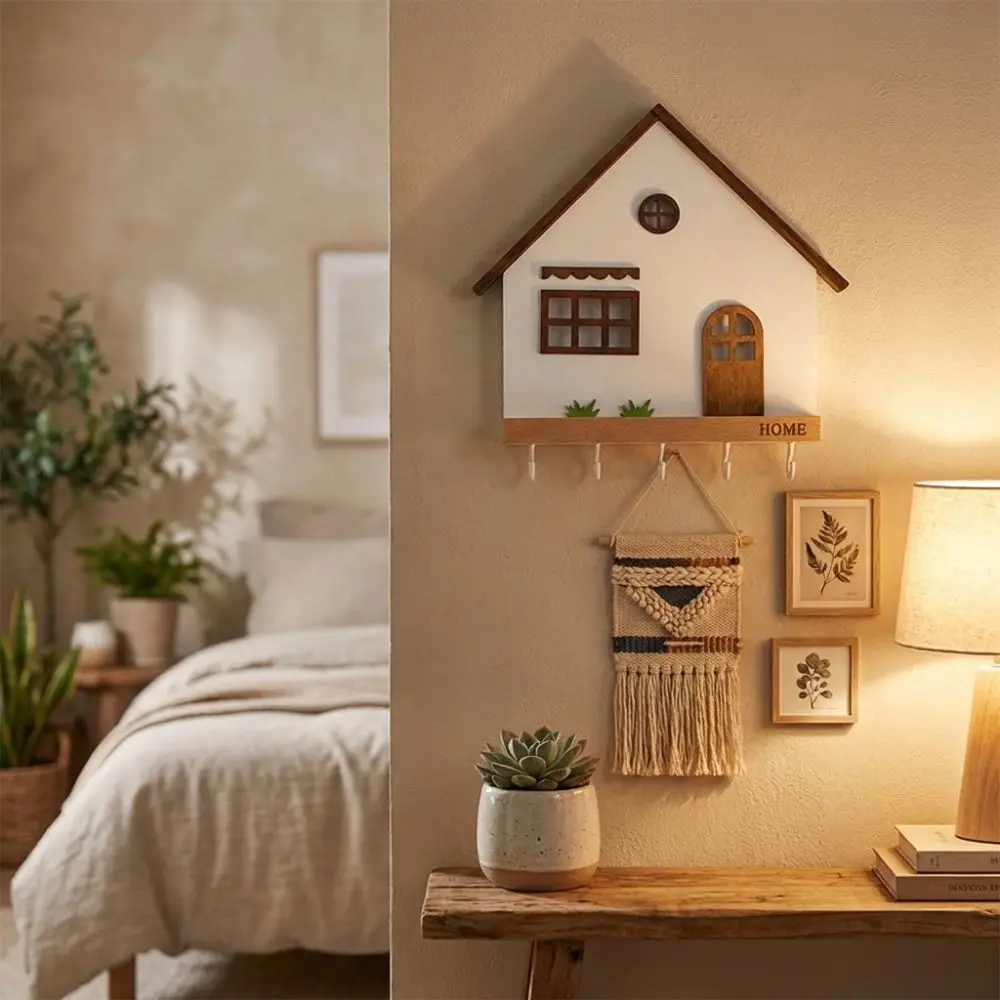
House-Shape 5-Hook Key Holder for Wall
Charming house-silhouette key holder for wall with 5 hooks for keys, leashes and lanyards. Compact Scandinavian look for entryways, hallways and kids' rooms.
Buying Guide: Size, Hooks, Weight Capacity, and Features
Choosing well means matching dimensions and hardware to your household count, wall type and what else you carry, because the right key holder for wall should handle your total daily load with spare capacity. Use this checklist before you click buy.
1. Measure your wall first. Most entries comfortably fit a 12 to 18-inch-wide rack. Hold painter’s tape on the wall at eye level to visualize width. Leave at least 8 inches clear on the hinge side of the door swing and 4 inches above light switches. In hallways narrower than 42 inches, stay under 3 inches deep to preserve shoulder clearance. In wider foyers, a 4 to 5-inch-deep shelf adds useful tray space without crowding.
2. Count hooks realistically. The rule I give clients is two hooks per adult plus two spare. A couple needs 6 hooks: two car sets, one house set, one mailbox set, one dog leash and one guest spare. A family of four needs 8 to 10. Space hooks at least 2.5 inches apart so bulky fobs do not tangle. If you also hang lanyards, badges or umbrellas, add one oversized coat hook at one end rated for 10 pounds.
3. Check weight ratings honestly. Manufacturers often list total capacity, not per-hook capacity. A rack rated for 30 pounds total with six hooks realistically holds 5 pounds per hook, which is plenty for keys but not for backpacks. If you plan to hang purses, tote bags or winter coats, look for through-bolted metal hooks rated 10 to 15 pounds each and mount into studs or toggle anchors. When in doubt, choose metal over MDF and screws over adhesive.
4. Decide on mail and shelf needs. If mail piles on your kitchen counter, you need more than hooks. Prioritize models with vertical slots or a lipped tray at least 9 inches wide to hold standard envelopes. A 3-inch-deep upper shelf fits sunglasses, sunscreen and a wallet without jutting too far. Felt or leather liners reduce sliding and muffle the clatter of dropped keys, a small luxury you will appreciate daily.
5. Match mounting to wall type. Drywall with studs is ideal for screwed rails. Plaster, brick and tile require masonry bits and appropriate anchors — never rely on small nails alone. For rentals, high-bond adhesive rails rated for your load plus a removable mounting strip preserve your deposit. Always confirm what hardware is included. The best kits include both adhesive and screws so you can start damage-free and upgrade to screws later.
6. Prioritize finish and hook design. Closed-loop hooks prevent keys from slipping off when the door slams. Angled, upturned hooks hold better than straight pegs. For finishes, powder-coated metal resists chips, sealed walnut resists moisture, and raw pine dents easily. If you have toddlers, choose rounded ends and mount sharp metal edges above their reach.
Before finalizing, compare dimensions and hook spacing side by side in our detailed review of the best wall mounted key organizer to avoid buying a beautiful rack that is too small for your key count.
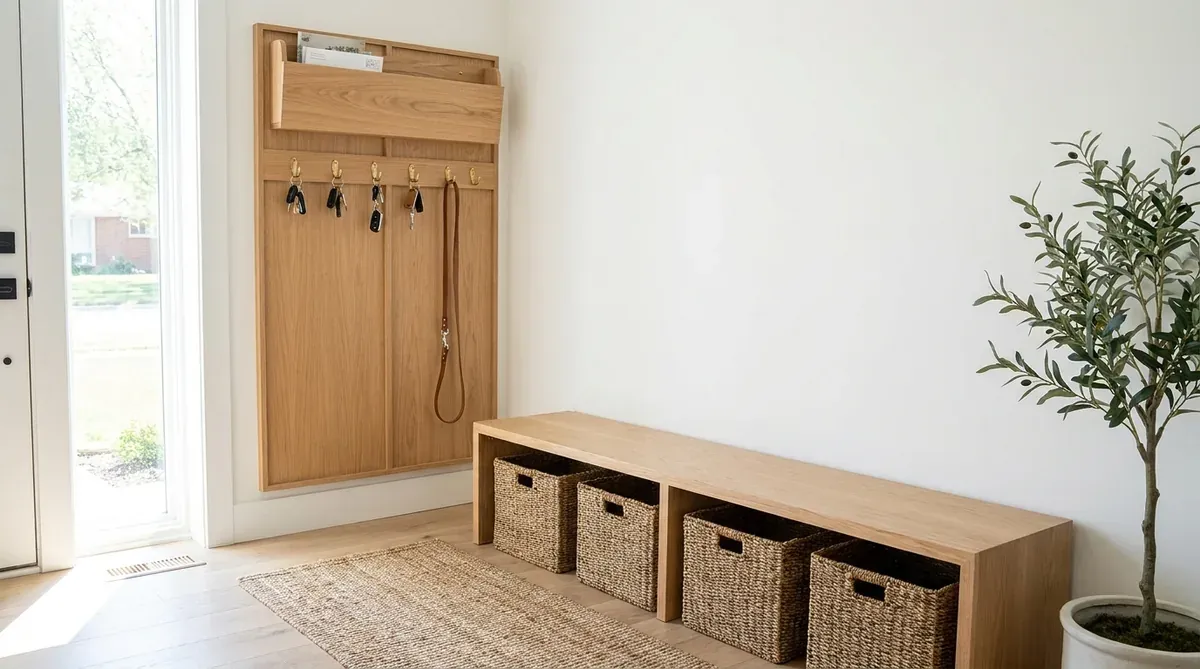
Where to Place It: Height, Location, and Entryway Layout
Even the highest-quality rack will fail if it is mounted in the wrong spot. Placement determines whether using it feels effortless or annoying.
Height: For most adults, center hooks 54 to 60 inches from the floor. This puts keys at eye to chest level where you can see and grab without bending or reaching. If you include an upper mail shelf, its base should sit 60 to 64 inches high so envelopes remain visible but out of toddler reach. For a dedicated kids’ tier — backpack keys, lunch tags — add a second lower rail 40 to 44 inches high. Avoid mounting above 65 inches; anything higher forces short household members to stretch and discourages daily use.
Horizontal location: Mount on the handle side of your most-used door, not behind the swing. Stand inside with the door closed and notice where your hands naturally fall within one step. That is usually 8 to 24 inches to the side of the door frame on the latch side. Keep at least 8 to 12 inches clear of the door’s swing arc so the door never clips hanging keys. Near a light switch is ideal because you will touch that spot every time you enter.
Layout by entry type: In a straight hallway with no foyer, use a slim metal rail directly beside the door to preserve walking width. In an L-shaped foyer with a console, center the rack 6 to 8 inches above the console so keys hang above and mail lands on the surface below. In a mudroom with lockers, dedicate one locker bay or one 16-inch wall section per person with labeled hooks to prevent systematically mixing sets. In a studio where the front door opens directly into living space, mount inside a shallow closet door or on the side of a tall bookcase to hide visual clutter while keeping function.
Lighting matters more than people expect. If your entry is dark, add a battery puck light or LED strip above the rack so you can identify keys at night without overhead lights. A small mirror beside the rack doubles the perceived light and gives you a last look before heading out.
For renters dealing with strict lease terms or concrete walls, placement flexibility is key. Single adhesive pegs let you work around thermostats, intercoms and mirrors where a fixed plank would not fit. Learn more about non-invasive layouts in our tutorial on how to install wall-mounted entryway racks.
How to Install a Wall Key Organizer Safely
Most wall organizers install in 20 to 30 minutes with basic tools, but the difference between a rack that lasts a decade and one that rips out in six months is wall anchoring. Follow this methodical process.
Step 1: Gather tools. You will need a pencil, painter’s tape, level, tape measure, stud finder, drill with appropriate bits, screwdriver, and the correct anchors for your wall. For drywall, have #8 screws plus plastic expansion anchors or toggle bolts for heavy loads. For plaster, brick or concrete, use masonry bits and sleeve anchors. For tile or glass, use adhesive or suction mounts unless you are comfortable drilling with a diamond bit.
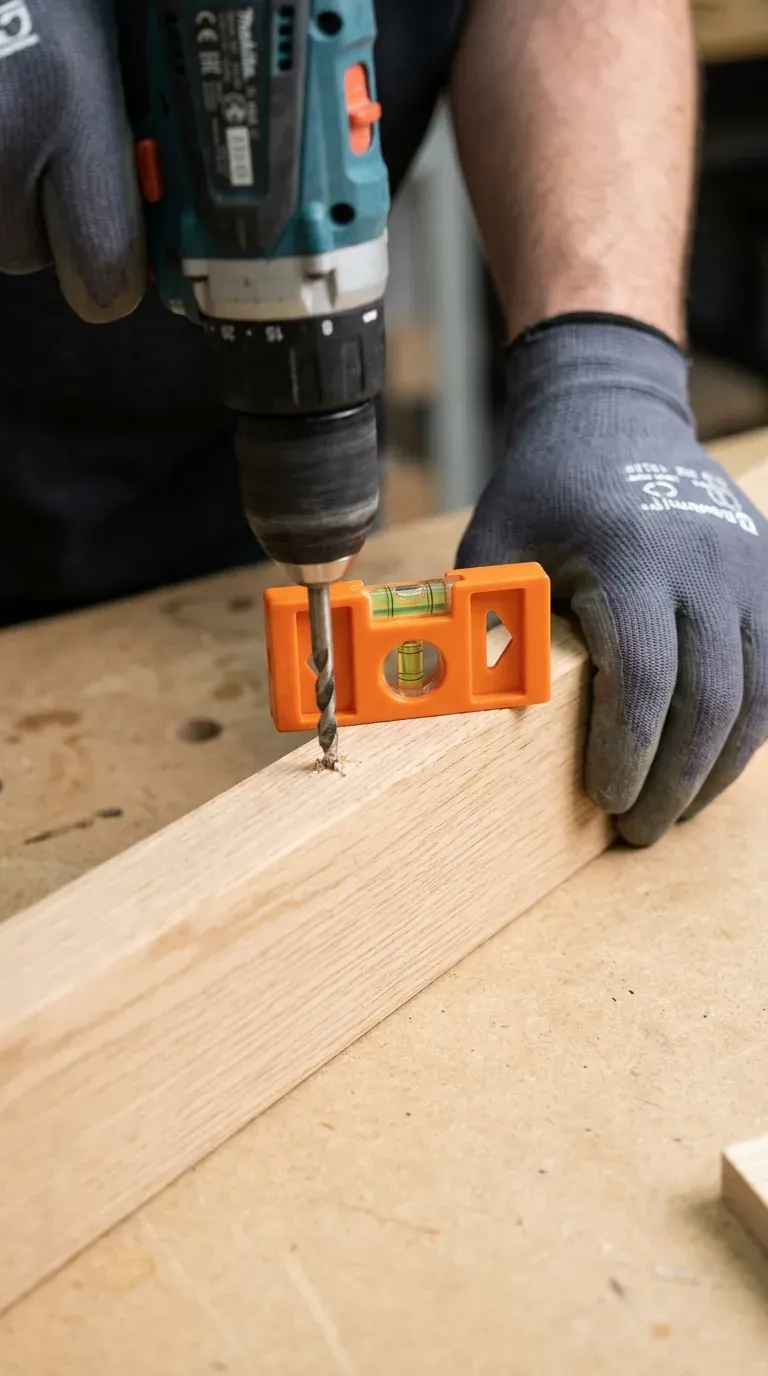
Step 2: Mark and level. Hold the rack against the wall at your target height — hooks centered 54 to 60 inches high — and mark screw holes lightly with pencil. Place a 12-inch level on top and adjust until bubble-centered. For wide racks, use painter’s tape to create a straight baseline across the wall first; this prevents drift when marking multiple holes. Step back and check sightlines from the doorway to confirm it looks centered and reachable.
Step 3: Locate studs and choose anchors. Slide a stud finder across the marks. If at least one hole hits a stud, drive a 1.5 to 2-inch wood screw there for primary strength and use drywall anchors for the remaining holes. If no stud aligns, use toggle bolts rated for 30 to 50 pounds each for heavy family stations, or high-quality expansion anchors for lightweight key-only rails under 15 pounds. Never rely on small finishing nails or push pins; they pull out under dynamic load when you yank keys quickly.
Step 4: Drill, mount and test. Drill pilot holes slightly smaller than your anchors, tap anchors flush, then drive screws leaving 1/8 inch proud to hang keyhole slots before tightening fully. Once mounted, tug firmly outward and downward with 1.5 times your expected load. Hang your heaviest bag overnight as a test before trusting expensive fobs. If the rack flexes or tilts, add a third center anchor or relocate to a stud.
Step 5: Adhesive alternative for renters. If drilling is prohibited, clean the wall with isopropyl alcohol, dry completely, apply high-bond strips rated for your total weight plus 30 percent margin, press firmly for 60 seconds and wait a full 24 hours before loading. Distribute weight evenly and avoid hanging wet umbrellas or heavy coats on adhesive alone. Keep a spare strip kit for summer humidity, which can weaken bonds.
If you are comparing screw-in versus adhesive models before buying, review load tests and hardware included in our roundup of the best wall mounted key holder to choose mounting you can trust.
Detailed anchor charts by wall material are also covered in our ultimate guide to choosing entryway hooks, which explains shear versus pull-out strength in plain language.
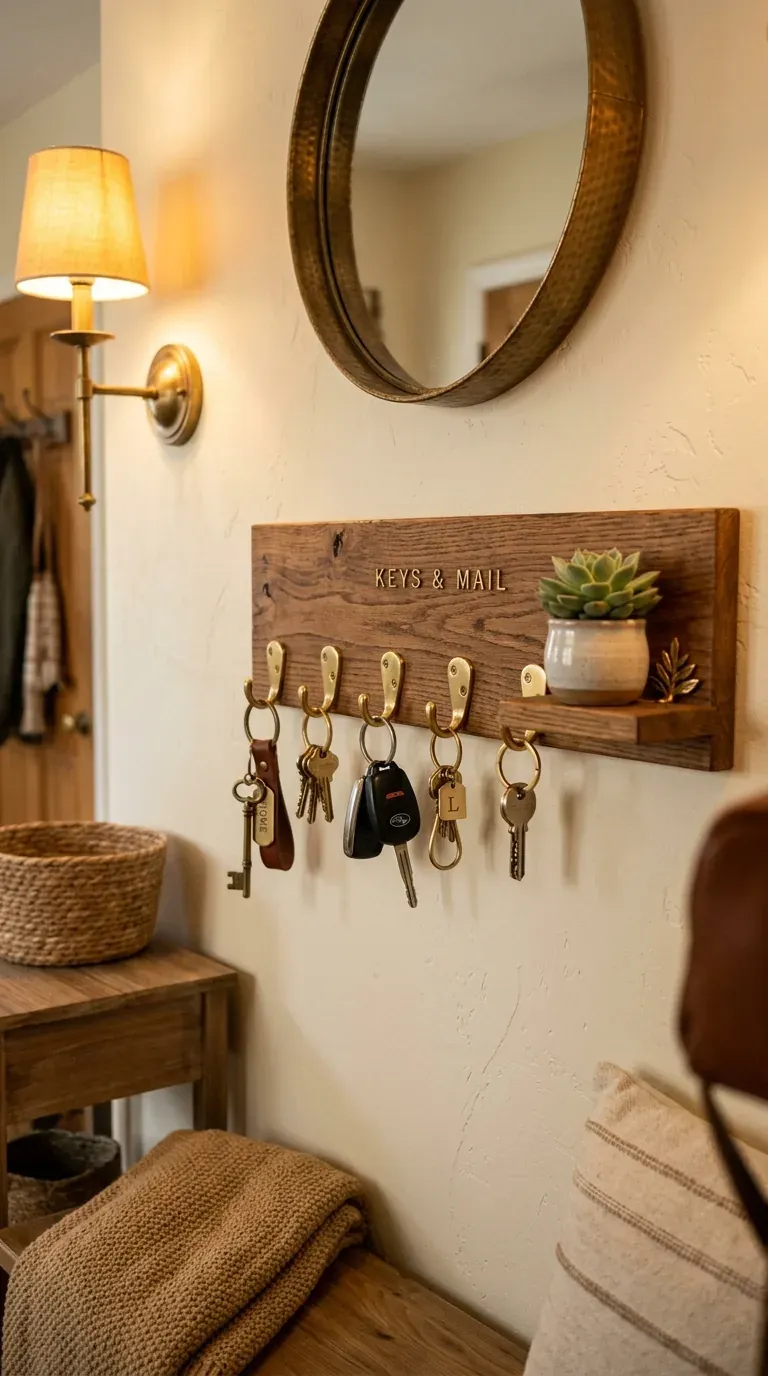
Getting the mount straight is what makes daily grabbing feel effortless. Hold the rail at 57 inches, check it with a level, and pre-drill for drywall anchors before driving screws. A quick overnight test with your heaviest bag confirms it will hold keys, leashes, and mail without shifting.
Small Apartment and Renter-Friendly Ideas
Small spaces benefit most from vertical organization because floor area is scarce and every surface multitasks. The trick is to think in inches, not feet, and to choose mounting that respects your lease.
Start with the back of the door. An over-the-door rail with 5 hooks adds key storage with zero wall holes and keeps keys hidden when the door is open for a cleaner look from the living room. If over-door hooks rattle, add thin felt pads behind the brackets. Inside a coat closet, mount a 10-inch adhesive rail on the side wall at eye level so keys live with jackets but off the bedroom counters.
Next, exploit narrow wall slices others ignore. The 6-inch strip between a door frame and a corner, the side of a refrigerator near the entry in studios, or the inside of a pantry door can all host 3 single adhesive pegs in a vertical line. Because each peg is independent, you can stagger heights for adults and kids without needing a level 18-inch span. This approach also works around rentals with concrete or plaster where drilling a wide plank is difficult but sticking three small pegs is allowed.
Combine functions to justify every screw or strip. A 12-inch shelf with 4 hooks underneath plus a magnetic strip on its bottom edge stores keys, holds mail on top and grabs spare keys underneath in one footprint smaller than a sheet of paper. Add a slim wall pocket beside it for outgoing envelopes and you have eliminated the need for a console table entirely — a major win in a 400-square-foot studio where a table would block the walkway.
For roommates, label by color, not name, for privacy. Assign each person a hook color with matching key caps. This prevents accidental grabs and makes it obvious whose set is missing. A small chalkboard or dry-erase strip above hooks lets roommates leave notes like taking the parking pass without texting.
Finally, make it portable. Choose a lightweight wood rail with keyhole slots rather than permanent French cleats so you can lift it off two screws and take it to your next apartment, patching only two tiny holes. Store the original paint touch-up pen and anchor kit in a labeled bag taped inside a closet for move-out day. Your future self will thank you.
A compact wall station truly shines when paired with a disciplined mail routine. If paper threatens to bury your hooks, adopt the triage system in our guide to key and mail management for small entryways to keep envelopes flowing instead of stacking.
Styling Tips to Match Your Decor
Function gets you to hang keys daily, but style gets you to keep the system visible instead of hiding it behind a door. The good news is that modern wall organizers come in finishes for every aesthetic, from warm minimalism to bold industrial.
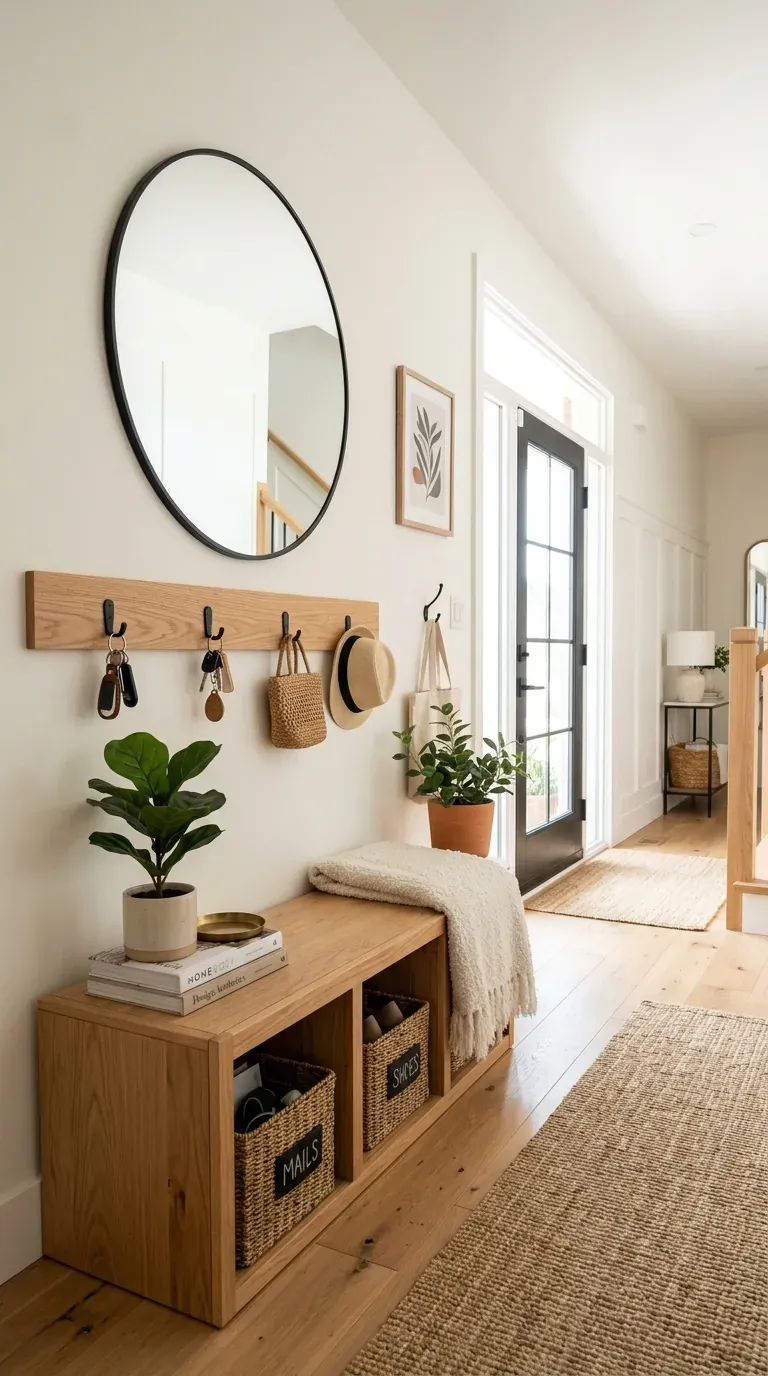
For Scandinavian and Japandi entries, choose light oak or ash with matte black or brass hooks, generous negative space and no more than 5 hooks. Keep the shelf styling spare: one small trailing pothos, one ceramic dish for coins, nothing else. The beauty is restraint. Mount at eye level beside a round mirror and a light bouclé bench for a calm, airy arrival.
For farmhouse and rustic entries, look for reclaimed-look pine, distressed whitewash or dark walnut with cast-iron hooks and stenciled labels like KEYS or HOME. Pair with shiplap, woven baskets underneath and a vintage runner. The texture hides daily wear and makes mismatched keychains look intentional rather than messy.
For modern and industrial lofts, powder-coated matte black steel, brushed nickel or concrete-look rails with clean geometric lines disappear into gallery walls. Combine with a rectangular mirror, concrete planter and monochrome art. Hide colorful lanyards inside a small cabinet version to preserve the palette while keeping everyday sets on one exterior hook for speed.
Practical styling rules apply regardless of theme. Limit shelf decor to three items maximum so mail still has landing space. Use a small felt tray to corral non-hanging items like earbuds and garage remotes so they do not migrate onto hooks. Add warm 2700K lighting above to make brass and wood glow in the evening. And dust hooks monthly — metal hooks collect grime that transfers to key finishes.
Avoid over-accessorizing. I often see beautiful racks buried under dried wreaths, oversized signs and seasonal garlands that block hooks and force keys back into bowls. Decor should frame the station, not cover it. Hang wreaths on the adjacent wall or front door itself, keeping a clear 4-inch radius around each hook for quick grabbing with gloves on.
Common Mistakes to Avoid and Final Thoughts
After troubleshooting hundreds of entries, I see the same preventable errors repeat. Avoid these and your system will work for years.
Mistake 1: Buying too small. A 3-hook rail looks tidy online but fails for a family of four with two cars, a house set and a dog leash. Count realistically, then add two spare hooks. It is far cheaper to have one empty hook than to buy twice. If wall width is limited, go vertical with two staggered rails rather than cramming hooks too close where fobs tangle.
Mistake 2: Mounting too high or behind the door. Hooks above 62 inches discourage kids and shorter adults, while placement behind the door swing means you must close the door to reach keys — an extra step you will skip. Always mount on the latch side within one step of your natural path and test with grocery bags in hand before drilling.
Mistake 3: Ignoring wall anchors. The most common failure I repair is a beautiful solid-wood rack hung with tiny nails that pull out under a heavy tote. Match anchors to wall type and load, hit a stud where possible, and test overnight with extra weight. For plaster and brick, masonry anchors are non-negotiable.
Mistake 4: Mixing mail and keys without boundaries. Piling flat mail on the same shelf where keys land buries fobs and hides bills. Use vertical slots or a divided tray so paper stands upright and keys hang below with clear airspace between. Sort mail weekly to prevent overflow from creeping onto hooks.
Mistake 5: Choosing style over hook design. Straight, slippery pegs look minimal but drop keys when the door slams. Prioritize upturned, closed-loop or lipped hooks that retain rings under vibration. You can have both beauty and grip by choosing brass hooks with an upward curl or wood pegs with a notched tip.
In conclusion, the humble key holder for wall earns its place because it solves a daily friction point with minimal cost, zero floor space and almost no maintenance. Whether you choose warm wood, rugged steel, a discreet cabinet or a renter-friendly adhesive rail, success comes down to three habits: mount at the right height in your natural path, give every set its own hook, and keep mail visually separate. Do those three and lost-key panic becomes a story you tell about your old apartment.
If you are ready to choose, start by measuring your wall and counting hooks, then compare tested dimensions, load ratings and current discounts in our guide to the best wall mounted key organizer. For integrated mail control, revisit our plan for a dedicated mail and key drop station to design a complete landing zone that stays tidy long after installation day.
FAQs
What is the best height for an entryway key rack?
Center hooks 54 to 60 inches from the floor for adults, which places rings at eye to chest level for easy grabbing. Place any upper mail shelf 60 to 64 inches high so envelopes stay visible but out of reach of toddlers. For kids, add a separate lower rail 40 to 44 inches high for backpack tags and house keys.
How many hooks does a family need?
Most families need 6 to 10 hooks. Allow two per adult for vehicle and house sets, plus dedicated spots for mailbox keys, dog leashes, guest sets and spares. Space hooks at least 2.5 inches apart to prevent bulky fobs from tangling, and add one heavy-duty hook rated for 10 pounds if you also hang bags or lanyards.
Can renters install wall organizers without drilling?
Yes. High-bond adhesive strips, nano-suction mounts and over-the-door rails all provide sturdy, damage-free storage holding 5 to 15 pounds on smooth drywall, tile or sealed wood. Clean with alcohol, press for 60 seconds and wait 24 hours before loading. Use screws into studs or toggle anchors for anything heavier like winter coats.
Are wood or metal organizers better?
Solid wood offers warmth, quiet operation and versatile style for most living rooms and foyers, while powder-coated metal offers higher weight capacity and slimmer profiles for narrow halls and heavy family loads. Many top-rated designs combine both: a wood backboard that protects walls with through-bolted metal hooks that resist bending.
How do I stop mail from covering my keys?
Separate paper vertically from keys physically. Choose a combo unit with upright mail slots above and hooks below, leaving 4 to 6 inches of clear airspace between. Sort standing mail into action, file and recycle weekly, and keep a small concealed recycling bin nearby so junk never lands on your key shelf.
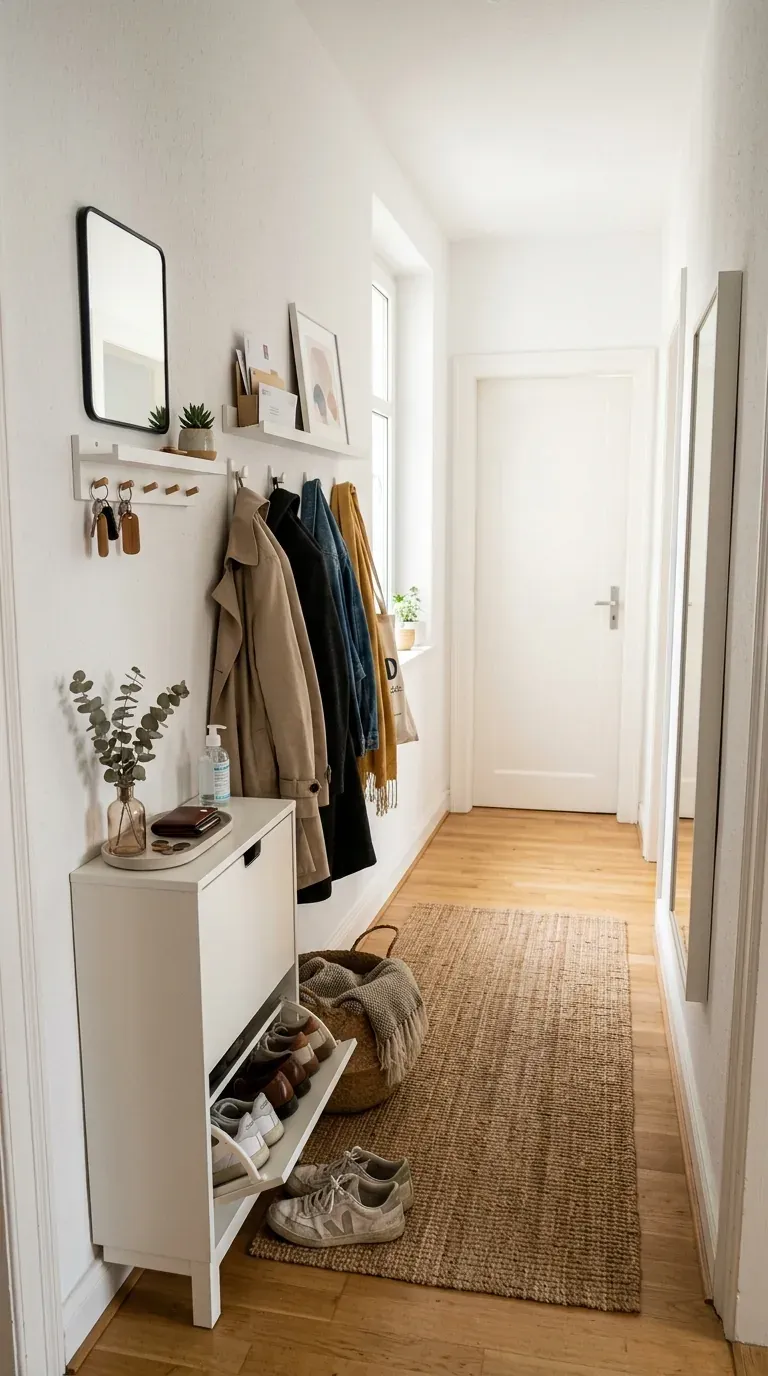
For narrow halls and small apartments, a slim profile keeps the walkway clear. A white rail above a shoe cabinet holds keys and coats in one vertical strip without crowding the door. Styled simply, it makes even a tight entry feel bright and intentional.
Honorable Mentions: Guitar-Style Key Holders
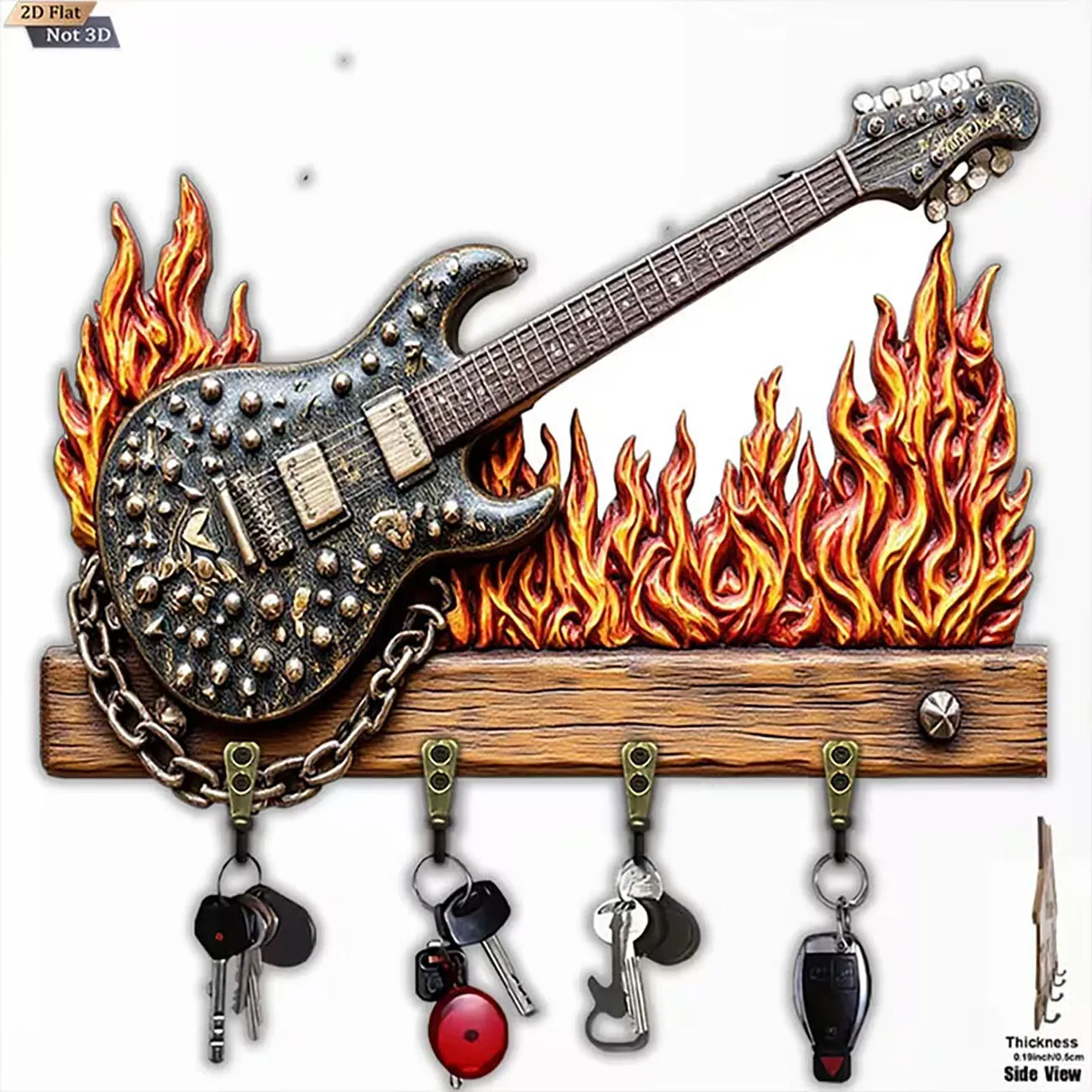 2D Flame Guitar Key Holder for Wall — 14.31, -92%) — Check Price →
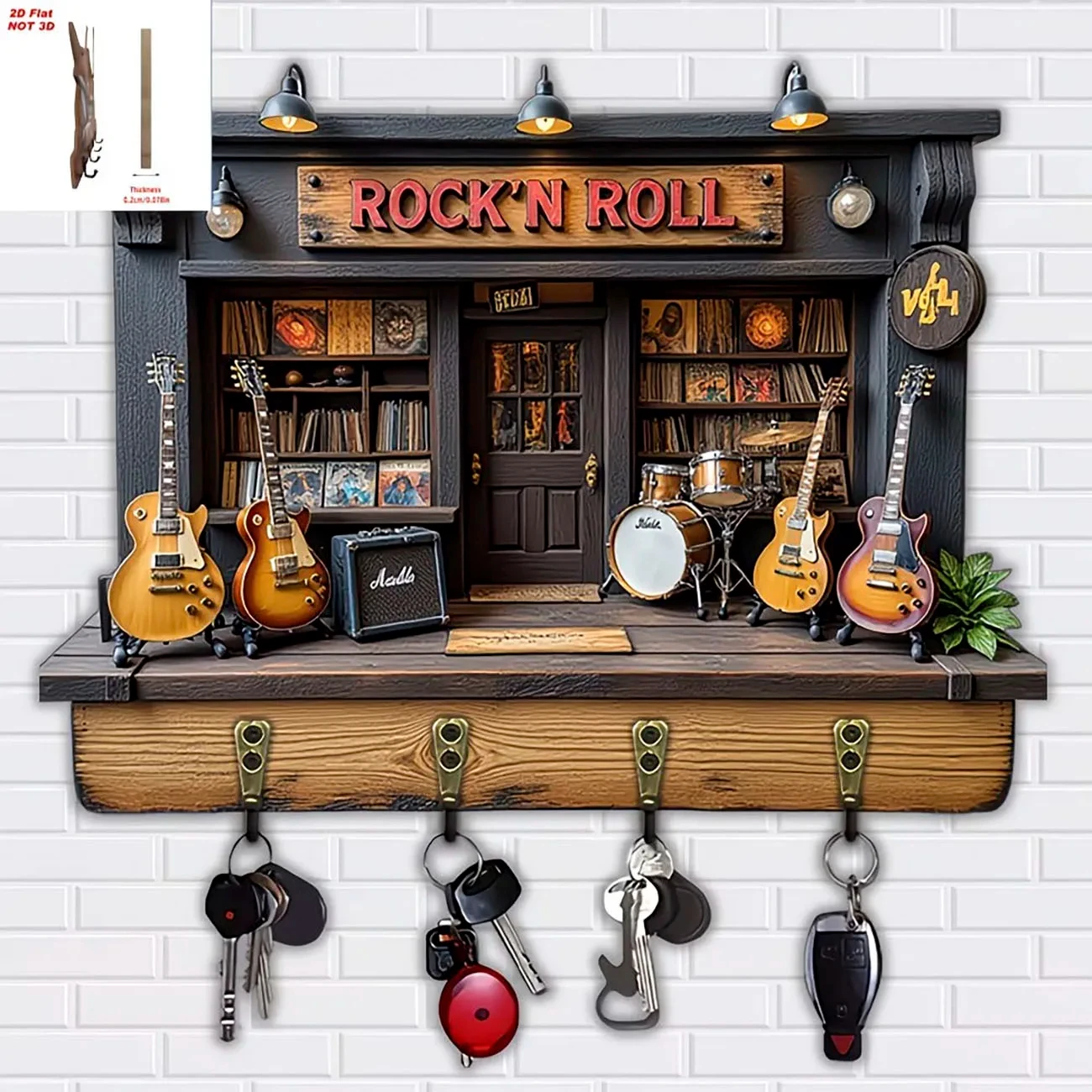 Rock N Roll Shop Guitar Key Holder for Wall — 12.67, -91%) — Check Price →
Related Guides
- Best Wall Mounted Key Organizer Compared – side-by-side dimensions, hook counts and deals
- Dedicated Mail and Key Drop Zones – how to design a built-in landing station
- Key and Mail Management for Small Entryways – paper triage for tight foyers
- How to Install Wall-Mounted Entryway Racks – anchors, studs and renter options
- Ultimate Guide to Choosing Entryway Hooks – hook styles, spacing and weight ratings
Frequently Asked Questions
What is the best wall-mounted organizer for keys?
The best option for most homes is a 6-hook wood or metal organizer with a mail tray and sturdy mounting hardware. Renters often prefer adhesive models, while families need solid wood with a shelf for sunglasses and wallets.
Where should you mount an entryway key rack?
Mount it on the strike side of your front door, 8 to 12 inches clear of the door swing, with hooks centered 54 to 60 inches from the floor for adults and 40 to 44 inches for kids.
How many hooks do you need for a family?
Plan for 4 to 6 hooks minimum. Allow two per adult for car and house sets, plus one each for dog leashes, guest keys and spares, spaced at least 2.5 inches apart.
Can you install a key rack without drilling?
Yes. High-strength adhesive strips and nano-suction mounts hold 5 to 15 pounds on smooth drywall or tile. Use stud screws or drywall anchors for heavy coats and bags.
Are magnetic mounts safe for car fobs?
Yes. Static magnets in modern mounts do not damage RFID chips or transponders in smart fobs. Choose wood-faced or silicone-lined bars to prevent scratches.
