
Rental-friendly Entryway Storage
Rental friendly entryway storage starts with the deposit: non permanent entryway storage rules, renter friendly hooks that hold, and pieces undoable in an hour.
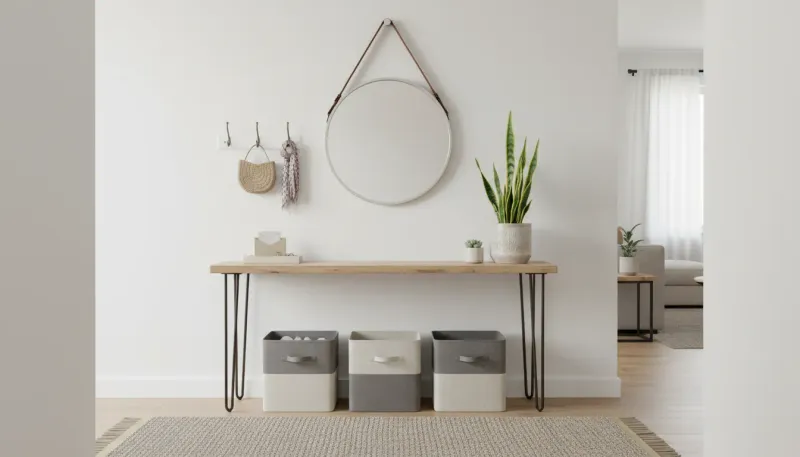
Feb 1, 2026 · Linda Wise
15 min readRental-friendly entryway storage means the deposit survives: no big screws, no wall destruction, no ‘we’ll patch it’ promises you’ll regret.
The apartment entryway is a narrow hallway, a patch of wall behind the door, or the moment between corridor and living room — and the lease is watching everything you hang on it. The good news: the best rental storage is not a watered-down version of permanent storage. Tension, gravity, and freestanding mass do the same work as studs and anchors, and they do it reversibly. This guide is the renters’-rights encyclopedia of entryway organization: the rules that keep walls paintable, the hardware that genuinely holds, and the hour-easy undoing that gets your deposit back in full.
Rental Friendly Entryway Storage: The Rules
Rental friendly entryway storage runs on three rules, and everything below obeys all of them.
Rule 1: Damage is a scale, not a binary. A pin hole is routine wear in most leases; a half-inch screw hole with a torn anchor is not. Everything here stays in the pin-hole family or below.
Rule 2: Reversible beats strong. The best system is the one you can fully undo in an hour at move-out — which is also the one you can rearrange at 2 p.m. when you decide the entryway belongs on the other wall.
Rule 3: Weight must be engineered, not wished. Adhesive hooks hold astonishing loads when the surface is clean and the load is static. Coats yanked off a hook generate shock loads — so the hook’s job is to hold, and your job is to hang the heaviest things low.
Your landlord’s wall has seen worse. But the security deposit has a memory — keep the damage to pin holes.
Non-Permanent Storage: Tension Rods, Command Hooks, Freestanding, Over-Door
Tension Rods
The tension rod is the renter’s stud finder. A spring-loaded rod carries surprising weight when you respect its limits: heavy coats on rods spanning a recessed nook, lighter bags on lower rods, and a wooden plank across two rods makes an instant floating shelf. Vertical floor-to-ceiling tension poles wedge between floor and ceiling to back a small coat and hat station with no hardware at all.
Command Hooks
Adhesive Command strips are the backbone of damage-free walls — when you press for the full 30 seconds, wait an hour before loading, and never overload. Stagger them in two rows: one high row for long coats, one low row for bags and purses. Staggered, your profile stays flush against the wall instead of bulging like a clothing rack.
Freestanding
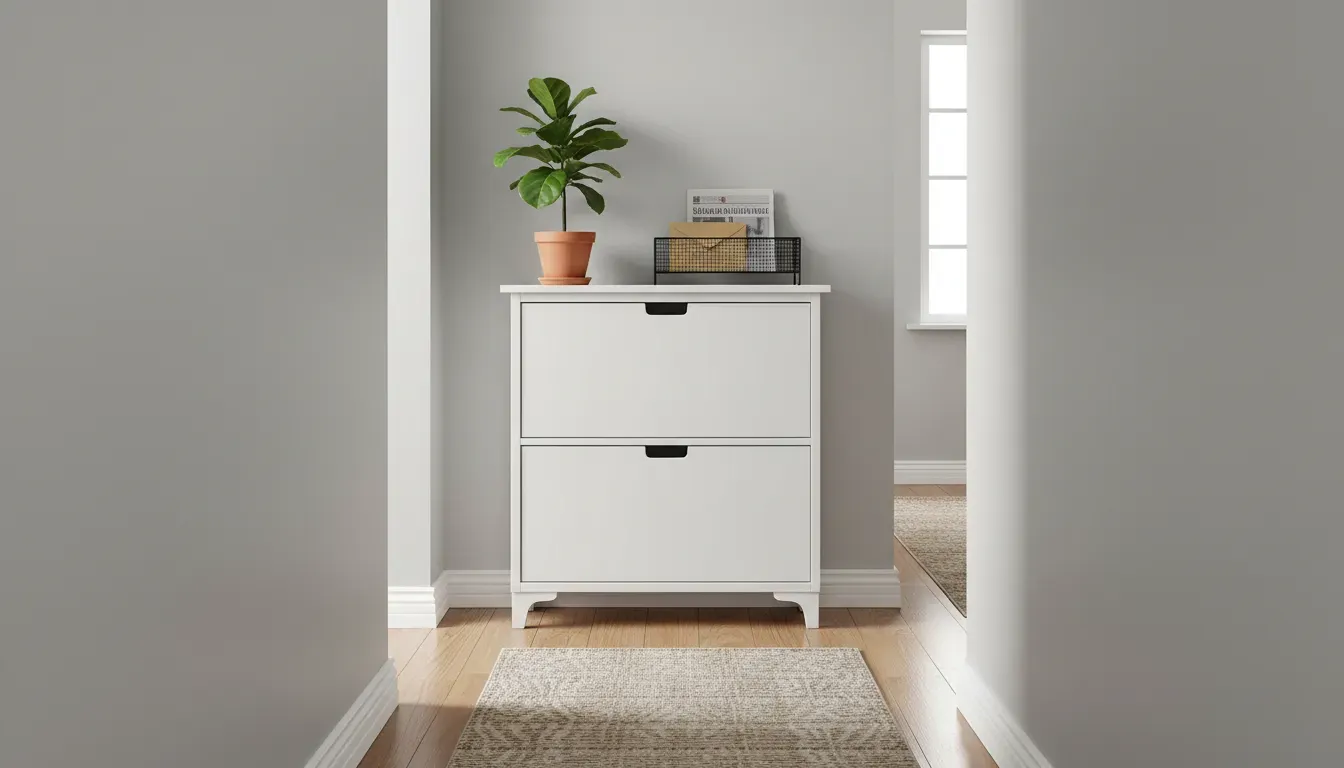
When the walls are off-limits, the floor works twice as hard. Tipping shoe cabinets, skinny consoles, and storage benches hold the daily rotation without touching an ounce of paint. Depth is the enemy in hallways — look for pieces 9 to 15 inches deep so the walkway survives.
Over-Door
The front door is a storage wall no one is renting out. A sturdy over-the-door rack with flat hooks holds coats and bags without blocking the door swing, and wire-pocket versions swallow shoes, mail, and dog gear right at eye level. Magnetic hooks do the same on metal apartment doors with zero contact points on the frame.
Renter-Friendly Hooks That Actually Hold (the brands/loads that work)
Not all “renter friendly” hooks are equal. The brand that dominates is 3M Command, and its ratings are honest if you obey the surface rules: clean with alcohol, press 30 seconds, wait an hour before hanging, and never hang below the rating. The published per-hook loads:
| Hook / Strip | Rated per hook | What to hang on it |
|---|---|---|
| Command Medium hooks | 4–5 lbs | Purse, scarf, dog leash, keys |
| Command Large hooks | 6–7.5 lbs | Lighter jackets, tote bags, umbrellas |
| Command X-Large hooks | 10 lbs | Heavy winter coat, work backpack |
| Command Utility hooks | 14–16 lbs | Two coats or a loaded gym bag |
Gorilla-brand adhesive hooks reach similar territory; read the box and assume the load rating assumes a clean, flat, non-textured wall. Alternative “hooks” that genuinely hold without hardware: boot trays with grip-stick mounting, over-door racks with molded J-hooks, and rail systems that clamp to the top of the door frame. If a wall is textured or wallpapered, skip adhesion entirely — that is what freestanding pieces are for.

Freestanding Pieces That Anchor Without Drilling
Freestanding storage is the heavyweight champion of rental entryways, because it anchors itself with mass instead of screws.
- Tipping shoe cabinets hold 16 to 30 pairs in 6 to 10 inches of depth, and their tops double as a console for keys, mail, and a lamp.
- Storage benches and hall trees concentrate hooks, seating, and shoe cubbies in one self-contained piece. Hall trees with a wide, heavy base are stable freestanding; treat any tall, narrow unit as a leaner and push it against the wall. They are the closest a rental gets to a built-in mudroom — see the entryway benches that win at seasonal clutter.
- Slim consoles with baskets absorb the small stuff: one basket per person, one tray for keys, everything off the floor.
The freestanding rule is simple: if a child could pull it over, it is not freestanding — either pick a heavier, wider piece or put the heaviest items at the bottom. Baskets, bins, and the containers between them are covered in our guide to the best storage bins.
The Move-Out Test (undo it all in an hour)
Before you buy any rental item, run it through the move-out test: can one person, no tools beyond a hair dryer, undo everything in sixty minutes? If yes, buy it. Then leave it with this checklist:
- Strip, don’t pull. Remove Command hooks by stretching the tab straight down parallel to the wall — pulling outward peels paint.
- Warm up stubborn adhesive with a hair dryer for 20 seconds; the bond softens and comes off clean.
- Patch the pin holes. A dab of spackle or toothpaste on white walls, sanded flat at dry, hides last year’s nail.
- Reverse the tension — loosen rods before they mark the floor or ceiling, then wipe the contact points.
- Reset the room. Move freestanding pieces to their final homes and sweep the freshly exposed wall.
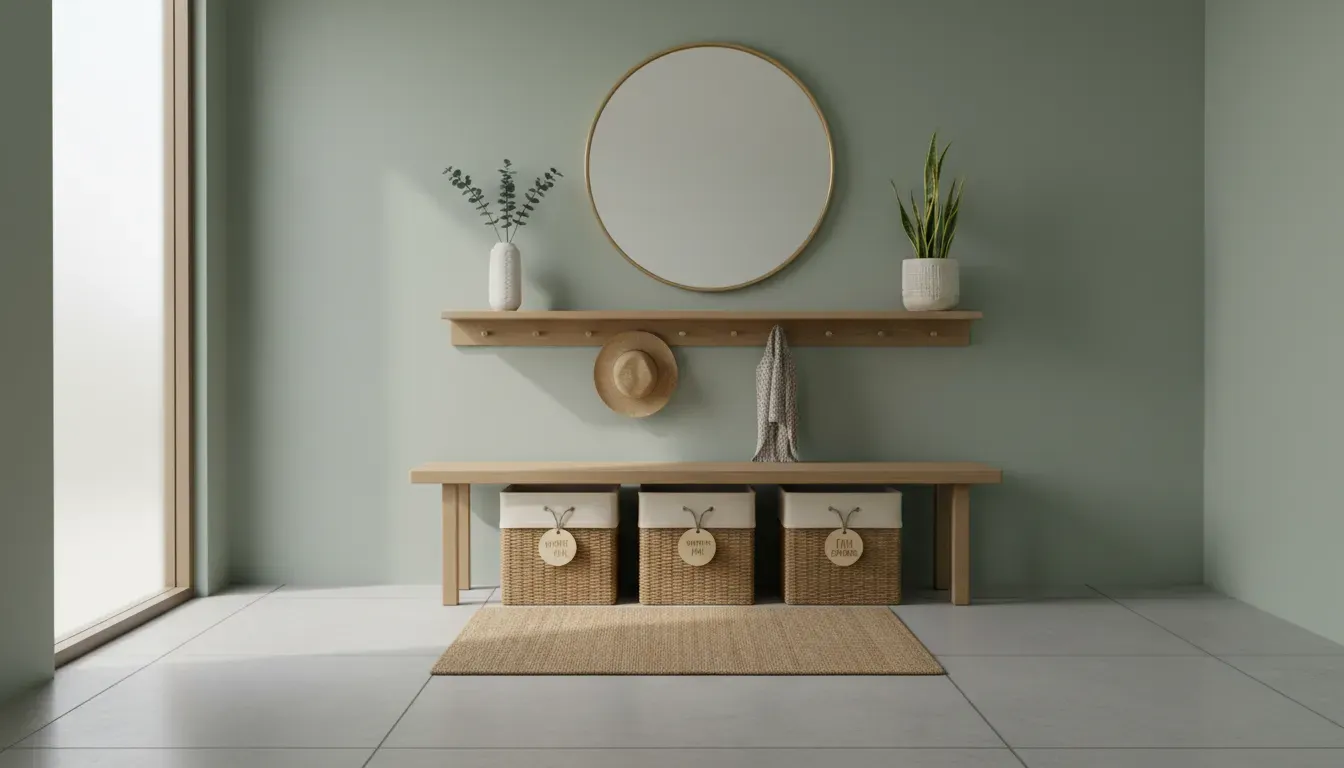
Rental-friendly entryway storage is not a compromise — it is a discipline with better results than most permanent builds: every piece earns its place, every hook proves it can hold, and everything you own comes down clean. If you want more of the trick book before you shop, our 15 genius entryway storage ideas will give you every corner of the apartment a place to put things down.
Stop Guessing Measurements. Build Your Dream Entryway with Confidence.
Transform awkward hallways, cramped foyers, and cluttered mudrooms into organized sanctuaries. Includes 20 CAD floor plans, facing real-home photo spreads, the 36-Inch Clearance Rule, the Shoe Pairs Formula, and 7 printable worksheets.
Core Edition ($17.99) · Flagship Photo Edition v5 ($39.99)
