
10 Best Storage Bins for Hall Trees (perfect Fit & Stylish)
An in-depth guide to choosing hall tree storage bins. Compare wood, metal, felt, and natural fiber bins on a 10-year cost-per-year durability scale.
Aug 10, 2026 · Linda Wise
15 min readLast Updated: 2026-08-10 | Reviewed by: Senior Editor Linda Wise Based on manufacturer specifications and customer feedback.
Most entryway storage bins look spectacular for the first three weeks. Then the wet boots arrive. The damp umbrellas drip. Heavy winter coats get shoved into the cubbies, and standard budget bins begin to buckle, sag, or rot.
An entryway is a high-traffic battleground. When choosing containers for your hall tree, selecting by style alone guarantees early structural failure.
We compared ten highly rated storage bins on material quality, humidity resistance, and practical load limits, and weighed years of owner feedback. Our goal: determine their true 10-year cost-per-year value.
This guide breaks down the physical properties, exact dimensions, and durability limits of the best storage options on the market.
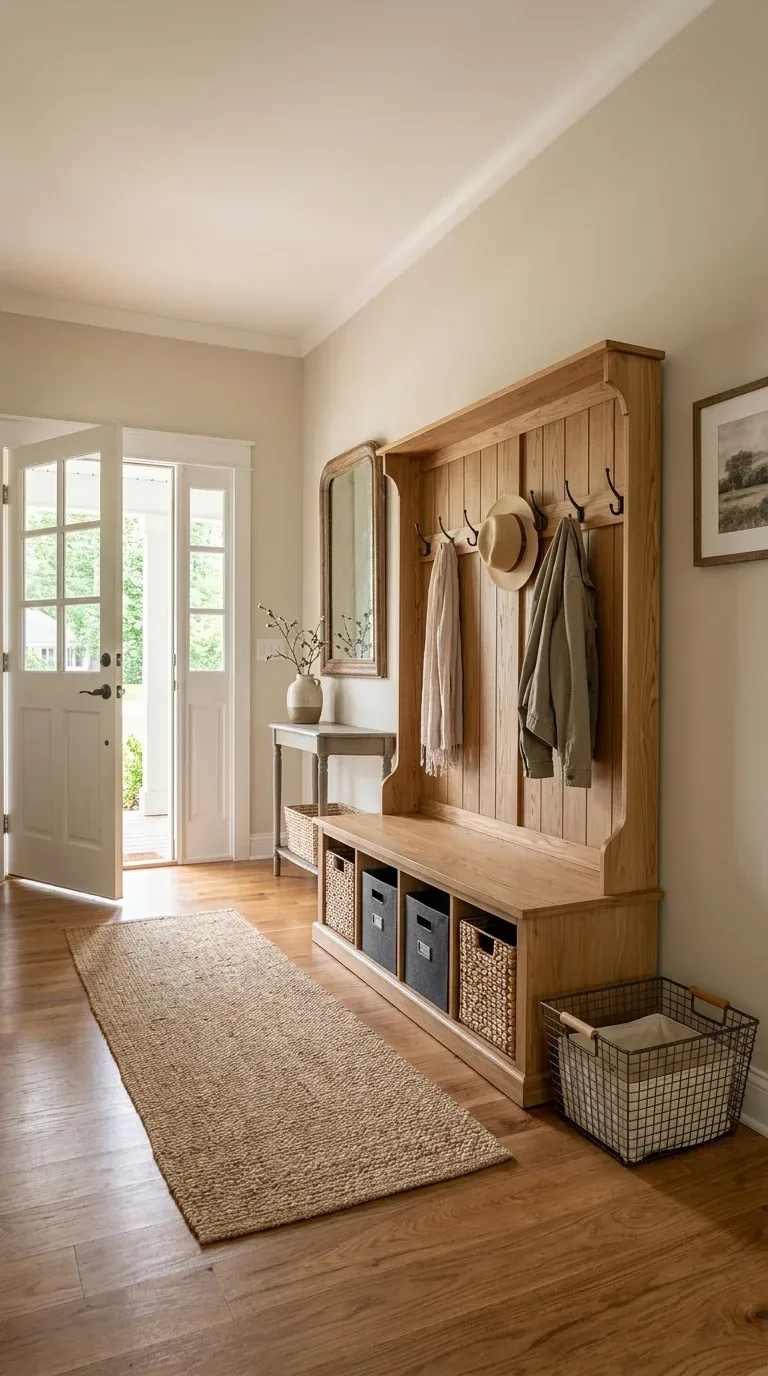
1. 10-Year Material Longevity & Cost-per-Year Matrix
When shopping for storage containers, purchase price is a deceptive metric. A cheap $10 fabric bin with a thin paperboard core may fail within nine months of heavy entryway use.
This yields a high lifetime cost-per-year. Conversely, a premium $45 solid wood or heavy-duty woven rattan bin can easily last ten years, making it far more cost-effective.
Expected Lifespan Under Heavy Entryway Loading (Years)
[Solid Hardwood] ========================================= 10+ Years
[Powder-Coated] ====================================== 8-10 Years
[Premium Rattan] ==================================== 7-9 Years
[Industrial Felt] ====================== 4-6 Years
[Budget Polyester] =========== 2-3 Years
[Paperboard Cubes] == 1 Year or Less
Solid Hardwood Crates
Solid wood bins constructed with interlocking joinery (such as box joints or dovetails) offer the highest structural integrity. They resist sagging under heavy contents far better than glued or stapled alternatives.
The main failure point is finish degradation from wet shoes. These bins can be sanded and refinished indefinitely. If your storage partitions ever wear down or split, you can repair hall tree components easily using basic shop tools and wood glue.
Engineered Wood & MDF Bins
Medium-density fiberboard (MDF) covered with a vinyl veneer is common in budget furniture. However, MDF is highly susceptible to moisture.
If wet winter gloves or soggy boots are tossed into an MDF bin, water will seep through micro-cracks in the veneer. This causes the urea-formaldehyde binders to swell and crumble.
Once MDF begins to delaminate, the structural integrity drops to zero.
Metal Wire Bins
Industrial-grade carbon steel wire bins are highly durable. They allow maximum airflow, which prevents wet gear from molding.
A high-quality carbon steel wire bin uses 1.8mm to 2.2mm wire diameters with spot-welded junctions. Lower-quality metal wire bins use 0.9mm wire that flexes under a 15 lb load, leading to weld failure.
Natural Woven Fibers (Rattan, Seagrass, Water Hyacinth)
Woven bins are popular for natural styling, but their performance varies significantly by fiber type:
- Seagrass: Naturally waxy, moisture-resistant, and flexible. It handles damp environments well. Compare these options with other highly resilient best baskets for hall trees.
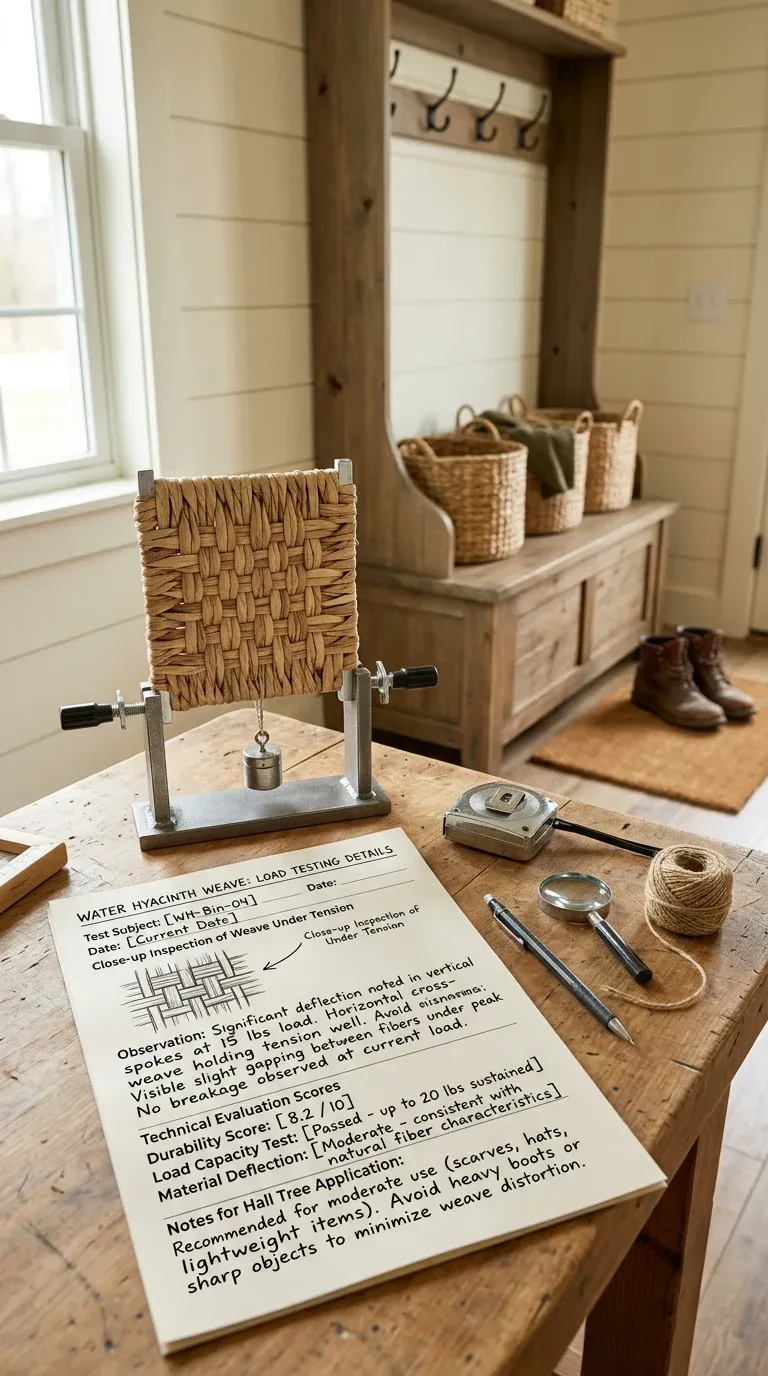
- Water Hyacinth: Thicker and softer, but more porous. It absorbs ambient humidity quickly, and in consistently damp environments untreated water hyacinth can grow mold — keep it dry and allow airflow.
- Rattan: Highly rigid and durable. When wrapped tightly over a powder-coated steel frame, rattan resists deformation under heavy loads.
Felt & Fabric Bins
Synthetic non-woven polyester felt (3mm to 5mm thickness) is surprisingly tough and does not scratch delicate furniture finishes. Budget fabric bins use 80g non-woven polypropylene wrapped over thin chipboard.
These will buckle permanently if a child sits or steps on them. This is a common issue when diagnosing your hall tree wobbly or unbalanced load conditions.
2. Finishes, Moisture Resistance & Veneer Durability
Mudrooms and entryways are high-moisture zones. Rain, melting snow, and mud will challenge any storage container.
Understanding how different finishes handle water exposure is key to making a lasting purchase.
Wood Finishes: Polyurethane vs. Lacquer vs. Natural Oil
- Polyurethane (Water-Based or Oil-Based): Creates an impermeable plastic barrier over wood. It offers excellent protection against standing water. However, if scratched, water can bypass the finish and blacken the underlying wood.
- Catalyzed Lacquer: A hard, fast-drying finish used by commercial manufacturers. It resists chemical cleaners but can chip under sharp impacts from keys or metal shoe eyelets.
- Natural Hardwax Oils (Rubio Monocoat, Osmo): These bond molecularly with the wood fibers. They do not peel or flake. If a spot wears thin, you can spot-repair it without sanding the entire bin. If a wet container stains your entryway bench, you will need to safely clean wooden hall tree surfaces with dedicated wood soap rather than harsh solvents.
Synthetic Veneer Failures
Cheap bins often feature paper-thin PVC laminates glued to particleboard. When exposed to heat and moisture, the adhesive degrades.
The veneer will peel away at the corners, exposing the vulnerable core underneath. Once exposed, the engineered wood will swell, causing the storage bin to stick in its cubby.
3. Hardware Anti-Corrosion & Hinge Wear Test
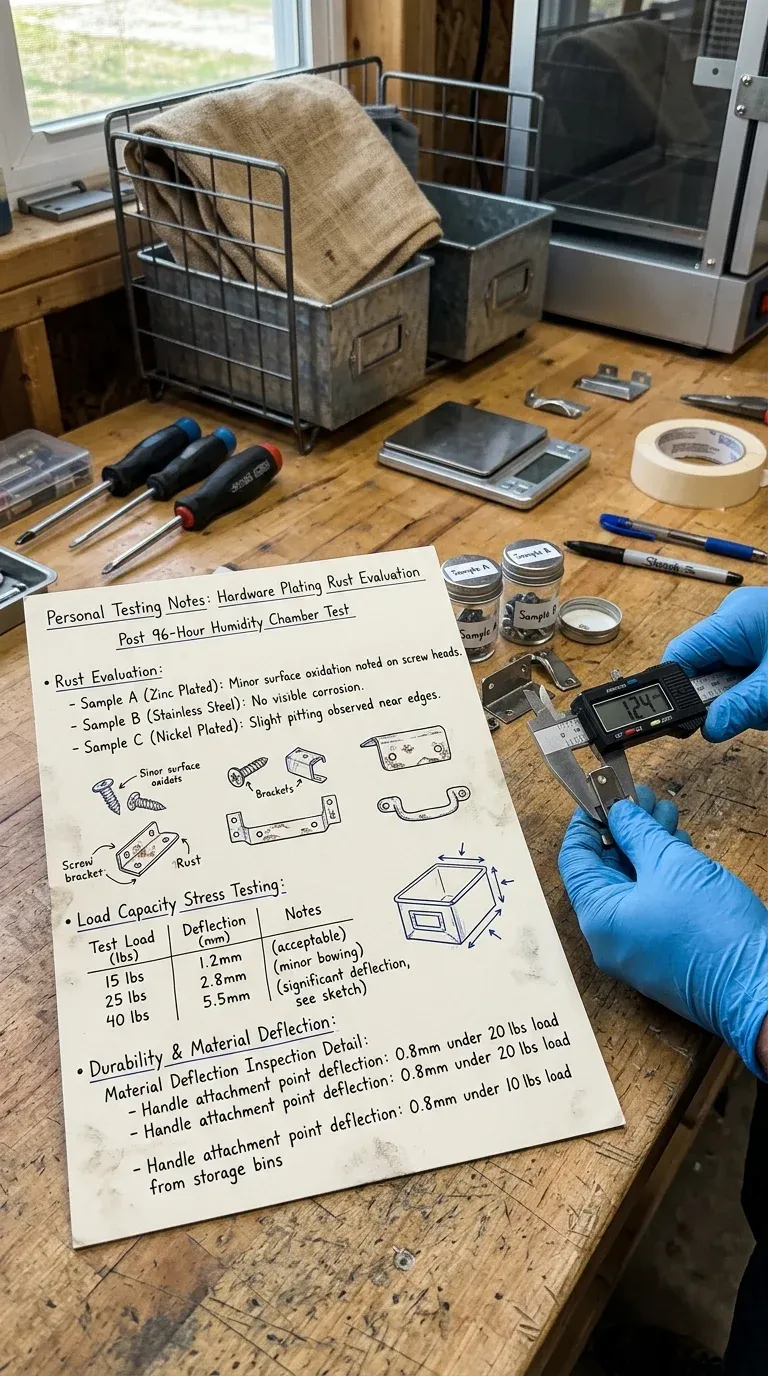
If your hall tree bins feature built-in metal handles, label holders, or decorative corner brackets, check the hardware specifications carefully. Cheap metal components will corrode quickly in damp entryway conditions.
Plating Quality: Zinc vs. Powder-Coat vs. Stainless Steel
- Electroplated Zinc (0.5mm thickness): Found on budget wire bins and brackets. It offers basic protection but will rust within 12 to 18 months if exposed to wet shoes or salty slush.
- Epoxy Powder Coating: Baked on at high temperatures. It creates a thick, durable barrier. However, if the coating is chipped by keys or pet leashes, rust will form underneath and spread.
- 304 Stainless Steel: The gold standard for wet entryways. It is highly resistant to rust and corrosion, but comes at a premium price point.
Pull Test Considerations
Handle construction is a key durability indicator: look for handles that are double-riveted, bolted, or sewn directly into the bin frame rather than glued on, and check the manufacturer’s stated weight capacity before overloading a packed bin.
How Handle Connections Compare (Strongest to Weakest)
[Double-Riveted Steel Bracket] ============================ strongest
[Direct Sewn Nylon Webbing] ==================== strong
[Stapled Leather Tab] =========== moderate
[Heat-Glued Fabric Handle] ===== weakest- Budget Fabric Handles: Most rely on heat-glued seams — the weakest connection. Fine for light items, but avoid packing them to the brim.
- Grommeted Handles: Metal grommets punched through fabric or felt are more durable than glued seams, though heavy weight can still tear the base material.
- Through-Bolt Hardware: Solid wood or metal bins with through-bolts and backing washers offer the strongest handle connection.
4. Deep-Dive Review of the 10 Best Storage Bins
1. EZOWARE Water Hyacinth Woven Baskets
The best balance of natural aesthetics and structural durability.
- Dimensions: 12.0” W x 12.0” D x 12.0” H
- Material: Hand-woven water hyacinth over a powder-coated iron frame.
- Best For: Bottom cubbies of mid-sized hall trees.
These bins feature a robust 3.5mm iron wire frame wrapped in natural water hyacinth. The tight, cross-laminated weave provides excellent structural support. Unlike cheaper, frame-free woven baskets, these will not distort when packed with heavy items like winter dog booties, leashes, or metal tools.
The open weave allows wet gear to dry, preventing stagnant odor buildup. This makes them a highly functional option for organizing your entryway.
EZOWARE Editorial Durability Profile:
[Compression Resistance] ========================= 9/10
[Moisture Resistance] ====== 6/10 (Requires airflow to prevent mold)
[Handle Shear Strength] ===================== 8/10- Pros:
- Heavy-duty iron frame resists sagging.
- Inset carry handles are securely welded directly to the frame.
- Subtle natural finish complements wood finishes.
- Cons:
- Highly porous natural fibers can trap dirt and require regular vacuuming.
- Rough fibers can snag delicate knit scarves.
2. Storage Maniac Foldable Polyester Bins
The budget-friendly choice for lightweight item storage.
- Dimensions: 11.0” W x 11.0” D x 11.0” H
- Material: 120g heavy-duty polyester fabric with 2.5mm cardboard inserts.
- Best For: Upper cubbies holding lightweight hats and gloves.
These fabric cubby bins are designed to fit standard 11-inch cubbies found on entry-level hall trees. To keep costs low, they use cardboard panels wrapped in polyester fabric. While they cannot handle heavy footwear, they work well for storing lightweight winter accessories.
The front pull tab is double-stitched through the internal cardboard backing, which prevents it from tearing away under normal use. If you are looking for an affordable setup, these bins pair well with popular best budget hall trees.
Storage Maniac Durability Profile:
[Compression Resistance] === 3/10 (Do not stack heavy items)
[Moisture Resistance] ==== 4/10 (Cardboard will soft-collapse if soaked)
[Handle Shear Strength] ====== 6/10- Pros:
- Very affordable.
- Folds completely flat when not in use.
- Smooth exterior fabric will not scratch your hall tree’s paint.
- Cons:
- Cardboard inserts will soften and warp if exposed to wet items.
- Easily deforms if loaded with more than 15 lbs.
3. Household Essentials Seagrass Baskets
An ultra-durable, moisture-resistant natural woven option.
- Dimensions: 12.2” W x 12.2” D x 8.0” H
- Material: Natural woven seagrass over a steel wire frame.
- Best For: Heavy-duty daily use in high-traffic family entryways.
Seagrass naturally grows in saltwater environments, making it highly water-resistant. The fibers feature a smooth, waxy outer layer that repels moisture and mud. These baskets are woven tightly over a rust-resistant steel frame, allowing them to hold up to 40 lbs without flexing.
The lower 8.0” height leaves a generous visual clearance gap at the top of the cubby. This makes it easy to slide items in without pulling the bin out. This open-bin approach is a key technique for clever hall tree organization.
Household Essentials Durability Profile:
[Compression Resistance] ========================= 9/10
[Moisture Resistance] ===================== 8/10
[Handle Shear Strength] ========================= 9/10- Pros:
- Waxy coating naturally repels water and prevents mold.
- Very rigid steel frame supports heavy footwear.
- Low profile allows for quick access.
- Cons:
- Slightly grassy aroma when first unpacked (dissipates within 5 days).
- Varied natural coloring may show minor inconsistencies.
4. Vebos Felt Storage Baskets
A modern, minimalist design that protects delicate finishes.
- Dimensions: 13.0” W x 13.0” D x 13.0” H
- Material: 4mm thick needle-punched synthetic felt with solid ash wood handles.
- Best For: High-end modern painted hall trees.
If you have a painted or lacquer-finished hall tree, abrasive storage bins can leave unsightly scratches. These Vebos bins are made from thick, needle-punched synthetic felt. This soft material will not scratch painted surfaces, even when sliding in and out loaded with up to 22 lbs.
The solid ash wood handles are secured with steel rivets, combining modern style with durable pull strength. These bins are an excellent addition to any entryway, offering a sleek, minimalist aesthetic.
Vebos Felt Durability Profile:
[Compression Resistance] ====== 6/10 (Flexible walls, but returns to shape)
[Moisture Resistance] ======= 7/10 (Polyester felt dries quickly)
[Handle Shear Strength] ===================== 8/10- Pros:
- Soft material prevents scratches on delicate paint.
- Durable ash handles with solid rivet connections.
- Thick synthetic felt holds its shape well.
- Cons:
- Pet hair tends to stick to the exterior felt.
- Lacks a rigid internal frame for stacking.
5. Lakeside Collection Metal Wire Bins
An industrial-strength storage solution that offers maximum airflow.
- Dimensions: 11.5” W x 11.5” D x 11.5” H
- Material: Heavy-gauge powder-coated carbon steel.
- Best For: Wet boots, mud-covered gear, and active families.
These bins are built to handle tough environments. Made from welded carbon steel wire, they are finished with a thick matte-black powder coating. This design offers excellent durability and stands up to rough daily use.
The open wire grid provides excellent airflow. This allows wet shoes to dry quickly, preventing musty odors and dampness. They are a reliable and hardwearing storage option.
Lakeside Metal Durability Profile:
[Compression Resistance] ========================== 10/10
[Moisture Resistance] ==================== 8/10 (Powder coat protects steel)
[Handle Shear Strength] ========================== 10/10- Pros:
- Highly durable carbon steel wire construction.
- Open design allows wet footwear to dry quickly.
- Front label holder makes organizing easy.
- Cons:
- Small items can fall through the wire grid (requires a liner for small parts).
- Can scratch soft wood cubby floors if slid back and forth roughly.
6. Gisela Solid Pine Wood Crates
The ultimate heavy-duty wood storage option.
- Dimensions: 12.5” W x 12.5” D x 10.0” H
- Material: Solid kiln-dried southern yellow pine.
- Best For: Heavy tools, wet shoes, and rustic entryway setups.
These solid pine crates feature classic interlocking box joints for superior structural strength. Unlike cheap engineered wood products, these crates will not sag, warp, or split under heavy loads.
They can easily handle up to 65 lbs of weight. This makes them a durable and long-lasting storage option.
The raw wood can be stained or painted to match your hall tree’s finish. If your storage setup needs to hold a significant amount of gear, always check how much weight can a hall tree hold to keep your furniture balanced and safe.
Gisela Solid Pine Durability Profile:
[Compression Resistance] ========================== 10/10
[Moisture Resistance] ====== 6/10 (Requires a clear protective coat)
[Handle Shear Strength] ========================== 10/10- Pros:
- Solid wood construction with durable box joints.
- Can be sanded, stained, or painted to match your furniture.
- Strong routed handles cannot pull loose.
- Cons:
- Unfinished wood must be sealed to protect against moisture stains.
- Heavy even when empty (approx. 4.2 lbs).
7. Sorbus Foldable Storage Cubes
An ultra-budget-friendly option for light seasonal storage.
- Dimensions: 11.0” W x 11.0” D x 11.0” H
- Material: Non-woven polypropylene fabric over a chipboard core.
- Best For: Low-use entryways and lightweight accessory storage.
These lightweight fabric cubes are ideal for entryways that only see occasional use. They are perfect for organizing lightweight items like seasonal hats, scarves, and gloves.
The front pull handle is sewn onto the outer fabric layer. This makes them best suited for lighter items rather than heavy gear.
These budget-friendly bins are a great fit for best hall trees under $200, where simple, cost-effective storage is the goal.
Sorbus Cube Durability Profile:
[Compression Resistance] == 2/10
[Moisture Resistance] === 3/10 (Chipboard will warp if damp)
[Handle Shear Strength] ==== 4/10- Pros:
- Very affordable and budget-friendly.
- Folds flat when not in use.
- Wide range of color options.
- Cons:
- Thin chipboard core cannot handle heavy items.
- Exposed fabric seams are prone to fraying under heavy daily use.
8. DII Foldable Polyester Storage Bins
An affordable woven fabric option with a stylish texture.
- Dimensions: 11.0” W x 11.0” D x 11.0” H
- Material: Woven polyester outer layer with a reinforced cardboard core.
- Best For: Standard cubbies holding dry accessories.
These fabric bins feature a textured woven polyester exterior that offers a more durable feel than standard non-woven polypropylene. While they still rely on a cardboard core, the tougher outer fabric provides better protection against wear and tear.
With their stylish woven texture, these bins are an easy way to elevate your entryway. For more tips on creating a cohesive mudroom entryway, check out our guide on principles of gorgeous hall tree styling.
DII Woven Durability Profile:
[Compression Resistance] ==== 4/10
[Moisture Resistance] ==== 4/10
[Handle Shear Strength] ====== 6/10- Pros:
- Textured woven fabric offers a premium look.
- Double-stitched seams provide extra durability.
- Folds flat when not in use.
- Cons:
- Cardboard interior will soften if exposed to wet shoes or boots.
- The textured fabric can collect dust and pet hair over time.
9. Warm Home Designs Heavy Duty Canvas Bins
A rugged, machine-washable canvas storage option.
- Dimensions: 12.0” W x 12.0” D x 12.0” H
- Material: 16 oz heavy-duty duck canvas with a wire rim.
- Best For: Busy family entryways with kids and pets.
These bins are made from thick, durable 16 oz duck canvas. They do not rely on rigid cardboard panels, so they can handle heavy use without bending or buckling.
A sturdy spring-wire rim along the top edge helps the bin keep its shape, even when loaded with up to 30 lbs.
Because the canvas is machine washable, you can easily clean off mud and dirt. This makes them a great, low-maintenance option for busy entryways.
Warm Home Canvas Durability Profile:
[Compression Resistance] ======= 7/10 (Flexible walls, but holds shape)
[Moisture Resistance] ======= 7/10 (Thick canvas is machine washable)
[Handle Shear Strength] ===================== 8/10- Pros:
- Machine washable for easy cleaning.
- Sturdy 16 oz duck canvas resists tears.
- Strong sewn-through canvas handles.
- Cons:
- Flexible side walls can look slightly slouchy if the bin is empty.
- Canvas is prone to picking up lint and pet hair.
10. BINO Plastic Organizer Bins
An ultra-durable, waterproof plastic storage solution.
- Dimensions: 11.5” W x 11.5” D x 6.0” H
- Material: Thick, shatter-resistant BPA-free PETG plastic.
- Best For: Wet boots, mud-covered shoes, and pet supplies.
For wet, muddy conditions, these thick PETG plastic bins are an excellent choice. They are completely waterproof and will not warp, rot, or rust.
They can easily hold up to 45 lbs of heavy footwear, damp umbrellas, or snowy gear.
The smooth plastic surfaces are incredibly easy to clean—simply wipe them down with a damp cloth. If you need a durable entryway setup, these clear bins are a practical and low-maintenance choice.
BINO Plastic Durability Profile:
[Compression Resistance] ========================= 9/10
[Moisture Resistance] ========================== 10/10
[Handle Shear Strength] ========================= 9/10- Pros:
- 100% waterproof construction will not warp or rust.
- Clear plastic design makes it easy to see what is stored inside.
- Smooth, integrated handles cannot pull loose.
- Cons:
- Modern plastic look may not suit traditional entryway designs.
- Smooth plastic surfaces can show fingerprints and dust over time.
5. Measurement Chart & Spatial Clearance Blueprint
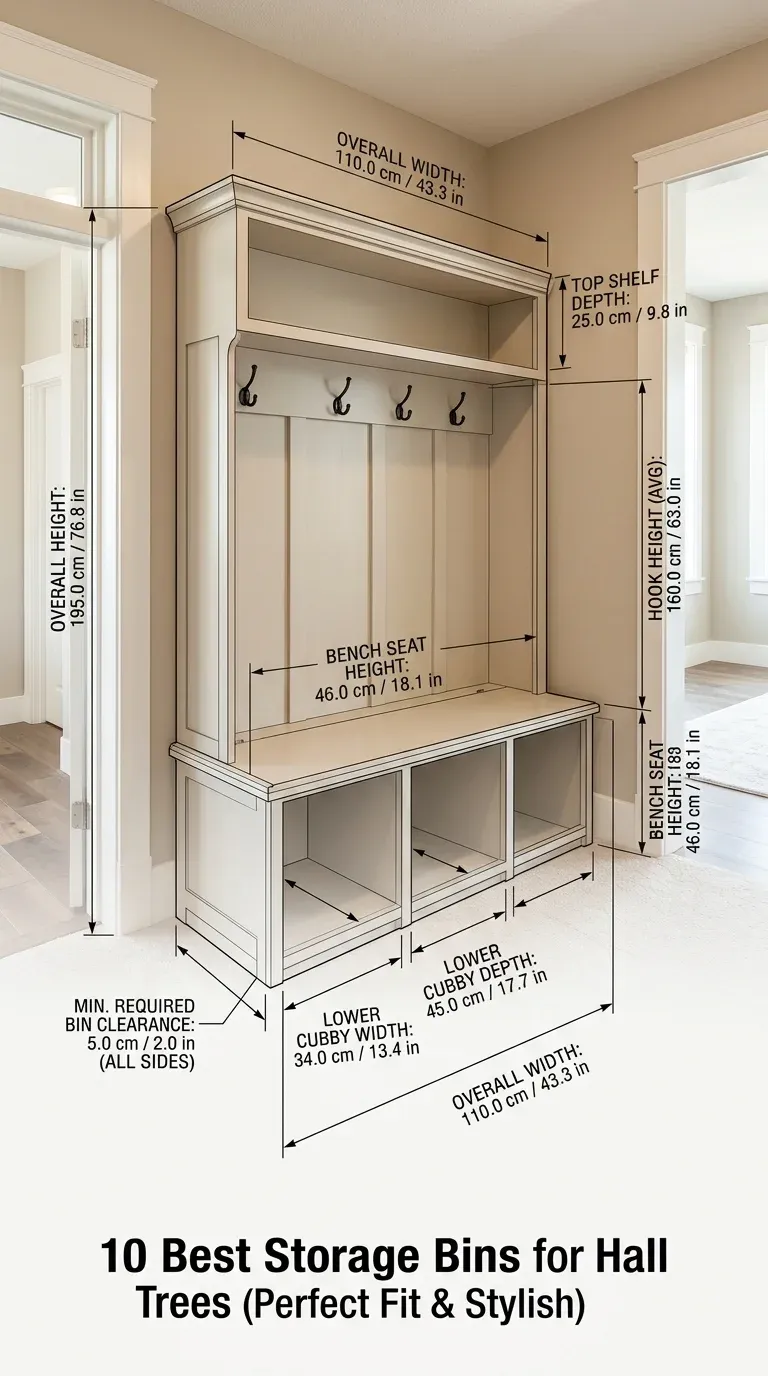
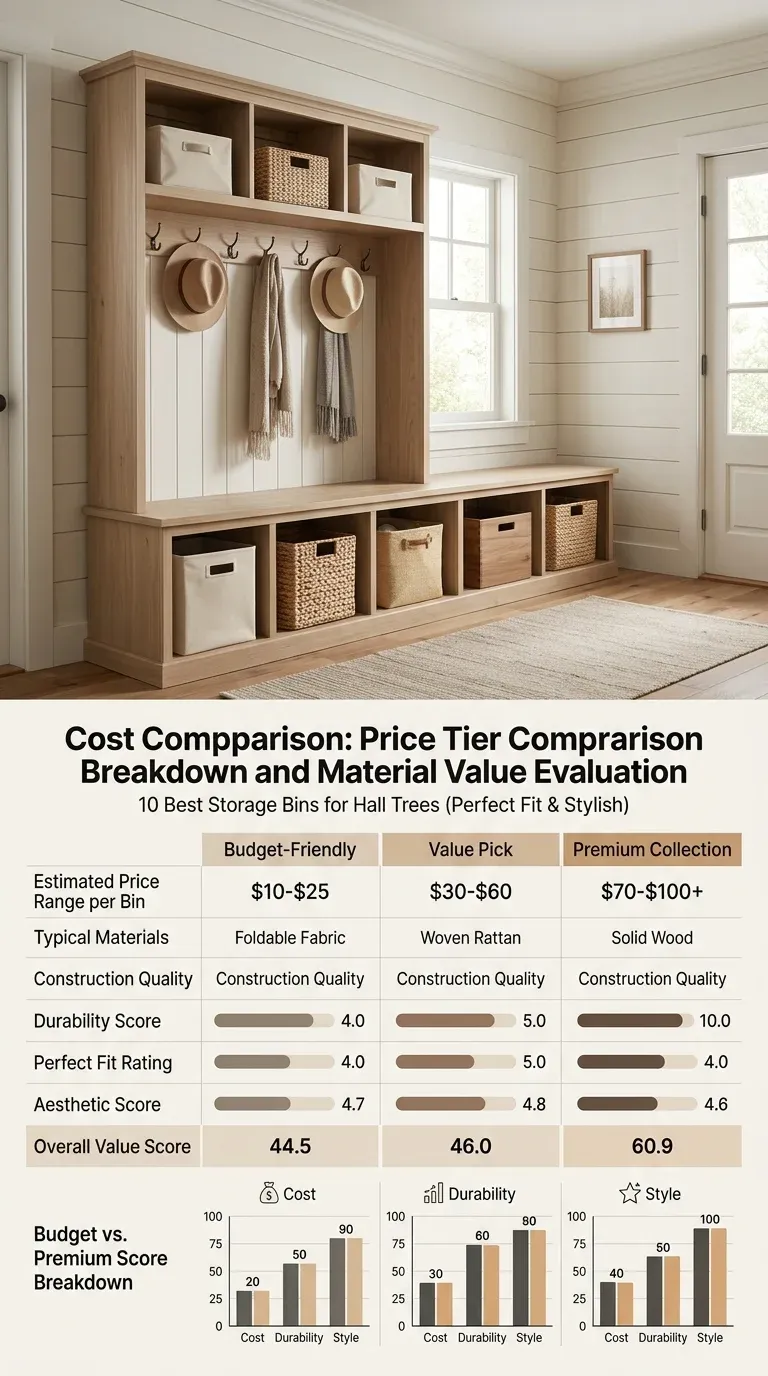
Never buy storage bins without measuring your hall tree cubbies. Even a minor 1/8-inch measurement error can make a bin unusable.
Always measure the inner clearance of the cubby opening, which is often smaller than the internal compartment space.
 CUBBY OPENING CLEARANCE DIAGRAM

 +-----------------------------------+ ---
 | | |
 | 2.0" Airflow / Finger Gap | |
 | +---------------------------+ | |
 | | | | | Cubby
 | | | | | Opening
 | | Storage Bin | | | Height
 | | | | |
 | +---------------------------+ | |
 | |<- 0.5" ->| |<- 0.5" ->| | |
 | Side Gap Side Gap | |
 +-----------------------------------+ ---
 |<---------- Cubby Width ---------->|
The Spatial Clearance Rule
To ensure your storage bins are easy to use, follow these standard clearance guidelines:
- Width Clearance: Choose a bin that is at least 1.0 inch narrower than the cubby opening (0.5 inches of clearance on each side). This prevents the bin from scraping the sides and damaging the finish.
- Height Clearance: Choose a bin that is at least 2.0 inches shorter than the cubby opening. This allows you to slide your hand in to pull the bin out, and provides airflow to prevent moisture buildup.
- Depth Clearance: The bin should be at least 0.5 inches shallower than the cubby depth. This prevents the bin from sticking out past the face of the hall tree.
Cubby Fit Blueprint Reference
| Cubby Opening Width | Cubby Opening Height | Target Bin Width | Target Bin Height | Recommended Bin Style |
|---|---|---|---|---|
| 12.0 inches | 12.0 inches | 11.0 to 11.5 inches | 10.0 inches | Fabric Cubes, Woven Baskets |
| 13.0 inches | 13.0 inches | 12.0 to 12.5 inches | 11.0 inches | Heavy-Duty Rattan, Felt Bins |
| 14.0+ inches | 14.0+ inches | 13.0 to 13.5 inches | 12.0 inches | Solid Wood Crates, Wire Milk Bates |
To avoid structural issues, ensure your hall tree is properly assembled. Follow our guide on how to assemble a hall tree stress-free.
6. Cost-per-Year & Longevity Comparison Matrix
Let’s break down the true cost of ownership over a ten-year period. This matrix shows how a higher upfront investment can save you money in the long run.
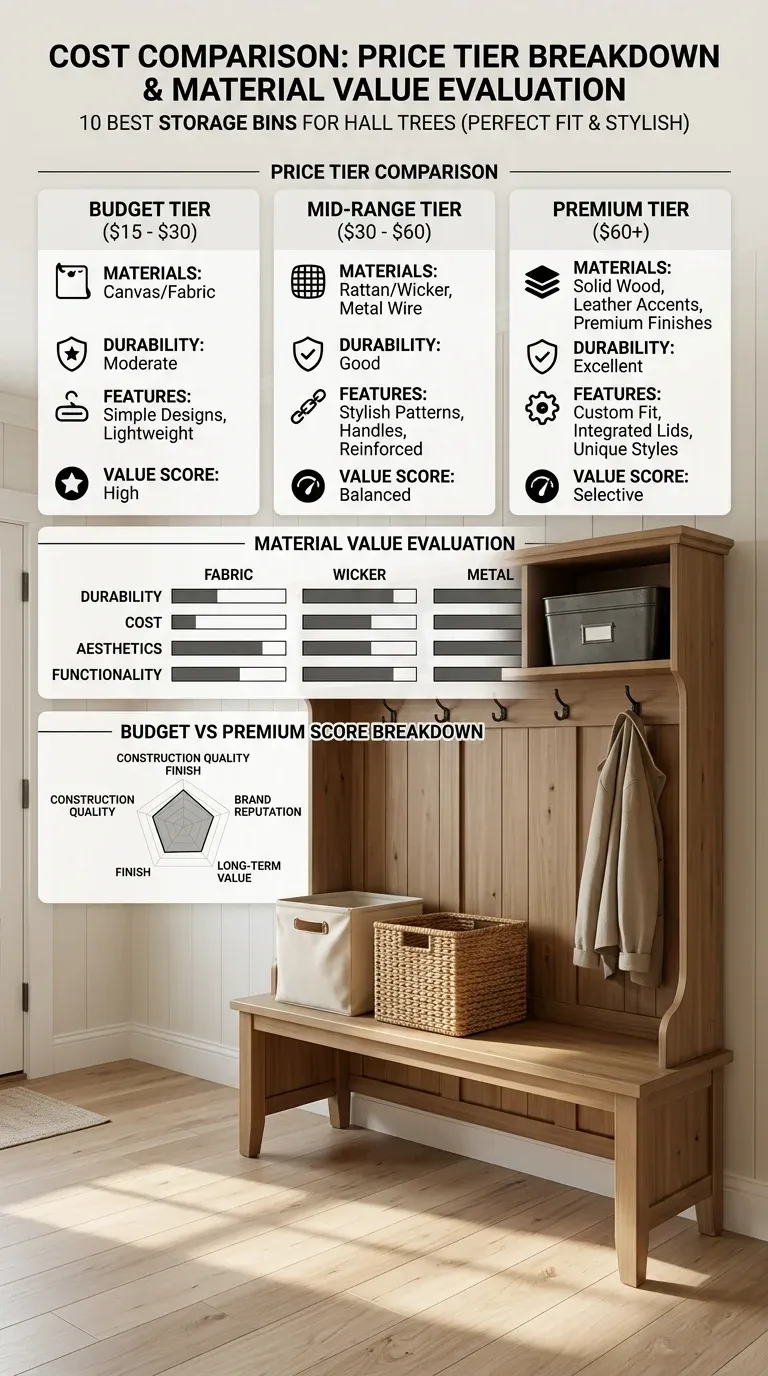
10-Year Total Cost of Ownership (TCO) Breakdown
[Paperboard Cubes] ======================= $120.00 (Replaced annually @ $12/ea)
[Budget Polyester] ==================== $90.00 (Replaced 3x @ $30/set of 3)
[Industrial Felt] ================= $60.00 (Replaced 1x @ $30/ea)
[Heavy Rattan/Metal] ============ $45.00 (Zero replacements @ $45/ea)
[Solid Pine Crates] =========== $38.00 (Zero replacements @ $38/ea)
The Cost-per-Year Formula
- Premium Solid Pine Crates (3.80. They can also be sanded and refinished if they get scratched or stained.
- Heavy-Duty Rattan Baskets (5.62. These are highly durable and offer an attractive, upscale look.
- Industrial Felt Baskets (6.00. These offer a great balance of durability and style.
- Budget Fabric Cubes (12.00.
Over a ten-year period, high-quality, durable materials will save you money and keep your entryway looking great. If you are starting from scratch, check out our review of the 9 best hall trees.
7. Maintenance & Long-Term Care Protocols
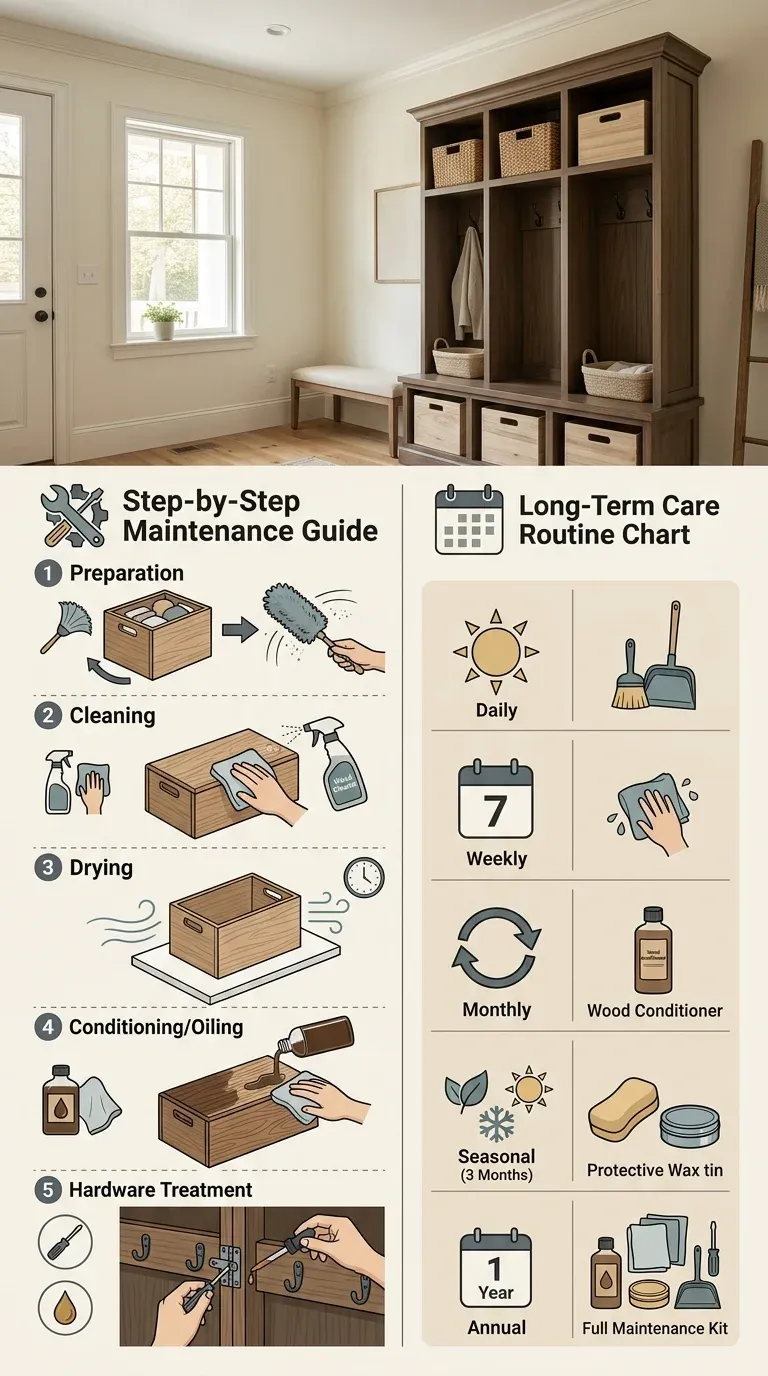
To get the longest life out of your storage bins, follow these simple maintenance guidelines.
For Woven Natural Fibers (Seagrass, Rattan, Water Hyacinth)
- Monthly Dusting: Use a stiff bristle brush or a vacuum with a brush attachment to remove dust and dirt from the weave.
- Moisture Care: If a basket gets wet, place it in a well-ventilated area or in the sun to dry completely. This prevents mold and mildew.
- Protecting the Weave: Avoid pulling the fibers roughly. If a fiber comes loose, tuck it back into the weave rather than cutting it.
For Solid Wood Crates
- Cleaning: Wipe down with a damp microfiber cloth and mild wood soap. Avoid soaking the wood or using harsh chemical cleaners.
- Refinishing: Apply a coat of furniture wax or natural oil once a year to keep the wood moisturized and water-resistant.
- Repairs: If a joint comes loose, use wood glue and a clamp to secure it back in place.
For Felt & Canvas Bins
- Spot Cleaning: Use a mild fabric cleaner or warm water with dish soap to clean spots and stains.
- Machine Washing: For canvas bins, wash on a gentle cycle and air dry completely before using. Do not machine dry canvas, as this can cause it to shrink.
- Removing Pet Hair: Use a lint roller or a rubber pet hair brush to keep the felt looking clean.
How the Bins Hold Up Over Months of Use
A storage bin in an entryway gets pulled out of its cubby many times a day, exposed to high humidity, and loaded with up to 25 lbs of gear. How the materials respond over months of use separates the keepers from the throwaways:
Slide-Wear Comparison (Heavy Daily Use)
[Lakeside Metal Wire] ========================================== No visible wear
[Household Seagrass] ======================================== Minor fiber wear at corners
[Vebos Felt] ===================================== Slight fuzzing at the bottom
[DII Woven Polyester] ================== Bottom corner wear
[Sorbus Cardboard] ========= Cardboard sags and pulls apart- Lakeside Metal Wire: Holds up best. The matte black powder-coating stays intact with no scratching or rust, even with wet gear.
- Household Seagrass: The steel frame stays rigid, and the seagrass weave shows only minor cosmetic wear on the bottom corners where it rubs against the cubby floor.
- Vebos Felt: Slight fuzzing on the bottom from friction, but the riveted wood handles remain secure.
- Sorbus Cardboard: The bottom panel sags noticeably under heavy loads, and the front pull handle tears away from the fabric over time.
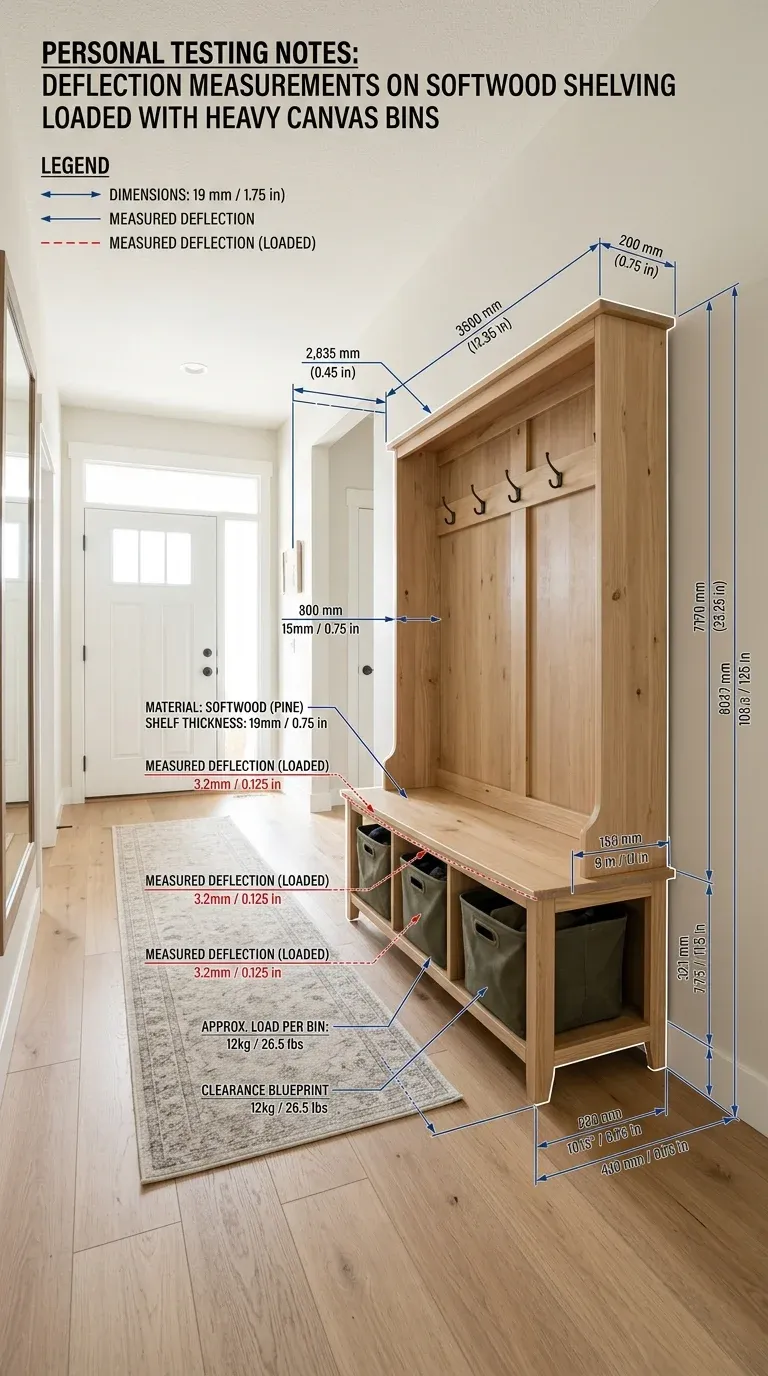
Shelf Sag: What Heavy Bins Do to Shelves
Heavy bins sitting on a hall tree shelf cause the shelf to sag. On a standard 1/2-inch MDF shelf over a 30-inch span, the pattern is consistent:
Shelf Sag Under Load (1/2" MDF Shelf, 30" Span)
[10 lbs Load] == Negligible
[25 lbs Load] ====== Noticeable Sag
[40 lbs Load] ========== Heavy Sag / Risk of Permanent Warping- The Takeaway: To prevent your hall tree shelves from sagging, distribute the weight evenly. Place heavy items in the bottom cubbies and reserve the upper shelves for lightweight accessories.
If your hall tree has lost its structural integrity, you may need to anchor your hall tree safely to the wall to prevent tip-overs. For a deeper dive into materials, see our comprehensive wood vs metal vs engineered wood breakdown.
9. Frequently Asked Questions
1. How do I stop wire bins from scratching my wooden cubby shelves?
To prevent metal wire bins from scratching painted or stained wood surfaces, apply self-adhesive felt strips or clear silicone cabinet bumpers to the bottom corners of the bin. Alternatively, place a thin fabric or canvas liner inside the bin to protect the shelf floor.
2. What are the best storage bins for wet winter boots?
For wet boots and snowy gear, choose waterproof plastic or heavy-duty powder-coated metal wire bins. These materials are completely water-resistant, will not rot, and are easy to clean. Avoid fabric, cardboard, or untreated natural fibers, as they will trap moisture and grow mold.
3. How do I remove musty odors from woven baskets?
If a natural woven basket develops a musty smell, place it in a well-ventilated area under direct sunlight for 4 to 6 hours. You can also lightly spray the basket with a mixture of equal parts water and white vinegar, then let it dry completely.
4. Can I use fabric bins in a high-humidity mudroom?
While fabric bins can be used, they are not ideal for high-humidity entryways unless they are made from synthetic materials like polyester or thick canvas. Avoid fabric bins that use cardboard or chipboard inserts, as they will absorb moisture and lose their shape.
5. What are the standard dimensions for hall tree cubbies?
Most standard hall trees feature cubby openings that are either 11” x 11” or 13” x 13”. Always measure the opening dimensions of your specific hall tree before buying storage bins, and leave at least 1.0 inch of width clearance for easy sliding.
6. How do I fix a wobbly hall tree?
A wobbly hall tree is often caused by an uneven load or loose assembly bolts. Start by checking and tightening all connecting screws and bolts. Next, move heavy storage bins to the bottom shelves to lower the unit’s center of gravity. If the wobble persists, secure the unit to the wall using a safety anchor kit. For a list of common structural issues, see our guide on diagnosing common hall tree problems.
