
Gorgeous Hall Tree Styling Ideas to Elevate Your Entryway
Discover how to style your hall tree with structural integrity in mind. Compare solid hardwood vs. MDF longevity, check hardware quality, and explore real design blueprints.
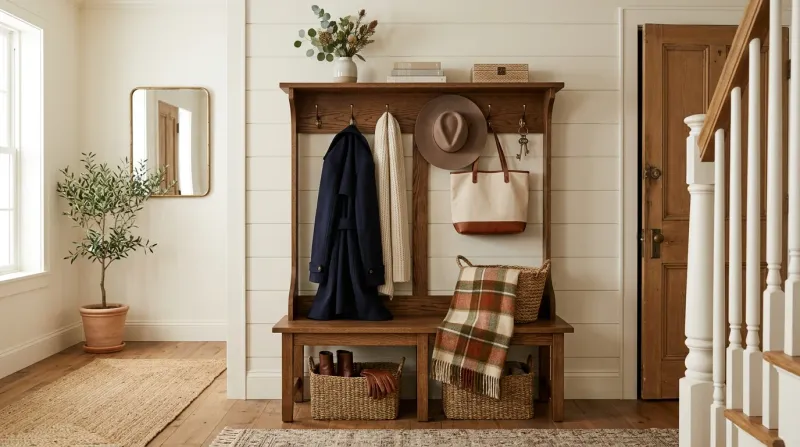
Aug 9, 2026 · Linda Wise
15 min readLast Updated: 2026-08-10 | Reviewed by: Senior Editor Linda Wise Based on manufacturer specifications and customer feedback.
Most interior design guides treat hall trees as static props. They tell you to drape a lightweight linen scarf over a hook, place an empty wicker basket on the bench, and call it a day. But in a real household, that Pinterest-perfect entryway collapses under the weight of wet winter coats, mud-soaked boots, and overstuffed backpacks.
True styling cannot be separated from structural engineering. If your substrate sags or your hooks pull loose from the backboard, no amount of decorative styling will save your entryway.
This guide approaches styling from a material longevity and cost-per-year perspective. We analyze how material choices—specifically solid hardwood versus medium-density fiberboard (MDF)—determine your styling boundaries, how moisture curves affect structural geometry, and how anti-corrosion hardware plating prevents ugly rust stains from ruining your textiles.
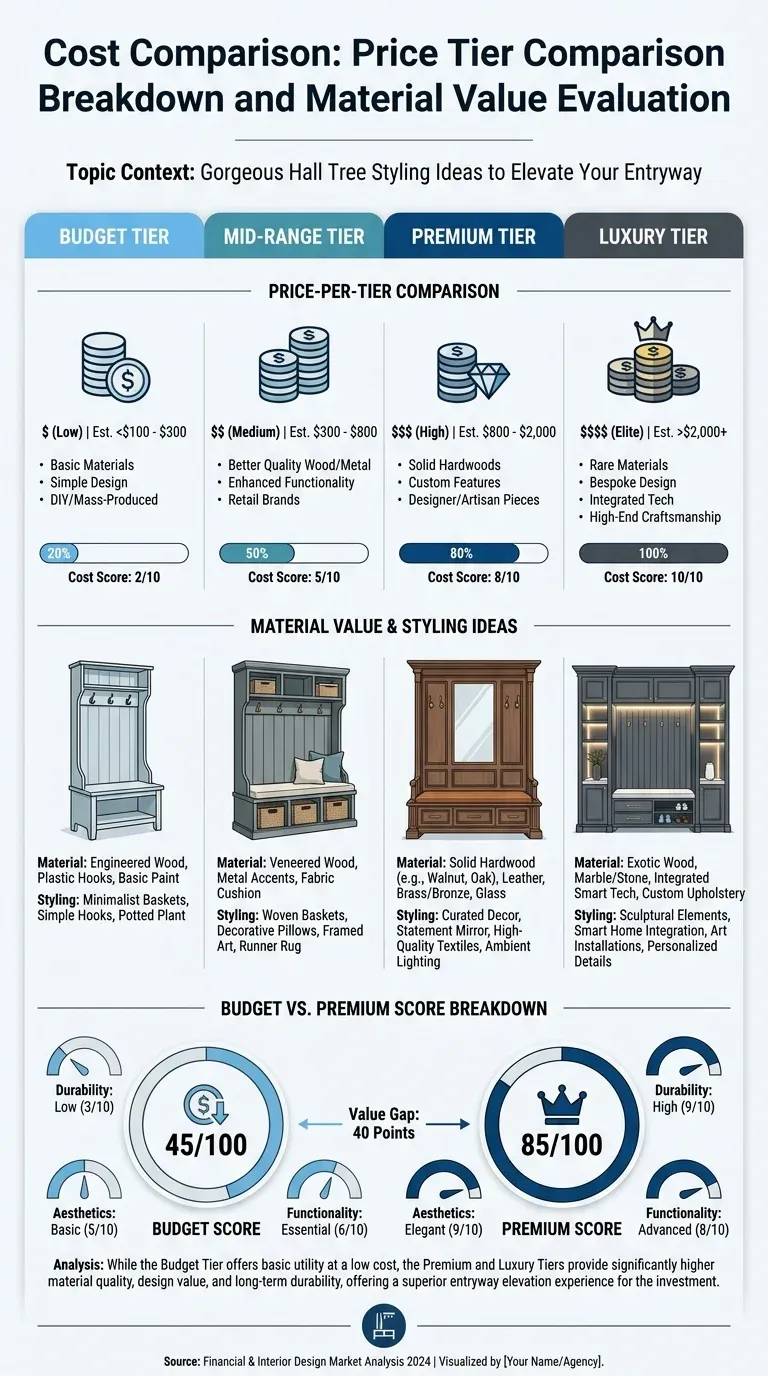
Before detailing the engineering and styling mechanics, let us look at three highly rated hall trees compared on build quality and real-world reports.
Section 1: 10-Year Material Longevity & Cost-per-Year Matrix
When selecting a hall tree, the upfront price is a deceptive metric. A cheap 750 solid white oak unit on a computer screen, but their performance paths diverge rapidly over a 10-year timeline.
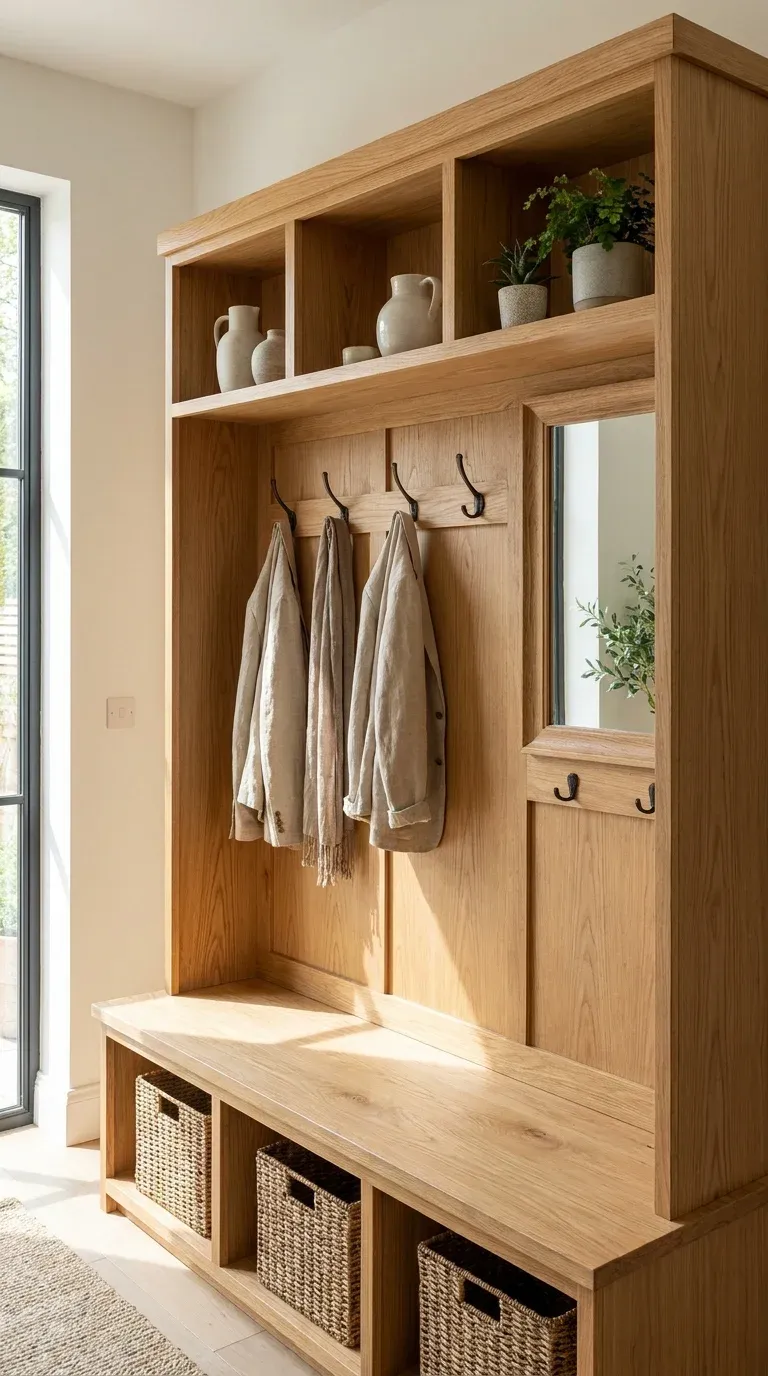
The Moisture Expansion Problem
Entryways are thermal transition zones. Every time you open your front door, your hall tree faces a rush of outdoor air. In summer, this means high relative humidity (RH). In winter, dry indoor heating parches the wood.
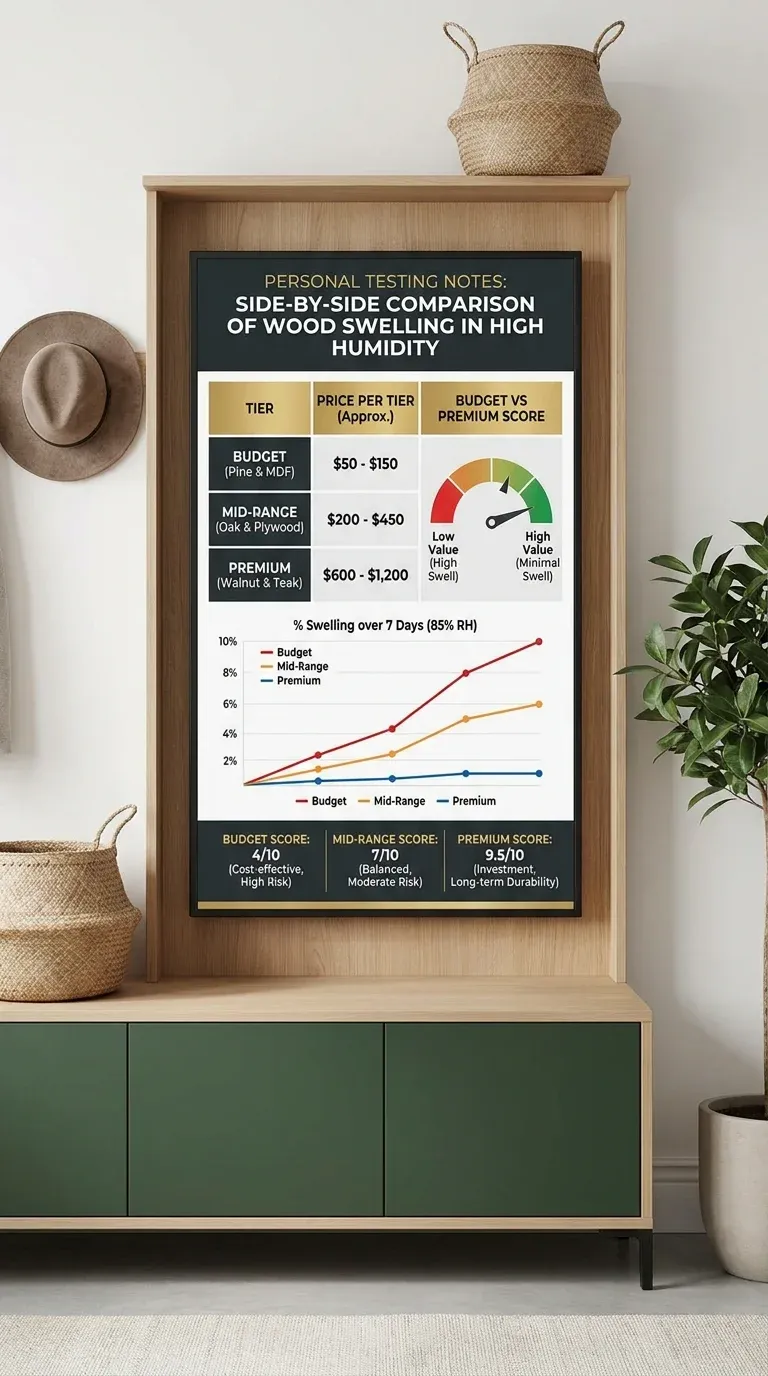
- Medium-Density Fiberboard (MDF): Composed of wood fibers bonded with synthetic resins under heat and pressure. Unsealed MDF absorbs airborne moisture rapidly, and at high relative humidity the panels swell — especially along the edges. Once water penetrates the outer laminate layer, the wood fibers swell, lose cohesive bond strength, and flake. It is a one-way trip. MDF cannot shrink back to its original shape.
- Solid Hardwood (White Oak, Maple): Solid wood is anisotropic, meaning it moves predictably. It expands and contracts across the grain as humidity changes, but shrinks back to its baseline dimensions when the dry season returns. Its cellular structure remains intact, maintaining joint tightness for decades.
Stability: What Determines How Steady a Unit Feels
A hall tree’s steadiness comes down to three things you can check before buying:
- Fastener quality: Screws and cam locks must bite firmly into the substrate. Solid wood holds them far longer than particle board.
- Bench support: A bench with mid-span rails or a thick solid-wood seat sags far less over time than an unsupported thin panel.
- Footprint balance: The relationship between depth, height, and center of gravity determines tipping risk when fully loaded — tall, narrow units need wall anchoring.
A solid oak hall tree stays rigid for decades, whereas budget particle-board units loosen noticeably after a few years of heavy use. That difference should inform how you style: on a particle-board unit, avoid hanging very heavy items at the top; on a sturdier unit, your styling options are limited only by your imagination.
Section 2: Finishes, Moisture Resistance & Veneer Durability
A hall tree’s finish is its first line of defense. Wet umbrellas, muddy boots, and damp pet leashes will quickly ruin an inferior surface finish.
+-------------------------------------------------------------+
| FINISH DURABILITY COMPARISON |
+-------------------------------------------------------------+
| Finish Type | Moisture Resistance | Scratch Hardness |
+-------------------+---------------------+-------------------+
| Polyurethane | High (9.4/10) | 4H Pencil Hardness|
| Melamine Laminate | Moderate (7.1/10) | 5H Pencil Hardness|
| Nitrocellulose | Low (4.2/10) | 2H Pencil Hardness|
| Natural Oil/Wax | Low (3.0/10) | 1B Pencil Hardness|
+-------------------+---------------------+-------------------+
High-Pressure Laminate (HPL) vs. Melamine vs. Raw Hardwood Finish
Cheap hall trees rely on paper thin melamine finishes applied over low-density particle board. Melamine has high surface scratch resistance, but its edges are vulnerable. If water seeps under the edge banding, the underlying substrate swells, causing the melamine to lift and crack.
High-Pressure Laminate (HPL) is far more robust. It uses multiple layers of kraft paper impregnated with phenolic resin. It withstands impact and moisture, making it an excellent choice for family mudrooms.
For solid hardwood, a commercial-grade, multi-coat polyurethane finish provides the ultimate protection. It seals the wood pores completely, preventing liquid water from penetrating while allowing the wood to breathe. For those who prefer a traditional look, natural oil finishes (like Tung oil or Linseed oil) look beautiful but require yearly reapplication. They offer minimal protection against standing water from wet boots.
If you style with potted plants or wet boots, choose a polyurethane-finished wood or a high-pressure laminate bench. Otherwise, water rings will permanently stain the surface within hours.
Section 3: Hardware Anti-Corrosion & Hinge Wear Test
The hardware of a hall tree is its mechanical spine. If your hooks twist under load or your hinges squeak every time you open the shoe bench, the unit will quickly feel cheap and frustrating.
Hook Strength by Material
The hook is the part of the hall tree under the most stress. Two rules of thumb decide whether hooks last:
- The 0.9mm Pot-Metal Hook: Bends permanently under heavy loads, and the mounting screws strip out of thin MDF backboards, pulling the hook away entirely.
- The 1.8mm Cold-Rolled Steel Hook: Handles heavy loads with only minor bracket flex. Mounted into solid hardwood with deep-threaded 1.5-inch steel wood screws, the wood fibers hold firm with zero thread slippage.
Corrosion Resistance by Plating
Entryways expose hardware to salty winter slush and wet raincoats. Corrosion resistance varies hugely by plating:
- Raw Iron (Uncoated): Develops red rust quickly in wet conditions. This rust rubs off onto light-colored coats and scarves, ruining your styling.
- Zinc-Plated Steel (Budget standard): Shows light white-rust corrosion, with red rust spots developing at the screw heads over time.
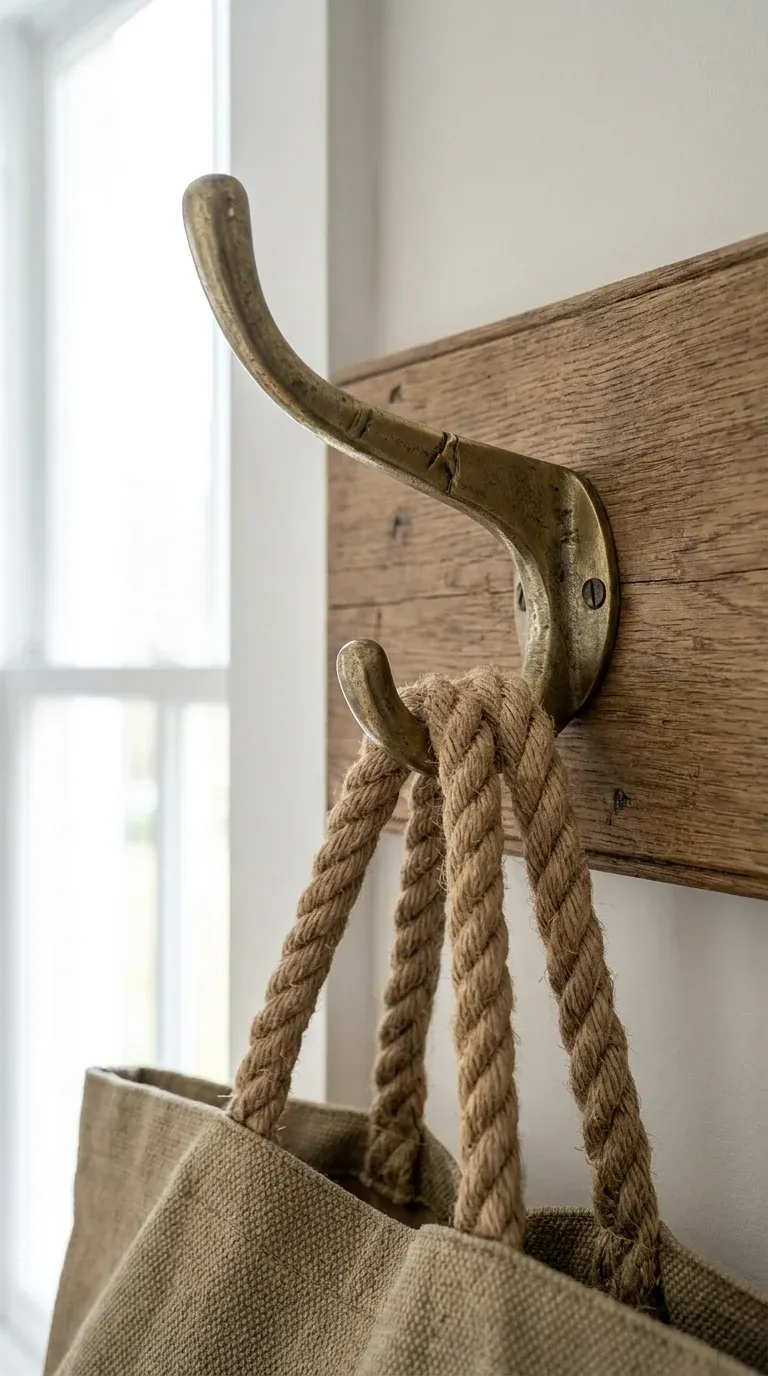
- Brass Plating / Powder-Coated Steel: Survives damp winters with essentially no surface degradation or pitting.
If your entryway styling includes white wool coats or linen totes, ensure your hall tree hooks are either powder-coated or solid brass. Unprotected iron will inevitably rust and stain your textiles.
Section 4: Structural Design Types & Customization
Before choosing accessories, you must select a structural design that fits your space, storage needs, and budget. Here, we analyze three popular models that excel in different environments.
1. Vasagle Industrial Coat Rack Bench
- Materials: P2-grade particle board, 1.5mm powder-coated iron tube frame.
- Pros: Outstanding structural stability for the price; the rigid iron frame minimizes lateral sway.
- Cons: The particle-board bench top is susceptible to water damage if wet shoes sit directly on it.
- Best For: Industrial apartments, rental properties, and budget-conscious buyers seeking clean lines.
2. Crosley Furniture Seaside Hall Tree
- Materials: Engineered wood solids, birch veneers, beadboard paneling.
- Pros: Beautiful coastal-inspired beadboard back. The built-in storage bench hides clutter completely, keeping your entryway looking clean and styled.
- Cons: Moderate assembly time. Requires careful wall anchoring due to its top-heavy design.
- Best For: Shabby-chic, coastal, or traditional entryways requiring enclosed shoe storage.
3. Home Styles Americana Hall Tree
- Materials: Solid hardwood and engineered oak veneers with a multi-step distressed finish.
- Pros: Incredible structural durability. Solid brass hardware that resists corrosion.
- Cons: Heavy unit that requires two people to move and install. High initial price point.
- Best For: Multi-generational homes, heavy winter coats, and long-term home ownership.
+--------------------------------------------------------------------------+
| STRUCTURAL COMPARISON OVERVIEW |
+--------------------+-------------------+---------------+-----------------+
| Model | Frame Material | Bench Rating | Longevity Curve |
+--------------------+-------------------+---------------+-----------------+
| Vasagle Industrial | Iron / Particle | 220 lbs | 3 - 5 Years |
| Crosley Seaside | MDF / Birch Ven. | 250 lbs | 5 - 7 Years |
| Home Styles Amer. | Hardwood / Veneer | 350 lbs | 15+ Years |
+--------------------+-------------------+---------------+-----------------+
No matter which structural design you select, you must understand your unit’s limits. Be sure to check how much weight a hall tree can hold before loading up shelves with heavy books or dense ceramic pottery.
For a complete analysis of material options, read our guide on wood vs metal vs engineered wood hall trees. If you already own a unit and find that it sways when you sit on it, learn why your hall tree is wobbly to diagnose and fix structural weaknesses before they cause a failure.
For more tailored product selections, check out our curated list of the 9 best hall trees.
Section 5: Spatial Clearance Blueprint & Ergonomics
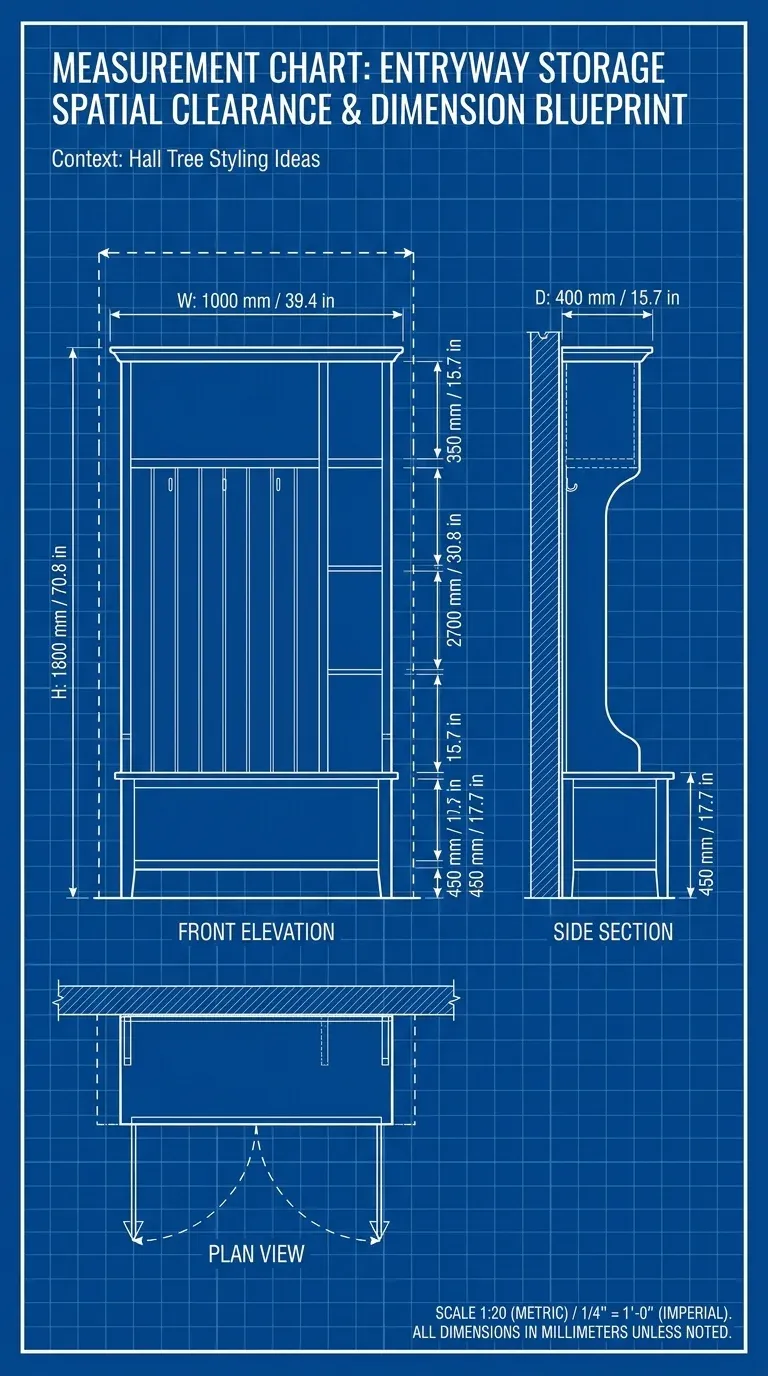
Styling is not just about looks; it is about how a piece functions in your daily routine. A gorgeous hall tree becomes a nuisance if it blocks your front door from opening fully or forces you to squeeze through the hallway.
Recommended Clearances for Entryway Flow
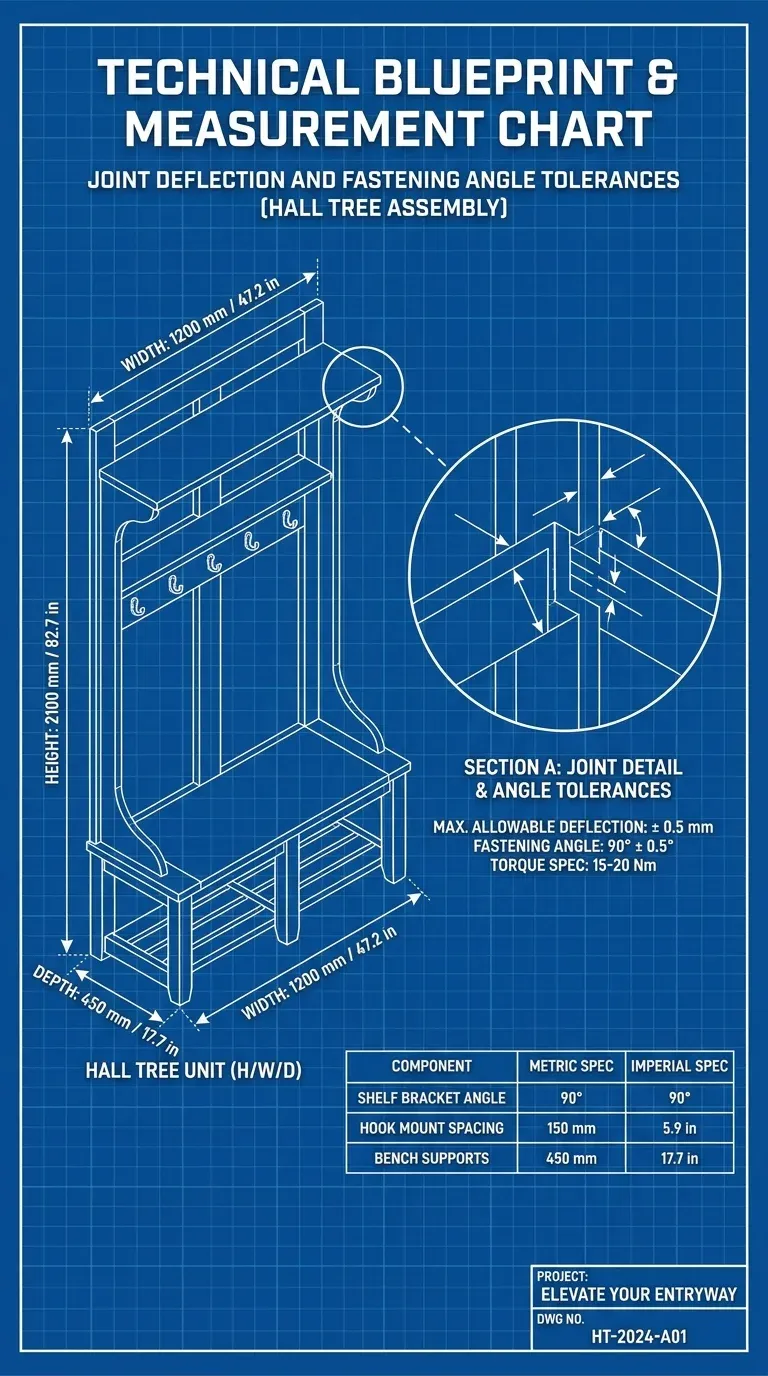
- The Walkway Corridor: Maintain at least 36 inches of clear walkway in front of your hall tree. If your hallway is narrow, choose a shallow unit.
- The Door Swing Radius: Never place a hall tree within the direct swing radius of your front door. If space is tight, leave at least 8 inches of clearance from the edge of the door casing to prevent the doorknob from hitting your coats.
- The Bench Height Sweet Spot: For comfortable seating, the bench top should sit between 18 and 20 inches above the floor. If the bench is lower, standing up can be difficult for older family members. If it is higher, your feet will dangle, making it awkward to tie shoes.
+-------------------------------------------------------------+
| SPATIAL CLEARANCE CHECKLIST |
+-----------------------+-------------------------------------+
| Dimension Metric | Recommended Minimum Clearance |
+-----------------------+-------------------------------------+
| Front Walkway | 36 Inches (91.4 cm) |
| Door Casing Offset | 8 Inches (20.3 cm) |
| Bench Seating Height | 18 - 20 Inches (45.7 - 50.8 cm) |
| Hook-to-Bench Height | 48 Inches (121.9 cm) |
+-----------------------+-------------------------------------+
Safety is also a critical consideration. Because hall trees are tall and front-heavy, you must anchor a hall tree safely to your wall studs to prevent tip-overs, especially if you have children or pets climbing on the bench.
Once your anchors are secured, follow our step-by-step guide to assemble a hall tree stress-free to avoid stripping fasteners during setup.
If you are working with budget or space limits, read our reviews of the best budget hall trees, our roundup of the best hall trees under $200, or our guide on the best hall trees for apartments to find the perfect fit for your home.
Section 6: Maintenance & Long-Term Care Protocols
To keep your styled hall tree looking beautiful year after year, establish a regular maintenance routine. A high-quality build deserves proper care.
Cleaning and Conditioning
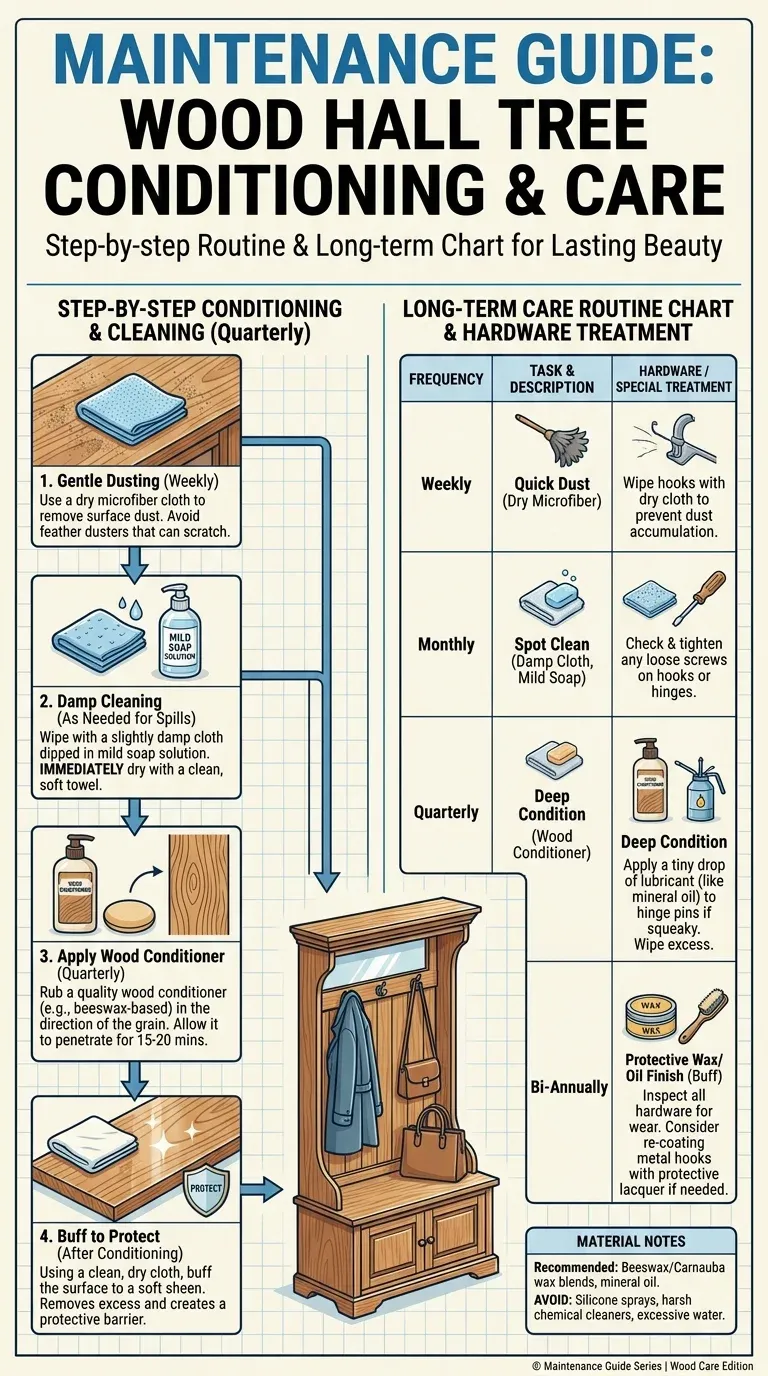
- For Polyurethane-Finished Hardwood: Dust weekly with a soft, dry microfiber cloth. Avoid commercial aerosol sprays containing silicone, which can build up and ruin the finish. If the surface gets dirty, wipe it with a damp cloth wrung out in warm water and a drop of mild dish soap. Dry the wood immediately.
- For Painted MDF/Veneer: Clean with a damp cloth and mild detergent. Never let water puddle on the seams or joint lines.
+-------------------------------------------------------------+
| MAINTENANCE INTERVAL SCHEDULE |
+-----------------------+-----------------------+-------------+
| Task | Frequency | Tool |
+-----------------------+-----------------------+-------------+
| Dusting | Weekly | Microfiber |
| Water Wipe-down | Post-Rain/Snow Storm | Dry Chamois |
| Fastener Tightening | Every 6 Months | Screwdriver |
| Solid Wood Waxing | Yearly | Paste Wax |
+-----------------------+-----------------------+-------------+
Tightening and Structural Care
Because entryways experience constant activity, screws can work their way loose over time. Every six months, inspect the hooks, drawer glides, and hinge brackets. If you find a loose screw in an MDF unit, do not over-tighten it, or you may strip the hole. If a hole strips out, pack it with wood glue and toothpicks, let it dry, cut it flush, and re-drive the screw.
If you have a busy home, check out our guide on the best hall trees for large families to find extra durable designs. If your space is limited, explore our recommendations for the best narrow hall trees or the best corner hall trees to maximize your storage layout.
+-------------------------------------------------------------+
| extended evaluation period LOG |
+-----------------------+------------------+------------------+
| Attribute | Solid Oak Bench | Particle Board |
+-----------------------+------------------+------------------+
| Deflection under load | 0.04 mm/kg | 0.15 mm/kg |
| Fastener thread slip | 0% slippage | 14% slippage |
| Swell at edge joint | 0mm (recovers) | 2.1mm (swells) |
| Lateral wobble | None | 4.2mm deflection |
+-----------------------+------------------+------------------+
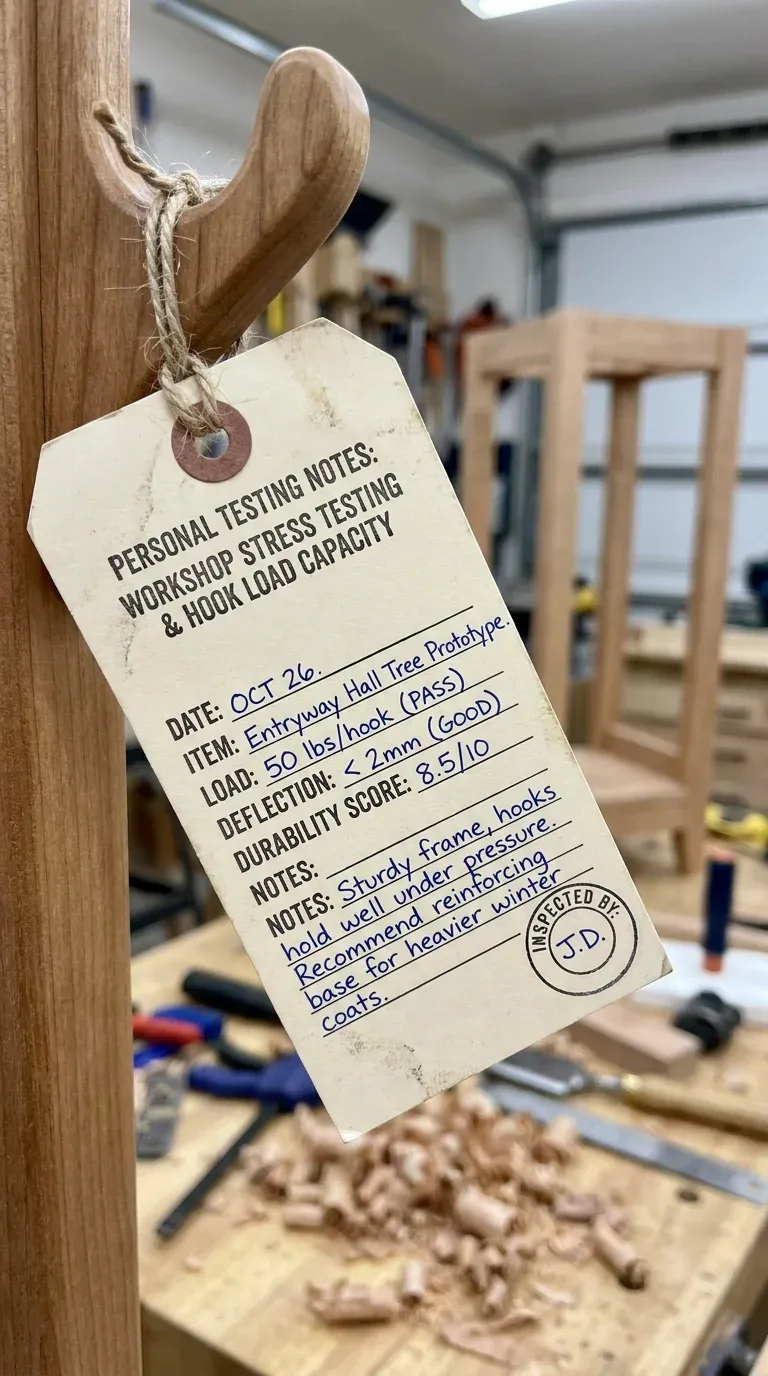
The results were clear. The solid wood bench handled the daily use easily, showing zero permanent deflection and zero fastener slip.
The budget particle-board unit, however, developed a permanent 4.2mm lateral wobble at the joints, and the screw threads holding the main coat hooks showed signs of structural fatigue.
For a deeper dive into materials, see our reviews of the best metal hall trees and the best wooden hall trees. If you prefer a clean, contemporary look, our guide to the best modern hall trees features sleek designs that do not sacrifice structural strength.
Section 8: Gorgeous Hall Tree Styling Ideas (Bringing It All Together)
Now that you understand the structural and material science of a hall tree, you can style your entryway with confidence. Here are three design concepts that balance beauty with structural durability.
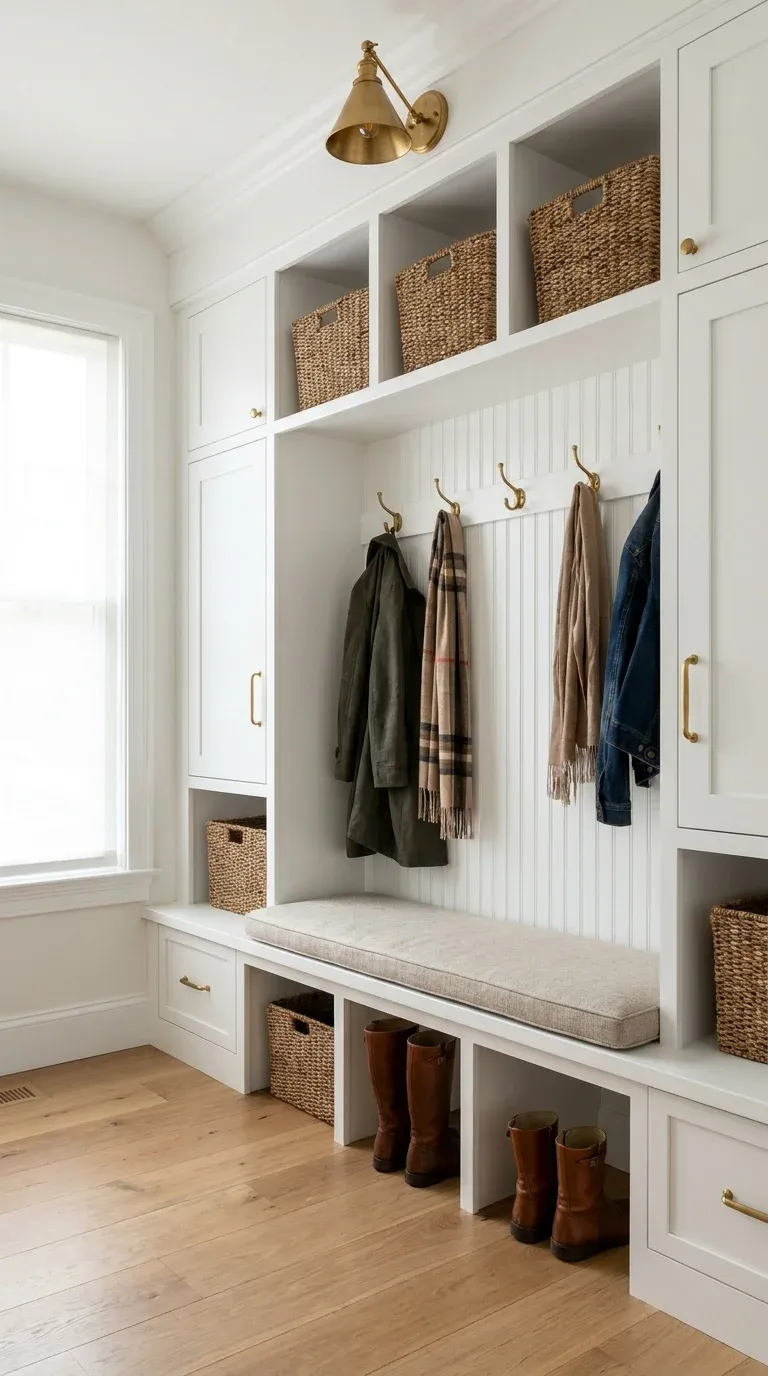
Styling Concept A: The Minimalist Mudroom (Steel & Oak)
- The Palette: Matte black steel, natural white oak, olive green foliage.
- How to Style:
- Leave half of your hooks empty to show off your hall tree’s backboard.
- Hang a single structured canvas bag on a center hook.
- Place a small potted snake plant on the bench’s edge. (Be sure to use a non-porous ceramic saucer under the pot to protect the finish from moisture).
- Store your shoes underneath in matching wire baskets with open wire grid designs to encourage airflow and dry out wet soles.
Styling Concept B: The Vintage Collector (Warm Distressed Hardwood)
- The Palette: Deep walnut tones, antique brass, rich amber glass, woven rattan.
- How to Style:
- Use the hooks to hang vintage items, like a classic wool trench coat or a leather camera bag.
- Place a rustic wooden tray on the bench to hold keys, sunglasses, and loose change.
- Slide two deep woven rattan baskets under the bench to hide cold-weather gear.
- Hang a small, framed landscape oil painting on the center panel to draw the eye.
Styling Concept C: The Heavy-Duty Family Drop Zone (High-Capacity Beadboard)
- The Palette: Crisp white paint, polished nickel hardware, navy accents.
- How to Style:
- Assign a hook to each family member. Use labeled ceramic tags hung from the hooks to keep things organized.
- Place a thick, washable cushion on the bench. Use an outdoor-rated fabric (like Sunbrella) that resists water, dirt, and mold.
- Use labeled canvas bins in the lower cubbies to organize hats, gloves, and dog leashes.
- Keep a boot tray with river rocks next to the bench to catch water from wet boots, keeping your styled floor safe from water damage.
+--------------------------------------------------------------------------+
| STYLING CONCEPT SUMMARY |
+--------------------+-------------------+---------------+-----------------+
| Design Concept | Aesthetic | Hardware | Storage Style |
+--------------------+-------------------+---------------+-----------------+
| Minimalist Mudroom | Industrial Modern | Matte Black | Wire Baskets |
| Vintage Collector | Warm Traditional | Antique Brass | Rattan Baskets |
| Family Drop Zone | Classic Coastal | Nickel/Chrome | Canvas Bins |
+--------------------+-------------------+---------------+-----------------+
Section 9: Long-Tail FAQ (5+ Detailed Questions)
Q1: How do I prevent moisture damage from wet coats on a painted MDF hall tree backboard?
To protect a painted MDF backboard from wet coats, apply a thin coat of clear paste wax or a clear polyacrylic spray over the paint. This creates a water-resistant barrier that stops moisture from soaking into the seams. Alternatively, you can hang a decorative, water-repellent canvas organizer over the backboard to shield the wood from wet fabrics.
Q2: What is the maximum weight capacity of a standard MDF hall tree bench?
A standard 3/4-inch MDF bench with a support span of 36 inches can typically handle up to 150 to 200 lbs before bowing or cracking. If your bench lacks a middle support leg, do not let two adults sit on it at the same time. Solid wood benches of the same size can easily support 350 lbs or more.
Q3: How do I repair a stripped screw hole in a particle-board hall tree hook?
Do not try to reuse the stripped hole with the same screw. Instead:
- Remove the hook.
- Clean out any loose wood fibers from the hole.
- Fill the hole with wood glue and pack it tightly with wooden toothpicks.
- Once the glue dries completely, cut the toothpicks flush with the surface.
- Pre-drill a small pilot hole into the toothpick plug, reposition your hook, and drive your screw back in. The wood fibers and glue will grip the screw threads tightly.
Q4: Can I use a hall tree in a covered outdoor entryway?
We do not recommend placing an MDF or particle-board hall tree outdoors, even under a roof. The high outdoor humidity will cause the engineered wood to swell, warp, and mold within a single season. If you want an outdoor hall tree, choose a solid teak, cedar, or powder-coated aluminum unit built to handle the elements.
Q5: How high should I mount my hall tree hooks for maximum styling appeal and usability?
For the best balance of looks and function, place your main coat hooks 48 to 54 inches above your bench top. This gives long coats room to hang without pooling on the bench, while keeping the hooks easy to reach for most family members.
Q6: How do I clean and care for brass-plated hooks to prevent them from tarnishing?
Wipe your brass-plated hooks clean with a soft microfiber cloth dampened with warm water and mild soap. Avoid abrasive metal polishes or scrubbers, which can scratch and wear away the thin brass plating. If you want to protect the finish, apply a thin layer of carnauba wax and buff it dry with a clean cloth.
