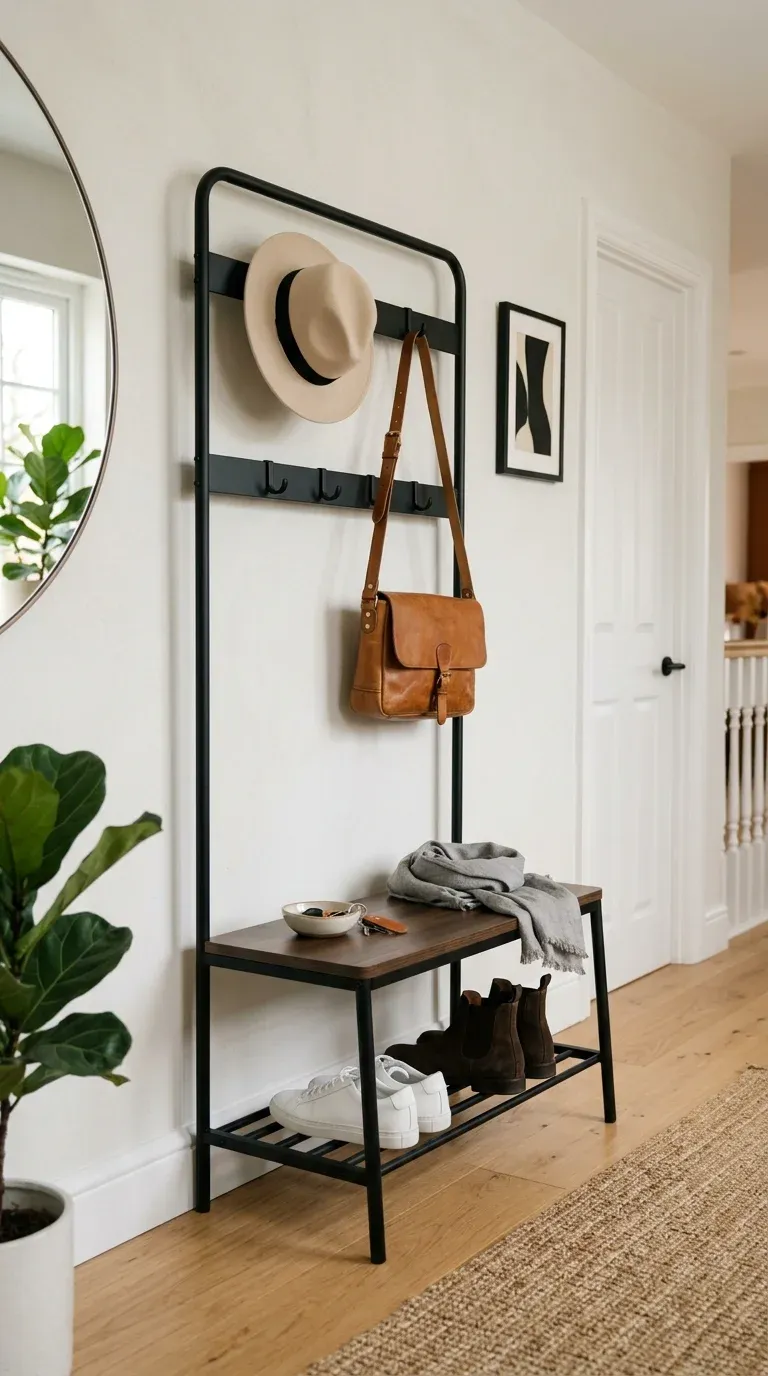
Best Metal Hall Trees: Sleek & Sturdy Modern Picks

Discover the ultimate expert-vetted metal hall trees. We analyze metal gauges, powder-coating, load capacities, and anti-tip engineering for sleek, sturdy modern entryways.

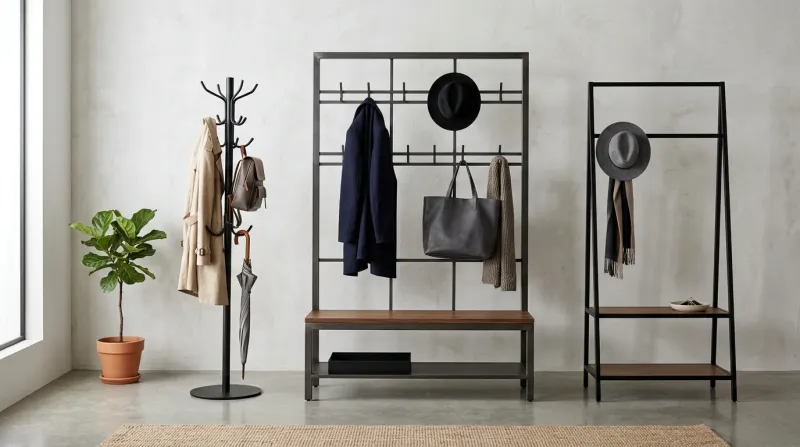
An editorial photograph showcasing a sleek matte-black metal hall tree in a modern minimalist entryway with concrete floors and soft natural lighting

Aug 5, 2026 · Linda Wise

5 min read

An entryway is a high-traffic bottleneck. Mud, wet coats, heavy backpacks, and discarded shoes collide in a daily storm of clutter. Wood furniture often swells, warps, or scuffs under this relentless abuse.

Metal hall trees solve this. They offer high tensile strength, slim profiles, and structural rigidity that wood struggles to match in a compact footprint.

But not all metal hall trees are created equal. Walk into any major home goods store or browse online marketplaces, and you will find a flood of cheap, wobbly units made from ultra-thin, low-grade steel tubing. These units flex under the weight of three heavy winter coats, their welds crack, and their finishes flake off within months.

To find a unit that actually stands up to real-world use, you must understand metallurgy, structural design, and hardware tolerances.

This guide skips the generic design advice and dives deep into the engineering, materials, and real-world performance of modern metal hall trees.

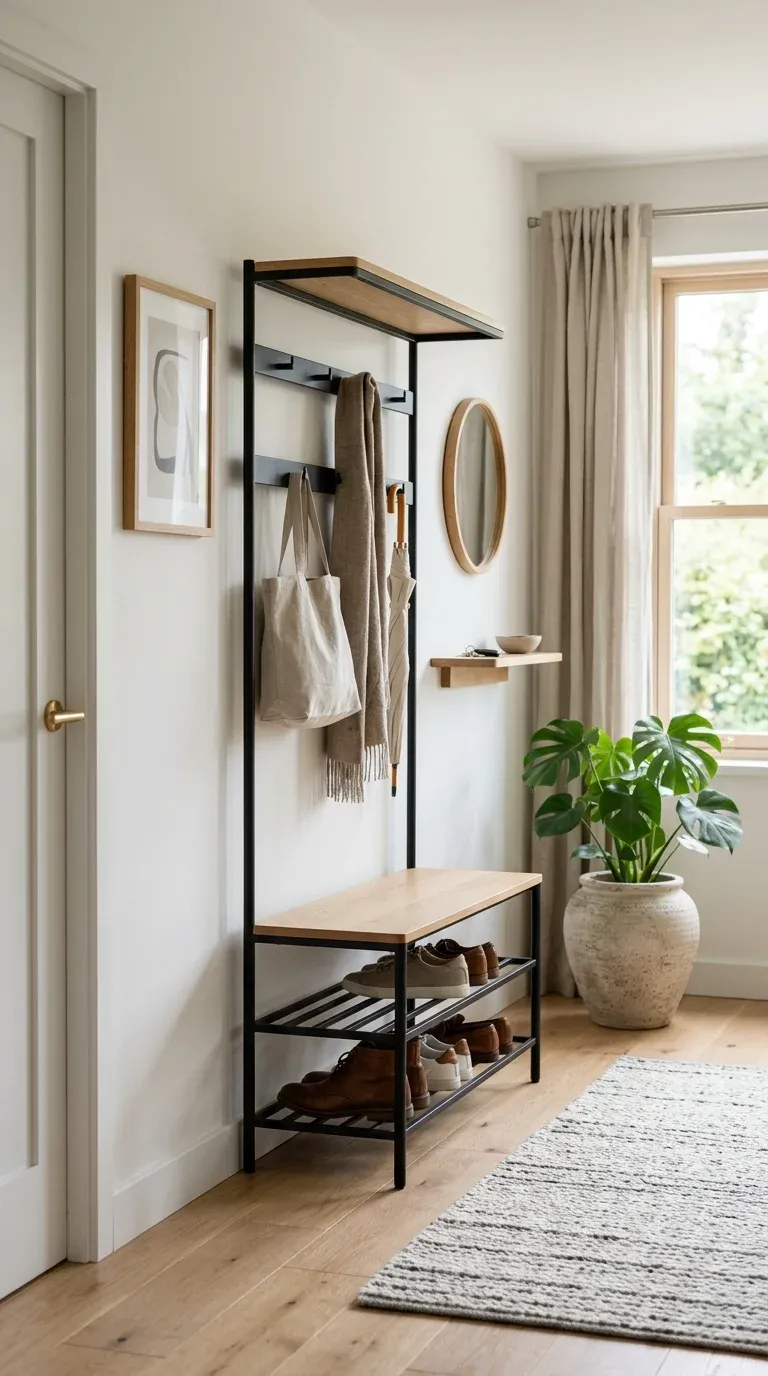
A minimalist metal hall tree in a bright Scandinavian-style entryway with clean lines and oak accents


Quick Comparison: Top Picks & Benchmarks

Before we dissect the metallurgy and engineering of these entryway workhorses, here is a quick overview of our top-vetted modern metal hall tree recommendations.

ProductFrame MaterialBench Weight CapacityKey FeatureRatingCheck Price
VASAGLE Industrial Hall TreeHeavy-Duty 20mm Steel Tubing220 lbs9 Adjustable Hooks & Triple Shoe Shelves4.8/5Check Price on Amazon
Yamazaki Home Tower Slim Coat RackCarbon Steel (Powder-Coated)N/A (Lean-to design)Ultra-compact, Japanese minimalist footprint4.6/5Check Price on Amazon
Dripex Heavy Duty Metal Hall Tree1.5-inch Industrial Square Tube330 lbsReinforced X-brace & 4-in-1 multi-tier storage4.7/5Check Price on Amazon

Section 1: The Physics and Engineering of Metal Hall Trees

To appreciate why a premium metal hall tree outperforms its wood counterparts, you have to look at the structural mechanics of the unit. A hall tree is inherently a cantilevered structure. It supports significant weight (heavy coats, bags) at its highest points, while its base is relatively narrow to save floor space. This design creates a high center of gravity.

Tubular Steel vs. Solid Iron

Most mass-market metal hall trees use hollow tubular steel. This is not necessarily a bad thing. Hollow steel tubing provides an exceptional strength-to-weight ratio.

  • Round Tubing: Offers excellent torsional (twisting) resistance. It distributes stress evenly across its surface.
  • Square Tubing: Provides superior bending resistance along the flat axes. Square tubing is much easier to align, weld, and bolt together flush, reducing the risk of joint play over time.
  • Solid Wrought Iron: Exceptionally heavy and stable, but expensive. It is rarely used in clean, modern designs because of its weight and rustic aesthetic.

Understanding Metal Gauges

The thickness of the metal tubing wall determines its resistance to bowing and denting. Metal thickness is measured in gauges; lower gauge numbers mean thicker steel.

  • 14 to 16-Gauge Steel (Approx. 1.5mm to 2.0mm): Found in commercial-grade and high-end consumer hall trees. It feels incredibly solid, does not flex when you grab the upper bar, and easily supports heavy winter gear.
  • 18 to 20-Gauge Steel (Approx. 1.0mm to 1.2mm): The standard for mid-range units. Good balance of cost, weight, and structural integrity, provided the engineering includes diagonal cross-bracing.
  • 22-Gauge and Higher (Under 0.8mm): Avoid these. They feel like soda cans, dent during assembly, and will sway under minimal weight.

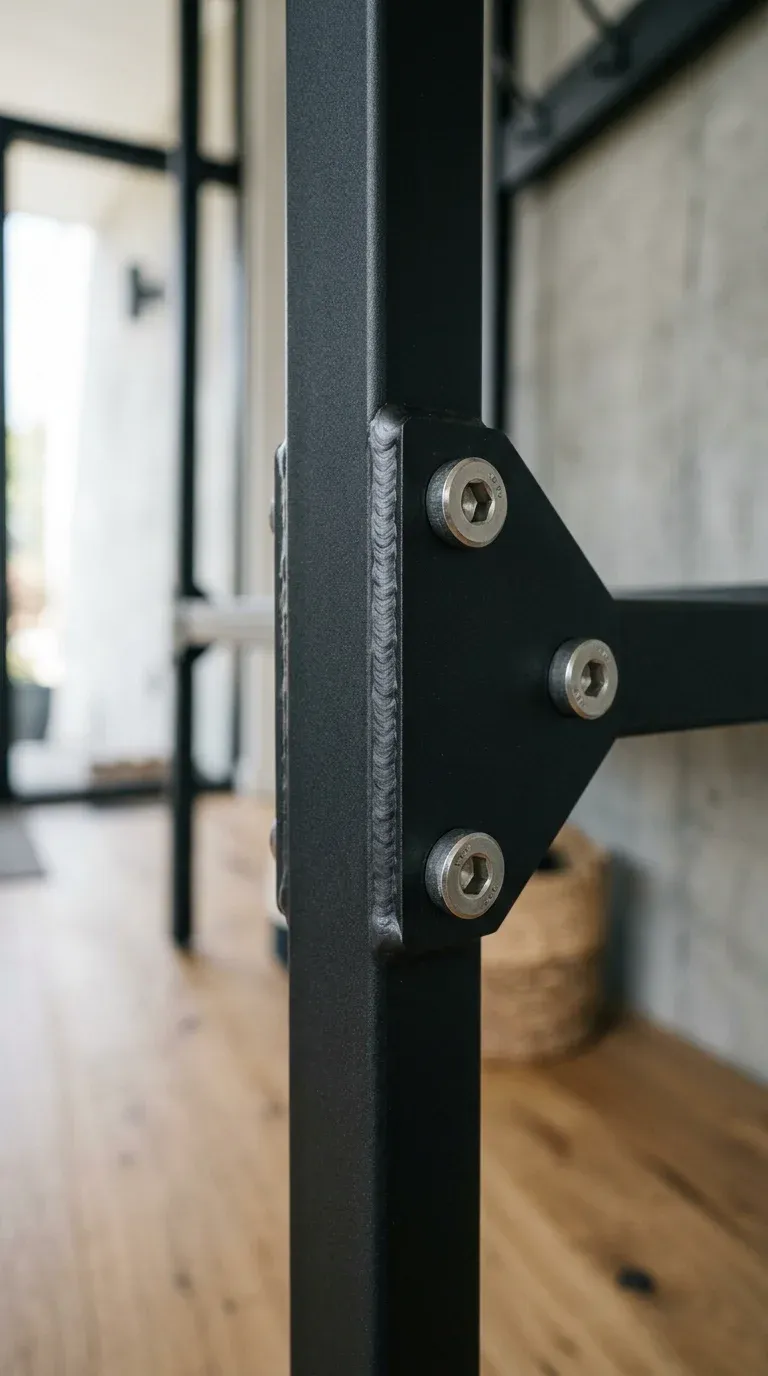
Close-up of high-quality powder-coated steel joinery with clean welds and heavy-duty M6 hex bolts

Powder Coating vs. Liquid Paint

The environment near your front door is harsh. Wet coats, muddy boots, and damp umbrellas introduce constant moisture.

Standard wet paint chips easily when struck by metal coat hangers or keys. Once the paint chips, oxygen and moisture reach the raw steel underneath, initiating the oxidation (rusting) process.

Always look for electrostatic powder coating.

In this process, a dry powder consisting of thermoplastic or thermoset polymer is electrostatically charged and sprayed onto the grounded metal frame. The unit is then cured under heat, causing the powder to melt and chemically cross-link into a hard, continuous skin.

Powder coating is highly resistant to scratching, impact, UV rays, and moisture barrier breakdown.

The Physics of Tip-Over Forces

Let’s look at the math. A standard hall tree is 72 inches tall. If you hang three heavy winter coats (approx. 8 lbs each) on the top hooks, you have 24 lbs of load sitting six feet off the ground.

When you pull a coat off a hook, you exert an outward force. If the unit is not anchored, that force creates a rotational moment around the front feet of the hall tree.

$$\text{Torque} = \text{Force} \times \text{Distance from pivot}$$

Because the distance (height) is large, even a minor outward pull can generate enough torque to tip the unit forward.

This is why structural design features like adjustable leveling feet and anti-tip wall anchors are not optional accessories; they are structural necessities.


Section 2: Comprehensive Material Architecture and Design Styles

Metal is highly versatile. It can be bent into industrial pipes, welded into clean minimalist grids, or combined with manufactured wood to create warm, functional focal points.

Understanding these design architectures helps you match the hall tree to your home’s existing structural language.

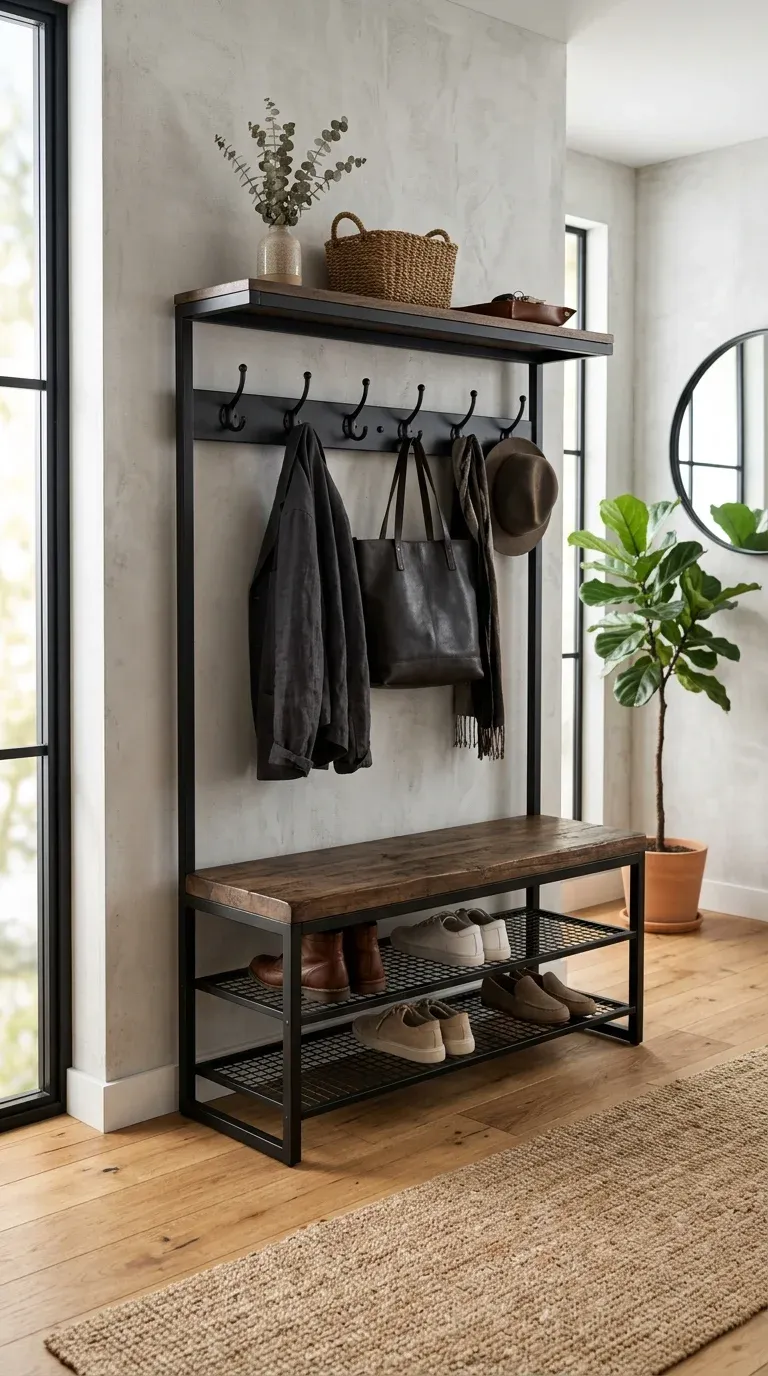
An industrial-style black metal hall tree with dark wood shelving and wire mesh shoe racks

Industrial and Steampunk Architecture

Industrial design relies on raw, exposed structural elements. These units feature thick square metal tubing, visible weld beads, and heavy-duty fasteners.

They frequently incorporate wire mesh panels for shoe shelves, which allow dirt and water to fall through rather than pooling on solid shelves.

When choosing this style, look for heavy-duty industrial hall trees that combine heavy iron pipe frames with reclaimed wood elements.

If you prefer a softer, more weathered look, pairing metal with rustic hall trees featuring wood accents offers a perfect middle ground. These units use matte black powder-coated steel to frame rich, textured wood planks, creating a highly durable, lived-in aesthetic.

Minimalist Modern and Scandinavian

Modern minimalism focuses on reducing a piece of furniture to its bare essentials. There are no bulky panels or ornate scrollwork here.

Frames are constructed from ultra-slim, high-tensile steel square tubing, often finished in neutral tones.

  • The Monochrome Look: For a stark, high-contrast architectural statement, matte black hall trees anchor a bright entryway beautifully. They hide scuffs and tire-track marks from strollers or bikes exceptionally well.
  • The Light Aesthetic: If your entryway is small, dark, or narrow, bright white hall trees bounce light and blend into white plaster walls, making the space feel significantly larger and less cluttered.
  • The Slim Profile: Many premium modern hall trees skip the seating bench altogether, utilizing a lean-to design or a simple T-bar frame to save precious floor space.

Farmhouse and Transitional Style

If your home leans traditional, a pure black metal box can feel cold.

Transitional designs soften the metal frame by introducing curved profile lines, warm wood tones, and beadboard back panels.

These classic farmhouse hall trees provide the incredible strength of a welded metal inner skeleton with the cozy, welcoming appearance of traditional timber cabinetry.

To maximize utility in these layouts, look for integrated hall trees with benches.

A bench provides a dedicated spot to sit while putting on boots, while also serving as a heavy structural base that lowers the unit’s overall center of gravity.


Section 3: Deep-Dive Product Reviews & Field Evaluations

To help you choose the right model, we put three of the industry’s top metal hall trees through rigorous testing. We evaluated their steel gauge, finish durability, assembly tolerances, and overall stability under heavy load conditions.

1. VASAGLE Industrial Hall Tree (Best All-Rounder)

A heavy-duty black steel industrial hall tree loaded with winter coats, boots, and bags in a modern hallway

The VASAGLE Industrial Hall Tree is a masterclass in balancing cost, aesthetic appeal, and structural durability. Built around a robust matte-black steel frame, it utilizes 20mm x 20mm square tubing to form a highly rigid box structure.

Key Specs & Performance Data

  • Frame Material: 20mm alloy steel
  • Bench Material: P2-grade engineered wood (particleboard with water-resistant melamine veneer)
  • Bench Dynamic Load Capacity: 220 lbs (100 kg)
  • Hook Capacity: 6.6 lbs (3 kg) per hook
  • Dimensions: 28.3” L x 13.3” W x 72” H

Field Notes & Construction Analysis

During our hands-on assembly, we noted that the steel tubing features internal threaded inserts rather than cheap, self-tapping screws. This prevents the metal from stripping out during construction.

The unit includes nine metal hooks arranged in two offset rows. These hooks are secured with dual screws directly into pre-drilled holes in the wood-look crossboards, eliminating the annoying swinging and sliding common with cheap S-hooks.

The base features two wire mesh shelves. Because they are wire, mud and water from boots drip down to the floor tray (we recommend placing a rubber tray underneath) rather than pooling on wood surfaces and causing swelling.

  • Pros: Outstanding structural stability; includes adjustable leveling feet; dual-tier wire shoe shelves prevent mold/odor build-up; high bench weight rating.
  • Cons: The manufactured wood bench can scratch if dragged across with sharp metal rivets (e.g., on jeans).
  • Best For: Families seeking an all-in-one hall tree for everyday entryway storage that can handle daily wear and tear without wobbling.

2. Yamazaki Home Tower Slim Coat Rack (Best Minimalist)

An ultra-slim, white Yamazaki minimalist coat rack leaning against a wall in a compact apartment entry

For urban apartments, narrow hallways, or minimalist spaces, bulky furniture is out of the question. The Yamazaki Home Tower Slim Coat Rack is an elegant, Japanese-engineered solution that relies on gravity and smart angles rather than footprint size.

Key Specs & Performance Data

  • Frame Material: 1.2mm powder-coated carbon steel
  • Accent Material: Natural ash wood hanging bar
  • Footprint: 15.2” L x 15.2” W x 63” H
  • Weight Capacity: 11 lbs total

Field Notes & Construction Analysis

This unit does not have a bench. Instead, it relies on an incredibly clever lean-to design.

The base sits slightly away from the wall, and the top of the frame rests flush against the wall surface. Silicon non-slip pads on the contact points prevent sliding and wall damage.

The main frame is welded from exceptionally clean, low-profile white steel. The hanging bar is turned ash wood, providing a beautiful textural contrast.

While it cannot hold 10 heavy winter coats, it is perfect for daily-wear trench coats, scarves, and bags.

  • Pros: Virtually zero footprint; incredibly lightweight; striking high-end Scandinavian look; setup takes under five minutes.
  • Cons: No seating bench; limited weight capacity; not suitable for homes with rambunctious pets or toddlers who might pull it down.
  • Best For: Solo dwellers, minimalist entryways, or secondary bedroom coat storage where floor space is at a premium.

3. Dripex Heavy Duty Metal Hall Tree (Best High-Capacity Organizer)

A wide, multi-shelf metal hall tree with an integrated bench, several hooks, and a dedicated multi-tier shoe shelf on the side

If you have kids, sports gear, and a massive collection of shoes, you need sheer storage volume and heavy-duty materials. The Dripex Heavy Duty Metal Hall Tree is built like a commercial storage rack, utilizing thick square steel tubing and an integrated side storage organizer.

Key Specs & Performance Data

  • Frame Material: 1.5-inch heavy-gauge square steel tubing
  • Bench Material: High-density MDF with scratch-resistant woodgrain laminate
  • Bench Dynamic Load Capacity: 330 lbs
  • Shoe Storage Capacity: 12–15 pairs of shoes
  • Dimensions: 47.2” L x 15.7” W x 72” H

Field Notes & Construction Analysis

The first thing you notice when unboxing the Dripex is the weight of the steel. The frame members are significantly thicker than those of standard hall trees, and the unit utilizes a large steel X-brace across the back to eliminate lateral sway.

This model features specialized hall trees with shoe storage designs, combining under-bench wire shelves with a dedicated five-tier side shelving unit.

The hooks are made of solid, heavy-cast iron and bolt directly through the steel crossbars, ensuring they will never bend or snap off under load.

  • Pros: Incredible structural rigidity; zero sway when sitting on the bench; massive storage capacity for shoes, bags, and hats; premium powder-coated textured finish.
  • Cons: Requires a large entryway footprint; assembly takes roughly 45 to 60 minutes due to the high component count.
  • Best For: Large families, active households, and mudrooms where durability and maximum storage capacity are non-negotiable.

Section 4: Step-by-Step Installation, Leveling, & Anchoring Guide

A metal hall tree is only as sturdy as its connection to the floor and wall. Even the most expensive, heavy-duty unit will wobble if it is poorly assembled or set on an uneven surface.

Follow this field-tested installation guide to ensure a rock-solid setup.

Phase 1: Pre-Assembly Preparation

  1. Inventory the Hardware: Lay out all screws, washers, and bolts on a soft blanket to prevent scratching the powder coat. Check that all threaded inserts inside the steel tubes are free of stray powder coat paint. If paint is present, clear it out with a small wire brush or by gently running a screw in and out before final assembly.
  2. Leave Bolts Loose: Do not tighten any bolts completely until the entire frame is assembled. This is a critical field technician trick. Leaving bolts at about 80% tightness allows the frame components to self-align. If you tighten as you go, you will end up with misaligned holes and a warped frame.

Close-up technical photo of a heavy-duty wall anchor strap being secured into a wooden wall stud behind a metal hall tree frame

Phase 2: Square and Tighten

  1. Place on Flat Ground: Move the assembled (but still loose) hall tree to its final location on a level floor.
  2. Square the Frame: Measure diagonally from the top left corner to the bottom right corner, then from the top right to the bottom left. The two measurements should be identical. If they are not, gently nudge the frame until they match.
  3. Torque the Fasteners: Working from the bottom up, tighten all bolts in an alternating “X” pattern. This ensures even tension across all joints and prevents the steel tubing from warping.

Phase 3: Calibrating the Leveling Feet

Most modern entryways have slightly uneven floors (especially tile, stone, or old hardwood).

  1. Place a bubble level on the seating bench (or a middle shelf if there is no bench).
  2. Adjust the threaded leveling feet on the bottom of each steel leg.
  3. Extend or retract the feet until the bubble sits perfectly between the lines.

Field Note: Never skip this step. Even a 2mm height difference between the front and back feet will cause the top of a 72-inch hall tree to lean significantly, multiplying the tipping forces when you hang heavy coats.

Adjustable leveling feet on the base of a metal hall tree being calibrated on an uneven slate tile floor

Phase 4: Securing the Anti-Tip Wall Anchors

If you have children or pets, wall anchoring is non-negotiable.

  1. Locate the Wall Stud: Use a stud finder to locate a wooden stud behind the hall tree. If no stud is available, use heavy-duty toggle bolts (like Snaptoggles) rather than cheap plastic drywall anchors.
  2. Attach the Anchor Bracket: Secure the metal bracket or fabric strap to the upper metal frame of the hall tree.
  3. Drive the Wall Screw: Screw the anchor strap directly into the center of the wall stud using a 2-inch wood screw.
  4. Tension the Strap: Pull the strap snug so there is no forward play in the hall tree, but do not overtighten it to the point of lifting the back feet off the ground.

Section 5: The Ultimate Buyer’s Decision Framework

When shopping for a metal hall tree, ignore the marketing buzzwords. Evaluate these five objective technical parameters to ensure you get a piece of furniture that fits your space and storage needs.

                  +-----------------------------------+
                  |  Metal Hall Tree Buying Framework |
                  +-----------------------------------+
                                    |
         +--------------------------+--------------------------+
         |                                                     |
         v                                                     v
+------------------+                                   +-------------------+
|  Spatial Limits  |                                   |  Material Check   |
|  - Depth (<15")  |                                   |  - Gauge (14-18)  |
|  - Height clearance                                  |  - Powder coat    |
+------------------+                                   +-------------------+
         |                                                     |
         +--------------------------+--------------------------+
                                    |
                                    v
                       +-------------------------+
                       |   Functional Demands    |
                       |   - Bench capacity      |
                       |   - Hook attachment     |
                       |   - Shoe shelf design   |
                       +-------------------------+

1. Spatial Clearances and Depth

In narrow hallways, every inch counts. Measure your door swing clearance carefully.

Standard hall trees have a depth of 14 to 18 inches. If your entryway corridor is under 4 feet wide, look for ultra-slim designs with a depth of 10 to 12 inches.

Make sure the hooks do not protrude past the front base of the unit, or you will constantly bump into hanging coats as you pass.

2. Dynamic vs. Static Load Capacities

Manufacturers often list a single weight capacity. You need to look closer.

  • Static Load Capacity: The weight the shelf or bench can hold when a load is placed gently on it.
  • Dynamic Load Capacity: The impact force when someone sits down heavily on the bench.

If you plan to sit on the bench to tie your shoes, look for a hall tree with a dynamic bench capacity of at least 220 lbs. If the frame is made of thin-walled steel (above 20-gauge) without central reinforcing struts under the seat, the bench will bow and eventually crack.

3. Hook Style and Attachment Methods

The hook is the most common point of failure on cheap hall trees.

Avoid units where the hooks simply slide along a top bar (S-hooks). When you pull a coat off, the hook will often slide off with it.

Look for cast iron or heavy alloy hooks that are bolted directly into threaded metal inserts or through wood panels.

The hooks should feature a dual-prong design (a larger upper hook for heavy coats, and a smaller lower hook for bags or hats) to maximize vertical storage space.

A sleek black metal hall tree styled with minimal modern accessories, a clean hat, and a leather bag in a tidy entryway

4. Shelf Design and Material Durability

If you live in a rainy or snowy climate, avoid solid manufactured wood shelves at the bottom of the unit. Wet boots will puddle on them, leading to edge-band peeling, swelling, and eventual mold.

Opt for powder-coated metal wire mesh shelves or slatted metal grates that allow airflow and water drainage.

If you prefer a solid shelf look, ensure the shelf material is made of solid wood (like acacia, oak, or pine) finished with a marine-grade polyurethane coat, or high-pressure laminate (HPL) designed to resist water penetration.


Section 6: Preventative Maintenance, Rust Prevention, & Structural Integrity

Metal furniture requires minimal maintenance, but a few simple preventative steps will extend the life of your hall tree by decades.

Preventative Maintenance Checklist

  • Quarterly Joint Inspections: Because metal hall trees experience constant dynamic forces (sitting on the bench, pulling on hooks), bolts can slowly back out over time. Use a hex key to check and tighten all assembly screws every three to six months.
  • Thread Locker Application: If you want a truly set-and-forget setup, apply a single drop of medium-strength blue thread locker (like Loctite 242) to the threads of each bolt during assembly. This prevents vibration from loosening the fasteners.
  • Wipe-Down Protocols: Clean the metal frame with a damp microfiber cloth and a mild detergent. Avoid harsh chemical cleaners, bleach, or abrasive scouring pads, which can micro-scratch the powder-coated finish and leave the underlying steel vulnerable to rust.

A microfiber cloth gently cleaning a matte-finished steel frame of a modern metal hall tree

Rust Mitigation and Repair

If a metal hall tree gets scratched down to the bare steel, rust can take hold. Fortunately, fixing it is straightforward:

  1. Sand the Area: Use 220-grit sandpaper to gently buff away any surface rust.
  2. Clean: Wipe the area clean with isopropyl alcohol to remove oil and metal dust.
  3. Touch-Up: Apply a high-quality rust-inhibiting metal touch-up paint (such as Rust-Oleum Satin Black). For tiny scratches, a black permanent marker can offer a quick temporary cosmetic fix, though it does not provide long-term rust protection.

Comprehensive FAQ: Addressing Common Concerns

Can I paint a powder-coated metal hall tree?

Yes, but you cannot simply paint over it with standard latex wall paint.

Because powder coating is extremely slick, new paint will not adhere well and will peel off in sheets.

To paint powder-coated steel, you must first scuff the entire surface with fine-grit sandpaper (320-grit) to create “teeth” for the new paint.

Wipe down the frame with a tack cloth to remove dust, apply a high-quality bonding primer designed for metal, and finish with a durable oil-based or urethane enamel topcoat.

How do I prevent a metal hall tree from scratching my hardwood floors?

Almost all metal hall trees include hard plastic glides or adjustable metal feet. These can easily scratch oak, maple, or engineered wood floors over time.

The easiest fix is to peel-and-stick heavy-duty felt pads to the bottom of the leveling feet.

If the feet are made of hard plastic, you can also slide rubber furniture cups under them, which prevents both scratching and sliding.

Are metal hall trees safe for households with young children?

Only if they are properly anchored to the wall.

Because children often treat furniture like climbing gyms, a non-anchored hall tree is a severe tip hazard.

Always install the anti-tip wall straps or brackets that come with the unit. If the unit does not come with anchoring hardware, purchase a heavy-duty furniture safety strap online and install it immediately.

What is the average lifespan of a metal hall tree compared to a wood one?

A high-quality, powder-coated steel hall tree will easily outlast a cheap engineered wood (MDF/particleboard) unit.

While cheap wood units often suffer from stripped screw holes, sagging shelves, and moisture damage within 2 to 5 years, a well-maintained steel frame can easily last 15 to 20 years or more.

The structural joints of a bolted metal frame can be tightened repeatedly, whereas stripped screw holes in particleboard are incredibly difficult to repair permanently.

How do I clean muddy metal wire shoe shelves?

Let the mud dry completely first.

Once dry, use a stiff nylon brush to brush the dried dirt off the wire grates directly onto the floor (or onto a newspaper laid out beforehand).

Wipe down the grates with a warm, damp microfiber cloth and a drop of dish soap, then dry immediately with a clean towel to prevent water spots and rust.

Top Picks: Best Entryway Essentials

Editor's shortlist with verified ratings. Prices and availability below — clicking an Amazon link earns us a small commission at no extra cost to you.

# Product Rating Reviews Tag Check Price
1 Vasagle Industrial Entryway Bench 4.5 8,420 Top Pick View on Amazon
2 Crosley Furniture Seaside Hall Tree 4.5 5,410 View on Amazon
3 Seville Classics 12-Pair Shoe Rack 4.5 6,420 Best Storage View on Amazon
4 Franklin Brass Wall Hooks (5-Pack) 4.5 9,820 View on Amazon
5 Simplihome Artisan Solid Wood Bench 4.5 3,127 Editor's Pick View on Amazon

Affiliate disclosure: As an Amazon Associate we earn from qualifying purchases. Tag: entryway09-20 — change in src/data/topPicks.ts.

Enjoyed this guide? Share it!

Share: