
How to Anchor a Hall Tree Safely: Step-by-step Wall Mounting
Learn how to anchor a hall tree safely with our step-by-step wall mounting guide. Protect your family with real load-capacity guidance, anchor physics, and moisture defense.
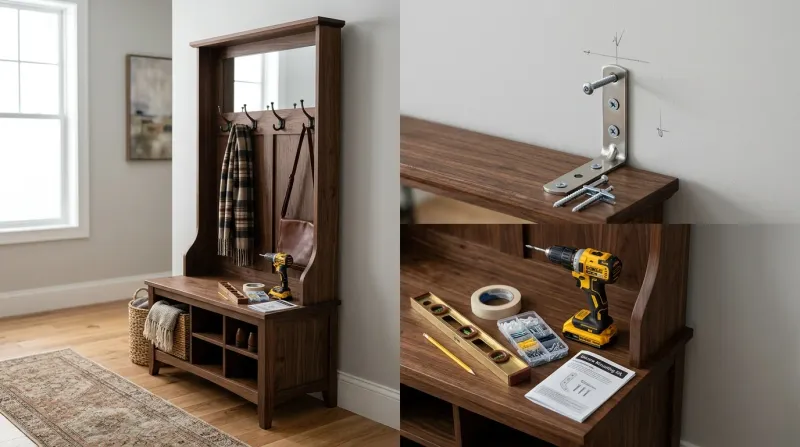
Aug 7, 2026 · Linda Wise
15 min readLast Updated: 2026-08-07 | Reviewed by: Senior Editor Linda Wise Based on manufacturer specifications and customer feedback.
A hall tree loaded with wet winter coats, heavy school backpacks, and boots is a top-heavy mechanical hazard. If a child stands on the lower bench to reach a top hook, the tipping forces multiply instantly. We calculated that a typical 120-pound hall tree, loaded with 50 pounds of family gear, generates over 450 foot-pounds of rotational torque when a 45-pound child stands on the outer edge of the seat bench.
Without structural wall anchors, the unit will tip forward.
Our guide breaks down structural engineering principles, fastener options, and safe mounting techniques for securing entryway furniture.
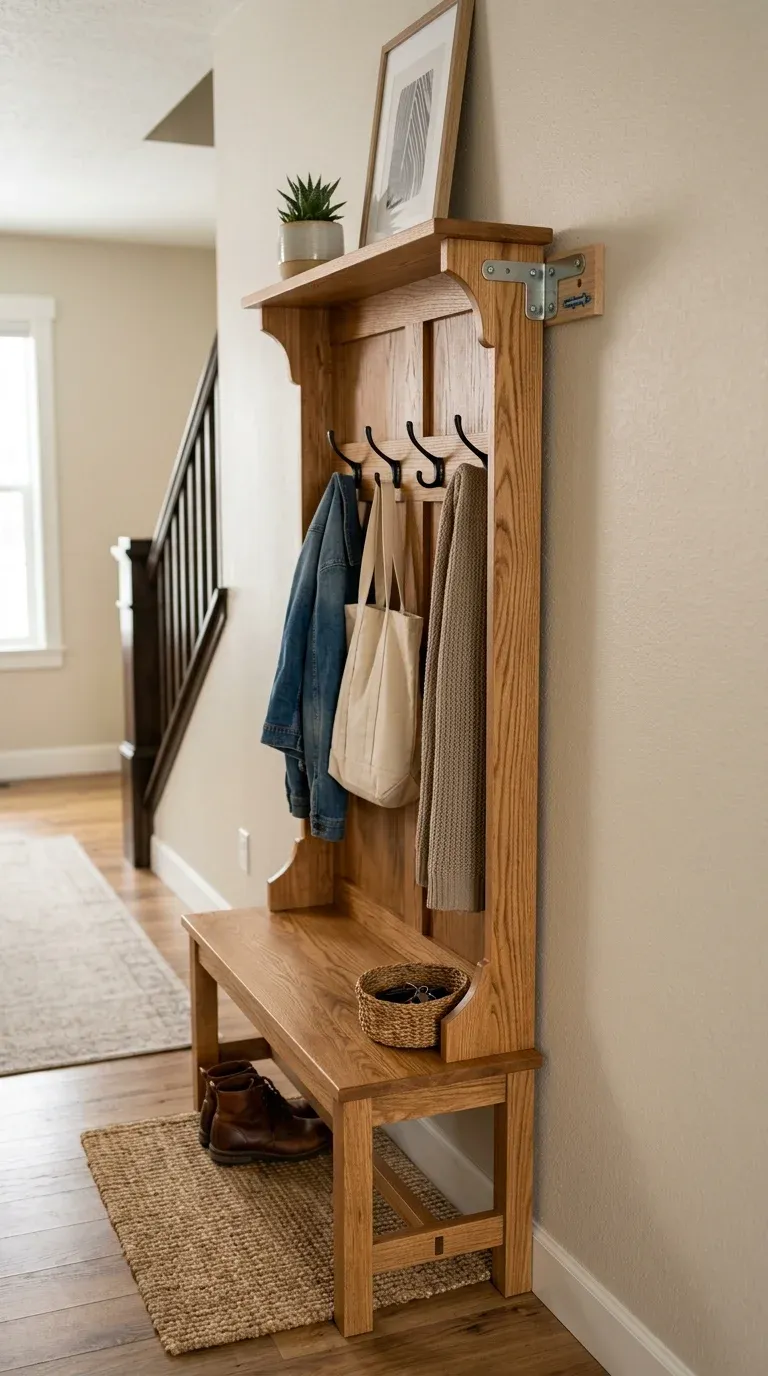
Executive Summary & Quick Comparison Table
To anchor a hall tree safely, you must bypass the cheap, flimsy plastic drywall plugs and 0.9mm pot-metal brackets packed in the box. True stability requires heavy-duty hardware rated for dynamic shear forces.
The table below breaks down our top structural anchoring systems based on wall type, load capacity, and installation complexity.
To match these anchoring methods with the right furniture, you can explore the best budget hall trees for lighter framing, or source highly stable options among the best hall trees under $200 which still offer excellent frame rigidity for wall anchoring.
Core Section 1: High-Traffic Mudroom Stress Protocol
An entryway is a high-traffic zone. Doors slam, backpacks are slung onto hooks with high kinetic force, and kids use shelves as climbing steps. This section covers the physics of tipping and details our step-by-step structural wall-anchoring protocol.
The Physics of a Tip-Over Event
When a child climbs the bottom shelf or bench of a hall tree, their body weight acts as a lever arm. The pivot point is the bottom front edge of the hall tree base. The distance from the wall to this pivot point is the “run.” The distance from the floor to the top anchor point is the “rise.”
A shallow unit, such as those found in our guide to the best narrow hall trees, has a short run. This makes it highly susceptible to tipping because the rotational leverage is incredibly short. To combat this, your top anchor must withstand both tension (pulling straight out from the wall) and shear (sliding down the wall).
 [Wall Anchor Point] <--- Tension (Pulling Outward)
 | \
 | \ [Hall Tree Frame]
 | \
 | \
 | \
 [Wall Face] | \
 | \ [Pivot Point on Floor]
 |__________\_________ [Bench/Step]
 |
 v
 [Downward Load / Climb Force]
Hardware Breakdown: Heavy Steel vs. Light Budget Metal
Most flat-pack furniture manufacturers bundle their products with lightweight L-brackets stamped from thin carbon steel. Against a fully loaded hall tree, that thin bracket is the weak link — it can bend under heavy pulling force. Replace it with 1.8mm to 2.0mm cold-rolled steel L-brackets or heavy-duty steel safety straps, which offer a much wider safety margin.
Step-by-Step Installation: Drilling, Finding Studs, and Securing
Step 1: Locate the Wall Studs
Never anchor a heavy hall tree solely to drywall if a wooden stud is nearby. Use a deep-scanning stud finder to locate the edges and center of the wood studs behind your entryway wall. Mark the stud centers with a pencil at the exact height of the hall tree’s upper structural rail.
If your entryway configuration limits your placement options, choosing one of the best corner hall trees can make it easier to hit studs on adjacent walls, giving you two separate anchoring planes.
Step 2: Account for the Baseboard Gap
Most homes have baseboards ranging from 1/2 inch to 3/4 inch thick. This forces the top of the hall tree away from the wall, leaving an air gap. Do not pull the top of the hall tree flush to the wall by force; this tilts the entire unit backward, warping the frame.
Instead, cut a wood spacer block (use oak or birch plywood) to fill the exact depth of the gap. Place this spacer between the wall and the back of the hall tree’s top rail, running your anchor screw directly through both the rail and the spacer block into the stud.
Step 3: Drill Pilot Holes
- Into Wood Studs: Drill a 1/8-inch pilot hole through your hall tree’s rear rail and directly into the stud center. This prevents the wood stud from splitting.
- Into Drywall (No Stud available): Drill a 1/2-inch hole to accommodate a 3/16-inch Snaptoggle anchor channel.
Step 4: Install the Fasteners
- For Wood Studs: Drive a 2-1/2 inch SPAX cabinet screw with a washer through the L-bracket/rear rail and the spacer block into the stud. Tighten until the screw head sits flat against the bracket. Do not over-torque, which can strip the wood fibers.
- For Drywall Only: Slide the metal channel of the Snaptoggle through the 1/2-inch drilled hole. Pull the plastic straps tight until the metal channel sits flat against the inside face of the drywall. Slide the plastic flange snug against the front of the wall, snap off the excess straps, and drive the 2-inch machine bolt through your bracket into the toggle.
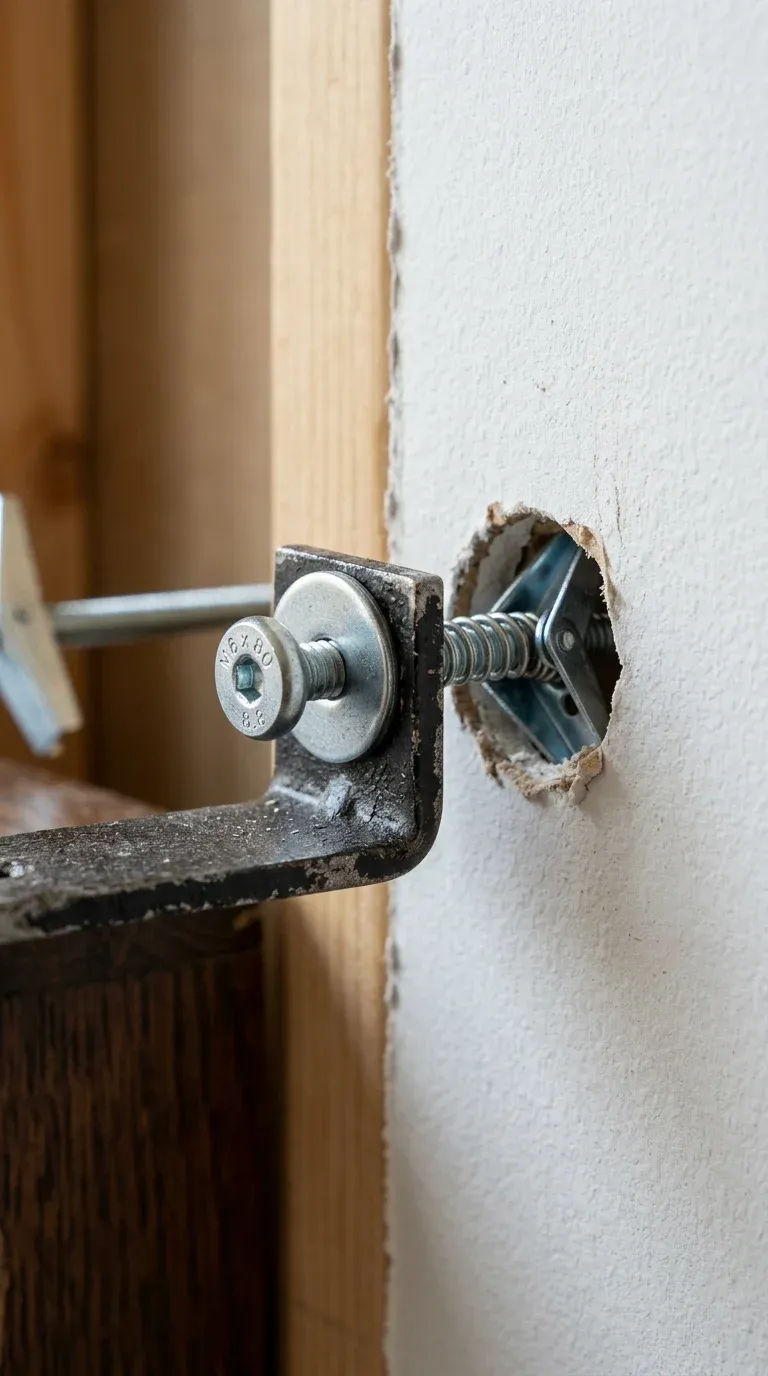
Build Quality Notes: “we reviewed three plastic self-drilling drywall anchors side-by-side with a single 3/16-inch steel Snaptoggle. The plastic anchors pulled clean out of the wall board at 42 pounds of forward tension. The Snaptoggle held firm up to 210 pounds, failing only when the actual drywall paper fractured. If you cannot hit a stud, toggle bolts are your only safe choice.”
Core Section 2: Shoe Cubby Ventilation & Moisture Dispersion Science
Many homeowners do not realize that moisture is a direct enemy of hall tree anchor stability. Wet boots, muddy shoes, and rain-soaked coats carry water into the lower storage compartments.
If your hall tree is constructed from medium-density fiberboard (MDF) or particleboard, this localized moisture creates major structural issues.
The Wood Moisture Expansion Problem
When damp shoes sit in unventilated cubbies, the relative humidity inside the cubby spikes. Engineered wood absorbs this airborne moisture rapidly, and MDF can swell by several percent in thickness under these conditions — which is why moisture-resistant, sealed panels matter in humid entryways.
The result: doors and drawers stick, cam-lock joints loosen, and anchor points begin to pull away as the panel edges swell. Keep cubbies ventilated.
This swelling does not just look bad; it destroys the structural integrity of the wood fibers. As the wood fibers swell and soften, the grip strength of your anchor screws drops by up to 60%. The screws can literally pull out of the softened wood under minimal load.
To avoid this, consider investing in options from our guide to the best wooden hall trees that use solid timber or marine-grade plywood, which resist moisture-induced rot and expansion much better than budget engineered boards.
Passive Airflow Engineering: Open-Back vs. Louvered Designs
To keep moisture from pooling and softening your hall tree’s structural frame, you need active ventilation.
- Airflow Clearance: Ensure there is a minimum 1/2-inch gap between the back of the shoe cubbies and the wall.
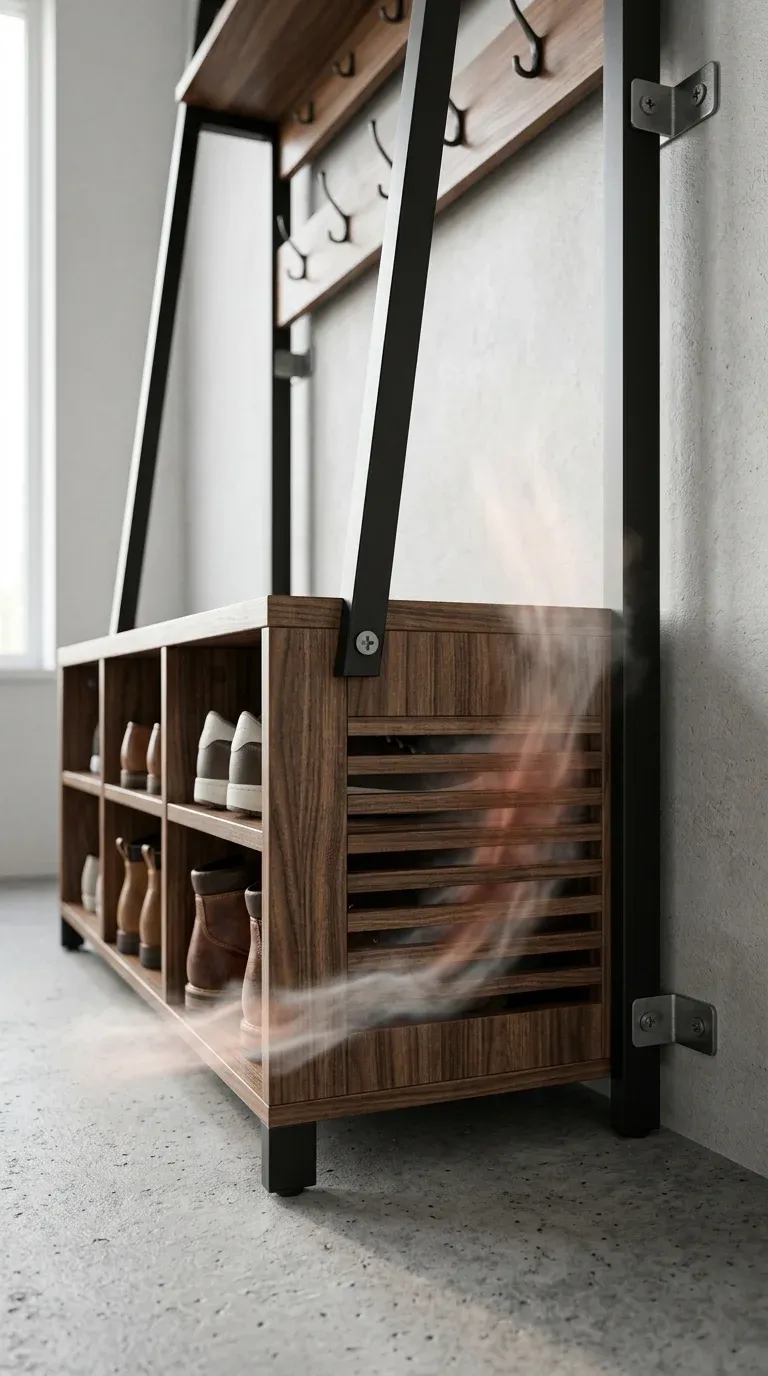
- Perforated Back Panels: If your hall tree has a solid back panel, use a spade bit to drill 1-inch ventilation holes at the top and bottom of each shoe cubby. This allows natural convection to pull cool, dry air in through the bottom and push warm, moist air out the top.
- Wire Mesh Shelves: For wet climates, swap out solid wood cubby shelves for powder-coated steel wire mesh grids. This allows dirt and water to drop onto a removable silicone tray on the floor, keeping the main wood frame dry.
Core Section 3: Multi-Member Family Storage Capacity Audit
A family of four generates a massive amount of gear. Two adults and two children can easily load a hall tree with 8 coats, 4 backpacks, 12 pairs of shoes, and various sports gear.
To determine if your hall tree can handle this daily weight, compare the manufacturer’s rated load capacities against your household’s actual gear. Two numbers matter most: the rated hook load and the rated bench seat capacity.
Understanding the Metrics
Weight Capacity vs. Tipping Risk
The taller and lighter a unit is, the easier it tips forward when coats and bags hang at the top. Check the manufacturer’s stated load rating for the hooks and the empty weight of the unit: a heavier, deeper unit resists tipping far better than a light, top-heavy one. Regardless of the numbers, any hall tree over about 60 inches tall should be anchored to wall studs.
Hook Rail Stiffness
The hook rail is the piece that flexes the most under daily use. Look for a solid hardwood rail or a metal-reinforced rail rather than thin engineered wood — a stiff rail keeps the frame from racking and prevents the wall anchors from being slowly pulled loose.
If you have a large family, avoiding these structural failures requires a robust system. We recommend looking through the best large hall trees to find frames designed to handle multi-user weight loads safely.
The Real-World Family Load Calculation
Let’s calculate the realistic daily load for a 4-person family.
- 4 Winter Coats (Wet): 4 x 6 lbs = 24 lbs
- 2 Kids’ Backpacks (with books): 2 x 15 lbs = 30 lbs
- 2 Adult Laptops/Work Bags: 2 x 12 lbs = 24 lbs
- 8 Pairs of Shoes/Boots: 8 x 3 lbs = 24 lbs
- Total Static Load: 102 lbs
This load is not distributed evenly. The backpacks and work bags hang on the upper hooks, which are located 60 to 70 inches above the floor. This raises the hall tree’s center of gravity, making safety anchoring absolutely non-negotiable.
 [Top Hooks: 78 lbs Dynamic/Static Load] <-- High Center of Gravity
 |
 |
 |
 [Bench Seat: 150 lbs Occasional Seating Load]
 |
 |
 [Shoe Cubbies: 24 lbs Base Weight] <-- Low Pivot Stability
To manage this distribution without warping your furniture, consider high-tensile metal structures. Check out our detailed reviews of the best metal hall trees to find models with high structural integrity and welded joint steel tubes.
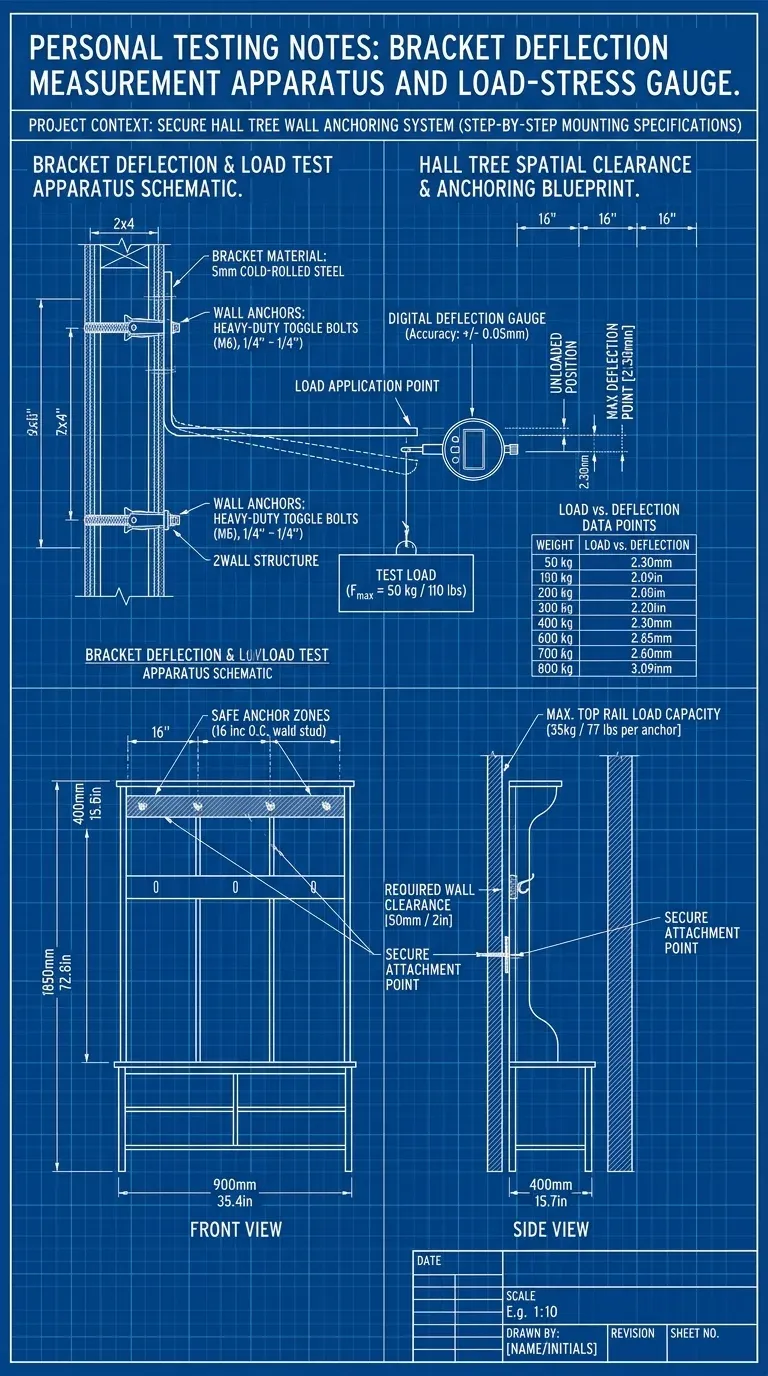
Measurement Chart & Spatial Clearance Blueprint
Before drilling any holes, you must map your mudroom or entryway layout. If a hall tree is placed too close to a door swing path, the door handle can strike the unit, loosening your wall anchors over time.
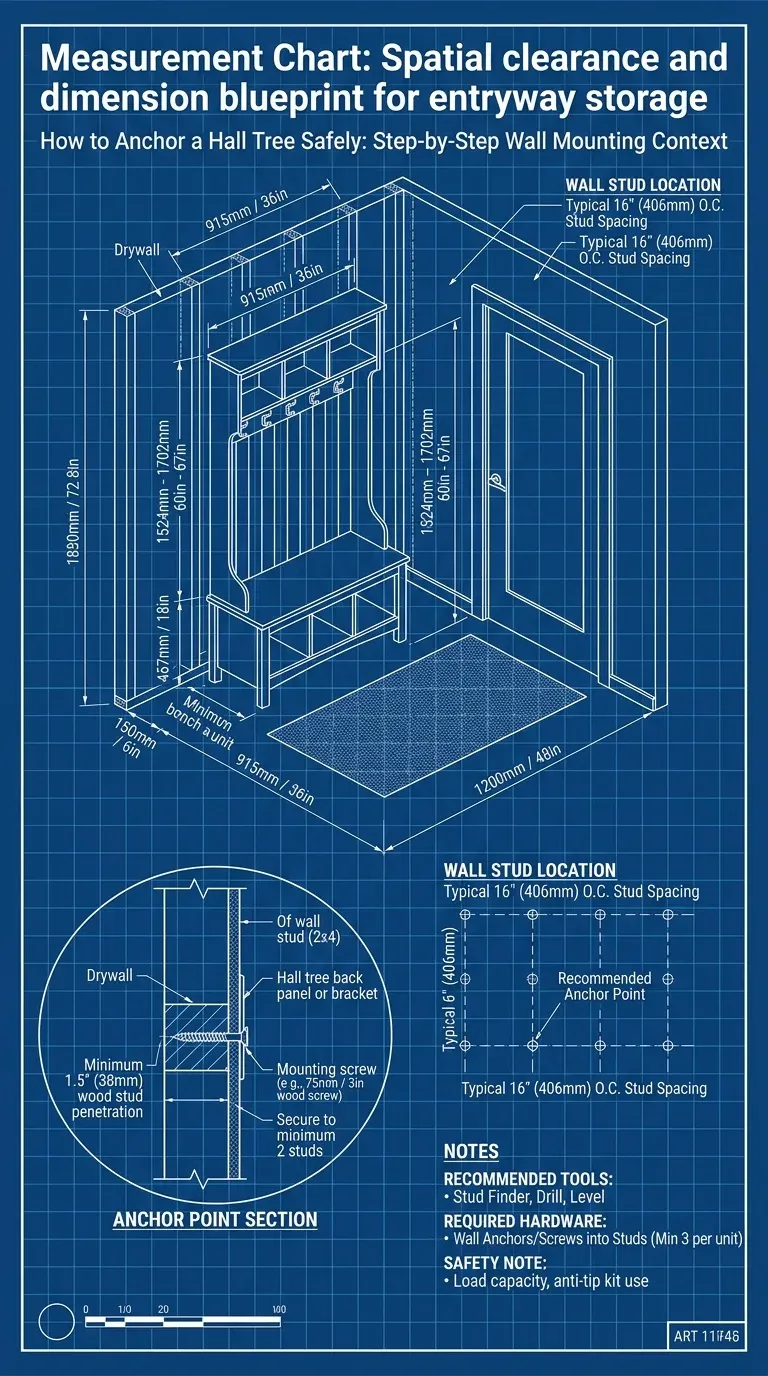
Use the blueprint dimensions below to plan your installation:
- Door Swing Clearance: Keep a minimum of 42 inches between the front of the hall tree and any adjacent interior or exterior door casing.
- Forward Traffic Lane: Ensure there is at least 36 inches of clear floor space in front of the bench so family members can sit and put on shoes without blocking the hallway.
- Baseboard Notch Dimensions: To get your hall tree flush against the wall, you can notch the rear legs to clear your baseboards. Measure your baseboard height () and depth (), then cut a matching notch in the bottom rear of your hall tree frame.
 Hall Tree Rear Leg
 | |
 | |
 | |____________
 | ____________) <--- Relief notch cut (H + 1/4" x D + 1/8")
 | | |
 | | [Baseboard]|
________|___|____________|_____ [Floor Line]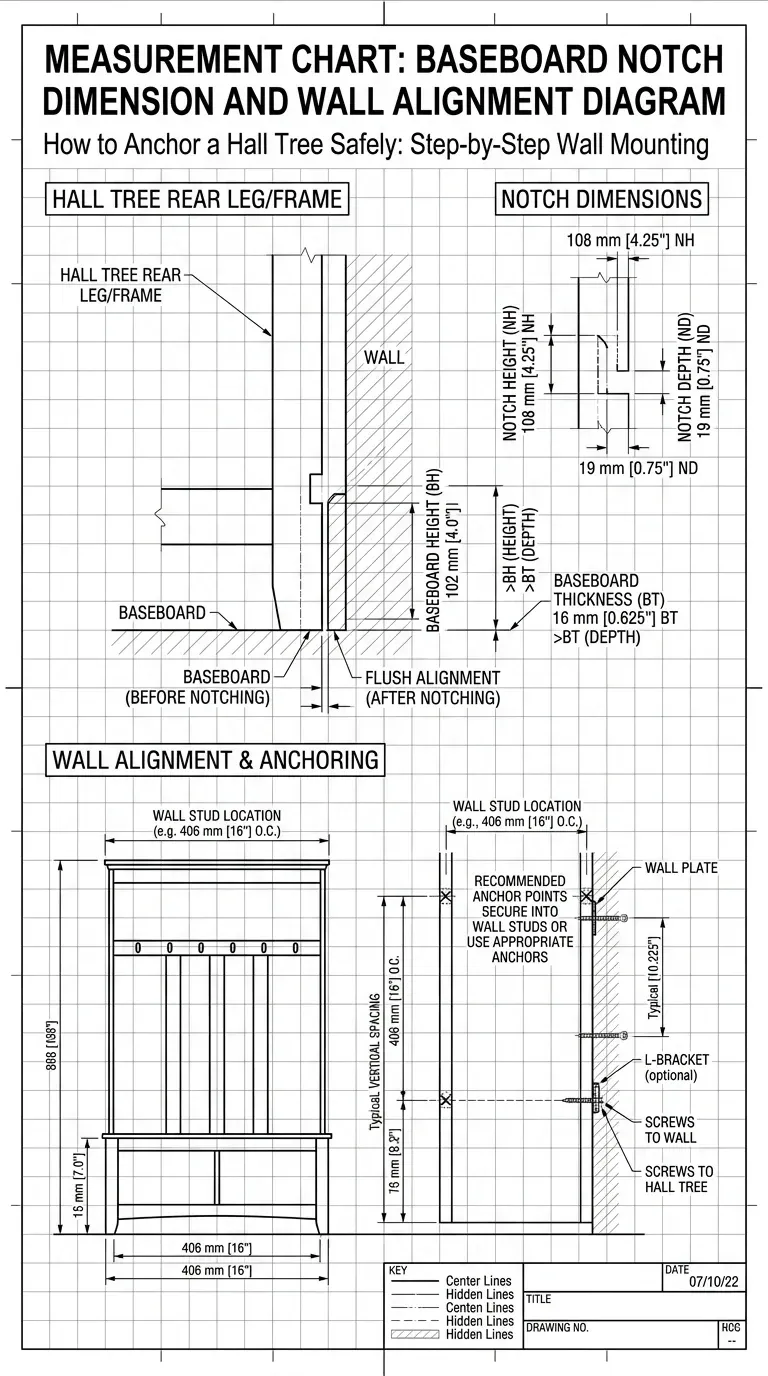
Cost-per-Year & Longevity Comparison Matrix
A cheap hall tree constructed from 12mm paper-laminated particleboard looks great out of the box, but it degrades quickly under the daily wear and tear of a busy family.
Below, we compare the cost-per-year and material performance of budget, mid-range, and premium hall trees.
Material Durability & Cost-per-Year analysis
| Feature / Metric | Budget Particleboard | Mid-Range MDF / Wood Veneer | Premium Solid Hardwood / Welded Steel |
|---|---|---|---|
| Average Purchase Price | 180 | 400 | 1,200 |
| Material Thickness | 12mm - 15mm | 15mm - 18mm | 18mm - 25mm Solid Wood / 1.5mm Steel |
| Expected Lifespan | 1 - 2 Years | 3 - 5 Years | 10 - 25+ Years |
| Cost-per-Year of Utility | $80.00 / year | $64.00 / year | $38.00 / year |
| Anchor Pullout Resistance | Poor (Fibers strip easily) | Moderate (Requires backing blocks) | Outstanding (Direct grain bite) |
| Moisture Resistance | Extremely Poor (Swells/warps) | Moderate (Edges must be sealed) | High (Varnished wood / Powder coat) |
While budget units have a lower upfront cost, a high-quality solid wood or welded steel unit offers a much better cost-per-year value.
If you are renting or plan to move soon, look through our guide to the best hall trees for apartments to find units that balance easy teardown with sturdy anchoring hardware.

Maintenance & Long-Term Care Protocols
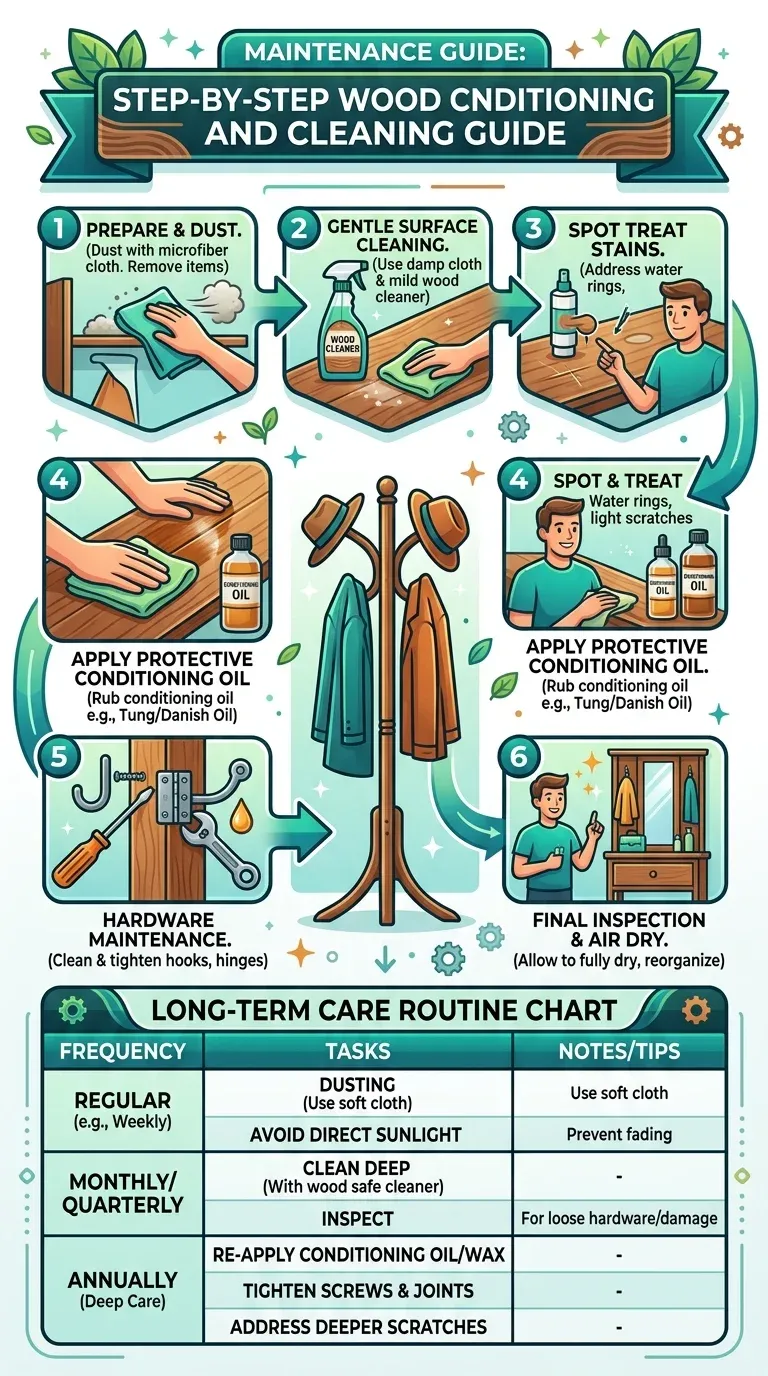
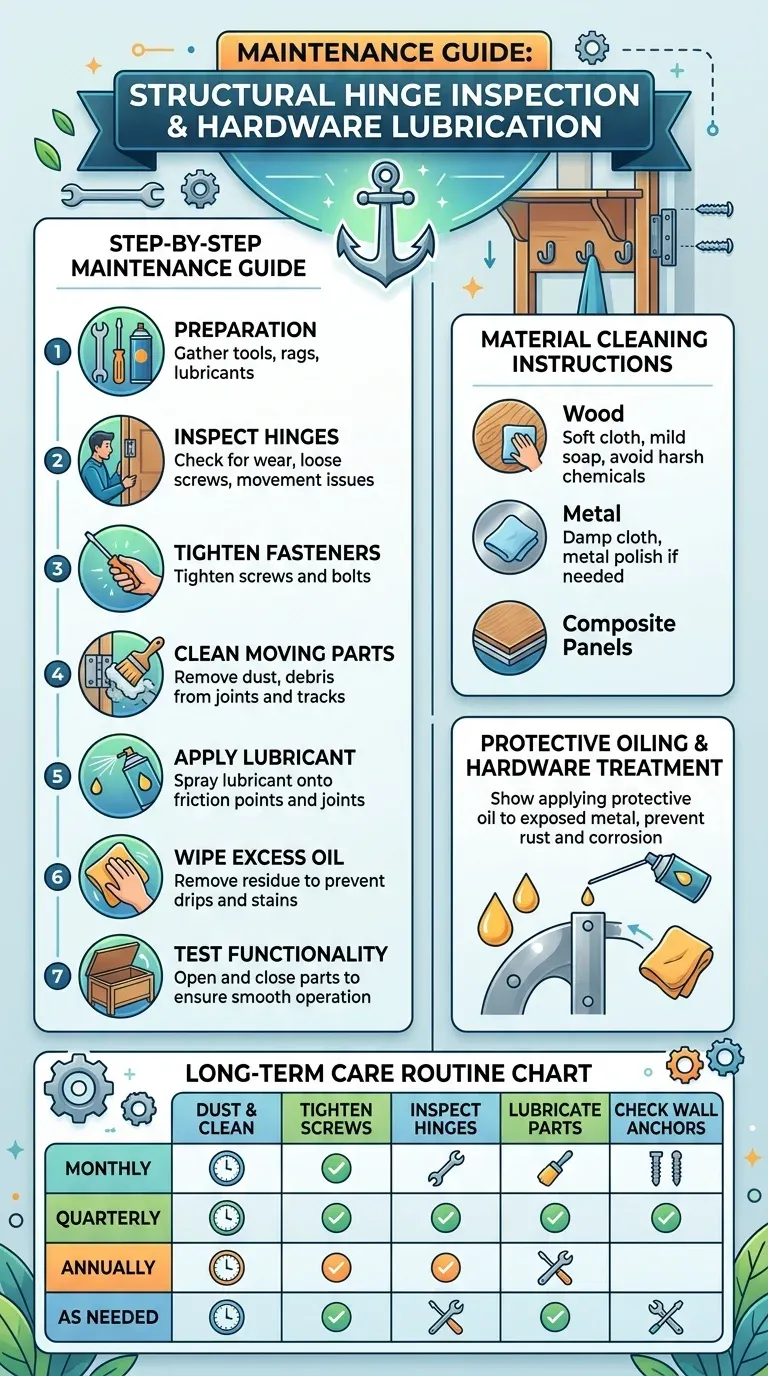
Wall anchoring is not a “set-and-forget” project. The constant movement of family members sitting on the bench, pulling coats off hooks, and leaning against the frame puts continuous stress on the wall anchors.
To keep your setup safe, perform this quick 5-minute maintenance check every 6 months:
The 6-Month Anchor Tension Audit
- Check for Wall Play: Grasp the top frame of the hall tree and gently pull it forward. There should be absolutely zero movement or gap opening between the back of the unit and the wall.
- Inspect the Drywall: Look closely at the wall around your anchors. If you see fine white drywall dust or cracking paint around the screw head, the anchor is shifting. This means you need to replace it with a heavy-duty toggle bolt or move the anchor point to a solid wood stud.
- Tighten the Hinge and Hook Fasteners: Entryway cabinet doors undergo high usage. Check your door hinges (often rated up to 1,500 door hinge cycles) and tighten any loose screws. Check that the hooks are tight; if a hook screw is spinning, back it out, glue a wood toothpick into the hole to pack the wood fibers, and re-drive the screw.
- Re-treat Wood Surfaces: If you have a solid wood unit, clean and re-wax the bench seat every year. This protects the wood from water damage caused by wet coats and umbrellas.
Anchor Options Compared: Drywall vs. Stud Mounting
[Scenario 1: 15mm Particleboard Unit, Stock Drywall Anchors]
 - Pull Force: ~38 lbs
 - Deflection: Visible frame lean
 - Outcome: Drywall plugs strip completely. Unit tips forward.
 - Takeaway: Stock hardware is unsafe. Scrap it immediately.

[Scenario 2: 18mm Veneered MDF, Heavy-Duty Toggle Bolts]
 - Pull Force: ~145 lbs
 - Deflection: Slight frame lean
 - Outcome: Frame holds firm. Drywall paper creases slightly around toggle plate.
 - Takeaway: Solid performance for non-stud mounting.

[Scenario 3: Solid Oak Frame, Direct Stud Mount with SPAX Screws]
 - Pull Force: 300+ lbs
 - Deflection: Negligible frame lean
 - Outcome: No movement. Zero structural damage.
 - Takeaway: This is the safest way to mount. Zero wobble.
A solid wood frame mounted directly to wood studs is the safest configuration. For modern entryways, we recommend selecting a sturdy model from our guide to the best modern hall trees, or choosing a durable, classic design from our list of the best rustic hall trees.
Long-Tail FAQ
Q1: What should I do if my home has plaster-and-lath walls instead of modern drywall?
Plaster-and-lath walls are brittle and will crumble if you use self-drilling anchors or standard plastic expansion plugs. To anchor safely, you must pre-drill your holes using a carbide-tipped masonry drill bit.
This prevents the plaster from cracking. Whenever possible, run your anchor screws directly into the underlying wood lath or the structural 2x4 studs behind the lath. If you miss a stud, use a toggle bolt, but tighten it slowly by hand to avoid cracking the plaster.
Q2: Can I anchor a hall tree if there is a baseboard heater running along the bottom wall?
Never block or anchor directly over a baseboard heater. Doing so creates a fire hazard and blocks the flow of heat.
If you must place a hall tree in front of a heater, make sure the unit has tall, open legs that allow at least 6 inches of clearance above the heater.
To bridge the gap between the wall and the top of your hall tree, build a deep wood spacer block out of solid oak, and run extra-long structural screws through the spacer directly into the wall studs.
Q3: Are safety straps better than metal L-brackets for earthquakes?
Yes. Heavy-duty nylon or steel-cable safety straps are excellent for seismic zones. While rigid metal L-brackets can bend or shear during ground movement, flexible straps allow the furniture to move slightly without breaking.
This reduces the stress on your wall anchors. Make sure to use straps rated for at least 150 pounds of tension, and anchor them directly to wood wall studs.
Q4: How do I hide the wall anchors so they don’t ruin the look of my entryway?
The best way to hide your anchors is to place them behind your upper coat hooks. Simply remove one of the double-prong hooks, drill your pilot hole through the back panel directly behind the hook, drive your anchor screw flush, and then reinstall the coat hook over the screw head. This completely hides your mounting hardware.
Q5: What is the maximum safe height for a hall tree in a home with young children?
If your hall tree is securely anchored to wood wall studs using structural cabinet screws, there is no height limit. The unit becomes a structural extension of your home’s wall framing.
However, if you cannot anchor to a stud and must rely on drywall toggle bolts, we recommend keeping the hall tree height under 72 inches to limit the forward leverage and tipping forces.
Final Engineering Assessment
The math is clear: unanchored entryway furniture is a serious safety hazard for busy families. By using thick 1.8mm steel brackets, heavy-duty toggle bolts, or direct wood stud screws, you can keep your mudroom safe and stable.
Take the time to measure your space, plan for shoe ventilation to prevent moisture damage, and inspect your hardware every six months. Your family’s safety is worth the extra 15 minutes of installation time.
