Best Wooden Hall Trees: Warm & Welcoming Entryway Storage
Discover the best wooden hall trees for your entryway. Learn about solid hardwood durability, structural load limits, anti-tip safety, and space optimization.
Aug 5, 2026 · Linda Wise
5 min readYour entryway is the most demanding zone in your home. It handles a relentless daily influx of heavy coats, mud-slicked boots, keys, backpacks, and wet umbrellas. Without a dedicated system to capture this chaos, your foyer quickly devolves into a cluttered bottleneck.
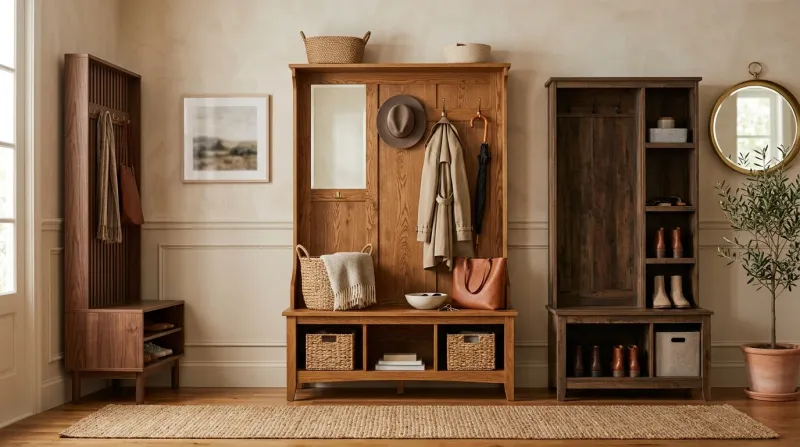
While metal or plastic organizers offer basic utility, they often feel cold, clinical, and industrial. Wood brings organic warmth, visual substance, and structural integrity. A high-quality wooden hall tree serves as an architectural anchor, turning a chaotic transition zone into an inviting, highly organized space.

Choosing the right wooden hall tree requires balancing spatial realities with material science. You must consider wood species, joinery methods, weight capacities, and finish resilience. This guide delivers a deep dive into wooden hall tree architecture, helping you choose a piece that is as structurally sound as it is visually striking.
Quick Comparison: Top Picks & Benchmarks
The table below outlines our hands-on selections for the best wooden hall trees, categorized by material build, storage configuration, and target space.
| Product | Material & Finish | Primary Storage | Key Strength | Check Price |
|---|---|---|---|---|
| Crosley Furniture Seaside Hall Tree | Engineered Wood & Birch Veneer | Drop-Down Bench Cabinet, 4 Double Hooks | Coastal styling, concealed lower clutter | Check Price on Amazon |
| Bush Furniture Salinas Hall Tree with Bench | Engineered Wood & Laminate | 3 Open Cubbies, 4 Double Hooks | Heavy-duty bench, Mission-style aesthetic | Check Price on Amazon |
| Home Styles Americana Warm Oak Hall Tree | Solid Hardwood & Veneers | Dual Storage Drawer, 4 Double Hooks | Exceptional solid wood feel, traditional brass hardware | Check Price on Amazon |
| Walker Edison Furniture Rustic Entry Hall Tree | High-Grade MDF & Durable Laminate | Large Open Bench, 4 Single Hooks | Industrial minimalist footprint, budget-friendly | Check Price on Amazon |
1. The Anatomy of a Wooden Hall Tree
To understand what makes a wooden hall tree durable, we must look at its structural components. A poorly engineered hall tree will wobble under the weight of heavy winter coats or bow when an adult sits on the bench. A premium unit distributes force evenly through clever joinery and balanced design.

The Upper Valance and Crown Molding
The top of the hall tree defines its architectural style. Traditional designs feature deep crown moldings, while minimalist units use flat, clean-cut top boards. Beyond aesthetics, the upper valance provides lateral stability, keeping the left and right vertical panels aligned.
The Hook Rail (The Shear Stress Zone)
The hook rail experiences constant downward shear stress. A single heavy winter parka, soaked with rain, can weigh over 10 pounds. When you multiply that by four or five hooks, the rail must support significant weight.
High-end hall trees secure the hook rail to the vertical side panels using heavy-duty dowels or pocket screws, reinforced with a solid back panel. Look for units where the hooks are screwed directly into solid wood or thick MDF, rather than thin backing boards.
The Back Panel: Beadboard vs. Frame-and-Panel
The back panel prevents the hall tree from racking—the side-to-side swaying motion that weakens joints over time.
- Beadboard Backing: Features vertical grooves that add a classic, cottage-style texture. In premium furniture, this is made of individual tongue-and-groove wood planks. In budget furniture, it is a single sheet of routed MDF.
- Open Frame: Eliminates the solid back panel, using a cross-brace (X-brace) or heavy corner brackets instead. This design lets your wall color show through, which helps smaller entryways feel more open.
The Bench (The Load-Bearing Core)
The bench is the centerpiece of the hall tree, serving as both a seat and a structural anchor. It must handle downward forces of 250 to 400 pounds.
The front rail under the bench seat acts as a load-bearing beam. If this beam is too thin or lacks central support, it will sag. High-quality wooden benches feature thick solid wood tops or reinforced engineered panels supported by sturdy vertical dividers.
The Base: Cubbies, Drawers, or Cabinets
The space below the bench determines how well you can organize footwear and outdoor gear.
- Open Shoe Cubbies: Offer quick access and excellent airflow, helping wet shoes dry faster.
- Drawers with Ball-Bearing Slides: Keep clutter completely out of sight. Look for full-extension slides that let you easily reach the back of the drawer.
- Drop-Down Cabinets: Use friction hinges to prevent the door from slamming down. This style offers a clean look while hiding bulky items like dog leashes, sports gear, or winter boots.
2. Material Science: Solid Wood vs. Engineered Wood
The “wooden” label covers a wide range of materials. Understanding the differences between solid hardwoods, softwoods, and engineered wood composites will help you balance your budget with your durability needs.

Solid Hardwoods (Oak, Maple, Birch, Ash)
Hardwoods come from slow-growing deciduous trees, resulting in a dense, highly durable cell structure.
- Durability: Excellent resistance to dents, scratches, and gouges.
- Longevity: Can be sanded down, repaired, and refinished multiple times.
- Grain Variance: Features beautiful, natural grain patterns that make every piece unique.
- Cost: High initial investment, but lasts for generations.
Solid Softwoods (Pine, Fir, Cedar)
Softwoods come from evergreen conifers and are less dense than hardwoods.
- Durability: Softer and more prone to scratching from metal zippers, dog claws, or boot heels.
- Aesthetics: Often used in rustic designs, where dents and scratches add to a charming, lived-in patina over time.
- Weight: Lighter than hardwoods, making assembly and moving easier.
Medium-Density Fiberboard (MDF) with Wood Veneer
MDF is made by breaking down hardwood or softwood residuals into fine wood fibers, combining them with wax and a resin binder, and pressing them into panels under high temperature and pressure.
- Stability: MDF is highly stable and does not expand or contract with humidity changes like solid wood does.
- Veneer Layer: A thin slice of real hardwood (like oak or birch) is bonded to the MDF face, providing the look and feel of solid wood at a lower price point.
- Edge Banding: The edges must be sealed with veneer banding to prevent moisture from getting into the MDF core, which can cause swelling.
Particle Board with Melamine/Laminate
Particle board is made from larger wood chips and shavings bonded with resin. It is the most budget-friendly option.
- Durability: Low impact resistance. Screws can strip out if over-tightened during assembly.
- Moisture Sensitivity: Highly vulnerable to water. If wet boots sit on a chipped laminate surface, the particle board underneath can swell and crumble.
- Best Use: Guest rooms, low-traffic areas, or dry climates where moisture isn’t a constant issue.
3. Style, Design, & Architectural Integration
A wooden hall tree should complement your home’s existing architecture. By selecting the right finish, hardware, and silhouette, you can create a cohesive look that ties your entryway together.

For homes with clean lines and minimalist profiles, integrating refined modern wood hall trees establishes an organized visual field without heavy ornamentation. These designs prioritize sleek profiles, hidden hardware, and recessed pulls.
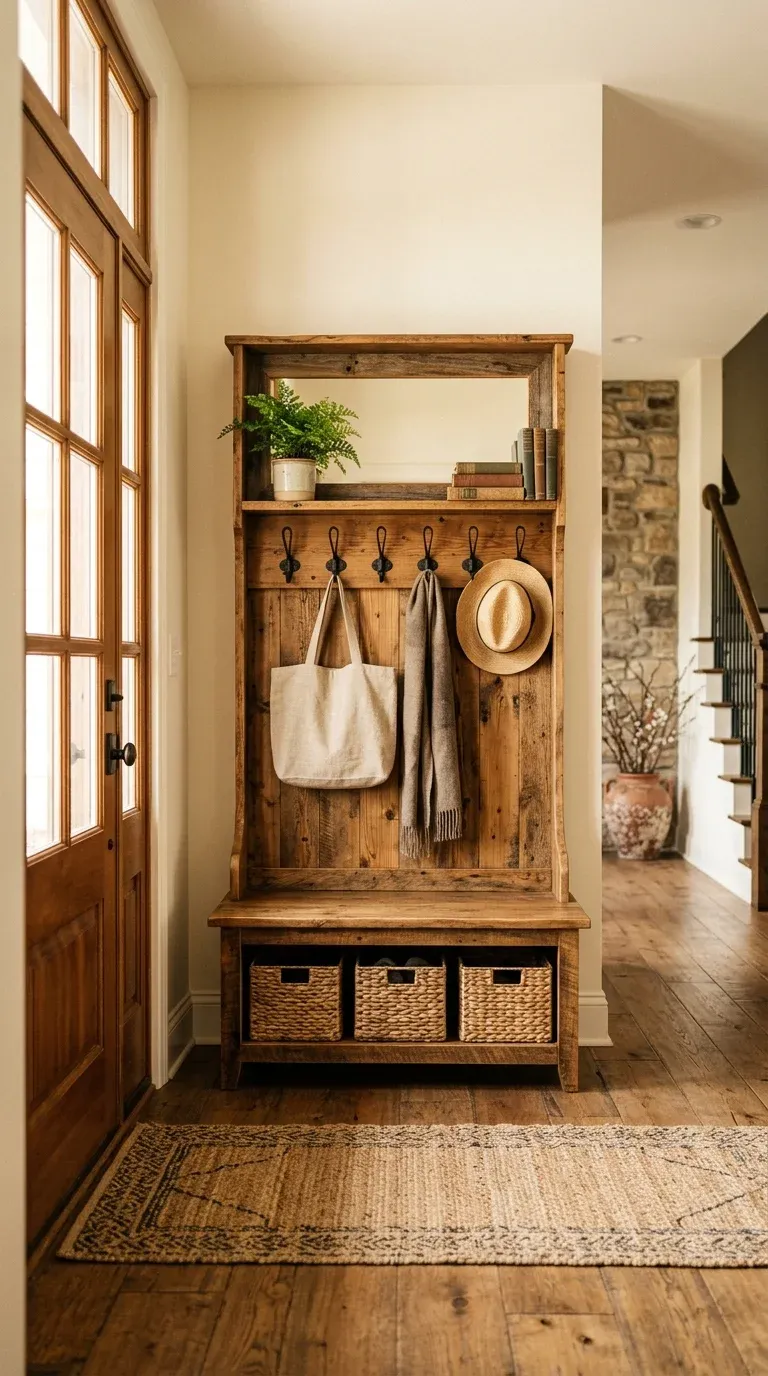
On the other hand, a rugged rustic entryway hall tree celebrates natural imperfections, displaying knots, deep wood grains, and rough-sawn textures. These pieces pair beautifully with wrought-iron hardware, bringing a cozy, cabin-like feel to your home.
If light and airy is your objective, choosing bright white wooden hall trees can instantly open up a narrow, dimly lit foyer. Painted finishes reflect natural light, making tight spaces feel larger and more welcoming.
Visual Weight & Color Impact:
[White / Cream Finishes] ---> Reflects light, visually lightweight, ideal for tight entries.
[Natural / Medium Oaks] ---> Balanced contrast, hides dust/scratches, classic look.
[Dark Charcoal / Black] ---> Strong architectural anchor, dramatic, high contrast.
Alternatively, dramatic black hall trees provide an elegant, high-contrast focal point. A dark unit works well in modern, industrial, or transitional spaces, especially when paired with light walls and bold floor tiles.
For that classic, lived-in aesthetic, charming farmhouse hall trees with shiplap backing, cup pulls, and distressed finishes evoke a warm, relaxed lifestyle. They bring comfort and character to busy family entryways.
If your home features exposed brick, concrete, or metal accents, urban industrial hall trees blend raw metal piping with heavy wood slabs. This combination offers excellent durability and a modern, city-inspired edge.
If seating is your absolute priority, choosing hall trees with heavy-duty benches guarantees a comfortable, stable platform for putting on boots. Look for designs with thick wood tops and sturdy, reinforced legs.
To find the ideal storage solution for your layout, consult our comprehensive directory of hall trees designed for every entryway size. This guide helps you maximize utility, whether you have a grand foyer or a compact alcove.
Finally, if footwear clutter is your primary pain point, prioritize hall trees featuring dedicated shoe storage to keep mud and dirt contained. Dedicated cubbies, drop-down doors, or under-bench drawers keep your entryway floor clean and clear.
4. Key Recommendations & Hands-On Reviews
Here, we review three outstanding wooden hall trees. Each model represents a unique balance of materials, style, and storage capability.
Crosley Furniture Seaside Hall Tree

The Crosley Furniture Seaside Hall Tree is an elegant, cottage-inspired solution designed to keep entryways neat. Built from engineered wood and birch veneers, it features a beadboard back panel and classic crown molding.
- Material Composition: Solid hardwood frame elements, high-grade MDF core panels, and real birch veneers.
- Load Capacities: Bench supports up to 250 lbs; each double hook is rated for 10 lbs.
- Storage Configuration: Features a spacious drop-down lower cabinet with high-quality friction hinges, plus 4 dual-prong metal hooks.
- Dimensions: 40” W x 18.5” D x 74.5” H.
Pros & Cons
-
Pro: The drop-down storage door hides cluttered shoes, keeping the entryway looking tidy.
-
Pro: High-quality finish resists yellowing over time.
-
Pro: Beadboard backing adds beautiful, classic texture.
-
Con: Assembly takes 2 to 3 hours and requires careful alignment of the door hinges.
-
Con: Not suitable for very narrow hallways due to its 18.5-inch depth.
-
Best Use-Case: Perfect for coastal, traditional, or transitional foyers that need a stylish, medium-width storage solution to hide shoe clutter.
Bush Furniture Salinas Hall Tree with Bench

The Bush Furniture Salinas Hall Tree brings Mission-style design and reliable utility to your home. It features tapered legs, curved base rails, and an open shoe storage design that makes organizing footwear easy.
- Material Composition: Engineered wood finished with a durable laminate that resists scratches and moisture.
- Load Capacities: Bench supports up to 250 lbs; each double hook is rated for 15 lbs.
- Storage Configuration: Includes 3 open shoe cubbies under the bench and 4 double-prong coat hooks on the back panel.
- Dimensions: 31.7” W x 15.7” D x 69.1” H.
Pros & Cons
-
Pro: Compact 31.7-inch width fits beautifully into smaller entryways.
-
Pro: Open cubbies allow wet shoes to air dry quickly.
-
Pro: Scratch-resistant surface stands up to daily wear and tear.
-
Con: The laminate finish lacks the natural warmth and grain texture of real wood veneer.
-
Con: The lower cubbies may not fit tall work boots or high heels.
-
Best Use-Case: An excellent choice for busy, high-traffic family entryways that need durable, scratch-resistant storage with quick, open access to shoes.
Home Styles Americana Warm Oak Hall Tree

The Home Styles Americana Warm Oak Hall Tree is a substantial, heirloom-style piece. Built from solid hardwoods and veneers, it features a warm oak finish and antiqued brass hardware.
- Material Composition: Solid Asian hardwood (rubberwood) combined with oak veneers over engineered core panels.
- Load Capacities: Bench supports up to 300 lbs; each hook is rated for 20 lbs.
- Storage Configuration: Features a large drawer on smooth, full-extension ball-bearing slides, plus 4 heavy-duty dual-prong brass hooks.
- Dimensions: 40.5” W x 18.25” D x 73” H.
Pros & Cons
-
Pro: Solid hardwood construction feels exceptionally sturdy and grounded.
-
Pro: Deep storage drawer is perfect for winter accessories, blankets, or dog leashes.
-
Pro: Beveled mirror panel on the upper valance is handy for quick check-ups on your way out.
-
Con: Quite heavy, requiring two people for safe assembly and positioning.
-
Con: Premium materials come with a higher price point.
-
Best Use-Case: Ideal for homeowners looking for a durable, traditional piece of furniture with rich wood tones and excellent load capacity.
5. Spatial Clearances & Installation Dynamics
Before buying a wooden hall tree, you must measure your space carefully. A hall tree that is too large will crowd your entryway, while one that is too small can look out of place.

Essential Clearances
- Door Swing Clearance: Ensure your front door can open fully without hitting the corner of the hall tree. You need at least 36 inches of clear space in front of the doorway.
- Hallway Width: A standard hallway is 36 to 42 inches wide. If your hall tree is 18 inches deep, it will leave only 18 to 24 inches of walkway, which can feel tight. For narrow halls, look for shallow units with a depth of 12 to 14 inches.
- Vertical Height: Standard hall trees range from 68 to 78 inches tall. Measure your ceiling height, and make sure to account for any low-hanging light fixtures or crown molding.
The Baseboard Offset Problem
Most baseboards stand out 0.5 to 0.75 inches from the wall. This prevents the flat back of a hall tree from sitting flush against the drywall, creating a gap at the top.
To solve this, premium hall trees feature a baseboard cutout at the bottom of the side panels. If your unit doesn’t have this, you can use spacer blocks behind the top mounting brackets to secure it safely to the wall.
Solving Uneven Floors
Few floors are perfectly level, especially in older homes or near tiled entryways. If a tall hall tree sits on an uneven floor, it will tilt, causing doors to swing open and putting extra stress on the joints.
- Adjustable Levelers: Choose a hall tree with adjustable leveling feet under the base.
- Shimming: If your unit doesn’t have levelers, you can slide thin wood shims under the low corners. Trim them flush with the base so they stay hidden.
Field Note: Anti-Tip Security is Non-Negotiable A tall hall tree is inherently top-heavy, especially when loaded with heavy winter coats on the upper hooks. If a child climbs on the bench or pulls on a coat, the entire unit can tip forward. Always anchor your hall tree to the wall studs using L-brackets or heavy-duty anti-tip straps. Do not rely on simple drywall anchors.
6. Buyer’s Evaluation Framework
When shopping for a wooden hall tree, use this five-point framework to evaluate its quality before you buy.

I. Joinery Check
Avoid units held together entirely by basic wood screws driven directly into particle board. These joints can strip out and loosen over time. Instead, look for:
- Cam-Lock Fasteners: Common in engineered wood furniture; reliable if tightened correctly.
- Pocket-Hole Joinery: Uses angled pre-drilled holes to join wood pieces securely.
- Mortise-and-Tenon or Dowels: Found in premium solid-wood furniture, these classic joints offer outstanding strength and durability.
II. Hook Quality and Attachment
- Material: Hooks should be made of cast iron, zinc alloy, or heavy-duty brass. Avoid thin stamped steel or plastic hooks.
- Mounting: Each hook should be secured with at least two screws driven into solid wood or a reinforced MDF rail.
III. Bench Load Rating
Make sure the manufacturer specifies the bench’s weight capacity. A reliable bench should support at least 250 pounds for daily use.
IV. Drawer Glide Engineering
If the hall tree has drawers, check the glides:
- Epoxy-Coated Roller Slides: Simple and reliable, but they don’t let the drawer open fully.
- Ball-Bearing Slides: Offer smooth, quiet operation and full-extension access, making it easy to reach items in the back.
V. Environmental and Safety Standards
When buying engineered wood (MDF or particle board), look for TSCA Title VI or CARB Phase 2 compliance. These certifications ensure the resins used in the wood emit minimal formaldehyde, keeping your indoor air safe.
7. Wood Care & Longevity Cycles
Your hall tree will face wet coats, muddy boots, and everyday bumps. Proper care will keep the wood looking beautiful and prevent damage over time.

Dealing with Moisture
Wet umbrellas and damp coats can damage wood finishes if left to sit.
- Wipe Dry: Always wipe up standing water on the bench or shoe shelves right away.
- Use Liners: Place water-resistant silicone trays or boot mats in shoe cubbies to protect the wood from road salt and melting snow.
Cleaning and Dusting
- Daily Cleaning: Wipe the wood with a soft, dry microfiber cloth to remove dust and grit that can scratch the finish.
- Deep Cleaning: Use a damp cloth with a mild, pH-balanced wood cleaner. Avoid harsh chemical cleaners, ammonia, or abrasive pads, which can wear down the protective finish.
Seasonal Wood Movement
Solid wood is a natural material that breathes. It expands when humidity is high in the summer and contracts when the air drys out in the winter.
- Give it Space: Leave a tiny bit of clearance between the hall tree and heat registers or radiators. Direct heat can dry out wood too quickly, leading to cracking or warping.
- Hinge Adjustments: If your cabinet doors start sticking or don’t line up perfectly after a season change, use a screwdriver to make small adjustments to the European-style hinges.
Exhaustive FAQ
Can I place a wooden hall tree on a heated tile floor?
Yes, but with care. Hydronic or electric radiant floor heating is generally safe for wood furniture, but constant direct heat can accelerate wood drying. If you have solid wood furniture, choose a model with feet rather than a solid flat base. This allows air to circulate underneath, preventing heat from building up and drying out the wood.
How do I fix a wobbly hall tree if my drywall isn’t perfectly flat?
Walls are rarely perfectly flat. If you secure a tall hall tree flush against an uneven wall, the frame can twist, causing doors to stick.
To fix this, place the hall tree on its levelers or shims first so it stands perfectly straight. Then, measure any gap between the top anchor points and the wall. Insert thin wood shims or rubber spacers into the gap before tightening the anti-tip screws. This secures the unit safely without twisting the frame.
Is engineered wood MDF safe for homes with pets and kids?
Yes, provided it meets modern safety standards. Look for products certified as CARB Phase 2 compliant or certified under the TSCA Title VI. These regulations strictly limit formaldehyde emissions, making the engineered wood safe for indoor environments. For added peace of mind, high-quality laminates or wood veneers completely seal the MDF core, preventing off-gassing.
How do I remove water rings or white spots from a wood bench?
White spots happen when moisture gets trapped under the top layer of the wood finish (often lacquer or wax).
- The Heat Method: Place a dry cotton towel over the spot and gently run a warm iron (no steam) over it for 10-15 seconds. The gentle heat helps release the trapped moisture.
- The Oil Method: Mix equal parts olive oil and white vinegar. Rub the mixture onto the spot with a soft cloth, following the direction of the wood grain, then buff dry.
For deep water damage where the finish has peeled, the wood will need to be lightly sanded and resealed with a fresh coat of polyurethane or wood sealer.
Can I paint or stain a veneered hall tree?
Yes, but the process depends on the type of veneer:
- Real Wood Veneer: Can be lightly sanded with fine-grit sandpaper (220-grit) and refinished. Be careful not to sand too deep, as wood veneers are very thin (often less than 1/32 of an inch) and you can easily wear through to the MDF core underneath. Once sanded, you can apply a fresh stain or paint.
- Paper or Melamine Laminate: These synthetic surfaces cannot be stained because they are non-porous. To paint them, you must use a high-adhesion primer (like shellac-based primer) before applying your top coat of paint.
What hook spacing is best for preventing overlapping coats?
For comfortable use, hooks should be spaced at least 8 to 10 inches apart. This spacing allows bulky items, like heavy winter coats or backpacks, to hang side-by-side without overlapping and creating a messy, bulging profile. If your hall tree has closely spaced hooks, try alternating between hanging heavy coats on one and light items (like keys or hats) on the next.
Top Picks: Best Entryway Essentials
Editor's shortlist with verified ratings. Prices and availability below — clicking an Amazon link earns us a small commission at no extra cost to you.
| # | Product | Rating | Reviews | Tag | Check Price |
|---|---|---|---|---|---|
| 1 | Vasagle Industrial Entryway Bench | 8,420 | Top Pick | View on Amazon | |
| 2 | Crosley Furniture Seaside Hall Tree | 5,410 | — | View on Amazon | |
| 3 | Seville Classics 12-Pair Shoe Rack | 6,420 | Best Storage | View on Amazon | |
| 4 | Franklin Brass Wall Hooks (5-Pack) | 9,820 | — | View on Amazon | |
| 5 | Simplihome Artisan Solid Wood Bench | 3,127 | Editor's Pick | View on Amazon |
Affiliate disclosure: As an Amazon Associate we earn from qualifying purchases.
Tag: entryway09-20 — change in src/data/topPicks.ts.