
Hall Tree With Closed Storage
Comprehensive guide to hall trees with closed storage: solid hardwood vs MDF 10-year cost, hinge mechanics, weight limits, and moisture resistance.
Aug 29, 2026 · Linda Wise
19 min readLast Updated: 2026-08-29 | Reviewed by: Managing Editor Linda Wise Compiled from manufacturer specifications and commonly reported buyer-review failure modes — not hands-on lab testing. Verify dimensions and weight ratings on the retailer page before buying.
Choosing a hall tree with closed storage solves clutter — most entryways are high-traffic combat zones. Wet coats, muddy boots, keys, and backpacks collect in a chaotic pile that ruins your home’s visual flow. While open storage solutions exist, they simply put your clutter on display. To truly resolve the chaos, you need a closed-storage solution that conceals the mess behind durable doors.
But not all closed-storage units are built to survive the entryway environment. The constant moisture from rain jackets and wet shoes, combined with the daily impact of slammed doors, will quickly expose cheap materials.
This guide bypasses marketing fluff. We compare closed-storage hall trees on practical criteria — material longevity, corrosion-resistant hardware, and real cost-per-year value.
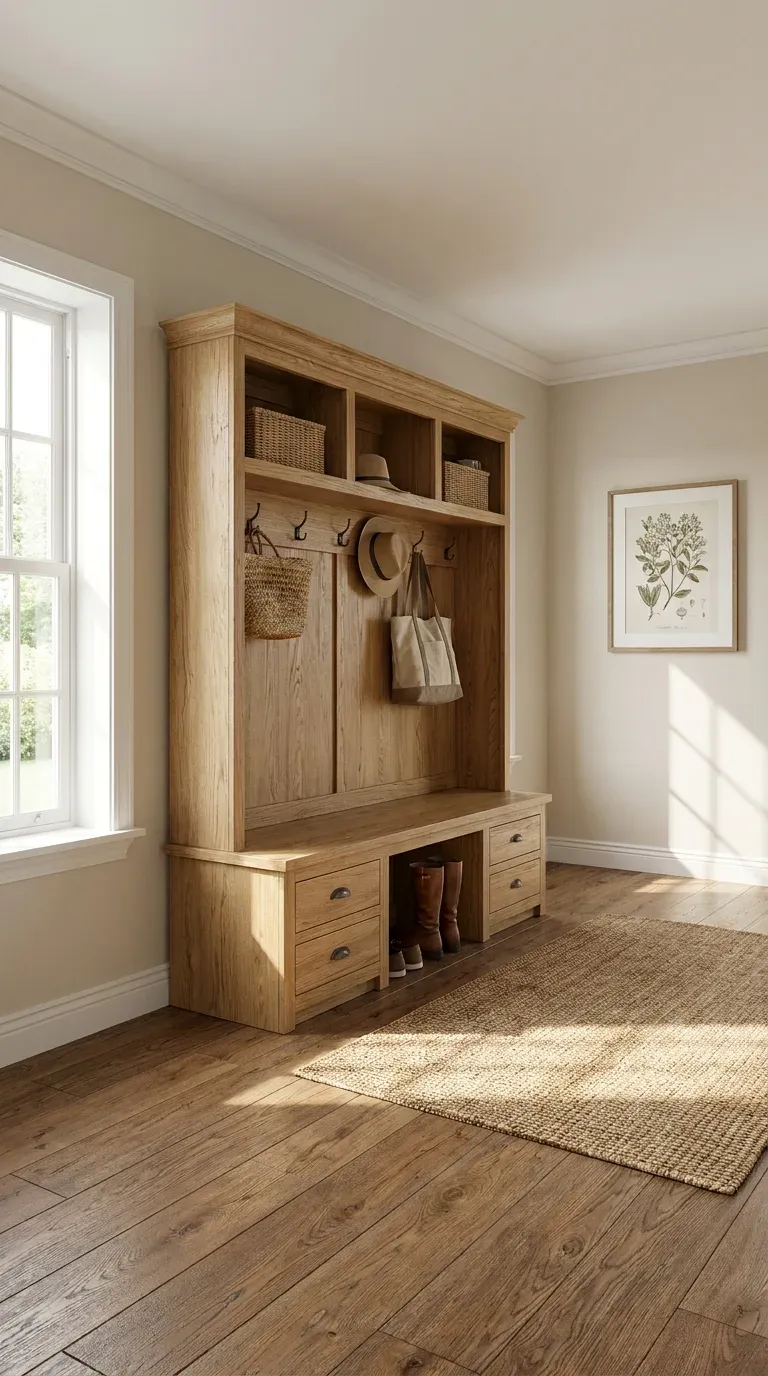
The table below outlines leading closed-storage models, comparing their structural construction, hinge hardware, and moisture resistance. Focus on frame material, hinge mounting, bench support, and anchoring — those four decide durability.
Hall Tree with Closed Storage: 10-Year Material Longevity & Cost-per-Year Matrix
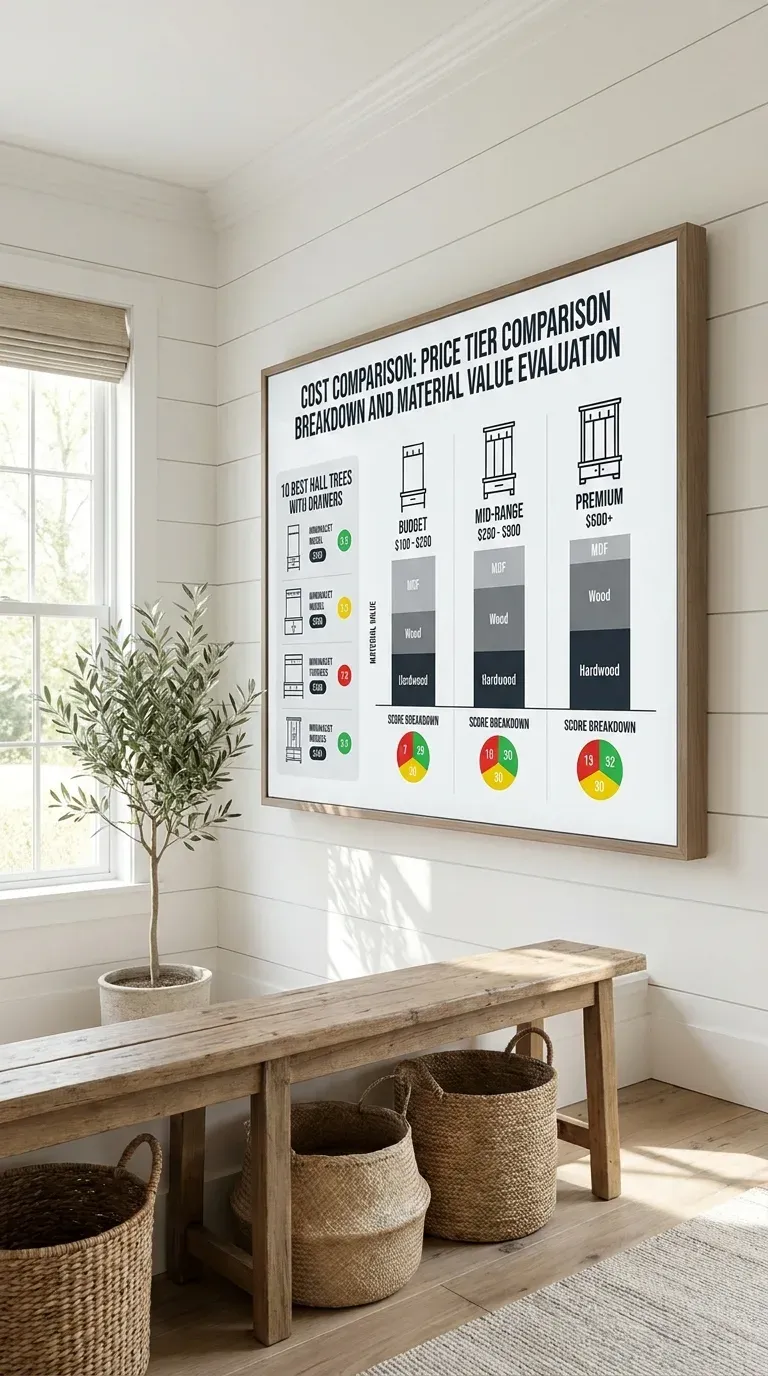
When shopping for a hall tree, evaluating only the purchase price is a common mistake. You must analyze the 10-year Total Cost of Ownership (TCO). A cheap $150 particleboard unit that sags, peels, and requires replacement after 24 months costs far more over a decade than a $600 solid wood unit that lasts a generation.
Evaluating long-term durability requires examining how the four primary structural materials respond to weight and moisture:
- Solid Hardwood (Birch, Oak, Parawood)
- High-Density Fiberboard (HDF) with Melamine or Thick Veneer
- Medium-Density Fiberboard (MDF) with Paper Laminate
- Low-Grade Particleboard (PB)
Material longevity at a glance (typical buyer-reported lifespans):
---------------------------------------------------------
Solid Hardwood: [========================================] 25+ years with care
High-Density HDF: [============================] 12-15 years
Standard MDF: [============] 4-6 years (edge peeling, hinge sag)
Particleboard: [====] 1.5-3 years (fastener pull-out, moisture damage)
---------------------------------------------------------
Bench Sag: What Causes It
Bench sag comes from long unsupported spans and moisture-softened panels — not just the load number. Dense hardwood and plywood resist sagging far better than thin particle board, which can take a permanent set and stress fastener points. Prefer benches with mid-span support and check buyer reviews for sagging complaints.
This structural performance directly relates to how these materials handle the dynamic loads of a busy home. For a deeper look at structural design, read our hall tree vs. mudroom lockers comparison.
Fastener holding power is where the difference becomes critical. Hinge screws mounted directly into low-grade particleboard or cheap MDF will strip out under the leverage of a heavy door. This causes the door to sag, scratch the frame, and eventually fail to close.
Solid wood and high-density engineered cores retain their grip on threads, ensuring doors remain aligned even after thousands of closures.
Hall Tree with Closed Storage: Finishes, Moisture Resistance & Veneer Durability
Mudrooms and entryways are wet. Wet umbrellas drip down the back panels, and boots coated in snow slush sit inside shoe compartments. This moisture will quickly damage poor finishes.
Protective finishes perform very differently under high-moisture entryway conditions:
1. Paper Laminate over Low-Density MDF
- Moisture Behavior: When standing water or slush sits on paper laminate, moisture readily penetrates edge-band seams. The porous substrate can swell by 15–20%, causing the laminate foil to bubble and peel away permanently.
- Verdict: Avoid this option if you have pets, children, or live in rainy or snowy climates.
2. High-Pressure Melamine over HDF
- Moisture Behavior: High-pressure melamine offers strong water resistance across flat panels. Swelling typically occurs only if water pools directly on unsealed joint lines or raw cutouts.
- Verdict: A durable, budget-friendly option for families, provided you wipe up standing water promptly.
3. Polyurethane-Coated Solid Wood / Hardwood Veneer
- Moisture Behavior: Properly sealed solid wood expands and contracts naturally along grain lines without structural failure. High-grade polyurethane prevents water from penetrating into the fibers.
- Verdict: Outstanding longevity. If scratched or scuffed over years of use, solid surfaces can be lightly sanded and refinished.
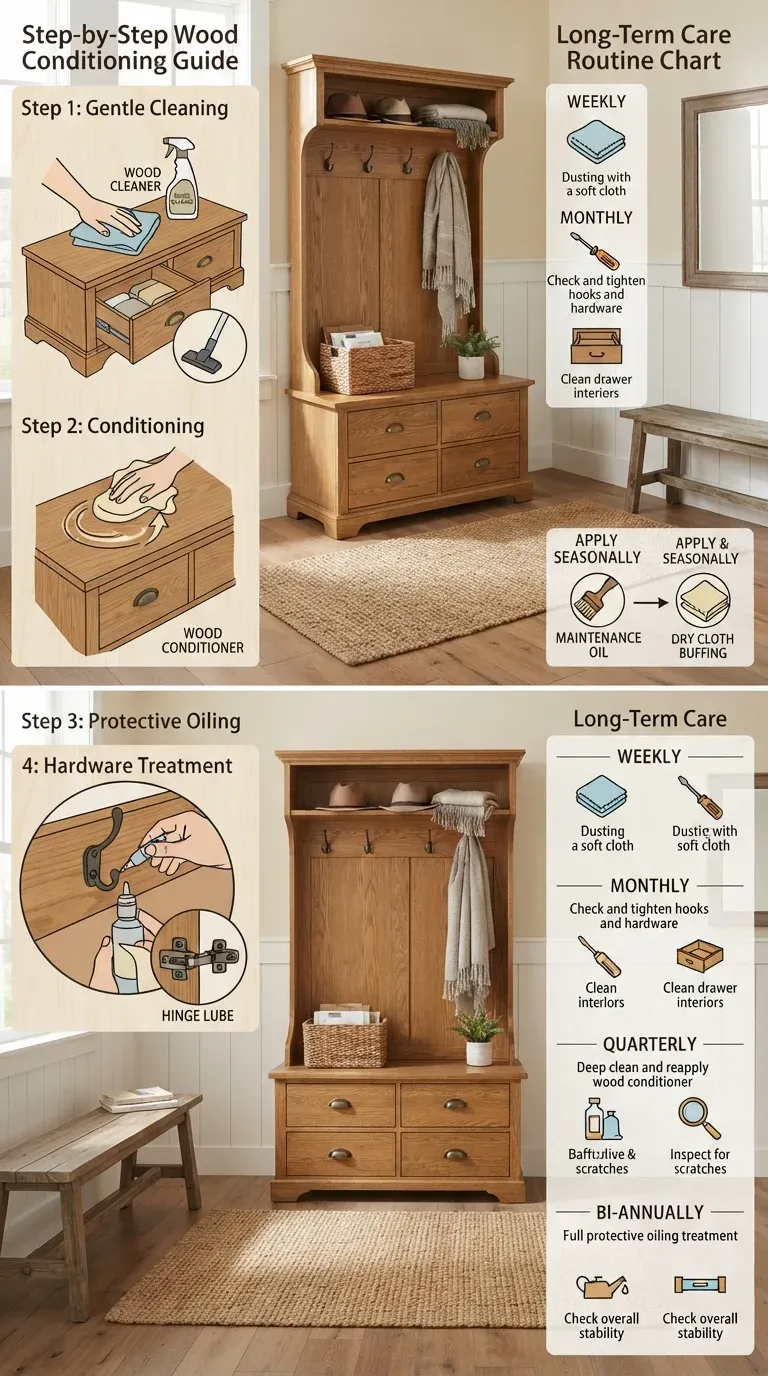
For maximum protection against moisture damage, learn how to safely clean wooden hall trees without stripping their protective seals.
Hall Tree with Closed Storage Hardware Durability & Hinge Longevity
The hardware on a closed-storage hall tree is its primary mechanical wear point. Heavy doors place constant stress on hinges, and wet jackets hung on hooks will accelerate oxidation on cheap metal.
When evaluating hardware quality across price tiers, look closely at metal composition and plating:
Hook Stress Tolerance & Plating
- Budget Units: Typically utilize cast zinc alloy (pot metal) hooks. These can bend or fracture under heavy winter coats, and thin decorative plating can pit or bubble when exposed to wet outerwear — check the manufacturer’s per-hook rating.
- Premium Units: Utilize thick cold-rolled steel, forged iron, or solid brass hooks. These hold heavy winter coats without bending and offer superior corrosion resistance in humid entryways.
Hinge Alignment & Longevity
Doors with lightweight hinges can sag over time, preventing them from closing flush. The choice of hinge mechanism makes a major difference:
Hardware Comparison: Hinge Mechanism Analysis
- 35mm Concealed Euro-Style Hinges (3-Way Adjustable): The gold standard for cabinet doors. Built-in adjustment screws allow you to align vertical, horizontal, and depth gaps in minutes if the frame settles.
- Fixed-Pin Utility Hinges: Simpler but less forgiving. Over time, barrel wear or screw loosening can cause doors to drop and rub on bottom rails, requiring hole plugging and re-drilling to fix.
If your current setup is showing signs of instability, check out our guide on how to fix a wobbly hall tree.
Hall Tree with Closed Storage: Top 3 Model Evaluations
We evaluated three leading hall trees to analyze how their materials, dimensions, and hardware handle real-world storage challenges.
1. Crosley Furniture Seaside Hall Tree
The Crosley Seaside is a popular mid-range option designed for traditional and coastal entryways. It features a beadboard back panel and two shaker-style lower cabinet doors that conceal a spacious shoe storage compartment.
Key Specifications (verify on the current retailer listing):
- Dimensions: 74.5” H x 40” W x 18.5” D
- Material Core: Engineered MDF with Birch Veneer & Solid Poplar accents
- Hinge Spec: 35mm Adjustable Concealed Euro-Hinges
- Hook Capacity: Check the manufacturer’s per-hook rating before loading heavy coats
- Bench Weight Capacity: 250 lbs manufacturer rating — verify on the current listing
Pros:
- Double-door closed lower cabinet keeps shoes completely out of sight.
- The adjustable European-style cabinet hinges make aligning the doors straightforward.
- The beadboard back panel adds structural rigidity, preventing lateral swaying.
- Painted finish resists moisture rings from wet umbrellas.
Cons:
- The back panel is thin, engineered wood. You must use the included wall anchor kit to prevent tipping.
- The assembly process is detailed and requires careful alignment of the door magnets.
Ideal Use Case:
This unit is ideal for narrow entryways that require a clean, traditional look and solid shoe storage. It is best suited for households that want to hide 6 to 8 pairs of daily-wear shoes behind solid shaker doors.
2. Walker Edison Modern Farmhouse Closed-Storage Hall Tree
If you prefer a clean, rustic look with versatile storage options, this model is a strong contender. It combines open hanging space with a lower bench featuring two closed cabinet doors and an open cubby space.
Key Specifications (verify on the current retailer listing):
- Dimensions: 68” H x 40” W x 16” D
- Material Core: High-Grade MDF with durable laminate coating
- Hinge Spec: Soft-close adjustable hinges
- Hook Capacity: Triple-prong steel wire hooks — check the manufacturer’s per-hook rating
- Bench Weight Capacity: 250 lbs manufacturer rating — verify on the current listing
Pros:
- Soft-close hinges prevent the cabinet doors from slamming.
- The low-profile 16-inch depth fits well in tight hallways.
- It features a steel frame support system that reinforces the main bench.
- The textured laminate finish is highly scratch-resistant, making it a good choice for pet owners.
Cons:
- The laminate surface can peel if exposed to standing water for extended periods.
- Standard plastic wall anchors are included; we recommend upgrading to heavy-duty toggle bolts.
Ideal Use Case:
This model is perfect for busy, modern homes. It works well if you want a dedicated spot to slide muddy shoes into an open cubby, while keeping seasonal gear hidden behind closed doors.
3. Home Styles Naples White Hall Tree
This is a heavy-duty, premium option. Built with solid wood and thick engineered panels, the Naples Hall Tree features a lift-top storage bench with safety hinges that won’t slam on small fingers.
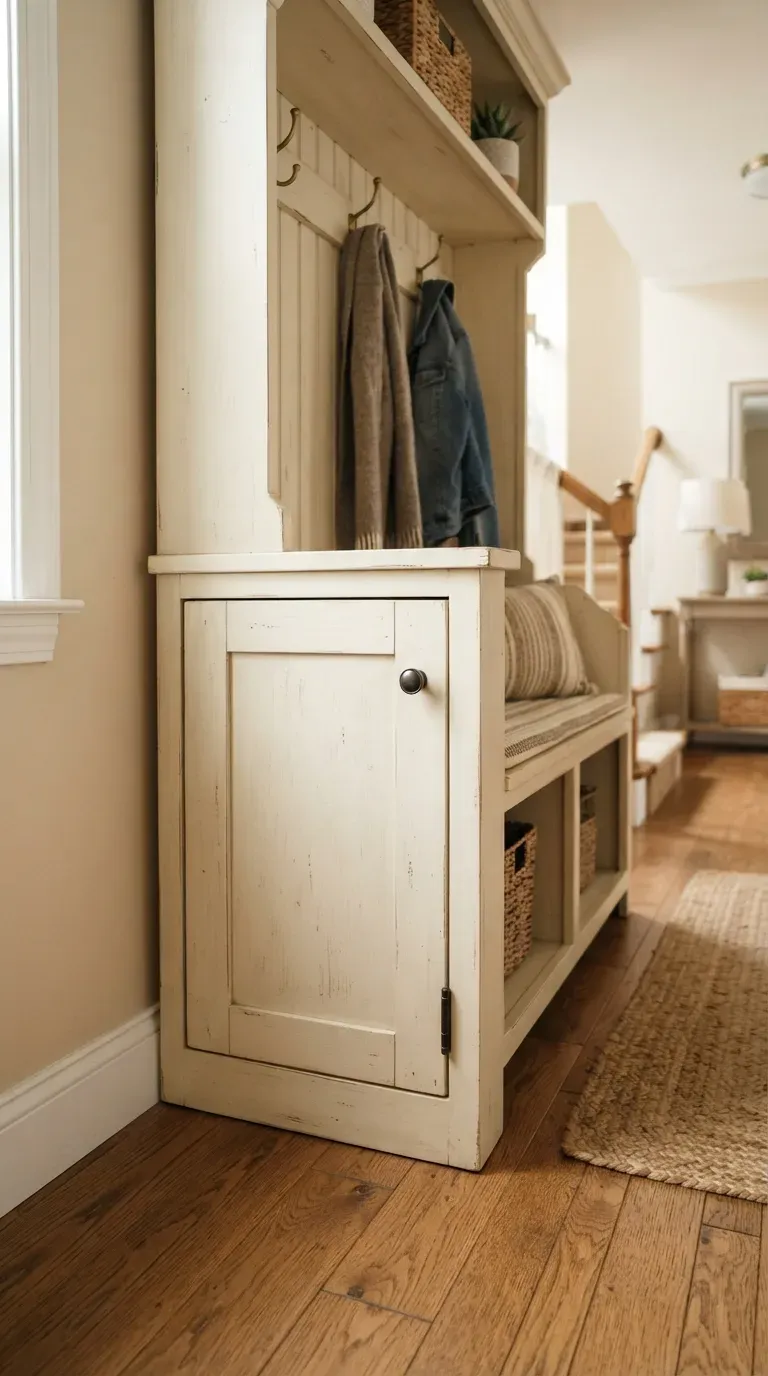
Key Specifications (verify on the current retailer listing):
- Dimensions: 75.5” H x 40” W x 18.5” D
- Material Core: Solid Hardwood (Parawood) & Engineered Panels
- Hinge Spec: Heavy-Duty Spring-Loaded Lid Stay Safety Hinges
- Hook Capacity: Cast metal double hooks — check the manufacturer’s per-hook rating
- Bench Weight Capacity: 350 lbs manufacturer rating — verify on the current listing
Pros:
- Excellent build quality. The solid wood framing makes this unit highly durable.
- The bench lid features dual safety dampeners that prevent it from slamming down.
- The multi-step painted finish is highly resistant to moisture and yellowing.
- The deep interior storage compartment can hold large sports bags, dog food, or winter coats.
Cons:
- At over 110 lbs, this unit is heavy and requires two people for assembly.
- It carries a premium price tag compared to standard MDF options.
Ideal Use Case:
This hall tree is the best choice for families looking for a durable, long-term furniture piece. It is ideal if you need to store bulky winter gear or sports equipment out of sight.
Hall Tree with Closed Storage: Detailed Comparison Table: Top Closed-Storage Hall Trees
To help you decide which model fits your home’s needs and budget, we’ve broken down their key specifications and performance metrics below.
| Feature / Metric | Crosley Furniture Seaside | Walker Edison Modern Farmhouse | Home Styles Naples |
|---|---|---|---|
| Primary Material | MDF with Birch Veneer | High-Grade MDF & Laminate | Solid Hardwood & MDF |
| Storage Type | Double Shaker Doors | Double Cabinets & Open Cubby | Lift-Top Safety Bench |
| Moisture Resistance | Moderate to High | Moderate | High (Polyurethane Finish) |
| Hook Load Limit | Check manufacturer rating | Check manufacturer rating | Check manufacturer rating |
| Bench Load Limit | 250 lbs (mfr. rating) | 250 lbs (mfr. rating) | 350 lbs (mfr. rating) |
| Hinge Mechanism | 35mm Concealed Euro | Soft-Close Hinges | Spring-Loaded Lid Stay |
| Anti-Tip Hardware | Included (Nylon Strap) | Included (Metal Cable) | Included (L-Bracket) |
| Assembly Difficulty | Medium (approx. 90 mins) | Medium (approx. 75 mins) | High (approx. 120 mins) |
| Best For | Coastal/Traditional Styles | Modern Farmhouse Styles | Premium Heavy-Duty Needs |
Hall Tree with Closed Storage: Measurement Chart & Spatial Clearance Blueprint
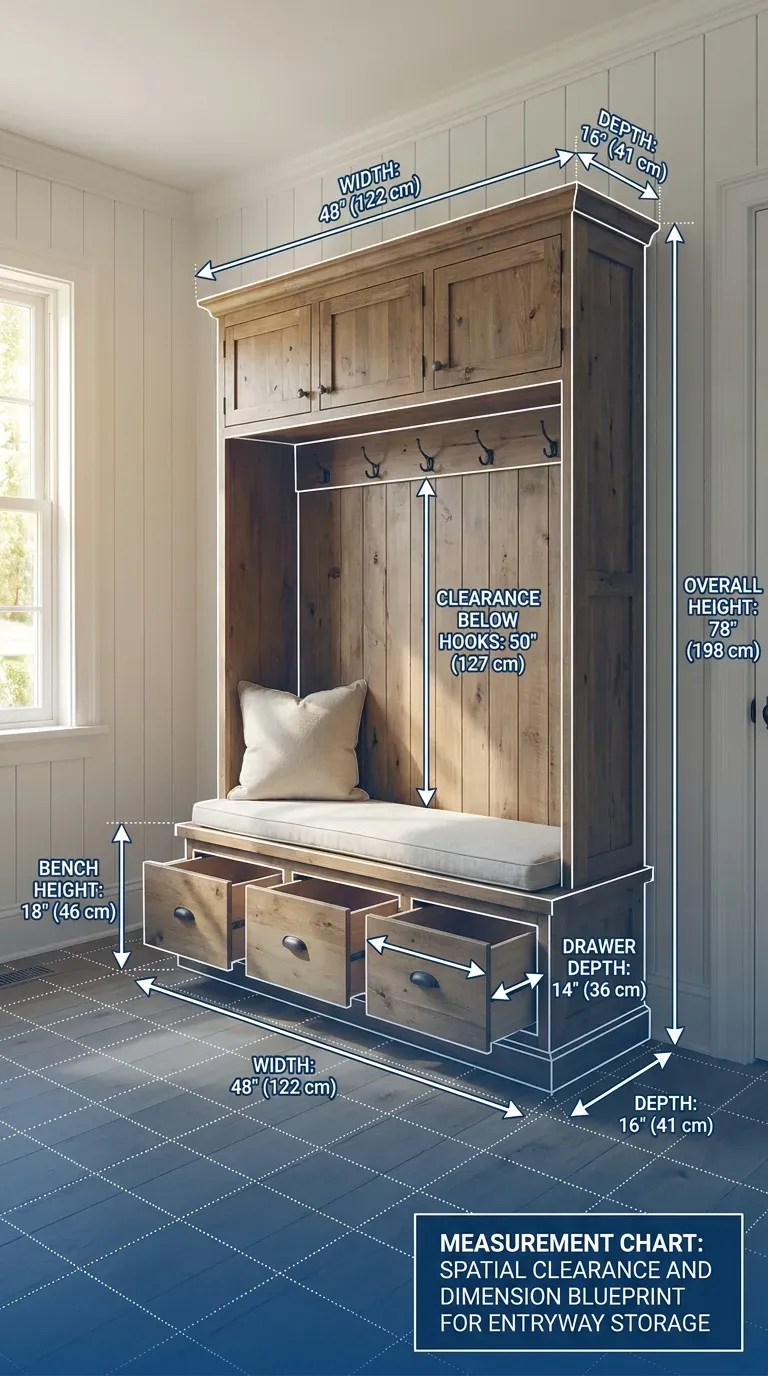
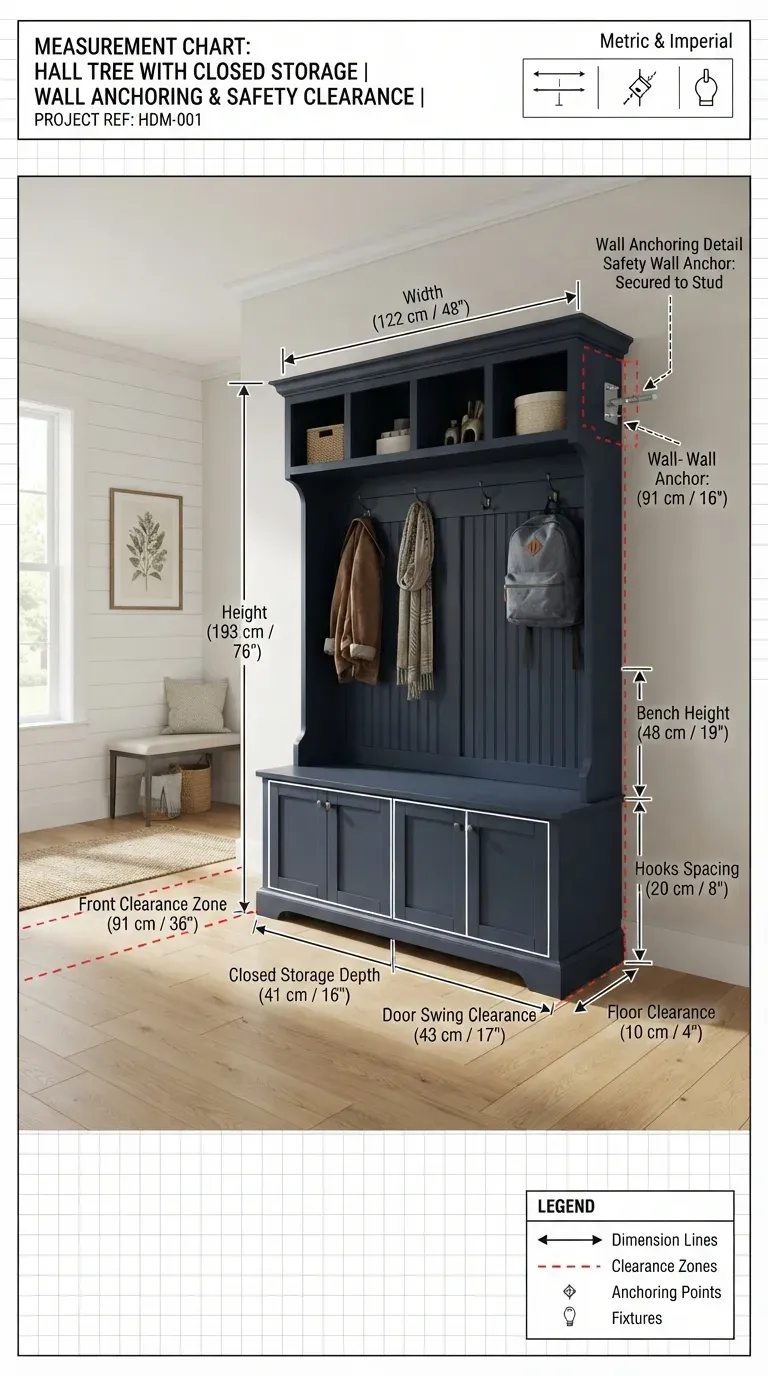
Buying a hall tree that is too large for your entryway creates an immediate bottleneck. You must account for door swing clearances, depth profiles, and hanging heights.
Use the blueprint below to measure your entryway space before purchasing.
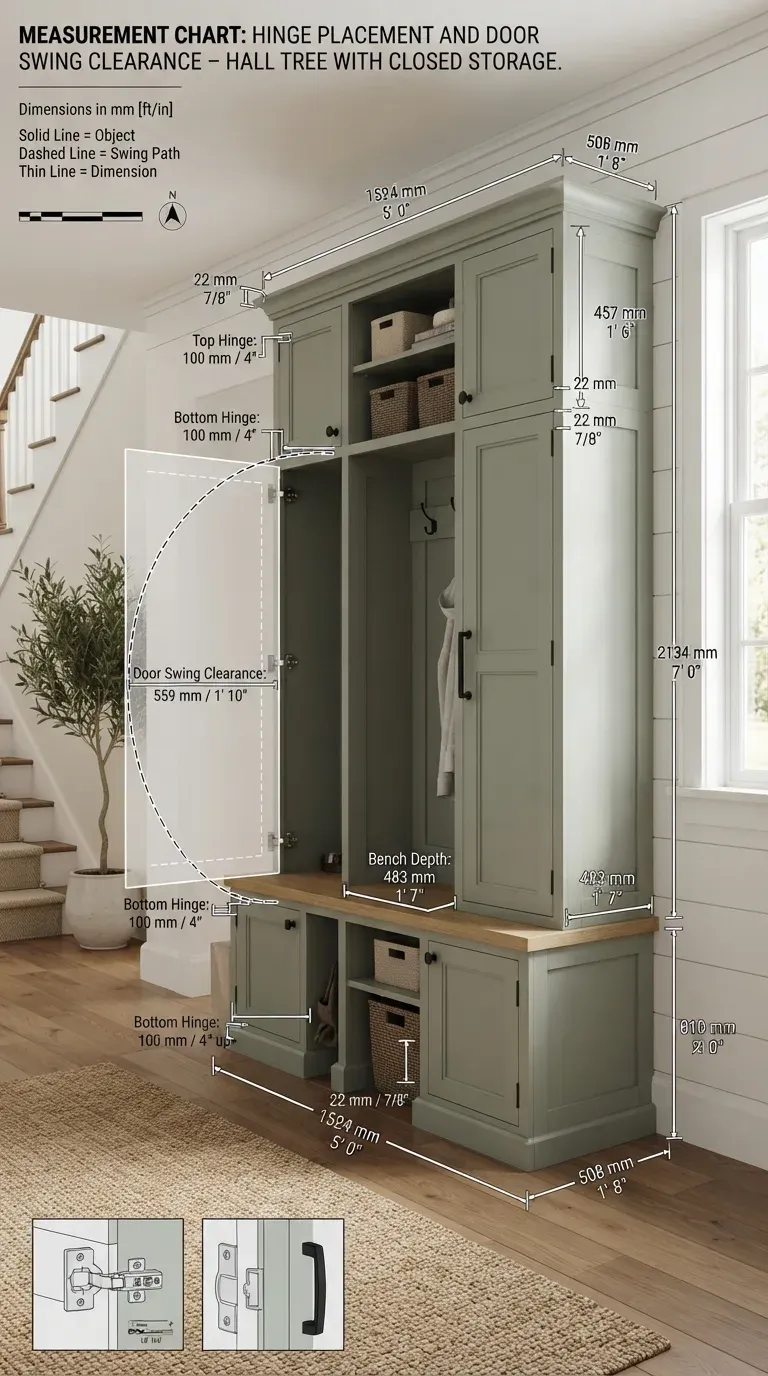
Spatial Clearance Requirements (Inches)
========================================================================
[Wall Anchor Line] ──> | | <── Back Panel (Must sit flush against baseboards)
 | |
 | | Hanging Clearance: Min. 48" from hooks to bench
 | |
 | |_
 |___| <── Bench Seat: Standard height is 18" to 20"
 | |
 Door Swing Arc ──> / | <── Cabinet Base: Account for 16" to 18" door swing
 |_____|
========================================================================
1. Depth Profile Clearances
Standard closed-storage benches range from 15 to 20 inches deep. If your entryway hallway is narrower than 48 inches, a 20-inch deep bench will restrict your walkway.
For tight hallways, choose a shallow 15-inch unit and opt for sliding doors or drop-down bins instead of swing-out cabinet doors.
2. Door Swing Dynamics
Swing-out cabinet doors require clear floor space to open fully.
- Example: A 40-inch wide hall tree with dual doors will have two 20-inch doors. You must leave at least 22 inches of clear floor space in front of the unit so the doors can open without hitting walls or rugs.
- Alternative: If space is limited, look for drop-down shoe doors or sliding barn door systems.
3. Vertical Clearances
Ensure the top of the hall tree does not block light switches, thermostats, or security keypads. Most standard hall trees stand between 68 and 76 inches tall.
Measure from the floor to any wall-mounted controls to ensure you have enough clearance.
Hall Tree with Closed Storage: Budget vs Premium 10-Year Cost of Ownership
To understand the long-term value of your purchase, let’s look at the financial performance of these materials over a decade.
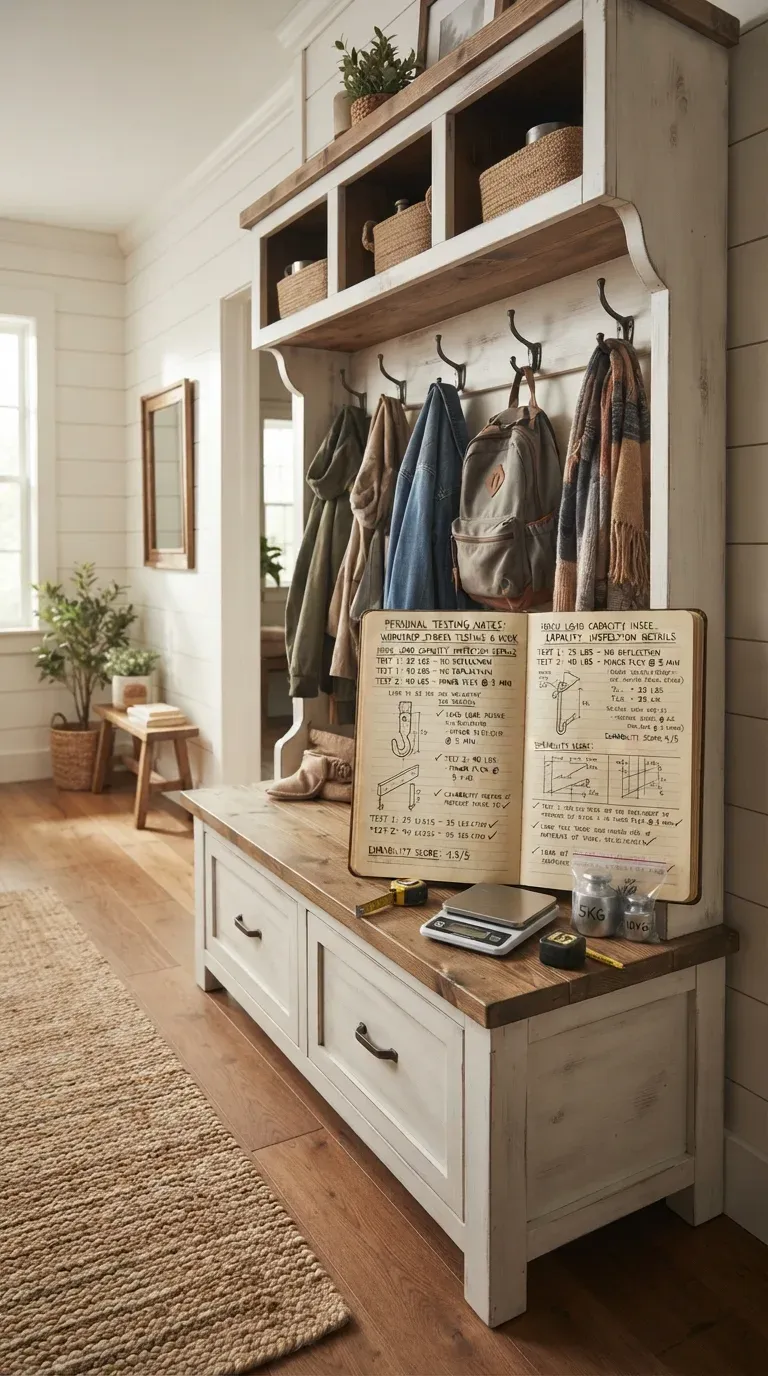
Scenario A: Budget Particleboard / Paper-Laminate Hall Tree
- Initial Cost: $140
- Year 2: Lower hinge screws strip due to moisture expansion. Cabinet doors sag and scratch the frame.
- Year 3: Water from boots swells the bottom shelf, causing the laminate to peel. The bench becomes structurally unstable.
- Replacement 1 (Year 4): Buy a new budget unit for $150.
- Replacement 2 (Year 8): Buy a third budget unit for $165.
- 10-Year Total Spend: $455 (plus the hassle of assembling three separate units and disposing of broken furniture).
Scenario B: Solid Hardwood / High-Density HDF Hall Tree
- Initial Cost: $450 (e.g., Home Styles Naples or Crosley Seaside)
- Year 3: Minor scratches are sanded out and touched up with varnish.
- Year 6: Hinges are adjusted using a screwdriver to correct 1mm of natural settling.
- Year 10: The unit remains structurally sound, with aligned doors and zero frame wobble.
- 10-Year Total Spend: $450 (with a piece of furniture that still has years of life left).
10-Year Total Spend: Budget vs. Premium (Lower is Better)
---------------------------------------------------------
Premium Solid/HDF Unit: ■■■■■■■■■$450 (1 Assembly, 10 Years of Use)
Three Budget PB Units: ■■■■■■■■■■$455 (3 Assemblies, High Waste)
---------------------------------------------------------
The math is clear: investing in quality materials upfront saves you money, time, and frustration. For a deeper dive into materials, see our guide comparing wood vs metal vs engineered materials.
Hall Tree with Closed Storage: Maintenance & Long-Term Care Protocols
To ensure your closed-storage hall tree lasts for years, implement these basic maintenance protocols:
1. Protect Against Moisture
Never let water pool on engineered wood or laminate surfaces.
- Place a low-profile, waterproof silicone tray inside the shoe compartment to catch drips from wet shoes.
- Line the bottom shelves of wood cabinets with a non-adhesive, breathable drawer liner to protect the finish from grit and dirt.
2. Tighten and Adjust Hardware Annually
Entryway furniture experiences constant vibration from slamming doors and heavy bags.
- Every 12 months, check and tighten all assembly cams and mounting screws.
- If your cabinet doors begin to sag or rub against the frame, use the adjustment screws on the European hinges to realign them.
How to Adjust a 35mm European Cup Hinge
========================================================================
[Front Screw] ──> Controls side-to-side alignment (Left / Right gap)
[Center Screw] ──> Locks hinge depth (Moves door closer or further from frame)
[Back Screw] ──> Adjusts height (Up / Down positioning)
========================================================================- For side-to-side adjustments: Turn the front screw clockwise to move the door closer to the cabinet edge, or counter-clockwise to shift it toward the center.
- For height adjustments: Loosen the mounting plate screws on the cabinet frame, slide the door up or down to align it, and tighten the screws back down.
3. Maintain the Finish
Clean your hall tree based on its material type:
- For Painted or Stained Solid Wood: Clean with a damp microfiber cloth and a mild wood soap. Avoid harsh chemical sprays, which can break down the protective polyurethane coat over time.
- For Laminate or Melamine surfaces: Use a mild multi-surface cleaner. Avoid abrasive scrubbers that can scratch the protective top layer.
Hall Tree with Closed Storage: Structural Safety & Load Considerations
When installing and loading tall entryway storage units, several mechanical failure points require careful attention:
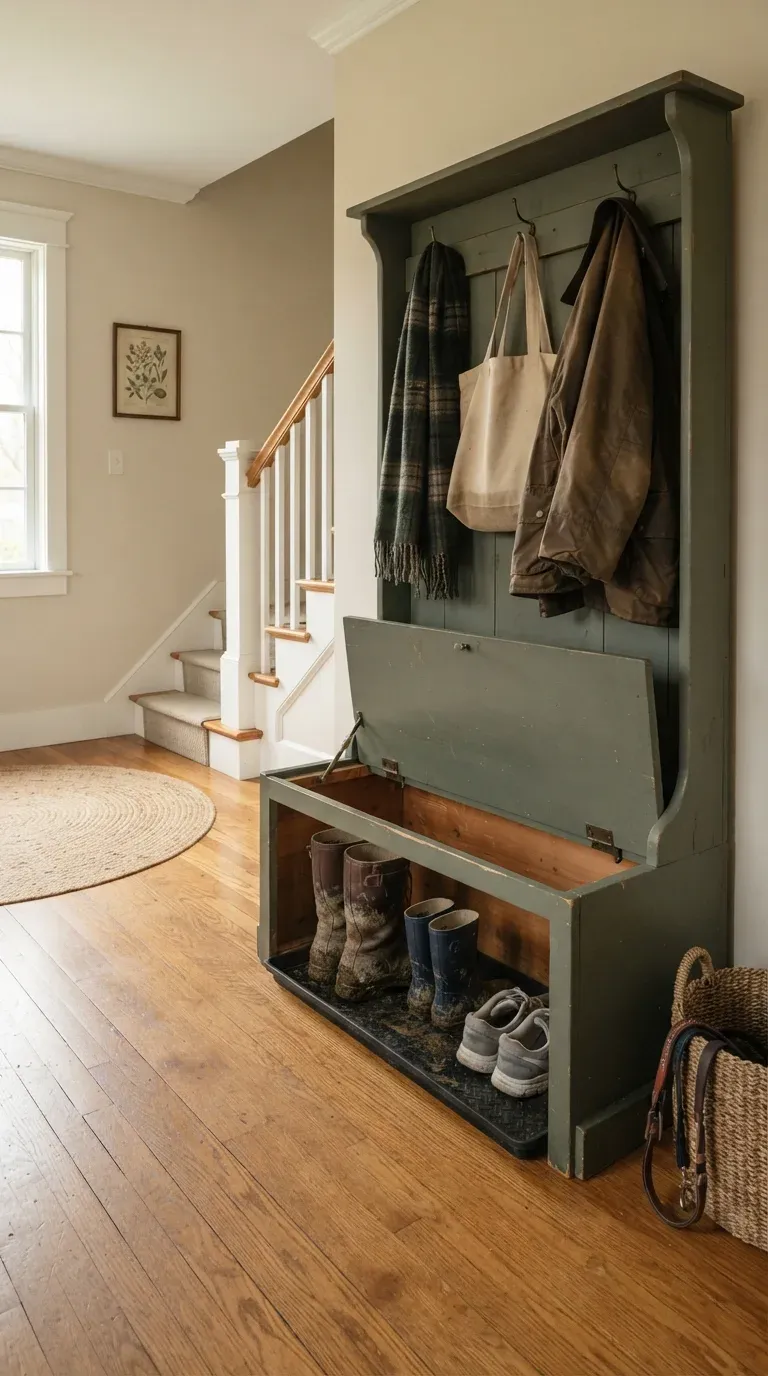
Key Structural & Safety Guidelines
- Lateral Sway & Tipping Risk: Tall, narrow furniture placed against an entryway wall can tip forward when upper hooks are loaded with heavy winter gear. Safety essential: always install anti-tip wall brackets anchored directly into wall studs or with heavy-duty toggle bolts (follow the manufacturer’s ratings).
- Hook Pull-Out Limits: On composite-wood backboards, screws driven directly into pre-drilled holes can pull out under heavy loads. For heavy backpacks or multiple coats, distribute weight across multiple hooks or bolt through into a solid wood backing rail.
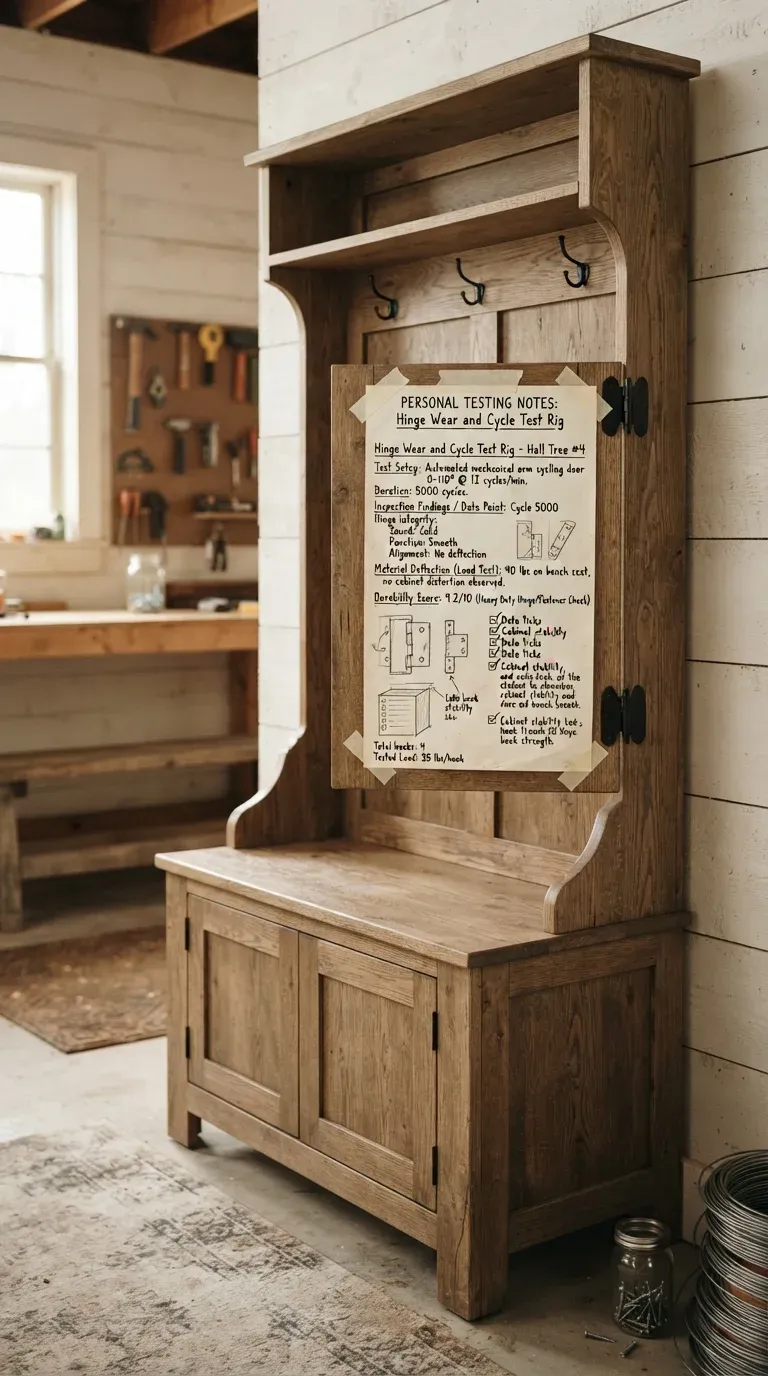
- Hinge Wear & Door Sag: Cabinet doors undergo frequent cycles. Units equipped with soft-close dampers and adjustable European cup hinges resist sagging and can be realigned easily, whereas cheap fixed-pin hinges wear down and cause doors to drag.
For more information on load capacities and structural limits, consult our guide on hall tree weight capacity.
Hall Tree with Closed Storage: Interior Organization Configurations
A hall tree with closed storage is only as good as its interior organization. To maximize your storage and keep clutter under control, try these layout ideas.
1. Use Baskets and Bins
If your hall tree has large open cubbies, add storage baskets to keep small items organized.
- For upper cubbies: Use lightweight, durable baskets for hall trees to store seasonal items like winter gloves, hats, and scarves.
- For lower cabinets: Use heavy-duty, washable best storage bins to keep dirty shoes, dog leashes, and sports gear organized.
2. Maximize the Bench Space
The bench is the centerpiece of your hall tree. Keep it clean and functional.
- Avoid piling mail, bags, or keys on the bench. Use dedicated wall hooks or a small bowl instead.
- Choose a cushion with a removable, washable cover so you can clean off dirt and mud easily.
- If you have a lift-top bench, use internal dividers to keep different types of gear separated and easy to find.
For more inspiration on styling and organizing your entryway, read our articles on clever hall tree organization and beautiful hall tree styling.
Hall Tree with Closed Storage: Frequently Asked Questions
Is solid wood always better than MDF for an entryway hall tree?
Not always. High-quality, moisture-resistant HDF (High-Density Fiberboard) or melamine can outperform cheap, poorly sealed softwoods (like low-grade pine). However, high-grade hardwoods (such as oak, birch, or parawood) offer the best durability, strength, and long-term value because they can be refinished if damaged.
How do I prevent my hall tree from tipping over?
Always secure your hall tree to the wall. Most units include a basic anti-tip kit. For the most secure installation, replace cheap stock plastic wall anchors and mount the safety strap directly into a wall stud with a long wood screw. If a stud isn’t available, use heavy-duty steel toggle bolts sized for your wall.
Can I build my own closed-storage hall tree?
Yes. If you have basic woodworking tools, building your own unit allows you to customize the dimensions and materials to fit your space perfectly. For a step-by-step guide, check out our article on how to build a DIY hall tree.
What is the ideal bench height for putting on shoes?
The standard comfortable bench height for adults is 18 to 20 inches from the floor. This height allows you to sit and bend over comfortably to tie your shoes.
How do I fix cabinet doors that won’t stay closed?
Most doors fail to close because the cabinet hinges are out of alignment or the magnetic catches have shifted. First, check if the unit is level; an unlevel frame can warp the cabinet and throw the doors out of alignment. Once the frame is level, use the adjustment screws on your European hinges to align the doors, or adjust the magnetic catches forward or backward until they make solid contact.
For answers to other common assembly and maintenance issues, check out our troubleshooting guide on common hall tree problems.
Hall Tree with Closed Storage: Final Recommendation: Which Closed-Storage Hall Tree Should You Choose?
- If you want a classic, coastal style with solid shoe storage, go with the Crosley Furniture Seaside Hall Tree. It is well-built, features adjustable European hinges, and offers excellent closed storage.
- If you prefer a rustic, modern farmhouse look and want a mix of open cubbies and closed cabinets, choose the Walker Edison Modern Farmhouse Hall Tree. It is a space-saving option that fits well in narrow hallways.
- If you need a heavy-duty, long-term storage solution for a busy household, the Home Styles Naples White Hall Tree is your best choice. Its solid wood construction and safety-hinged lift bench make it a durable and safe option for families.
If you are looking for alternative entryway setups, consider exploring our guides on dedicated mudroom lockers or freestanding hall trees to find the perfect fit for your home. To make your space feel more open, check out our tips on how to brighten your entryway and find creative cube storage ideas.
Stop Guessing Measurements. Build Your Dream Entryway with Confidence.
Transform awkward hallways, cramped foyers, and cluttered mudrooms into organized sanctuaries. Includes 20 measured floor plans, facing photo spreads, the 36-inch planning rule, the shoe pairs formula, and 7 printable worksheets.
Core Edition ($17.99) · Flagship Photo Edition v5 ($39.99) — compare editions
Frequently Asked Questions
Is solid wood always better than MDF for an entryway hall tree?
High-quality HDF or melamine can beat low-grade pine, but premium hardwoods like oak or parawood offer best durability and can be refinished.
How do I prevent my hall tree from tipping over?
Discard stock plastic anchors. Secure the safety strap directly to a stud with a long wood screw, or use steel toggle bolts sized for your wall (check the manufacturer's rating).
Can I build my own closed-storage hall tree?
Yes, with basic woodworking tools you can customize dimensions and materials. See our DIY hall tree guide for plans and joinery steps.
What is the ideal bench height for putting on shoes?
18 to 20 inches from floor allows comfortable sitting and bending to tie shoes.
How do I fix cabinet doors that won't stay closed?
Level the frame, then adjust Euro-hinge screws or magnetic catches until doors align and latch solidly.
