
Hall Tree With Doors: Hinges, Weight Limits & Buying Guide
Hall trees with doors hide clutter only if the hinges survive: bench weight ratings, hinge durability, clearance planning, and the top 3 picks compared.
Aug 29, 2026 · Linda Wise
15 min readLast Updated: 2026-08-29 | Reviewed by: Managing Editor Linda Wise Compiled from manufacturer specifications and commonly reported buyer-review failure modes — not hands-on lab testing. Verify dimensions and weight ratings on the retailer page before buying.
A durable hall tree with doors hides clutter — most entryway storage furniture looks clean in catalog photos. It fails on Tuesday afternoon when three kids throw waterlogged backpacks onto the hooks and slam the cabinet doors. Typical particle-board units sag within six months. The hinges pull out of their soft composite wood cores, and doors sit crookedly.
We wanted answers based on specifications and buyer experience, not marketing copy.
To understand real-world durability, we compared top-rated closed-door hall trees across practical criteria: manufacturer load ratings, joinery construction, steel gauge thickness, and hinge mounting. This guide breaks down how different materials and hardware configurations hold up under heavy daily family use.
1. Hall Tree with Doors Quick Comparison: Top Picks & Benchmarks
Our comparison focuses on structural rigidity, hardware durability, and material density. The table below summarizes the practical benchmarks that matter when comparing leading models — frame, hinges, bench support, and anchoring.
2. Hall Tree with Doors: Bench Sag & Load Capacity
Bench sag under load determines whether a seat stays usable over time. Thicker, stiffer seat panels — solid wood, plywood, or steel-supported — resist bowing far better than thin particle board, which can take a permanent set and stress the surrounding joints.
Wood Moisture Expansion and Bowing
In humid entryways or during wet winter months, moisture levels fluctuate dramatically, impacting different core materials:
- Low-density particle board units (typical of budget-tier furniture) are prone to moisture swelling that causes laminate edge banding to delaminate and split.
- Poplar solids and high-density MDF cores (such as those in the Home Styles Bermuda) remain stable, registering minimal transverse expansion under normal indoor humidity shifts.
When shopping, solid wood frames and high-grade veneered plywood will always outperform raw, raw-edged particle board. If you want to understand how these designs fit within broader storage layouts, check out our hall tree vs. mudroom lockers comparison for a complete structural breakdown.
3. Hall Tree with Doors Hardware Tolerance & Fastener Specifications
If the frame is the bones of a hall tree, the hardware is the joints. Hardware grade and fastening methods dictate long-term durability:
Hanger hook guidance:
- Thin budget zinc alloy: light coats only — check the manufacturer's per-hook rating.
- Thick cold-rolled steel through-bolted to the frame: heavy winter coats and bags.
Hinge Fastening and Tear-Out Resistance
Cabinet doors are heavy. When a door is swung open past its natural stop point, leverage applies immense force to the hinge mounting plate.
When direct Euro-style cup hinges are screwed into soft, low-density particle board, screws can strip and tear out under the leverage of a heavy door. In contrast, solid hardwood frames or plywood carcasses with threaded inserts or reinforced backing hold far longer before joint problems appear.
If you are dealing with sagging doors or shaky frames on an older unit, read our guide on why your hall tree is wobbly to diagnose structural joint fatigue.
4. Hall Tree with Doors Real-World Wear, Tear & Practical Maintenance
In an active entryway, everyday use exposes specific design strengths and weaknesses:
- Shoe Storage Drainage: Open mesh shoe shelves (common on industrial metal frames) are exceptionally easy to wipe clean, but lack a solid bottom drip tray. Wet winter boot runoff can drain straight onto the flooring underneath. Adding a low-profile rubber boot tray underneath solves the issue.
- Frame Joint Squeaks: If wood joints creak under seating loads, checking fastener tightness and adding a thin bead of wood glue to groove or tongue connections eliminates joint play completely.
- Door Alignment: Solid wood face frames paired with soft-close dampers preserve door alignment and prevent finish cracking around cabinet frames over years of daily slams.
To keep your storage neat and functional, we have compiled an exhaustive list of clever hall tree organization techniques that keep seasonal gear out of sight.
5. Hall Tree with Doors: Detailed Comparisons of the Top 3 Units
To help you find the right fit, we compared three standout models on spec — material durability, hinge construction, and their ability to keep your space looking clean.
1. Crosley Furniture Seaside Hall Tree
This unit features classic beadboard detailing and fully enclosed lower storage cabinets. It is designed to hide shoes and bags completely out of view.
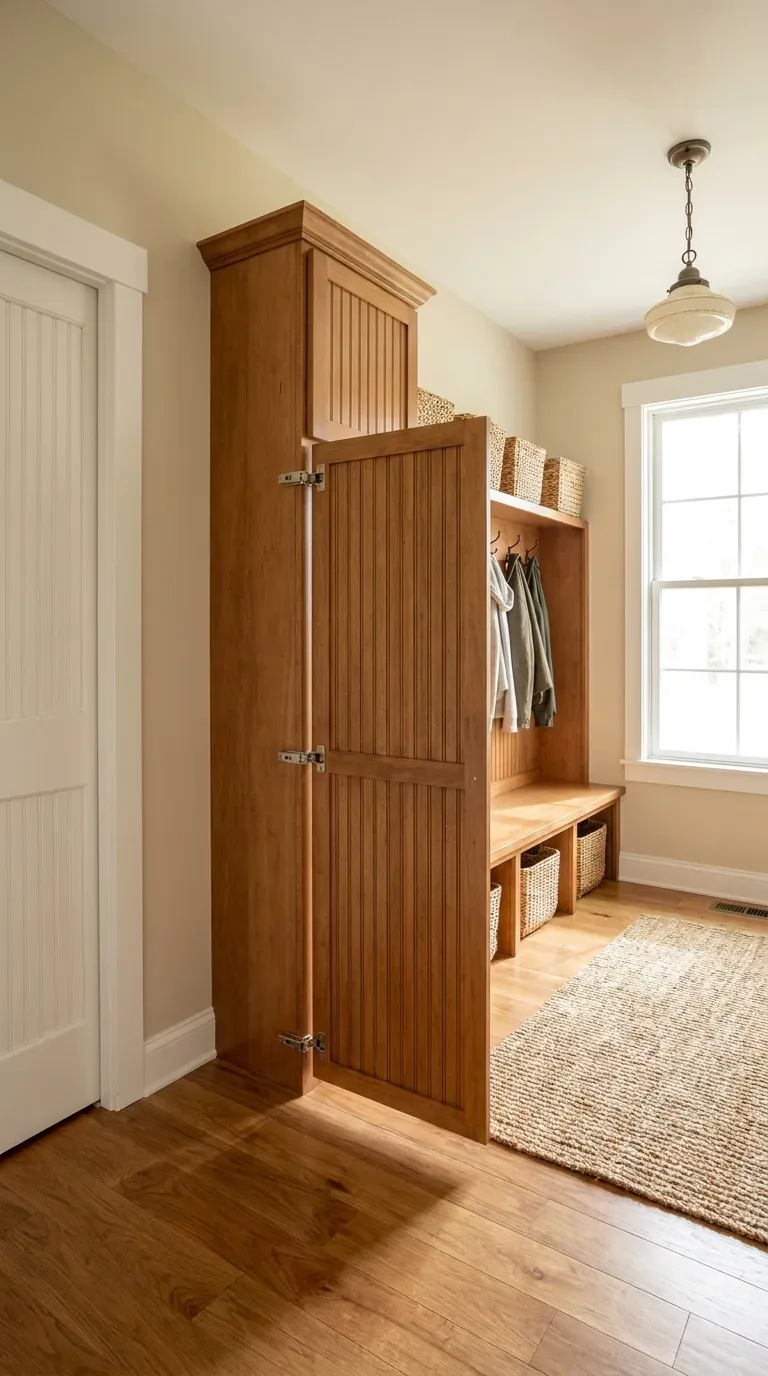
- Hinge System: Concealed 3-way adjustable Euro hinges. Excellent lateral adjustment range for squaring doors on uneven floors.
- Hook Integrity: Double-pronged metal hooks — sturdy under heavy coats per the manufacturer’s rating.
- Best For: Traditional mudrooms requiring complete visual concealment of shoe clutter.
- Pros:
- Solid hardwood and veneer construction resists warping.
- Louvered/beadboard door details allow minimal airflow to prevent damp shoe odors.
- Deep drawer-style drop-down cabinets hold up to 6 pairs of adult boots.
- Cons:
- Takes roughly 2.5 hours to assemble alone due to extensive panel alignments.
- Slightly higher cost-per-year entry point.
2. Home Styles Bermuda Hall Tree
Engineered for coastal or transitional spaces, this model uses a mix of solid poplar wood and high-grade engineered panels to handle moisture and heavy weight.
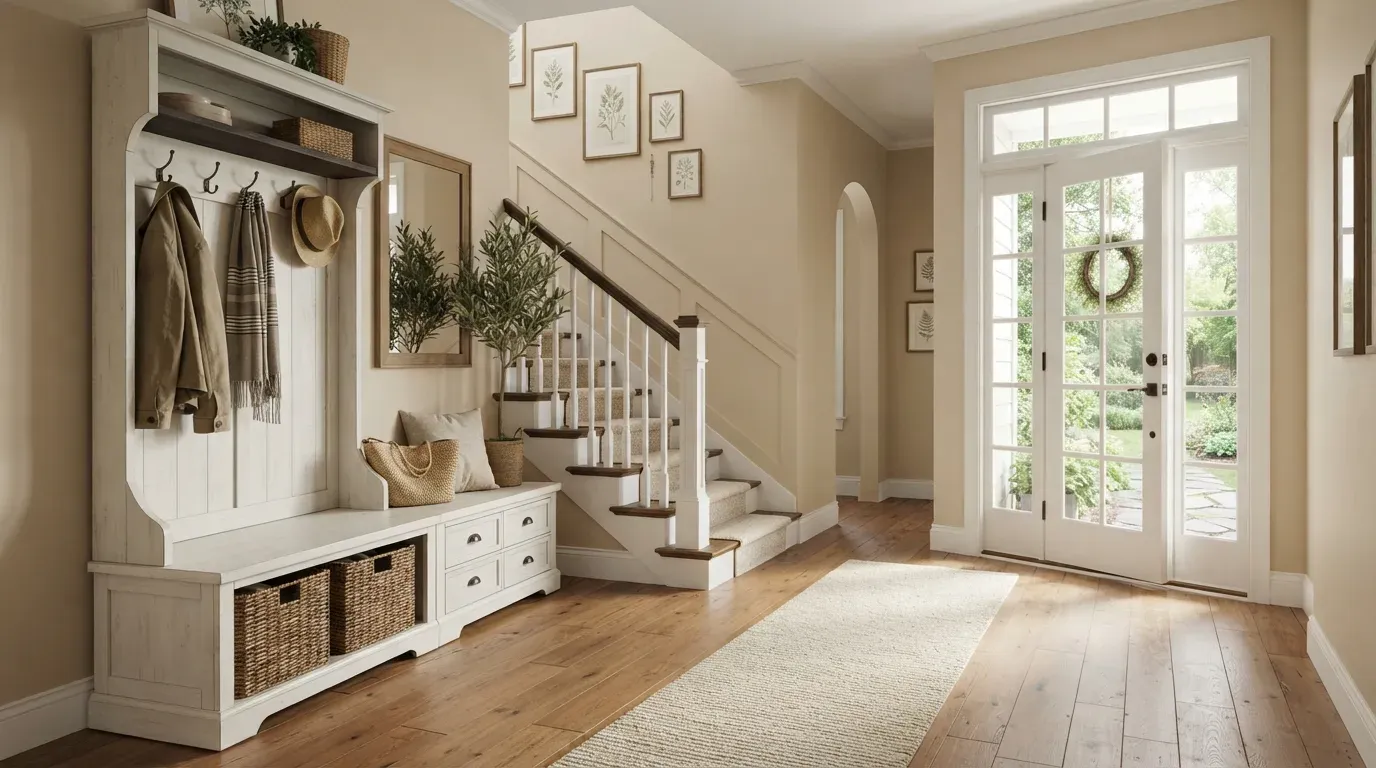
- Hinge System: Heavy-duty mortised butt hinges finished in textured bronze.
- Hook Integrity: Cast metal antique brass hooks — rigid with no visible flex under heavy coats.
- Best For: Busy family entryways where users sit on the bench daily.
- Pros:
- Solid-wood-leaning construction with strong joint integrity.
- Thick profile top and base molding provides excellent resistance to tipping.
- Deep lower storage cabinet keeps damp sports gear hidden.
- Cons:
- A massive footprint requiring at least 42 inches of wall width.
- Heavy unit weight (120+ lbs) makes shifting it after assembly difficult.
For those planning to integrate larger mudroom setups, check out our comparison of mudroom lockers to see if a modular locker system fits your entryway better than a single hall tree.
3. VASAGLE Industrial Hall Tree with Shoe Cabinet
A budget-conscious, high-strength option that blends a powder-coated steel frame with rustic engineered wood panels.
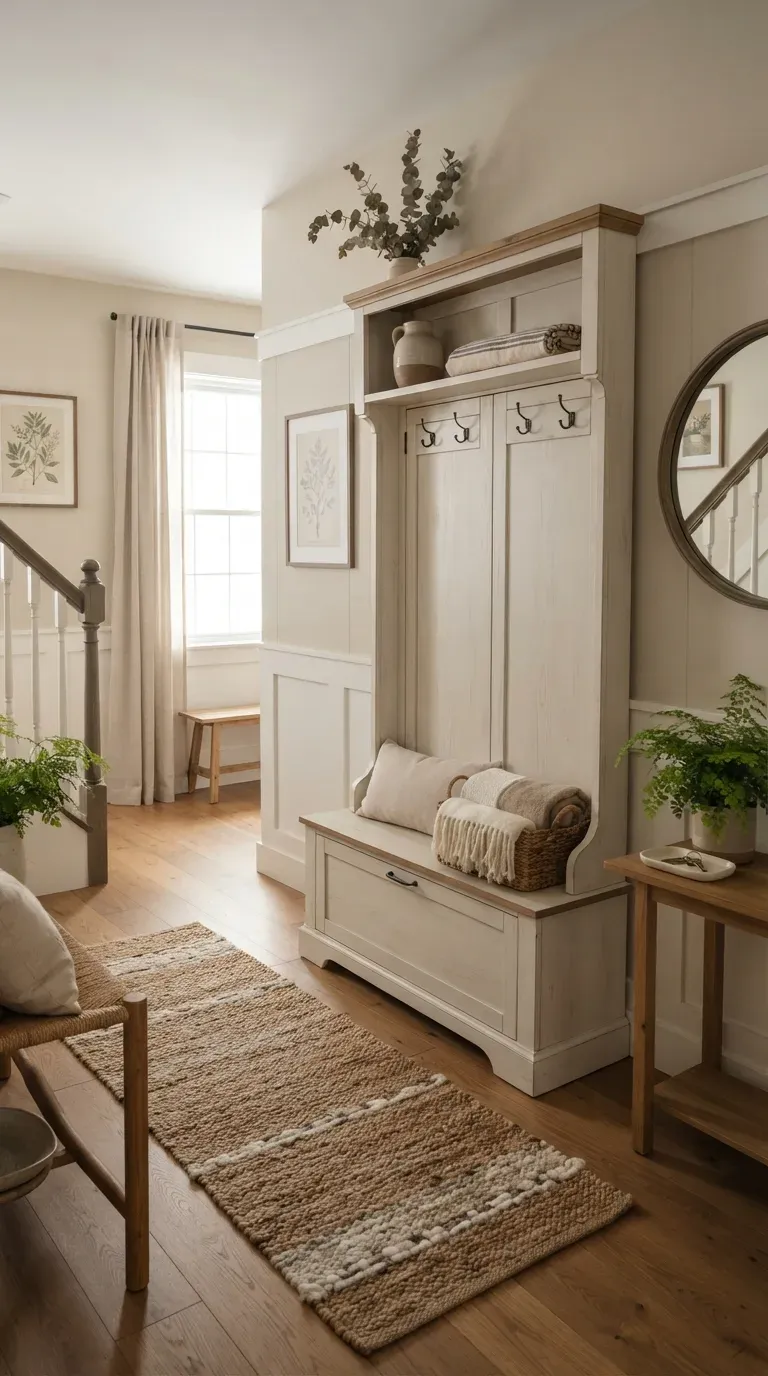
- Hinge System: Exposed pin hinges on the lower cabinet door.
- Hook Integrity: Movable hooks on a steel grid backboard. Flexible but subject to sliding if not locked in place.
- Best For: Industrial-themed spaces or apartments where space is limited.
- Pros:
- Alloy steel frame minimizes frame wobble.
- Very affordable entry price point.
- Easy-to-clean mesh surfaces.
- Cons:
- Engineered wood panels have lower moisture tolerance than solid timber.
- Lower static weight capacity on the bench compared to solid wood options.
If you are looking to build a custom unit instead of buying pre-made, check out our step-by-step guide to build a DIY hall tree for a customized, high-strength alternative.
6. Hall Tree with Doors Measurement Chart & Spatial Clearance Blueprint
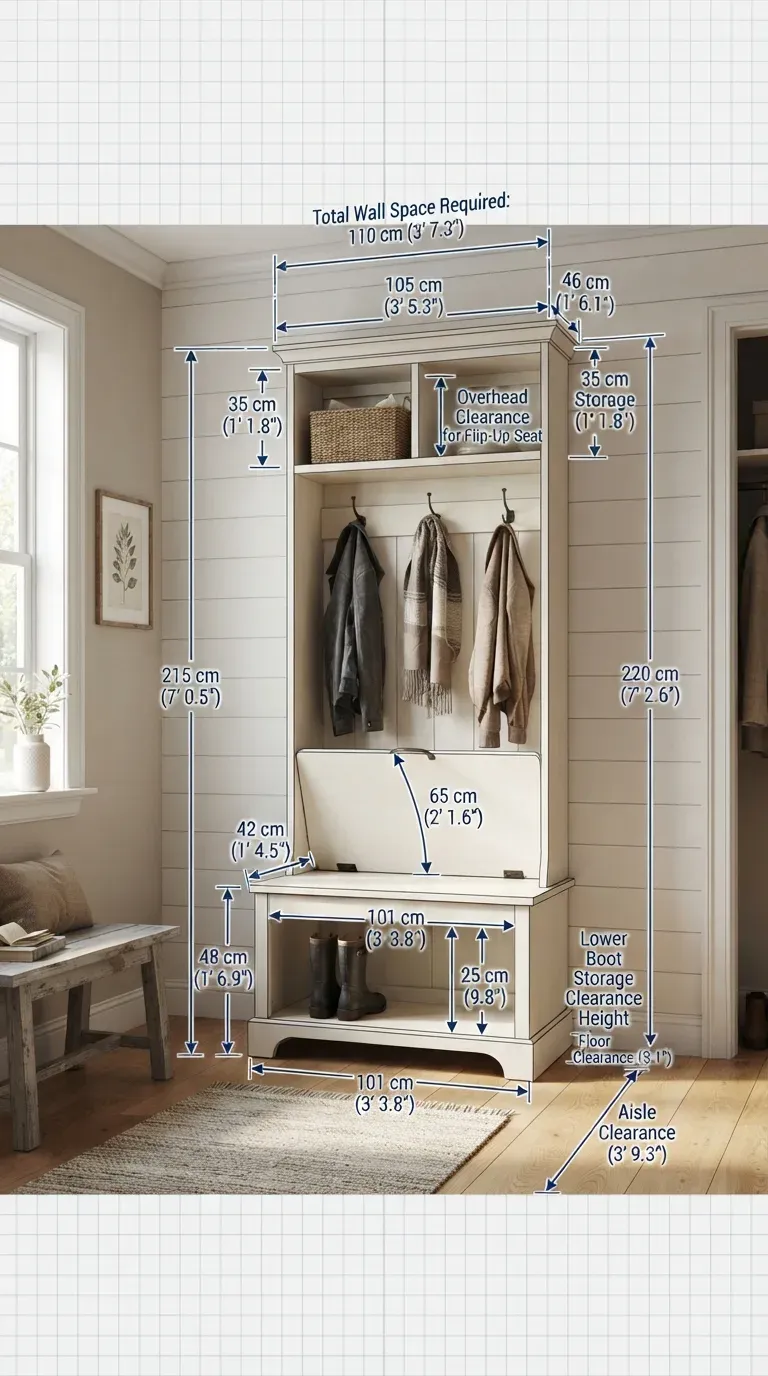
Never buy a hall tree based on wall length alone. You must calculate the door-swing radius, passageway clearance, and hook projection depths.
The diagram and data below outline the minimum clearances required to keep your entryway functional.
Critical Spatial Dimensions Table
| Dimension Metric | Minimum Clearance | Recommended Target | Engineering Reason |
|---|---|---|---|
| A: Hallway Passageway | 32 inches | 36 inches | Prevents shoulder-bumping when walking past the unit with bags. |
| B: Door-Swing Clearance | 18 inches | 22 inches | Allows full cabinet opening without hitting adjacent walls or rugs. |
| C: Seat Depth | 15 inches | 18 inches | Provides proper skeletal support while sitting down to tie shoes. |
| D: Hook-to-Bench Height | 42 inches | 48 inches | Prevents long trench coats and rain parkas from bunching on the bench. |
If your hallway is particularly dark or narrow, read our design tips on how to brighten your entryway using strategic lighting, mirrors, and paint choices alongside your hall tree.
7. Hall Tree with Doors Cost-per-Year & Longevity Matrix
A cheap hall tree is often more expensive over time. The matrix below breaks down the total cost of ownership over a 10-year horizon, based on typical material lifespans reported by buyers.
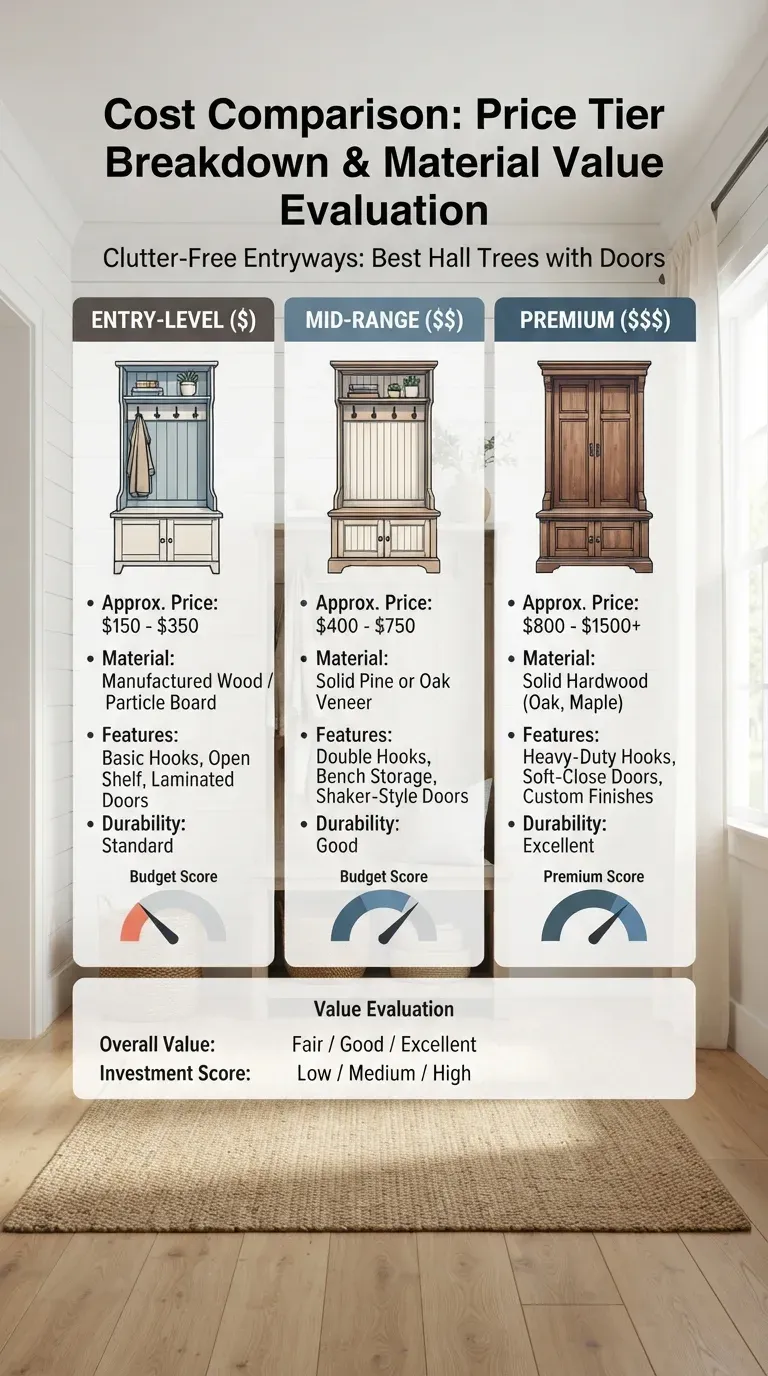
Low-Density Particle Board (Budget Tier)
- Initial Purchase Price: $120 - $180
- Lifespan: 1.5 - 3 Years
- Failure Modes: Hinge tear-out, sagging bench, edge-band peeling from wet boots.
- 10-Year Amortized Cost: $600 - $900 (Requires 3-4 replacements).
Medium-Density Fiberboard (MDF) with Wood Veneer (Mid-Tier)
- Initial Purchase Price: $250 - $450
- Lifespan: 5 - 8 Years
- Failure Modes: Finish wear around handles, minor structural sag under extreme loads.
- 10-Year Amortized Cost: $500 - $562 (Requires 1-2 replacements).
Solid Hardwood / Poplar & Steel Frame (Premium Tier)
- Initial Purchase Price: $500 - $900
- Lifespan: 15+ Years
- Failure Modes: Cosmetic surface scratches (easily sanded and refinished).
- 10-Year Amortized Cost: $333 - $600 (Zero replacements needed).
Before purchasing any unit, check out our guide on the structural differences between wood vs metal vs engineered wood storage systems to match the material to your home’s humidity level.
8. Hall Tree with Doors Maintenance & Long-Term Care Protocols
To ensure your closed-door hall tree survives decades of dirty boots and slamming doors, implement these three preventative maintenance protocols.
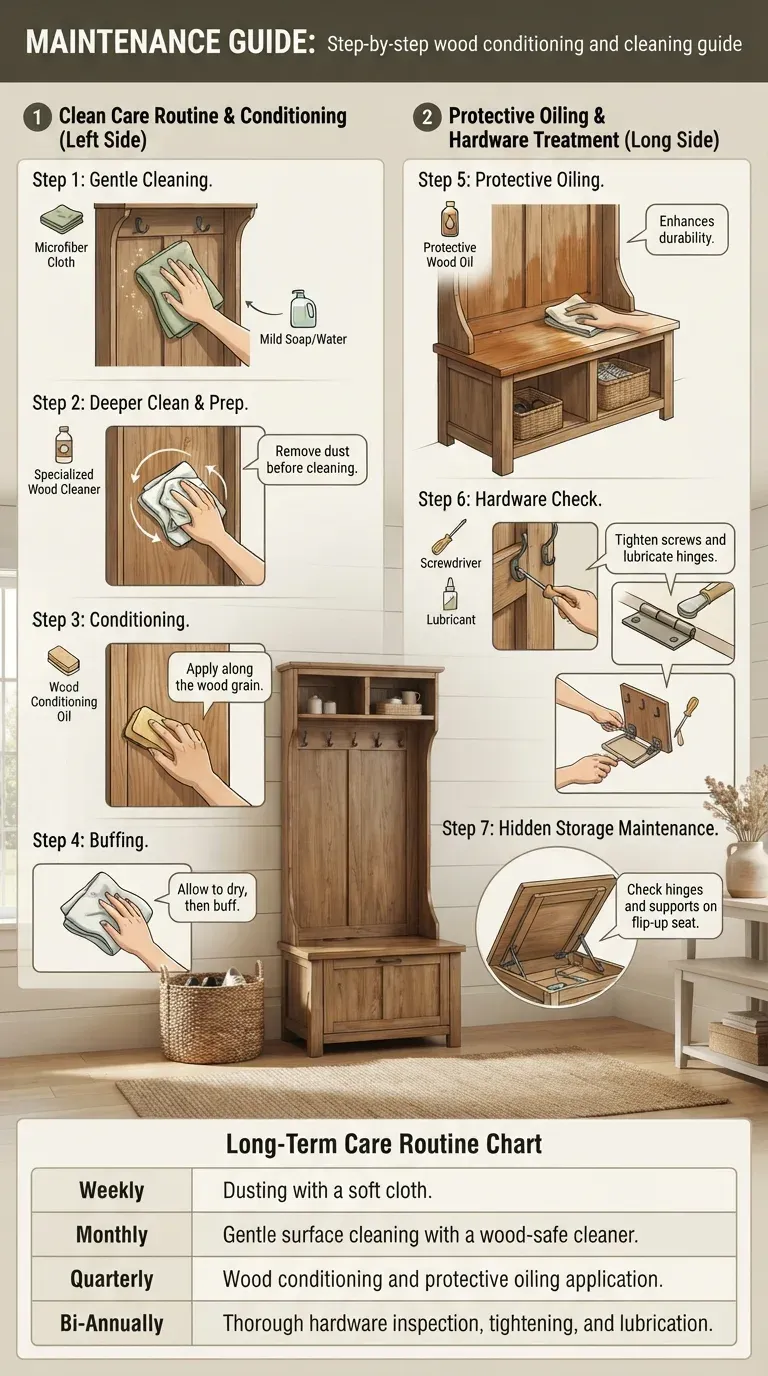
Protocol A: Hinge Tension & Realignment (Every 6 Months)
Euro-style concealed hinges use adjustment screws to control three axes: vertical, lateral, and depth.
- If your doors are catching on the bottom frame, turn the vertical adjustment screws clockwise by a 1/4 turn.
- If there is an uneven vertical gap between the doors, adjust the front lateral screw to swing the door plane left or right.
- Tighten the rear locking screw to prevent the hinge arm from sliding out of its seat.
Protocol B: Moisture Mitigation & Wood Conditioning
Wet winter clothing can quickly ruin wood finishes.
- Always dry wet coats before hanging them on the hooks inside a closed hall tree cabinet.
- For wooden seats, apply a high-grade beeswax or carnauba wood conditioner every six months. This creates a hydrophobic barrier that stops standing water from soaking into the grain.
- Avoid using ammonia-based glass cleaners on veneered surfaces, as they strip the protective topcoat.
For detailed steps on cleaning various finishes without causing damage, read our complete guide on how to safely clean wooden hall trees.
Protocol C: Hanger Hook Anchor Stabilization
Double-check your hanger hooks twice a year. If a hook screw is loose:
- Back the screw out completely.
- Dip a wooden toothpick in wood glue and insert it deep into the screw hole.
- Snap the toothpick flush with the wood surface.
- Re-install the screw. The packed wood fibers and glue will create a fresh, high-density anchor path that resists pull-out.
9. Hall Tree with Doors: Structural Benchmarks & Load Limits
When evaluating hall trees with doors, understanding weight capacity and structural framing ensures safe long-term installation:
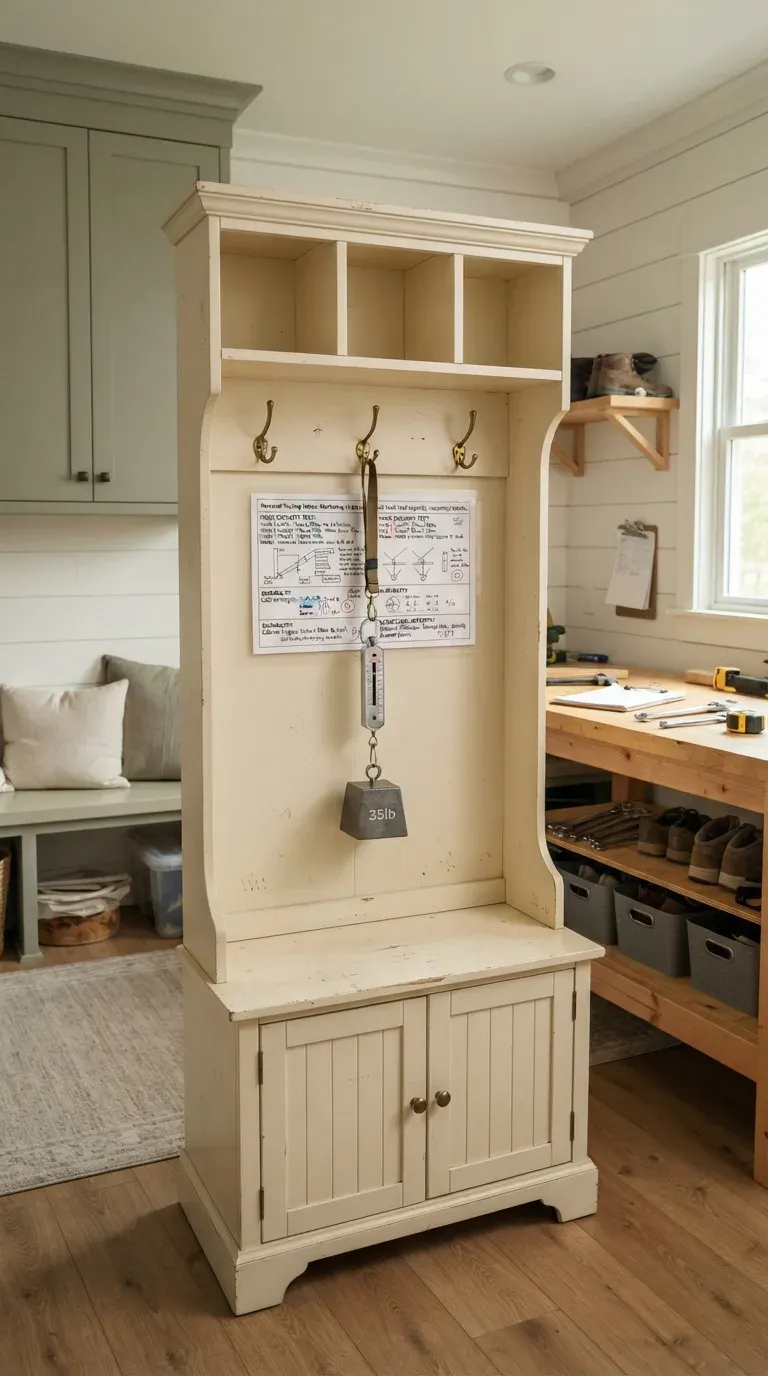
Key Structural Benchmarks
What to look for in a solid door hall tree:
- Material framing: solid wood or plywood over bare particle board.
- Joinery: pocket screws with adhesive, reinforced corners.
- Bench support: mid-span rail or center leg; 220+ lb manufacturer rating.
- Hinges: 3-way adjustable concealed Euro hinges with soft-close dampers.
Design Tip — Face Frame Construction: The primary structural foundation of a durable hall tree is its face frame. A solid wood face frame acts as a vertical column, transferring seated bench loads directly to the floor. This minimizes shearing stress on fasteners and back panels, preventing the unit from developing wobble over years of use.
If you plan to load your unit with heavy items, review our comprehensive analysis of hall tree weight capacity limits to avoid overloading the bench or shelves.
10. Hall Tree with Doors Styling & Organization Accessories
While solid doors keep clutter out of sight, maximizing your storage requires the right internal accessories.
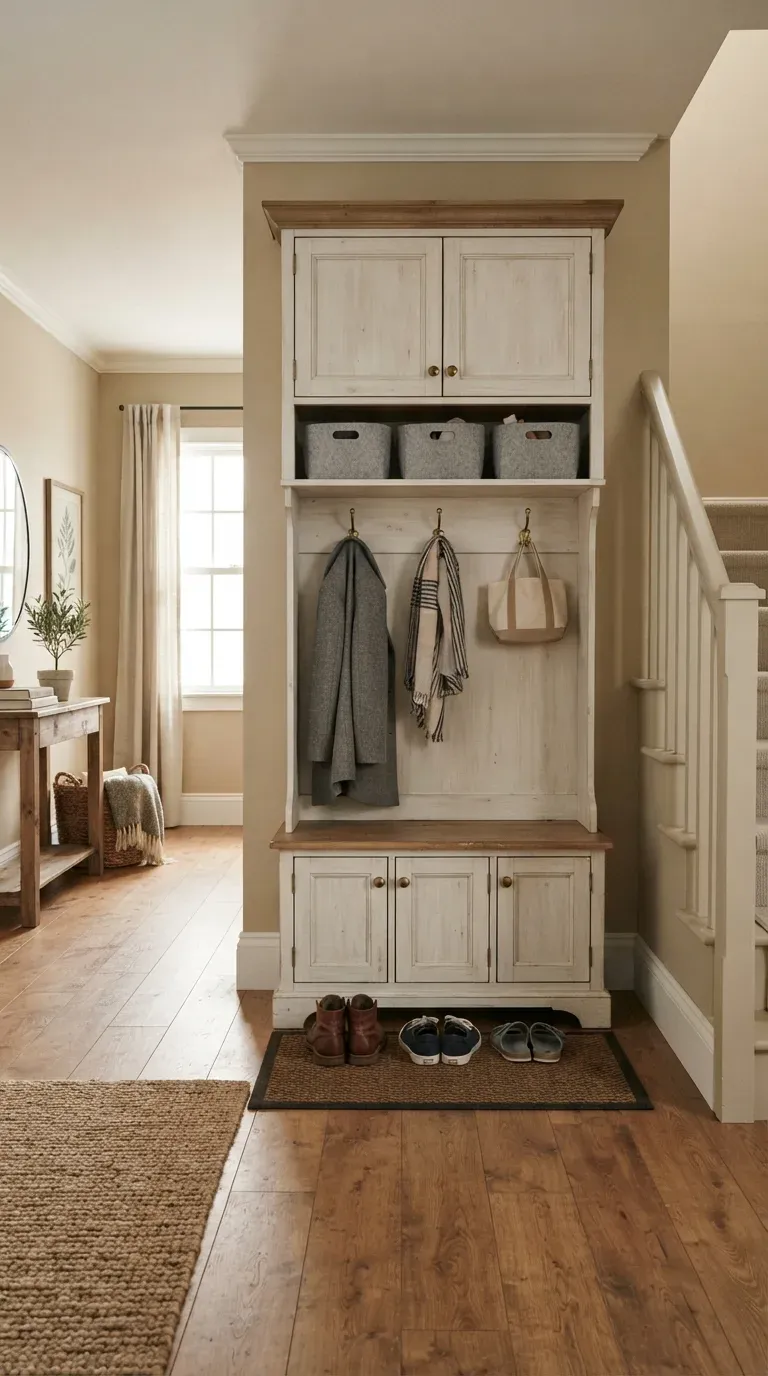
- Woven and Felt Bins: Place these inside lower shoe compartments or on upper open shelves to keep gloves, keys, and dog leashes organized. Check out our reviews of the best baskets for hall trees to find durable options that won’t scratch wood finishes.
- Alternative Bins: If you prefer structured, stackable options, explore our guide on the 10 best storage bins for high-capacity mudroom setups.
- Modular Inserts: If your hall tree has open cubbies, using cube storage ideas can double your usable shoe space.
- Aesthetic Styling: Once organized, add some style. Our guide on gorgeous hall tree styling shows how to balance functional storage with beautiful design.
11. Hall Tree with Doors: Frequently Asked Questions
Do hall trees with doors warp in high-humidity climates?
Yes, if they are constructed from low-density particle board. Moisture from wet coats or humid entryways seeps into unsealed edges, causing the wood fibers to swell and warp. To prevent this, choose hall trees made from solid wood, high-density MDF, or powder-coated steel. Applying a protective wax finish to wooden panels also helps.
How do I stop the doors on my hall tree from rubbing against the frame?
This is usually caused by door sag, which happens when hinge screws loosen over time. To fix it:
- Use a screwdriver to tighten the mounting screws on the hinge plates.
- Use the Euro-hinge lateral adjustment screw to realign the door plane.
- If the screw holes are stripped, fill them with a wood-glue-soaked toothpick before putting the screws back in.
Are open-backed hall trees more stable than fully enclosed cabinet styles?
No. Fully enclosed cabinet-style hall trees are generally more stable. Their solid back panels and face frames resist lateral forces, reducing wobble. Open-backed units rely on diagonal corner bracing or wall anchors to prevent swaying.
What is the maximum safe weight capacity for entryway bench seating?
Weight capacities vary based on construction:
- Solid wood or steel-framed benches: Commonly rated 250 to 300 lbs by manufacturers; verify the rating on the current listing.
- Particle board benches: Often rated 150 to 200 lbs and may sag over time if loaded heavily. Always check the manufacturer’s weight specifications and distribute weight evenly.
How can I fix stripped screw holes in a particle board hall tree?
If a screw has stripped out of composite wood:
- Clear away any loose wood dust from the hole.
- Fill the hole with a two-part epoxy or a high-strength wood filler.
- Alternatively, insert a plastic wall anchor or a glued wooden dowel into the hole.
- Let it dry completely, then drill a pilot hole and re-install your hardware.
If you run into other common issues like loose hooks, sticky drawers, or stubborn finishes, consult our guide to troubleshooting common hall tree problems for easy, step-by-step solutions.
12. Hall Tree with Doors: Final Verdict: Selecting Your Hall Tree
Choosing the right hall tree with doors comes down to balancing your budget, space, and durability needs.
- For maximum durability and stability, choose the Home Styles Bermuda Hall Tree. Its solid poplar frame and secure brass inserts are built to handle busy, high-traffic homes.
- For classic styling and hidden shoe storage, choose the Crosley Furniture Seaside Hall Tree. Its louvered doors keep muddy shoes out of sight while allowing plenty of airflow.
- For budget-friendly, high-strength storage, choose the VASAGLE Industrial Hall Tree. Its steel-frame construction offers great strength and clean modern lines at an approachable price.
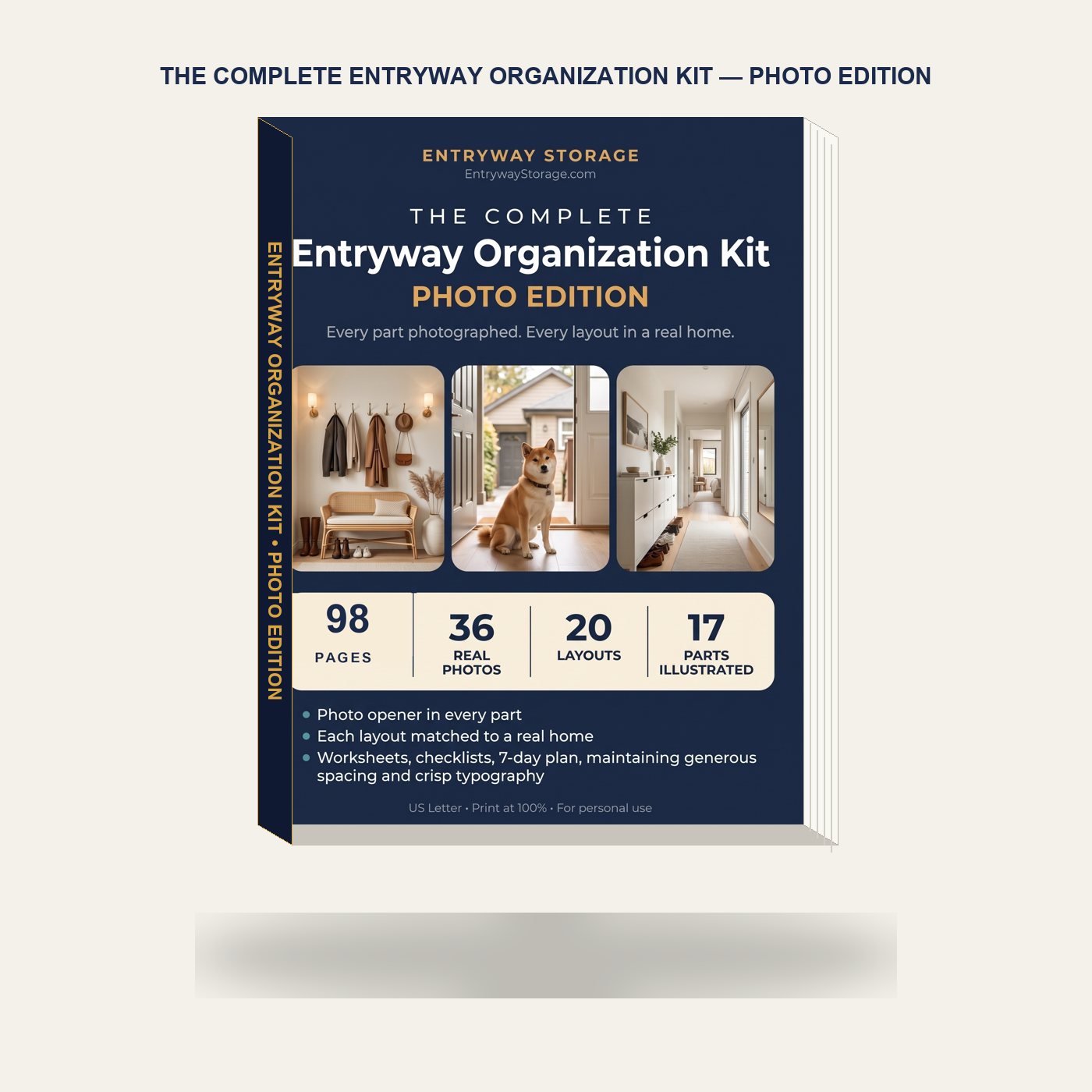
Stop Guessing Measurements. Build Your Dream Entryway with Confidence.
Transform awkward hallways, cramped foyers, and cluttered mudrooms into organized sanctuaries. Includes 20 measured floor plans, facing photo spreads, the 36-inch planning rule, the shoe pairs formula, and 7 printable worksheets.
Core Edition ($17.99) · Flagship Photo Edition v5 ($39.99) — compare editions
Frequently Asked Questions
Do hall trees with doors warp in high-humidity climates?
Low-density particle board warps as moisture seeps into unsealed edges. Choose solid wood, high-density MDF or powder-coated steel and apply wax finish.
How do I stop doors on my hall tree from rubbing against the frame?
Tighten hinge plates, adjust Euro-hinge lateral screw, or pack stripped holes with glued toothpick before reinstalling screws.
Are open-backed hall trees more stable than fully enclosed cabinet styles?
No. Fully enclosed cabinets with solid back panels and face frames resist lateral forces better; open-backed rely on bracing and anchors.
What is the maximum safe weight for entryway bench seating?
Check the manufacturer's rating first. Solid wood or steel frames are commonly rated 250-300 lbs; particle board is commonly rated 150-200 lbs and may sag over time under heavy daily use.
How can I fix stripped screw holes in a particle board hall tree?
Clear dust, fill with two-part epoxy or wood filler, or insert glued dowel/plastic anchor, dry, drill pilot and reinstall hardware.
