
The Best Knock-Down Workbench Designs You Can Easily Disassemble
Discover expertly engineered knock-down workbench designs that offer rock-solid stability during heavy planing while tearing down in minutes for ultimate portability.
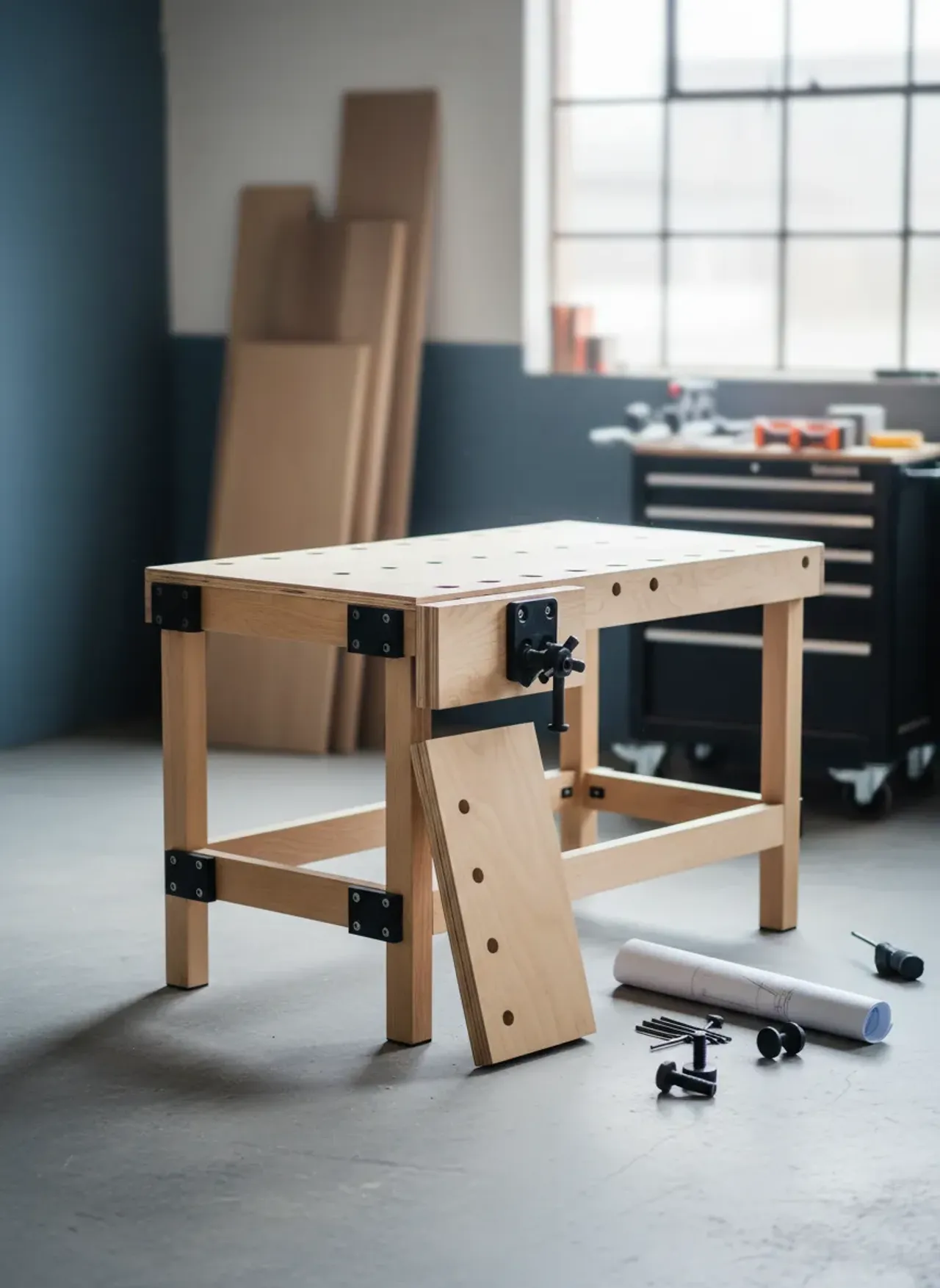
Mar 25, 2026 - Written by: Linda Wise

Every serious woodworker eventually hits the exact same paradox. You need massive, unyielding mass to absorb the brutal racking forces of hand-planing rough lumber, yet you simply don’t have the dedicated square footage to park a 300-pound Roubo permanently in your garage. I’ve personally wrestled with this exact dilemma. The fantasy of a sprawling, climate-controlled shop rarely matches the reality of sharing space with minivans, lawnmowers, and seasonal decorations.
Here is the real kicker: portability does not have to mean compromise. For decades, traditional joiners and traveling carpenters relied on highly engineered benches that could be flat-packed into a wagon, yet stood rigid enough to dimension massive oak timbers. Today’s best knock-down workbench designs leverage both ancient joinery techniques and modern mechanical fasteners to give you a rock-solid work surface that vanishes when you need the floor space back.
If you are tired of flimsy, folding sawhorses masquerading as real woodworking benches, you are in the right place. We are going to dissect the anatomy of true knock-down designs, examining the structural mechanics that make them work, the specific hardware required, and the distinct styles that dominate the hybrid shop environment.
Quick Comparison: Top Picks
| Product | Rating | Check Price |
|---|---|---|
| Sjobergs Scandi Plus 1425 Knock-Down Bench | ⭐⭐⭐⭐⭐ | View on Amazon |
| Kreg KWS1000 Mobile Project Center | ⭐⭐⭐⭐½ | View on Amazon |
| BORA Centipede Workstand Kit | ⭐⭐⭐⭐ | View on Amazon |
The Anatomy of a Truly Portable Workbench
Before looking at specific designs, you have to understand the physics working against you. When you push a #7 jointer plane across a rough hardwood board, you are introducing extreme lateral shear forces—what woodworkers call “racking.” A traditional bench fights this with pure gravitational mass and glued, drawbored mortise-and-tenon joints.
A knock-down bench must accomplish the exact same resistance without glue, using temporary compression.
To achieve this, brilliant makers have historically relied on mechanical leverage. The fundamental anatomy of any successful disassemblable bench relies on interlocking geometries. The tighter you wedge a joint, the more rigid the structure becomes. You’ll notice that the best designs use angular legs, deep aprons, or specialized steel hardware to create a closed loop of tension.
When you swing a heavy mallet to chop a mortise, the bench must also resist downward deflection. This requires a thick top or a torsion-box construction. Balancing the need for a thick, heavy top against the reality of having to physically lift that top off the base is the delicate dance of knock-down design.
Top Knock-Down Workbench Styles for Serious Woodworkers
Not all portable benches are created equal. Depending on your primary workflow—whether you use exclusively hand tools, heavy power routers, or track saws—different historical and modern designs will serve you better.
The Moravian Workbench
If there is a holy grail of traditional knock-down benches, it is the Moravian. Popularized heavily in recent years by experts studying historical 18th-century North Carolina furniture makers, the Moravian is an engineering marvel.
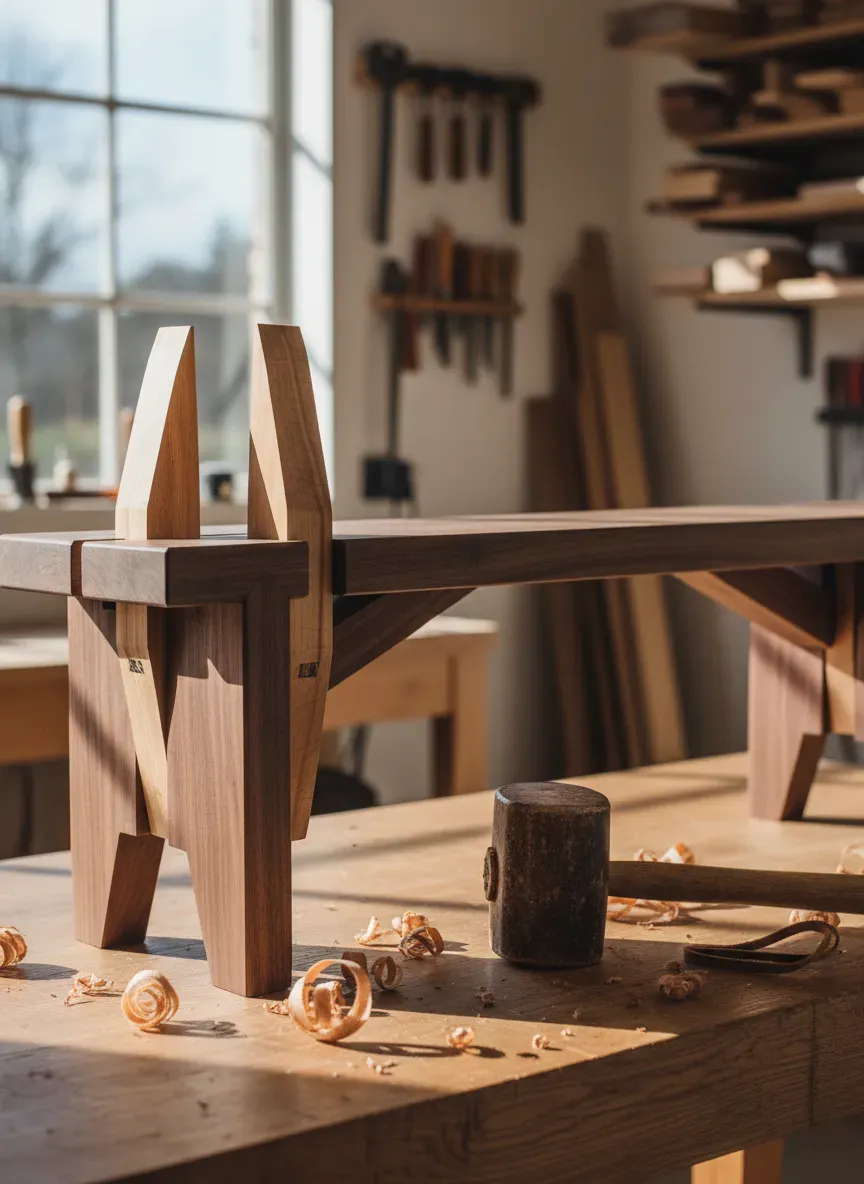
It utilizes severely splayed legs mortised into heavy wooden stretchers. The genius of the Moravian lies in its tusk tenons. The long stretchers pass completely through the leg assemblies. You then drive a tapered wooden wedge (the tusk) into a mortise cut into the protruding tenon. As you hammer the wedge downward, it pulls the leg assembly impossibly tight against the stretcher shoulder.
I’ve personally found that a well-built Moravian bench is actually stiffer than many glued-up benches. Because wood moves with seasonal humidity changes, glued joints can eventually fatigue and crack. With a Moravian, if the bench ever gets slightly wobbly in the dry winter months, you simply give the four tusks a solid whack with your mallet, instantly restoring absolute rigidity. The top usually sits entirely unattached, held in place by massive wooden dowels (or gravity alone), allowing you to lift it off and stack the flat components against a wall in under three minutes.
The Nicholson-Style Knock-Down
The English Nicholson bench relies on a completely different mechanical theory: the deep apron. Rather than using massive slabs of thick timber for the top, the Nicholson uses relatively thin boards (often just 1.5 inches thick) combined with incredibly wide, vertical front and back aprons (usually 10 to 12 inches deep).
This creates an “L” or “U” shaped beam that boasts massive torsion rigidity. It resists downward deflection brilliantly while remaining shockingly lightweight.
To make a Nicholson knock-down, modern builders replace traditional glued joinery with heavy-duty bed bolts or carriage bolts. By bolting the wide aprons to the leg assemblies, you create a massive surface area of friction. When those bolts are torqued down, the sheer width of the apron prevents the legs from racking. You can easily unbolt the four corners, leaving you with two flat leg assemblies and a top-and-apron unit that can be stood vertically in a tight closet.
The Paulk Smart Bench (Torsion Box Design)
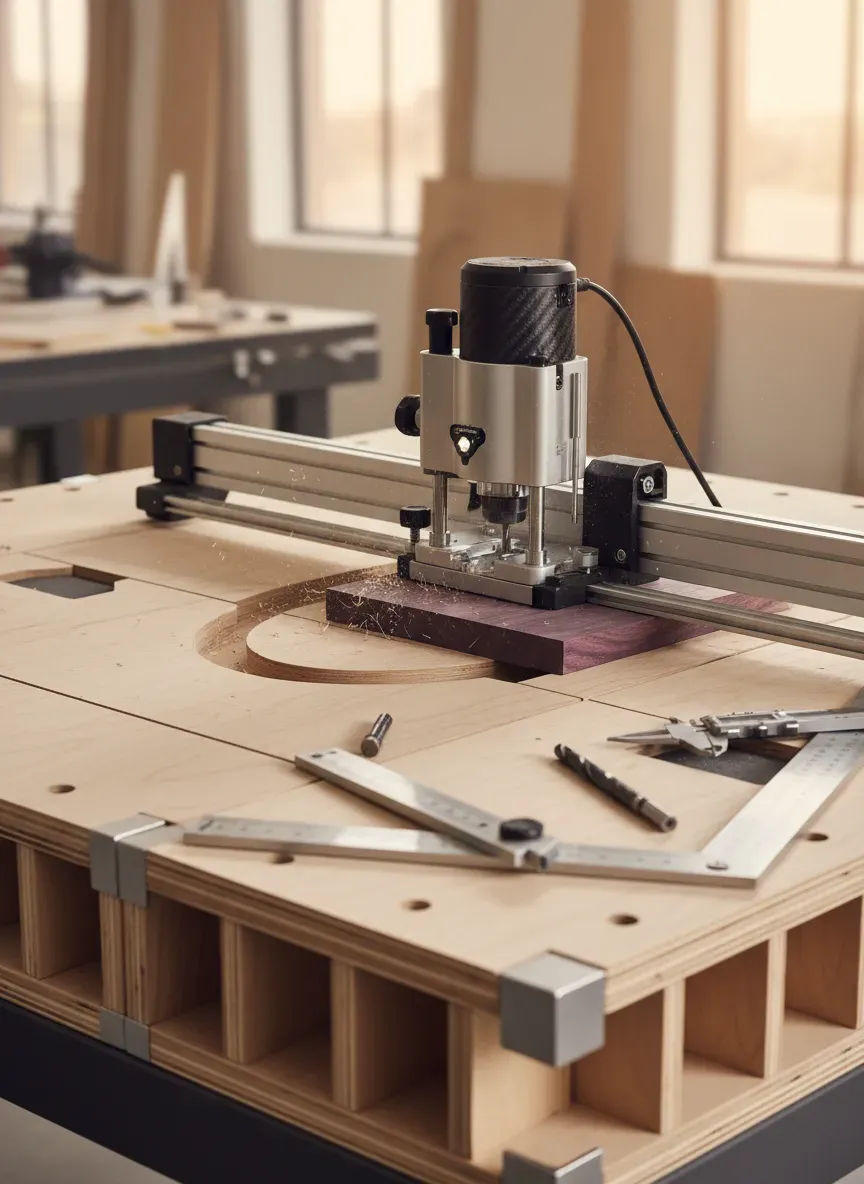
For the modern power-tool user, the Paulk workbench has revolutionized job site efficiency. Designed by Ron Paulk, this bench uses a hollow torsion box design made entirely out of high-quality plywood (like Baltic Birch).
The top looks like an airplane wing: two thin skins of plywood separated by a grid of intersecting ribs. This results in a flawlessly flat surface that weighs a fraction of solid hardwood. The brilliant part of the Paulk design is the integration of dog holes across the entire surface, acting perfectly alongside track saws and modern clamping systems.
The hollow cavity between the top and bottom skins also serves as immediate tool storage, keeping your routers, drills, and measuring tapes off the work surface but within arm’s reach. The base usually consists of intersecting plywood sawhorses that slot together like a 3D puzzle without a single screw. When you are done, the entire bench breaks down into a few flat sheets of plywood you can toss into the bed of a pickup.
Must-Have Hardware for Disassemblable Benches
If you choose to bypass tusk tenons and build a hardware-based knock-down bench, you absolutely cannot rely on standard wood screws or drywall screws. They will strip out the end-grain within three assembly cycles. You need dedicated, heavy-duty hardware engineered for high torque and repeated use.
Bed Bolts and Cross Dowels
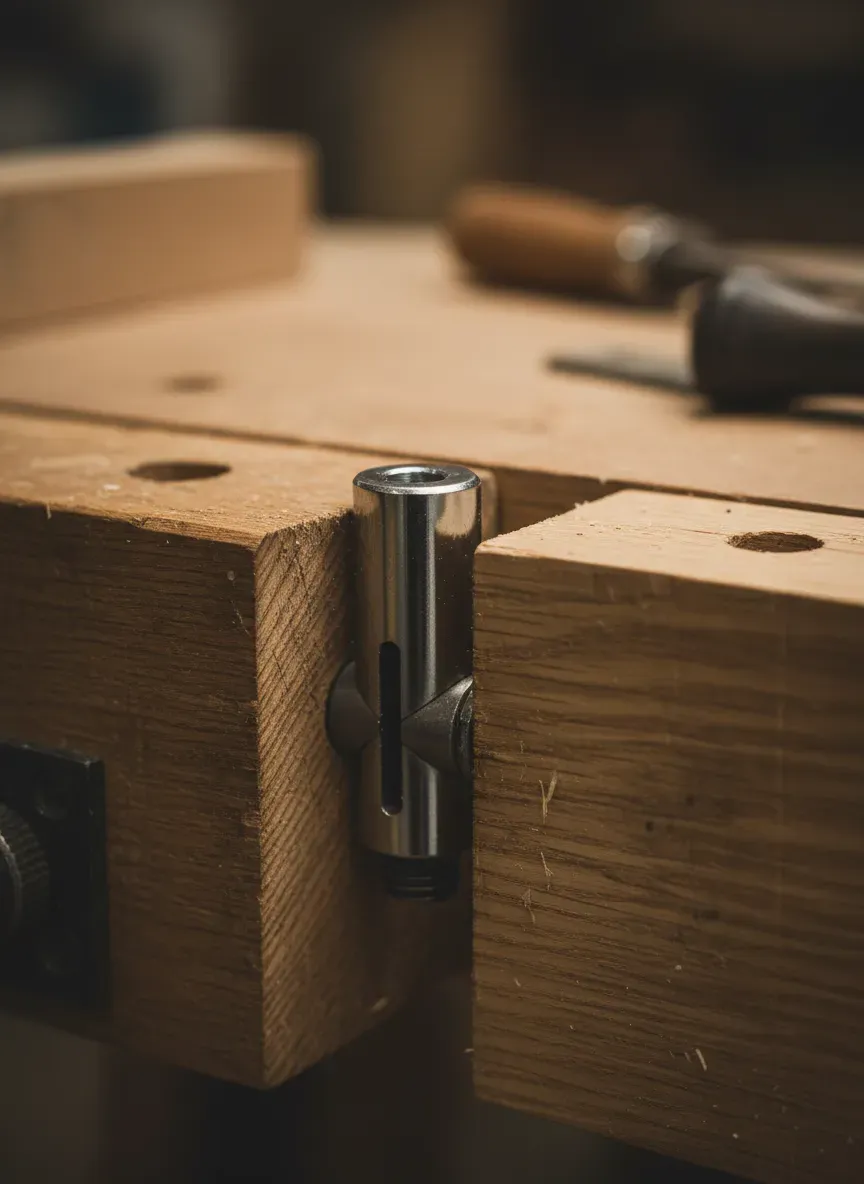
This is the gold standard for structural integrity in disassemblable furniture. A cross dowel (or barrel nut) is a steel cylinder with a threaded hole bored through its side. You drill a hole into the face of your wooden stretcher and drop the steel cylinder in. Then, you drill an intersecting hole through the end-grain to meet it.
You pass a heavy machine bolt through your bench leg, into the stretcher, and thread it directly into the steel cross dowel. Because you are pulling steel against steel rather than pulling steel against wood fibers, you can crank these bolts down with a massive wrench. The compression force generated is staggering.
Heavy-Duty Threaded Inserts
If cross dowels aren’t an option, threaded inserts are the next best thing. These are brass or zinc cylinders with aggressive, knife-like threads on the outside and standard machine threads on the inside. You drive them into a pre-drilled hole in your wood.
The Bottom Line: Never install threaded inserts directly into end-grain if you can avoid it. They will eventually pull out under heavy racking forces. If you must use them, epoxy them into place, or better yet, glue a dowel of hard maple cross-grain into your piece, and drive the threaded insert into that face-grain plug.
Pro Tip: Always lubricate the threads of your heavy machine bolts with a little bit of paste wax or beeswax before assembly. This prevents the steel from binding or galling inside the barrel nut, ensuring you can always disassemble the bench smoothly when the time comes.
Practical Applications: Where Knock-Down Shines
The utility of a knock-down bench extends far beyond the cramped residential garage. Professional carpenters and installers rely on these designs to bring shop-level precision directly into the client’s home.
Imagine you are hired to do a massive entryway remodel. You need a dead-flat surface for assembling face frames, routing hinge mortises, and cutting precise joinery. Trying to do this on the floor or over cheap plastic sawhorses is a nightmare that leads to sloppy tolerances. By tossing a flat-packed Moravian or Paulk bench into your van, you can assemble a 250-pound, dead-flat workstation right in the client’s foyer.
This level of on-site rigidity is an absolute game-changer when you are crafting custom hall trees and mudroom lockers. Massive cabinet carcasses require precise, square assembly. Having a dedicated, heavy bench on-site allows you to clamp the cabinet sides perfectly square while the glue dries, ensuring the final installation looks seamless against the wall.
Furthermore, apartment woodworkers have embraced these designs out of sheer necessity. A knock-down bench can be assembled in a spare bedroom or a living room corner for a weekend project. When Monday morning rolls around, the bench is disassembled and shoved under the bed. It democratizes the craft, proving you don’t need a dedicated outbuilding to produce heirloom-quality furniture.
Common Pitfalls in Knock-Down Construction
Designing a bench that comes apart is easy. Designing one that goes back together perfectly rigid 50 times in a row is incredibly difficult. Many first-time builders fall into specific engineering traps that leave their benches swaying like ships at sea.
Ignoring Wood Movement in Tusk Tenons
If you build a Moravian bench, you must account for hygroscopic cycles—the way wood swells and shrinks with seasonal humidity. Many builders cut their mortises for the tusk tenon exactly flush with the leg shoulder.
When the dry winter air shrinks the stretcher, the wedge bottoms out against the mortise before it can pull the joint tight. You must cut your mortise so it extends slightly inside the leg shoulder. This gives the wedge room to travel deeper, guaranteeing it can always apply pressure to the joint, regardless of seasonal shrinkage.
Using Softwoods for High-Stress Points
While you can absolutely build a fantastic bench out of cheap Douglas Fir or Southern Yellow Pine construction lumber, you cannot use softwoods for your wedges or your hardware anchoring points.
If you use a pine wedge in a tusk tenon, the heavy mallet blows will crush the wood fibers, deforming the wedge until it fails to hold tension. Always use a dense, closed-grain hardwood like maple, oak, or hickory for your wedges. Similarly, if you are using cross dowels, burying them in a softwood stretcher means the high torque of the bolt might crush the wood fibers surrounding the dowel. Reinforce these areas if possible.
Failing to Account for Floor Variations
A rigid bench is entirely useless if it sits on four uneven legs. Because a knock-down bench is so stiff, it will not twist to accommodate a sloped garage floor. It will simply teeter back and forth.
This is particularly frustrating when installing smart shoe storage solutions in an uneven mudroom, where you desperately need a level surface to reference your cuts.
To combat this, you should incorporate heavy-duty leveling feet into the base of your knock-down bench. Alternatively, many traditional woodworkers simply keep a handful of wooden shims in their tool tray to slide under the offending leg.
Key Takeaways for Knock-Down Success
- Friction is your friend: Broad, flat surfaces clamped tightly together (like a Nicholson apron to a leg) provide massive racking resistance.
- Avoid end-grain threading: Never rely on screws driven straight into the end of a board; they will inevitably strip out under vibration.
- Embrace gravity: Let the massive weight of your bench top do the work. Often, the top doesn’t need to be bolted to the base at all. Heavy dowels dropping into locating holes are usually sufficient and save minutes during teardown.
- Protect the edges: When storing your disassembled bench pieces, wrap the tenons and hardware in rags. A dented tenon shoulder will ruin the tight fit of your joint.
Building Your Own vs. Buying a Prefab Kit
The decision to build or buy ultimately comes down to your primary goal: do you want to practice woodworking by building the bench, or do you want the bench immediately so you can build other things?
Building a Moravian or a Nicholson bench is a rite of passage. It forces you to master critical skills like chopping deep mortises, surfacing wide slabs flat by hand, and understanding the nuances of mechanical tension. It allows you to customize the working height precisely to your elbow (the gold standard for comfortable hand planing) and configure the tail vises and dog holes exactly how you want them.
However, building a bench takes massive amounts of time. Sourcing 8/4 hardwood, letting it acclimate, milling it square, and executing the joinery can easily consume a month of weekends.
If you view the workbench simply as a tool to achieve an end, modern prefab options are spectacular. Companies like Sjobergs and Ramia offer beautiful European beech benches with heavy-duty steel knock-down hardware pre-installed. You can have a dead-flat, rock-solid bench assembled in your garage 45 minutes after the delivery truck drops off the boxes. Hybrid options, like the Kreg Mobile Project Center, sacrifice some of the sheer mass of a traditional bench but offer unparalleled convenience, track-saw integration, and literal fold-away storage.
The Final Verdict on Modular Benches
We no longer have to accept the false dichotomy between immovable stability and flimsy portability. The evolution of knock-down workbench designs proves that with clever geometry, the right hardware, and an understanding of load-bearing physics, you can have a world-class workstation that shares your garage with the family sedan.
Whether you choose the traditional wooden wedges of the Moravian, the bolted aprons of the Nicholson, or the high-tech hollow core of the Paulk, the key is execution. Tight tolerances, robust hardware, and a dense, flat top will yield a surface capable of handling the heaviest hand-tool operations. Your shop space may be temporary or cramped, but the quality of the furniture you produce on these benches certainly won’t be.
If you are ready to stop making excuses about your lack of shop space and want to start building heirloom-quality pieces right now, having the right plans is just as critical as having the right bench. I highly recommend checking out Ted’s Woodworking. I’ve found it to be an absolute goldmine for makers of all skill levels. They offer an incredible archive of over 16,000 step-by-step woodworking plans—including brilliant workbench designs, shop storage, and intricate furniture pieces. Right now, you can grab the entire collection at a massive 75% discount. Stop piecing together confusing, half-finished plans from forums and get a lifetime of project blueprints that will put your new knock-down bench to work today.