
Choosing the Perfect Color for Your Entryway Benches with Storage
Discover expert strategies for selecting the ideal color for your entryway storage bench, blending interior design psychology with practical organization needs.
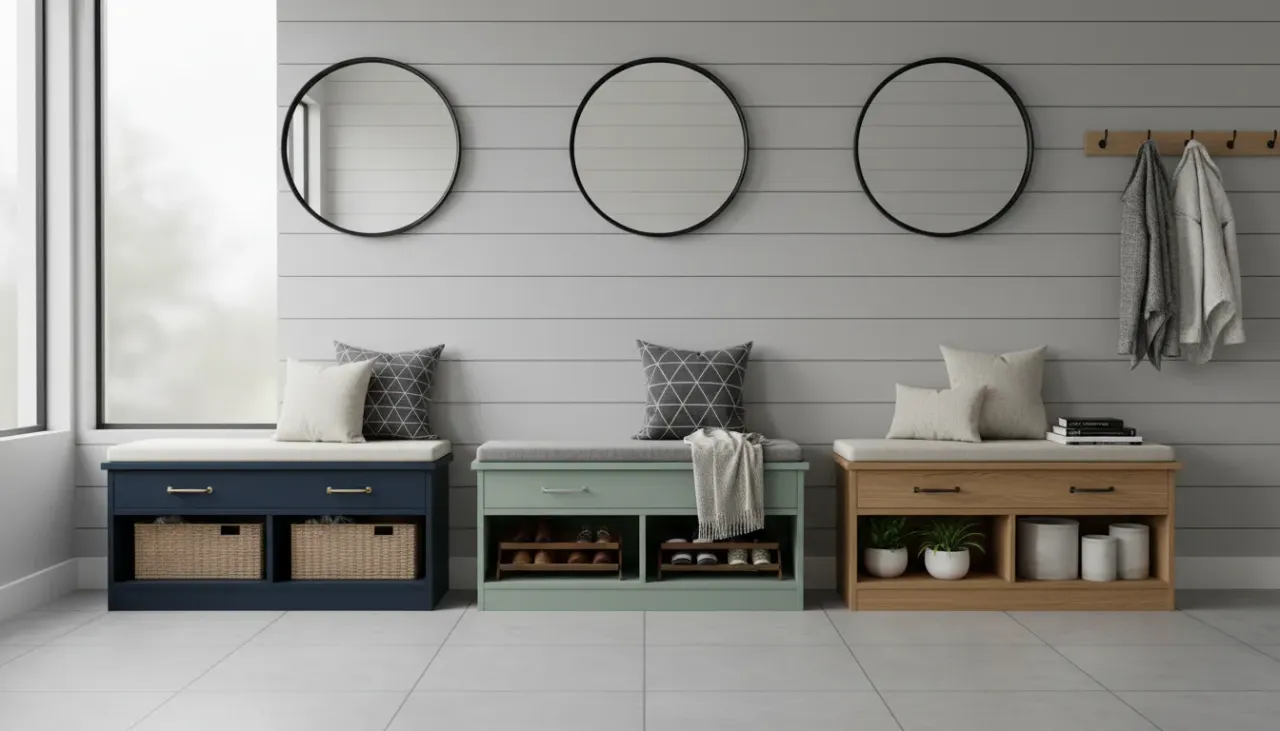
Feb 4, 2026 - Written by: linda wise

The entryway is the handshake of the home. It is the first space guests encounter and the final view you see before leaving for the day. Despite its transitional nature, this area sets the tonal expectation for the rest of your interior design. Central to many functional entryways is the storage bench—a versatile piece of furniture that marries the utilitarian need for organization with the aesthetic desire for comfort.
However, selecting the right storage bench goes beyond measuring dimensions or counting shoe compartments. The color you choose plays a pivotal role in how the space feels, how light behaves in the room, and how well the furniture withstands the daily rigors of a high-traffic zone. Whether you are aiming to create a serene sanctuary or a bold artistic statement, the hue of your entryway bench is a foundational design decision. This comprehensive guide will explore the nuances of color psychology, lighting, and practical maintenance to help you select the perfect shade for your home.
The Psychology of Arrival: Setting the Mood
Before browsing specific shades, it is essential to consider the psychological impact of color in a transitional space. The entryway is a decompression zone. It is where the chaos of the outside world is shed in favor of the comfort of home. The color of your dominant furniture piece, often the storage bench, anchors this emotional shift.
Warm vs. Cool Tones
Color temperature profoundly influences atmosphere. Warm tones—such as terracottas, rich woods, and creams—create an immediate sense of coziness and welcome. A storage bench in a warm walnut finish or a beige upholstery suggests an inviting, traditional hospitality. These colors advance visually, making a large, cavernous foyer feel more intimate.
Conversely, cool tones—blues, greens, greys, and crisp whites—evoke calmness, cleanliness, and order. In a cluttered world, walking into an entryway anchored by a slate blue or charcoal bench can signal a mental reset. Cool colors tend to recede visually, which can help a cramped hallway appear more spacious and airy.
Assessing Your Entryway’s Lighting and Dimensions
No color exists in a vacuum. The way a specific hue translates in your home depends entirely on the lighting conditions and the physical volume of the space. A color that looks sophisticated in a showroom may appear dull or overwhelming in your specific environment.
The Impact of Natural Light
If your entryway is blessed with sidelights, a transom window, or a glass-paneled door, you have more flexibility with darker colors. Natural sunlight reveals the true undertones of furniture. A navy blue bench will read as a true blue rather than black. However, direct sunlight can fade certain fabrics and wood stains over time. If your bench will sit in a sunbeam, consider lighter colors or UV-resistant finishes to maintain longevity.
Managing Dark Hallways
Many entryways, particularly in apartments or townhomes, lack direct natural light. In these scenarios, the storage bench becomes a tool for light management. Dark colors absorb light, potentially making a windowless hallway feel cave-like.
For dimly lit spaces, opt for high-LRV (Light Reflectance Value) colors. Whites, creams, and light oaks reflect artificial light, brightening the overall atmosphere. If you are determined to use a dark color in a dark hall, ensure the bench has a glossy finish or metallic hardware to catch and bounce whatever light is available.
The Timeless Appeal of Neutrals
For many homeowners, the goal of entryway decor is longevity and versatility. Neutral colors are the safest investment, ensuring that your storage bench remains relevant even if you change your wall color or rug runner in the future.
Crisp White and Cream
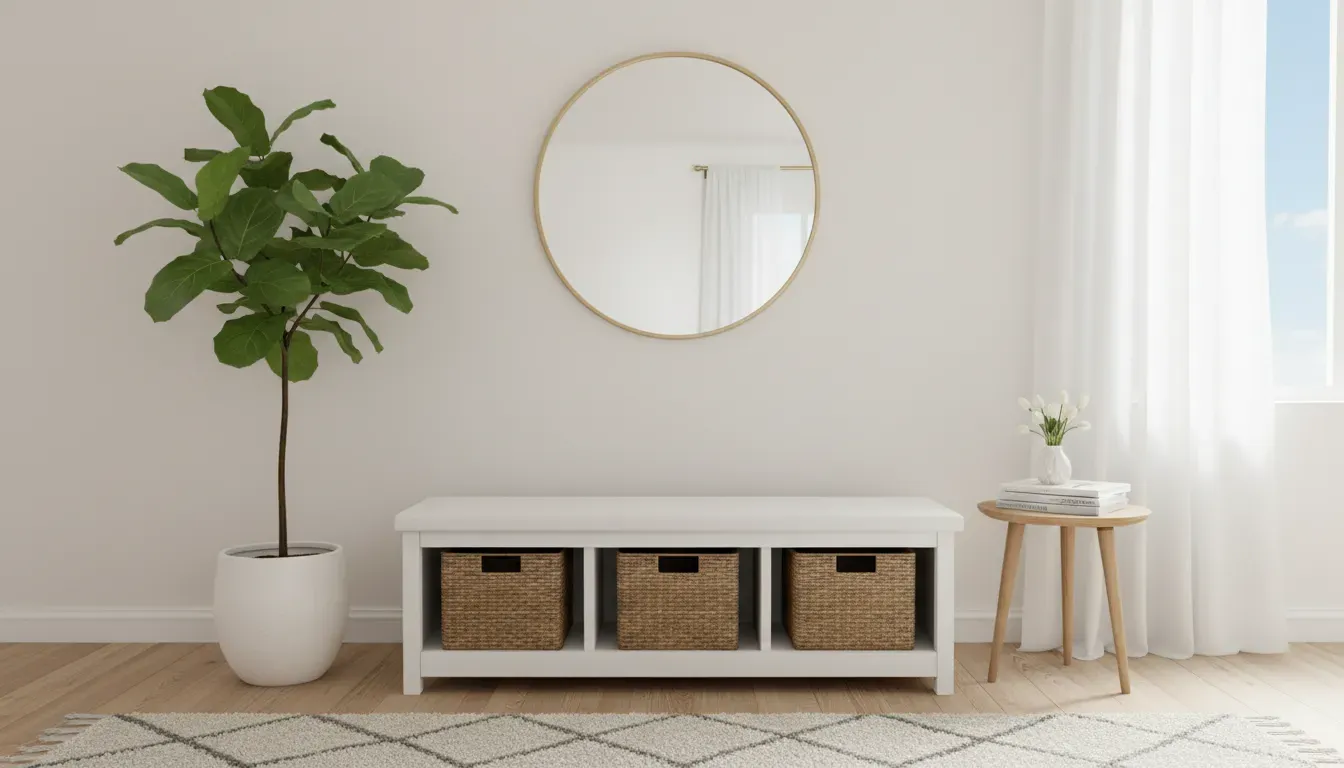
A white storage bench is the epitome of classic design. It works seamlessly with coastal, farmhouse, and traditional aesthetics. White furniture feels clean and architectural, often blending with baseboards to create a built-in look.
However, the practicality of white in a “mudroom” context must be considered. Scuff marks from shoes and dirt from the outdoors show up instantly on white painted wood. If choosing white, look for semi-gloss finishes that are easy to wipe down, or ensure that any upholstered cushions have removable, washable covers.
Classic Black and Charcoal
Black is a grounding color. A black storage bench acts as a visual anchor, drawing the eye and adding a layer of sophistication. It pairs exceptionally well with metallic accents like brass hooks or a gold mirror frame.
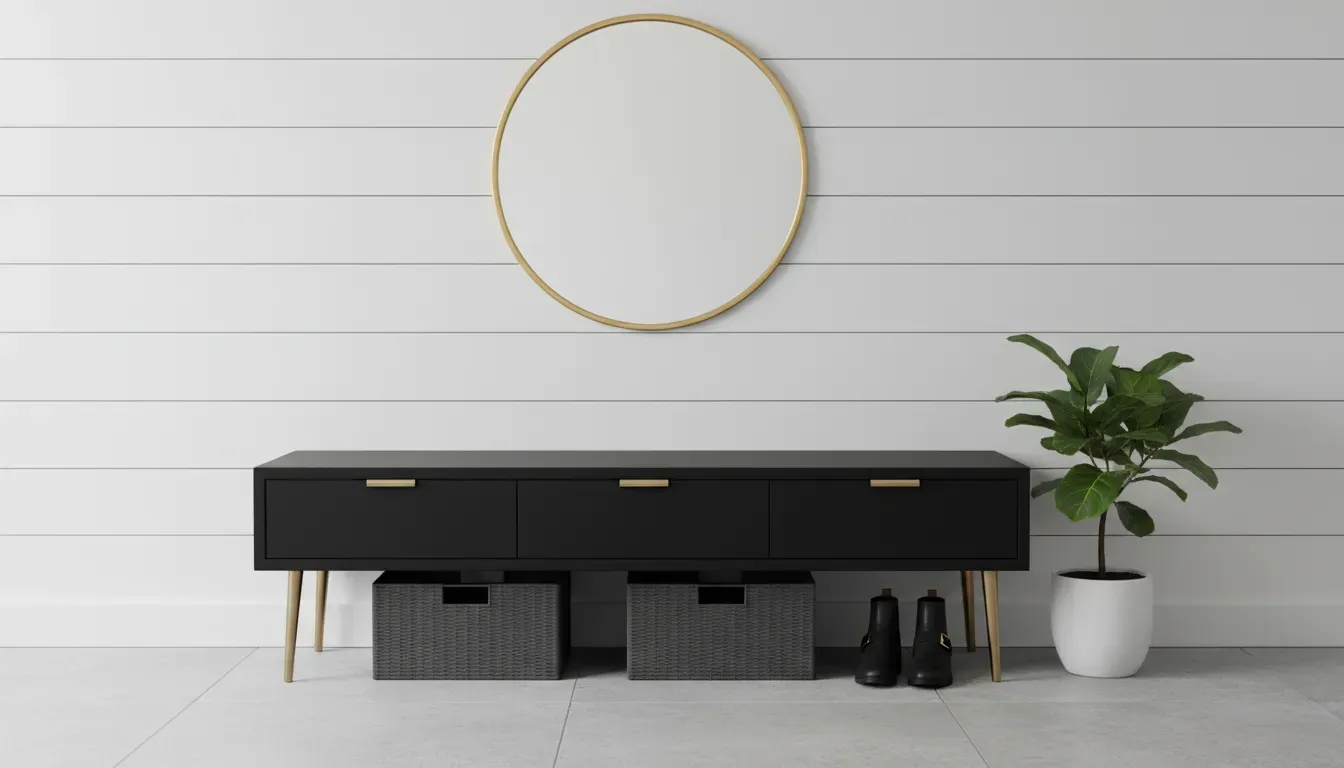
From a maintenance perspective, black is forgiving of mud and dark scuffs but will show dust and pet hair prominently. A charcoal grey offers a middle ground, hiding both dirt and dust effectively while maintaining that modern, moody aesthetic.
If you are looking for a piece that anchors a modern or industrial space, a dark, sleek bench is often the best choice.
Shop Black Entryway Storage Benches on Amazon
Natural Wood Tones
Wood is technically a neutral, but it carries a visual texture that painted surfaces lack. The color of the wood grain should coordinate with other timber elements in your home, particularly the flooring.
- Light Woods (Oak, Birch, Maple): energetic, Scandinavian, and airy. Excellent for hiding dust.
- Medium Woods (Teak, Acorn): Mid-century modern and warm.
- Dark Woods (Walnut, Mahogany): Formal, traditional, and serious.
Making a Statement with Bold Colors
While neutrals are safe, an entryway is a confined space where you can afford to take design risks. A colorful storage bench can serve as the “jewel” of the room, injecting personality the moment the door opens.
Deep Blues and Greens
Navy blue, midnight teal, and emerald green are currently dominating interior design trends for good reason. These colors act as “colored neutrals,” meaning they pair well with almost anything while providing significantly more character than grey or beige.
A velvet emerald bench suggests luxury and pairs beautifully with dark wood floors. A navy bench offers a nautical or preppy feel, working well with white wainscoting. These darker hues also have the practical benefit of hiding denim transfer and general wear better than pastels.
Warm Earth Tones
Terracotta, burnt orange, and mustard yellow benches bring a retro, energetic vibe. These colors stimulate conversation and energy. In a home with neutral walls (white, grey, or beige), a bench in a warm earth tone becomes the focal point of the room. This approach allows you to keep the expensive elements of the room (flooring and walls) neutral while using the furniture to define the style.
Coordinating with Flooring and Walls
The relationship between your storage bench and the surfaces it touches—the floor and the wall behind it—is critical for visual harmony.
The Floor-to-Furniture Connection
The biggest mistake in choosing a wood bench is matching it too closely to the wood flooring. If the tones are identical, the furniture disappears, and the room looks flat.
You need contrast. If you have dark walnut floors, choose a lighter oak bench or a painted color. If you have light maple floors, a dark espresso bench will provide the necessary visual break. If you must use a wood bench that matches the floor, place a patterned rug underneath it to separate the two planes.
Wall Contrast
Similarly, consider the wall color. A white bench against a white wall can look chic and minimalist, but it can also look unfinished if the whites have different undertones (e.g., a cool white wall vs. a creamy white bench). Contrast is usually the safer and more dynamic choice.
For a cohesive look, use the “Rule of Three.” Limit your entryway palette to three main colors: the wall color, the floor color, and the accent color (your bench). This prevents the small space from feeling chaotic.
Material Matters: How Texture Influences Color
Color is not just about pigment; it is about how that pigment is delivered. The material of your bench changes how the eye perceives the color.
Upholstered Benches
Fabric absorbs light, making colors appear softer and deeper. A grey linen bench feels casual and approachable, while a grey velvet bench feels glamorous and moody. When choosing upholstery, consider performance fabrics. Entryways are high-traffic zones. Look for solution-dyed acrylics or treated polyesters that repel water and stains.
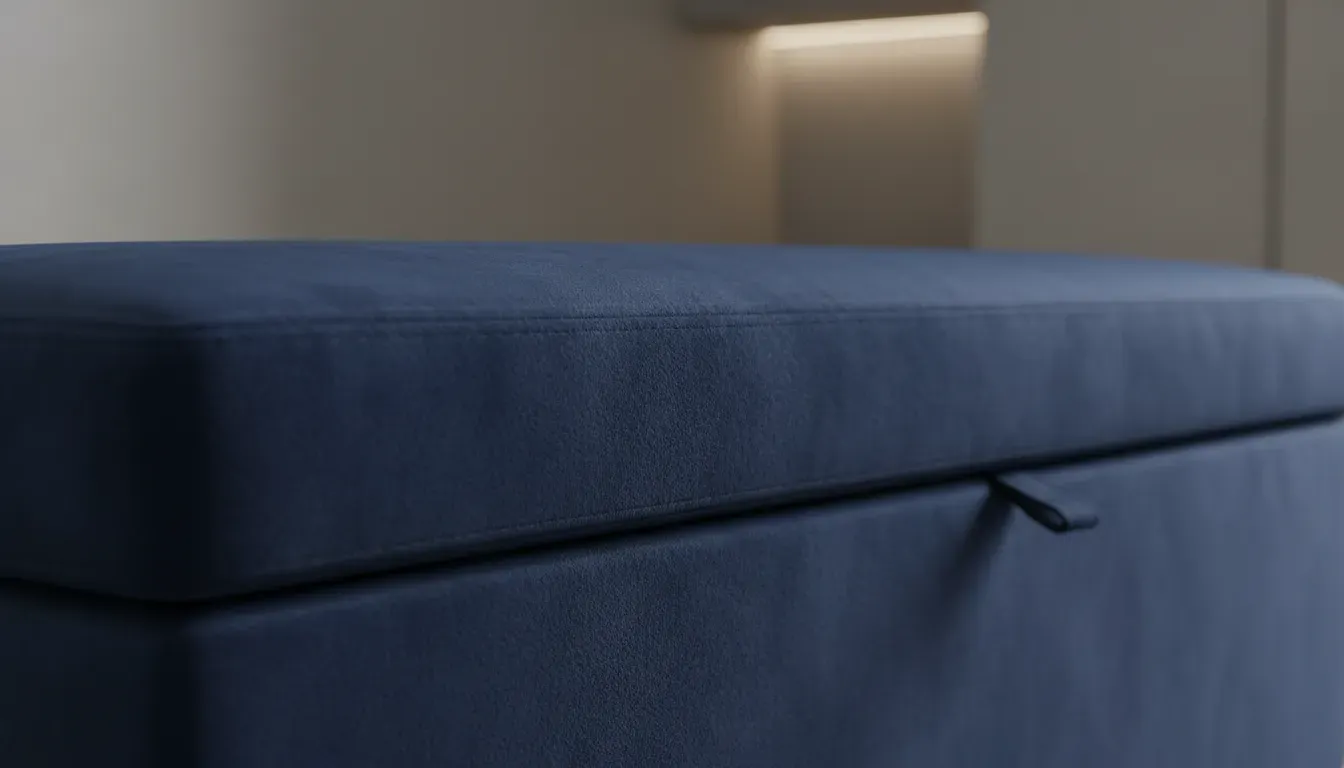
If you prefer the soft look of upholstery but worry about stains, consider a bench with a wooden frame and a removable cushion. This allows you to change the color of the seat seasonally without replacing the entire furniture piece.
Shop Upholstered Storage Benches on Amazon
Painted vs. Stained Finishes
Painted finishes (opaque color) offer a uniform, modern look. They are excellent for introducing specific colors like sage green or slate blue. Stained finishes (translucent) highlight the natural beauty of the wood grain.
Stained wood generally hides physical damage better than paint. A scratch on a painted bench reveals the raw wood underneath, creating a high-contrast blemish. A scratch on a stained bench often blends in with the natural grain pattern.
Matching Your Bench to Interior Design Styles
Your entryway should be a prologue to the story your home tells. The color and style of your bench should align with your broader interior design theme.
Modern Farmhouse
This style relies heavily on high contrast and rustic textures. The ideal color palette includes distressed whites, matte blacks, and greige (grey-beige). A white bench with a reclaimed wood top is a quintessential farmhouse choice. Alternatively, a wire-brushed grey finish hides dust and compliments the rustic aesthetic.
Mid-Century Modern
Mid-Century design celebrates warm woods and earthy accents. Look for benches in acorn or walnut finishes. If choosing an upholstered version, olive green, mustard yellow, or teal are period-appropriate colors that add authenticity to the look.
Industrial
Industrial design favors raw materials. A bench combining black metal piping with dark, rough-hewn wood fits perfectly. Leather is also a key material here. A cognac or saddle-brown leather storage bench adds warmth to the typically cold industrial palette of concrete and brick.
Shop Rustic Wooden Shoe Storage Benches on Amazon
Scandinavian
Scandi style is defined by light, functionality, and minimalism. Stick to blonde woods (ash, birch, pine) and white. Avoid heavy, dark colors. If you want to add softness, choose a bench with a sheepskin throw or a grey wool cushion.
Practical Considerations: The Life of a Bench
While aesthetics drive the initial attraction, practicality determines long-term satisfaction. The entryway is a workhorse space. Shoes bring in mud, grit, and moisture. Bags are dropped heavily. Pets jump up and down.
Hiding the Evidence
If you live in a rainy climate or have young children, avoid light-colored fabrics on the seat of the bench. It will stain. Instead, opt for a hard surface bench (wood or metal) in a medium-to-dark tone. Medium grey and mid-tone woods are the champions of concealing dust and minor debris until cleaning day.
If you are committed to a fabric bench, patterns are your friend. A tweed, herringbone, or subtle geometric pattern will disguise stains and pet hair significantly better than a solid color.
For more tips on maintaining an organized and clean space, read our guide on hallway organization strategies.
Steps to Finalize Your Decision
You have analyzed the lighting, considered the style, and weighed the practical needs. Now, it is time to make the purchase. Before clicking “buy,” take these final steps to ensure the color is perfect.
- Tape it Out: Use painter’s tape to outline the dimensions of the bench on your floor. This helps visualize the volume.
- Request Swatches: If ordering an upholstered bench, request fabric swatches. View them in your entryway at different times of the day (morning light vs. evening artificial light).
- The “Squint Test”: Stand at the far end of the hallway or the adjacent room and squint at your entryway. This blurs the details and allows you to see the color blocks. Does the space need a dark anchor, or does it need a lift of brightness?
- Consider the “Sight Line”: What other rooms are visible from the entryway? If your living room is painted sage green, ensure your entryway bench color clashes or coordinates pleasantly with that view.
Conclusion
Choosing the perfect color for your entryway bench with storage is a balance of art and science. It requires understanding the physics of light, the psychology of color, and the reality of your household’s daily routine. Whether you opt for a sleek black statement piece, a warm walnut classic, or a bold velvet accent, the right color will elevate your entryway from a mere passageway into a welcoming destination.
Remember that the bench is likely the most used piece of furniture in your home. It supports you as you lace up your shoes for work and greets you when you return. Choose a color that not only fits the design magazine aesthetic but also brings you a sense of calm and order every time you walk through the door. By thoughtfully considering contrast, material, and maintenance, you can find a storage bench that is as beautiful as it is functional.