
Entryway Benches with Storage That Double as Pet Stations
Discover how to combine entryway organization with pet care by choosing benches that serve as storage units and functional pet stations.
Feb 4, 2026 - Written by: linda wise

The entryway is the handshake of the home. It is the first space guests encounter and the transition zone where the outside world is shed before entering your sanctuary. For pet owners, however, this transition zone often becomes a chaotic holding ground for leashes, waste bags, muddy towels, and oversized bags of kibble. The challenge lies in maintaining a sophisticated aesthetic while accommodating the utilitarian needs of animal companionship.
The solution to this common dilemma is the integration of multi-functional furniture: entryway benches with storage that double as pet stations. This emerging trend in interior design, often referred to as “barkitecture,” prioritizes seamless living where pet accessories are not merely tolerated but integrated into the structural design of the room. By selecting the right furniture, you can transform a cluttered foyer into a streamlined command center for both you and your four-legged family members.
The Evolution of the Modern Mudroom
Traditionally, the entryway bench served a singular purpose: a place to sit while removing shoes. Occasionally, it offered a flip-top lid for winter scarves or a shelf for boots. However, as modern living spaces have become smaller and more efficient, the demand for furniture that performs double duty has skyrocketed.
For pet owners, the “mudroom” concept has evolved. It is no longer just about mud; it is about the daily rituals of walking, feeding, and grooming. A standard bench is insufficient for these tasks. The modern pet station bench must address specific pain points:
- The Leash Tangle: Preventing leads and harnesses from becoming a knotted mess.
- The Food Storage: Keeping treats and food accessible but sealed away from pests and hungry noses.
- The Comfort Zone: Providing a safe, designated waiting area for pets before walks or upon return.
By consolidating these functions into a single piece of furniture, homeowners can reclaim floor space and maintain visual tranquility.
Anatomy of a Pet-Centric Entryway Bench
When shopping for or designing a dual-purpose bench, specific features elevate a piece from simple storage to a functional pet station. Understanding these components will help you identify the best furniture for your lifestyle.
Integrated Feeding Systems
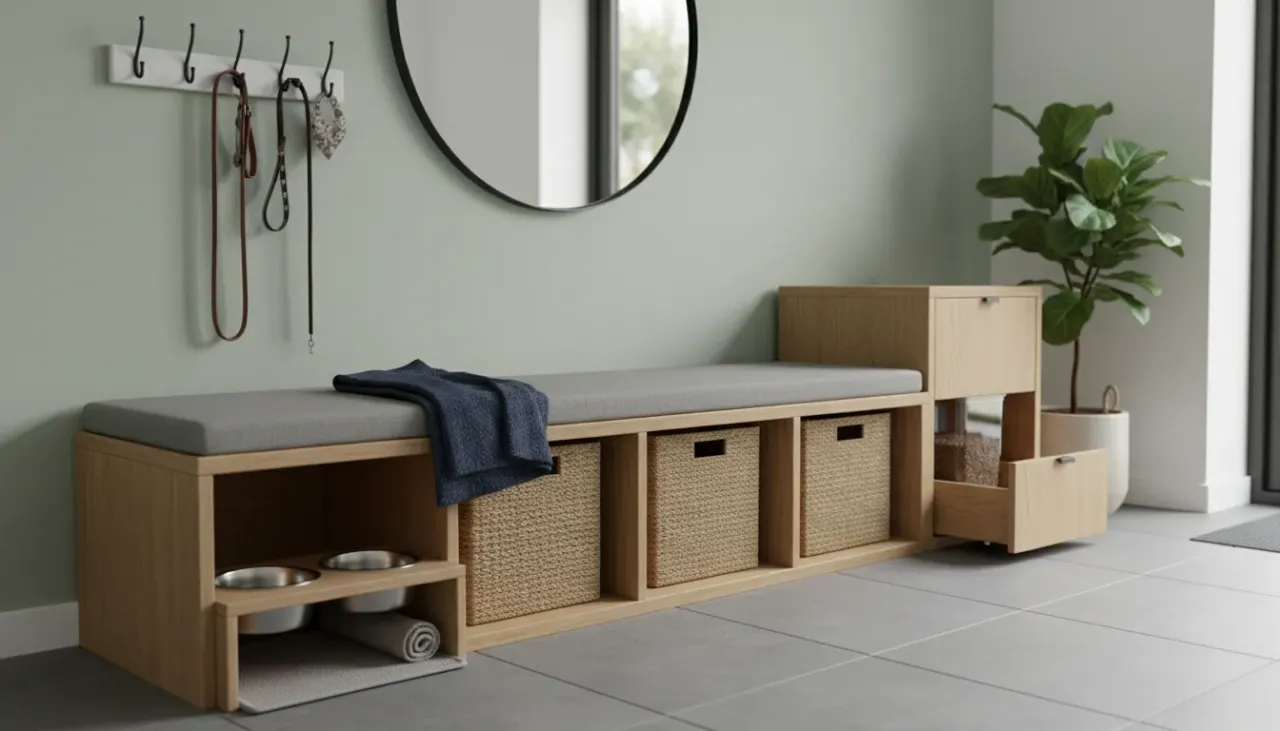
One of the most innovative designs in this category is the bench with integrated feeding drawers. These units look like standard cabinetry drawers but pull out to reveal recessed stainless steel bowls. This design is particularly brilliant for entryways in smaller apartments where the kitchen might be adjacent to the door, or for owners who prefer to feed their dogs immediately after a walk.
When the drawer is closed, the bowls are hidden, protecting the food from dust and clearing floor space. However, this requires diligent maintenance to ensure moisture does not damage the surrounding wood.
The Resting Nook
For many pets, the entryway is a vigil post where they await their owner’s return. Benches featuring an open lower cubby—rather than a solid block of drawers—can be outfitted with a custom cushion to create a “den.” This utilizes the dead space beneath the seat, offering a cozy retreat that feels safe and enclosed.
Specialized Storage Compartments
Generic storage is useful, but specialized storage is efficient. A bench doubling as a pet station should ideally include:
- Deep Bins: For bulkier items like winter dog coats, towels for muddy paws, and spare toys.
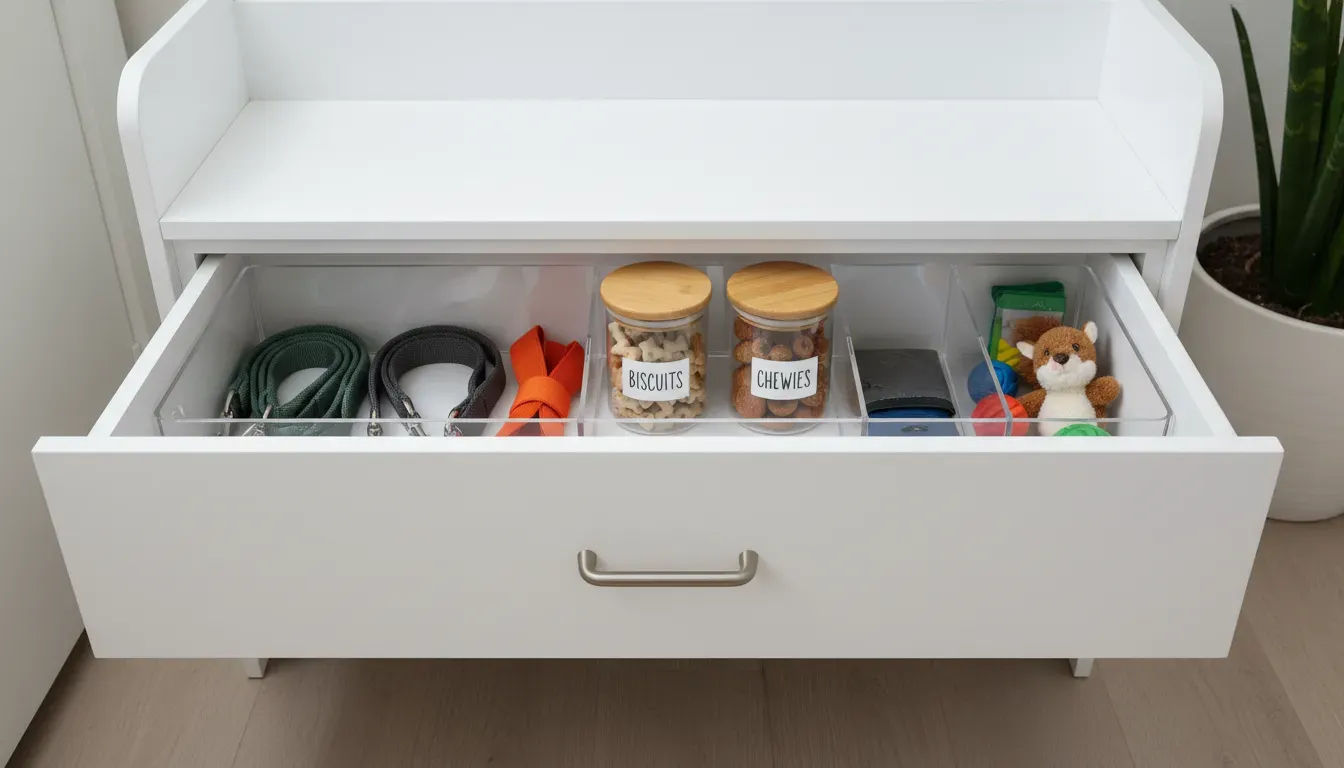
- Shallow Drawers: Perfect for small essentials like waste bags, clickers, grooming brushes, and flea medications.
- Side Hooks: While often found on wall-mounted racks, hooks on the side of the bench allow for immediate access to leashes and collars.
Design Configurations: Choosing Your Station Style
Not all pet stations serve the same purpose. Your choice should depend heavily on your specific routine and the layout of your foyer.
The “Crate” Bench
For owners who crate their dogs while away, a wire crate in the middle of a living space can be an eyesore. The crate bench solves this by building the containment area into a stylish wooden frame that serves as a console or seating area. These are often reinforced with metal bars for security but finished with wood veneer to match interior decor.
If you are looking for a robust solution that combines containment with surface area, consider exploring high-quality furniture-style crates.
Recommended Product: Check out this furniture-style dog crate bench
The “Walkies” Command Center
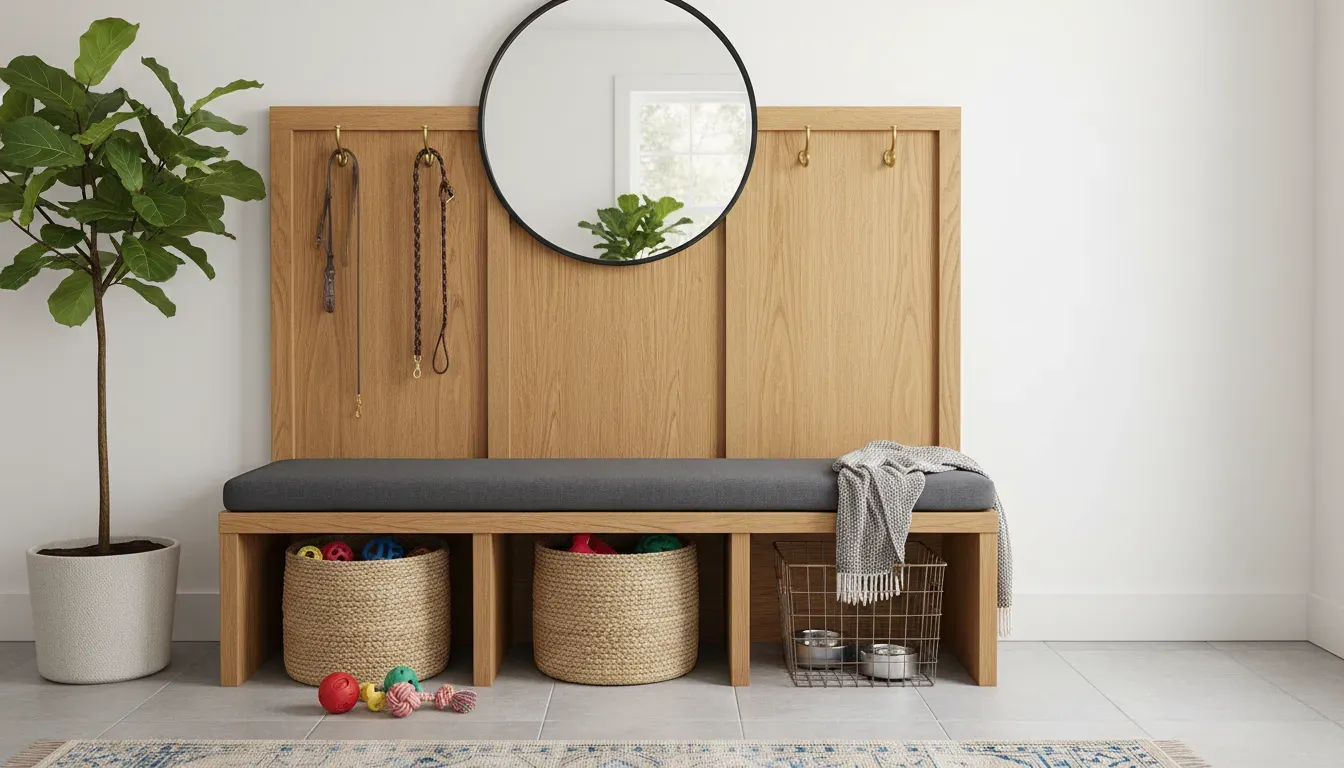
This configuration prioritizes the transition between indoors and outdoors. It typically features a tall back (hall tree style) with hooks for human coats and dog leashes, a bench for putting on boots, and storage underneath for walking gear. The focus here is on speed and accessibility. Everything needed for a walk is within arm’s reach, reducing the pre-walk excitement chaos.
The Hidden Litter Box Bench
For cat owners, the entryway can sometimes be the only viable location for a litter box, yet it is the least desirable place for one visually. Benches designed with a side entrance hole and a hollow interior can house a litter pan completely out of sight. The bench lid or front door opens for cleaning, but to guests, it appears to be a standard seating chest.
Material Selection: Durability Meets Design
Merging pet furniture with human furniture requires a strict evaluation of materials. Entryways are high-traffic zones, and adding pets to the mix increases the wear and tear significantly.
Wood vs. Engineered Materials
Solid wood, particularly hardwoods like oak or maple, offers the best longevity. It can be sanded and refinished if scratched by claws. However, it is susceptible to water damage from wet bowls or muddy fur. Engineered wood (MDF) is cost-effective but can swell and warp if the moisture barrier is breached. If choosing MDF, ensure it has a high-quality laminate or melamine finish that is water-resistant.
Upholstery Considerations
If your bench includes a cushioned seat, fabric selection is paramount. Avoid loose weaves like linen or tweed, which snag easily on claws. Instead, opt for:
- Crypton Fabric: engineered to be stain, moisture, and odor-resistant.
- Canvas or Duck Cloth: durable and tightly woven.
- Microfiber: smooth and resistant to scratching, though it can attract hair.
- Faux Leather: easy to wipe down, though prone to puncture marks from sharp claws.
Hardware and Finishes
Ensure that drawer slides are heavy-duty and soft-closing to prevent startling sensitive pets. Finishes should be non-toxic. If you are retrofitting a vintage piece, seal it with a pet-safe polyurethane to protect against the inevitable moisture of wet noses and paws.
Organizing Your Pet Station for Maximum Efficiency
Once you have the furniture, the key to a functional entryway is internal organization. Dumping items into a large chest creates a “junk drawer” effect on a larger scale.
Zoning the Storage
Divide the storage areas based on frequency of use.
- Daily Use: Leashes, harnesses, and waste bags should be in the most accessible top drawer or on hooks.
- Weekly Use: Grooming tools, shampoo, and nail trimmers can go in lower drawers or bins.
- Seasonal/Occasional: Winter coats, travel bowls, and spare bedding should be placed in the back or bottom of deep storage chests.
Containerizing Within the Bench
Use clear acrylic bins or labeled fabric baskets inside the bench to keep items separated. Small items like clickers and treat pouches tend to vanish in large spaces. A drawer divider is essential for keeping these small accessories sorted. For kibble storage, always use an airtight container inside the bench rather than pouring food directly into a drawer, which invites pests and grease stains.
Recommended Product: Find heavy-duty storage baskets for entryway organization
DIY Solutions: Retrofitting Existing Furniture
If you cannot find a pre-made bench that suits your aesthetic, creating a custom pet station is a viable weekend project. This often involves modifying standard flat-pack furniture or upcycling vintage finds.
The IKEA Hack Approach
Popular shelving units can be turned sideways to create a bench. By leaving one cubby open and adding a cushion, you create a pet nook. The remaining cubbies can be fitted with baskets for storage. To elevate the look, wrap the cushion in high-end fabric and add custom legs to the unit to raise it off the floor.
Upcycling a Dresser
An old dresser can be transformed into a bench by removing the top row of drawers and reinforcing the structure to support weight. The remaining bottom drawers serve as storage for food and toys. You can cut a hole in the side of the unit to create a hidden entrance for a cat litter box or a small dog sleeping area within the main cavity.
For more ideas on maximizing small spaces, you might be interested in our guide on innovative shoe storage solutions which shares similar principles of space economy.
Maintaining Hygiene in High-Traffic Zones
Combining pet gear with your entryway furniture introduces potential hygiene issues. Mud, allergens, and “dog smell” can permeate the area if not managed.
Ventilation is Key
If you store kibble, dirty toys, or bedding inside the bench, ensure there is adequate airflow. Drill discrete holes in the back panel of the furniture to allow air circulation. This prevents the buildup of musty odors and keeps food fresh.
Washable Components
Everything soft should be removable and washable. Cushion covers should have zippers. Drawer liners should be wipeable plastic rather than paper. Keep a “de-mudding” kit inside the bench—comprising a microfiber towel and a spray bottle of waterless paw cleaner—so you can clean your pet before they ever leave the entryway mat.
Aesthetic Integration: Styling the Station
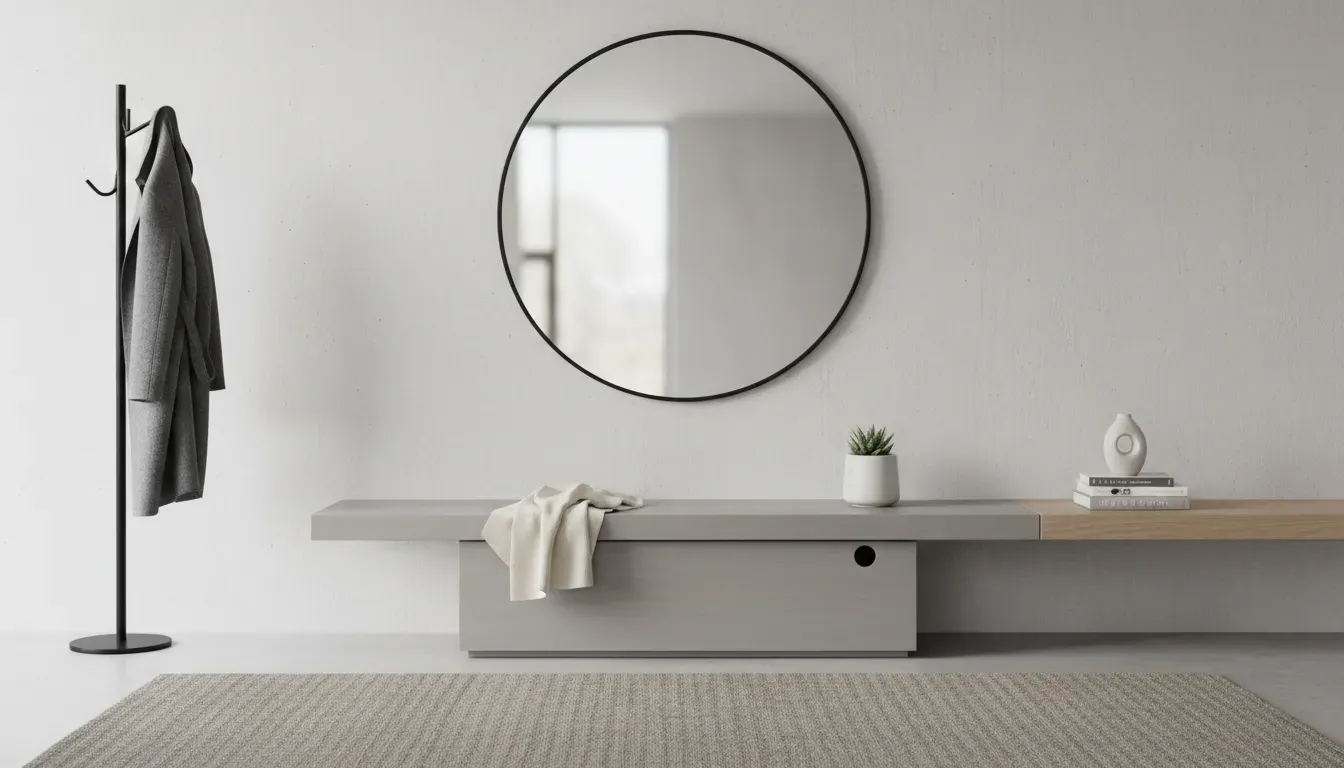
The ultimate goal is for the pet station to blend into the home decor so effectively that its dual purpose is not immediately obvious.
Color Coordination
Match the bench color to your existing trim or door color for a built-in look. If your pet has light fur, a lighter bench surface will hide shedding better than a dark espresso finish. Conversely, dark fabrics hide mud stains better than creams or whites.
Decorative Elements
Use the top of the bench (if not used solely for seating) or the wall above it to tie the station into the room’s design.
- Gallery Wall: Hang framed photos of your pets above the bench to thematically own the space without it looking messy.
- Lighting: a sconce above the bench adds warmth and makes finding the leash for late-night walks easier.
- Rugs: Place a durable, washable runner in front of the bench. Ruggable or similar brands offer machine-washable options that withstand heavy paw traffic.
The Psychological Benefit of Order
There is a profound psychological benefit to organizing pet gear. The walk routine is a bonding activity, but it can be stressful if you are scrambling to find a waste bag or untangle a leash while a dog barks excitedly. A dedicated station streamlines the process, starting and ending the walk on a calm, organized note.
Furthermore, giving your pet a dedicated space in the entryway—the “family hub”—reinforces their status as a member of the household. It provides them with a sense of security, knowing they have a spot that is theirs in a busy area of the home.
Conclusion
The entryway bench with storage that doubles as a pet station is more than a furniture trend; it is a response to the way we live now. It acknowledges that our homes are multi-species habitats that require intelligent design to function smoothly. Whether you choose a high-end custom piece, a ready-made station from a retailer, or a DIY project, the investment in this hybrid furniture yields high returns in organization, aesthetics, and peace of mind.
By prioritizing durable materials, smart storage configurations, and seamless design integration, you can create an entryway that welcomes guests with elegance while serving the daily needs of your most loyal companions.
Recommended Product: Explore versatile entryway hall trees with storage benches
For further inspiration on organizing your home’s entrance, consider reading about optimizing narrow hallways to ensure every square inch of your foyer is utilized effectively.