
Entryway Organization Systems That Include Seating and Wall-Mounted Hooks
Transform your chaotic drop zone into a streamlined masterpiece. We break down the ergonomics, materials, and top-tier systems that combine seating with vertical storage.
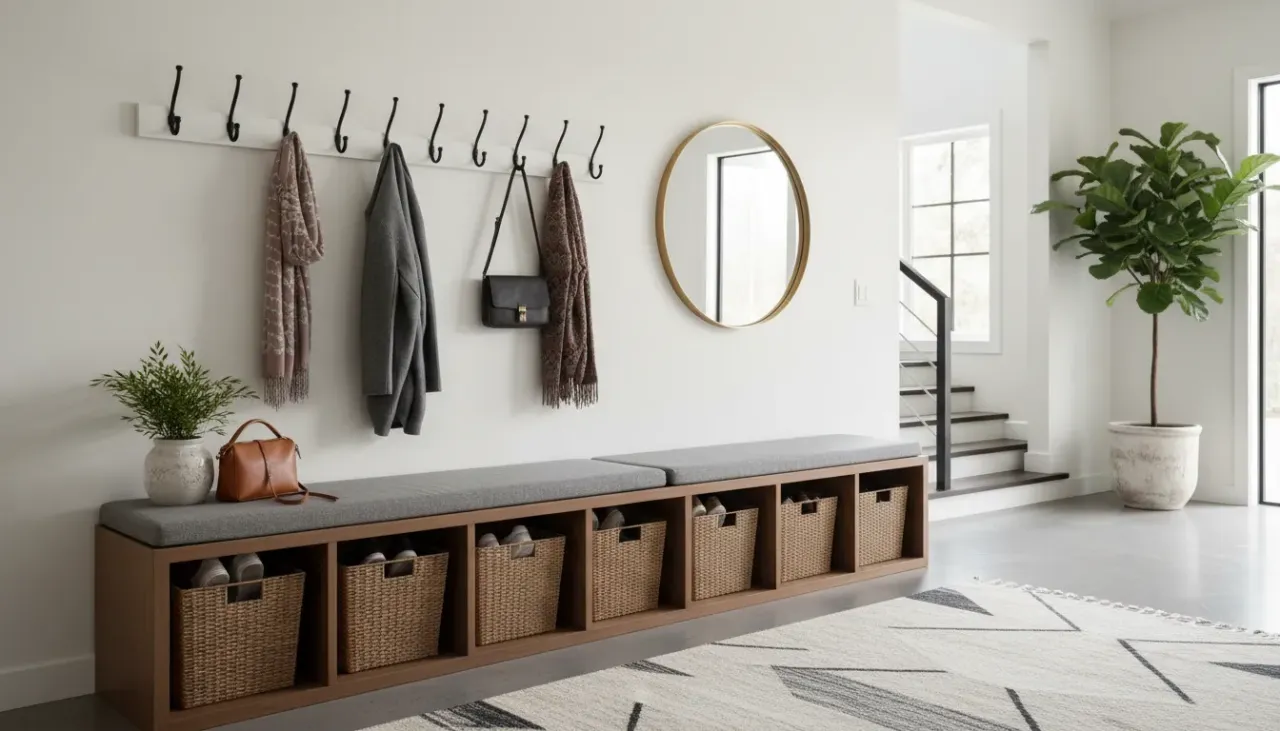
Feb 10, 2026 - Written by: Linda Wise

I used to dread opening my front door. It wasn’t because of what was outside—it was because of the immediate, ankle-breaking obstacle course waiting for me on the inside. You know the scene: a mountain of sneakers, a backpack seemingly dropped from the ceiling, and coats draped over the banister because the closet is “too far away” (it’s three feet away).
The entryway is the most abused square footage in a home. It’s a transition space, a psychological airlock between the chaos of the world and the sanctuary of your living room. When this space fails, the stress of the day follows you inside.
That’s why the combination of seating and wall-mounted hooks isn’t just a furniture choice; it’s a lifestyle pivot. By integrating a place to sit (for shoe removal) with immediate vertical storage (for the shedding of layers), you stop the clutter at the source.
In this deep dive, we aren’t just looking at pretty pictures. We are going to dissect the mechanics of a functional “drop zone,” analyze the structural integrity required for heavy winter gear, and look at systems that actually work for real families, not just catalog models.
The Anatomy of a Functional “Drop Zone”
Before you buy a single bracket or board, you have to understand the ergonomics of an entryway. I’ve seen homeowners spend thousands on custom millwork only to realize the bench is too high for their kids to sit on, or the hooks are mounted so low that coats puddle on the seat.
A successful system relies on the Triangle of Efficiency:
- The Landing Strip (The Bench): A stable surface to sit on while dealing with footwear, which also serves as a temporary surface for grocery bags or mail.
- The Vertical hang (The Hooks): Immediate, accessible storage for items used daily.
- The Concealment Zone (Under-bench or overhead): Where the ugly stuff (muddy boots, seasonal scarves) goes to die—or at least hide.
Bench Ergonomics
The standard chair height is roughly 18 inches. However, for an entryway bench, I often recommend aiming slightly lower—around 16 to 17 inches—especially if you plan to use a cushion. This allows for easier shoe tying. If the system includes storage under the bench, you are balancing the need for volume (taller bench) with comfort.
Hook Theory
Here is where most DIYers and cheap furniture manufacturers fail. Hooks cannot be arbitrary.
- Height: Hooks should be mounted 60 to 66 inches from the floor for adults.
- Spacing: You need a minimum of 8 to 12 inches between hooks. If you crowd them, bulky winter coats will overlap, creating a bulging mess that pushes everything off the rack.
Types of Systems: Choosing Your Architecture
The market is flooded with “entryway solutions,” but they generally fall into three distinct structural categories. Your choice depends heavily on your wall type (drywall vs. plaster vs. brick) and your willingness to use a drill.
1. The All-in-One Hall Tree
This is a freestanding unit where the bench and the hook backing are connected. It’s a single piece of furniture.
- Pros: It’s renter-friendly. You generally don’t need to anchor it to studs (though you should always use an anti-tip kit). It defines the space clearly.
- Cons: Visual bulk. It can make a small hallway feel claustrophobic because it extends from the floor to eye level in one solid block.
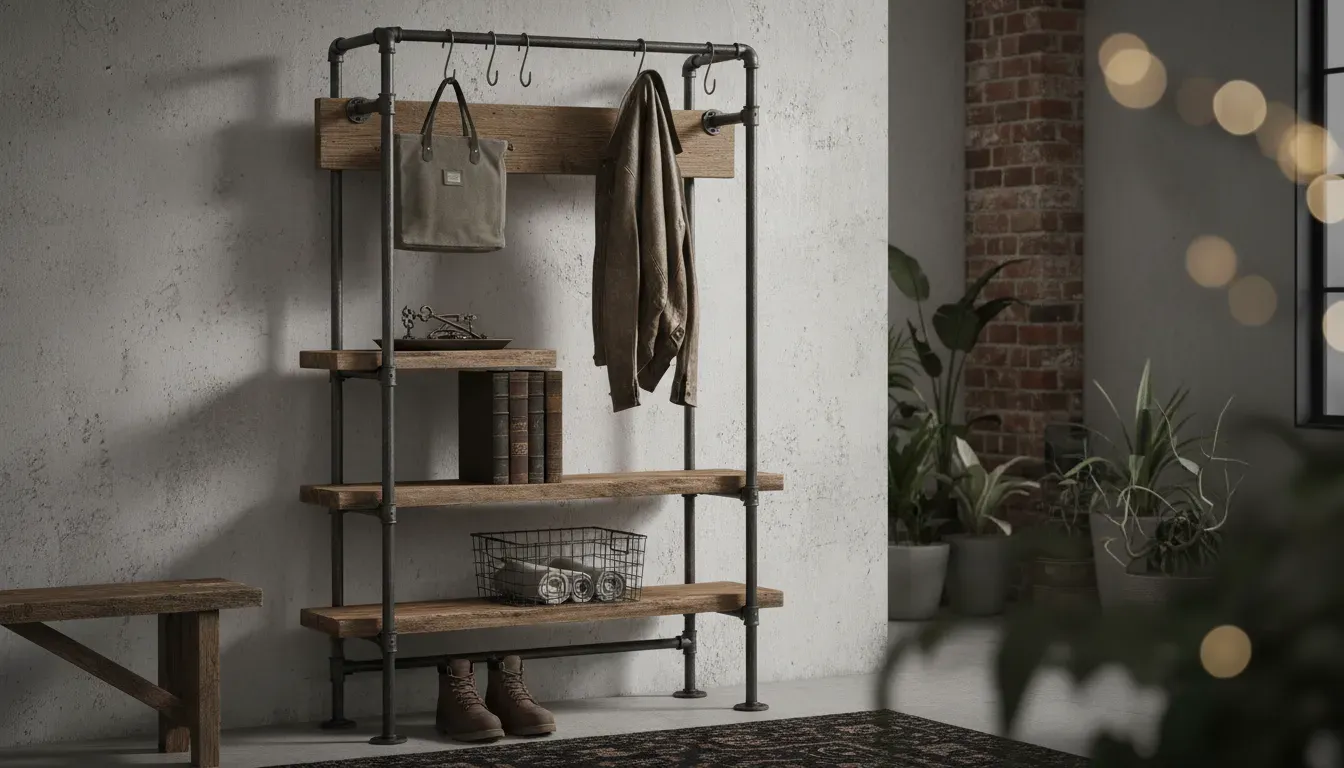
If you are looking for a robust, industrial vibe that can take a beating, the Vasagle Alinru Coat Rack is a standout performer. I’ve recommended this to clients with narrow apartments because the metal frame feels “open,” allowing light to pass through, which prevents the hallway from feeling closed off.
2. The Modular “Floating” System
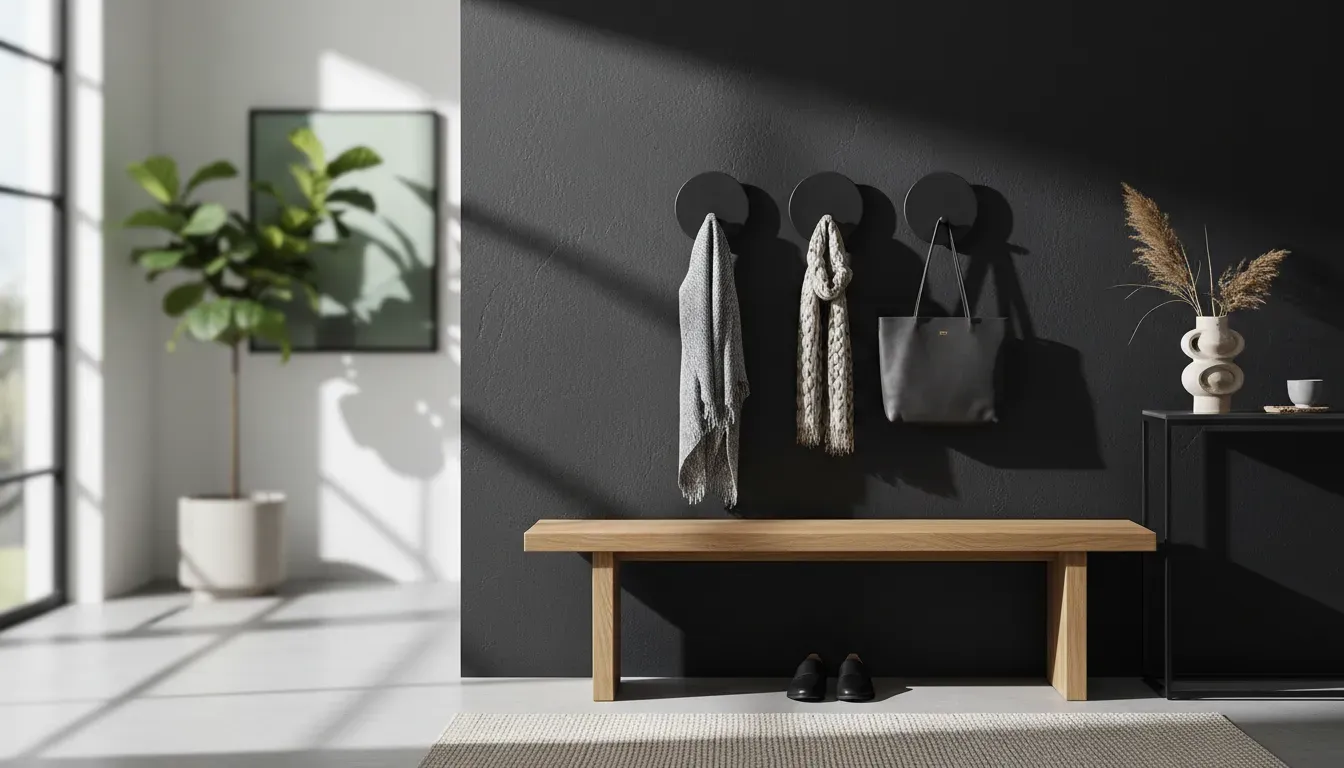
This approach separates the components. You mount a shelf with hooks directly to the wall studs and place a freestanding bench underneath.
- Pros: Infinite customization. You can hang the hooks at the exact height you need. It creates a sense of airiness because there is visible wall space between the bench and the hooks.
- Cons: Installation difficulty. You must hit studs or use heavy-duty toggle bolts. A bag filled with books or a wet wool coat is heavy; drywall anchors will rip out eventually.
3. The Built-In Hack
This involves taking stock cabinetry (like kitchen bridge cabinets) for the bench and using molding and beadboard to connect it visually to a high shelf. It looks like custom millwork but costs a fraction of the price.
Pro Tip: If you go the modular route, install a strip of wainscoting or a wood backer board behind the hooks. This protects your drywall from the inevitable scuffs of zippers and buckles swinging against the paint.
Material Selection: Durability vs. Aesthetics
Your entryway takes more abuse than your kitchen floor. Wet umbrellas, muddy cleats, and heavy backpacks are the enemies of cheap materials.
Particle Board vs. MDF vs. Real Wood
Most affordable entryway organization systems are made of particle board with a laminate finish. While cost-effective, these are sponges for moisture. If you live in a snowy climate, snow melt will get into the seams of a laminate bench and cause it to swell and bubble.
MDF (Medium Density Fiberboard) is denser and paints beautifully, making it great for the “built-in” look, but it also dislikes water.
Solid Wood or Metal is the gold standard. A metal frame with solid wood accents offers the best longevity. Metal won’t warp when wet, and solid wood can be sanded and refinished if it gets scratched.
If you want a piece that feels like a permanent fixture with a high-end traditional aesthetic, take a look at the Crosley Furniture Brennan Entryway Seating. The finish quality here is typically superior to the flat-pack big-box store options, and it includes high-grade hardware that doesn’t feel flimsy when you hang a heavy parka on it.

Maximizing the “Under-Bench” Real Estate
The space beneath the seat is often squandered. You usually have three options here:
1. Open Cubbies
Great for visual accessibility. You can see exactly where the shoes are.
- The Downside: It looks cluttered instantly. Unless you have a strict “only cute shoes allowed” policy, it becomes a chaotic jumble of laces and dirt.
2. Drawers
The cleanest look. It hides everything.
- The Downside: Drawers require hardware and runners, which take up space. You lose about 15-20% of your storage volume to the drawer mechanism itself.
3. Baskets/Bins
The hybrid winner. Baskets in open cubbies allow you to pull out the “drawer” to rummage, but hide the mess when pushed back in. Woven seagrass or wire baskets add texture to the design.
Space Planning: The Traffic Lane
Here is the kicker that trips people up—literally. You cannot just measure the width of the wall. You have to measure the intrusion depth.
A standard hallway is 36 to 42 inches wide. If you buy a system that is 18 inches deep, you have choked your hallway down to 18-24 inches. That is not a hallway; that is a squeeze.
For narrow corridors, you need a “slim-profile” system, usually around 12-14 inches deep. You won’t be able to sit comfortably for long periods, but it serves the purpose of a perch for shoe tying.
Key Takeaways for Measuring:
- Baseboards: Remember that furniture sits against the baseboard, not the wall. You might lose an inch of depth.
- Door Swing: Open your front door fully. Does it bang into where the bench will be?
- Light Switches: Ensure your vertical hook panel doesn’t cover the hall light switch.
For families needing maximum storage density without sacrificing style, the Prepac Wide Hall Tree is a workhorse. It maximizes verticality, utilizing space up to the ceiling rather than eating up floor space, and the cubby system is sized perfectly for standard shoe sizes.
Installation: The “Do It Right” Doctrine
I’ve fixed enough falling coat racks to tell you that the hardware included in the box is rarely sufficient.
When you buy a wall-mounted hook system, the manufacturer usually provides those little plastic conical anchors. Throw them in the trash. They are rated for static loads, not dynamic loads. A coat rack experiences dynamic force—you pull coats off, kids yank on backpacks.
Use Toggle Bolts or hit the studs. If your hook rail doesn’t align with your studs (which are usually 16 inches apart), bolt a piece of 1x4 finished lumber into the studs first, then mount your hooks or system to that lumber. It acts as a bridge and adds a nice architectural detail.
Style Integration: Making it Fit
An organization system shouldn’t look like a locker room (unless that’s the vibe you want).
The Modern Farmhouse
Look for beadboard backings, matte black hooks, and distressed white or grey wood finishes. Baskets should be wire or heavy canvas.
Mid-Century Modern
Look for tapered legs on the bench, walnut finishes, and brass hardware. The hooks should be simple pegs rather than ornate curves.
Industrial / Urban
Pipe fittings for rails, raw steel frames, and reclaimed wood tones. This style is incredibly forgiving of wear and tear because scratches just look like “patina.”
The Hidden Features to Look For
When you are scrolling through options, look for these specific details that indicate quality:
- Cantilevered Hooks: Hooks that curve back inward or have a deep “U” shape. Shallow hooks let coats slide off too easily.
- Shoe Dividers: If the bench has a large open cavern underneath, shoes will pile on top of each other. Look for individual compartments.
- Moisture Resistant Feet: If the unit is wood, does it have plastic or metal glides on the bottom? If not, the mop water from cleaning your floors will wick up into the legs over time.
Maintaining the System (The Human Element)
You can buy the most expensive, well-engineered system in the world, but if you don’t have a protocol, it will fail.
The Law of the Entryway is “One In, One Out.” Hooks are finite resources. If you have 5 hooks and 4 family members, that rack is for current coats only. The heavy winter parka does not belong there in July. The system is for active storage, not long-term storage.
The Bottom Line: An entryway organization system with seating and hooks is the command center of the home. It sets the tone for your entry and exit. Don’t just buy a piece of furniture; invest in a workflow. Measure your space, respect the weight limits, and choose materials that can handle the reality of your life. When you walk through the door and simply hang up your bag and sit down to take off your shoes without stepping on a Lego, you’ll wonder how you ever lived without it.