
Entryway Storage for Kids: Making Organization Accessible and Fun in Small Spaces
Discover expert strategies for organizing small entryways with kids. Learn how to create accessible, fun, and stylish storage solutions that build good habits.
Feb 2, 2026 - Written by: linda wise

The morning rush is a universal phenomenon for families. The clock is ticking, the bus is approaching, and the hunt for a matching left sneaker has entered its tenth desperate minute. In homes with expansive mudrooms, clutter can be concealed behind cabinet doors. However, for families living in apartments, townhouses, or homes with modest square footage, the entryway is often a chaotic bottleneck. When space is at a premium, a pile of backpacks and coats can instantly make the entire home feel disorganized.
The challenge lies not just in the lack of square footage, but in the disconnect between adult-centric design and child-centric needs. Traditional coat racks are too tall, heavy drawers are difficult to open, and aesthetic baskets often hide items so well that children forget where they belong. To reclaim your entryway, you must bridge the gap between sophisticated home decor and functional accessibility.
This guide explores comprehensive strategies for transforming a cramped foyer into a streamlined command center. By implementing systems that children can easily navigate, you not only declutter your home but also foster independence and organizational habits that last a lifetime.
The Psychology of Accessibility: Why Kids Make Messes
Before purchasing bins or installing shelves, it is crucial to understand why clutter accumulates in the first place. Children rarely leave items on the floor out of malice; they do it because the organizational systems in place offer too much friction. If a hanger requires fine motor skills to manipulate, or if a hook is six inches out of reach, the path of least resistance is the floor.
The Eye-Level Rule
The most effective storage solutions meet children where they are—literally. Accessibility is defined by vertical reach. For a toddler or preschooler, the prime storage zone is between 24 and 36 inches off the ground. For school-aged children, this extends up to 48 inches.
When designing your entryway, crouch down to your child’s height. Look at the space from their perspective. Is the shoe rack an insurmountable fortress of shelves? Is the coat hook a distant object high on the wall? Successful organization in small spaces relies on lowering the center of gravity for storage. By placing hooks, cubbies, and baskets at their eye level, you empower them to take ownership of their belongings. This autonomy is the cornerstone of maintaining a tidy home.
Reducing Friction with Open Storage
Adults often prefer concealed storage to maintain a minimalist visual. We like doors, lids, and opaque boxes. Children, however, struggle with the concept of “out of sight, out of mind.” If they cannot see the destination for their shoes, they will not put them there.
In small spaces, where opening a cabinet door might block the hallway, open storage is often the superior choice. Open shelving, hook rails, and rimless baskets allow for a “drop and go” motion that aligns with a child’s natural behavior upon entering the home.
Maximizing Vertical Real Estate
In a small entryway, floor space is your most expensive currency. You cannot afford to waste it on bulky furniture that protrudes into the walking path. The solution lies in aggressive vertical utilization. Walls are often underutilized in family homes, yet they offer the most flexible potential for storage volume.
The Double-Row Hook System
A standard coat rack typically features a single row of hooks at an adult height. This renders the bottom four feet of the wall useless for storage. A more efficient approach for families is the double-row or even triple-row hook system.
Install a primary row of heavy-duty hooks at standard height (approximately 60 to 65 inches) for adult coats and bags. Directly beneath this, at approximately 36 to 40 inches, install a second row of hooks specifically for the children. This creates a dedicated zone for their backpacks and jackets without requiring a separate piece of furniture.
For even tighter spaces, consider a staggering alignment where the lower hooks are positioned in the gaps between the upper hooks. This prevents long adult coats from obscuring the children’s hooks, keeping everything visible and accessible.
Modular Pegboards and Slatwalls
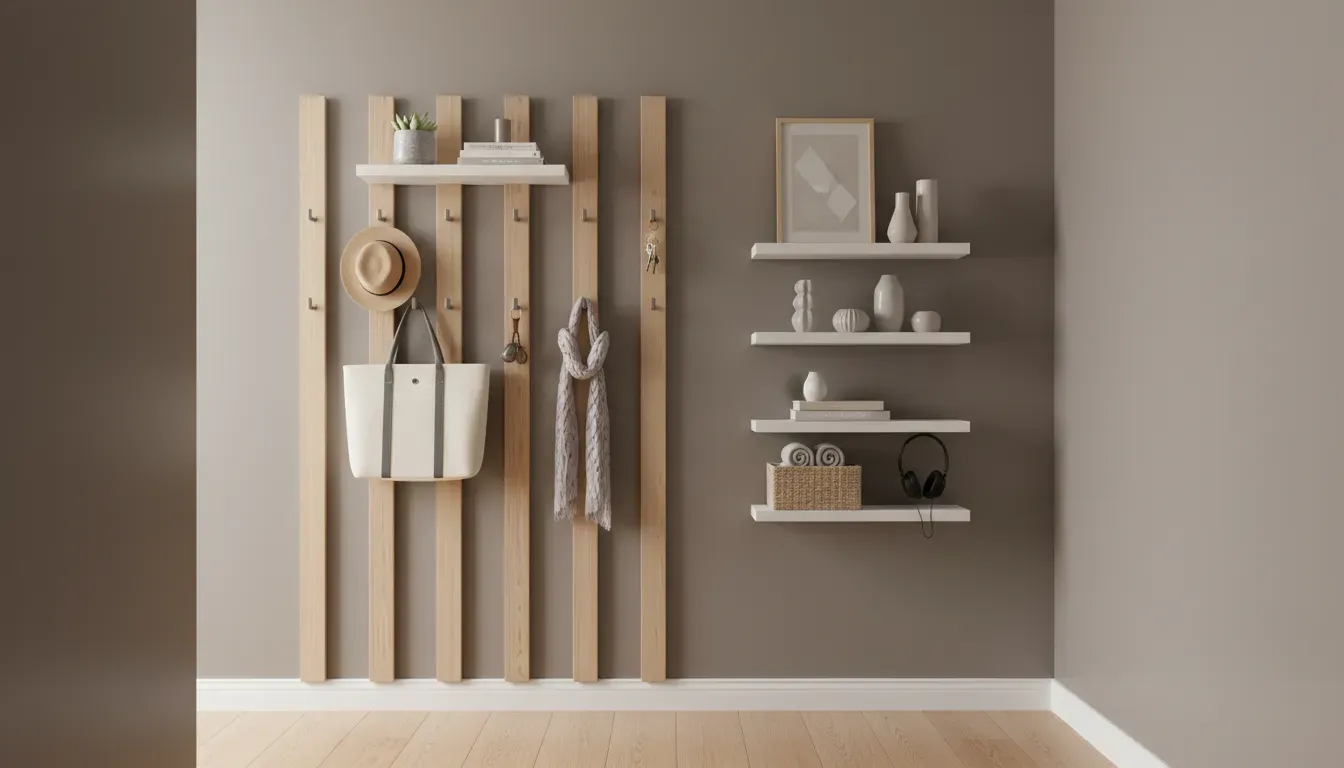
For ultimate flexibility, modular wall systems like pegboards or slatwalls are invaluable. These systems allow you to reconfigure the layout as your children grow. A hook that is perfect for a three-year-old today will be too low in two years. A modular system allows you to unclip the hook and move it up three inches without drilling new holes in the drywall.
Furthermore, these systems can accommodate accessories beyond simple hooks. You can attach small wire baskets for mittens, clips for permission slips, or narrow shelves for sunglasses. This keeps small, easily lost items off the floor and out of the “junk drawer” abyss.
For parents looking to implement a highly adaptable wall system, consider starting with a robust base that can handle the weight of winter gear.
Shop Modular Wall Organizers on Amazon
Shoe Storage Solutions for Small Footprints
Shoes are the primary antagonist in the battle for a clean entryway. They are bulky, dirty, and multiply rapidly. In a narrow hallway, a standard shoe rack can feel like a stumbling block. You need solutions that are slim, accessible, and capable of containing the mess.
The “One In, One Out” Rule and the Active Rotation
The first step in managing shoe storage in a small space is inventory control. A small entryway cannot house every pair of shoes a child owns. Implement a strict “active rotation” policy. Keep only the current season’s essentials by the door: one pair of sneakers, one pair of boots, and one pair of house slippers. All other footwear should be stored in bedroom closets. This reduces the sheer volume of items requiring management.
Vertical Shoe Stackers and Slim Cabinets
Traditional horizontal shoe racks eat up floor space. Look for vertical shoe stackers or “tipping” shoe cabinets. Tipping cabinets are exceptionally thin—often less than 10 inches deep—making them perfect for narrow corridors. While opening the drawer might be a slight barrier for very young children, the sleek profile saves immense space.
For a more child-friendly approach, consider wall-mounted wire baskets installed low to the ground. These allow kids to toss their shoes into a designated container without needing to line them up perfectly on a shelf. This “toss” mechanic is much easier for a toddler to execute than the precision required for a flat shelf.
Boot Trays for Weather Management
In climates with rain or snow, wet shoes can ruin floors and create slip hazards. A standard rubber boot tray is functional but can be unsightly. To elevate the look, fill a deep, galvanized metal tray with polished river stones. The stones allow water to drain away from the soles of the boots, helping them dry faster, and the aesthetic is far more pleasing than black rubber.
Multifunctional Furniture: The Storage Bench
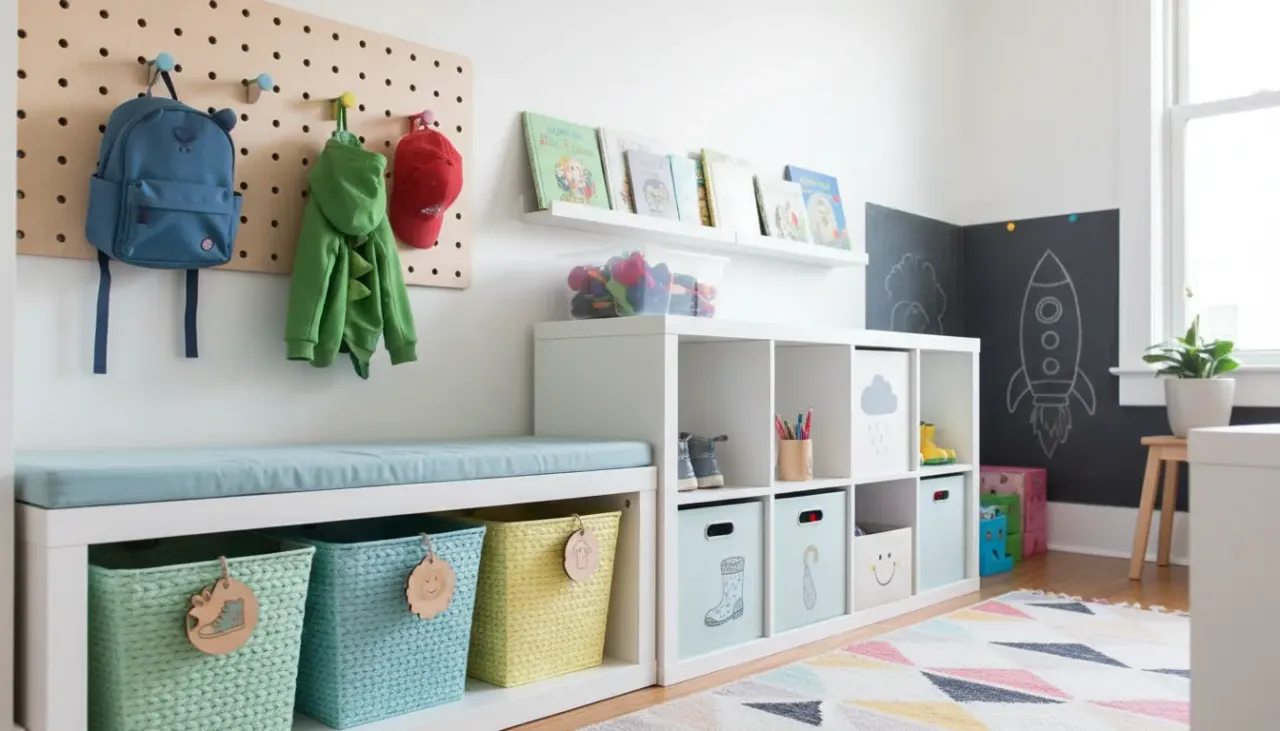
If you have room for only one piece of furniture, make it a storage bench. This item serves a dual purpose: it provides a place for children to sit while putting on shoes (which prevents them from sitting on the dirty floor), and it offers substantial storage capacity.
Cubbies vs. Lift-Top Benches
For children, a bench with open cubbies underneath is superior to a lift-top bench. A lift-top requires the child to stand up, clear off any items sitting on the bench, and lift a heavy lid to access their gear. This is too many steps for a quick departure.
Open cubbies beneath the seat allow for the use of slide-out baskets or simply open shelving for shoes. Assign one cubby per child. This delineates personal space and prevents arguments about whose stuff is where. If you prefer a cleaner look, use wicker or felt baskets that fit the cubbies perfectly. These hide the visual clutter of neon sneakers while remaining easy for a child to slide out.
For those with extremely limited depth in their entryway, look for benches specifically designed for narrow spaces, typically under 14 inches deep.
Shop Narrow Storage Benches on Amazon
Gamification and Visual Cues
Making organization “fun” may sound like a stretch, but for children, engagement is key to compliance. If the storage system feels like a game or a personalized zone, they are more likely to use it.
Color Coding and Personalization
Assign a specific color to each child. Buy a blue basket, blue hook, and blue shoe mat for one child, and a red set for the other. This visual shorthand makes it instantly obvious where items belong. It also creates a sense of ownership; this is their space, and they are responsible for it.
For younger children who cannot read, use visual labels. Take a photo of their shoes and tape it to the shoe bin. Take a photo of their backpack and tape it above the hook. These picture labels serve as clear instructions that don’t require literacy, reducing the cognitive load on the child.
The “Mailbox” System for Paper Clutter
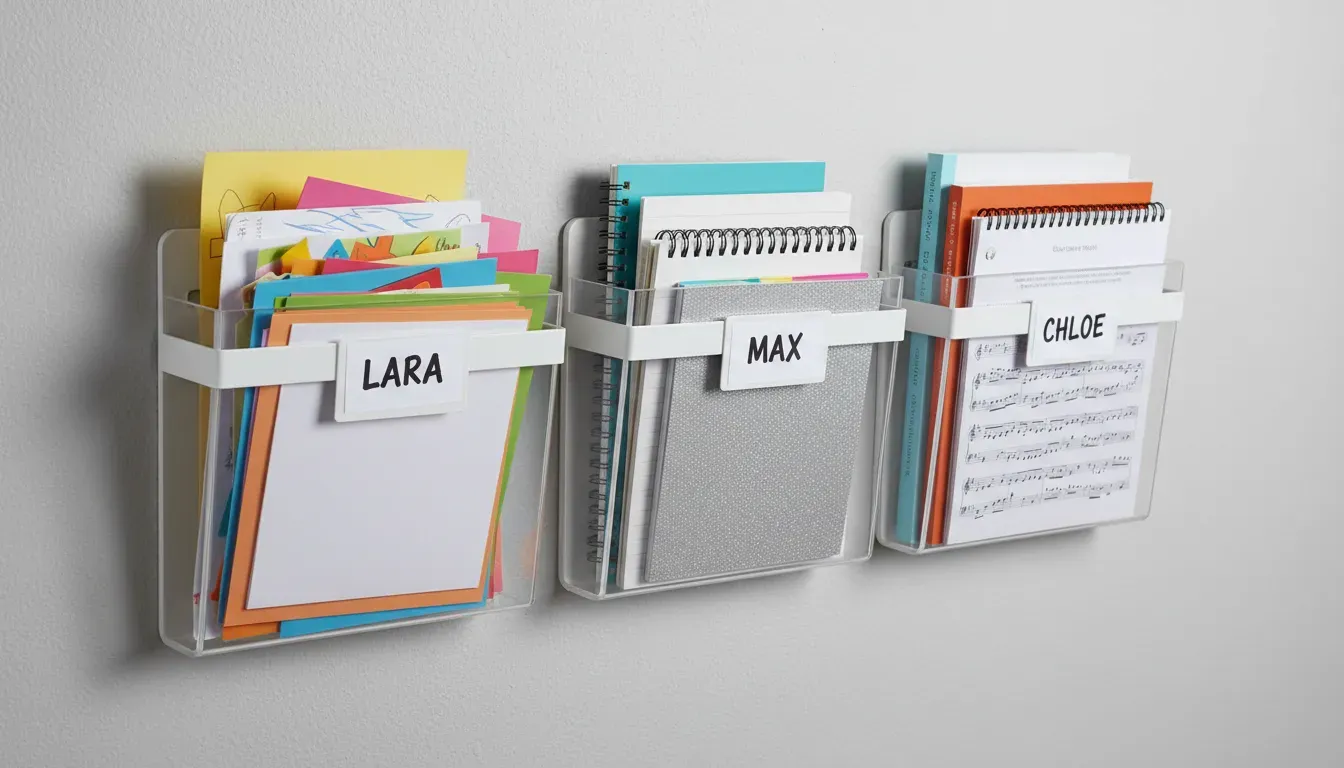
School brings an endless tide of paper: artwork, permission slips, flyers, and homework. This paper clutter often lands on the entryway floor or gets lost in the bottom of a backpack.
Create a vertical “mailbox” system using wall-mounted file holders. Label one for each child and one for parents. Teach the children that the first step upon entering the house is to empty their “take home” folder into the parent inbox. Conversely, if you need them to take a signed form back to school, place it in their inbox. This creates a defined workflow for paper, keeping flat surfaces clear.
Managing Bulk: Backpacks and Sports Gear
Backpacks are notoriously difficult to store. They are heavy, bulky, and often feature long straps that get caught in drawers. In a small entryway, a backpack on the floor is a major tripping hazard.
Heavy-Duty Hardware
Standard decorative hooks often fail under the weight of a textbook-laden backpack. Use heavy-duty, double-prong coat hooks anchored into studs or using high-weight-limit drywall anchors. The “double prong” design spreads the weight and prevents the bag from slipping off.
Designated Sports Zones
If your children play sports, the equipment can quickly overwhelm a small foyer. Do not attempt to store all sports gear in the entryway. Instead, use a “transit bag” system. Keep a large, durable tote bag hanging on a sturdy hook. On practice days, the specific gear needed (shin guards, cleats, uniform) goes into the transit bag. On non-practice days, that gear lives in the garage, closet, or bedroom. The entryway should only house what is needed for the immediate 24-hour cycle.
Shop Heavy Duty Wall Hooks on Amazon
Utilizing Dead Space
In small entryways, you must look for “dead space”—areas that are typically ignored but can serve a purpose.
Behind the Door
The space behind the front door (or the coat closet door) is often wasted. Install an over-the-door organizer with deep pockets. This is an excellent location for winter accessories like gloves, hats, and scarves. Because these items are soft, they won’t prevent the door from opening fully. Clear pockets are ideal so children can see exactly where their favorite mittens are.
The Corners
Corners are notoriously difficult to furnish. However, a corner shelf unit or a corner-mounted hook rail can turn a useless ninety-degree angle into a functional storage column. This is particularly effective for oddly shaped entryways where a long bench or console table won’t fit.
Aesthetic Integration: Blending Kid Zones with Adult Style
A common fear is that making a home “kid-friendly” means sacrificing style. This does not have to be the case. The key is to select storage materials that complement your existing decor.
If your home features a modern farmhouse aesthetic, choose wire baskets and reclaimed wood hooks. If your style is mid-century modern, look for walnut finishes and clean lines. Avoid brightly colored plastic bins that scream “playroom.” Instead, use neutral containers (canvas, seagrass, felt) and use the contents or discreet tags to provide the color coding.
By using high-quality materials, the entryway remains a sophisticated introduction to your home, even while functioning as a utilitarian mudroom for toddlers.
Routine and Maintenance: The Secret Ingredient
No storage solution, no matter how expensive or well-designed, runs itself. The hardware is only as good as the habits that support it. To make these systems work in a small space, you must implement a maintenance routine.
The Friday Reset
Designate a specific time each week—Friday afternoons work well—to “reset” the entryway. This involves:
- Clearing the Mailboxes: Recycle old papers, file important ones.
- Shoe Audit: Ensure only the active pairs are by the door. Move the muddy cleats to the garage or the dress shoes back to the bedroom.
- jacket check: Has the weather changed? If it’s spring, move the heavy parkas to deep storage to free up hook space.
Involving the children in this reset teaches them the lifecycle of organization. It is not a one-time event but a continuous process.
The “Launch Pad” Concept
Train your children to view the entryway not just as a place to dump things, but as a “Launch Pad” for the next day. Before bed, have them check their hook. Is the backpack packed? Are the shoes paired? Is the coat ready? This evening ritual reduces morning anxiety and ensures the small space flows smoothly when everyone is rushing to leave.
DIY Solutions for Renters and Budget-Conscious Parents
You do not need a custom carpenter to achieve a functional entryway. Many effective solutions are renter-friendly and budget-conscious.
Tension Rods
If you have a small nook or alcove, install a tension rod at a low height to create an instant coat rack for kids. Use S-hooks to hang bags or jackets. This requires no drilling and can be removed instantly.
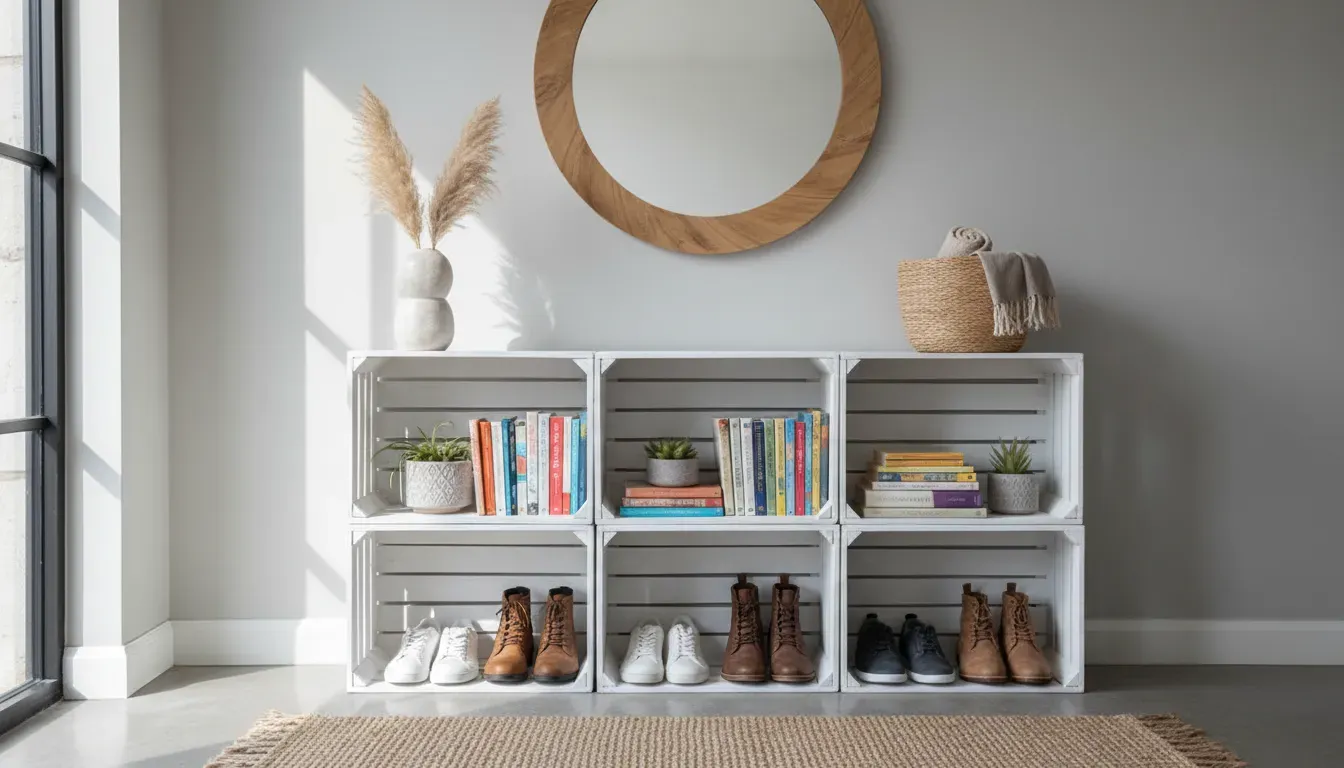
Crate Stacking
Wooden crates are inexpensive and modular. Stack two crates on their sides to create a makeshift cubby system. Use zip ties or binder clips to secure them together for stability. This allows you to build a custom-sized storage unit that fits exactly into your available wall space. Paint them to match your walls for a built-in look.
Conclusion
Transforming a small entryway into a functional, kid-friendly zone is a challenge of geometry and psychology. It requires rejecting the standard “coat closet” mentality in favor of open, accessible, and vertical solutions. By lowering hooks to eye level, utilizing every inch of vertical space, and implementing smart rotation habits, you can conquer the clutter.
Remember, the goal is not a pristine, uninhabited showroom. The goal is a space that breathes, functions, and welcomes you home without the stress of tripping over obstacles. With the right strategies, your small entryway can become one of the most organized and efficient hardworking spaces in your home.
For more ideas on maximizing tight quarters, explore our guide on Small Space Living Room Layouts or learn about Decluttering Strategies for Busy Families. Organization is a journey, and every small step in the entryway sets the tone for the rest of your home.