
Entryway Storage for Pets: Keeping Leashes, Toys, and Supplies Tidy in Apartments
Master the art of organizing pet supplies in small apartments. Discover stylish, functional entryway storage solutions for leashes, toys, and essentials.
Feb 2, 2026 - Written by: linda wise

The entryway of an apartment sets the tone for the entire home. It is the transitional threshold between the chaotic outside world and your personal sanctuary. However, for pet owners, this space often devolves into a cluttered drop zone of tangled leashes, muddy harnesses, scattered waste bags, and oversized food deliveries. In a compact apartment where square footage is at a premium, maintaining a tidy entryway while accommodating the daily needs of a pet requires strategic planning and disciplined organization.
Creating a functional pet station does not require sacrificing aesthetic appeal. On the contrary, integrating pet storage into your entryway design can elevate the space, blending utility with sophisticated interior decor. By employing vertical storage, concealing clutter, and selecting multi-functional furniture, you can transform a chaotic doorway into a streamlined, efficient hub that serves both you and your companion. This comprehensive guide explores high-level strategies for organizing pet supplies in apartment entryways, ensuring that every walk begins and ends with ease.
Assessing Inventory and Workflow
Before purchasing bins or installing hooks, one must conduct a thorough audit of the items that actually inhabit the entryway. The goal is to separate daily essentials from occasional necessities. Overcrowding the front door with items used only once a month creates visual noise and physical obstruction.
The Daily Essentials
These items must be immediately accessible. If retrieving a leash requires moving three coats and opening a sealed box, the system will fail.
- Leashes and Collars: The primary tools for the daily walk.
- Waste Bags: These should be stocked in bulk but dispensed individually.
- Treats: High-value rewards for training or departure.
- Paw Wipes or Towels: Crucial for maintaining apartment cleanliness, particularly during inclement weather.
The Occasional Items
Items used less frequently should be stored in secondary locations or higher shelves to reserve prime real estate for daily drivers.
- Grooming Supplies: Brushes, shampoos, and nail clippers usually belong in the bathroom or a dedicated closet, not the front door.
- Bulk Food: While deliveries arrive at the door, long-term storage should be in the kitchen or pantry.
- Travel Gear: Car harnesses, portable water bowls, and carriers can be stored in less accessible bins.
Once the inventory is categorized, analyze your workflow. Do you put your shoes on before the leash? Do you need to wipe paws before the dog crosses the threshold? Understanding this sequence will dictate where each storage solution is placed.
Vertical Mastery: utilizing Wall Space
In apartments, floor space is finite, but vertical space is often underutilized. The walls of your entryway offer a canvas for organization that keeps items off the floor and within arm’s reach.
High-End Hook Systems
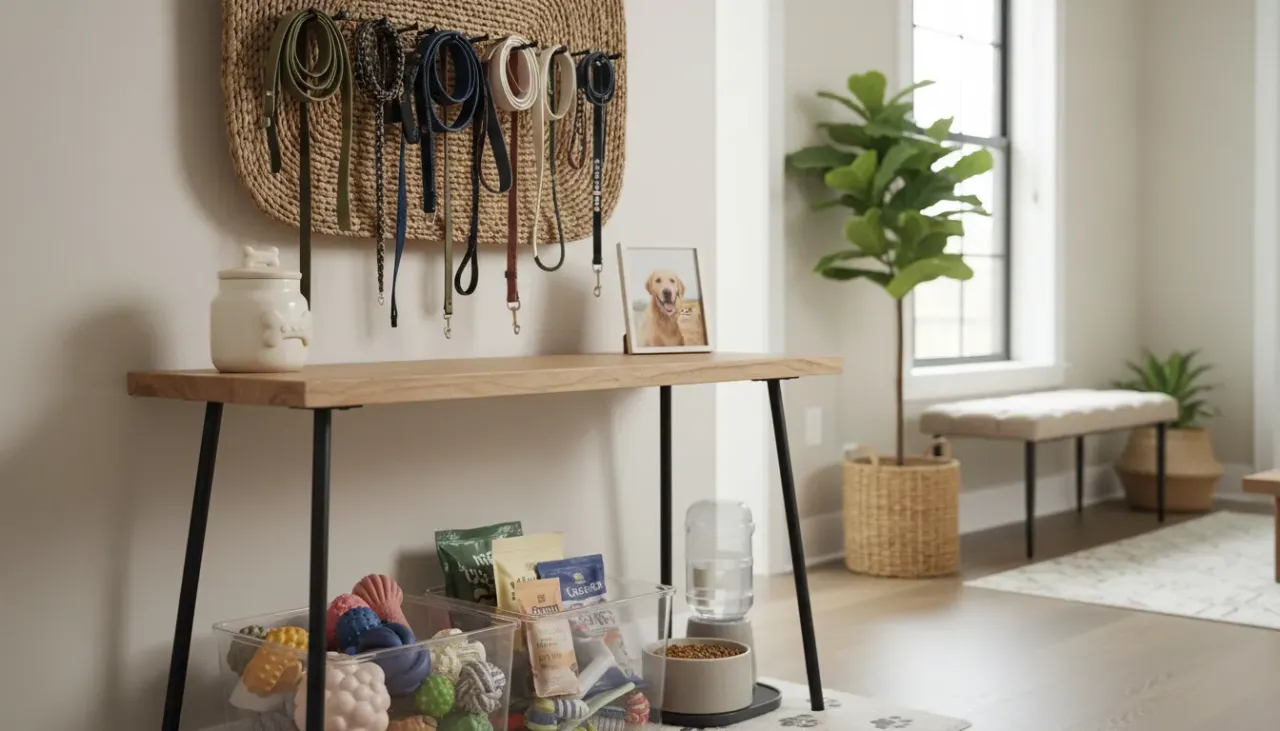
A simple row of hooks is the backbone of entryway organization, but the execution matters. Avoid cheap, plastic adhesive hooks that degrade the look of the room. Opt for robust materials like brass, matte black metal, or polished wood.
Install hooks at varying heights. Higher hooks can hold human coats and bags, while a lower tier—accessible but off the ground—is dedicated to leashes and harnesses. This separation prevents tangling and clearly delineates spaces. For a cohesive look, consider a wall-mounted organizer that combines hooks with a shelf or cubby. This provides a designated spot for keys and waste bag rolls alongside the leashes.
For those seeking a sleek, all-in-one solution, wall-mounted organizers often include mail slots and shelving, which helps consolidate human and pet clutter into a single station.
Shop Wall Mounted Entryway Organizers on Amazon
The Pegboard Solution
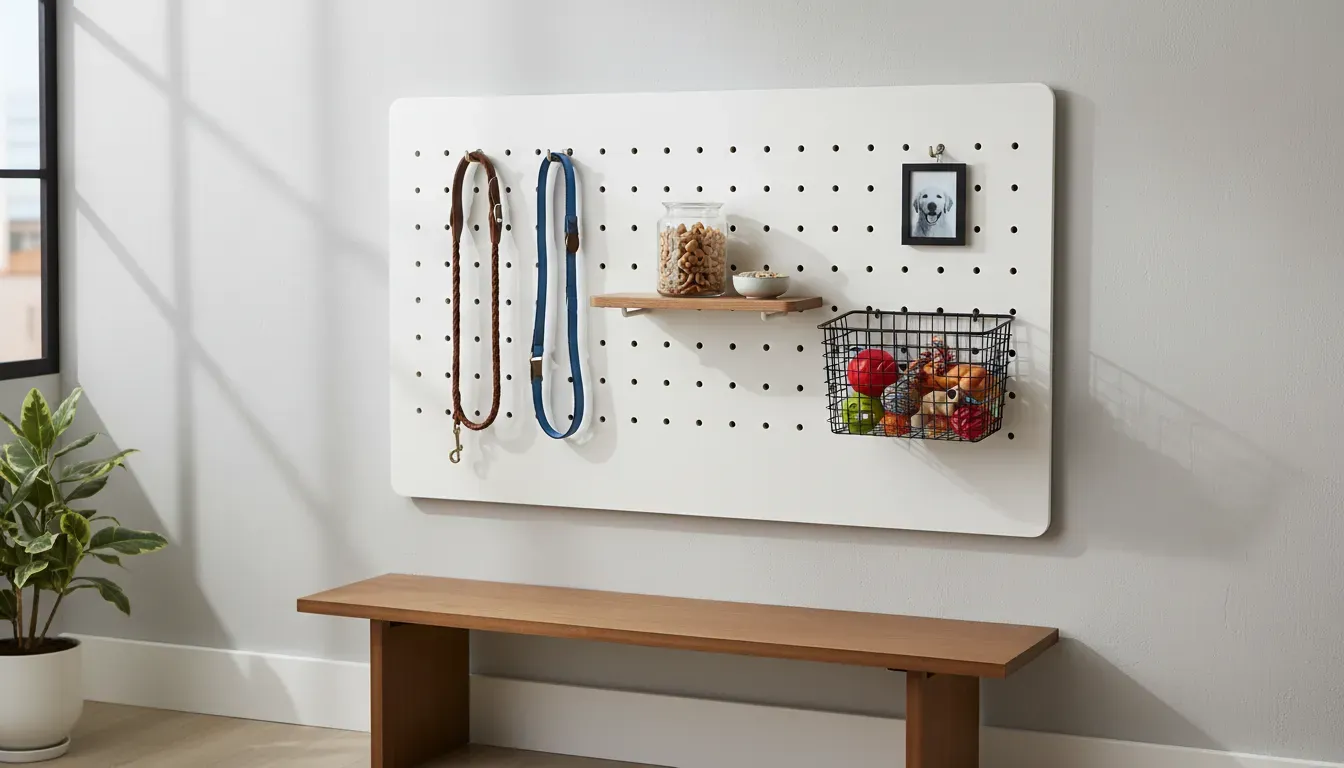
For a more industrial or modular aesthetic, a pegboard wall offers unparalleled flexibility. Unlike static hooks, a pegboard allows you to reconfigure the layout as your needs change. You can attach wire baskets for balls and toys, heavy-duty hooks for retractable leashes, and shelves for treat jars. This customizable approach is particularly effective in narrow hallways where depth is limited.
Concealed Storage: The Art of Hiding Clutter
Visual tranquility is achieved by hiding the chaotic elements of pet ownership. While a leather leash might look nice on a hook, a half-chewed rubber toy or a crinkled bag of treats does not contribute to a sophisticated decor theme. Concealed storage is the answer.
The Console Table with Drawers
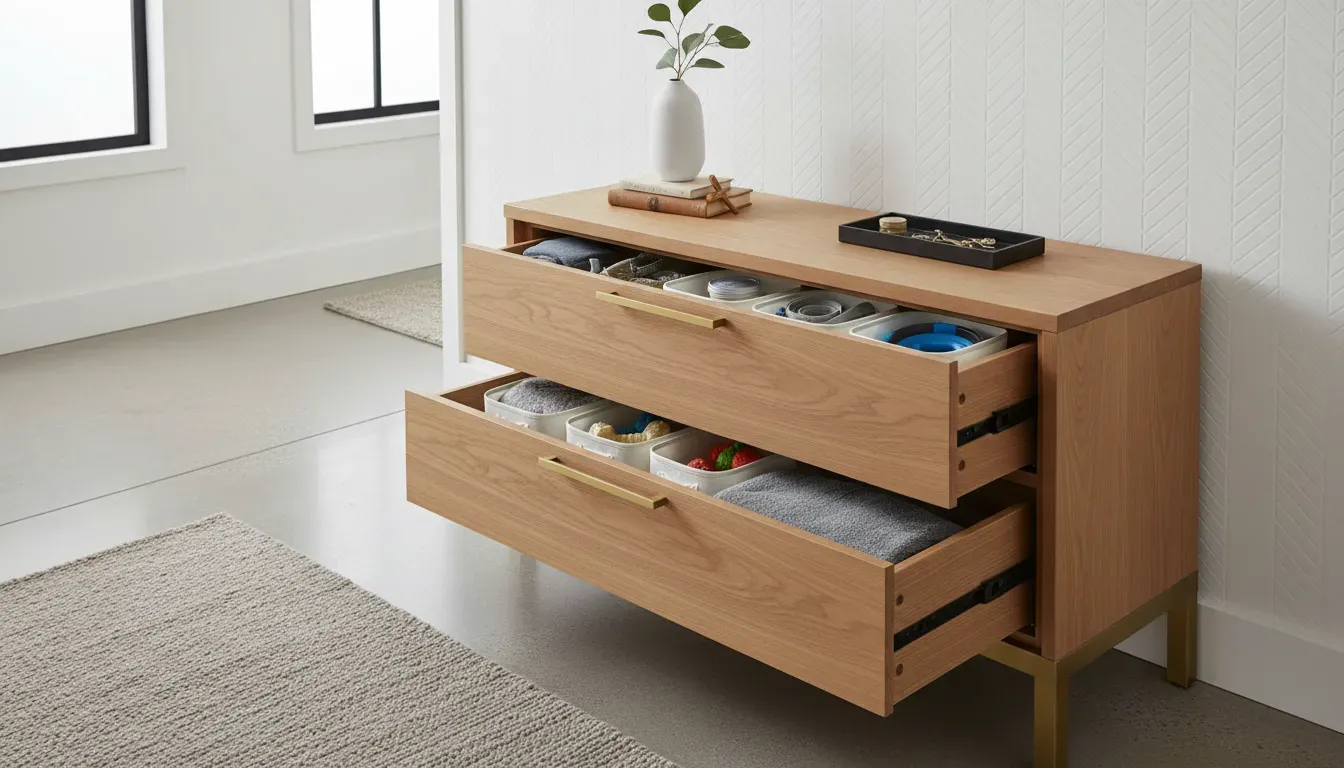
A narrow console table is a staple of entryway design. When selecting one for a pet-friendly apartment, prioritize models with drawers. Drawers are the perfect hiding spot for the “ugly” necessities: rolls of poop bags, flashlights for night walks, and spare collars.
By utilizing drawer dividers, you can prevent these small items from becoming a jumbled mess. Dedicate one drawer entirely to the pet. This containment strategy ensures that human items like sunglasses and wallets do not get covered in treat crumbs.
Shoe Cabinets as Supply Lockers
Tip-out shoe cabinets are a secret weapon for narrow apartments. These units are remarkably slim, often protruding less than 10 inches from the wall, yet they offer deep storage. While designed for footwear, the tilt-out bins are ideal for storing bulky pet items that don’t fit in shallow drawers.
A shoe cabinet can easily house:
- Folded dog raincoats and sweaters.
- Large towels for paw drying.
- Spare harnesses.
- Packages of wipes.
The top surface of the cabinet serves as a styling opportunity for a lamp, a plant, or a sophisticated treat vessel, keeping the functional chaos completely hidden behind closed doors.
Multi-Functional Furniture
In a small apartment, every piece of furniture must earn its keep, ideally performing two or more functions.
The Storage Bench
A storage bench provides a place to sit while putting on shoes—a necessity for walk preparation—while the interior offers cavernous storage volume. This is an excellent location for bulkier items or toys that need to be rotated out of circulation.
When choosing a bench, look for one with a lift-top mechanism or easy-glide drawers. If the bench has open cubbies underneath, fit them with precise-dimension baskets to maintain a clean look. This keeps the contents accessible but obscured.
Shop Entryway Storage Benches on Amazon
Ottoman Storage
For smaller entryways where a full bench is not feasible, a storage ottoman or pouf can serve as a compact alternative. These can be tucked under a floating console table when not in use. Inside, they can hold balls, frisbees, or seasonal pet apparel.
Containerizing: Baskets and Bins
Even within shelves and cupboards, loose items create mess. The strategic use of baskets and bins brings order to the chaos and introduces texture to the design scheme.
Material Selection
The material of your storage containers should align with your decor while offering durability.
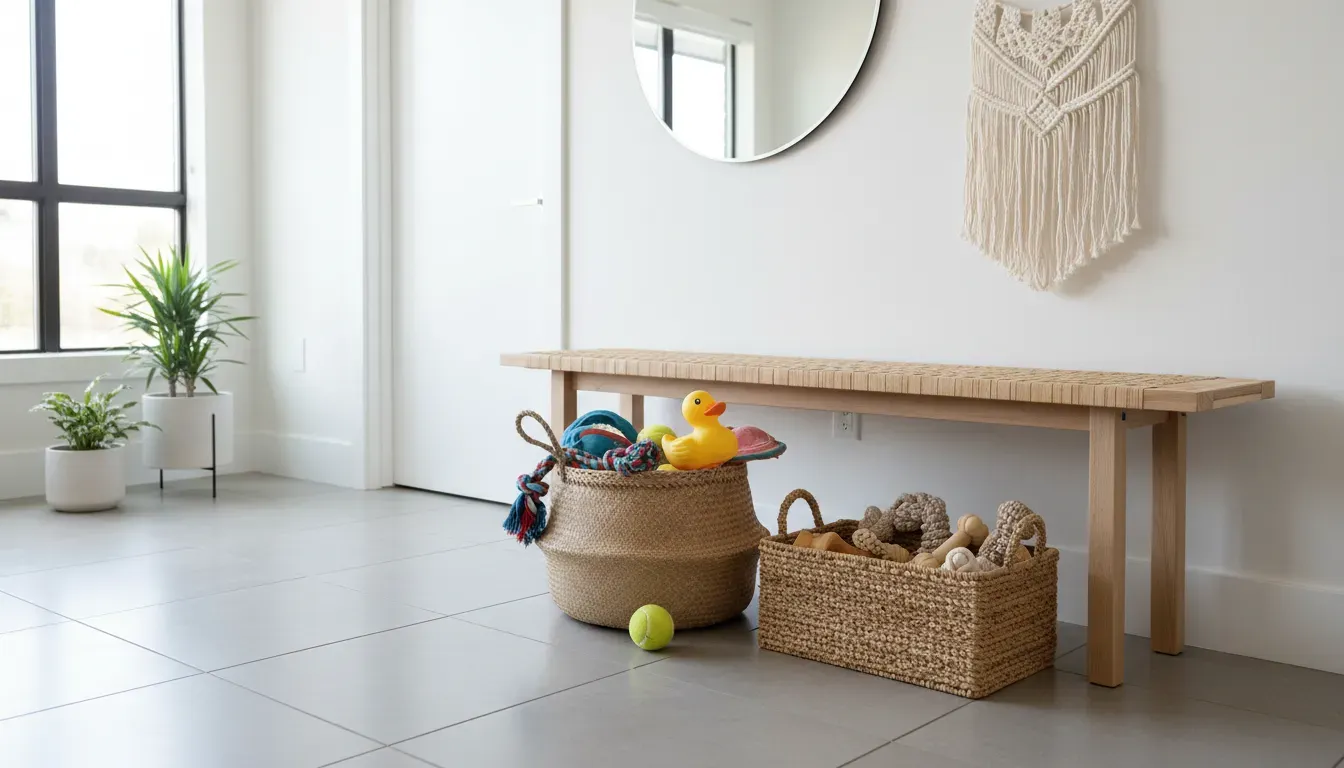
- Woven Seagrass or Hyacinth: Adds warmth and organic texture to modern or boho spaces. Ensure the weave is tight so small items don’t fall through.
- Wire Baskets: Ideal for industrial or farmhouse aesthetics. They allow you to see the contents instantly, which is helpful for grabbing toys in a hurry.
- Canvas or Felt: Soft-sided bins are excellent for storing hard toys, dampening the sound when they are tossed back in.
Categorization
Avoid the “doom basket” phenomenon where everything is thrown into a single container. Instead, use smaller, specific bins:
- The “Walk” Bin: Harnesses, high-visibility vests, and waste bags.
- The “Play” Bin: Balls, ropes, and park toys.
- The “Clean” Bin: Wipes, sprays, and a brush.
Shop Woven Storage Baskets on Amazon
Managing the “Wet Dog” Factor
One of the greatest challenges of apartment living with pets is dealing with inclement weather. Without a mudroom or garage, the entryway must handle wet paws and muddy fur without ruining the floors.
Rug Stratification
Invest in a high-quality, absorbent runner rug for the hallway. Materials like polypropylene are durable, stain-resistant, and often machine washable. Avoid high-pile rugs that trap dirt; flat-weave or low-pile options are easier to vacuum and clean. Placing a heavy-duty doormat outside the apartment door (if permitted) acts as the first line of defense, catching coarse debris before it enters the home.
The Drying Station
Designate a specific hook or basket strictly for towels. Microfiber pet towels are highly absorbent and dry quickly. Having a towel hook immediately adjacent to the door frame allows you to dry paws before the dog has a chance to run onto the carpet or jump on the sofa.
For rain gear, install a small, low hook where a wet dog raincoat can drip dry over the boot tray, rather than stuffing a wet coat back into a drawer.
Aesthetic Integration and Decor
Storage is functional, but it shouldn’t look utilitarian. The pet station should blend seamlessly with your home’s design language.
Decanting Treats
Pet treat packaging is rarely designed with interior decor in mind. Bright, crinkly plastic bags create visual clutter. The solution is decanting. Transfer treats into glass jars with airtight lids or ceramic canisters that match your decor. A row of uniform glass jars on a floating shelf looks like intentional styling rather than pet storage. This not only elevates the look but keeps treats fresher for longer.
Coordinated Colors
Try to coordinate the colors of your pet gear with your entryway palette. If your hallway features neutral tones and black accents, a neon orange leash will stick out aggressively. Opting for leashes in leather, rope, or neutral nylon can make the hanging storage look curated. While you cannot change the color of every toy, keeping the visible gear (leashes, collars, coats) within a cohesive color story makes a significant difference in a small space.
For more inspiration on maintaining style in compact areas, consider reading our guide on entryway decor ideas for small spaces, which explores how to balance functionality with high-end design.
Renter-Friendly Adaptations
Many apartment dwellers are restricted from drilling holes in walls. Fortunately, robust organization is possible without permanent modification.
- Over-the-Door Organizers: If you have a coat closet in the entryway, the back of the door is prime real estate. Clear pocket organizers can hold an immense amount of supplies, from grooming tools to medicines, completely out of sight.
- Tension Rods: Inside a closet or a deep nook, a tension rod can create an extra rail for hanging pet coats or leashes without screws.
- Heavy-Duty Adhesive: Modern adhesive technology has improved significantly. High-weight-capacity adhesive hooks can hold heavy leather leashes or filled tote bags. Always clean the surface with alcohol before application to ensure a secure bond.
Routine and Maintenance
The best storage system in the world will fail without a maintenance routine. Entryways are high-traffic zones, and clutter accumulates rapidly.
The Weekly Reset
Dedicate five minutes once a week to “reset” the entryway.
- Empty the pockets of coats (remove old treat wrappers).
- Refill the waste bag dispenser.
- Shake out the rug.
- Return migrated toys to their designated bin.
Seasonal Swaps
Apartment storage is finite. Do not keep winter coats and heavy reflective gear in the prime entryway spots during July. Utilize under-bed storage or high closet shelves to rotate pet gear seasonally, just as you would your own wardrobe. This keeps the entryway explicitly for items relevant to the current weather.
Conclusion
Organizing an entryway for pet ownership in an apartment is an exercise in spatial efficiency and aesthetic discipline. It requires looking at the available space—walls, floors, and hidden compartments—and assigning a specific purpose to every inch. By combining vertical storage solutions like hooks and pegboards with concealed options like console drawers and storage benches, you can create a system that handles the rigors of daily walks without surrendering your home to clutter.
The ultimate goal is a frictionless transition. When the leash is easy to grab, the bags are always stocked, and the muddy paws are managed effortlessly, the daily routine of pet ownership becomes a joy rather than a chore. Your entryway is the handshake of your home; with thoughtful organization, it can welcome both guests and four-legged family members with style and order.