
The Evolution of Entryway Benches with Storage: From Chests to Modern Designs
Trace the fascinating history of entryway storage, from Renaissance chests to contemporary multi-functional benches, and find the perfect piece for your home.
Feb 3, 2026 - Written by: linda wise

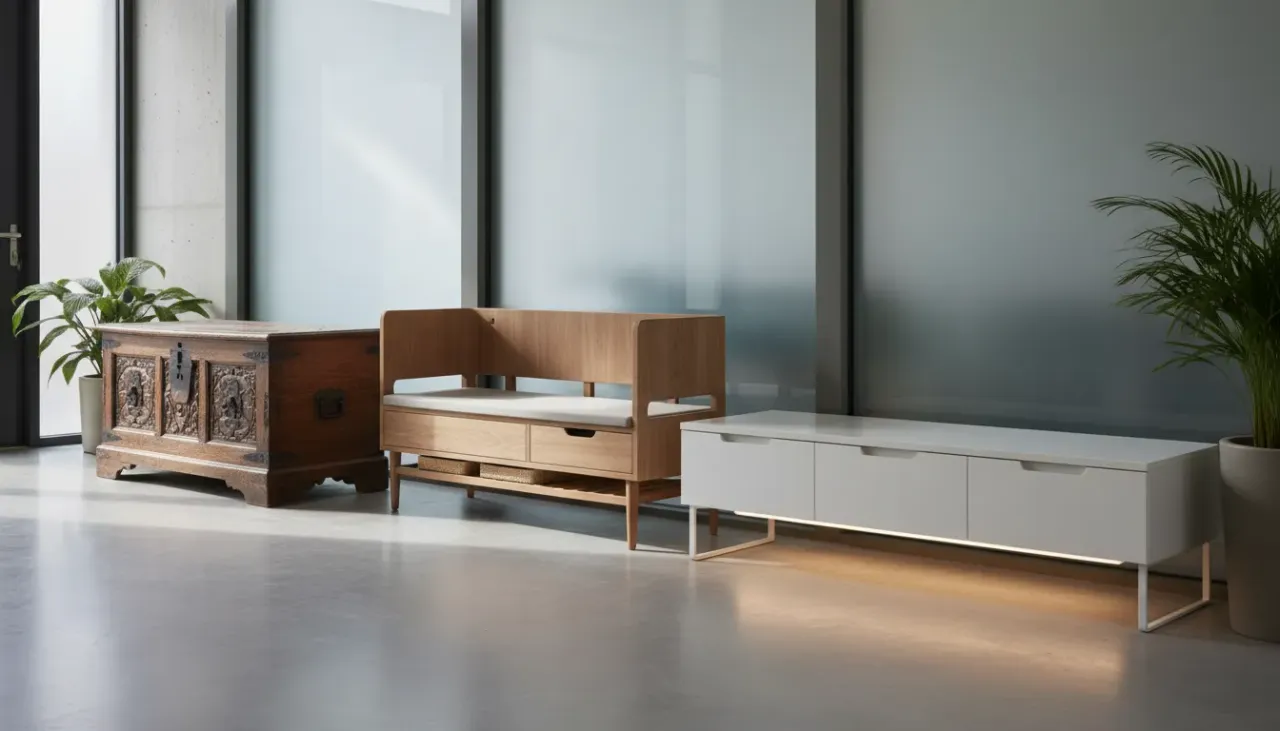
The entryway is the handshake of the home. It is the first space to greet a guest and the final space to bid a resident farewell. Within this transitional zone, few pieces of furniture have worked as hard, or evolved as dramatically, as the storage bench. What we now recognize as a staple of home organization—a hybrid of seating and concealment—has a lineage that stretches back centuries. This evolution is not merely a history of furniture design; it is a reflection of changing domestic lifestyles, architectural trends, and the eternal human desire to conquer clutter.
From the heavy, ornate marriage chests of the Italian Renaissance to the sleek, minimalist shoe racks of the twenty-first century, the entryway bench has adapted to serve the needs of the era. This comprehensive guide explores that journey, analyzing how form and function have intersected over the last five hundred years to create one of the most versatile pieces of furniture in the modern home.
The Ancestral Origins: The Cassone and the Chest
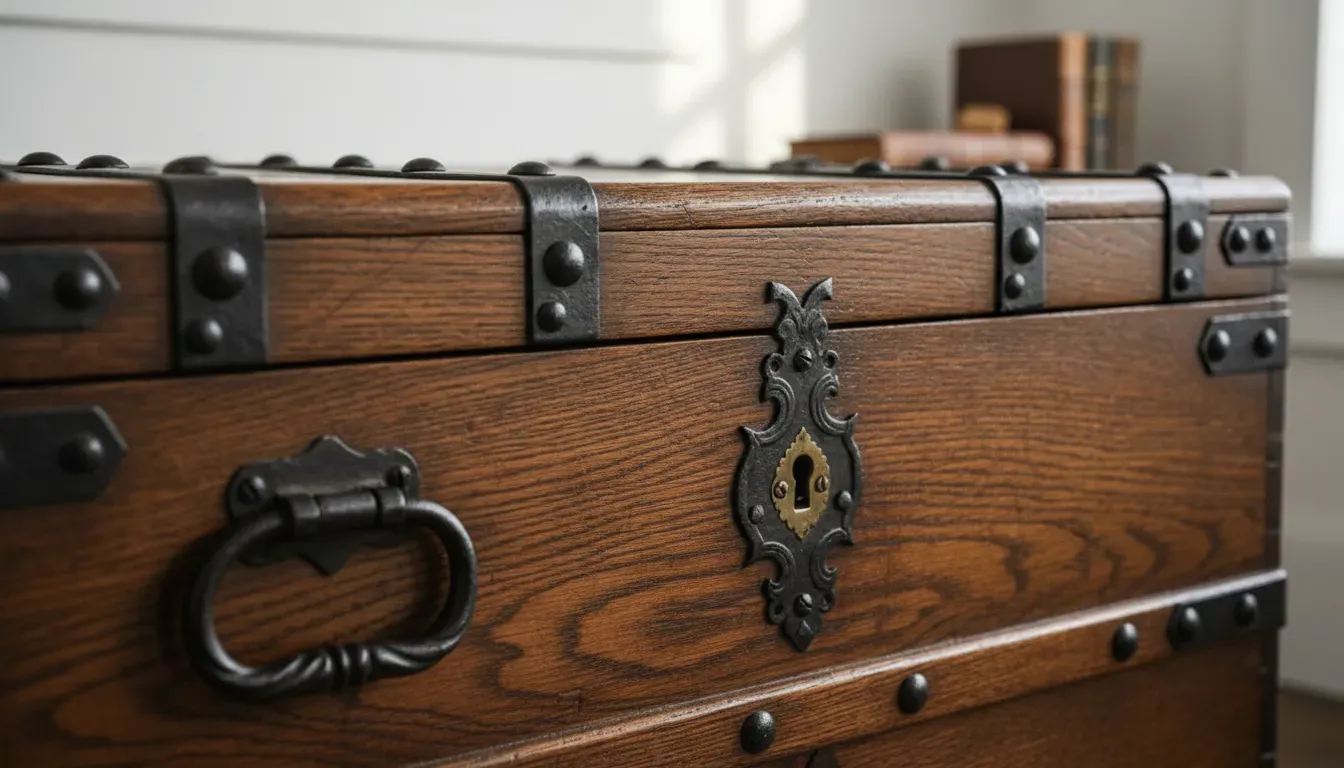
To understand the modern storage bench, one must look to its ancestor: the chest. In medieval and Renaissance Europe, the chest (or coffer) was often the most significant piece of furniture a family owned. It was portable, secure, and multifunctional. Before the invention of built-in closets or elaborate chests of drawers, the chest held everything from linens and clothing to weapons and currency.
The Italian Cassone
During the Renaissance, particularly in Italy, the cassone became a status symbol. These were large, elaborately carved, and often painted chests given as marriage dowries. While their primary function was to store the bride’s trousseau, their sturdy, flat lids naturally invited use as seating.
In the grand halls of palazzos, these chests lined the walls. They were not strictly “entryway” furniture in the modern sense, as the concept of a dedicated foyer had not yet fully materialized in domestic architecture. However, they established the fundamental utility that persists today: a heavy, wooden vessel that offers a place to sit while concealing voluminous items within.
The Colonial Blanket Box
As furniture design migrated to the Americas and Northern Europe, the chest evolved into the blanket box or the hope chest. The ornamentation became more subdued, favoring the clean lines of Shaker or Colonial craftsmanship. These pieces were often placed at the foot of a bed or near the hearth, but in smaller cottages, they were positioned near the door to hold winter woolens and boots.
The limitation of these early designs was accessibility. To retrieve an item, one had to disturb the sitter, clearing the top surface to lift the heavy lid. It was a simple solution, yet it lacked the compartmentalization required for the fast-paced life that was to come.
The Victorian Era: The Hall Stand and Specialized Furniture
The Industrial Revolution brought about a seismic shift in furniture production and home design. The middle class was expanding, and with it, the size of homes and the volume of possessions. The Victorian home typically featured a distinct hallway or vestibule, intended to separate the public street from the private sanctuary.
The Hall Tree
This architectural development necessitated specific furniture. Enter the “Hall Stand” or “Hall Tree.” These were imposing, vertical structures often made of oak, mahogany, or cast iron. They combined a mirror (to check one’s appearance before entering the parlor), hooks for hats and coats, an umbrella stand, and, crucially, a bench with a lift-seat storage compartment.
This was the first true iteration of the dedicated entryway storage bench. The storage compartment was typically deep and used for galoshes or house shoes. The Victorians prioritized order and etiquette; having a designated place for wet items prevented mud from being tracked onto expensive rugs.
While the Hall Stand was a triumph of utility, it was physically imposing. As architectural tastes shifted in the 20th century toward lower ceilings and open floor plans, these monolithic pieces began to feel outdated and cumbersome.
Mid-Century Modernism: The Horizontal Shift
Following the Second World War, the landscape of domestic life changed again. The rise of the suburb and the influence of Scandinavian design introduced a new philosophy: Mid-Century Modernism. The heavy ornamentation of the Victorian era was stripped away in favor of clean lines, organic curves, and functionality.
The entryway bench was reimagined. No longer part of a towering vertical unit, it became a standalone, low-profile piece. Designers like George Nelson and Hans Wegner experimented with slatted wood benches that could serve as seating or as a platform for plants and books.
Hidden vs. Open Storage
During this era, storage became more discreet. We began to see the introduction of sliding doors and shallow drawers. The bench was no longer just a box; it was a piece of sculpture. However, the “storage” aspect was often secondary to the aesthetic. Many Mid-Century benches featured open slats, utilizing the space underneath for baskets or leaving it bare to create a sense of airiness in smaller post-war ranch homes.
For those looking to replicate this timeless aesthetic while maintaining modern organizational standards, finding a balance is key.
Amazon Product Recommendation: Mid-Century Modern Storage Bench
This era proved that the entryway bench could be elegant. It moved the needle away from the purely utilitarian “box” toward a piece of furniture that set the design tone for the rest of the house.
The Rise of the Mudroom: Organization as a Lifestyle
In the late 20th and early 21st centuries, the “Mudroom” emerged as a highly desirable feature in family homes. Distinct from the formal front foyer, the mudroom is the workhorse entrance, usually located off the garage or side door. This shift in architecture fundamentally changed the design of the storage bench.
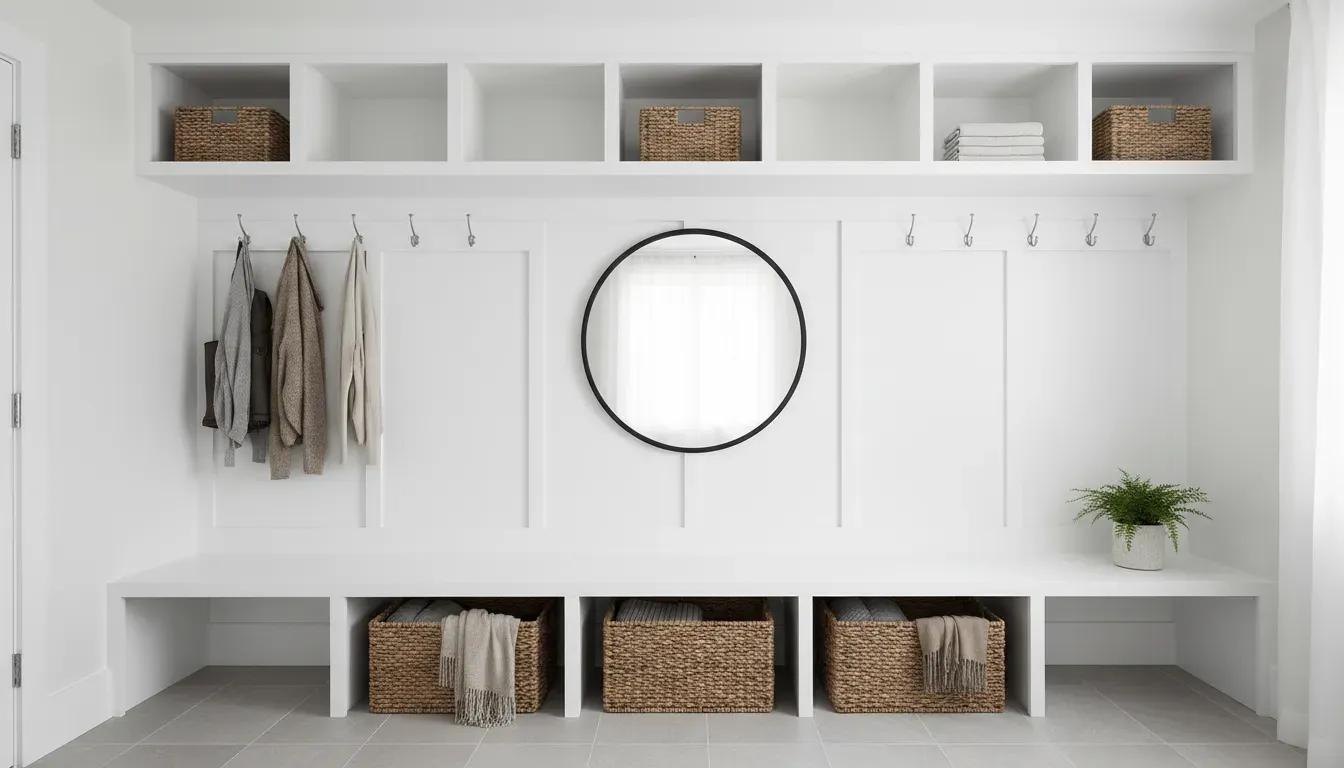
The bench became the anchor of a larger system. It was now integrated into built-in cabinetry, flanked by lockers and overhead cubbies. The focus shifted entirely to high-volume organization. The modern family had more “gear”—backpacks, sports equipment, specialized footwear—than previous generations.
Cubbies and Baskets
The lift-top lid, a hallmark of the chest for centuries, began to fall out of favor in high-traffic zones. It was simply too inconvenient to have a child stand up and clear the bench to retrieve their cleats.
This led to the proliferation of the cubby bench. By creating open compartments beneath the seat, users could slide shoes in and out without obstruction. To handle visual clutter, designers introduced wicker or wire baskets that fit perfectly into these cubbies, offering the concealment of a drawer with the accessibility of an open shelf.
For deeper insights into optimizing high-traffic areas, consider reading our guide on organizing narrow hallways.
Contemporary Design Philosophies
Today, the entryway bench exists in a multitude of forms, catering to the diverse living situations of the modern populace. Urbanization has led to smaller apartments where square footage is at a premium, while expansive suburban homes continue to demand substantial furniture pieces.
The Urban Multi-Tasker
In city apartments, the entryway is often nonexistent—sometimes just a patch of wall behind the front door. Here, the storage bench must be compact and hyper-functional. We see the rise of the shoe rack bench, which combines a cushioned top with tiered metal or wood shelving. Industrial materials like steel and reclaimed wood are popular, offering durability and a modern edge.
Amazon Product Recommendation: Industrial Shoe Storage Bench
The Upholstered Ottoman
On the other end of the spectrum is the shift toward luxury and comfort. The upholstered storage bench acts as a bridge between furniture and decor. Velvet, linen, and leather are used to create pieces that feel like living room furniture but reside in the hall.
These often utilize the “hydraulic lift” mechanism. Unlike the heavy wooden lids of the past, modern hardware allows the top to lift effortlessly and stay open safely. These are ideal for storing seasonal items that aren’t accessed daily, such as winter scarves or emergency supplies, maintaining a clean and sophisticated look.
Anatomy of the Modern Storage Bench
To truly appreciate the evolution, one must look at the specific mechanisms that define today’s market. The modern consumer is spoilt for choice, but these choices generally fall into three categories of mechanics.
1. The Flip-Top (The Classic)
Directly descended from the cassone, the flip-top offers the most unbroken storage volume.
- Pros: Accommodates large, bulky items (blankets, umbrellas, large bags). Aesthetically clean when closed.
- Cons: Inconvenient for daily shoe retrieval. Requires the surface to be kept clear of decor.
2. The Drawer Unit
A refinement of the chest of drawers, adapted for low seating.
- Pros: Excellent organization for small items (keys, gloves, dog leashes). Keeps clutter completely hidden.
- Cons: Hardware can fail over time. Drawers reduce the available internal volume compared to an open box.
3. The Open Shelf/Cubby
The most utilitarian and arguably the most popular for families.
- Pros: Instant access. Encourages family members to actually put their shoes away.
- Cons: Visual clutter. Requires attractive shoes or the use of baskets to maintain a “designed” look.
Selecting the Right Bench for Your Space
Choosing the correct bench is no longer just about buying a wooden box. It requires an analysis of your lifestyle and your space constraints.
Measuring for Traffic Flow
The most common mistake in entryway design is selecting a bench that impedes the flow of traffic. Standard hallways are often narrow. A bench that is too deep (over 18 inches) can make a corridor feel claustrophobic. Modern “slim” designs have emerged to combat this, offering depths as shallow as 12 to 14 inches while still providing adequate seating and storage.
Material Durability
The entryway is a high-impact zone. It faces mud, water, road salt, and heavy bags being dropped.
- Wood: Solid wood is durable but can scratch. It requires maintenance but ages beautifully.
- Metal: Impervious to water and mud, making it excellent for shoe racks.
- Upholstery: Adds softness but requires performance fabrics (like Crypton or treated canvas) to withstand staining.
Amazon Product Recommendation: Upholstered Entryway Storage Bench
The Intersection of Technology and Furniture
As we look toward the future, the evolution of the entryway bench is beginning to intersect with technology and sustainability.
Smart Furniture
We are beginning to see prototypes and high-end custom pieces that integrate technology. Benches with built-in USB charging ports are becoming useful for charging devices as soon as one walks in the door. Some designs incorporate LED lighting within cubbies, activated by motion sensors, to help locate shoes in dim entryways without turning on overhead lights.
Sustainable Materials
The modern consumer is increasingly conscious of their carbon footprint. The evolution of the bench is shifting toward bamboo (a rapidly renewable resource), reclaimed woods (history repurposed), and recycled plastics. The “fast furniture” era is slowly giving way to a desire for longevity—a return to the philosophy of the Renaissance chest, where a piece was built to last generations.
Aesthetic Integration: Styling the Bench
A bench does not exist in a vacuum. Its evolution has also been shaped by how we style our homes. In the Victorian era, the bench was part of a set. Today, it is often a statement piece that contrasts or complements the architecture.
The Rule of Three
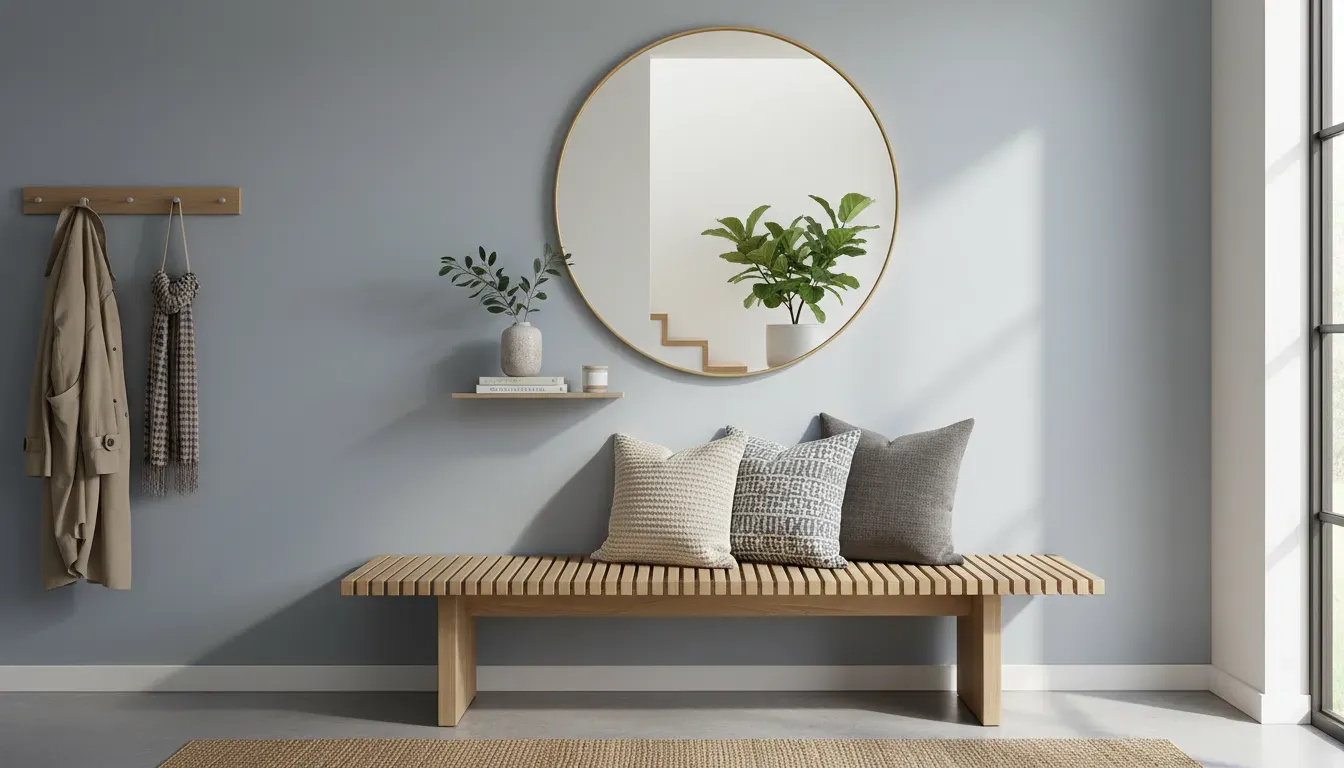
Designers often employ the “rule of three” when styling a storage bench.
- The Anchor: The bench itself.
- The Vertical: A mirror or artwork hung above the bench to draw the eye up.
- The Textile: Throw pillows or a blanket to soften the hard lines and invite seating.
This styling approach transforms a utilitarian storage box into a welcoming vignette. It signals to the guest that they have entered a home that values both comfort and order.
For more ideas on creating a welcoming atmosphere, browse our article on styling entry tables and benches.
Conclusion: The Enduring Legacy of the Storage Bench
The journey of the entryway bench from the heavy oak chests of the 16th century to the multifunctional, sleek designs of the modern era is a testament to human ingenuity. We have taken a simple concept—a box to put things in—and refined it over centuries to suit our changing needs.
While the cassone spoke of dowries and lineage, and the Hall Stand spoke of Victorian etiquette, the modern storage bench speaks of efficiency and style. It acknowledges that our lives are busy and our spaces are precious. Whether you opt for a flip-top bench that hides winter blankets or an industrial shoe rack that keeps your daily trainers in check, you are participating in a design evolution that spans centuries.
As homes continue to evolve, the storage bench will undoubtedly adapt with them. Yet, its core purpose remains unchanged: to provide a moment of pause at the threshold of our sanctuary, and a place to put away the burdens of the outside world.