
hallway coat storage
Discover expert strategies for hallway coat storage, from spatial topography and hardware selection to custom built-in solutions that banish entryway clutter.
Apr 19, 2026 - Written by: Linda Wise

The threshold of your home is a high-stakes psychological boundary. You step through the front door, shedding the chaotic weight of the outside world—both metaphorically and physically. Yet, if your vestibule lacks a highly functional, intentionally designed system to catch your outerwear, that transition instantly devolves into a stressful obstacle course of discarded parkas and tripped-over scarves. I’ve personally found that treating the entryway as a mere afterthought is the fastest way to sabotage a home’s entire organizational flow.
Effective hallway coat storage transcends nailing a cheap strip of plastic hooks into drywall. It demands a rigorous understanding of spatial topography, daily traffic patterns, material durability, and visual noise management. Whether you are navigating a claustrophobic apartment corridor or designing the drop-zone for a sprawling suburban foyer, the mechanics of how you store garments right at the point of entry will dictate the cleanliness of your entire living space.
Here is a look at some of the most reliable, architecturally sound off-the-shelf solutions I consistently recommend before we plunge into the granular mechanics of designing your own setup.
Quick Comparison: Top Picks
| Product | Rating | Check Price |
|---|---|---|
| VASAGLE Industrial Hall Tree | ⭐⭐⭐⭐⭐ | View on Amazon |
| Umbra Sticks Wall Mount Rack | ⭐⭐⭐⭐½ | View on Amazon |
| YAMAZAKI Home Tower Coat Hanger | ⭐⭐⭐⭐½ | View on Amazon |
The Architectural Threshold: Why Entryway Topography Matters
Most people fail at entryway organization because they miscalculate their home’s natural kinetic friction. Hallways are arteries. They are narrow, high-velocity zones where people rarely linger. If the act of hanging up a heavy winter coat requires unzipping a garment bag, opening a stubborn closet door, or fiddling with flimsy wire hangers, human nature dictates that the coat will simply end up thrown over the nearest dining chair.
To master hallway coat storage, you must ruthlessly eliminate friction. The drop-zone must be immediately accessible, intuitively placed, and structurally robust enough to handle sheer, sudden downward force. You’ll notice that historical architecture often featured dedicated mudrooms or enclosed vestibules specifically engineered for this shedding process. Modern open-concept floor plans have largely erased these transitional rooms, forcing us to artificially recreate them using clever furniture and wall-mounted apparatuses.
Spatial Constraints and Clearance Zones
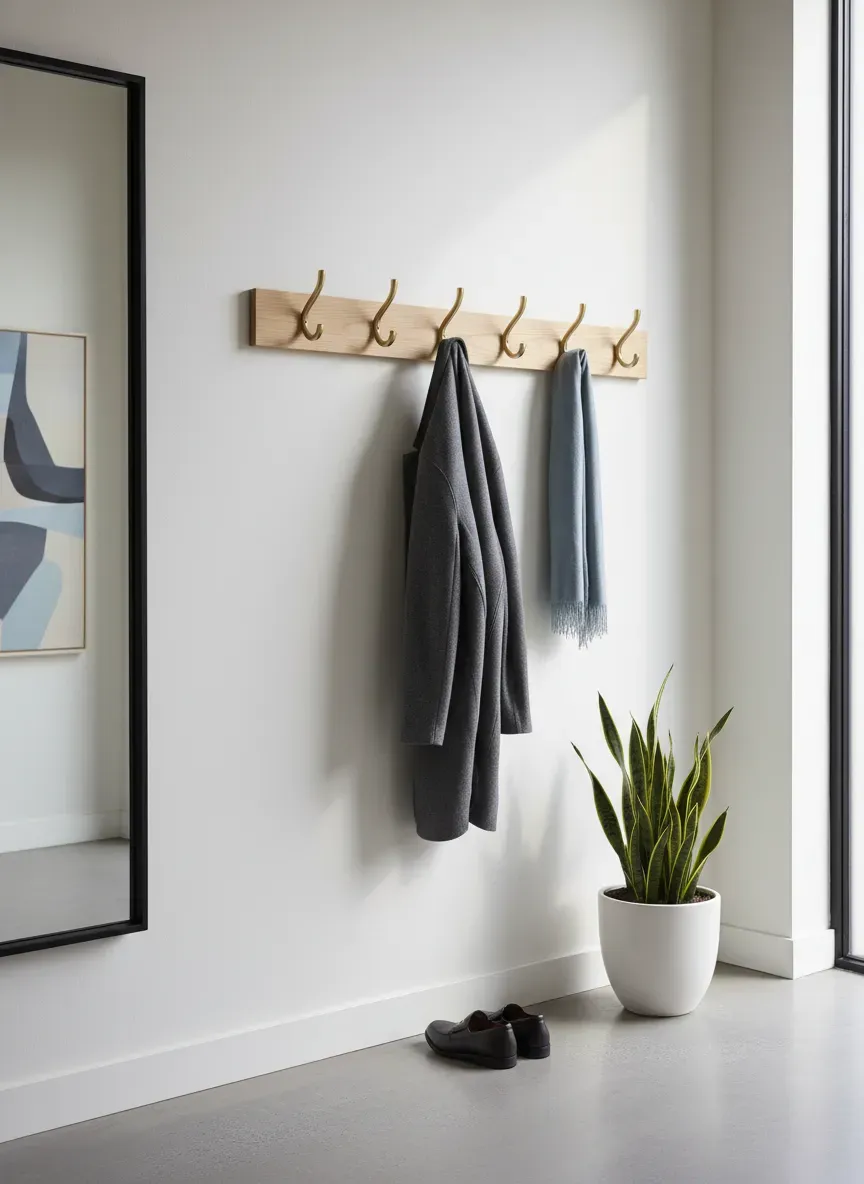
Before drilling a single hole or ordering a massive piece of furniture, you need to map your clearance. A standard residential hallway measures 36 inches in width. Heavy winter coats draped on hooks protrude roughly 6 to 8 inches from the wall. If you install a prominent coat rack on the narrowest point of your corridor, you create a physical bottleneck that will constantly brush against shoulders and snag loose bags.
If your corridor is narrower than 42 inches, floor-standing units are almost always a liability. You are forced into the vertical imperative: utilizing the upper half of your wall space while keeping the floor completely clear.
Unpacking the Big Three: Core Storage Archetypes
The market is saturated with supposed “hacks” and flimsy, tension-rod-based disasters. When curating a space that requires immense functional reliability, I steer clients toward three specific archetypes. Each serves a distinct spatial requirement and aesthetic vernacular.
The Resurgence of the Hall Tree
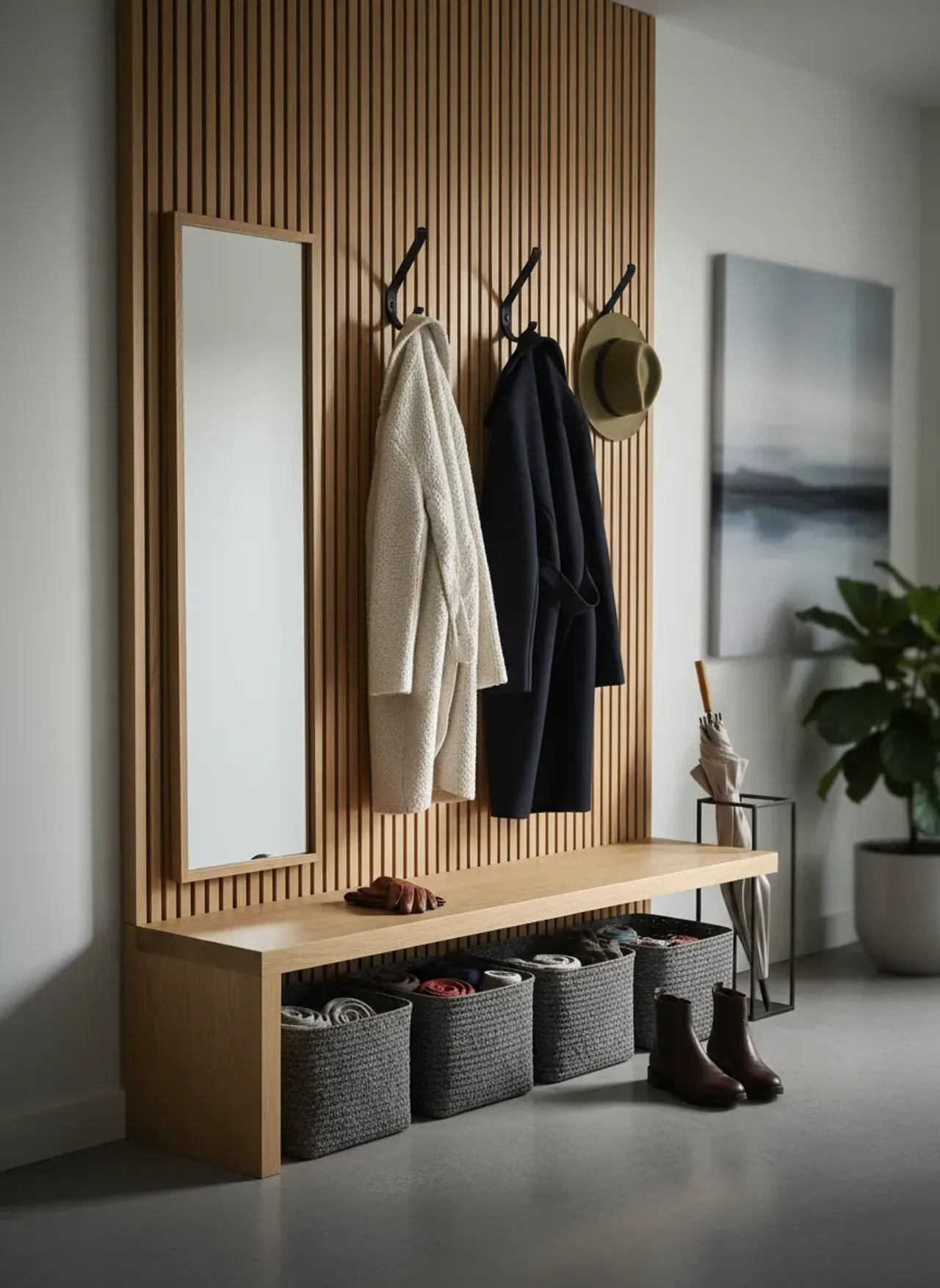
For homes boasting a wider foyer or a dedicated mudroom alcove, the hall tree is an undisputed heavyweight champion. It consolidates three distinct actions—hanging outerwear, sitting to remove footwear, and stowing shoes—into one monolithic footprint.
I frequently point homeowners toward the VASAGLE Industrial Hall Tree when they need an immediate, high-capacity intervention. The integration of a steel frame with engineered wood offers a crucial blend of tensile strength and rustic aesthetics. The real advantage of a well-designed hall tree is the staggered hook placement. By offering lower tiers of hooks, it naturally democratizes the space, allowing children to manage their own gear without dragging a step-stool to the front door.
Pro Tip: Always secure monolithic furniture to the wall studs using heavy-duty anti-tip brackets. A hall tree loaded with wet wool coats and heavy backpacks has a drastically altered center of gravity and presents a severe tipping hazard if someone yanks a snagged jacket.
Art Meets Utility: The Sculptural Wall Rack
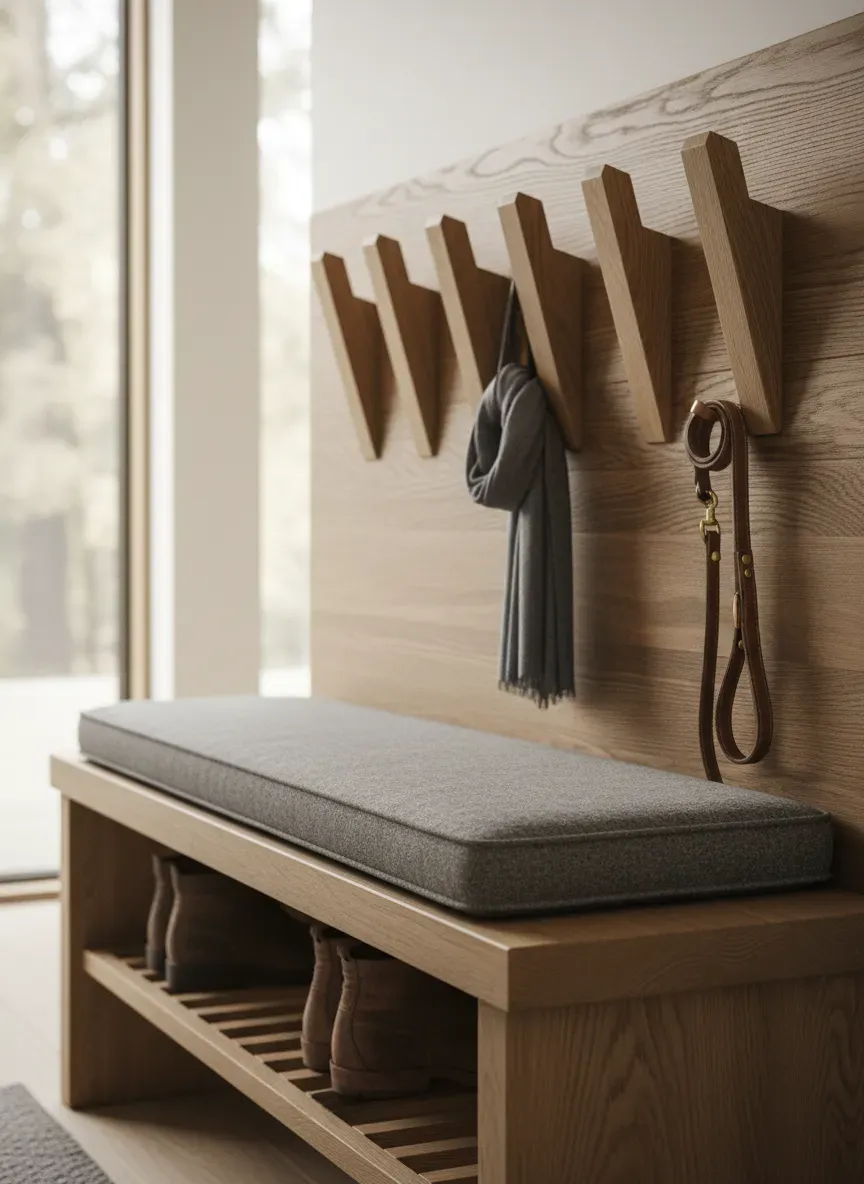
When dealing with severe spatial deficits, your storage must moonlight as architectural decor. Empty coat hooks are visually jarring; they look like skeletal claws protruding from your drywall. Modern design has solved this by creating dynamic racks where the hooks fold away flush with the base when not in use.
The Umbra Sticks Wall Mount Rack is a masterclass in this philosophy. At first glance, it reads as a piece of abstract, staggered wooden wall art. The molded “sticks” pull down individually to act as surprisingly robust hooks, bearing up to 5 pounds each. This kinetic approach allows a narrow apartment corridor to maintain a sleek, uninterrupted profile during the summer months when heavy coats are banished to deep storage, only deploying its functional capacity when a guest arrives.
The Minimalist Leaning Stand
There are scenarios—particularly in rental properties with draconian lease agreements—where drilling into the drywall is strictly forbidden. Traditional freestanding coat trees often suffer from a fatal flaw: they require a wide, sprawling base to prevent tipping, which eats up precious floor space.
The solution lies in the leaning architectural stand. The YAMAZAKI Home Tower Coat Hanger exemplifies Japanese spatial efficiency. By utilizing a slim steel profile that leans against the wall, relying on rubberized feet and gravity for stability, it dramatically reduces its footprint. It is ideal for tucking into the dead corner behind a front door, offering a sleek, barely-there armature for daily-driver jackets and scarves.
Materiality, Hardware, and Structural Integrity
Here’s the real kicker that most DIY blogs gloss over: coats are heavy. A wet wool peacoat or a waxed canvas chore jacket can easily weigh upwards of eight pounds. Multiply that by five family members, add the dynamic downward force of someone carelessly yanking their jacket off the wall in a rush, and you are subjecting your storage system to immense mechanical stress.
The Problem with Drywall Anchors
Screwing a beautiful piece of reclaimed oak directly into drywall using cheap, ribbed plastic anchors is a recipe for disaster. Over time, the sheer force of the hanging garments will micro-fracture the surrounding gypsum. The rack will slowly pull away from the wall, eventually tearing out completely and leaving you with gaping, ragged holes to patch.
If you are installing a horizontal peg rail or a hook board, you must locate the vertical wooden studs behind the drywall (typically spaced 16 inches apart). If the pre-drilled holes on your mounting board do not align with your studs, ignore the pre-drilled holes. Countersink new holes directly through the face of the board into the studs, and conceal the screw heads with matching wood plugs. If you absolutely must mount into hollow drywall, bypass plastic entirely and use heavy-duty steel toggle bolts, which expand behind the drywall to distribute the load across a vastly wider surface area.
Protecting Your Textiles
The geometry of the hook itself requires careful scrutiny. Aggressive, sharply angled metal hooks without protective finials or chamfered edges will aggressively stretch the collars of your garments. Over a single winter season, a sharp hook can punch a hole straight through the nape of a delicate trench coat or snap the hanging loop off a parka.
Seek out designs utilizing rounded wooden pegs, ceramic knobs, or metal hooks capped with rubberized tips. The Shaker-style peg rail remains a timeless classic for a reason: the thick, rounded wooden dowels distribute the weight of the garment gently, preventing localized stress tears in the fabric.
Concealed vs. Exposed Storage Paradigms
Deciding whether to hide your coats behind doors or leave them exposed on hooks is a critical inflection point in your home’s design narrative. Each approach carries distinct psychological and maintenance burdens.
Curating the Open Aesthetic
Exposed coat hooks are ruthlessly honest. They offer zero friction for the user—you walk in, you drop the coat—but they instantly become a dominant visual element in your hallway. If your aesthetic is heavily minimalist, a chaotic cluster of multicolored puffer jackets, mismatched umbrellas, and neon dog leashes will destroy the serene vibe of your entryway.
If you commit to exposed storage, you must adopt a strict curation policy:
- Only the current season’s daily drivers are allowed on the hooks.
- Off-season or occasional-use garments must be exiled to bedroom closets.
- Utilize uniform hangers if you are using an exposed hanging rod, rather than a mishmash of wire and plastic.
The Wardrobe Armoire Defense
If your foyer footprint allows for it, a freestanding armoire or a built-in enclosed wardrobe provides the ultimate defense against visual noise. You gain the luxury of shutting a physical door on the chaos.
The primary drawback of concealed hallway storage is ventilation. Damp raincoats and sweaty winter gear locked immediately inside an unventilated cabinet will quickly breed mildew and infuse your hallway with a distinct, musty odor. If you are retrofitting a closet or installing an armoire, ensure you incorporate louvered doors, discreet ventilation grilles, or active air circulation to allow textiles to breathe and dry naturally.
Key Takeaways for Entryway Organization:
- Assess the Width: Never install deep, protruding hooks in corridors narrower than 36 inches.
- Locate the Studs: Wall-mounted racks demand structural anchoring; do not trust plastic drywall anchors with winter outerwear.
- Protect the Fabric: Prioritize rounded, chamfered hooks to prevent permanent stretching and tearing of collar loops.
- Ventilate Concealed Spaces: Wet coats require airflow to prevent localized mildew accumulation.
Navigating Nooks and Dead Zones
Standard, off-the-shelf furniture rarely fits the quirky architectural realities of older homes. You might have a weirdly recessed alcove under a staircase, a slanted ceiling near the front door, or a radiator awkwardly positioned right where you want to place a bench.
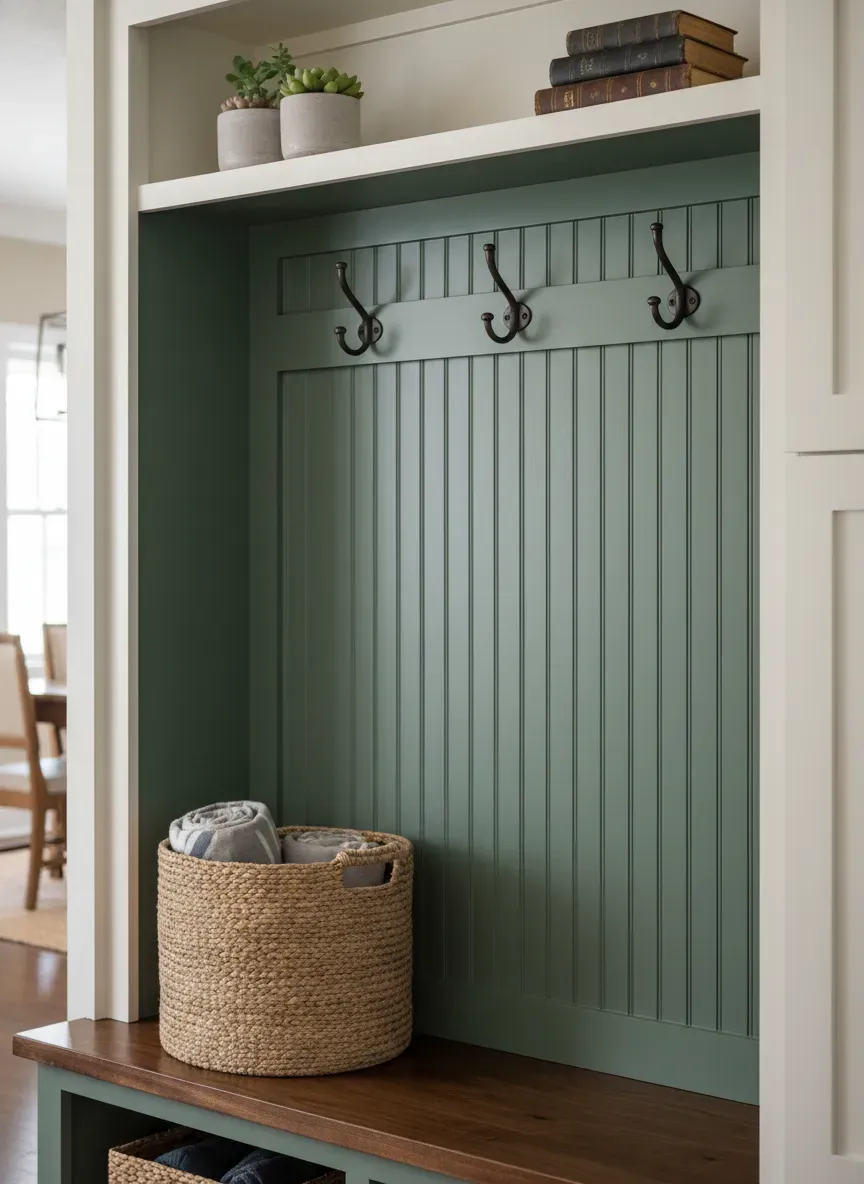
Trying to force a mass-produced hall tree into an irregular space usually results in wasted gaps that become magnets for dust bunnies and lost mittens. When dealing with complex geometry, you must abandon the catalog and look toward bespoke integration. Customizing your hallway coat storage allows you to exploit every square inch, turning awkward dead zones into highly engineered command centers.
Material Selection for Built-Ins
If you decide to craft a custom drop-zone, your choice of timber will dictate both the longevity and the visual weight of the piece.
Birch or maple plywood is structurally phenomenal for constructing cubbies and bench boxes, offering immense stability against warping. However, the edges must be meticulously banded or faced with solid wood. For the hook backboards—the element that takes the most abuse—I strongly suggest solid hardwoods like white oak, walnut, or ash. These dense woods can hold screw threads securely, meaning your heavy cast-iron hooks won’t eventually wobble loose after years of daily torque.
Softwoods like pine are cheap and accessible, but they dent incredibly easily. A heavy set of keys tossed against a pine backboard or a metal zipper swinging against the wood will quickly leave the surface looking battered and distressed. If that fits your rustic aesthetic, pine is fine; if you want a clean, modern finish that lasts decades, invest in hardwood.
The Bottom Line: A successful hallway coat storage system isn’t just about throwing hooks on drywall; it requires a calculated blend of spatial awareness, structural integrity, and aesthetic harmony.
Seasonal Rotation and Maintenance Routines
A hallway storage system is not a static installation; it is a living, breathing ecosystem that must pivot with the changing weather. The functional demands placed on your entryway in January are wildly different from those in July.
The Winter Heavyweight Strategy
During the deep freeze, your coat rack is doing maximum heavy lifting. This is the time to audit your hardware. Check every single hook for wobble. If a toggle bolt feels loose, tighten it immediately before the leverage strips the drywall out completely.
Winter also introduces moisture—snow, sleet, and muddy slush. If you have a wooden bench associated with your coat storage, you must treat the seating surface with a highly durable, water-resistant topcoat like a marine-grade spar urethane or a hard-wax oil. Standing water dripping off a wet parka will quickly penetrate untreated wood, causing the grain to swell and the finish to peel.
The Summer Lightweight Shift
When the weather breaks, a crucial psychological reset needs to happen at your front door. Do not let your heavy winter parkas languish on the primary hooks through August.
The summer shift involves stripping the heavy gear away, running it through the dry cleaner, and migrating it to secondary storage (under-bed bins or guest room closets). This frees up the high-value entryway real estate for lightweight windbreakers, sun hats, and canvas tote bags. By actively purging the out-of-season bulk, you maintain the frictionless, breezy entry experience that keeps your home feeling organized.
The Ultimate Customization Route
You can spend weeks scrolling through furniture catalogs trying to find the exact dimensions required to fit your specific entryway. You will likely compromise on the wood finish, settle for subpar hardware, or pay an extortionate markup for a brand name attached to particleboard. I’ve watched countless homeowners burn money on modular systems that just never look quite right because they aren’t actually scaled to the specific architecture of their home.
If you want a hallway coat storage system that looks like it was seamlessly built by a master finish carpenter when the house was originally constructed, you need to take control of the blueprints.
Here’s the truth: building a stunning, architectural-grade mudroom bench, a wall-to-wall shaker peg rail, or a custom wardrobe is not incredibly difficult if you have the exact, step-by-step schematics. You don’t need a decade of apprenticeship; you just need the right instructions.
If you are serious about finally solving your home’s entryway chaos with a piece of heirloom-quality woodworking that fits your space down to the millimeter, you need to check out Ted’s Woodworking. I’ve navigated a lot of design resources over the years, but nothing touches this archive. You get instant access to over 16,000 highly detailed, idiot-proof woodworking plans—including hundreds of specific blueprints for mudroom built-ins, hall trees, floating benches, and coat racks.
Right now, they are offering an incredible 75% discount on the entire database. Stop settling for wobbly, flat-pack furniture that ruins the first impression of your home. Grab the plans, buy some quality hardwood, and build a system that will outlast the house itself.