
Key and Mail Management: Small Entryway Storage Solutions for Daily Essentials
Discover expert strategies for organizing keys and mail in small entryways. Learn how to optimize compact spaces with functional decor and smart storage solutions.
Feb 1, 2026 - Written by: linda wise

The entryway is the transitional threshold between the chaotic outside world and the sanctuary of your home. However, for many living in urban apartments, townhouses, or smaller homes, this transition zone is often nonexistent or severely cramped. When space is at a premium, the accumulation of daily detritus—specifically keys, mail, sunglasses, and wallets—can quickly turn a welcoming entrance into a stress-inducing bottleneck.
Effective management of these daily essentials is not merely about tidiness; it is about cognitive load. When you know exactly where your keys are and where your bills have been filed, you reclaim mental energy that is otherwise wasted on searching and sorting. This comprehensive guide explores sophisticated, space-saving solutions for managing keys and mail in small entryways, blending high-end functionality with interior design principles.
The Psychology of the Drop Zone
Before purchasing hardware or installing shelves, it is vital to understand the behavior associated with entering the home. The “drop zone” is the immediate area where we shed the layers of the outdoors. In large homes, this might be a dedicated mudroom. In a small entryway, it might be a span of wall no wider than twenty inches.
The failure of most organization systems stems from working against human nature rather than with it. If a mail sorting system requires three steps to access, mail will end up on the nearest flat surface. If key hooks are hidden behind a cabinet door, keys will be tossed onto a table. The solutions proposed here adhere to the principle of “frictionless entry,” ensuring that the easiest action to take is the organized one.
Assessing Your Specific Inventory
To curate the correct solution, you must first audit what actually enters your home.
- The Key Cluster: Do you carry a bulky set of keys, a single fob, or a heavy carabiner? The weight and size dictate the hardware required.
- The Mail Volume: Do you receive magazines and catalogs daily, or mostly letter-sized envelopes?
- Peripheral Essentials: Do you also drop a wallet, work badge, headphones, or sunglasses immediately upon entry?
By quantifying these items, you move from abstract organization to a tailored strategy.
Vertical Velocity: Wall-Mounted Solutions
In small entryways, floor space is the most valuable currency. Therefore, the most efficient storage solutions are almost always vertical. Wall-mounted organizers keep the floor clear, creating an illusion of space while keeping essentials at eye level.
The Integrated Shelf and Hook System
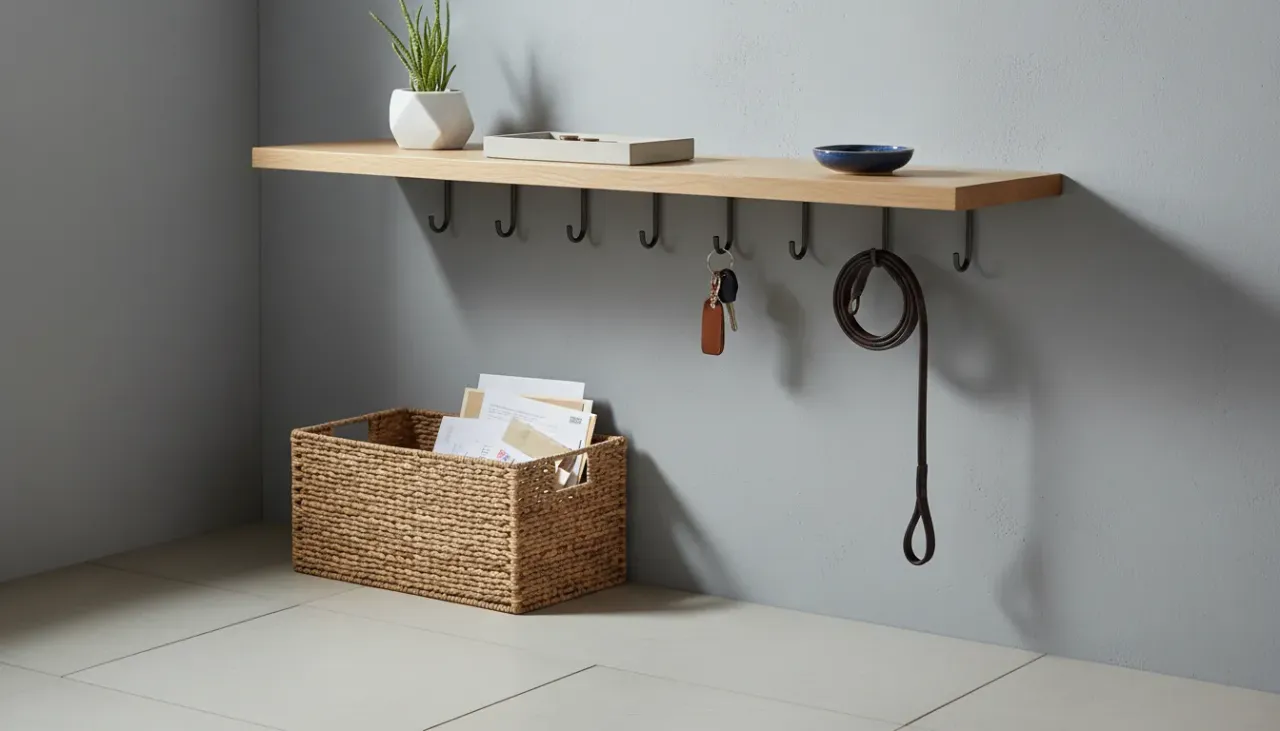
The most versatile solution for a compact entry is a multi-functional wall unit that combines a narrow shelf with under-mount hooks. This design creates a designated surface for items that do not hang (sunglasses, wallets) while providing immediate storage for keys.
When selecting a unit, prioritize depth. A shelf that protrudes too far into a narrow hallway can make the space feel claustrophobic. Look for depths between three and five inches—just enough to hold a letter or a pair of glasses without impeding traffic flow.
For those seeking a comprehensive solution that handles both sorting and hanging, we recommend looking for organizers that feature dedicated pockets.
Buy Wall Mounted Mail Organizer on Amazon
Magnetic Organization Strips
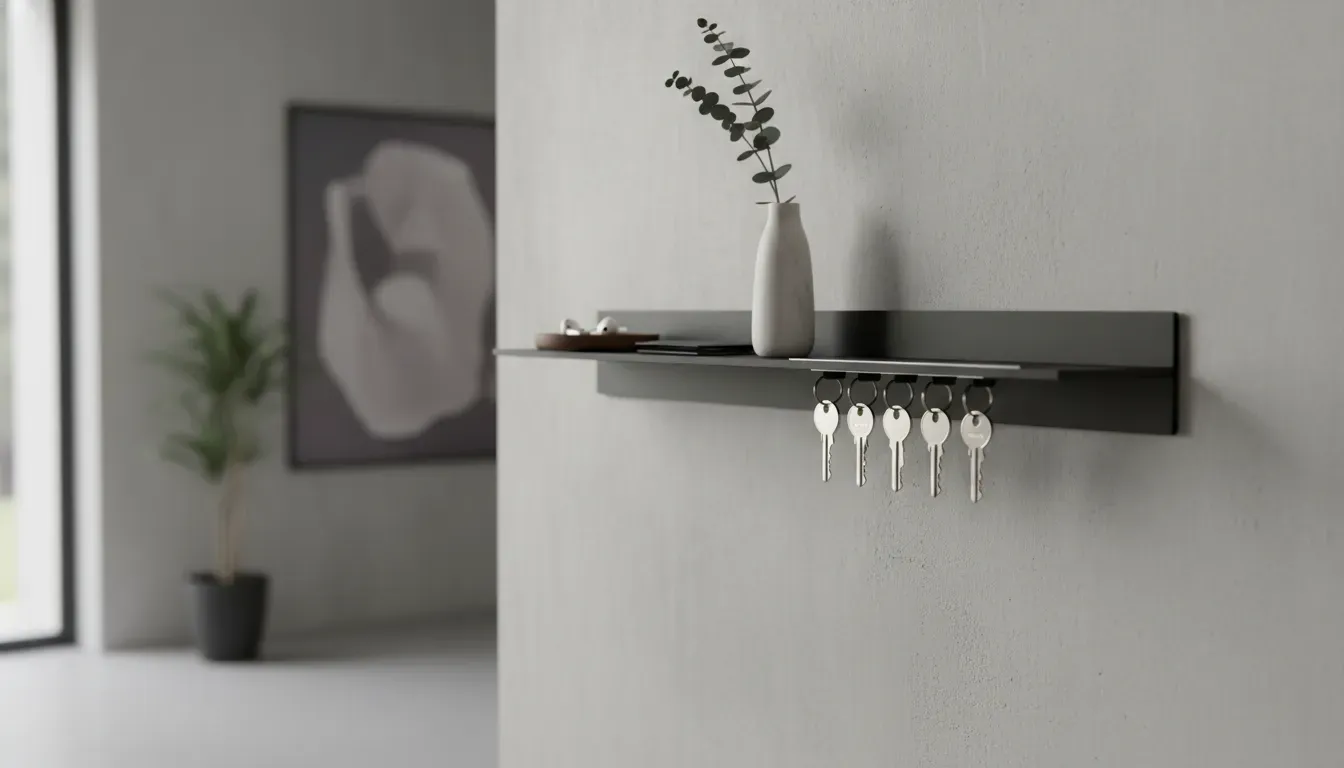
For the ultra-minimalist, magnetic strips offer a sleek alternative to traditional hooks. Often used in kitchens for knives, high-strength magnetic bars can be repurposed in the entryway. By attaching a small ferrous ring to your key fob, keys can seemingly float against the wall. This eliminates the visual clutter of hooks and allows for infinite adjustability.
This method is particularly effective in modern or industrial-style apartments. It forces a certain discipline, as the strip cannot hold heavy junk mail, thereby separating the key storage from the paper management completely.
Vertical Mail Pockets
The horizontal stack is the enemy of organization. When mail is stacked flat, the bottom items are forgotten. Vertical wall pockets allow you to file mail immediately upon entry.
In a small space, consider a tiered vertical file made of metal mesh, wood, or structured fabric. Assign categories to the tiers:
- Action Required: Bills, invitations, forms.
- To File: Bank statements, medical records.
- Outgoing: Letters to be mailed, returns.
By sorting immediately, you prevent the “mail mountain” from forming on your dining table later.
Furniture for Tight Spaces: The Slim Console
If your entryway allows for even a minimal footprint, a slim console table can anchor the space. The key is to find furniture with a profile depth of 8 to 10 inches.
The Floating Console
A floating console table provides the surface area of a table without the visual weight of legs. Mounted directly to the wall, it keeps the floor visible, which tricks the eye into perceiving the room as larger.
Use the surface of the floating console for a designated “in-box” tray for mail and a small decorative bowl for keys. The drawer of a floating console is invaluable for hiding items that are necessary but unsightly, such as dog waste bags, spare change, or lint rollers.
The Shoe Cabinet Hack
A popular trend in small space design is repurposing slim shoe cabinets as entryway consoles. These cabinets tilt out and are incredibly shallow, often protruding less than 10 inches from the wall. While designed for shoes, the top surface is perfect for mail and key management, and the tilting compartments can be repurposed to hold umbrellas, reusable shopping bags, or even sorted mail bins.
For more ideas on maximizing furniture in tight areas, read our guide on innovative furniture hacks.
Taming the Paper Tiger: Advanced Mail Management
Keys are static objects; they do not multiply. Mail, however, is a dynamic and relentless stream. Managing it in a small entryway requires a rigorous system.
The Recycling Gateway
The most effective way to manage mail in a small entryway is to prevent 80% of it from ever entering the main living space. This requires a waste or recycling receptacle in the entryway.
In a small space, a large trash can is impractical. Instead, look for:
- Slim-profile bins: Rectangular bins that fit flush against a wall.
- Basket hybrids: A woven basket that matches your decor but serves as a paper recycling collection point.
The habit to cultivate is “sort and purge.” As you walk through the door, immediately discard junk mail, flyers, and catalogs into the recycling bin. Only genuine correspondence should make it to your permanent storage solution.
The “Active” Tray
For the mail that survives the initial purge, avoid the “doom pile.” Use a shallow tray or a letter holder with dividers. The physical limitation of the container is crucial. If the tray is deep, you will accumulate months of paper. If the tray is shallow, you are forced to process the contents weekly to prevent overflow.
Aesthetic Integration: Materiality and Decor
Storage solutions in small spaces cannot be purely utilitarian because they are always visible. They must contribute to the overall aesthetic of the home.
Wood and Warmth
In sterile apartment hallways, using wood elements for your key and mail station adds necessary warmth. Walnut or oak organizers introduce natural texture. If you have wood floors, try to match the tone of your wall organizer to the floor to create a cohesive look.
Acrylic and Glass
For dark or particularly cramped entryways, transparent materials like acrylic or glass are excellent choices. A clear acrylic mail bin or floating shelf has zero visual weight—it serves its function without “taking up space” to the eye. This preserves the open feel of the entry.
The Mirror Strategy
Incorporating a mirror into your key and mail station serves a dual purpose. Ideally, it allows for a final check before leaving the house. Spatially, mirrors bounce light and reflect the room, effectively doubling the perceived size of a small entryway.
Look for organizers that feature a small mirror alongside hooks and shelves, or position your storage solution directly below a large, statement mirror.

Renter-Friendly Solutions
Many people dealing with small entryways are renters who cannot drill into walls or install heavy floating furniture. Fortunately, the market for damage-free organization has matured significantly.
Adhesive Heavy-Duty Hooks
Modern adhesive technology can hold significant weight. Brushed metal adhesive hooks can mimic the look of permanent hardware. Arrange them in a deliberate row—precision is what separates a “temporary fix” look from a “design choice.” Use a level to ensure perfect alignment.
Over-the-Door Organizers
If your entryway opens directly into a living room but has a coat closet nearby, utilize the back of the closet door. Over-the-door racks with baskets and hooks can hold keys and mail entirely out of sight. While this hides the clutter, it does require the discipline to open the closet immediately upon entering.
For renters looking for versatile, non-permanent options, magnetic key holders that attach to the metal door itself (if applicable) or high-quality adhesive shelves are ideal.
Buy Adhesive Entryway Shelf on Amazon
Lighting the Way
One often overlooked aspect of entryway storage is lighting. In a small corner, shadows can make clutter look worse.
Wireless Motion Sensor Lights
Install a small, rechargeable motion sensor light under your wall-mounted shelf or inside the cubby of your console. This illuminates your keys and mail when you reach for them, adding a touch of luxury and functionality. It ensures you aren’t fumbling in the dark and highlights the organized nature of the space.
Table Lamps
If using a slim console, a small, vertical table lamp adds height and ambiance. The pool of light defines the “drop zone” as a specific area of importance, subconsciously encouraging you to keep it tidy.
The Digital Integration: Smart Keys and Tech
As we move toward a more digital existence, the physical bulk of keys is changing. Smart locks and keyless entry systems are reducing the need for massive keychains, but they introduce new storage needs, such as fobs and backup keys.
The Charging Station Hybrid
Many modern entryway organizers now include integrated cable management or wireless charging pads. Creating a dedicated spot to drop and charge your phone alongside your keys ensures that all your “leaving the house” essentials are in one location.
For those who frequently misplace items, incorporating a designated spot for Bluetooth trackers (like AirTags or Tile) within your key bowl or organizer is a proactive measure.
Buy Key Organizer with Tray on Amazon
Maintaining the System: Habits Over Hardware
Even the most expensive custom joinery will fail without the accompanying behavioral habits. Small spaces are unforgiving; a single week of neglect can render the entryway unusable.
The One-Touch Rule
Strive to touch each item only once when entering.
- Enter door.
- Keys go immediately onto the hook (not the pocket, not the table).
- Mail is sorted immediately over the recycling bin.
- Keep mail goes immediately into the vertical file.
The Weekly Reset
Designate a specific time—perhaps Sunday evening—to clear the vertical file. Pay the bills, file the documents, and recycle what is no longer needed. This ensures the limited storage capacity of a small entryway never hits critical mass.
Seasonal Rotation
In a small entryway, you cannot store everything year-round. Your “active” hooks should only hold the keys you currently use. Spare keys, shed keys, or seasonal vehicle keys should be archived in deep storage elsewhere in the home, leaving the prime real estate of the entryway for daily essentials only.
Creative DIY Solutions
For those with a creative flair, customizing your entryway storage allows for perfect dimensional fit.
The Shadow Box Conversion
Deep shadow box frames can be converted into cabinet-style key holders. By adding hinges to the front glass (backed with a photo or artwork) and installing small cup hooks inside the frame, you create hidden storage that looks like wall art.
The Vintage Type Letterpress Drawer
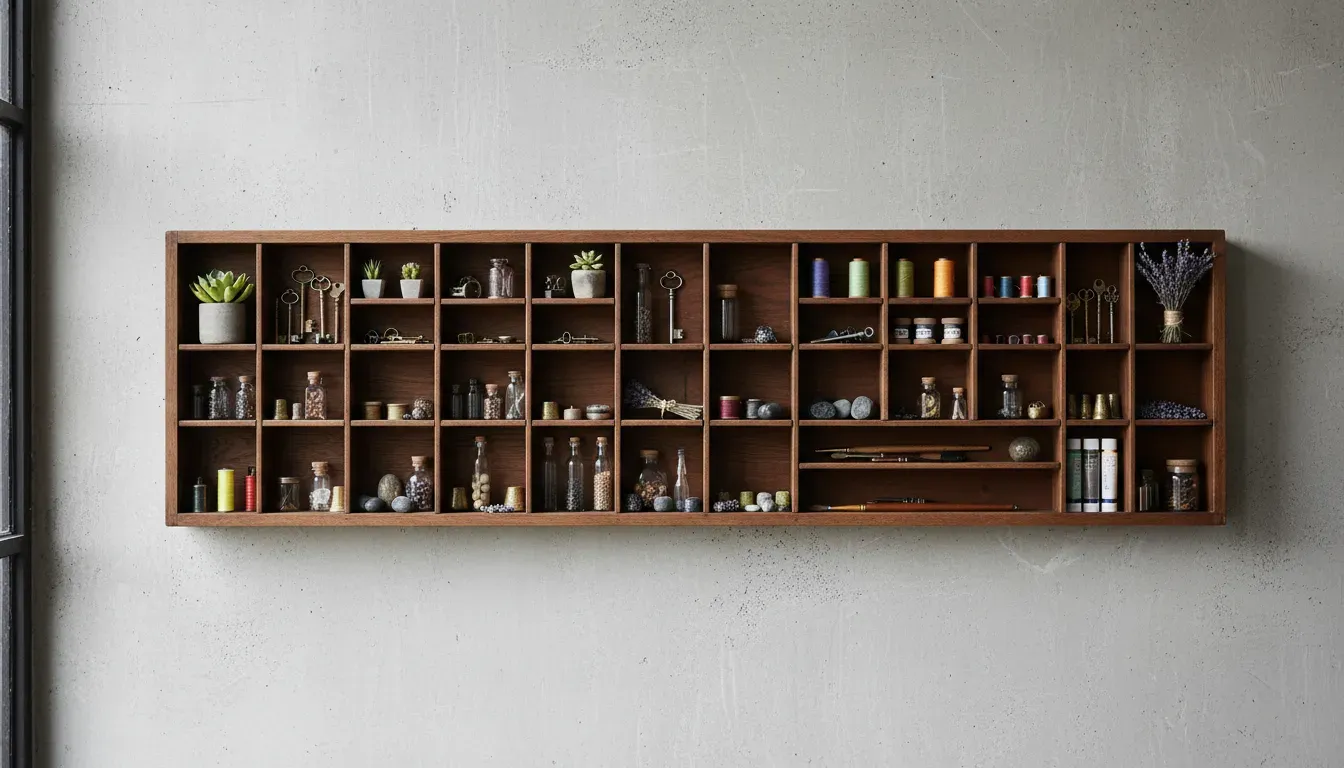
Vintage printers’ trays (letterpress drawers) are shallow, compartmentalized wooden trays that are perfect for wall mounting. The tiny compartments are ideal for separating keys, coins, and individual letters, turning your storage into a conversation piece.
Conclusion
Managing keys and mail in a small entryway is a microcosm of home organization as a whole. It requires a blend of honest inventory assessment, smart utilization of vertical space, and the cultivation of disciplined habits. By choosing the right tools—whether it be a sleek magnetic strip, a multi-functional wall shelf, or a slim console table—you transform a chaotic dumping ground into a streamlined launchpad for your day.
A well-organized entryway does more than just hold your keys; it sets the tone for your entire home. It whispers of order and calm the moment you walk through the door, proving that even the smallest spaces, when managed with intention, can offer immense functional and aesthetic value.
For more insights on organizing compact living spaces, explore our article on maximizing vertical storage.