
Mail and Paper Clutter Solved: Entryway Organizers with Integrated Letter Racks
Discover how to eliminate paper chaos with entryway organizers featuring integrated letter racks. A comprehensive guide to selection, installation, and usage.
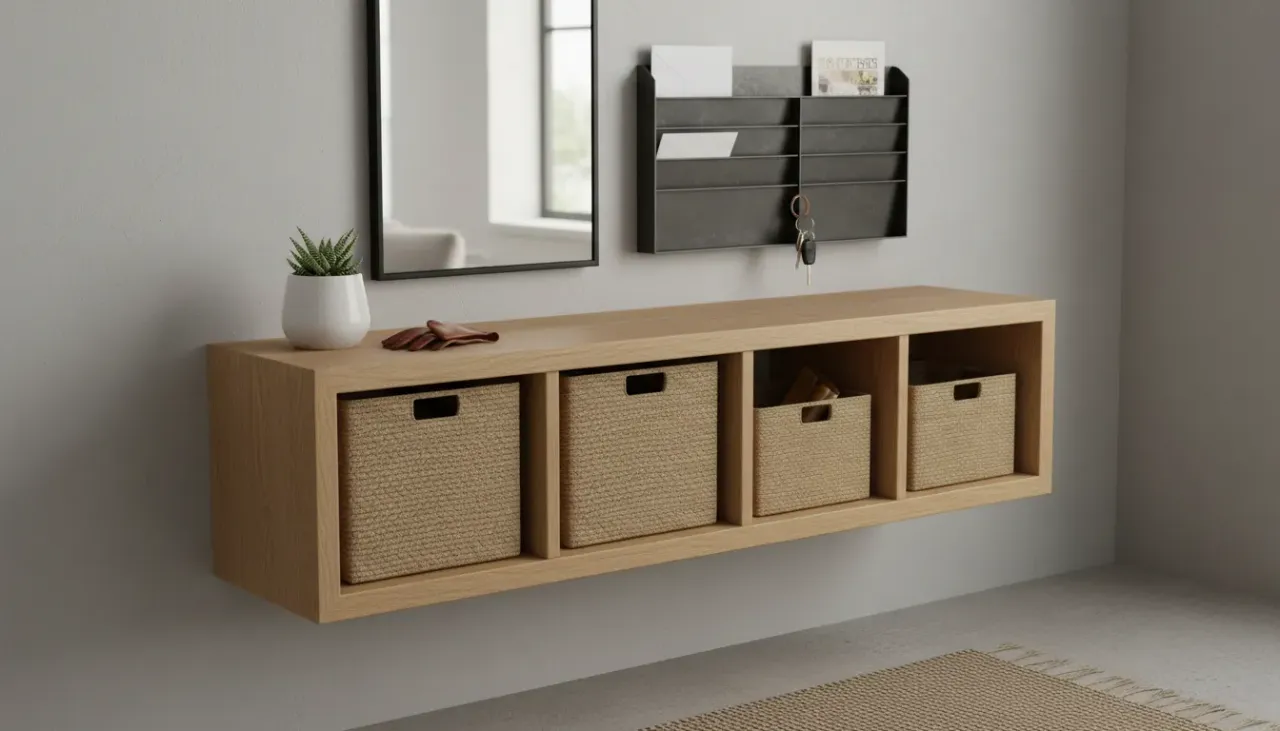
Feb 5, 2026 - Written by: linda wise

The entryway is the handshake of the home. It is the first space that greets you upon arrival and the last space you see before departing. Yet, for many households, this critical transitional zone acts less like a welcoming embrace and more like a chaotic catching ground. Among the shoes, coats, and umbrellas, one specific type of clutter is particularly insidious: paper.
Mail, school permission slips, flyers, and bills have a tendency to migrate from the mailbox to the nearest flat surface, where they rapidly multiply. This phenomenon, often referred to as “flat surface syndrome,” results in unsightly piles that induce low-level anxiety every time you walk through the door. The solution is not merely to clean more often, but to implement a system that intercepts paper clutter before it enters the main living areas. Enter the entryway organizer with an integrated letter rack.
This architectural hardware is more than a decorative accent; it is a functional command center designed to triage the influx of daily life. By combining the utility of coat hooks and shelving with the specific organizational capacity of mail slots, these units provide a designated home for the items that otherwise clutter kitchen counters and dining tables. This guide explores the strategic selection, installation, and utilization of these organizers to permanently solve the paper clutter dilemma.
The Psychology of the Drop Zone
To understand why paper clutter accumulates, one must understand the psychology of the “drop zone.” When we enter our homes, we are usually in a state of transition. We are shifting from the public self to the private self, often carrying groceries, bags, and mental fatigue. In this moment, the brain seeks the path of least resistance. If there is no specific, accessible place to put a handful of envelopes, they are placed on the nearest horizontal plane.
Once a single piece of mail lands on a table, it signals to the brain that this surface is an acceptable storage location for paper. A pile forms shortly thereafter. The entryway organizer interrupts this pattern by utilizing vertical space.
Vertical storage forces a different interaction. Placing a letter into a slot is as effortless as dropping it on a table, but it categorizes the item as “stored” rather than “discarded.” Furthermore, by keeping papers upright and visible, integrated letter racks prevent the “out of sight, out of mind” issue that occurs when documents are buried at the bottom of a stack.
Anatomy of a High-Performance Entryway Organizer
Not all organizers are created equal. When selecting a unit specifically to combat paper clutter, the design of the letter rack is the primary variable. A standard shelf may hold mail, but it does not organize it. The most effective units share several anatomical features designed for efficiency.
Segregated Slots vs. Open Bins
An open bin or basket attached to a wall organizer is better than nothing, but it often becomes a “doom box” where mail goes to die. The superior choice is a unit with segregated slots or tiers. This allows for immediate triage. One slot can be designated for “Inbound” (bills, personal letters), another for “Outbound” (letters to be mailed, forms to return), and perhaps a third for specific family members.
Depth and Visibility
The depth of the rack is critical. If the pocket is too deep, smaller envelopes disappear, leading to missed payments or lost invitations. If it is too shallow, heavy magazines or large manila envelopes will flop over, recreating the visual clutter you are trying to eliminate. Ideally, the front rail of the rack should be transparent (wire mesh or slats) or cut low enough to allow the contents to be identified at a glance.
Integration with Other Elements
A standalone mail sorter is useful, but an integrated system maximizes space efficiency. The ideal unit combines the letter rack with key hooks and a small shelf for sunglasses or wallets. This creates a centralized hub. When you pick up your keys, you see the outbound mail. This proximity reinforces the habit loop required to keep the system working.
Wall-Mounted Systems: Maximizing Vertical Space
For most homes, particularly those with limited square footage, wall-mounted organizers are the gold standard. They reclaim unused vertical real estate and keep floor space clear for shoes and benches.
Compact Solutions for Urban Living
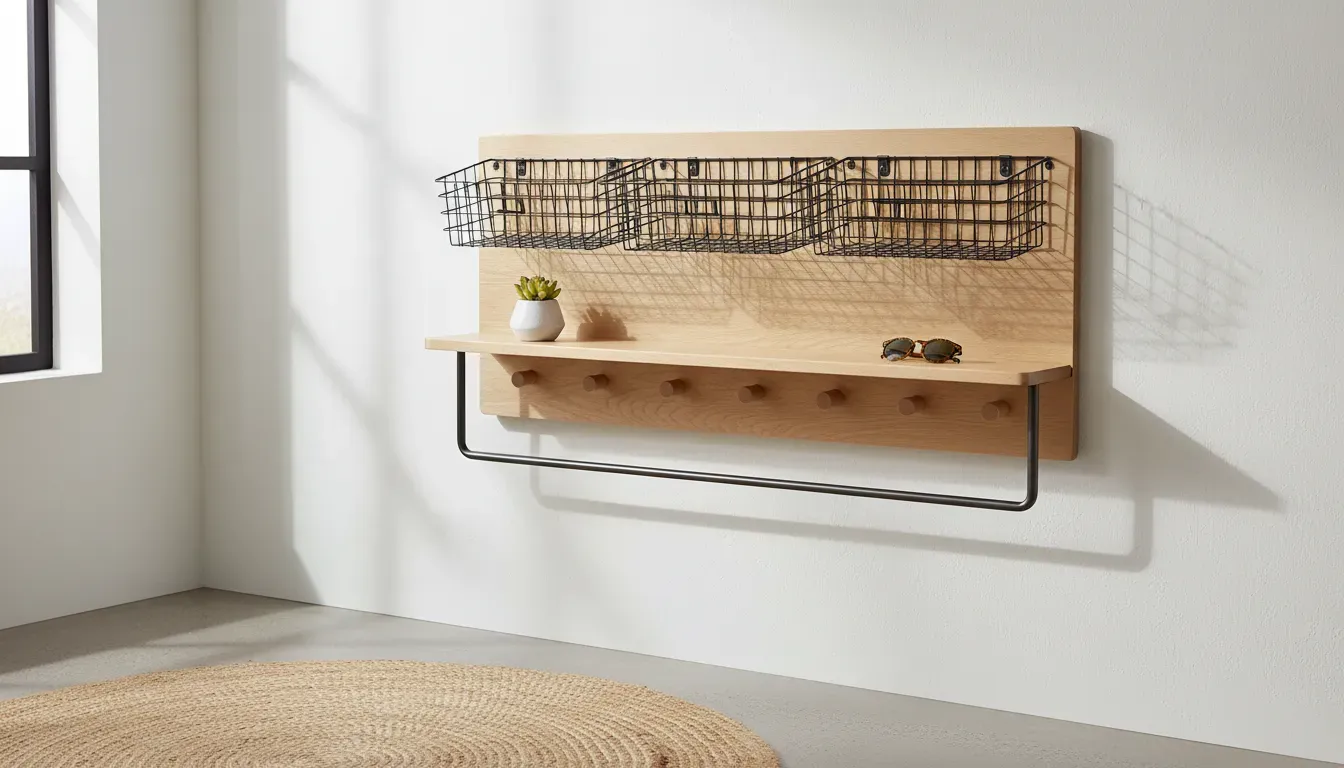
In apartments or homes where the front door opens directly into the living room, a bulky hall tree is not an option. Here, a sleek, wall-mounted organizer acts as a floating console. Look for designs that utilize verticality over width—tiered pockets stacked on top of one another rather than side-by-side.
For those seeking a balance of rustic charm and high utility, wood-based organizers with metal accents often provide the necessary durability.
Find Rustic Wood Mail Organizers with Key Hooks on Amazon
Heavy-Duty Organizers for Family Households
A single mail slot is rarely sufficient for a family of four. In busier households, the volume of paper requires a more robust solution. Wide, wall-mounted units that span 24 to 36 inches often provide three or more distinct mail compartments. This allows for a dedicated slot for each adult, plus a communal slot for shared bills or magazines.
When installing these larger units, structural integrity is paramount. These organizers will eventually hold not just mail, but heavy winter coats, backpacks, and potentially purses. Mounting them directly into wall studs is non-negotiable to prevent drywall damage.
Freestanding Console Options and Desktop Sorters
While wall-mounted units are space-efficient, some entryways benefit from the grounding presence of furniture. If you have a console table or a shoe storage bench, adding a freestanding organizer with an integrated letter rack can be equally effective.
The Furniture Approach
A console table provides a landing strip for items that are too heavy or bulky for a wall rack. However, the surface of a console table is prime territory for clutter accumulation. To combat this, place a dedicated desktop mail sorter on the surface.
This approach offers flexibility. You can rearrange the setup as needed, and it requires no drilling—ideal for renters. High-end desktop sorters often feature drawer components for stamps, pens, and checkbooks, creating a mini-administrative station right at the door.
Shop Desktop Wooden Mail Sorters on Amazon
Material Matters: Matching Style with Durability
Your entryway sets the tone for the rest of the home. The material of your organizer should harmonize with your existing decor while being durable enough to withstand daily abuse.
Industrial Metal: Metal organizers, particularly those made of wire mesh or galvanized steel, offer high visibility and extreme durability. They are impervious to moisture (wet umbrellas or rain-splattered mail) and fit well in modern, industrial, or loft-style spaces.
Solid Hardwood: Oak, walnut, and maple organizers bring warmth and texture. They are sturdy and age well. However, ensure the wood is sealed properly, as raw wood can absorb oils from hands or moisture from damp coats.
Acrylic and Lucite: For contemporary spaces or dark entryways, clear acrylic organizers are an excellent choice. They minimize visual bulk, making the space feel larger, and offer 100% visibility of the contents, ensuring no letter is ever forgotten.
The Sorting System: How to Use Your Rack Effectively
Owning the hardware is only half the battle. To truly solve the paper clutter problem, you must install the “software”—the habits and systems that dictate how the organizer is used. Without a system, your beautiful new letter rack will simply become a vertical junk drawer.
The “Touch It Once” Philosophy
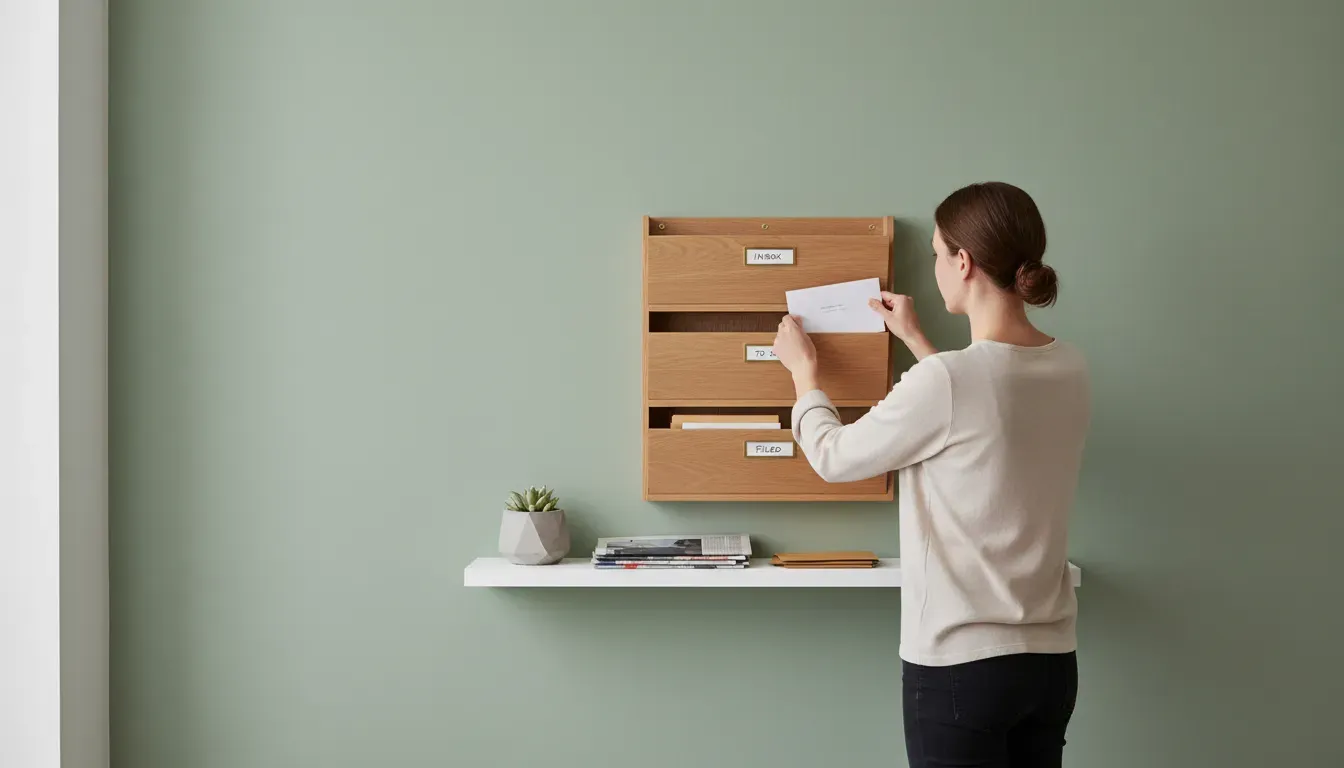
The most efficient way to manage paper is to touch it as few times as possible. When you walk in the door with mail in hand, approach the organizer immediately. Do not put the mail down on a table while you take off your shoes.
- Trash/Recycle: Junk mail, flyers, and solicitations should never touch the rack. Ideally, you should have a small wastebasket near the entryway. If not, these items should be carried directly to the recycling bin.
- Action Items: Bills, invitations, and forms requiring signatures go into the “Action” slot of your rack.
- Archive/Read: Magazines, catalogs, and non-urgent letters go into a “Read Later” slot or are moved to a designated spot in the living room or office.
Categorization Strategies
Labeling your slots can significantly improve compliance from family members.
- By Person: “Mom,” “Dad,” “Kids.” This is effective for preventing crucial documents from being buried under someone else’s catalogs.
- By Urgency: “Urgent/Bills,” “To File,” “Outgoing.” This focuses on the workflow of the household.
- By Function: “School,” “Finance,” “Personal.”
Weekly Resets
No system is self-cleaning. Set a recurring time—perhaps Sunday evening—to clear the rack. Pay the bills in the “Action” slot, recycle the catalogs in the “Read Later” slot that were never read, and file the documents that need to be kept. If the rack is overflowing, the system has failed. The rack is a temporary holding station, not a permanent archive.
Installation and Placement Guide
The placement of your organizer dictates its usability. If it is mounted too high, shorter family members will not use it. If it is tucked behind a door, it will be ignored.
Determining the Optimal Height
For a standard wall-mounted unit, the key hooks should be at a comfortable reaching height, typically around 60 to 66 inches from the floor for adults. This places the letter rack portion at eye level (roughly 68 to 72 inches). This ensures that the papers are directly in your line of sight, serving as a visual reminder.
If the organizer is intended for children to use (for school papers), consider mounting a secondary, lower unit or choosing a vertical design that spans a greater height.
Structural Security
As previously mentioned, integrated organizers carry weight. Never rely solely on the drywall anchors provided in the packaging if you plan to hang coats or bags. Use a stud finder to locate the wooden framing members behind the wall. If the studs do not align with your desired placement, invest in high-quality toggle bolts or heavy-duty screw-in anchors rated for at least 50 pounds.
Feng Shui and Flow
In design terms, the entryway should facilitate the flow of energy (Chi) into the home. Clutter blocks this flow. By lifting the mail off the surfaces, you open up the energy of the room. Ensure the organizer does not protrude so far that it impedes the walkway or prevents the door from opening fully.
Explore Modern Metal Wall Mount Entryway Organizers on Amazon
Beyond the Mail: Multifunctional Uses
While the primary purpose of an integrated letter rack is to manage paper, these versatile units can solve other organizational headaches.
The “Outbox” Concept: The letter rack is the perfect place for items that need to leave the house. This includes Netflix returns (if you still use them), outgoing mail, or permission slips. By placing them in the rack, they are physically associated with your keys, making it nearly impossible to leave without them.
Tech Management: Some modern organizers feature slots designed to hold tablets or phones, often with integrated cable management holes. This transforms the entryway organizer into a charging station, ensuring devices are charged and easy to grab on the way out.
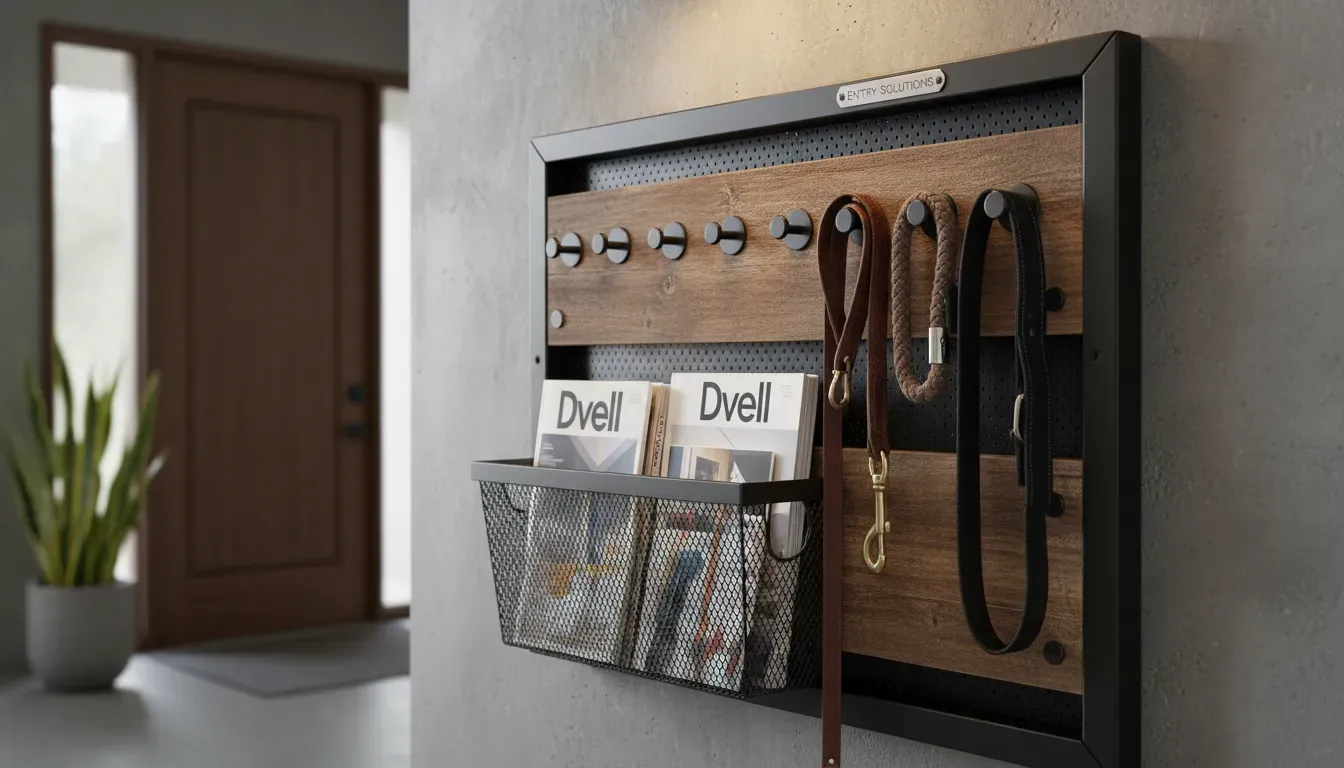
Pet Command Center: For pet owners, a dedicated slot can hold vaccination records, grooming appointments, and dog park passes, while the hooks manage leashes and harnesses. This keeps all pet-related items central and accessible.
Troubleshooting Common Issues
Even the best systems encounter friction. Here are solutions to common problems associated with entryway organizers.
The “Overflow” Problem
If your letter rack is constantly overflowing, it is a symptom of one of two things: either the volume of incoming mail is too high, or the processing habit is too slow.
- Solution: Reduce the inflow. Unsubscribe from catalogs and switch to paperless billing. This attacks the root of the problem.
The “Lost Keys” Syndrome
If keys are still ending up on the counter despite having hooks, the hooks may be difficult to use (too small or crowded) or the organizer is placed too far from the door.
- Solution: Ensure the path from the door to the organizer is unobstructed. If the hooks are crowded by coats, separate the functions. Use the organizer strictly for mail and keys, and install a separate heavy-duty coat rack elsewhere.
Visual Cohesion and Decor Integration
An entryway organizer is a highly visible element of your home’s interior design. It should not look like utility hardware bolted to a wall; it should feel like a curated piece of decor.
If you have a farmhouse-style home, look for organizers that utilize distressed wood, chicken wire, and chalkboard labels. For a mid-century modern aesthetic, look for clean lines, walnut finishes, and brass hardware. If your home is minimalist, a simple white or matte black metal folder holder may be all that is required.
Consider styling the area around the organizer. A small mirror mounted next to it allows for a final appearance check. A potted plant on a nearby shelf adds life. These touches integrate the organizer into the room, making it feel intentional rather than purely utilitarian.
Conclusion
The battle against clutter is won or lost at the threshold. By installing an entryway organizer with an integrated letter rack, you are establishing a defensive line against the encroachment of paper chaos. You are reclaiming your kitchen counters, your dining tables, and your peace of mind.
Remember that the product is only the tool; the discipline to sort, file, and discard is the true solution. However, with the right hardware—beautiful, durable, and perfectly placed—that discipline becomes infinitely easier to maintain. Transform your entryway from a drop zone into a command center, and experience the subtle but profound relief of a home where everything has a place.