
Maximize Your Small Space: The Best Slim Entryway Storage Cabinets for a Clutter-Free Hallway
Discover how to transform a chaotic, narrow hallway into a streamlined, functional drop zone using the best slim entryway storage cabinets.
Mar 30, 2026 - Written by: Linda Wise

The front door swings open, and you’re instantly confronted by the chaotic reality of daily life. A rogue sneaker trips you up. A tangled dog leash catches on the doorknob. Yesterday’s mail sits in a precarious pile on a dining chair dragged into the hall for lack of a better option. Sound familiar?
I’ve spent years consulting on interior layouts for urban apartments and historic homes where the “foyer” is nothing more than a three-foot-wide corridor. The spatial reality of narrow hallways leaves zero room for error. You can’t just drop a massive credenza against the wall and call it a day. You need architectural camouflage. You need high-efficiency storage. You need a piece of furniture that performs a magic trick: hiding a dozen pairs of shoes while protruding less than ten inches from the baseboard.
Finding the exact right piece requires navigating a minefield of poorly constructed particleboard and wildly inaccurate dimensional claims. I’ve personally sourced, built, and customized dozens of these units. Today, I’m pulling back the curtain on exactly how to engineer a flawless, highly functional entrance using the best slim entryway storage cabinets on the market.
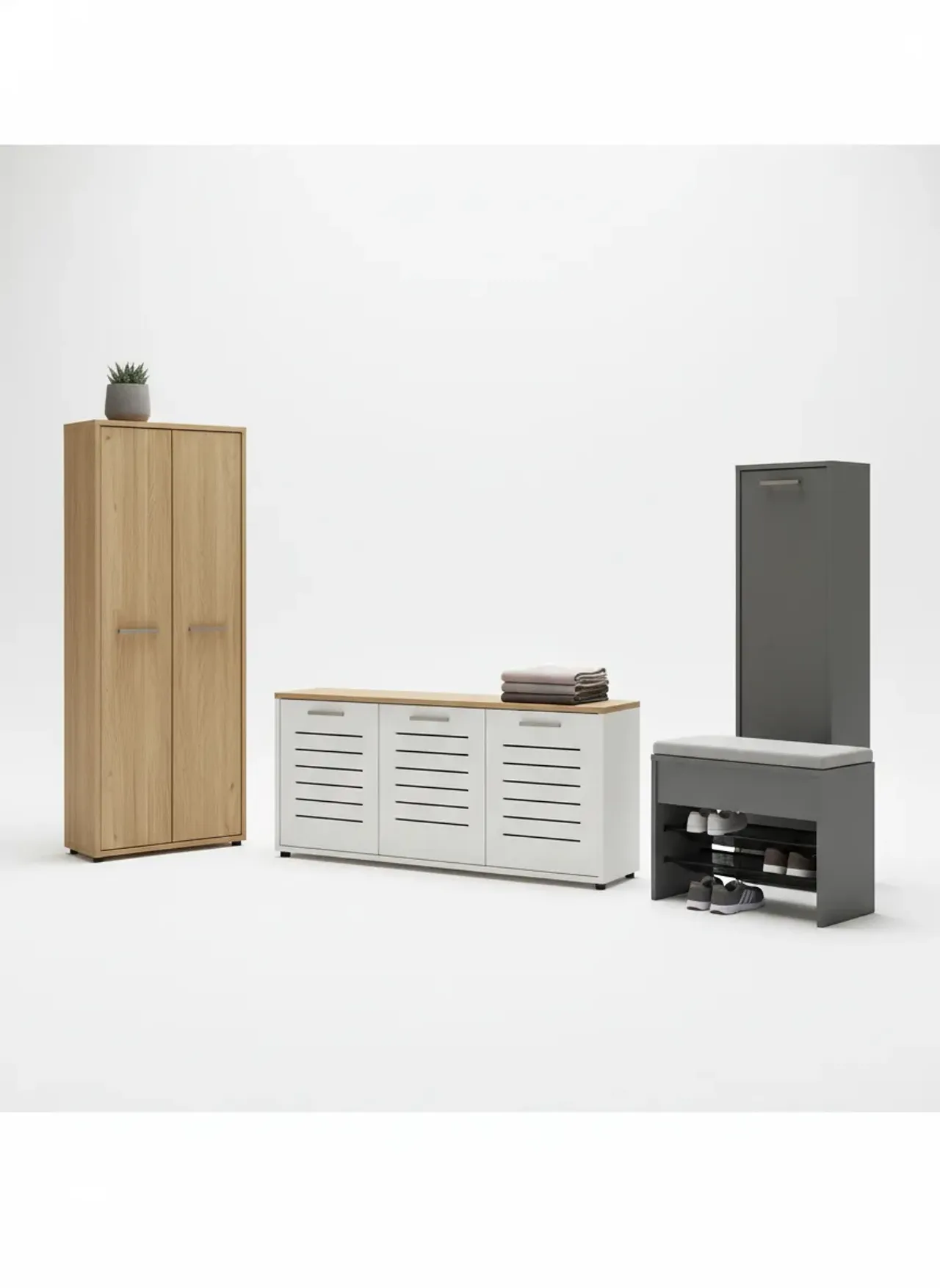
Quick Comparison: Top Picks
Before we get into the granular spatial mathematics of hallway design, here is a rapid-fire look at the top-performing narrow cabinets I consistently recommend to clients.
The Psychology of the Threshold
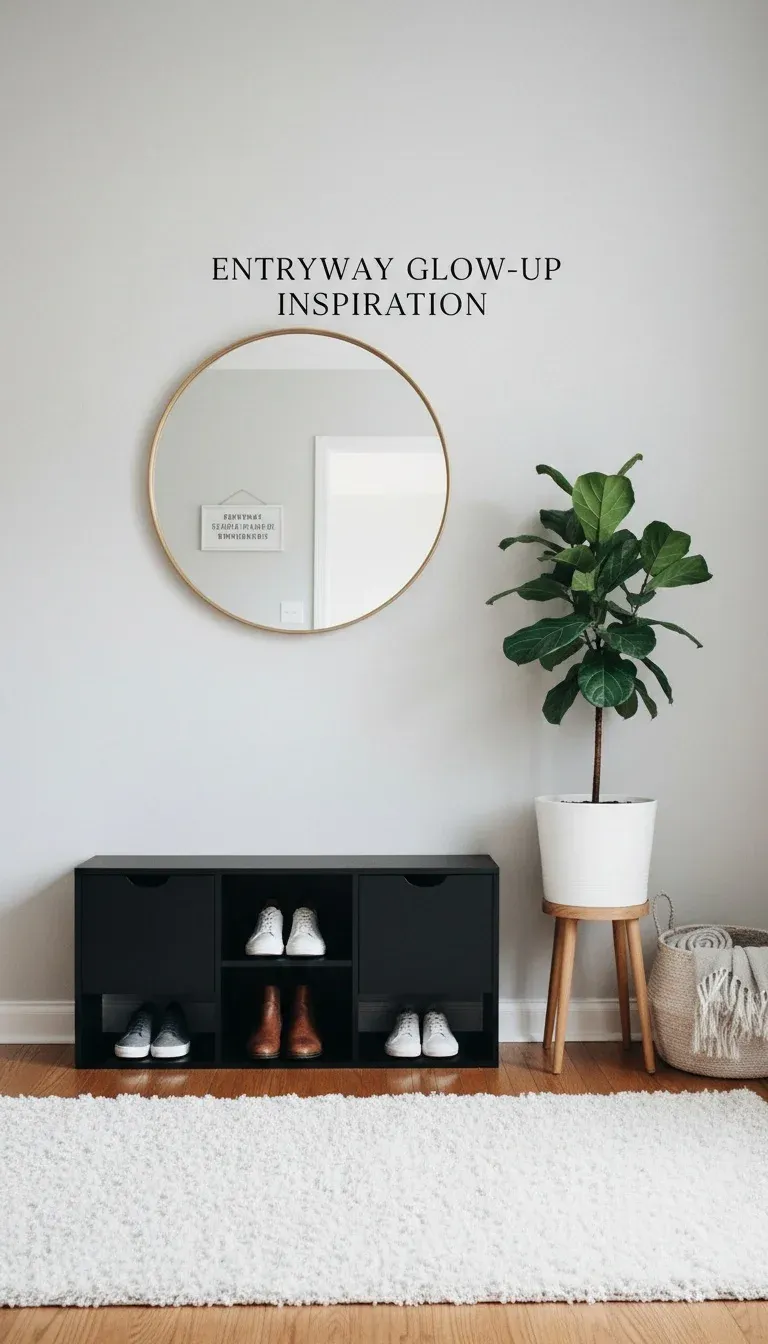
To truly master your entryway, you have to understand its psychological weight. Architects refer to this space as the “threshold.” It is the physical and mental transition point between the kinetic energy of the outside world and the sanctuary of your home.
When your threshold is cluttered, that visual noise follows you inside. It elevates cortisol. It sets a baseline of stress before you’ve even taken off your coat. A slim shoe cabinet isn’t just a place to shove your running sneakers; it is a tool for spatial equilibrium. By concealing the mess, you are actively protecting the mental peace of your living space.
The “Drop Zone” Imperative
Every home has a natural drop zone. If you don’t engineer one intentionally, human nature will create one organically—usually on your kitchen island or the nearest armchair. To intercept this behavior, your entryway cabinet must serve as a frictionless proxy. It needs to be easier to use the cabinet than it is to dump things on the floor.
Pro Tip: Never fight human nature in interior design. If you naturally drop your mail the second you walk in, put a leather catchall tray exactly where your hand wants to go. The furniture should adapt to your habits, not the other way around.
The Geometry of Narrow Corridors
Let’s talk dimensions. The standard residential hallway in North America is 36 inches wide. If you live in a pre-war apartment or a converted rowhouse, you might be dealing with a mere 32 inches.
To maintain comfortable passage, you need an absolute minimum of 24 inches of clear walking space. Do the math. If your hallway is 36 inches wide, your furniture cannot exceed 12 inches in depth. Ideally, you want to aim for a depth of 7 to 10 inches to avoid feeling like you have to turn sideways to walk to the kitchen.
This is where standard furniture fails. A typical entryway console table is 14 to 18 inches deep. Traditional dressers push 20 inches. For a tight corridor, these are absolute dealbreakers.
Measuring Like a Professional
Before you order anything, grab a laser tape measure. You need to account for three hidden dimensional thieves:
- Baseboards: If you have historic, chunky 6-inch baseboards, a cabinet that sits flush against the wall in photos will actually hover an inch away from the drywall in your home. You’ll need a cabinet with a baseboard cutout, or you’ll have to utilize heavy duty drywall anchors to float it.
- Door Swings: Does your front door open inward? Mark the exact arc of the swing on the floor using painter’s tape. Your cabinet must clear this arc completely.
- Radiators and Vents: Never block return air grilles. If you must place a cabinet near a baseboard heater, look for an open-bottom metal mesh entryway rack to allow heat to escape.
Defining the “Slim” Cabinet: Mechanisms That Work
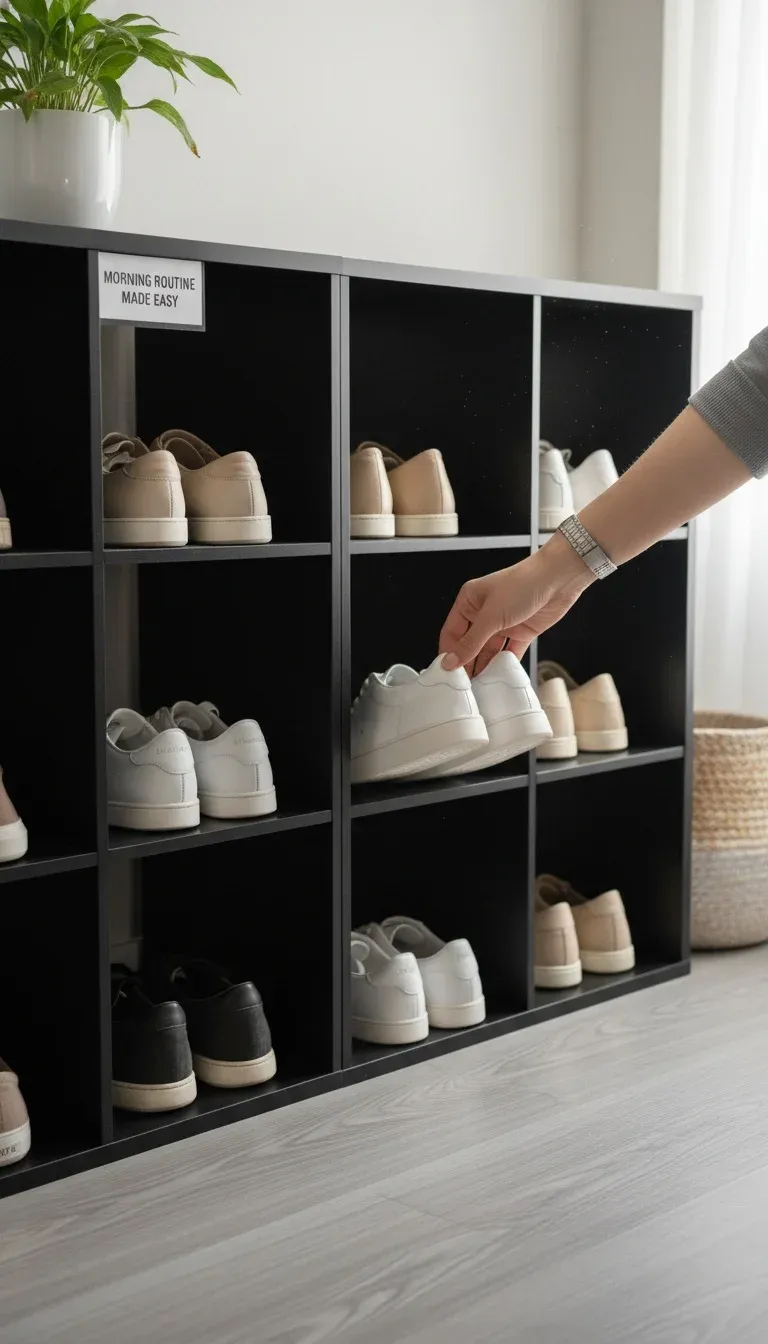
How does a cabinet hold a size 12 men’s Oxford shoe when the cabinet itself is only 9 inches deep? The answer lies in the tilt-out mechanism.
The Tilt-Out Flipper Drawer
This is the holy grail of narrow entryway storage. Instead of a traditional drawer that pulls out horizontally (which requires deep tracks), a flipper drawer drops down on a pivot hinge. The shoes are stored vertically against the door, sliding into a pocket as the door closes.
This design allows a cabinet with a staggeringly slim 6.5-inch profile to comfortably house a dozen pairs of low-profile shoes. When shopping for these, pay close attention to the pivot hardware. Cheap plastic hinges will snap after six months of daily use. I always steer clients toward units featuring metal pivot hinges for longevity.
The Floating Wall-Mounted Console
If floor space is at an absolute premium, get the cabinet off the ground. A floating entryway console bolts directly into your wall studs. By exposing the floor underneath the unit, you trick the eye into perceiving a wider hallway.
Wall-mounting requires precision. You’ll need a reliable magnetic stud finder and a high-quality cordless power drill. Never trust the cheap plastic anchors that come in the box; always upgrade to toggle bolts if you are forced to mount directly into drywall, as a fully loaded cabinet can easily weigh over 50 pounds.
Deep Dive: The Best Slim Entryway Storage Archetypes
Not all narrow cabinets are created equal. The aesthetic you choose will dictate the entire vibe of your home’s entrance. Let’s break down the most effective archetypes currently dominating interior design.
1. The Rattan Boho Flipper
Warm, textural, and inherently forgiving of dust. Rattan has made a massive resurgence, and for good reason. A rattan shoe cabinet softens the hard edges of a narrow corridor. The woven cane allows for passive airflow, which is a massive advantage when storing damp winter rain boots or sweaty athletic shoes.
When styling a rattan piece, lean into organic textures. Top it with a ceramic speckled vase filled with dried eucalyptus, and anchor it with a jute entryway runner to complete the organic aesthetic.
2. The High-Gloss Minimalist Slab
For ultra-modern apartments, visual continuity is everything. A white gloss shoe cabinet virtually disappears against a white wall. This is a brilliant architectural trick for impossibly tight spaces. By matching the cabinet finish to your wall paint, the unit reads as built-in architecture rather than freestanding furniture.
To elevate a basic high-gloss unit, discard the factory knobs. Swap them out for heavy, knurled brass drawer pulls or sleek matte black finger edges. This $20 hardware upgrade makes a $100 cabinet look like custom millwork.
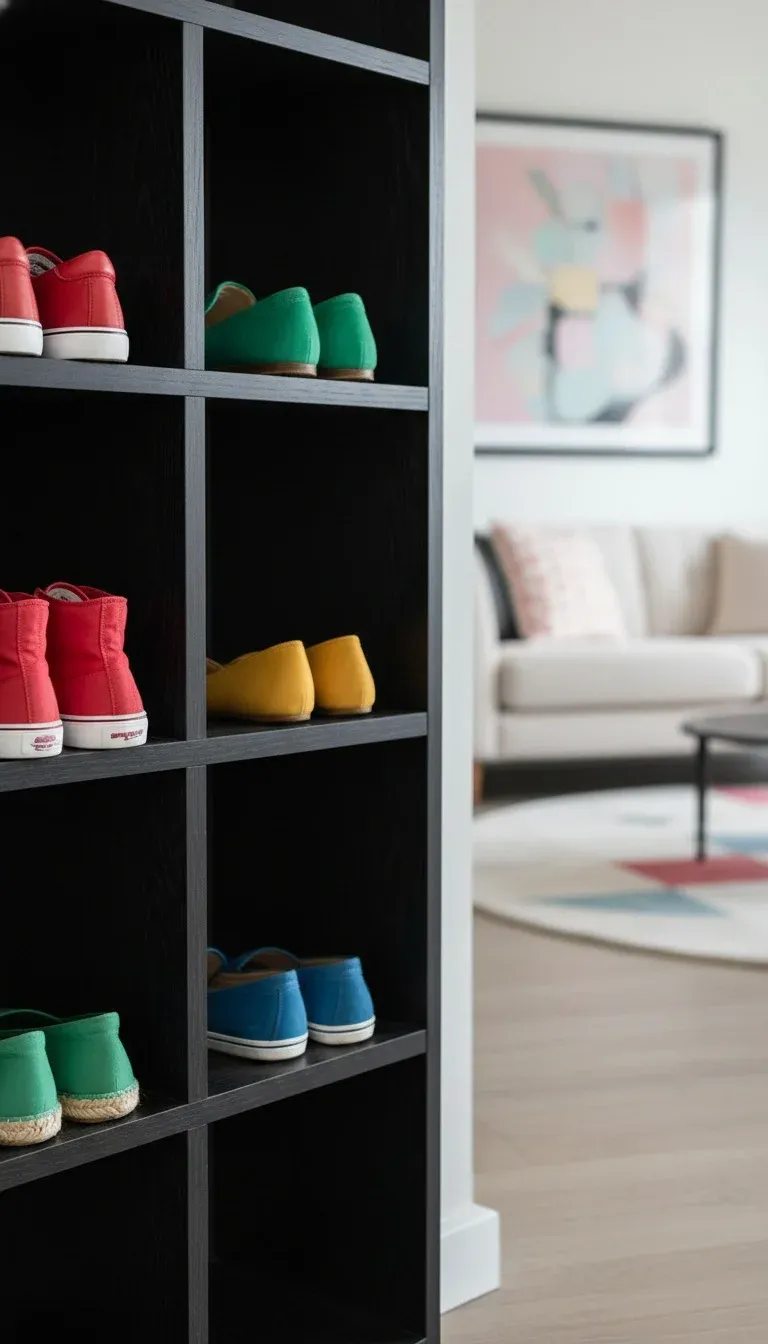
3. The Mid-Century Modern Anchor
Characterized by tapered legs and rich walnut tones, the mid-century look brings instant gravitas to an entryway. A walnut slim cabinet provides a beautiful contrast against crisp, light-colored walls.
The tapered wooden furniture legs typical of this style elevate the bulk of the cabinet off the floor, promoting a sense of lightness. Pair this style with a sunburst wall mirror and a vintage-inspired glass globe table lamp for a curated, Mad Men-esque arrival experience.
4. The Industrial Steel Locker
If you have kids, pets, or a general household tendency toward destruction, powder-coated steel is your best friend. A metal entryway locker is practically indestructible. It handles wet umbrellas, muddy hiking boots, and the blunt force trauma of daily family life without chipping or warping.
Look for industrial units that incorporate rustic wood top boards to prevent the piece from feeling too cold or institutional.
Material Matters: Durability at the Front Door
The entryway takes more abuse than almost any other square footage in your home. Furniture here is subjected to wild temperature fluctuations, moisture from wet coats, and abrasive grit dragged in from the sidewalk. Material selection isn’t just about aesthetics; it’s about survival.
Engineered Wood vs. Solid Wood
You will find that 90% of slim cabinets on the market are made from MDF (Medium Density Fiberboard) or particleboard covered in a veneer. This is necessary because solid wood is heavy, expensive, and prone to warping in fluctuating humidity.
If you buy an engineered wood cabinet, you must seal the bottom edges. I highly recommend running a bead of clear silicone sealant along the very bottom edge where the unit meets the floor. This creates an invisible waterproof barrier that stops the MDF from swelling into a sponge the first time someone places a dripping golf umbrella next to it.
The Power of Metal Accents
Cabinets with a powder-coated steel frame inherently last longer. The frame bears the structural weight, preventing the dreaded “wobble” that afflicts cheap particleboard furniture after a year of use.
Key Takeaways for Material Durability:
- Avoid paper veneers. Look for melamine or textured 3D laminates that resist scratching.
- If choosing wood, wipe up standing water immediately. Keep a microfiber cleaning cloth tucked inside the top drawer.
- Check the hardware. Flimsy plastic drawer slides should be avoided at all costs.
Organization Strategies: Maximizing the Interior
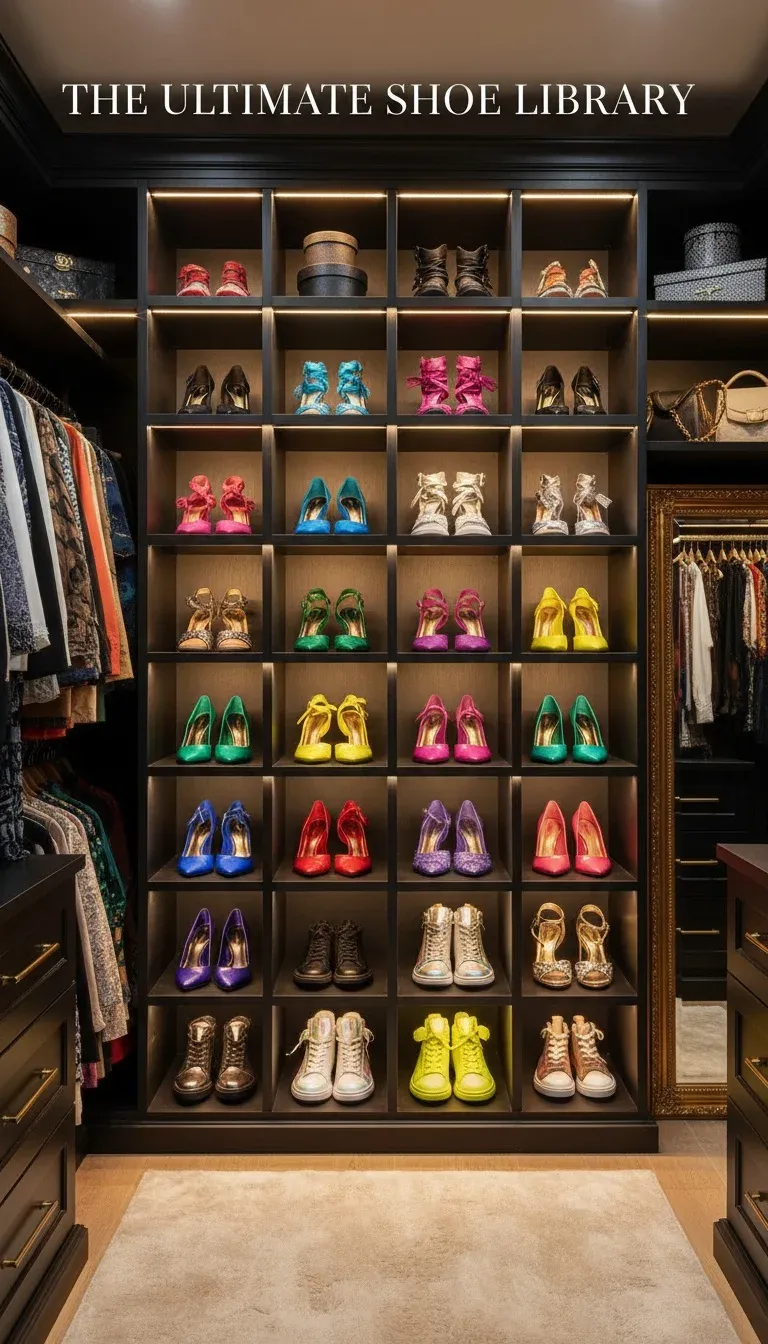
Owning the cabinet is only half the battle. If the inside is a black hole of tangled laces and crushed heels, you’ve failed. Slim cabinets require ruthless, disciplined interior organization.
The Shoe Geometry Problem
Tilt-out drawers are brilliant, but they have a fatal flaw: chunky shoes. A pair of flat canvas sneakers will slide in beautifully. A pair of bulky, size 13 high-top basketball shoes will jam the mechanism entirely.
To solve this, you need to segment your storage.
- Top Drawers: Reserve these for low-profile items. Flip-flops, flats, and leather loafers.
- Bottom Drawers: Most units allow you to remove the center dividing panel in the tilt-out mechanism. Removing this panel doubles the depth of the pocket, allowing you to store ankle boots and bulky running shoes.
- The Outliers: Knee-high boots simply will not fit in a slim cabinet. Don’t force it. Store them elsewhere, or invest in a dedicated tall boot stand for the closet.
Harnessing the Top Drawer
Many premium slim cabinets feature a shallow horizontal drawer above the shoe flippers. This is your command center. Do not let it become a junk drawer.
Use clear acrylic drawer dividers to create strict zones. You need a dedicated slot for:
- Keys: Never lose them again.
- Dog Gear: Keep biodegradable poop bags and a spare leash here.
- Weather Defense: A spot for polarized sunglasses in the summer, and a spot for knit gloves in the winter.
- Mail: A specific tray for outgoing mail.
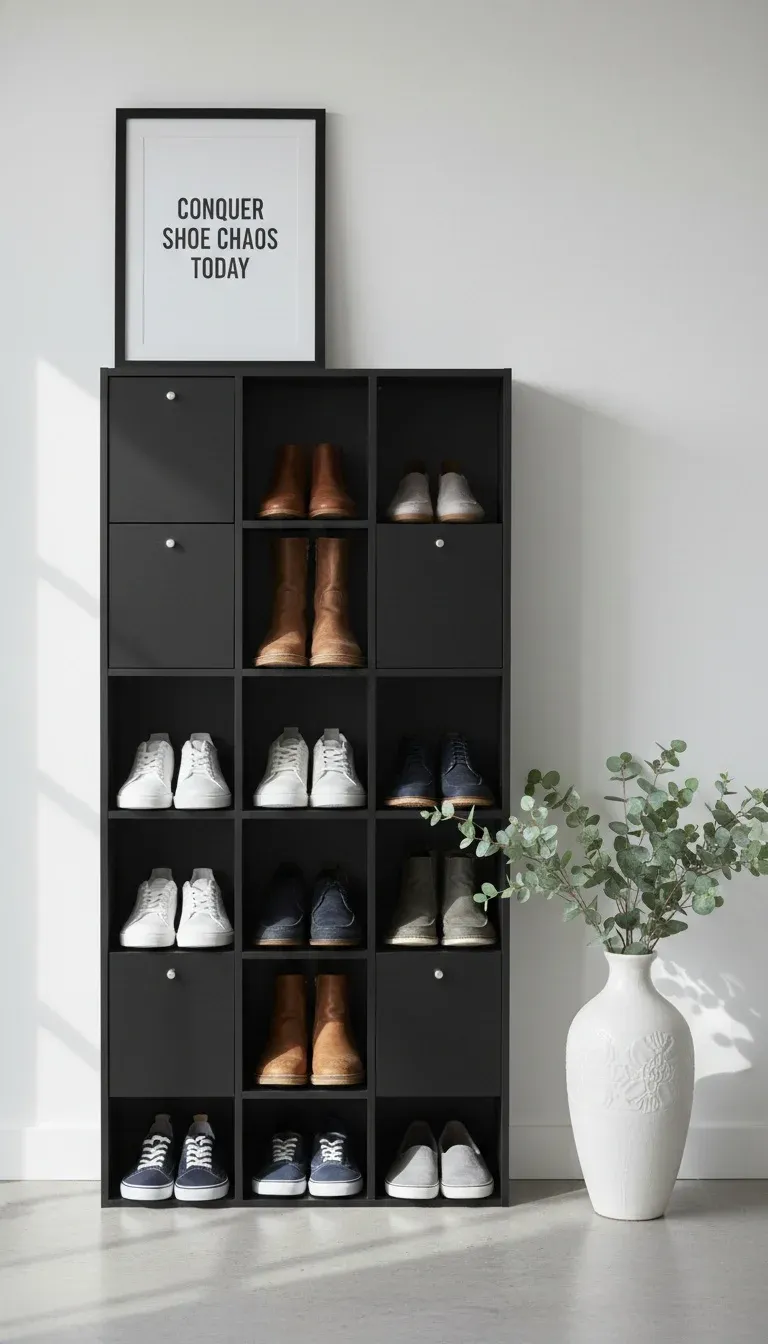
The Tech-Integrated Entryway
We live in a digital age, and your entryway cabinet should reflect that. The top surface of your cabinet is the perfect place to establish a charging station, but visible cords will instantly ruin the clean aesthetic you just worked so hard to build.
Hidden Charging Stations
Drill a small hole in the back of the cabinet’s top drawer using a hole saw drill bit. Feed a multi-port USB charging hub through the back so it rests inside the drawer. Now, you can plug in your phones, wireless earbuds, and smartwatches out of sight.
Automated Illumination
Walking into a dark apartment is incredibly uninviting. Standard overhead lighting is often too harsh. I always install a motion sensor LED strip light underneath the bottom lip of a floating cabinet.
When you open the front door, the floor illuminates with a soft, warm glow. It feels incredibly high-end, makes taking off your shoes safer, and requires absolutely no hardwiring.
For the interior of the shoe drawers, consider attaching small magnetic puck lights. These run on batteries and light up the dark recesses of the cabinet so you can easily distinguish your black navy loafers from your black dress shoes in the dead of winter.
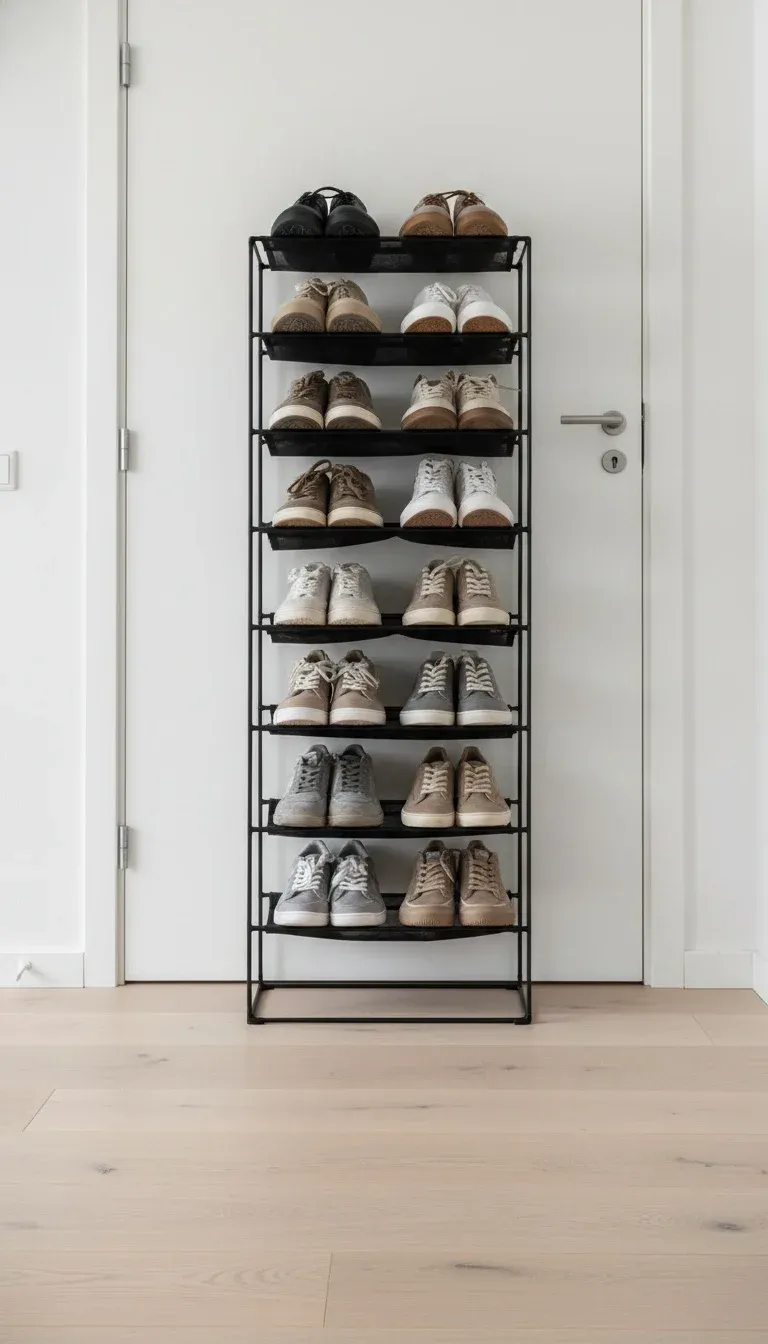
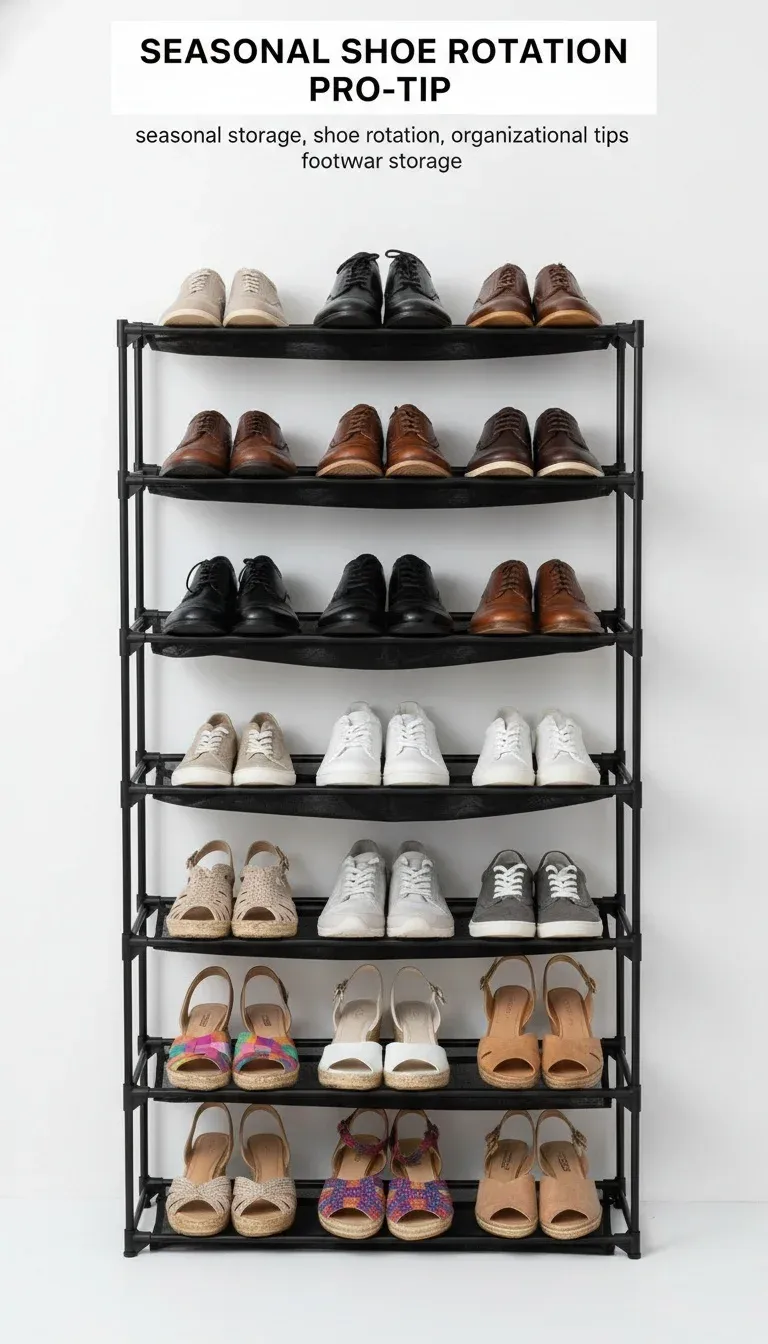
Seasonal Transitions: The Art of the Swap
A narrow entryway cannot hold your entire wardrobe. It is a staging area, not a long-term storage facility. Treating it like a closet is the fastest way to break the hinges on your new cabinet.
You must establish a rigorous seasonal rotation.
Winter Protocol
When the snow starts falling, the geometry of your entryway changes. Heavy coats and thick scarves demand space.
- Empty the slim cabinet of all summer sandals and canvas shoes. Move them to under-bed storage bins.
- Install heavy-duty wall hooks directly above the cabinet for damp winter coats.
- Place a slotted rubber boot tray on the floor next to the cabinet for snow-covered boots. Never put wet shoes directly into an enclosed MDF cabinet.
- Add activated charcoal deodorizer bags to every drawer. Winter footwear traps moisture and breeds odor. These bags absorb both passively.
Summer Protocol
Summer is about rapid transitions. Beach trips, park runs, and patio dinners.
- Swap out the heavy wall hooks for a sleek wooden peg rail to hold lightweight windbreakers, sun hats, and canvas totes.
- Fill the tilt-out drawers with your slip-ons, sandals, and running shoes.
- Keep a bottle of spray-on sunscreen and a lint roller in the top utility drawer for quick access on your way out the door.
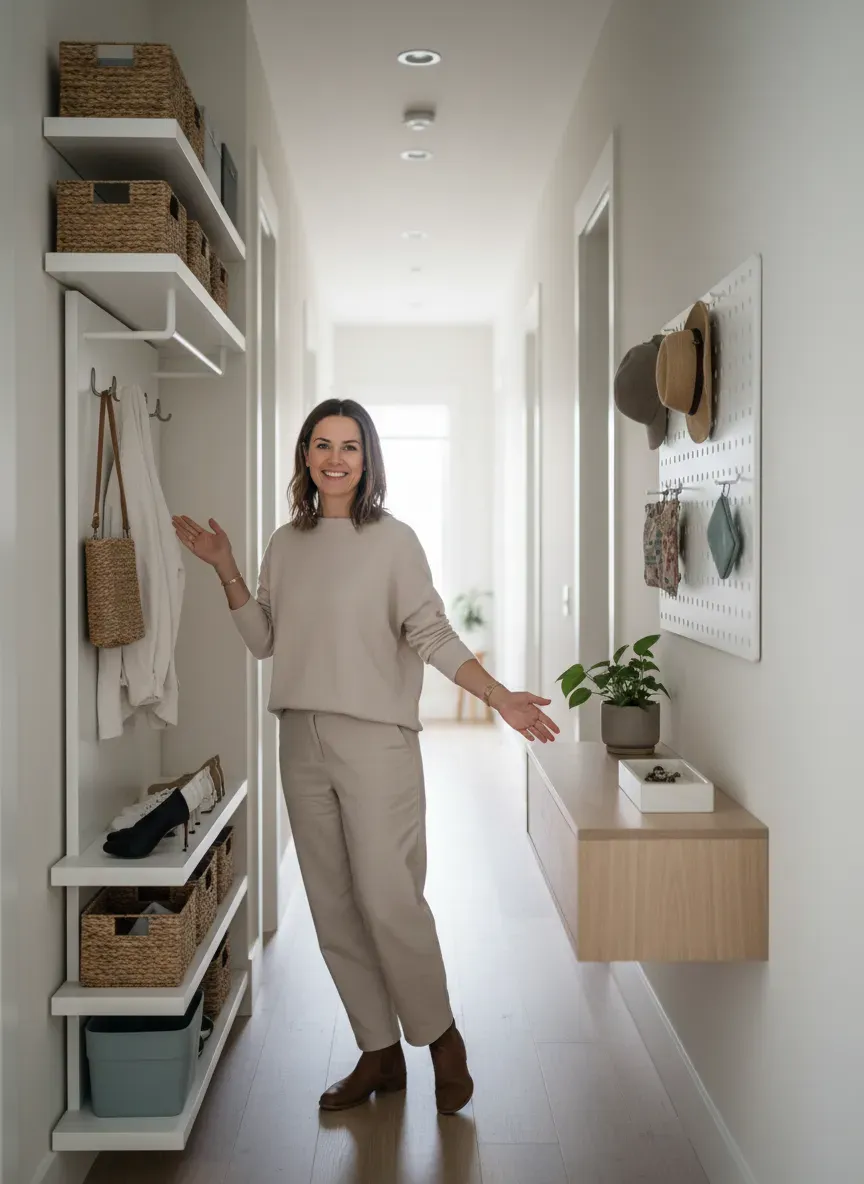
Installation Masterclass: Making It Look Custom
I’ve seen far too many beautiful, expensive cabinets ruined by lazy installation. A unit that leans forward off the baseboard looks cheap. A unit that wobbles when you open a drawer feels precarious. Here is how you install a slim cabinet like a professional carpenter.
Conquering the Baseboard Gap
If your cabinet has straight legs in the back, it will hit your baseboard before it hits the wall, leaving a noticeable 1-inch gap at the top. This gap is a magnet for dropped keys and dust.
You have three options:
- The Cutout: Buy a cabinet that features a pre-cut notch at the bottom rear.
- The Spacer: Mount a painted block of wood to the wall directly behind the top of the cabinet to bridge the gap, then secure the cabinet to the block.
- The Modification: If you are handy with an oscillating multi-tool, trace your baseboard profile onto the back legs of the cabinet and cut the notch yourself. This provides a flawless, built-in look.
The Wall Anchor Rule
I cannot stress this enough: You must anchor slim cabinets to the wall.
Because they are so tall and shallow, their center of gravity is completely off. The moment you pull open a top drawer loaded with heavy boots, the entire unit will tip forward. This is a severe safety hazard, especially if you have toddlers who might try to climb the open drawers.
Locate a stud using your finder. Drive a 3-inch wood screw through the back rail of the cabinet directly into the stud. If you cannot hit a stud, use a high-capacity drywall anchor rated for at least 75 pounds. Ensure the cabinet is perfectly level using a torpedo level before tightening the screws.
Common Pitfalls When Furnishing Small Entryways
Even armed with the best furniture, people make the same predictable mistakes when attempting to layout a narrow hall. Avoid these traps.
1. The “Too Much Depth” Illusion
People often buy a 14-inch deep console thinking, “It’s only two inches wider than the 12-inch limit, it will be fine.” It won’t be fine. In a narrow hallway, two inches is a massive volume of space. It’s the difference between walking comfortably and bumping your hip every time you carry groceries inside. Trust the geometry. Stick to sub-11-inch profiles.
2. Ignoring Verticality
When horizontal space is limited, vertical space is your only frontier. Don’t leave the wall above your cabinet blank.
Mount a tall arched mirror above the unit. This draws the eye upward, making the ceiling feel higher, while bouncing whatever natural light you have deeper into the corridor. Flank the mirror with two slim battery-operated wall sconces to create a sophisticated, hotel-like atmosphere.
3. The Clutter Creep
A storage cabinet only works if you use it. If you buy a beautiful piece of furniture but continue to throw your shoes on the floor next to it, the space will look worse than before. You have to commit to the system. Spend the extra three seconds to open the drawer and put the items away.
Pro Tip: Keep the cabinet slightly under-filled. If a drawer requires you to violently shove things around just to get it closed, you have too many shoes in rotation. An overstuffed cabinet causes friction, and friction leads to you abandoning the system entirely.

Styling Your Slim Cabinet: Form Meets Function
The top surface of your narrow cabinet is prime real estate. It needs to be beautiful, but it absolutely must remain functional. The key to styling small surfaces is the “Rule of Three”—grouping items in odd numbers creates visual interest without feeling cluttered.
The Anchor Piece
Start with something tall to anchor the arrangement. A textured ceramic table lamp or a tall vase with structural branches works perfectly. Place this on one side of the cabinet to establish asymmetry.
The Functional Tray
You need a designated boundary for loose items. A marble vanity tray or a woven basket creates a defined perimeter for keys, wallets, and lip balm. If you just place these items directly on the wood surface, they look like mess. Placed inside a tray, they look like a curated collection.
The Aesthetic Bridge
Bridge the gap between your tall anchor piece and your low functional tray with a medium-height object. A stack of two hardcover design books topped with a small brass wick trimmer or a sculptural soy pillar candle adds a touch of personality without taking up vital surface area.
Dealing with Wall Art
If you choose art over a mirror, ensure the scale is appropriate. A massive canvas will overwhelm a delicate, slim cabinet. Instead, opt for a gallery wall of smaller frames, or a wide, panoramic framed botanical print that mimics the horizontal lines of the furniture below it.

Customizing Factory Furniture (The “IKEA Hack” Approach)
Sometimes you find a cabinet with the perfect dimensions, but the finish is hideous. Don’t let ugly factory veneer deter you. Slim cabinets are incredibly easy to modify.
Contact Paper Transformations
If you buy a basic white MDF cabinet, you can wrap the top board in high-quality faux marble contact paper. Modern vinyl wraps are incredibly realistic and highly durable against scratches and water rings.
Painting Laminate
Painting laminate furniture used to be a nightmare, but modern primers have changed the game. If you want to paint a cheap cabinet to match your trim:
- Lightly scuff the entire surface with 220-grit sandpaper.
- Wipe away the dust with a tack cloth.
- Apply a coat of extreme-bond shellac-based primer. This is non-negotiable; normal paint will peel right off laminate.
- Once dry, apply two coats of a high-quality satin enamel paint using a foam roller for a factory-smooth finish.
By taking a $90 piece of flat-pack furniture, painting it a moody, saturated color like deep forest green or rich terracotta, and adding heavy brass hardware, you create a bespoke piece of entryway architecture that guests will assume cost hundreds of dollars.
The Bottom Line: Your entryway is the handshake of your home. It sets the tone, dictates your morning efficiency, and acts as the final barrier between your private sanctuary and the outside world. By respecting the rigid geometry of a narrow hallway and investing in a brilliantly engineered slim storage cabinet, you reclaim control over that crucial threshold.
You don’t need a grand foyer to create a beautiful entrance. You just need the right dimensions, a touch of organizational discipline, and furniture that works smarter, not harder.
Ready to transform your chaotic corridor into a streamlined architectural drop zone? I’ve curated a master list of the most structurally sound, aesthetically pleasing, and dimensionally accurate options available right now.
Discover the absolute best slim entryway cabinets to maximize your specific space right here.