
Maximizing Storage Space with Built-In Entryway Nooks and Niches
Transform your chaotic hall into a functional masterpiece. Discover expert strategies for designing built-in entryway nooks and niches that maximize storage.
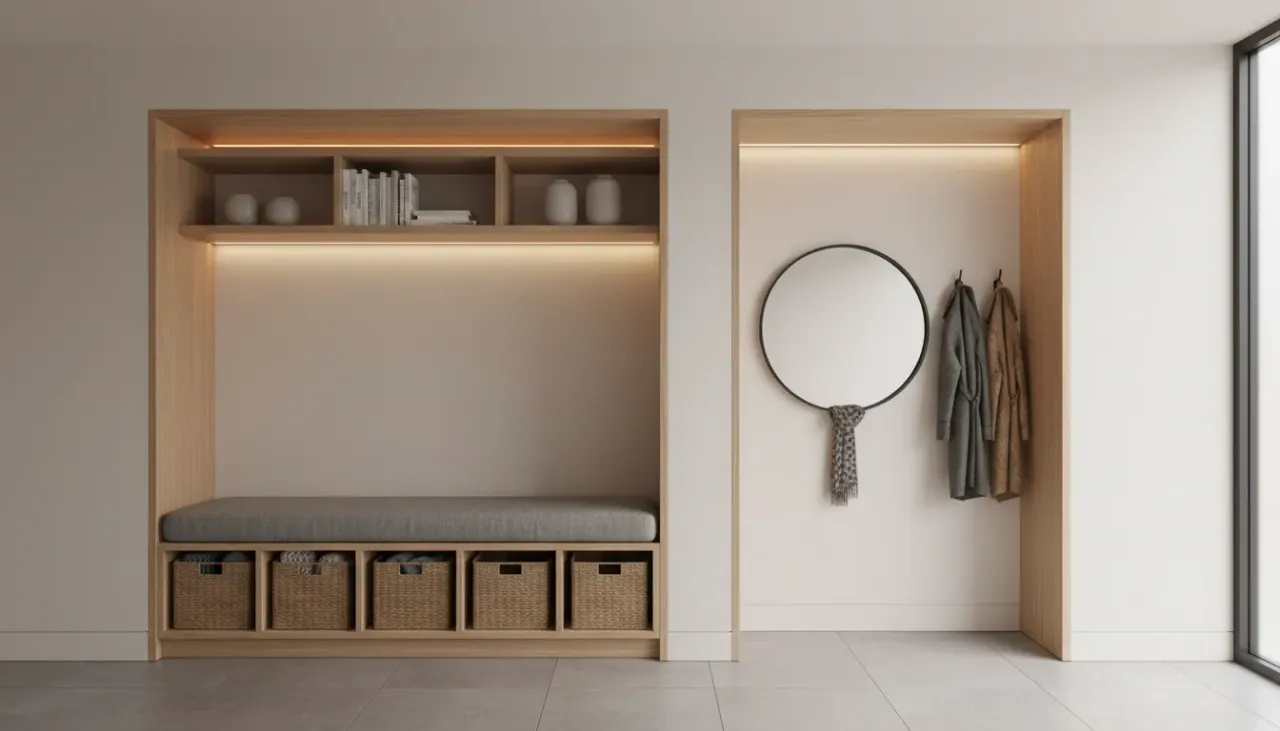
Feb 2, 2026 - Written by: linda wise

The entryway serves as the handshake of the home. It is the transitional space where the outside world is shed and the sanctuary of the interior begins. However, for many homeowners, this crucial area often devolves into a chaotic drop zone for shoes, coats, keys, and mail. While freestanding furniture can offer temporary relief, it often lacks the seamless integration and space-maximizing potential of architectural solutions.
Built-in nooks and niches represent the pinnacle of entryway design. By recessing storage into the walls or constructing custom joinery that mimics the home’s architecture, you can reclaim valuable square footage while establishing a sense of permanent order. This approach transforms dead space—such as the void between studs or the area beneath a staircase—into highly functional, aesthetically pleasing storage assets.
In this comprehensive guide, we will explore the strategic design and implementation of built-in entryway storage. We will delve into the structural considerations of creating niches, the aesthetic principles of styling them, and the organizational systems that keep them efficient.
The Architectural Advantage of Built-Ins
When considering entryway organization, the primary choice is often between buying furniture and building it in. Freestanding console tables and coat racks are portable and require no installation, but they frequently protrude into the walkway, creating visual clutter and impeding traffic flow in narrow corridors.
Built-in storage, conversely, becomes part of the home’s fabric. It offers a “fitted” look that suggests luxury and intentionality. From a real estate perspective, high-quality built-ins add tangible value to a property. They imply that the home was designed with functionality in mind. Furthermore, built-ins allow for the utilization of vertical height that standard furniture rarely captures, drawing the eye upward and making small foyers feel grander.
Reclaiming “Dead” Space
The walls of your home are thicker than they appear. In standard timber-frame construction, interior walls typically have a depth of roughly four to five inches between the drywall surfaces. While this may seem insignificant, a recessed niche of this depth is sufficient for key hooks, mail sorting, sunglasses storage, or display shelving. By cutting into the drywall and framing out a niche between the studs, you gain storage without sacrificing a single inch of floor space.
For deeper storage needs, borrowing space from an adjacent closet, garage, or utilizing the cavity under a staircase allows for the creation of substantial mudroom-style nooks capable of housing bulky winter coats and footwear.
Anatomy of the Perfect Entryway Nook
A successful built-in is not merely a hole in the wall; it is a carefully calibrated system designed to handle specific items. The anatomy of these spaces generally falls into three categories: the seating nook, the utility niche, and the concealed cabinet.
The Integrated Bench Nook
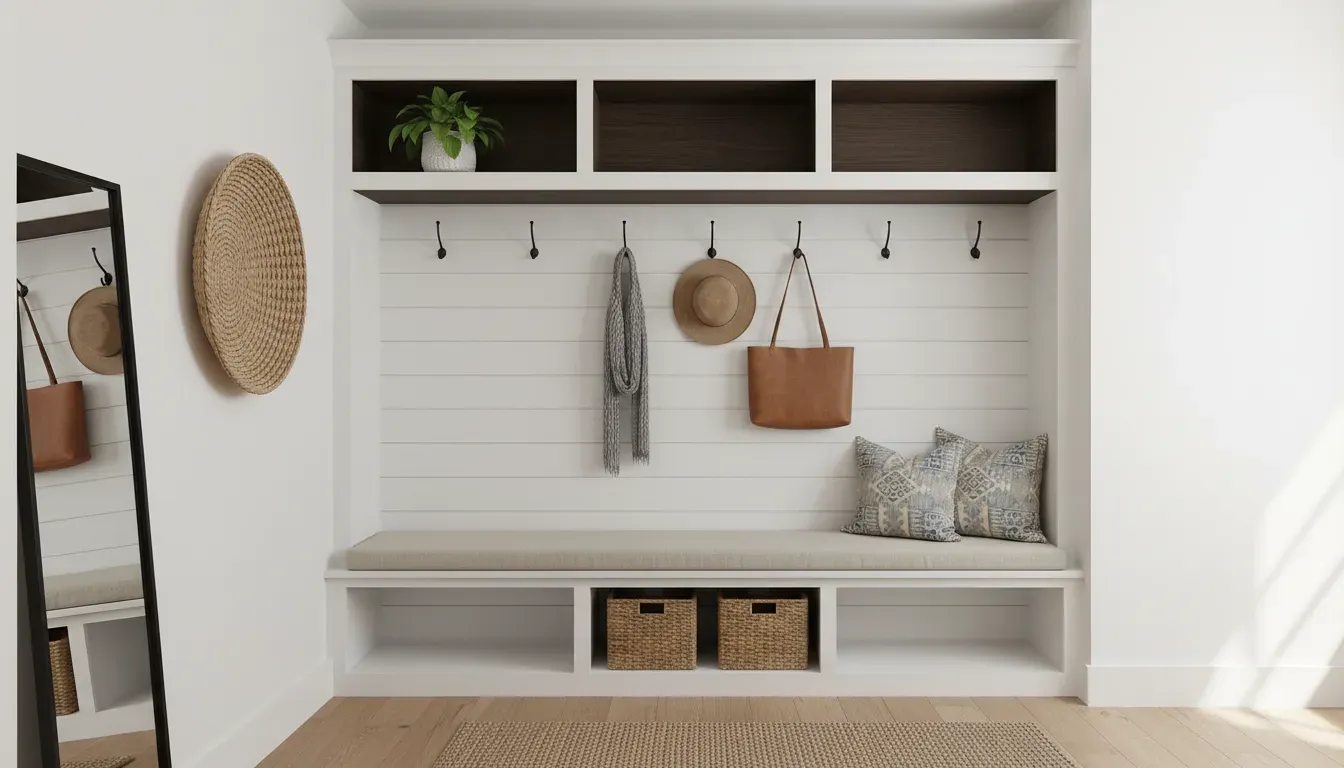
Perhaps the most coveted feature in a family home is the “mudroom bench,” even when a dedicated mudroom does not exist. This design typically involves a recessed alcove featuring a bench seat with storage above and below.
To maximize this space, the area beneath the bench should be utilized for shoe storage. Open cubbies offer easy access for children, while deep pull-out drawers provide a cleaner look by concealing visual clutter. The vertical space above the bench is ideal for beadboard paneling or shiplap, outfitted with heavy-duty hooks for outerwear.
Above the head-height line, an upper shelf or enclosed cabinets can house seasonal items that are not accessed daily. This three-tiered approach—shoes at the bottom, coats in the middle, long-term storage at the top—ensures that every vertical inch serves a purpose.
The Recessed Utility Niche
For narrower hallways where a bench is not feasible, the recessed utility niche is the superior solution. This is a shallow indentation in the wall, often framed with wood trim or tile, designed to act as a console table without the footprint.
A utility niche should be positioned at approximately waist to chest height. It serves as the designated landing pad for keys, wallets, and phones. Integrating a charging station into this niche elevates its functionality, keeping cables off the floor and out of sight.
The Under-Stair Alcove
If your entryway shares a wall with a staircase, you possess a goldmine of storage potential. The triangular space beneath the stairs, known as the spandrel, is frequently walled off. Opening this space allows for a variety of built-in configurations. You might install a graduated series of pull-out vertical drawers for shoes, or create a cozy reading nook that doubles as a waiting area.
For a deeper dive into optimizing difficult layouts, consider reading our guide on Small Hallway Layout Optimization.
Material Selection and Structural Considerations
The longevity and finish of your built-ins depend entirely on the materials selected. Because the entryway is a high-traffic zone subject to moisture from wet coats and muddy shoes, durability must be the priority.
Wood and Joinery
For bench seats and shelving, hardwoods like oak, maple, or walnut are preferable to softwoods like pine, which dents easily. If you plan to paint the unit, high-quality furniture-grade plywood or MDF (Medium Density Fiberboard) creates a smooth, stable surface that resists warping better than solid wood in fluctuating temperatures.
When designing the trim, match the architectural style of the rest of the home. If your home features Victorian crown molding, the built-in should reflect that. For modern homes, a flat-stock trim or a shadow-gap detail provides a contemporary, seamless appearance.
Hardware Selection
The hardware chosen for hooks and drawer pulls acts as the “jewelry” of the built-in. In an entryway, these components must be robust. A flimsy hook will eventually fail under the weight of a wet wool coat or a heavy backpack.
Opt for solid brass or forged iron hardware. Double-prong hooks maximize storage density, allowing for a coat and a scarf to hang on a single unit.
To source high-quality hardware that can withstand daily abuse, consider searching for heavy-duty options.
Search for Heavy Duty Brass Coat Hooks on Amazon
Integrating Lighting for Function and Ambiance
A dark niche is an uninviting black hole. Proper illumination is essential for both functionality (finding your keys) and aesthetics (highlighting the architecture).
Recessed Lighting
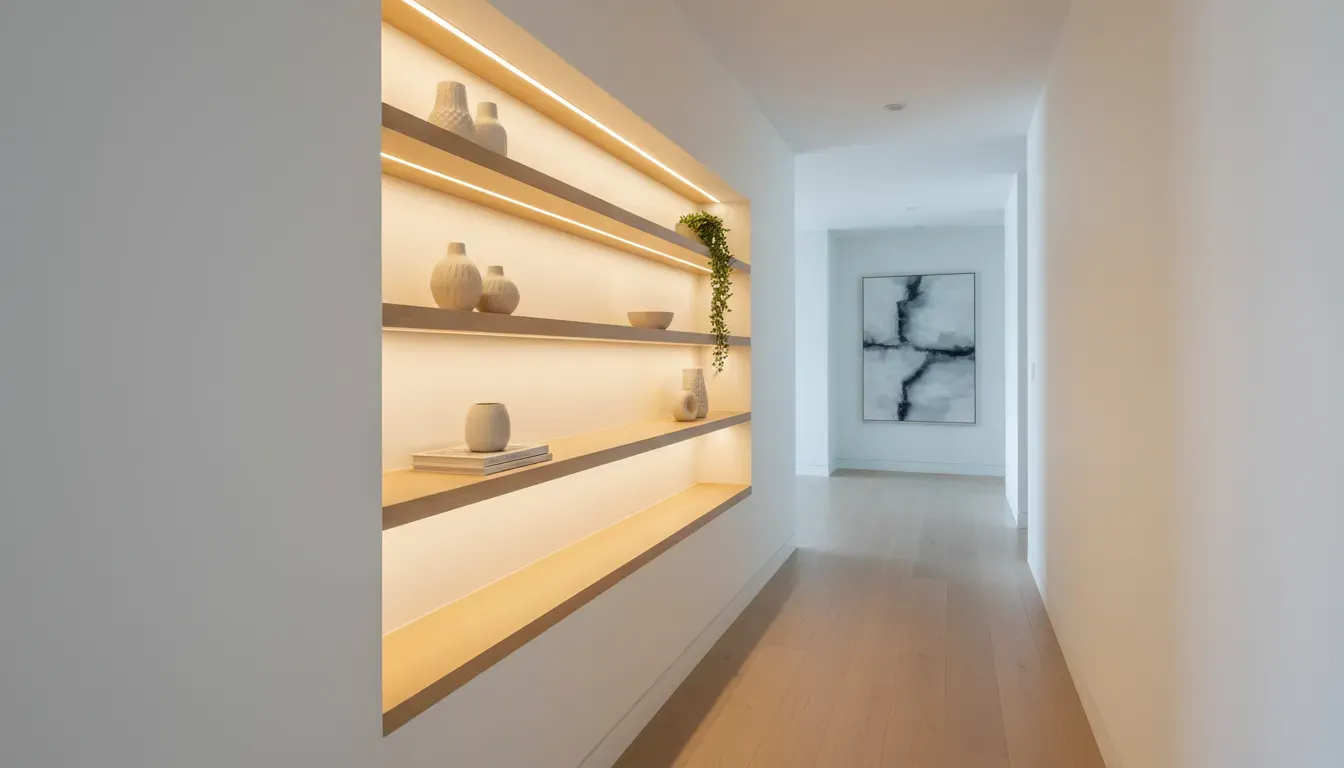
For deep nooks and benches, recessed can lights or “puck” lights installed in the overhead soffit provide necessary task lighting. If the built-in includes shelves, routing a channel for LED strip lighting along the back or front edge of the shelves creates a sophisticated wash of light that highlights decor and makes the space feel larger.
Sconces and Accent Lights
Hardwired wall sconces installed within or flanking a niche add a layer of decorative lighting. This establishes a warm, welcoming atmosphere in the evening. If hardwiring is not an option due to budget or structural constraints, motion-sensor battery lights are a practical alternative for illuminating deep cabinets or shoe cubbies automatically.
Search for Motion Sensor Cabinet Lights on Amazon
Organizational Systems for Built-In Spaces
Building the structure is only half the battle. Without an internal organizational system, a large built-in can quickly become a large mess. The goal is to subdivide the space so that every item has a specific home.
The Role of Baskets and Bins
Open shelving in an entryway can look cluttered if filled with loose hats, gloves, and dog leashes. The solution is to use uniform containers. Woven baskets add texture and warmth, softening the hard lines of the cabinetry. They function as drawers, allowing you to pull the contents out to search through them, then return them for a clean visual facade.
Assign a basket to each family member or categorize them by item type (e.g., “Winter Gear,” “Pet Supplies,” “Sun Protection”).
Search for Woven Seagrass Storage Baskets on Amazon
Drawer Dividers and Trays
If your built-in includes drawers, do not let them become junk drawers. Use dividers to separate keys, sunglasses, and mail. A designated spot for outgoing mail prevents envelopes from piling up on kitchen counters.
For more insights on managing paper clutter and small items, review our article on Creative Catch-All Solutions.
Design Strategies for Narrow Hallways
Many homes, particularly urban apartments and older townhouses, feature narrow entry corridors that seem to prohibit built-ins. However, shallow depth solutions can be incredibly effective.
The Floor-to-Ceiling Approach
In a narrow space, you cannot build out, so you must build up. A floor-to-ceiling unit that is only 10 to 12 inches deep can hold a surprising amount of shoes (stored at an angle) and folded items. Utilizing the full height of the wall draws the eye upward, countering the claustrophobic feel of a tight hallway.
Floating Units
To maintain a sense of openness, consider “floating” the built-in cabinetry off the floor. By leaving the bottom 12 inches open, you expose more floor area, which tricks the eye into perceiving the room as larger. This space can also be used to tuck away guest shoes temporarily without them becoming a permanent fixture.
The “Hidden” Niche: Concealed Storage Solutions
Minimalism remains a dominant trend in interior design. For those who prefer their storage to disappear completely, flush-mount carpentry is the answer.
Touch-Latch Cabinetry
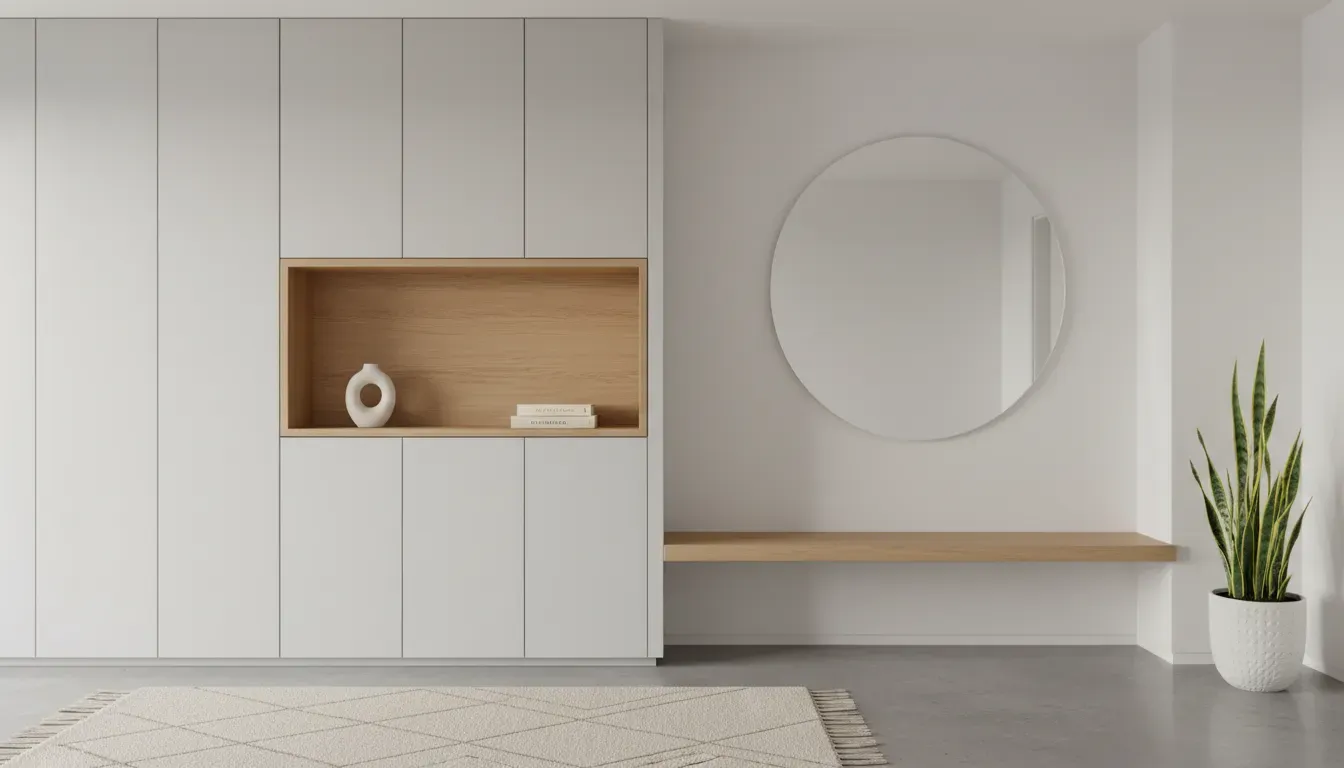
By using push-to-open latches, you can eliminate exterior hardware entirely. The built-in storage masquerades as a paneled wall. This is particularly effective for storing unsightly items like vacuum cleaners, bulky sports equipment, or utility meters that often reside in the entryway.
Secret Doors
A built-in bookcase or display niche can actually be a door to a closet or another room. While this may sound theatrical, it is a practical way to disguise a closet door in a small entryway where too many visible doors create visual noise.
DIY Retrofitting vs. Professional Custom Carpentry
Deciding between a Do-It-Yourself approach and hiring a professional finish carpenter depends on the complexity of the niche and your skill level.
The DIY Scope
Simple recessed niches between studs are well within the capabilities of a competent DIYer. The process involves locating studs, cutting drywall, framing a box, and inserting it into the wall cavity. Finishing involves drywall tape, mud, and trim. This project is low-cost and high-impact.
Similarly, “IKEA Hacks” allow homeowners to take standard bookcases, anchor them to the wall, and wrap them in baseboards and crown molding to simulate the look of custom built-ins. This is a cost-effective middle ground.
When to Hire a Pro
If your project involves altering load-bearing walls to create a wider niche, rerouting electrical wiring for sconces, or intricate joinery for drawers and doors, professional help is advised. A finish carpenter can ensure that the unit is perfectly scribed to the wall (accommodating for uneven floors and walls found in most houses) and that the structure can support the weight of people sitting on benches.
Styling Your Entryway Niche
Once built, the niche becomes a focal point. Styling strikes the balance between utility and beauty.
- The Rule of Thirds: When arranging decor on shelves, group items in threes. A stack of books, a small plant, and a sculptural object create a pleasing visual triangle.
- Texture Variance: Mix materials. If your built-in is painted wood, add metal hooks, woven baskets, and perhaps a leather cushion for the bench. This layering prevents the space from looking sterile.
- Personal Touches: The entryway welcomes guests to your home. Include framed family photos or a piece of art in the niche. However, keep it curated. Too many small items read as clutter.
Maintenance and Long-Term Care
Entryways endure abuse. Wet umbrellas, muddy boots, and abrasive bags take a toll on finishes.
- Paint Choice: Always use a high-quality enamel or semi-gloss paint for built-ins. These finishes are harder and easier to wipe down than matte or eggshell paints.
- Wood Protection: If you have a natural wood bench, seal it with a marine-grade varnish or a durable polyurethane to prevent water rings and scratches.
- Ventilation: If you are storing shoes in closed cabinets, consider adding inconspicuous ventilation holes or using louvered doors to prevent odors from accumulating.
Conclusion
Maximizing storage space with built-in entryway nooks and niches is more than a home improvement project; it is a lifestyle upgrade. It reclaims the wasted voids of a house and converts them into assets that streamline daily routines. By moving beyond temporary furniture and committing to architectural solutions, you create an entryway that is resilient, organized, and deeply welcoming.
Whether you are carving out a simple key niche between studs or commissioning a full wall of floor-to-ceiling cabinetry, the principles remain the same: assess your specific storage needs, respect the architecture of the home, and choose materials that will withstand the test of time. A well-executed built-in not only holds your belongings but also holds the promise of a calmer, more organized life the moment you walk through the door.