
Moody Mudroom Inspiration: Bold Dark Cubbies and Rich, Sophisticated Colors
Discover how to transform your entryway with bold dark cubbies, rich moody palettes, and expert design strategies that blend high-end drama with everyday functionality.
Apr 1, 2026 - Written by: Linda Wise

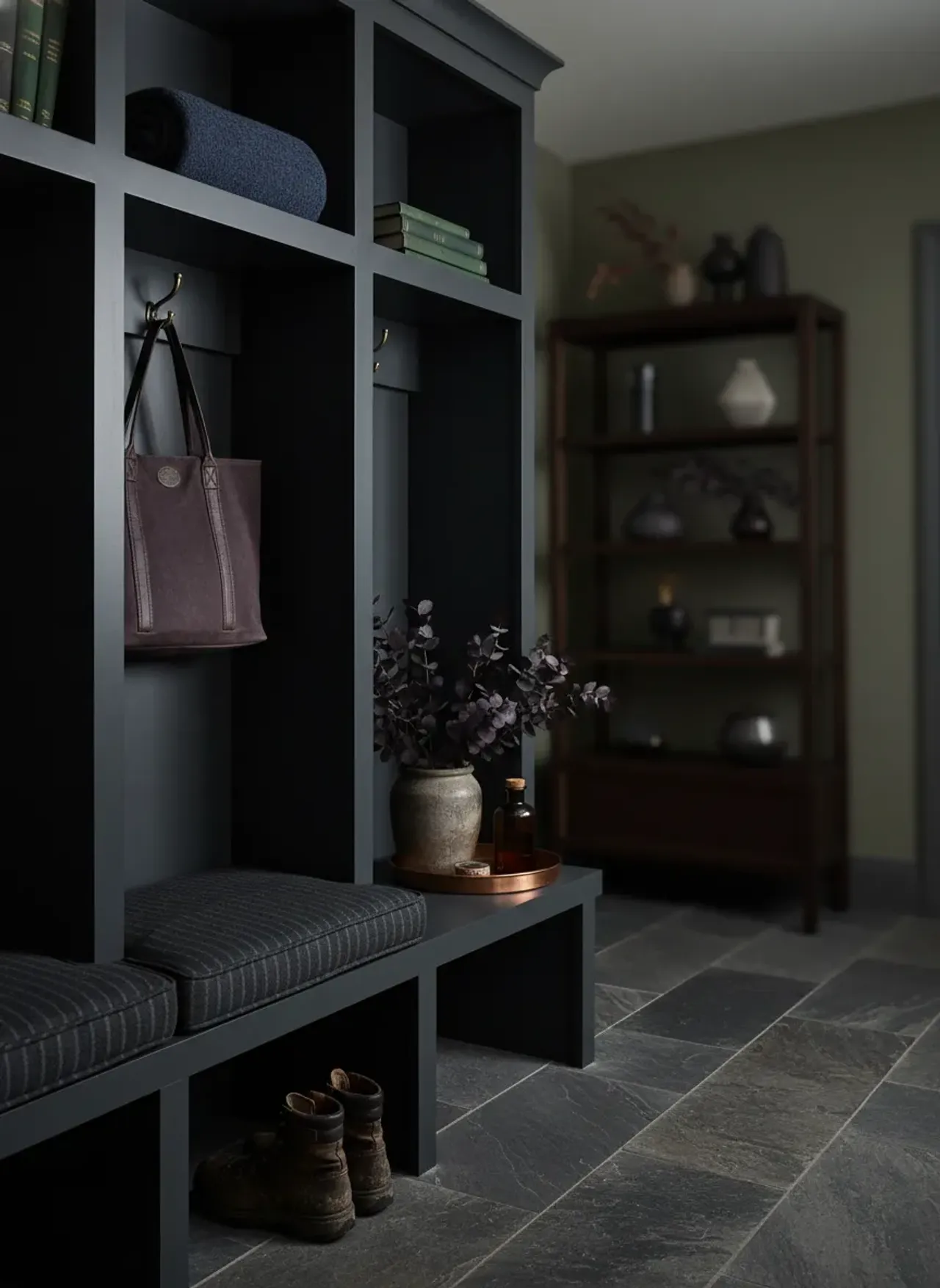
I’ve spent the better part of a decade designing, tearing apart, and rebuilding entryways. Here’s the real kicker: the era of the sterile, all-white shiplap mudroom is officially receding. We are witnessing a massive shift toward chromatic envelopment. Homeowners and designers alike are finally embracing the raw, cinematic power of a moody mudroom.
Think about it. The mudroom is the ultimate threshold. It is the architectural airlock between the chaos of the outside world and the sanctuary of your home. Why shouldn’t that transition space feel intentional, sophisticated, and deeply grounding? Bold dark cubbies paired with rich, sophisticated colors do exactly that. They anchor the room, cleverly mask the inevitable scuffs of daily life, and elevate a purely utilitarian zone into a striking design feature.
You’ll notice that executing a dark palette requires precision. Slapping a coat of black paint on some plywood won’t cut it. You need a nuanced understanding of undertones, lighting, hardware juxtaposition, and spatial dynamics. Let’s break down exactly how to master the moody aesthetic without turning your drop zone into a dungeon.
Quick Comparison: Top Picks
The Psychology of Dark, Moody Entryways
There is a distinct psychological weight to color. Bright whites and pale grays reflect light, making a space feel airy, but they also trigger a subtle, sterile alertness. Dark colors—charcoals, deep forest greens, and saturated navies—absorb light. They slow down the visual cadence of a room.
When you walk into a mudroom drenched in a moody hue, your brain registers a cozy, cave-like sense of security. It demands a slower pace. You sit on the bench. You unlace your boots. The psychological boundary between “work mode” and “home mode” is firmly established by the depth of the palette.
Furthermore, dark colors blur physical boundaries. When you paint walls, trim, and cubbies in the same saturated tone, the sharp corners and edges of the room visually recede. This optical illusion actually makes tight, cluttered spaces feel infinitely larger because the eye isn’t constantly stopping at contrasting lines. It’s a designer secret that consistently pays dividends in high-traffic utility zones.
Foundational Elements: Choosing the Right Bold Hues
The success of your moody mudroom hinges entirely on selecting a color with complex undertones. Flat, true blacks can feel lifeless. You want a color that shifts depending on the time of day and the angle of the light.
Deep Charcoals and Onyx
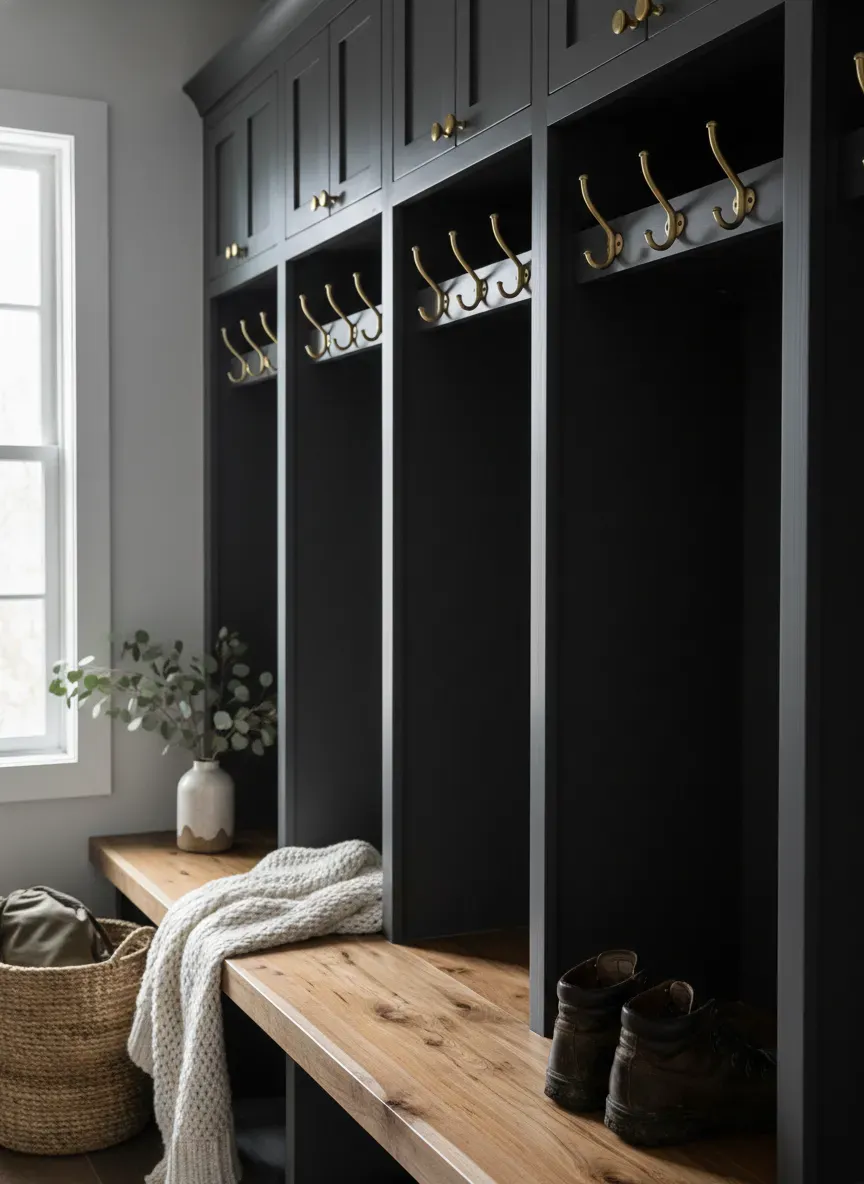
I’ve personally found that charcoal is the gateway drug to moody design. Colors like Sherwin-Williams’ Iron Ore or Benjamin Moore’s Cheating Heart are phenomenal. They possess a warmth that stark blacks lack, often carrying subtle green or brown undertones that pair beautifully with natural wood accents. Charcoal cubbies offer immense dramatic flair while remaining incredibly versatile against existing flooring.
Forest Greens and Midnight Navies
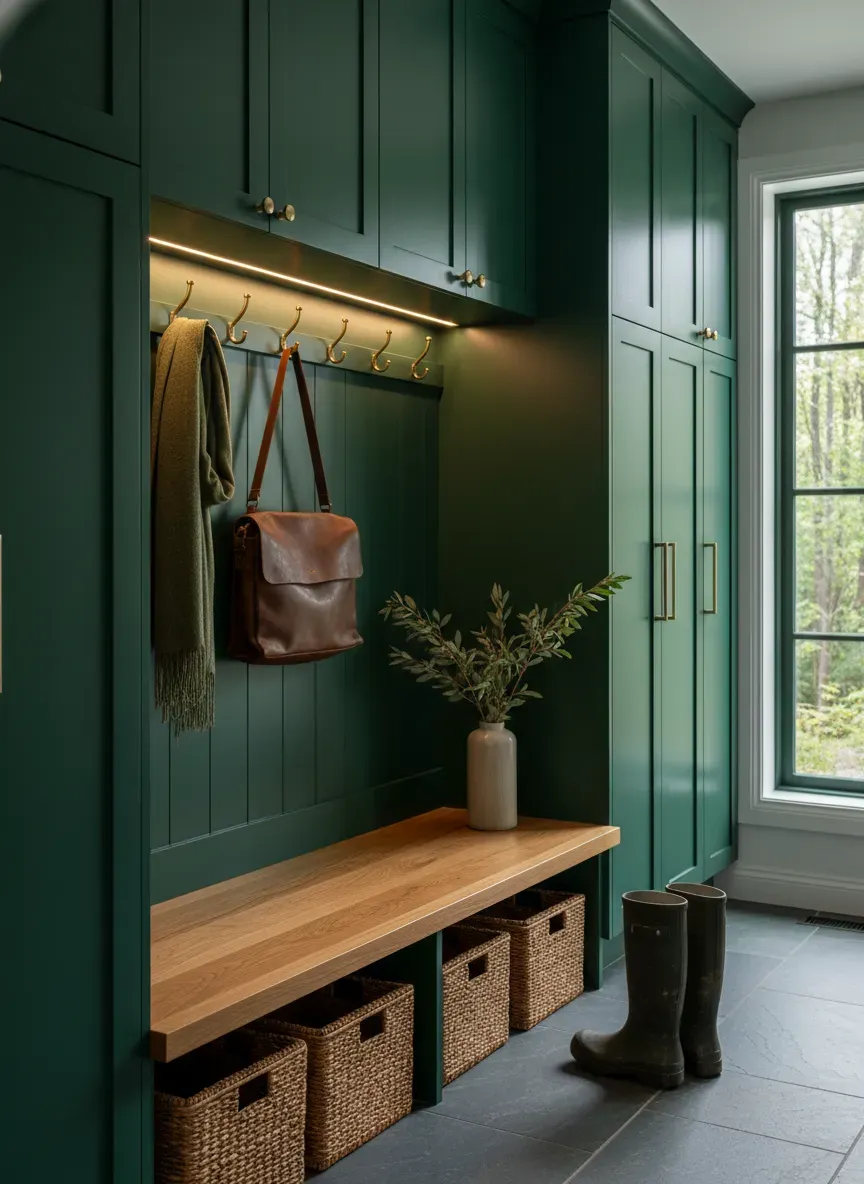
If you want to inject actual color while maintaining the moody vibe, deep greens and blues are unparalleled. Farrow & Ball’s Hague Blue is a legendary choice—it reads as a vibrant navy in direct sunlight but settles into a brooding, oceanic depth in the shadows. For greens, consider Benjamin Moore’s Salamander. It’s black-green. It feels organic, pulling the essence of the outdoors inside, which is contextually brilliant for a mudroom.
Rich Plums and Aubergines
For the truly daring, deep purples and earthy aubergines offer a sophisticated, almost regal aesthetic. These tones work remarkably well in homes with historical architecture or those leaning heavily into the dark academia aesthetic. Pair an aubergine built-in with unlacquered brass hardware, and the result is nothing short of breathtaking.
Designing Bold Dark Cubbies That Actually Work
Aesthetically pleasing is great. Structurally sound and functionally flawless is mandatory. When you commit to a bold, dark built-in, the architecture of the cubbies becomes the focal point of the room.
Material Selection for Dark Finishes
Dark paint highlights imperfections. Every knot, seam, and poorly sanded edge will catch the light and broadcast your mistakes. If you are building or commissioning custom cubbies meant for a painted moody finish, prioritize MDF (Medium-Density Fiberboard) for the panels and cabinet doors. MDF provides a glassy, uniform surface that takes dark paint flawlessly. Save the cabinet-grade plywood for the structural boxes and the hardwood for the bench seating, where a clear or stained finish can provide much-needed organic contrast.
Layout and Ergonomics
The visual weight of dark cubbies means they command the space. You must balance this heavy aesthetic with breathable functionality. Cramming too many partitions into a dark build creates a visual black hole. Figuring out the exact geometry is crucial. For instance, when planning the layout, understanding the ideal spacing between mudroom hooks and cubby dividers is the difference between a functional drop zone and a cramped disaster. Proper spacing ensures bulky winter coats have room to breathe and don’t visually choke the design.
Pro Tip: Never paint the actual bench seat the same dark color as the cubbies. The friction of denim, zippers, and heavy bags will scratch the paint within weeks. Instead, use a durable hardwood—like white oak or walnut—finished with a high-grade polyurethane. The warmth of the natural wood breaks up the monolithic dark color and provides a bulletproof landing zone.
Hardware Pairings for High Contrast
The hardware you select acts as the jewelry of your mudroom. Against a dark, moody backdrop, your hooks, pulls, and hinges need to pop.
The Magic of Warm Metals
Unlacquered brass is the undisputed champion of the moody mudroom. The warm, golden tones of brass against a deep navy or forest green create a tactile juxtaposition that screams high-end luxury. As unlacquered brass ages, it develops a patina that adds profound character to the space. If brass isn’t your style, consider antique copper or oil-rubbed bronze with copper highlights.
Leather and Matte Accents
For a more contemporary, rugged look, consider heavy-duty leather strap pulls for your closed storage doors. Thick, saddle-grade leather softens the hard, architectural lines of the cubbies. Conversely, if you are utilizing a color like a dark plum or a deep terracotta, matte black hardware can provide a subtle, tone-on-tone sophistication that feels incredibly modern.
Lighting a Dark Space Without Losing the Mood
The most frequent question I get about moody design is: “Won’t it feel too dark?” It will, unless you master your lighting plan. You cannot rely solely on a single flush-mount ceiling fixture in a dark mudroom.
Layered Lighting Strategies
You need three layers of light: ambient, task, and accent.
- Ambient: Your overhead light. Keep the fixture visually lightweight—perhaps a glass globe or an open metal cage—so it doesn’t compete with the heavy cubbies.
- Task: This is where you light the functional zones. Recessed puck lights hidden in the top cubby headers shining down onto the bench are non-negotiable.
- Accent: Wall sconces mounted directly onto the dividing stiles of your dark cubbies. This creates a spectacular “chiaroscuro” effect, washing light down the dark painted wood and highlighting the architectural depth of the build.
Nailing the Color Temperature
The temperature of your bulbs will make or break the paint color. Bulbs that are too cool (4000K and above) will cast a harsh, blue hospital glare that completely destroys the moody atmosphere, turning rich greens into sickly teals. Bulbs that are too warm (2200K) will make everything look orange. I’ve personally found that a color temperature of exactly 2700K to 3000K hits the sweet spot. It mimics the warm, inviting glow of late afternoon sunlight, enhancing the complex undertones of your dark paint.
Overcoming Small Space Limitations with Moody Palettes
There is a persistent, archaic myth in interior design that small spaces must be painted white to feel larger. This is simply untrue. Small spaces painted white often just feel like small, stark boxes.
The “Color Drenching” Technique
If you are working with extremely tight dimensions—perhaps utilizing our 5x6 mudroom guide for making the most of a micro footprint—color drenching is your secret weapon.
Color drenching involves painting everything—the walls, the baseboards, the crown molding, the ceiling, and the cubbies themselves—in the exact same dark hue. By eliminating the contrasting lines between the walls and the ceiling, your eye cannot easily discern where the room stops and starts. The boundaries blur into shadows. A tiny 5x6 mudroom suddenly feels like an expansive, jewel-box of a space. It’s dramatic, it’s bold, and it’s vastly more interesting than builder-grade beige.
Flooring and Textiles: Grounding the Drama
A moody mudroom needs a floor that can hold its own against the heavy visual weight of the walls and cubbies. Flimsy, light-colored linoleum or pale laminate will instantly cheapen the aesthetic.
Natural Stone and Heavy Textures
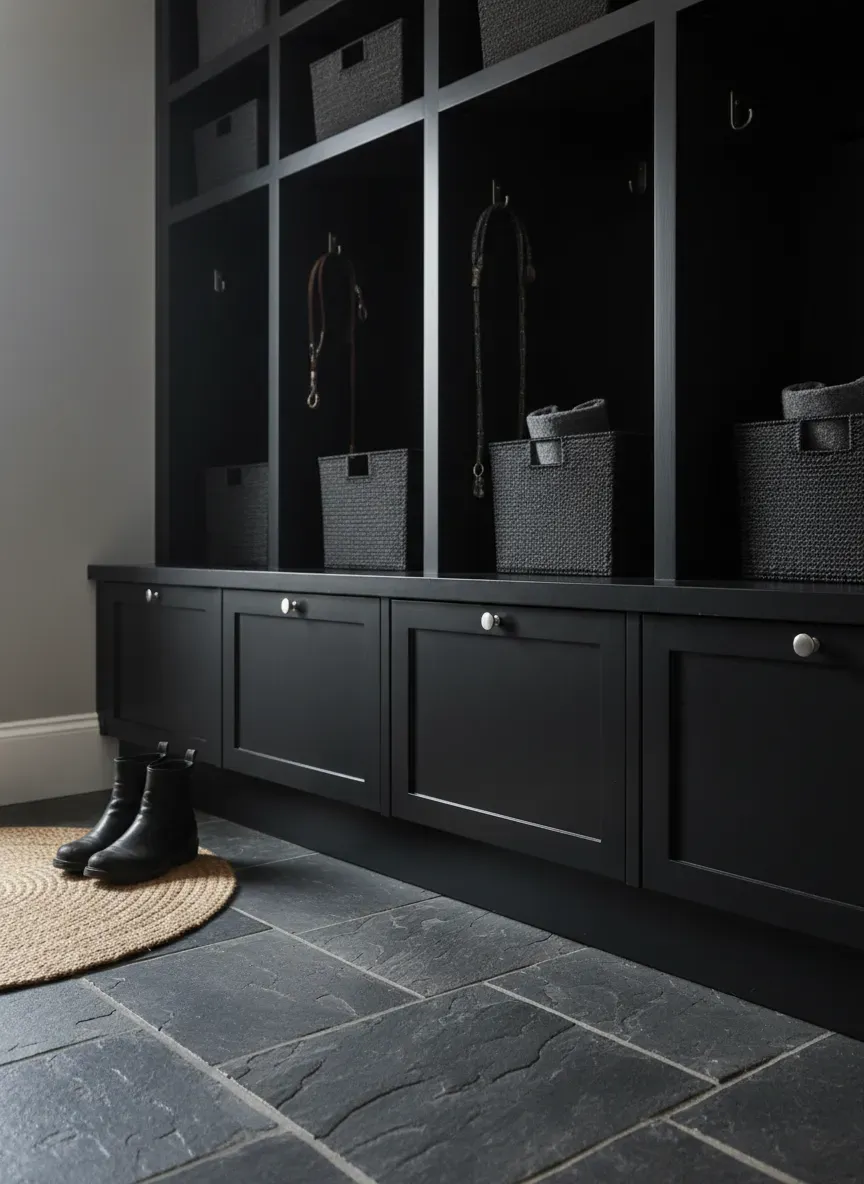
Natural slate is the ultimate companion to dark cubbies. The organic clefts, the varying shades of charcoal, rust, and blue inherent in real slate provide a rugged foundation that perfectly balances the refined paint job of the cabinetry. Herringbone brick is another phenomenal option. The earthy, rough-hewn texture of brick grounds the space, ensuring the room feels like a true mudroom rather than a delicate parlor.
Strategic Use of Rugs
Because dark rooms absorb light, you want to introduce textiles that offer a pop of pattern and warmth. A vintage, low-pile runner rug featuring deep reds, burnt oranges, and indigos will tie the whole room together. The rich patterns hide dirt effectively, while the warm tones bridge the gap between the dark cabinetry and the flooring.
Key Takeaways for Grounding the Space:
- Avoid highly polished, glossy floor tiles; they create glare and highlight wet footprints.
- Opt for matte, textured materials like slate, brick, or matte porcelain.
- Use vintage or washable runners to add warmth and break up the dark color blocks.
- Ensure the grout you choose is a medium-to-dark tone to hide heavy traffic wear.
Common Pitfalls When Executing a Dark Mudroom
Even with the best intentions, a moody design can go sideways if you ignore a few fundamental rules of execution.
Choosing the Wrong Sheen
This is the number one mistake I see. People choose a high-gloss or semi-gloss finish because they think it will be easier to wipe down. While that may be true, glossy dark paint reflects every single ray of light like a funhouse mirror. It highlights every dent in the wood, every brushstroke, and every speck of dust.
The Bottom Line: You must use a Satin or Eggshell finish for dark cabinetry. It provides enough enamel protection for wipeability but remains matte enough to absorb light and hide surface imperfections. If you are painting the walls to match, use a flat or matte finish. The slight contrast in sheen between the satin cubbies and the matte walls adds a highly sophisticated, subtle texture to the room.
Ignoring Natural Light Realities
Dark colors swallow natural light. If your mudroom has a single, tiny window facing north, a completely black room might genuinely feel too oppressive during the day. In spaces starved for natural light, you have two choices: overcompensate heavily with your artificial lighting plan, or pivot from black/charcoal to a highly saturated jewel tone (like deep emerald or sapphire) which retains more color memory in low light.
Styling and Maintenance: Keeping the Drama Alive
A mudroom is, by definition, a space that gets dirty. The beauty of a moody palette is that it naturally camouflages mud, scuffs, and fingerprints far better than white paint ever could. However, dark colors have one nemesis: dust.
Dust and Pet Hair Management
Dark, flat surfaces will show settling dust and light-colored pet hair. To mitigate this, keep the horizontal surfaces (like the bench and the top shelf) in a natural wood finish. Wood grain completely hides everyday dust. Reserve the dark, moody paint for the vertical surfaces—the stiles, the back panelling, and the cabinet faces—where dust doesn’t easily settle.
Accessorizing for Impact
Styling a dark mudroom requires a restrained hand. You don’t want to clutter the space and lose the architectural impact of the cubbies. Bring in organic elements to soften the dark edges. A woven seagrass basket tucked into the top cubby, a brass umbrella stand, or a simple terracotta pot with a trailing pothos plant provides exactly the right amount of organic relief. The goal is to make the space feel curated, not chaotic.
Final Thoughts & Your Next DIY Step
Building a moody mudroom with bold, dark cubbies isn’t just a weekend painting project; it’s an architectural transformation. It requires you to look at your entryway not just as a place to dump shoes, but as a transitional sanctuary that sets the tone for your entire home. The deep colors, the warm wood benches, the glint of unlacquered brass—it all comes together to create a space that is equal parts rugged and refined.
But here is where the rubber meets the road. Custom built-in cabinetry from a contractor to achieve this look will easily cost you upwards of $5,000 to $10,000. The alternative? You build it yourself. Creating structurally flawless, beautiful cubbies is entirely possible, even if you don’t have a master carpenter’s resume, provided you have the exact blueprints, cut lists, and step-by-step instructions.
If you are ready to stop pinning inspiration photos and actually start building the moody mudroom of your dreams, I highly recommend grabbing a comprehensive plan to guide you. I’ve partnered with the folks over at Ted’s Woodworking, and they are currently offering an incredible resource. You get access to over 16,000 detailed woodworking plans—including dozens of stunning mudroom cubbies, benches, and entryway storage solutions.
Right now, you can get the entire archive at a massive 75% discount. It takes all the guesswork out of the structural build, leaving you free to focus on the fun part: picking out that perfect, dramatic, moody paint color.