
mudroom bench height
Discover the precise ergonomics behind the perfect mudroom bench height. Avoid costly millwork mistakes with our expert sizing, cushion, and design guide.
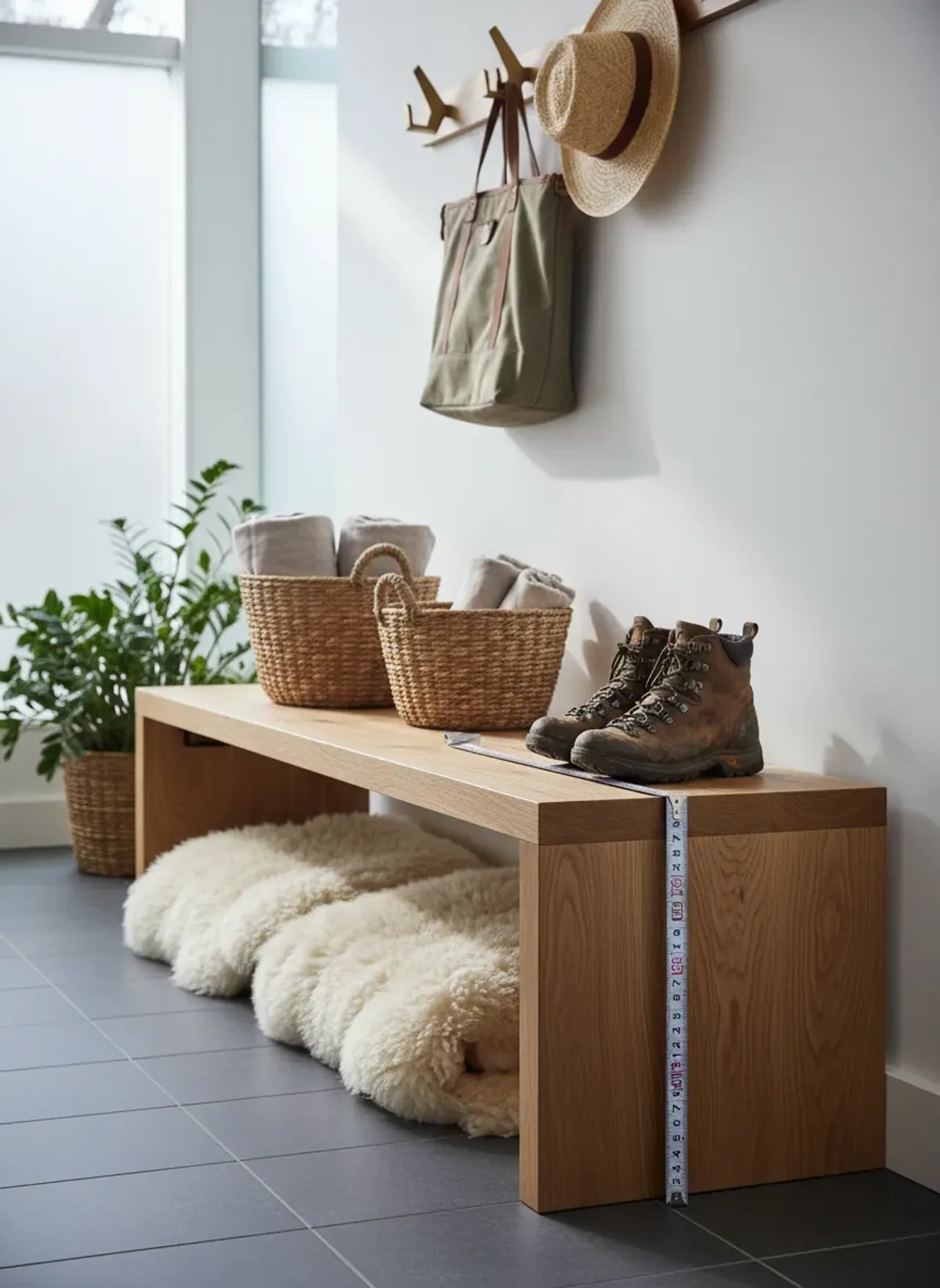
Apr 3, 2026 - Written by: Linda Wise

You know the feeling. You sit down to yank off a stubborn, snow-caked winter boot, and suddenly your knees are practically touching your chin. Your back aches, your center of gravity is entirely off, and you’re struggling just to get leverage. That’s exactly what happens when a mudroom bench is built even an inch too low.
Conversely, try perching on a bench that’s an inch too high. Your feet dangle, the edge bites into the back of your thighs, and you feel like a toddler sitting at the grown-ups’ table.
I’ve spent years analyzing, designing, and tearing out poorly executed entryway millwork. I can tell you unequivocally that nailing the exact mudroom bench height is the single most vital mathematical decision you will make in your entryway. Forget the paint color. Forget the cabinet hardware. If the seat height is wrong, the entire drop zone becomes a daily frustration.
Before we tear into the anthropometric data, cushion compression ratios, and boot clearances, here is a quick look at some freestanding options that actually get the math right.
Quick Comparison: Top Picks
| Product | Rating | Check Price |
|---|---|---|
| Prepac Wide Hall Tree Bench | ⭐⭐⭐⭐⭐ | View on Amazon |
| Bush Furniture Salinas Entryway Bench | ⭐⭐⭐⭐½ | View on Amazon |
| Crosley Furniture Seaside Hall Tree | ⭐⭐⭐⭐ | View on Amazon |
The Golden Ratio of Seating Ergonomics
Let’s cut right to the chase. The industry standard height for a mudroom bench is 18 inches from the finished floor to the top of the seating surface.
But why 18 inches? It’s not just a random number pulled out of thin air by a contractor. It stems from standard human anthropometric data—specifically, the average popliteal height (the distance from the floor to the crease behind your knee) of the adult population.
When you sit on an 18-inch surface, your knees bend at a comfortable 90-degree angle, your feet rest flat on the floor, and your torso can easily hinge forward. This forward hinge is non-negotiable for a mudroom. You aren’t lounging with a cocktail; you are aggressively pulling on or ripping off footwear. You need mechanical leverage.
Deconstructing the 18-Inch Target
Here’s the real kicker: hitting exactly 18 inches requires a bit of reverse engineering. You can’t just build an 18-inch plywood box and call it a day. You have to account for the thickness of the bench top itself, and potentially, the cushion you plan to place on top.
If you are using a standard 1.5-inch thick butcher block top, your base cabinet actually needs to be built at 16.5 inches. If you are planning to add a plush, 3-inch upholstered cushion, your base cabinet needs to drop all the way down to 13.5 inches.
Failing to do this reverse math is the number one mistake DIYers and rookie carpenters make. They build an 18-inch box, throw a piece of 2-inch oak on top, add a 3-inch cushion, and suddenly they’ve created a 23-inch bar stool instead of a bench.
Pro Tip: Always measure your bench height from the finished floor. If you are building the bench directly on the subfloor before installing 3/4-inch hardwood and a 1/4-inch underlayment, you need to add that entire inch to your raw cabinet frame so you don’t lose height once the flooring goes in.
The Cushion Compression Factor
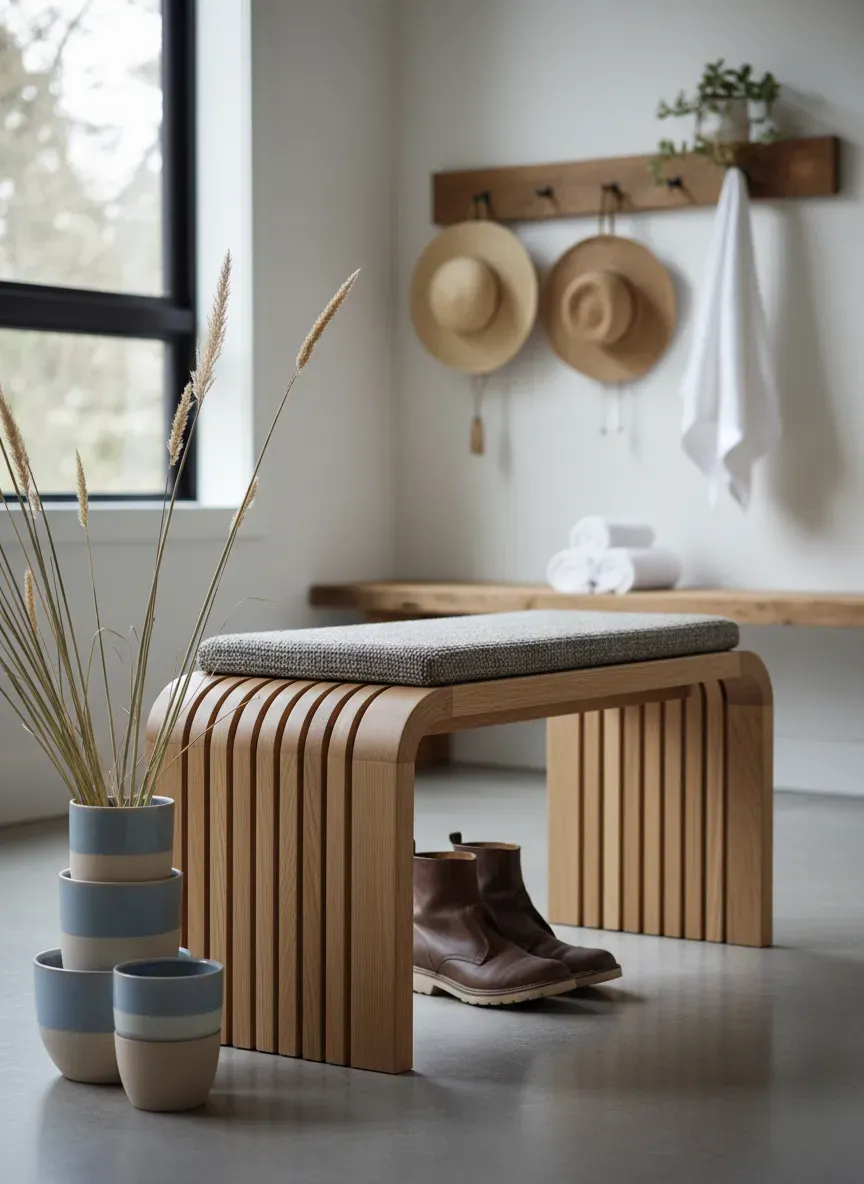
Let’s talk about upholstery. Adding a cushion to your mudroom bench changes the spatial dynamics drastically, and you have to understand the concept of “compression deflection.”
Compression deflection is simply a fancy manufacturing term that describes how much a piece of foam squishes when a human sits on it. Not all cushions behave the same way.
High-Density vs. Low-Density Foam
If you buy a cheap, low-density polyurethane foam pad, a 3-inch cushion might compress down to half an inch under the weight of an average adult. In this scenario, you wouldn’t want to subtract the full 3 inches from your base cabinet height, because the cushion effectively disappears when you sit on it.
I’ve personally found that the best approach for mudrooms is using High-Resilience (HR) foam with a firm density rating (usually around 2.8 lbs/cu. ft). A dense, high-quality 2-inch cushion will only compress about a half-inch when you sit. Therefore, you calculate your bench base assuming a 1.5-inch permanent addition.
Upholstered Built-Ins
If you’re going for a custom upholstered look where the fabric is stapled directly to the plywood base, the height of your wood frame will dictate everything. A firm, 2-inch tight-pulled upholstery job over a 16-inch base gives you that perfect 18-inch sweet spot.
Customizing Height Based on Family Dynamics
While 18 inches is the golden rule, rules are meant to be bent under the right circumstances. Your family’s specific physical makeup should heavily influence your final millwork drawings.
The Tall Family Conundrum
If you belong to a family where the average height hovers around 6’2”, an 18-inch bench might feel surprisingly squat. For taller individuals, dropping into a deep squat to reach a low bench strains the hip flexors and requires more quad strength to stand back up.
In households with exceptionally tall adults, raising the bench height to 19 or even 20 inches can drastically improve comfort. However, proceed with caution. A 20-inch bench means that any guests of average height will find their feet dangling awkwardly.
Designing for Children
Parents often ask me if they should lower the mudroom bench to accommodate toddlers and elementary-aged kids. My answer is almost always an emphatic no.
Kids grow incredibly fast. If you build a 14-inch high bench to suit your 5-year-old, they will outgrow it in a blink, leaving you with permanent, knee-wrecking cabinetry for the next decade. Instead, keep the bench at the adult standard of 18 inches. Kids are naturally adaptable—they will easily scramble up onto the bench, sit back, and swing their legs. Alternatively, you can slide a discreet wooden step stool under the bench for them to use temporarily.
Aging in Place and Accessibility
If you are designing a forever home or retrofitting a space for elderly parents, mobility is the primary concern. The Americans with Disabilities Act (ADA) guidelines suggest seating heights between 17 and 19 inches.
However, older adults often struggle more with the ascent from a seated position than the descent. A slightly higher bench—around 19 inches—combined with sturdy vertical armrests or adjacent wall grab bars makes standing up significantly easier.
The Impact of Footwear: What Goes Underneath?
A mudroom bench isn’t just for sitting; it’s the roof for whatever storage lives underneath it. The height of your bench directly dictates the vertical clearance of your shoe cubbies, and this is where spatial planning gets incredibly strict.
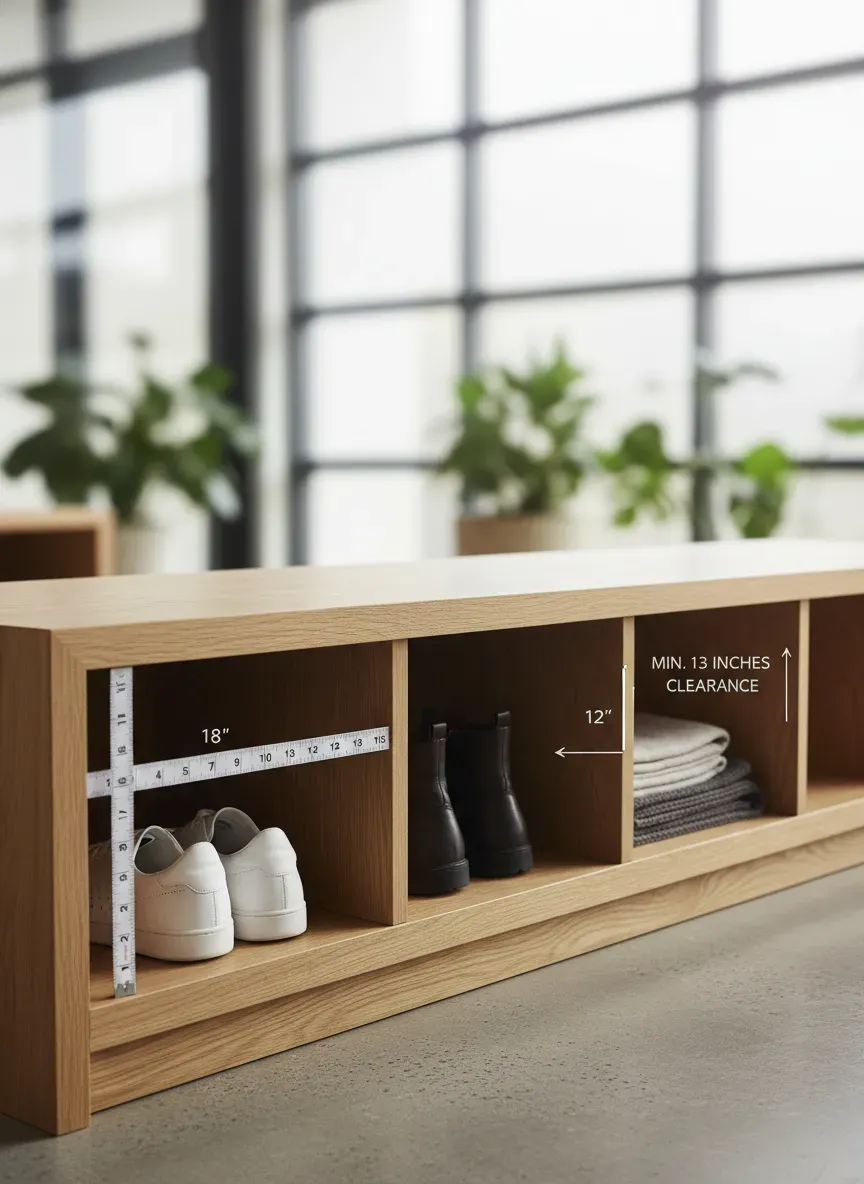
Let’s do the math again on an 18-inch bench. Subtract a 1.5-inch solid wood top. You are left with 16.5 inches. Now, subtract a standard 3.5-inch toe kick at the base (because nobody wants to scuff their cabinets with their shoes). You are down to 13 inches of vertical space. Subtract the 3/4-inch plywood used for the bottom shelf of the cubby. You now have 12.25 inches of usable vertical air space.
Sneakers vs. Winter Boots
12.25 inches is plenty of room for low-top sneakers, flats, running shoes, and kids’ cleats. You could even install a horizontal divider to create two tiers of 5.75-inch cubbies for maximum flat-shoe storage.
But what about winter boots?
A standard pair of adult L.L. Bean duck boots or Hunter rain boots requires at least 14 to 16 inches of vertical clearance. If you live in a snowy climate and wear tall boots daily, an 18-inch bench with a toe-kick will absolutely crush the tops of your footwear.
You have a few architectural choices here:
- Ditch the Toe Kick: Bring the cubbies flush to the floor (though you risk aesthetic damage over time).
- Raise the Bench: Push the bench to 19.5 inches, giving you that precious extra inch and a half for boot clearance.
- Hybrid Storage: Keep the bench at 18 inches, use the under-seat space for sneakers, and build a tall, vertical locker adjacent to the bench specifically for tall boots.
If you’re dealing with a cramped floor plan and don’t have room for adjacent tall lockers, figuring out how to choose the perfect small mudroom layout will dictate whether you can use a standard depth bench or if you need to get creative with your vertical storage constraints.
Built-In vs. Freestanding Benches
The debate between custom built-ins and buying a freestanding piece of furniture ultimately comes down to budget and permanence, but it also heavily affects how you measure and perceive height.
Freestanding Benches
When you buy a Prepac Wide Hall Tree Bench, the height is fixed at the factory. You get what you get. If the floor in your 100-year-old house is sloped, your bench will wobble, and the height will vary from the left side to the right.
If you are buying a Bush Furniture Salinas Entryway Bench, you’ll notice that the manufacturers usually design these slightly lower—around 16 to 17 inches—to accommodate the addition of a universal aftermarket cushion.
The Crosley Furniture Seaside Hall Tree utilizes a beadboard backing and a slightly elevated profile, making it feel substantial, but you still lack the ability to scribe it perfectly to your wall.
Scribing Built-Ins
With a custom built-in, you have total control. You can scribe the baseboards perfectly to the floor. If your mudroom floor has a 1/2-inch drop from the back wall to the front door (common in retrofitted garage mudrooms to allow water drainage), a skilled carpenter will cut the base of the bench on an angle. This ensures the top seating surface remains perfectly level at exactly 18 inches across its entire span.
The Floating Bench Aesthetic
A massive trend right now is the cantilevered, or “floating,” mudroom bench. These look incredibly sleek, as there is no cabinetry touching the floor beneath them, making the room feel larger and allowing you to just kick shoes underneath without restricting cubbies.
When installing a floating bench, the height measurement becomes even more critical because the visual weight is entirely different. Floating benches are usually constructed from a thick slab of wood—often 2 to 3 inches thick. You must measure exactly 18 inches to the top of that slab.
Furthermore, you need serious structural reinforcement. A floating bench carrying the dynamic load of a 200-pound adult dropping onto it to take off boots requires heavy-duty steel L-brackets bolted directly into the wall studs.
Designing the Entire Mudroom Ecosystem
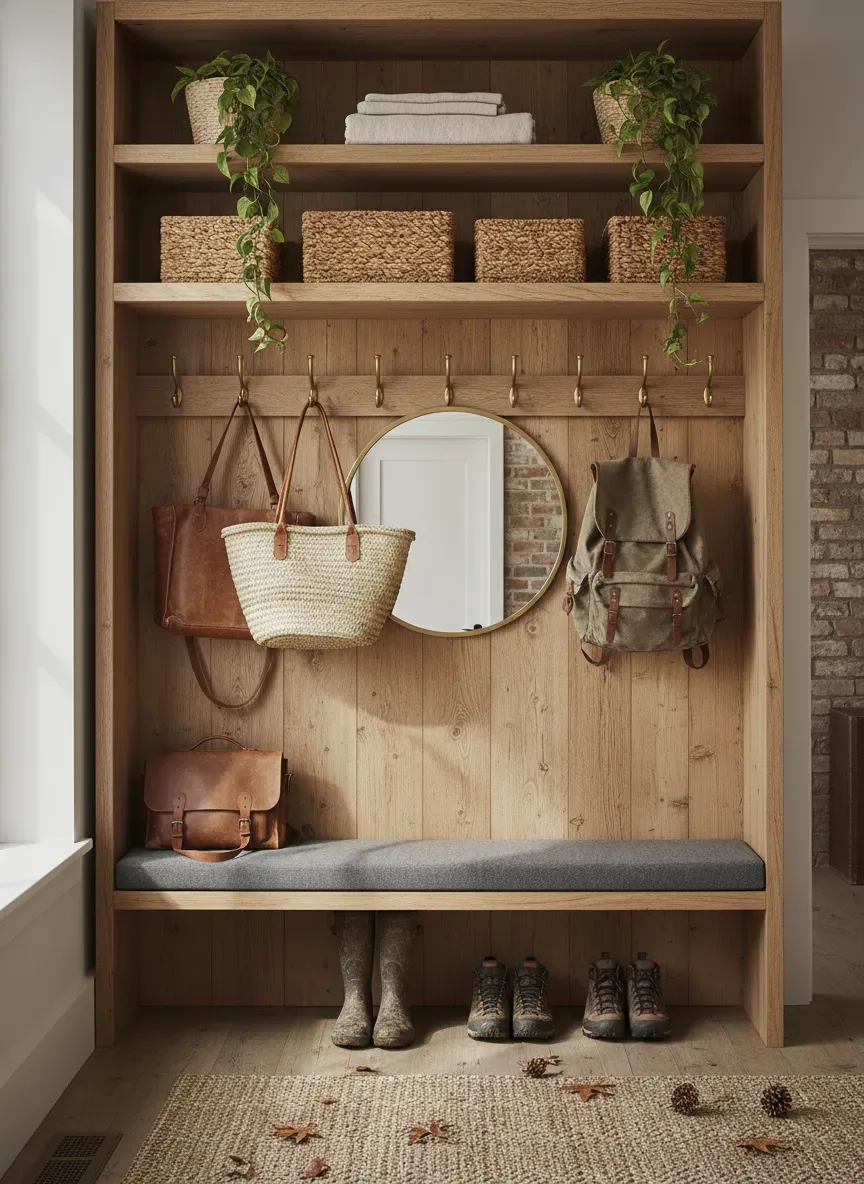
You cannot look at mudroom bench height in a vacuum. The bench is merely the anchor point for a broader vertical ecosystem. The height of the bench dictates where the wainscoting stops, where the coat hooks are mounted, and where the upper cubbies begin.
Hook Placement Relative to Bench Height
There is nothing more irritating than sitting down to tie your shoes and getting stabbed in the back of the neck by a stray jacket zipper or the metal prong of a coat hook.
The relationship between the seat and the hooks is delicate. If your bench is 18 inches high, the bottom of the lowest row of coat hooks should be mounted at a minimum of 60 inches from the floor (or 42 inches above the seat). This provides just enough clearance for a standard adult jacket to hang down without pooling onto the bench seat or interfering with the person sitting there.
If you are hanging long trench coats or heavy winter parkas, you need even more room. When you’re calculating this vertical real estate, figuring out the ideal spacing between coat hooks becomes just as vital as the bench itself. If you mount the hooks too low to accommodate children, the adults will be brushing against wet coats every time they sit down.
Wainscoting and Backrests
If you are installing board-and-batten or beadboard wainscoting behind your bench, the visual proportions matter. A common architectural rule of thumb is the rule of thirds.
If you have a standard 96-inch (8-foot) ceiling, a wainscoting height of 64 inches (two-thirds of the wall) looks visually stunning. With an 18-inch bench, this leaves exactly 46 inches of visible wainscoting behind the seated person. This provides a beautiful aesthetic backdrop while protecting the drywall from scuffs caused by backpacks and shoulders.
Upper Cubbies
Finally, consider the upper cabinetry. If your bench is 18 inches, and your hooks are at 60 inches, your upper cubbies (for hats, gloves, and out-of-season storage) generally start around 72 to 78 inches from the floor. This keeps the space feeling open and prevents the person sitting on the bench from feeling claustrophobic or like they are in a cave.
Common Pitfalls to Avoid
Even armed with the 18-inch rule, I see homeowners and contractors make the same mistakes repeatedly. Let’s outline the most egregious errors so you can bypass them entirely.
- Ignoring Baseboard Heaters: If you have baseboard heating running along the wall where you want your bench, you cannot simply build a solid box over it. You will create a massive fire hazard and block heat distribution. You must either reroute the plumbing, use a floating bench that clears the heater, or build a specialized ventilated base. This often forces the bench height up to 19 or 20 inches to accommodate the necessary venting.
- The “Deep Bench” Trap: We’ve talked extensively about height, but depth is its twin sibling. An 18-inch high bench that is 24 inches deep is a nightmare. It forces you to slide backward to rest your back, at which point your knees are no longer at the edge, and your feet lift off the floor. Keep the depth between 15 and 18 inches for optimal ergonomics.
- Forgetting the Hinge Clearance: If your mudroom bench has a lift-up top (like a piano bench) for hidden storage, you must factor in the hinge mechanism. Many friction hinges or gas struts require a minimum internal depth to operate. If your bench height is too low, the internal box might not be deep enough to house the hardware.
Key Takeaways
- The Standard: Always aim for 18 inches from the finished floor to the top of the final seating surface (including any non-compressible cushions).
- The Math: Deduct the thickness of your bench top and upholstery from your base framing measurements.
- The Footwear: Measure your tallest boots. If they exceed 13 inches, you must adjust your under-bench design, remove the toe-kick, or utilize an adjacent locker.
- The Ecosystem: Ensure coat hooks are mounted at least 42 inches above the seat to prevent coats from draping over seated individuals.
The Bottom Line: Precision matters. A mudroom is a high-traffic, utilitarian space that demands functional perfection. You wouldn’t guess the height of your kitchen counters, and you shouldn’t guess the height of your mudroom seating. Take the time to measure your family, measure your boots, and calculate the exact thickness of your materials.
Listen, if you’re tired of searching for the perfect off-the-shelf bench that rarely hits these exact ergonomic dimensions, I highly suggest taking matters into your own hands and building it yourself. I’ve personally found that the satisfaction of custom millwork far outweighs the convenience of flat-pack furniture.
If you want to guarantee your cuts are perfect and your structural integrity is flawless, you need proper schematics. You’ll notice that the best DIYers never fly blind. I strongly recommend grabbing the ultimate resource for custom builds: Ted’s Woodworking. With over 16,000 meticulously detailed woodworking plans—including phenomenal, customizable mudroom benches and hall trees—you’ll get exact cut lists and step-by-step instructions that take the guesswork out of the 18-inch rule. Plus, right now you can grab access to the entire vault at a massive 75% discount. Stop settling for poorly sized entryway furniture and build the exact drop zone your home deserves.