The Ultimate Space-planning Showdown: Standard Vs. Narrow Console Table With Storage

Confused between a standard and narrow console table? Read our expert-level comparative guide to discover how to maximize your entryway storage without sacrificing valuable floor space.

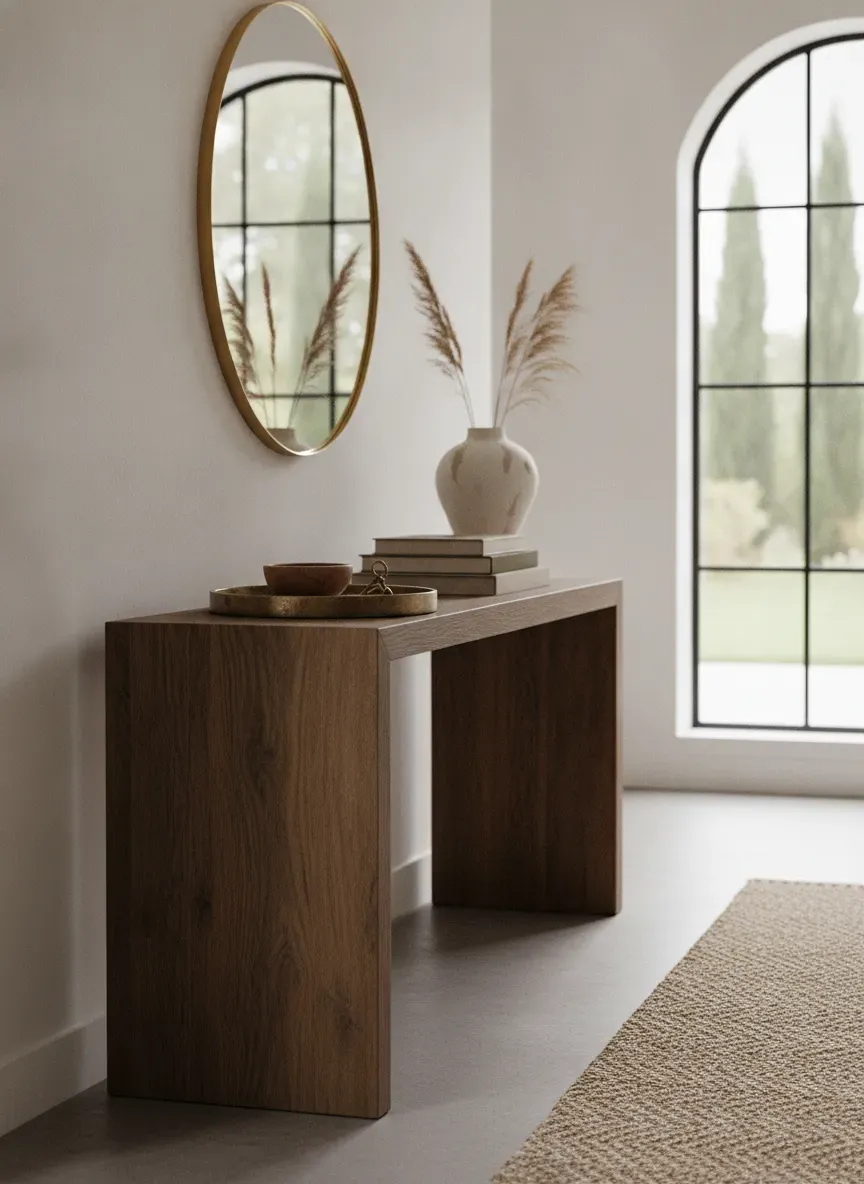
A beautifully styled entryway featuring a slim console table alongside modern decor elements

Jun 29, 2026 · Linda Wise

5 min read

Choosing the perfect accent furniture for your entryway or hallway often feels like a high-stakes game of Tetris. If you select a piece that is too bulky, you turn a high-traffic thoroughfare into an annoying bottleneck. If you go too small, you lose out on essential utility, leaving your keys, mail, and daily essentials with no designated home. I’ve personally found that finding a high-quality narrow console table with storage is the ultimate secret weapon for tight spaces, offering the perfect blend of a minimal footprint and maximum functionality. But how does it truly stack up against its traditional, standard-depth counterpart?

To help you skip the trial-and-error phase of interior decorating, let’s take a look at how these two popular configurations perform in real-world scenarios, comparing their dimensions, stability, styling potential, and storage capacities.

Quick Comparison: Top Picks

ProductRatingCheck Price
VASAGLE Narrow Console Table with Drawers⭐⭐⭐⭐⭐View on Amazon
HOOBRO Slim Console Table with Power Outlet⭐⭐⭐⭐½View on Amazon
Convenience Concepts Oxford Console Table with Shelves⭐⭐⭐⭐½View on Amazon

1. The Spatial Anatomy of Console Tables

Before pulling out your tape measure, we must dissect the core dimensional differences that separate these two categories. Many homeowners overlook the fact that a difference of just four to six inches in depth can completely alter the traffic flow of an entire room.

+-------------------------------------------------------------+
|                     CONSOLES AT A GLANCE                    |
+-------------------------------------------------------------+
|  Narrow Console (8" - 12" Deep)                             |
|  [=========] <- Ultra-slim footprint; keeps walkways clear  |
+-------------------------------------------------------------+
|  Standard Console (14" - 18" Deep)                          |
|  [===============] <- Deep storage; requires wider hallway  |
+-------------------------------------------------------------+

Defining “Standard” vs. “Narrow”

A standard console table typically features a depth ranging from 14 to 18 inches. Its length can vary wildly—anywhere from 36 inches to over 72 inches—while its height hover around the industry-standard 30 to 34 inches. This depth allows for deep drawers, generous display surfaces, and sometimes even cabinet-style doors.

On the other hand, a narrow console table lives in the 8 to 12-inch depth range. These units are intentionally designed to hug the wall, minimizing their projection into your living space. To compensate for their shallow depth, they often feature clever vertical configurations, tiered shelving, or fabric drawers that pull out without requiring bulky wooden glides.

Why Depth is the Silent Dealbreaker

You can easily live with a table that is slightly too long simply by shifting surrounding decor. However, a table that is too deep is a permanent physical hazard. If your home has a standard hallway width of 36 inches (the minimum residential building code in many regions), placing a 16-inch standard console table there leaves you with a measly 20 inches of walking clearance.

Try walking through that carrying groceries or wrangling a toddler. It’s a recipe for bruised hips. By swapping that piece out for an 11-inch slim console, you reclaim a comfortable 25 inches of clearance, which makes a massive psychological and physical difference in your home’s daily flow.

Sleek slim console table styling with minimal decor elements

The Ergonomics of Clearance Zones

When planning your layout, you need to account for what designers call “clearance zones.” These are the functional areas required to use a piece of furniture comfortably.

  • For drawer access: You need the depth of the table + the depth of the fully extended drawer + at least 18 inches of clearance for your body to bend down.
  • For cabinet access: You need the door swing radius + 15 inches of clearance.
  • For walkthrough traffic: A minimum of 24 inches of unobstructed space is required for a single adult to walk straight forward without turning sideways.

2. Deep Dive: The Narrow Console Table with Storage

Let’s focus on the engineering marvel that is the modern narrow console table. Making a piece of furniture that is tall, long, and exceptionally skinny—while still retaining storage capacity—requires thoughtful design and balanced weight distribution.

Why Slim Silhouettes Require Smart Storage Engineering

When you reduce the depth of a table to 9 or 10 inches, traditional wooden drawers become highly impractical. If you build them with standard wooden drawer glides, the drawer boxes themselves end up being so tiny that they barely hold a pack of gum.

To bypass this design limitation, manufacturers of high-quality slim consoles use a few clever workarounds:

  1. Fabric Foldable Bins: These bins maximize every square millimeter of internal space because their walls are paper-thin compared to 1/2-inch plywood or MDF drawer boxes.
  2. Flip-Down Compartments: Much like specialized shoe cabinets, some narrow consoles feature doors that tilt outward rather than pulling straight out. This allows you to store items vertically.
  3. Recessed Shelving: Open shelving that sits flush within the metal or wooden frame, eliminating any wasted space behind back panels.

You’ll notice this design philosophy in action with the VASAGLE Narrow Console Table with Drawers. It pairs a highly durable, rigid steel frame with clever drawer solutions to provide functional, out-of-sight storage without demanding valuable floor space.

The Structural Challenges of Narrow Designs

We need to talk about physics. A piece of furniture that is 30 inches tall but only 9 inches deep has a inherently high center of gravity. If you place a heavy vase on top or if a curious pet jumps onto it, the risk of tipping over increases exponentially compared to a wider, self-stabilizing standard console.

Pro Tip: If you buy a narrow console table, you must anchor it to the wall. Do not skip this step. Most reputable manufacturers include anti-tip kits in the box—use them. If your baseboards prevent the table from sitting flush against the wall, invest in adjustable L-brackets or gap spacers to ensure a rock-solid, secure attachment.


3. Standard Console Tables: When Space is No Object

If you are blessed with an expansive foyer, a grand open-concept great room, or a wide hallway, the standard console table is an excellent canvas for high-impact interior styling.

STANDARD VS. NARROW CONSOLE CAPABILITIES
+----------------------------+-----------------------------+
| Feature                    | Standard Console            |
+----------------------------+-----------------------------+
| Average Depth              | 14" to 18"                  |
| Storage Volume             | High (Deep drawers/cabinets)|
| Visual Mass                | Heavy, acts as an anchor    |
| Tip-Over Risk              | Low                         |
| Best Suited For            | Large Foyers, Behind Sofas  |
+----------------------------+-----------------------------+
| Feature                    | Narrow Console              |
+----------------------------+-----------------------------+
| Average Depth              | 8" to 12"                   |
| Storage Volume             | Moderate (Clever, compact)  |
| Visual Mass                | Light, airy, minimalist     |
| Tip-Over Risk              | Moderate (Requires anchoring)|
| Best Suited For            | Tight Hallways, Small Entrys|
+----------------------------+-----------------------------+

The Luxury of Deep Drawers and Double Shelving

A standard console table allows for heavy-duty storage. Here, you can easily store full-sized board games, thick blankets, bulky winter gear, or extensive dinnerware sets.

The drawers on a standard table are typically built with heavy-duty roller glides, meaning they can handle significant weight without sticking or sagging over time.

Design Weight and Visual Anchoring

In spacious rooms, a narrow console table can look lost, spindly, or cheap. Large spaces require furniture with sufficient “visual mass” to anchor the room.

A standard-depth console table, such as the Convenience Concepts Oxford Console Table with Shelves, uses bold geometric lines and substantial shelving to hold its own against high ceilings and large walls. It provides the visual weight needed to ground a spacious room, turning an empty wall into a deliberate design statement.

Standard wood console table in a spacious entryway


4. The Functional Sweet Spot: Hybrids and Technical Features

As our homes become smarter and more integrated, console tables have evolved beyond simple slabs of wood. Modern entryways and living rooms require integration with electronics, chargers, and cable management.

Power Outlets, USB Ports, and Cable Management

Many of us use our entry tables as charging hubs for phones, smartwatches, tablet devices, and portable power banks. Having cords running down the front or sides of a beautiful piece of furniture completely ruins its clean aesthetic.

This is where hybrid designs shine. Options like the HOOBRO Slim Console Table with Power Outlet integrate discrete power strips directly into the tabletop or lower shelves. This design detail allows you to plug in lamps, smart assistants, and chargers while routing all the unsightly cords cleanly down the back of the metal frame.

Drawer Glides, Magnetic Latches, and Hardware Quality

When evaluating any console table with storage, always pay close attention to the hardware:

  • Ball-Bearing Slides: Found in premium standard consoles, these offer the smoothest operation and longest lifespan.
  • Friction Slides: Often found in budget wooden consoles; they can squeak or bind over time, especially in humid climates.
  • Magnetic Catches: Critical for any cabinet doors to ensure they stay tightly closed and do not sag over time.
  • Integrated Leveling Feet: Absolutely vital for narrow console tables. Because they are so thin, even a minor floor slope can make them lean visibly. Adjustable feet allow you to level the table perfectly on uneven hardwood or plush carpeting.

5. Room-by-Room Placement Strategy

To help you decide which path to take, let’s look at how both narrow and standard console tables perform in different zones of your home.

The Entryway / Foyer: Making a First Impression

This is the ultimate battleground for console tables. Your entryway needs to welcome guests, set the stylistic tone for your home, and act as a drop zone for daily essentials.

  • Go with a Narrow Console if: Your front door swings directly into the living area or if your entryway is a long, straight hallway. You want to avoid any configuration where a guest has to step around the table to close the front door.
  • Go with a Standard Console if: You have a dedicated foyer with at least a 5x5 foot clear floor area. This allows you to style the tabletop with large decorative bowls, substantial lamps, and heavy art books without crowding the space.

The Living Room: Behind the Sofa Dynamics

Placing a console table behind a floating sofa is a classic design technique that hides the unsightly, plain back of the couch while offering a convenient surface for drinks or lighting.

  • Go with a Narrow Console if: The walkway behind your sofa is tight, or if your living room is on the smaller side. A slim table acts as a simple ledge for a drink or remote control without eating up precious floor space.
  • Go with a Standard Console if: Your sofa is a large, deep sectional. A tiny, narrow table will look completely dwarfed by a massive couch. In this scenario, you need a substantial standard table to match the scale of your seating.
       SOFA CONSOLE PLACEMENT SIGHTLINES
       
       [Standard Sofa] 36" Tall
       +------------------------------------+
       |                                    |
  +----+------------------------------------+----+
  |  [Narrow Console - 30" Tall]                 |  <-- Hidden behind sofa back;
  |  Provides a clean, low-profile ledge        |      perfect for low-profile rooms
  +----------------------------------------------+
  
  +----+------------------------------------+----+
  |  [Standard Console - 34" Tall]               |  <-- Tall and deep; serves as an
  |  Acts as a structural divider in open spaces |      independent focal point
  +----------------------------------------------+

The Hallway: Navigating High-Traffic Choke Points

Hallways are designed purely for movement. Any furniture placed here must respect the natural path of your body.

  • The Verdict: Here, the narrow console table with storage wins hands down. A standard table has no place in a normal hallway. A narrow table with open lower shelving allows light to pass through, keeping the hallway feeling airy and spacious rather than dark and cramped.

The Small Dining Room: Serving as a Minimalist Sideboard

Traditional dining room sideboards are deep, heavy, and expensive. If your dining area is cozy, a console table can serve as an elegant, budget-friendly alternative.

  • Go with a Narrow Console if: You only need a surface to hold a couple of bottles of wine, a decanter, and some extra cloth napkins in the drawers.
  • Go with a Standard Console if: You need to store heavy serving platters, stacks of dinner plates, and large table runners. The deeper drawers and robust shelving of a standard unit are necessary to support this kind of weight.

6. Materiality, Aesthetic Styles, and Longevity

The materials used to build your console table dictate its durability, maintenance requirements, and overall vibe. Let’s break down the common material configurations you’ll encounter during your search.

Solid Wood vs. MDF vs. Metal Frames

  • Solid Wood (Oak, Walnut, Pine): Offers incredible longevity, unique natural grain patterns, and can be sanded and refinished down the road. However, solid wood is prone to warping in high-humidity entryways and is significantly heavier.
  • MDF (Medium-Density Fiberboard) with Veneer: Highly stable, resistant to warping, and budget-friendly. Modern high-grade veneers look indistinguishable from real wood, though cheap laminates can peel at the corners if exposed to moisture.
  • Metal and Wood Hybrids: Extremely popular for slim designs. The metal frame provides structural rigidity that allows the table to remain ultra-slim without wobbling, while the wooden tabletop adds warmth and texture.
MATERIAL PROS & CONS
+-------------------+---------------------------+---------------------------+
| Material          | Pros                      | Cons                      |
+-------------------+---------------------------+---------------------------+
| Solid Wood        | Heirloom quality, strong  | Expensive, heavy, warps   |
| MDF/Veneer        | Cost-effective, stable    | Hard to repair if damaged |
| Metal/Wood Hybrid | Industrial look, rigid    | Can feel too cold/modern  |
+-------------------+---------------------------+---------------------------+

Styling Your Console: The Rule of Three and Visual Weight

Once your table is in place, styling it correctly is what elevates it from a mere utility piece to a beautiful design feature.

  1. The Rule of Three: Group your decor items in odd numbers. For example, place a tall table lamp on one side, a stack of two books in the middle, and a small decorative bowl on the other side. This creates a natural visual triangle that is highly pleasing to the eye.
  2. Mind the Visual Weight: If your console is open and airy, don’t crowd the top with heavy, dark objects. Balance a slim black metal frame with light-colored ceramics, clear glass vases, or reflective metallic accents to keep the composition looking balanced.
  3. Incorporate Greenery: A small potted plant or a vase of simple branches adds life and organic texture to the hard, straight lines of a console table.

Styling details on a console table


7. Crucial Buying Checklist & Pitfalls to Avoid

Before making your final choice, review this practical checklist to ensure you don’t run into any unexpected issues during assembly or placement.

  • Baseboard Clearance: Does your baseboard stick out significantly from the wall? If so, a slim console might sit an inch or two away from the wall at the top, creating a gap where mail or keys can fall behind. Look for consoles with recessed rear legs designed to clear baseboards.
  • Outlet Access: Will the table cover up a wall outlet that you need to access regularly? If yes, opt for an open-back console design or a unit with an integrated power strip.
  • Floor Material: If placing the console on carpeting, remember that thick carpet padding can cause skinny furniture to tilt slightly forward. Ensure the table has adjustable leveling feet to compensate for this.
  • Door Swing Clearance: Open your front door fully. Measure the distance from the wall to the edge of the door. Your console table should not sit within this swing radius, or you risk denting both the door and your new furniture.

Key Takeaways

  • Space Is King: Measure your room’s walkthrough clearance first. A hallway needs at least 24 inches of clear, unobstructed walking space to feel comfortable.
  • Anchor for Safety: Due to their high center of gravity, narrow console tables must be secured to the wall to prevent accidental tipping.
  • Style and Substance: Hybrid designs with integrated power outlets solve both your storage and cable management challenges in one sleek package.
  • Scale Matters: Match the visual weight of your table to your space. Slim tables excel in tight hallways, while standard tables anchor expansive, open-concept rooms.

The Bottom Line: If you are working with a tight entryway, a compact hallway, or a small living room, investing in a high-quality narrow console table with storage is the smartest choice you can make. It keeps your high-traffic walkways clear, provides dedicated storage for your daily essentials, and adds a polished, intentional design element to your home without occupying valuable floor space. For those with room to spare, a standard console table offers unmatched storage capacity and serves as a commanding visual anchor for larger architectural spaces. Assess your floor plan, prioritize your storage needs, and choose the option that best enhances your home’s daily flow.

Top Picks: Best Entryway Essentials

Editor's shortlist with verified ratings. Prices and availability below — clicking an Amazon link earns us a small commission at no extra cost to you.

# Product Rating Reviews Tag Check Price
1 Vasagle Industrial Entryway Bench 4.5 8,420 Top Pick View on Amazon
2 Crosley Furniture Seaside Hall Tree 4.5 5,410 View on Amazon
3 Seville Classics 12-Pair Shoe Rack 4.5 6,420 Best Storage View on Amazon
4 Franklin Brass Wall Hooks (5-Pack) 4.5 9,820 View on Amazon
5 Simplihome Artisan Solid Wood Bench 4.5 3,127 Editor's Pick View on Amazon

Affiliate disclosure: As an Amazon Associate we earn from qualifying purchases. Tag: entreyway-20 — change in src/data/topPicks.ts.

Enjoyed this guide? Share it!

Share: