
Navy Blue Mudroom Ideas: Classic Cubby Designs for a Sophisticated Entry
Transform your chaotic entryway into a sophisticated space. Discover expert navy blue mudroom ideas, classic cubby designs, and structural tips for maximum impact.
Apr 1, 2026 - Written by: Linda Wise

I’ve personally found that the mudroom is the hardest-working square footage in any house. It absorbs the brunt of our chaotic lives—muddy boots, dripping umbrellas, discarded backpacks, and an endless avalanche of mail. Yet, for decades, we treated these spaces as utilitarian afterthoughts, painting them sterile white and hoping the mess would somehow magically organize itself.
It rarely does.
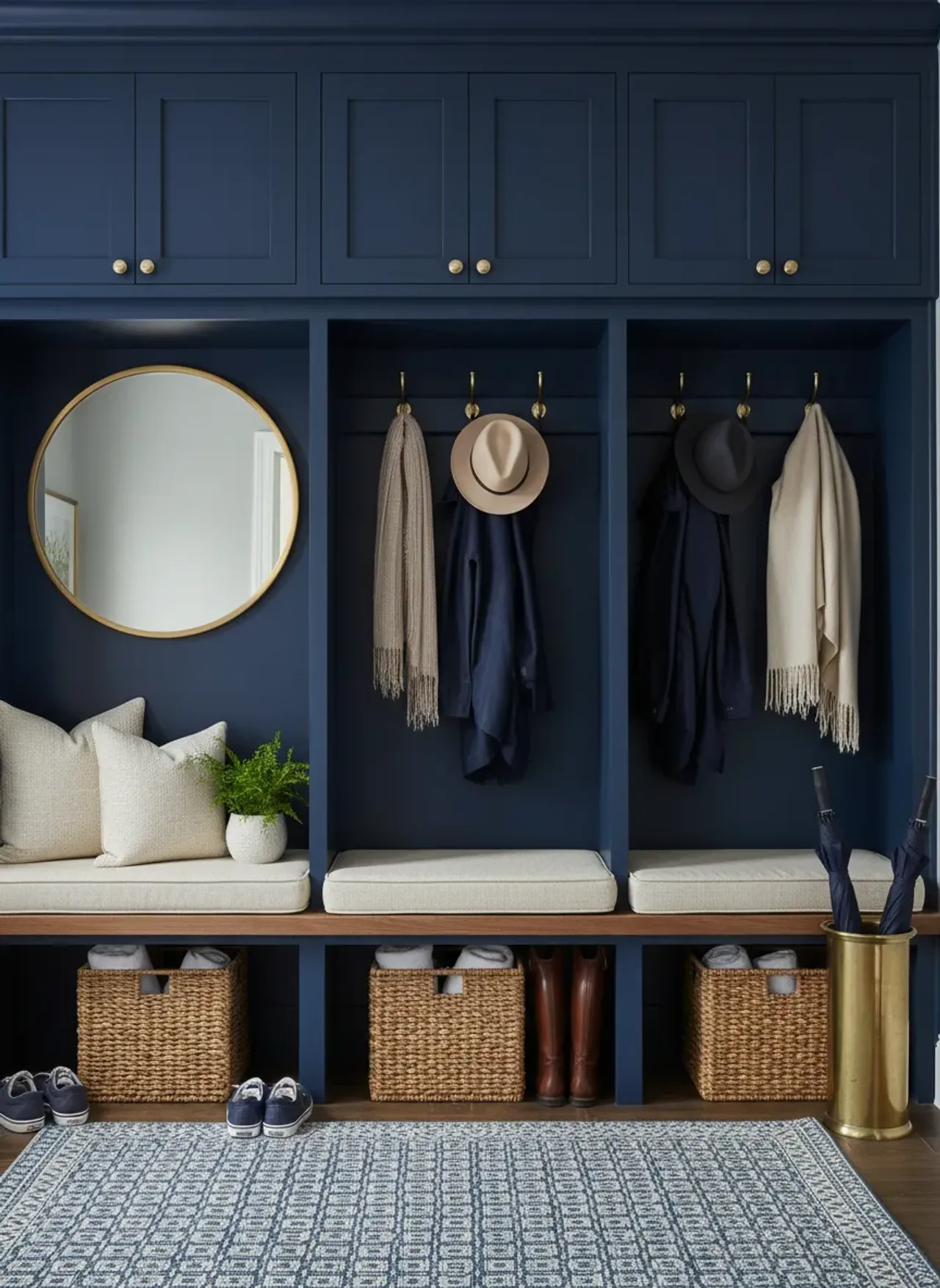
Enter the navy blue mudroom. Embracing a deep, saturated hue like navy doesn’t just camouflage the inevitable scuffs and dirt of daily life; it introduces a level of chromatic gravitas that elevates a simple drop zone into a sophisticated architectural feature. When you combine the moody elegance of navy with the structural rhythm of classic cubby designs, you create an entryway that commands order while feeling incredibly luxurious.
If you are planning to overhaul your entryway, you need a strategy that balances aesthetic depth with relentless functionality. Here’s a breakdown of the specific elements I rely on to craft bespoke, highly efficient mudroom environments.
Quick Comparison: Top Picks
| Product | Rating | Check Price |
|---|---|---|
| Heavy Duty Solid Brass Cabinet Pulls | ⭐⭐⭐⭐⭐ | View on Amazon |
| Hand-Woven Rattan Storage Baskets | ⭐⭐⭐⭐½ | View on Amazon |
| Premium Navy Cabinet Enamel Paint | ⭐⭐⭐⭐⭐ | View on Amazon |
The Psychology and Practicality of Deep Navy
Why navy? You’ll notice that interior designers frequently lean on dark, maritime blues when dealing with transitional spaces. Navy acts as a neutral. It grounds a room, offering the high-contrast benefits of black without the severe, gothic undertones.
Forgiving the Dirt (and the Chaos)
White beadboard is beautiful on day one. By day thirty, it’s a gallery of shoe scuffs, fingerprint smudges, and stray dirt. Navy blue effectively swallows these minor imperfections. It buys you time between deep cleans. More importantly, dark colors recede visually. When you have a wall of custom cabinetry filled with colorful coats and patterned scarves, a white background highlights the visual clutter. A navy background absorbs it, making the entire arrangement feel deliberate and cohesive.
Undertones Matter
Not all navy blues are created equal. Some veer into purple territory under incandescent light, while others pull heavily toward green or slate gray. If your mudroom receives abundant natural light, a true, inky navy like Sherwin-Williams’ Naval or Benjamin Moore’s Hale Navy provides spectacular depth. If your entryway is windowless, you might want a navy with slightly warmer, black undertones to prevent the space from feeling like a cold cavern.
Anatomy of the Classic Cubby
Creating a sophisticated entry relies entirely on the architectural framework of your storage. Classic cubby designs aren’t just open boxes; they require thoughtful proportioning.
Getting the Dimensions Right
You can build the most beautiful cabinetry in the world, but if the scale is wrong, it will fail you daily.
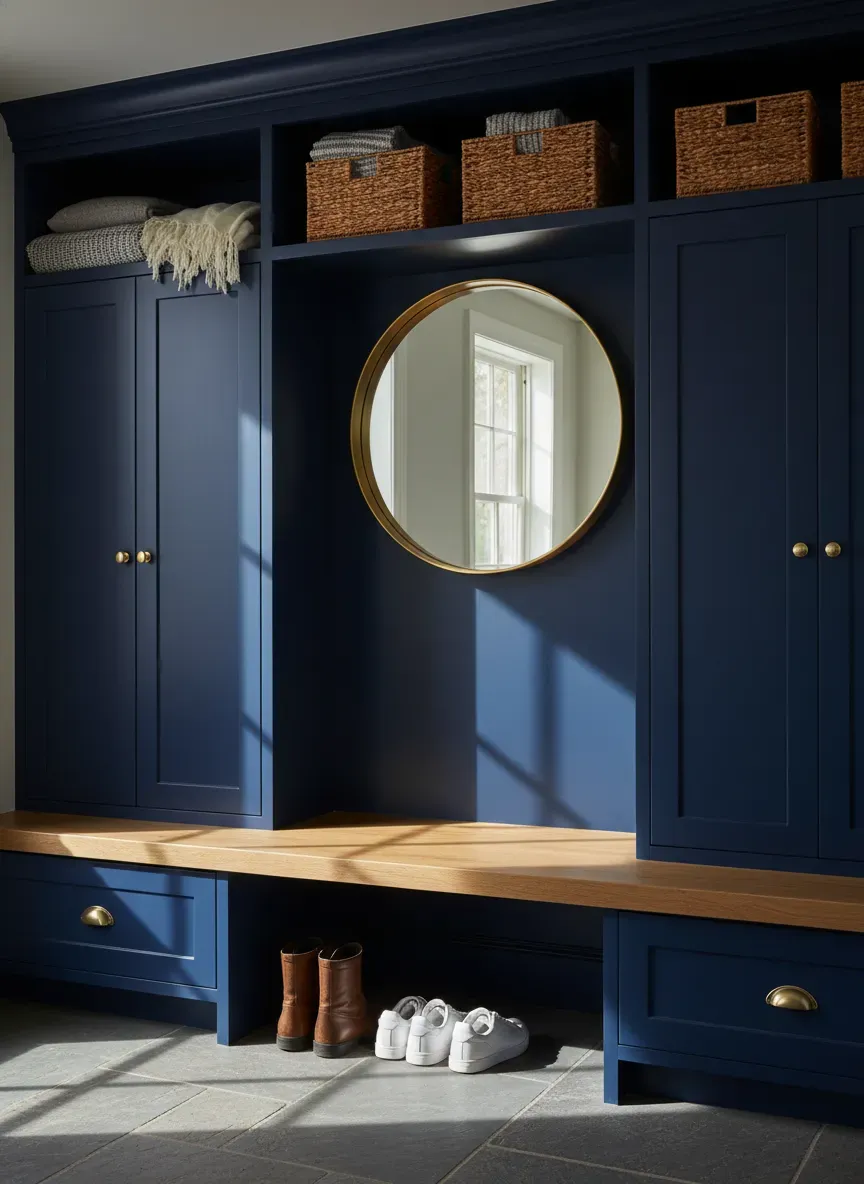
I generally recommend a bench height of 18 inches. This is the ergonomic sweet spot for sitting down to tie a shoe. The depth of the bench should sit between 18 and 20 inches—anything shallower feels precarious, and anything deeper becomes a black hole where items get lost.
When dividing the vertical space, assign each family member a dedicated “locker” or vertical column. A standard width of 15 to 20 inches per column is ideal. Above the bench, you need adequate clearance for long winter coats. This is where precision matters. If you mount your hardware too high, kids can’t reach it. Too low, and coats pool on the bench. I highly recommend spending time figuring out the ideal spacing between coat hooks to ensure your vertical storage functions flawlessly.
Small Space Strategies
Not everyone has a sprawling 150-square-foot dedicated mudroom. Often, we are carving these drop zones out of cramped hallways or garage transit areas. If you are working with limited square footage, verticality is your best friend. Take the cabinetry all the way to the ceiling, utilizing the highest cubbies for out-of-season storage.
If your footprint is particularly constrained, you have to be ruthless about dimensions. Shaving two inches off the depth of your bench might mean the difference between a functional hallway and a frustrating bottleneck. For those dealing with highly restricted layouts, you can learn a lot about maximizing a tight footprint with our 5x6 mudroom guide, which breaks down the exact tolerances needed for compact spaces.
Pro Tip: Always incorporate a “drop zone” hierarchy. Heavy, dirty items (shoes, boots) belong on the floor or in the lowest cubbies. Frequently used items (coats, bags) occupy the mid-zone. Lightweight, seasonal items (hats, gloves) go in baskets on the very top shelf.
Elevating the Aesthetic: Hardware, Wood, and Textures
A wall of dark blue cabinetry can feel heavy if you don’t break up the visual mass. The secret to a truly sophisticated entry lies in the materials you use to interrupt the navy.
The Magic of Brass and Gold Accents
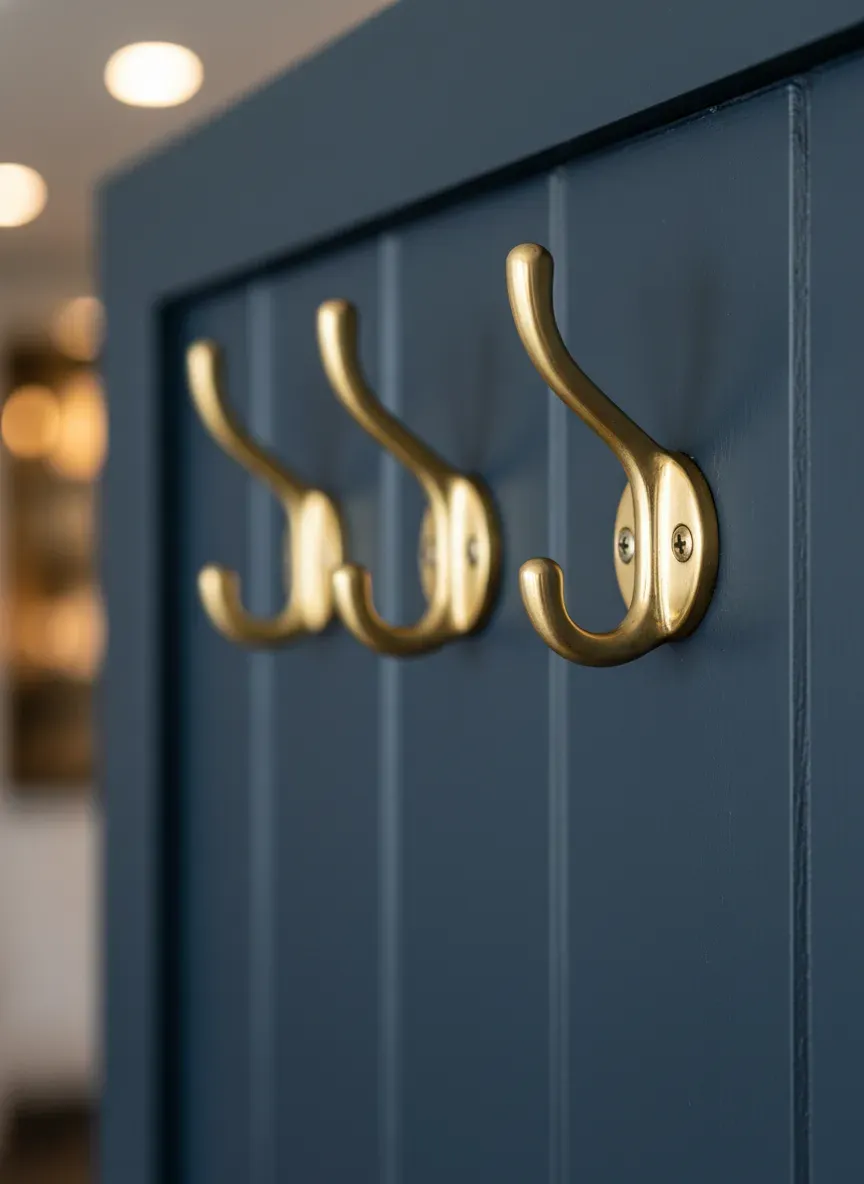
There is no better companion for navy blue than warm metal. Unlacquered brass, satin brass, or antique gold hardware pops violently (in the best way possible) against a dark maritime background.
Invest in high-quality hardware. Mudroom hooks take an absolute beating. A cheap, hollow metal hook will snap the first time someone yanks a heavy, wet winter coat off of it. Upgrading to solid metal hardware—like these Heavy Duty Solid Brass Cabinet Pulls—provides both a tactile sense of luxury and the mechanical strength required for daily abuse.
Introducing Organic Warmth
To prevent the space from feeling too clinical or locker-room-adjacent, introduce natural wood tones. A thick, solid white oak or walnut bench slab completely transforms the cabinetry. The organic grain of the wood softens the rigid geometry of the cubbies.
Similarly, utilize woven textures in your upper storage areas. Instead of matching navy painted boxes or sterile plastic bins, opt for Hand-Woven Rattan Storage Baskets. The honey tones of the rattan tie in perfectly with the brass hardware and wood bench, creating a cohesive triad of warm tones against the cool blue background.
Lighting the Moody Mudroom
Dark paint absorbs light. This is a simple law of physics, but it’s one that DIYers frequently forget when designing a navy mudroom. If you paint your entryway dark blue and rely solely on a single flush-mount ceiling fixture, the space will feel oppressive and gloomy.
Layered lighting is critical here.
- Ambient Lighting: Recessed ceiling lights spaced evenly to provide general illumination.
- Task Lighting: This is where the magic happens. Install brass sconces directly onto the face frames of your cubbies, right above the coat hooks. Not only does this provide brilliant task lighting for finding keys or zipping coats, but it also casts a beautiful, warm glow down the navy beadboard, highlighting the architectural details of your millwork.
- Accent Lighting: If your cubbies feature open upper shelves, running a concealed LED strip along the inside top edge creates a sophisticated, high-end retail display vibe.
Pay attention to your bulb temperatures. A 4000K or 5000K daylight bulb will make navy blue look harsh and industrial. Stick to a warm 2700K or 3000K temperature to bring out the rich, velvety undertones of the paint.
Paint Finishes and Application Techniques
Slapping a coat of wall paint on custom millwork is a recipe for disaster. Mudroom cubbies are high-friction environments. Backpacks will scrape against the sides; wet umbrellas will lean against the backing. You need an industrial-grade finish.
Satin vs. Semi-Gloss: The Ultimate Debate
Matte paint looks incredibly elegant, but you should never use it in a mudroom. It holds onto dirt and is notoriously difficult to wipe clean without burnishing (creating shiny spots).
For custom cabinetry, a satin or pearl finish is usually the sweet spot. It offers enough sheen to be easily wipeable but isn’t so glossy that it highlights every tiny imperfection in the wood. If your household is particularly rugged (think multiple large dogs and kids playing muddy sports), bumping up to a semi-gloss offers maximum durability.
The Prep Work
A flawless paint job is 90% preparation. If you are building cubbies from MDF or cabinet-grade plywood, you must seal the porous edges.
- Fill all brad nail holes with a high-quality wood filler, slightly overfilling so you can sand it perfectly flush.
- Sand the entire structure down to 220-grit.
- Caulk every single seam where wood meets wood (or wood meets wall). Do not skip this step. Caulking is what makes built-ins look like custom architecture rather than a weekend DIY project.
- Apply a high-adhesion bonding primer.
For the topcoat, avoid standard latex wall paint. You need an enamel or a urethane-alkyd formula that cures to a hard shell. Using a product specifically designed for high-traffic woodwork, like a Premium Navy Cabinet Enamel Paint, ensures your deep blue finish withstands the test of time without chipping or peeling.
Flooring Pairings That Anchor the Space
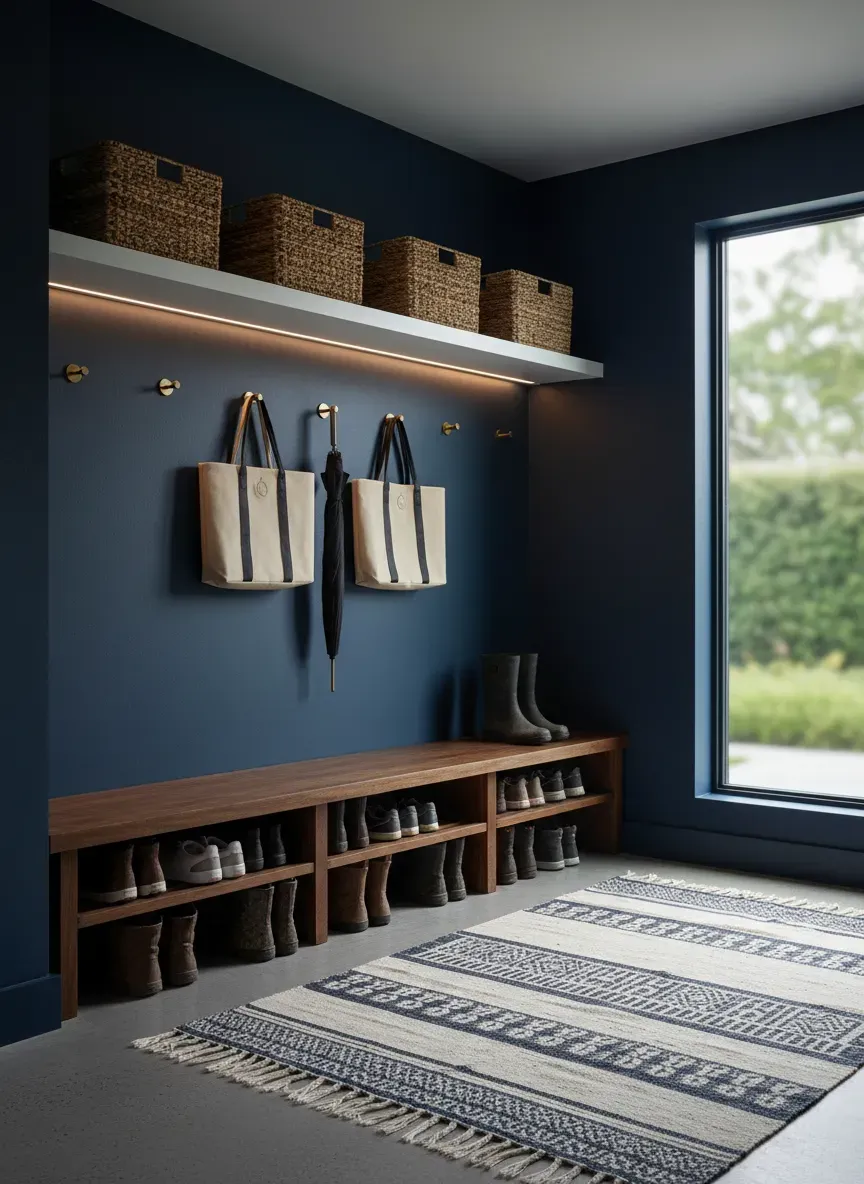
The floor of your mudroom takes just as much abuse as the cabinetry. When designing around a navy focal point, the flooring choice can either make or break the aesthetic.
- Natural Slate: A charcoal or multi-color cleft slate floor is a timeless companion to navy cabinetry. The rugged, uneven texture hides dirt brilliantly, and the dark gray tones complement the blue without competing with it. Laying slate in a herringbone pattern adds an extra layer of structural interest.
- Brick Pavers: Thin brick veneers laid on the floor evoke a classic, historic farmhouse feel. The red and orange tones of the brick provide a striking, complementary contrast to the cool navy blue, instantly warming up the room.
- Patterned Cement Tiles: If you want a more transitional or modern look, a geometric cement tile in black, white, and gray provides a highly durable, visually engaging base that allows the solid navy cubbies to stand out as the primary feature.
Common Pitfalls in Mudroom Design (and How to Dodge Them)
Even the most beautiful designs can fail if they ignore the realities of daily life. Here’s the real kicker: most mudroom mistakes only become apparent six months after the project is finished, right in the middle of a brutal winter or a rainy spring.
Forgetting Ventilation for Damp Items
Closed cabinets look tidy, but if you throw damp winter coats and wet shoes behind a solid door, you are creating a mold incubator. If your design includes closed doors for shoe storage, ensure you incorporate ventilation. Louvered doors, decorative metal mesh panels, or even discreetly drilled ventilation holes at the back of the cabinet will save you from a musty-smelling entryway.
Skimping on the Shoe Drop
People are inherently lazy when they walk through the front door. If putting a pair of shoes away requires opening a door, pulling out a drawer, and aligning the shoes perfectly… it won’t happen. The shoes will pile up in the middle of the floor. Always leave an open, accessible cavity directly beneath the bench. This allows family members to simply kick their shoes off and slide them under the bench in one fluid motion.
Overcomplicating the Visual Line
When building cubbies, it’s tempting to add intricate crown molding, corbels, fluted face frames, and heavily detailed baseboards. Unless you live in an ornate Victorian home, resist this urge. Navy blue is a heavy, commanding color. If you pair it with overly fussy architectural details, the space will feel claustrophobic and busy. Clean lines, simple shaker-style dividers, and a straightforward, chunky top molding will yield a much more sophisticated, timeless result.
Bringing It All Together: Your Blueprint for a Sophisticated Entry
Designing a highly functional, visually stunning mudroom doesn’t happen by accident. It requires a deliberate marriage of color theory, spatial planning, and material selection.
Key Takeaways
- Embrace the Dark: Navy blue (like Hale Navy or Naval) is exceptionally forgiving of dirt while providing a high-end, bespoke aesthetic.
- Prioritize Proportions: Bench height (18 inches) and cubby width (15-20 inches) dictate the comfort and usability of the space.
- Warm It Up: Counteract the cool tones of the navy paint with unlacquered brass hardware, natural wood benches, and woven rattan baskets.
- Layer Your Lighting: Don’t let dark paint swallow your light. Incorporate sconces and LED strips to highlight the millwork.
- Use the Right Paint: Always opt for an enamel or urethane-alkyd cabinet paint in a satin or semi-gloss finish to survive the friction of daily use.
The Bottom Line: A well-designed mudroom brings immediate peace of mind to a household. By choosing a sophisticated navy blue palette and adhering to classic, rigorously planned cubby dimensions, you are building an entryway that works tirelessly to keep your home clean while offering a gorgeous, welcoming aesthetic the moment you walk through the door.
Hiring a custom cabinet maker to design and install bespoke navy built-ins can easily run you upwards of $5,000 to $10,000 depending on your space. But if you have a free weekend, a circular saw, and a little bit of ambition, building these classic cubbies yourself is entirely within reach. You don’t need to guess at the cut lists or the structural joinery. I highly recommend checking out Ted’s Woodworking. You get instant access to over 16,000 step-by-step woodworking plans—including stunning, architecturally sound mudroom lockers and entryway benches. Right now, they are offering a massive 75% discount, making it an absolute no-brainer for anyone ready to transform their chaotic entryway into a sophisticated, custom-built drop zone. Grab the plans, pick out your favorite shade of navy, and start building.