
Organizing Shoes and Boots in Entryway Benches with Storage: Maximizing Capacity
Master the art of entryway organization. Learn expert strategies to maximize storage capacity for shoes and boots within storage benches while maintaining a stylish aesthetic.
Feb 3, 2026 - Written by: linda wise

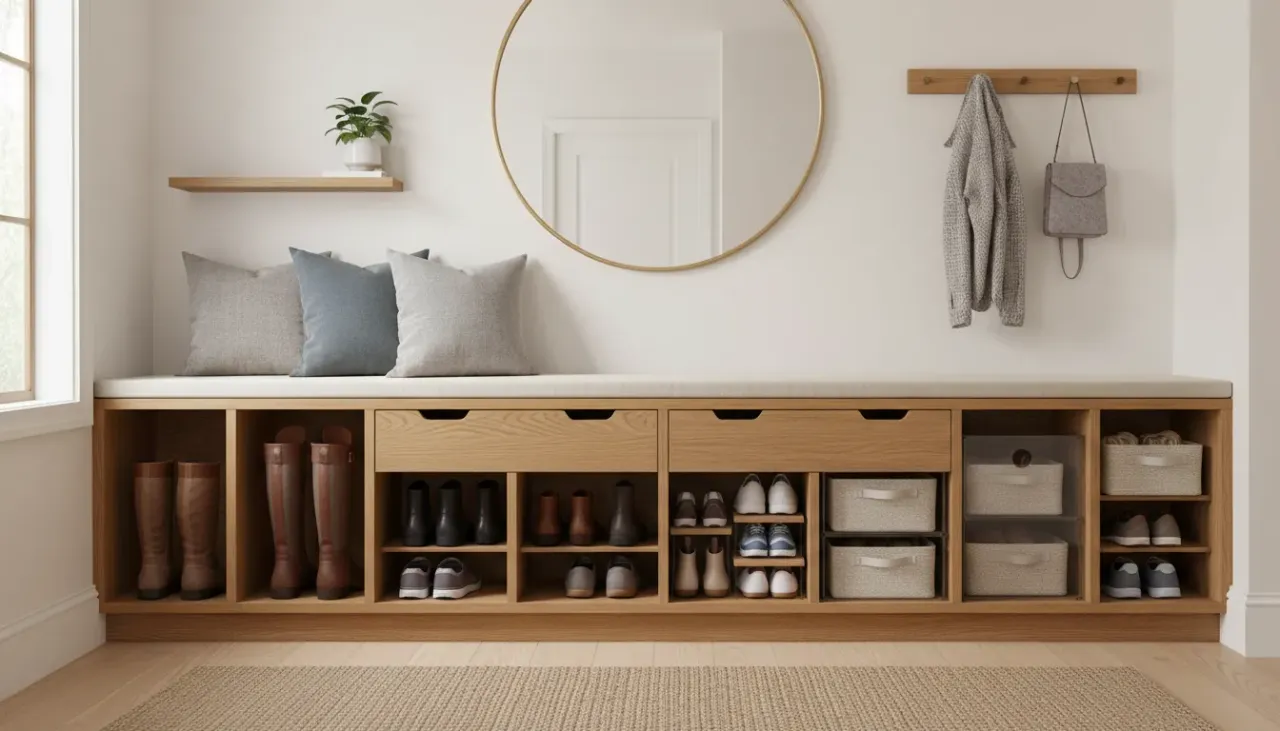
The entryway sets the tone for the entire home. It is the transition point between the chaotic outside world and your personal sanctuary. However, without a strategic system in place, this critical area often devolves into a cluttered obstacle course of discarded sneakers, sprawling rain boots, and mismatched sandals. The storage bench is widely regarded as the cornerstone of entryway organization, yet few homeowners utilize its full potential.
Simply purchasing a bench with an open cavity or a few shelves is rarely enough to solve the shoe storage dilemma. To truly maintain a serene and functional environment, one must employ specific spatial strategies. By optimizing how footwear is arranged, selecting the correct internal organizers, and understanding the geometry of your specific shoe collection, you can significantly increase the capacity of your entryway furniture. This guide provides a comprehensive approach to transforming your storage bench from a dumping ground into a high-efficiency organizational hub.
Assessing Footwear Volume and Entryway Dimensions
Before investing in new furniture or reorganizing your current setup, a thorough audit of your household’s footwear requirements is essential. The “one size fits all” approach is the enemy of efficiency. A family with young children has vastly different spatial needs than a couple with a penchant for high-top sneakers or knee-high leather boots.
The Audit: Active vs. Passive Storage
The first step in maximizing capacity is strictly defining which shoes belong in the entryway. The storage bench should be reserved for “active” footwear—the pairs worn daily or weekly. Occasional footwear, such as dress shoes for weddings or specialized athletic gear used infrequently, should be relegated to closet storage elsewhere in the home.
Conduct a count of the active pairs. Categorize them by height and width. Winter boots require vertical clearance, while flip-flops and loafers require minimal vertical space but can create horizontal clutter. Understanding these ratios will dictate whether you need a bench with deep vertical cavities, adjustable shelving, or a flip-top lid mechanism.
Measuring for Clearance and Traffic Flow
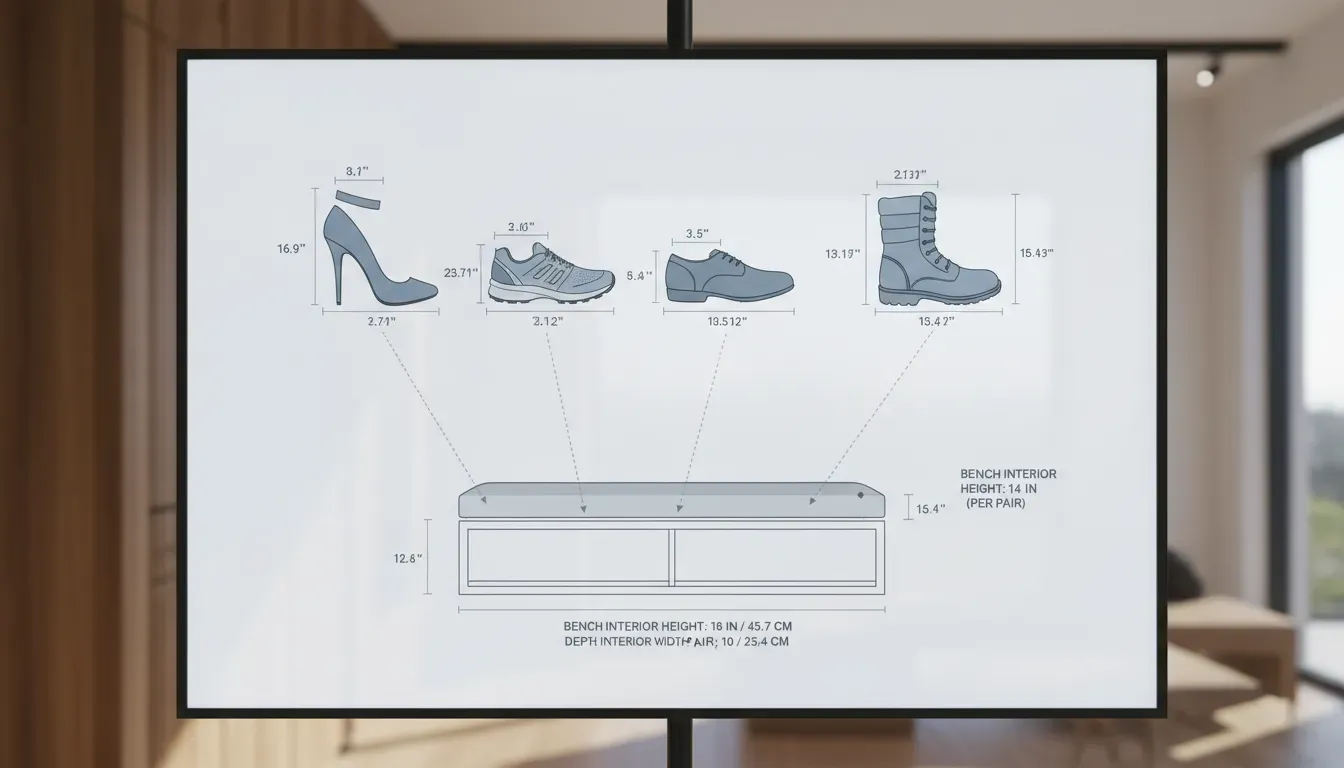
Maximizing capacity is not just about what goes inside the bench, but how the bench fits into the room. A bench that is too deep may obstruct the door swing or narrow the hallway to an uncomfortable degree. Standard bench depths range from 14 to 18 inches. If you plan to store men’s shoes (which often exceed 12 inches in length) inside a cabinet-style bench, ensure the internal depth is sufficient to allow the doors to close fully without crushing the heel counters of the shoes.
Selecting the Right Bench Architecture
The structural design of the bench is the primary factor in how much it can hold. While aesthetics are important, the internal architecture must match your specific inventory.
Cubby-Style Benches
For households that prioritize speed and accessibility, the open-cubby bench is superior. It allows for immediate visual identification of footwear and encourages family members to put shoes away because it requires no extra steps like opening a drawer or lid.
To maximize capacity in a cubby system, look for adjustable shelves. Fixed cubbies often waste vertical space. By adjusting a shelf downward by two inches, you may gain enough room on the tier above to fit ankle boots, rather than just flats.
Flip-Top Storage Benches
Flip-top benches offer a cleaner aesthetic by concealing the contents entirely. However, they present a unique challenge: the “black hole” effect. Without internal organization, shoes are tossed in, resulting in a jumbled pile where pairs become separated and materials are damaged.
If you choose a flip-top bench, it is imperative to create compartments within the open cavity. Vertical dividers are essential here to keep boots upright and separate delicate suede from muddy rubber soles.
Cabinet and Drawer Combinations
Benches featuring cabinet doors or pull-out drawers offer a middle ground. They conceal clutter while often providing shelving. Drawers are particularly effective for smaller items or children’s shoes, as you can view the entire contents from above without bending down to peer into a dark shelf.
For those seeking a versatile foundation for their organization system, consider a unit that combines seating with varied storage options.
Explore versatile entryway storage benches on Amazon
Strategic Placement Techniques
Once you have the appropriate furniture, the way you place the shoes inside dictates the total capacity. Utilizing specific arrangements can increase storage space by up to 30 percent.
The Heel-to-Toe Method
The most effective way to store shoes on a shelf or in a cubby is the heel-to-toe method. Place one shoe facing forward and its pair facing backward. This allows the widest part of the shoe (the toe box) to align with the narrowest part (the heel) of its partner. This interlocking arrangement saves horizontal space, often allowing three pairs of shoes to fit in a space that would typically accommodate only two pairs aligned side-by-side.
Vertical Stacking for Flats
Sandals, flip-flops, and low-profile flats waste significant vertical space when placed side-by-side. For these items, vertical stacking is superior. Use small risers or “shoe slots” that allow one shoe to sit on top of the other without touching. This effectively doubles your shelf capacity for low-profile footwear. Alternatively, place these items in baskets where they can be stored vertically on their sides, like files in a cabinet.
Nesting Boots
For shorter ankle boots or mid-calf boots stored in a flip-top bench, use the nesting technique. Lay one boot on its side, and place the other boot on top, inverted, so the toe of the top boot rests near the opening of the bottom boot. This creates a compact rectangular shape that is easily stackable.
Managing Tall Boots and Winter Gear
Boots present the most significant challenge for entryway benches due to their height and tendency to topple over. When boots flop sideways, they consume valuable floor space and can become permanently creased or damaged.
Upright Storage Solutions
If your bench has a tall shelf section, utilize boot shapers to keep the shafts upright. This minimizes the footprint of each pair. If you do not have shapers, rolled-up magazines or cut segments of pool noodles serve as effective, budget-friendly alternatives.
For flip-top benches, consider installing a tension rod across the length of the internal cavity. You can then use boot clips to hang the boots from the rod, suspending them above the floor of the bench. This not only preserves the shape of the boots but also allows you to store smaller items, like shoe care kits or extra laces, on the floor underneath the hanging boots.
Protecting the Bench Interior
Winter boots often carry snow, salt, and mud. To protect the material of your bench and maximize longevity, line the bottom of storage compartments with cut-to-size rubber mats or boot trays. This creates a waterproof barrier that is easy to remove and clean, preventing moisture from warping wooden interiors or staining fabric linings.
Find durable boot shapers and inserts on Amazon
Integrating Baskets and Bins
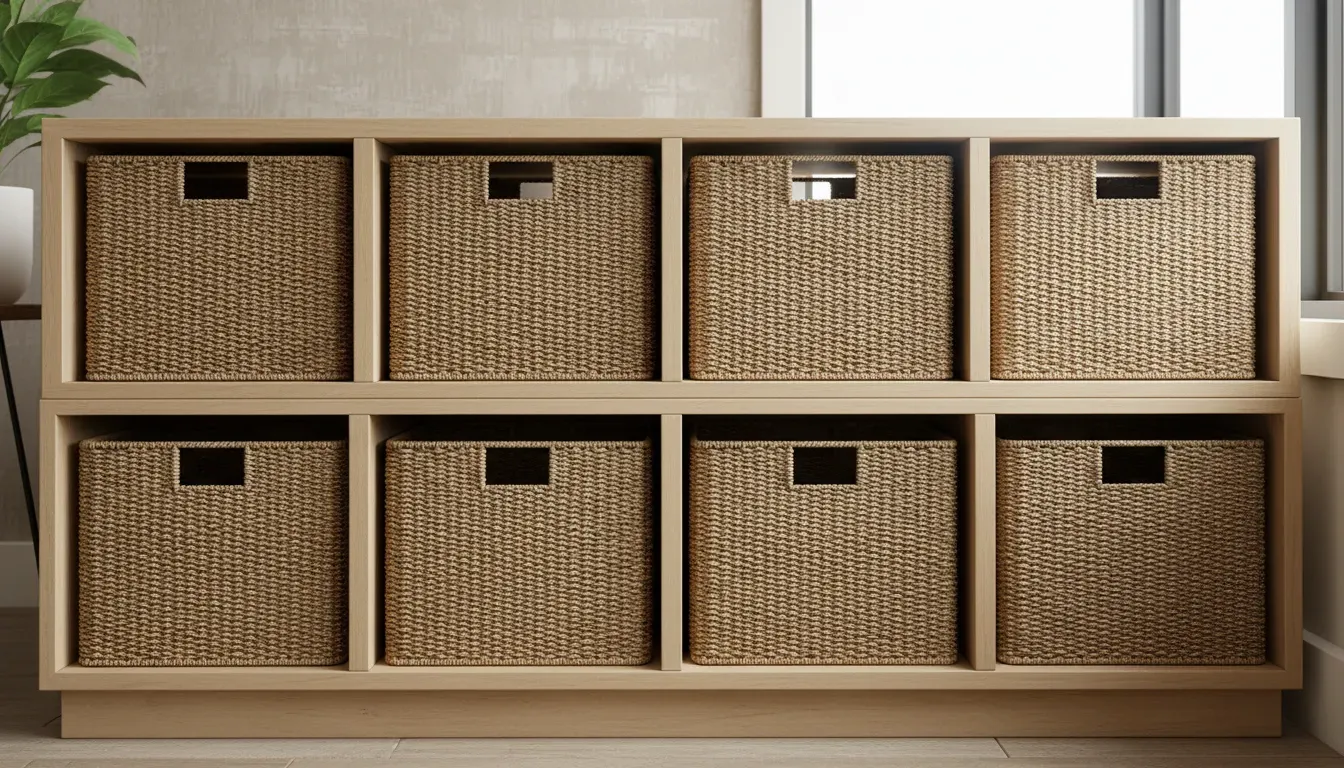
To maximize capacity while maintaining a polished look, the use of baskets and bins is non-negotiable, particularly for open-shelf benches. Baskets act as drawers, allowing you to utilize the full depth of a cubby. Without a basket, items pushed to the back of a deep shelf become inaccessible and forgotten.
Categorization by Container
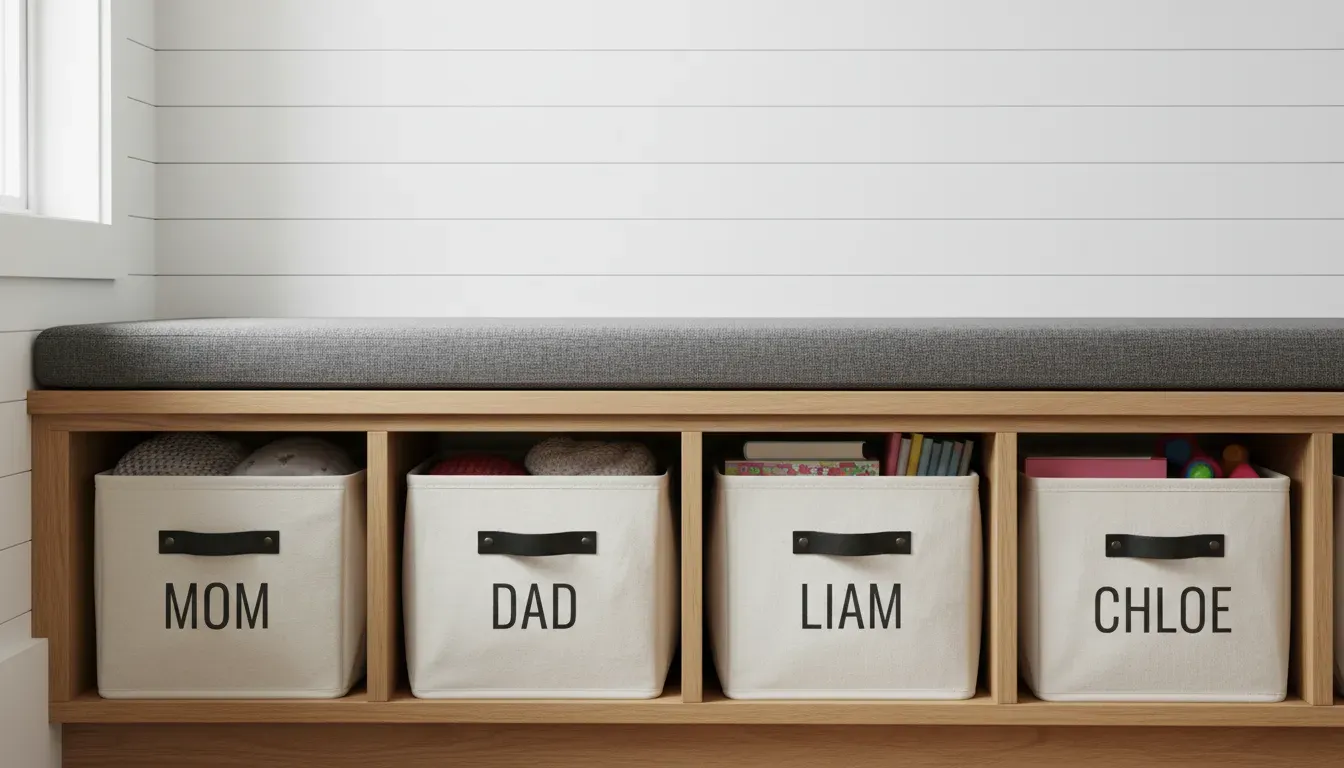
Assign specific baskets to specific family members or shoe types. A “Summer” basket can hold four to five pairs of flip-flops, while a “Sports” basket can contain cleats and shin guards. This containment strategy prevents item drift. When selecting baskets, measure carefully. You want the bin to fill the cubby space as completely as possible to avoid wasted gaps, while leaving just enough clearance to slide it out easily.
Visual Consistency
Using matching baskets unifies the look of the entryway. Even if the shoes inside are chaotic, the uniform facade of woven seagrass, wire, or felt bins creates a sense of order. This visual calm is essential for small entryways where clutter can feel overwhelming.
Utilizing Exterior and Peripheral Space
Sometimes, the interior of the bench simply cannot hold everything. To maximize capacity, you must think outside the box—literally.
Under-Bench Storage
If your bench stands on legs rather than sitting flush against the floor, utilize the space underneath. Low-profile rolling trays or shallow baskets can slide underneath the bench to hold guest slippers or excess shoes. This effectively adds a second tier of storage without increasing the furniture’s footprint.
Wall-Mounted Enhancements
Maximize the vertical wall space directly above the bench. While the bench holds the shoes, a row of heavy-duty hooks above can hold items that often end up cluttering the bench surface, such as bags, scarves, and umbrellas. Furthermore, installing a floating shelf high above the coat hooks provides a location for out-of-season footwear stored in labeled boxes.
For those with limited square footage, understanding how to utilize every inch is vital. You may find additional inspiration in our guide to optimizing narrow hallways for storage.
Material Considerations for Longevity
The material of your bench and organizers plays a role in capacity because damaged furniture often becomes unusable.
Moisture Resistance
Entryways are high-moisture zones. Particleboard or untreated MDF can swell and crumble if exposed to wet boots repeatedly. If you live in a wet climate, opt for solid wood sealed with marine-grade varnish, metal, or high-quality engineered wood with a melamine coating. If your bench is upholstered, ensure the fabric is performance-grade and stain-resistant.
Breathability
Shoes need to breathe to prevent odors and mold. Avoid airtight plastic bins for long-term storage inside the bench. Woven baskets, slat-style shelves, or benches with ventilated back panels allow for air circulation, preserving the condition of the leather and fabric of your footwear.
Advanced Organization: Rotation and Maintenance
The physical organization is only half the battle; maintaining the system requires a behavioral strategy.
The Seasonal Switch
To truly maximize capacity, you must practice the seasonal rotation. In April, heavy winter boots should be cleaned, stuffed with shapers, and moved to deep storage (a closet, attic, or under-bed storage). This frees up prime real estate in the entryway bench for sneakers, sandals, and light loafers. In October, reverse the process. This ensures that the bench is never overcrowded with items that are not currently useful.
The “One In, One Out” Rule
Entryway storage is finite. To prevent the capacity from being exceeded, adopt a strict “one in, one out” policy. If a new pair of sneakers enters the rotation, an old pair must be donated, discarded, or moved to long-term storage. This prevents the slow creep of accumulation that renders organizational systems useless.
Enhancing Aesthetics with Accessories
An organized bench should also be a beautiful feature of your home decor. Once the internal storage is optimized, focus on the external presentation.
Softening the Look
Add throw pillows and a cushion to the top of the bench. This not only invites you to sit and put on shoes comfortably but also draws the eye upward, away from the floor level where shoes are stored. Choose textiles that complement your home’s color palette.
Lighting
Good lighting is practical and aesthetic. If your bench has deep cubbies, they can become dark caves. Consider using small, battery-operated puck lights with motion sensors inside the cabinets. This makes it easier to find matching pairs in the morning rush and adds a touch of luxury to the storage unit.
Shop stylish wicker baskets for bench organization
Customizing for Family Needs
Different household members have different dexterity levels and habits. Customizing the storage zones within the bench can lead to better adherence to the organizational system.
The “Kid Zone”
If you have children, designate the lowest shelves or easiest-to-reach drawers for them. Avoid lids that are heavy or dangerous for small fingers. Open cubbies with soft fabric bins are ideal for children, as they can simply toss their shoes in without needing to line them up perfectly.
The “Guest” Consideration
Leave a small amount of empty space, if possible, for guests. Nothing is more welcoming than an entryway that isn’t overflowing. A designated spot for a guest to place their shoes signals hospitality and keeps their footwear from becoming a tripping hazard.
Conclusion
Organizing shoes and boots in an entryway bench is an exercise in spatial geometry and lifestyle management. By accurately assessing your needs, selecting the right furniture architecture, and employing strategic placement techniques like the heel-to-toe method and vertical stacking, you can drastically increase your storage capacity. Remember that the goal is not just to hide the mess, but to create a functional system that facilitates a smooth transition in and out of your home. With the right combination of durable materials, smart accessories like baskets and shapers, and a commitment to seasonal rotation, your entryway bench will serve as a resilient and stylish foundation for your home’s organization.