
Pegboard Entryway Storage Systems: The Customizable Solution for Tiny Spaces
Maximize your small entryway with customizable pegboard storage. Discover layout tips, material choices, and styling hacks for a clutter-free home.
Feb 2, 2026 - Written by: linda wise

The entryway is the handshake of the home. It is the first space that greets you after a long day and the last space you see before facing the world. Yet, in many urban apartments and smaller homes, this critical transitional zone is often reduced to a cramped corridor or a non-existent patch of floor by the door. The challenge of the “drop zone”—where keys, coats, mail, and bags accumulate—can quickly turn a small space into a chaotic obstacle course.
Enter the pegboard. Once relegated to garages and workshops for organizing wrenches and drills, the pegboard has undergone a design renaissance. It has emerged as a premier interior design solution for vertical storage, offering a unique blend of utilitarian efficiency and aesthetic versatility. For tiny spaces, where floor area is at a premium, a pegboard entryway storage system is not just an option; it is a strategic necessity.
The Vertical Advantage in Compact Living
When square footage is limited, the only direction to expand is up. Traditional entryway furniture, such as console tables or hall trees, requires a significant footprint. A standard console table might protrude twelve to eighteen inches into a hallway, potentially obstructing traffic flow in a narrow passage.
Pegboards, by contrast, hug the wall. They transform dead vertical space into an active, high-density storage area. This shift from horizontal surfaces to vertical planes forces a level of organization that drawers and bowls do not. On a flat surface, clutter piles up; on a pegboard, items are displayed. This visibility acts as a psychological cue to keep items organized. When every set of keys and every scarf has a dedicated hook, the visual noise of the entryway quiets down.
Material Matters: Choosing the Right Base
Before drilling holes or buying hooks, one must select the foundation of the system. The material of the pegboard dictates not only the durability and weight capacity but also the stylistic tone of the entryway.
Classic Masonite and Hardboard
The standard brown perforated board found in hardware stores is made of compressed wood fibers and resin. It is cost-effective and readily available. However, for an interior entryway, raw Masonite can look unfinished. If choosing this route, painting the board to match or contrast with the wall color is essential for a cohesive look. While affordable, standard hardboard has lower weight limits and can degrade if exposed to moisture from wet raincoats or umbrellas.
Metal Pegboards
For a modern, industrial, or sleek aesthetic, metal is superior. Steel or aluminum panels offer significantly higher strength, meaning they can support heavy winter coats and loaded backpacks without warping. Metal boards often accept magnetic accessories, adding another layer of functionality for notes or photos. They are easy to clean and resist moisture, making them ideal for high-traffic zones.
Wooden and Plywood Systems
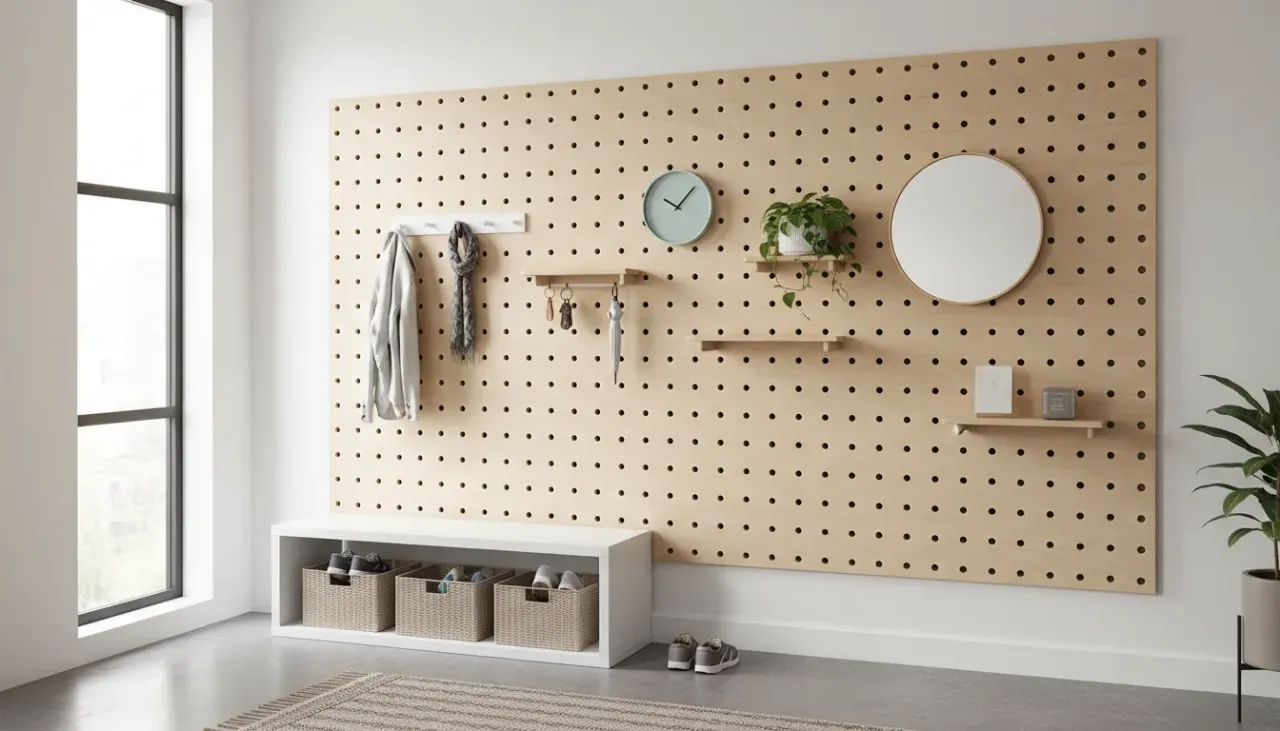
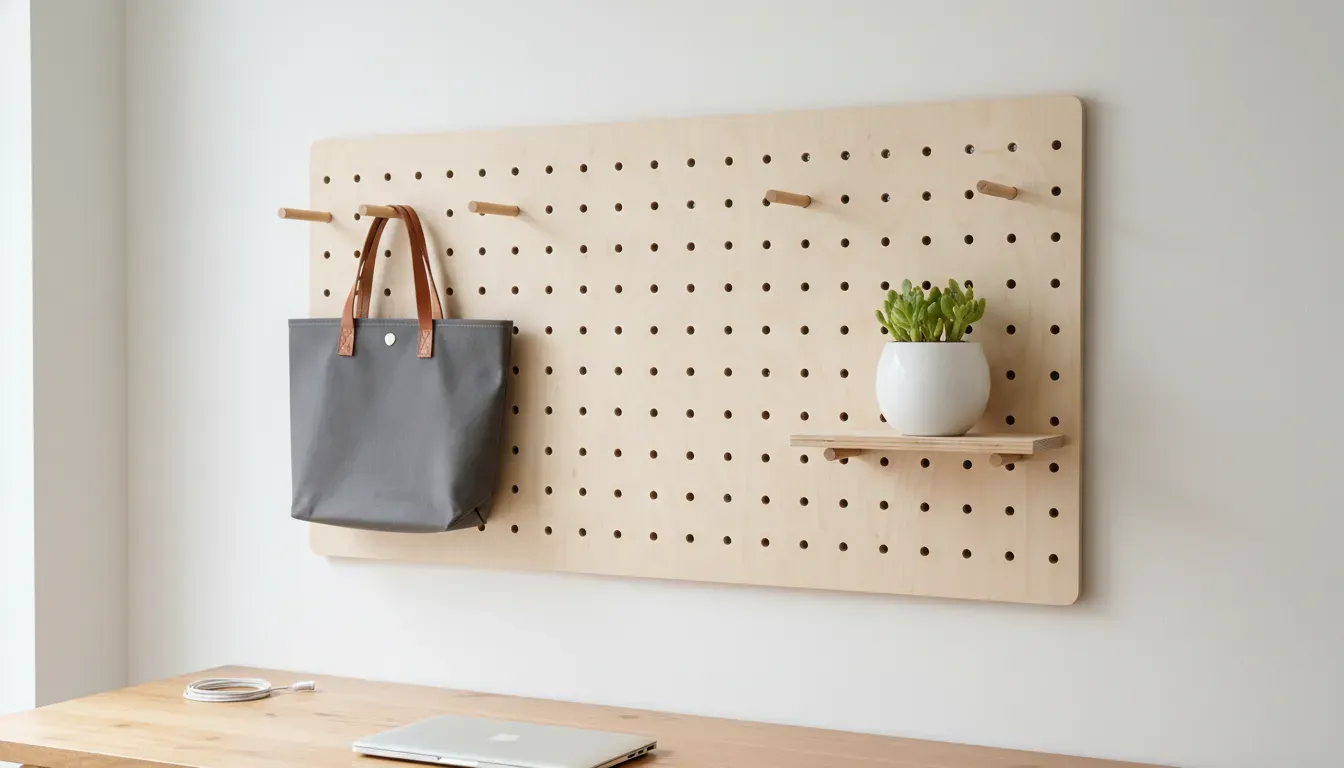
The “giant pegboard” trend features large sheets of high-grade plywood with oversized holes drilled at regular intervals to accommodate thick wooden dowels. This style leans heavily into Scandinavian and minimalist aesthetics. It serves as a statement piece of furniture rather than just a storage utility. The warmth of the wood grain adds texture to the room, softening the harsh lines often found in small corridors.
Architectural Planning: Zoning Your Wall
A pegboard is a blank canvas. Without a plan, it can become a cluttered mosaic. To create a functional entryway system, you must apply the principle of zoning.
The Reach Zone (Eye Level to Waist Level)
This is prime real estate. Items used daily should live here.
- Keys: Dedicate a specific small hook or magnetic strip near the door side of the board.
- Sunglasses and Wallets: Use shallow baskets or small shelves.
- Current Mail: A letter sorter or wire basket prevents mail from reaching the dining table.
The Load Zone (Waist Level to Knee Level)
This area is for heavier items and things you grab as you leave.
- Bags and Purses: Use heavy-duty double hooks or U-hooks to distribute the weight of the strap.
- Jackets: Ensure there is enough vertical clearance below these hooks so coats do not pool on the floor.
- Umbrellas: A deep wire basket or a dedicated loop can hold compact umbrellas.
The Archive Zone (High Up)
The space above eye level is perfect for seasonal rotation or items used less frequently.
- Hats and Helmets: Display hats as decor when not in use.
- Seasonal Gear: In summer, store scarves here; in winter, swap them for beach totes.
- Decor: Intersperse plants or artwork to keep the system from looking too utilitarian.
Installation: Security and Stability
Installing a pegboard for an entryway is different from hanging a picture frame. The dynamic load—the act of taking coats on and off, and the weight of bags—requires robust anchoring.
Furring Strips are Mandatory
Standard pegboard accessories need space behind the board to hook in. You cannot mount a standard pegboard flush against the drywall. You must install a frame of wood strips (furring strips) behind the perimeter and center of the board. This creates the necessary gap for the hardware to function.
Finding the Studs
Because this system will hold weight, anchoring into drywall alone is risky. Use a stud finder to locate the structural beams of the wall. If the placement of the studs does not align with your board’s corners, use high-weight toggle bolts or heavy-duty drywall anchors. A fully loaded pegboard can easily exceed 50 pounds.
For those seeking a more modular approach without the hassle of cutting lumber, metal systems often come with built-in standoffs that create the required gap automatically.
To get started with a robust metal foundation that requires minimal DIY modification, consider a dedicated wall control system.
Shop Wall Control Metal Pegboard Systems on Amazon
Accessorizing: Beyond the Basic Hook
The true power of the pegboard lies in its modular accessories. While simple J-hooks are necessary, relying on them exclusively limits the system’s potential.
Shelving Units
Miniature shelves that slot into the pegboard allow for the display of non-hangable items. Small succulents, a framed photo, or a decorative bowl for loose change can sit on these ledges. This breaks up the visual monotony of hanging items and adds depth.
Baskets and Bins
Wire or plastic bins are essential for containment. They act as “drawers” on your wall. They are perfect for corralling gloves, beanies, dog leashes, and outgoing mail. Bins hide the visual clutter of small, shapeless items that would otherwise look messy hanging on a hook.
Specialty Holders
Look for specific attachments for specific needs. There are ring holders for scarves, double-pronged hooks for hammers (which work surprisingly well for headphones), and clips for paper.
If you are building a custom system or need to refresh an existing board, a comprehensive accessory kit is the best starting point to experiment with different configurations.
Shop Pegboard Accessory Organizer Kits on Amazon
Design Aesthetics: Styling Your Entryway
A pegboard should not look like a hardware store display. It must integrate with the home’s interior design.
The Modern Minimalist
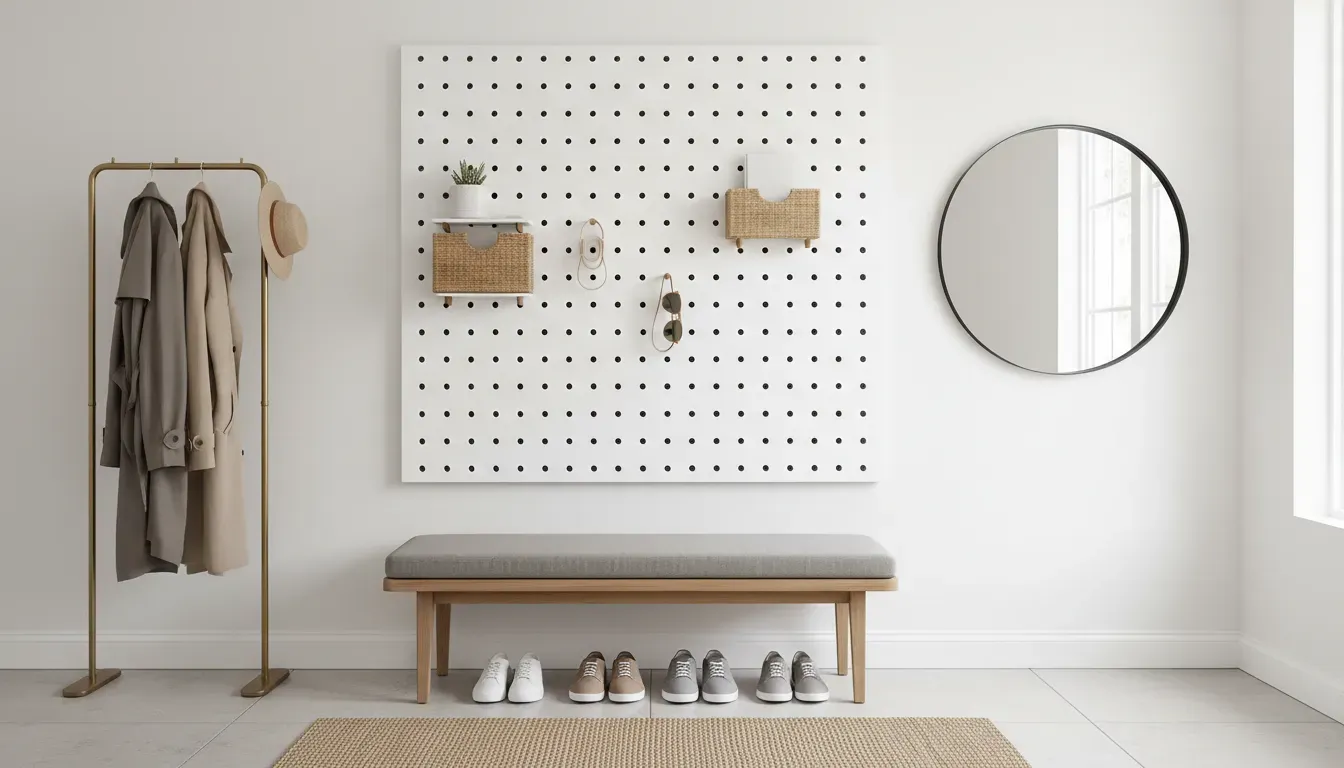
Opt for a white or matte black metal board. Use uniform accessories—all chrome or all black. Keep the layout symmetrical. Leave “negative space” on the board; do not fill every hole. The empty space is just as important as the filled space for creating a sense of calm.
The Boho Naturalist
Choose a wooden pegboard or unpainted Masonite. Use wooden dowels or brass hooks. Incorporate greenery—hanging pothos or air plants attach easily to pegboards. Use woven baskets for storage to add texture.
The Eclectic Pop
Paint the pegboard a bold color—emerald green, navy blue, or terracotta. Outline the zones with washi tape or paint geometric shapes across the board and the wall. Mix and match vintage hooks with modern bins.
Advanced Customization Techniques
For those willing to go the extra mile, the pegboard offers endless customization opportunities.
Integrated Lighting
Small, battery-operated LED strips can be mounted behind the pegboard (on the furring strips) to create a halo effect. This backlighting creates a sophisticated, floating appearance and provides soft ambient light for the entryway, serving as a nightlight.
The Mirror Combination
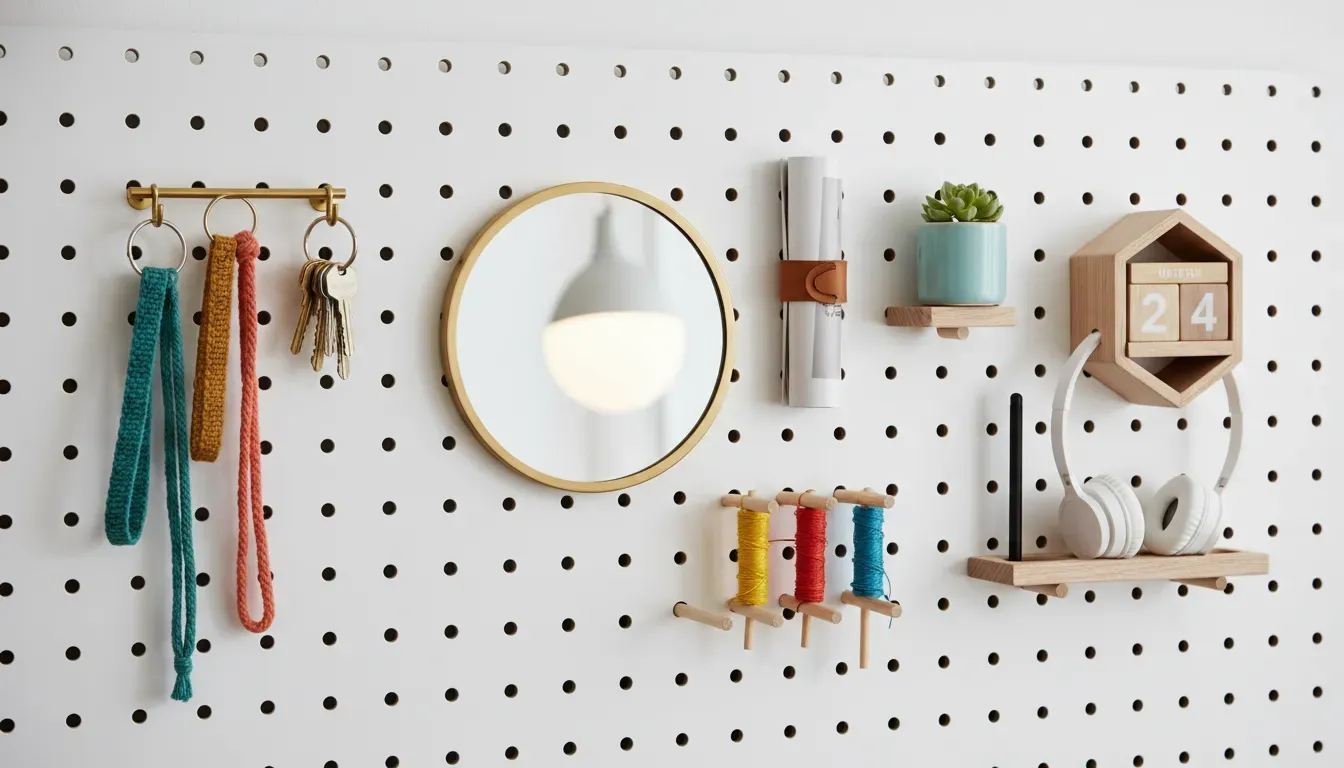
In a small entryway, a mirror is vital for checking one’s appearance and reflecting light to make the space feel larger. Mount a frameless mirror directly onto the center of the pegboard using construction adhesive or heavy-duty mounting tape, framing it with storage zones on either side. Alternatively, leave a cutout in the center of your pegboard layout to hang a mirror directly on the wall.
The Bench Hybrid
If space allows, install a pegboard above a small shoe bench. This creates a complete “mudroom” effect in a fraction of the space. The bench handles shoes, while the pegboard handles everything else. For inspiration on seating that complements wall storage, you might explore our guide on small space seating solutions.
Solving Specific Small Space Problems
Different tiny spaces present different architectural challenges. The pegboard adapts to them all.
The Narrow Hallway
In corridors less than 36 inches wide, protruding hooks can snag clothing as you walk by. Here, the strategy is “low profile.” Use flush hooks and shallow shelves. Avoid bulky baskets. Utilize the upper reaches of the wall for storage to keep shoulder-level space clear.
Behind the Door
The space behind an entryway door is often wasted. A slim pegboard mounted here can hold keys, dog leashes, and thin items like scarves. Ensure that the door stop prevents the door handle from smashing into your storage system.
Rental Restrictions
For renters who cannot drill many holes, heavy-duty adhesive strips can hold smaller, plastic pegboard squares. While these cannot support heavy coats, they are excellent for keys, mail, and jewelry. Alternatively, a large pegboard can be leaned against the wall if framed sturdily, similar to a floor mirror, provided it has rubber grips at the base to prevent sliding.
For narrow spaces or behind-door applications, sometimes a dedicated slim-profile organizer works in tandem with, or as an alternative to, a full board.
Shop Narrow Entryway Wall Organizers on Amazon
Maintenance: The One-In, One-Out Rule
The danger of a high-capacity storage system is that it enables hoarding. A pegboard in a tiny entryway is not deep storage; it is active storage. It requires discipline.
Adopt the “One-In, One-Out” rule. If a new coat is bought, an old one must be donated or moved to a closet. At the end of each season, strip the board completely. Wipe it down, reassess the configuration, and only put back what is needed for the current weather. Winter coats should not be hanging on the entryway pegboard in July. This seasonal reset keeps the entryway feeling fresh and prevents the visual weight of the storage from overwhelming the small space.
Comparison: Pegboards vs. Traditional Solutions
Why choose a pegboard over a standard coat rack or wall hooks?
- Flexibility: A row of hooks is static. If you need more space for bags and less for coats, you cannot change a fixed coat rack. A pegboard evolves with your lifestyle.
- Footprint: Coat stands (trees) are notorious for tipping over and taking up valuable floor corners. Pegboards consume zero floor space.
- Visual Weight: Cabinets and lockers can feel heavy and boxy in a small room. Pegboards are visually lighter and can be painted to blend into the wall, reducing their visual impact.
Conclusion
The entryway sets the tone for the entire home. In tiny spaces, the battle against clutter is fought daily at the front door. Pegboard entryway storage systems offer a weapon that is as sharp in style as it is in function. By utilizing vertical space, offering infinite reconfiguration options, and adapting to any decor style, the humble pegboard proves itself to be a sophisticated design element.
Whether you opt for a sleek metal grid, a warm wooden statement piece, or a classic painted board, the result is the same: a designated place for everything, reducing the cognitive load the moment you walk through the door. It transforms the chaotic “drop zone” into a curated gallery of daily essentials, proving that you do not need a grand foyer to have a grand entrance.