
Preserving Your Hats: Specialized Wall-Mounted Entryway Racks and Holders
Stop ruining your headwear with cheap hooks. We analyze the mechanics of hat preservation and the best specialized wall-mounted racks for your entryway.
Feb 10, 2026 - Written by: Linda Wise

There is a specific kind of heartbreak reserved for the moment you pull your favorite felt fedora or structured snapback off a generic coat hook, only to realize gravity has won. The crown is dimpled, the brim is warped, and the fabric has taken on a permanent, unsightly indentation.
I’ve seen it happen to vintage Stetsons and limited-edition streetwear alike. We spend exorbitant amounts of money curating our headwear, yet we often subject these items to storage solutions that are, frankly, barbaric. The entryway is the danger zone—the threshold where we are most tired, most rushed, and most likely to carelessly toss a hat onto a peg that was never designed to support it.
This isn’t just about organizing a messy hall; it is about preservation. A hat is a structural object. It relies on tension, steam, and blocking to maintain its form. When you introduce a specialized wall-mounted rack, you aren’t just buying a piece of decor; you are investing in the longevity of your wardrobe.
We need to dismantle the idea that “a hook is a hook.” It’s time to look at the physics of hat storage, the aesthetic integration of racks in the entryway, and the specific hardware required to keep your brim crisp and your crown proud.
The Physics of Deformation: Why Standard Hooks Fail
To understand why specialized racks are non-negotiable, you have to understand what kills a hat. It usually comes down to three forces: point-load pressure, humidity, and gravity.
When you hang a hat on a standard, thin coat hook, you are concentrating the entire weight of the item onto a surface area roughly the size of a dime. Over time, gravity pulls the rest of the hat downward while that single point pushes upward into the delicate fibers of wool, felt, or straw.
Pro Tip: never hang a hat by the very tip of the crown on a sharp object. This creates a “tent pole” effect that stretches the material permanently.
The Sweat Factor
Here is the variable most people ignore: your entryway is where the hat lands immediately after you’ve worn it. It is likely warm and slightly damp from perspiration. When natural fibers are warm and moist, they become malleable. If you hang a damp hat on a deformation-causing hook, it will dry in that distorted shape.
Specialized holders mitigate this by distributing weight. They mimic the shape of the human head or support the brim from underneath, allowing the hat to “breathe” and dry in its blocked, natural state.
Categorizing the Hardware: A Deep Dive into Rack Types
Not all racks serve the same master. The needs of a baseball cap collector differ vastly from those of a western wear enthusiast. I’ve broken down the market into the architectures that actually work.
1. The Dome (The Crown Savior)
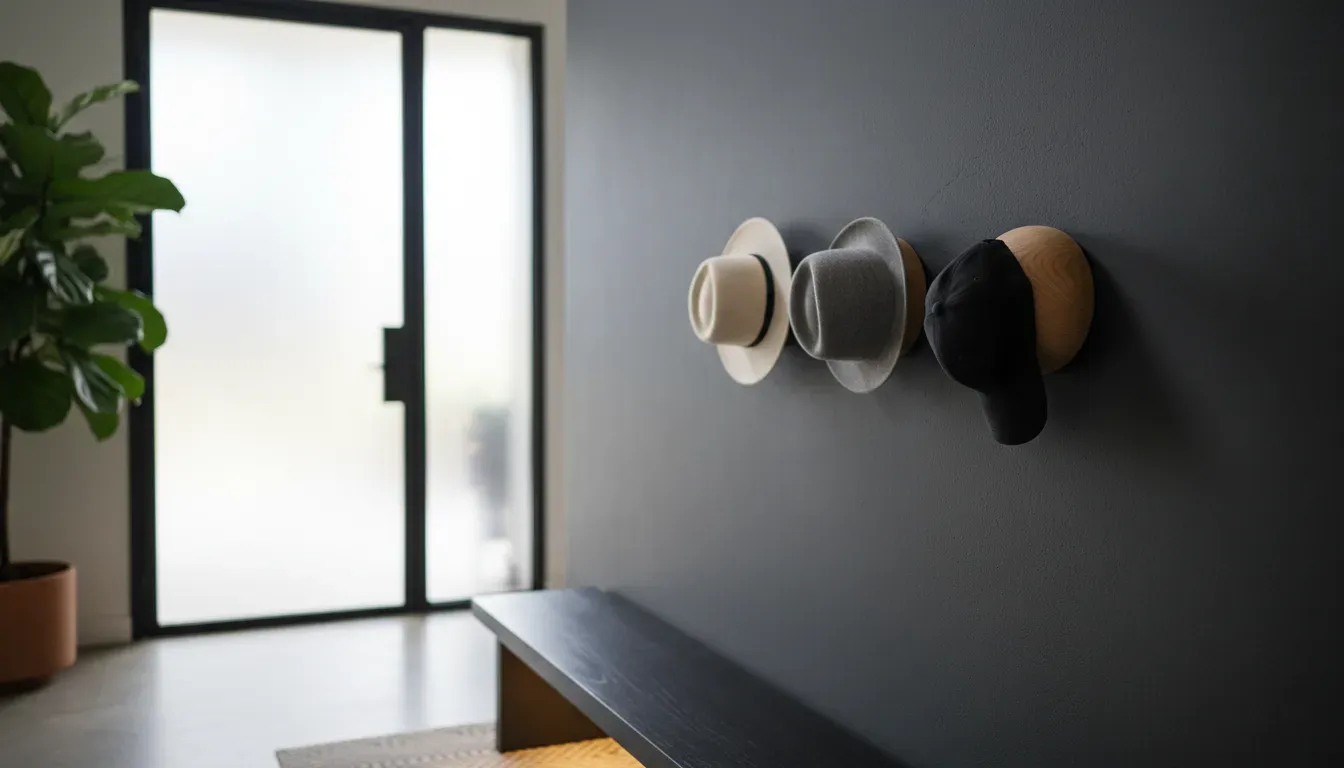
For anyone wearing fedoras, bowlers, trilbies, or cowboy hats, the dome mount is the gold standard. These look exactly like what they sound like: a mushroom-shaped protrusion extending from the wall.
The genius here is surface area. By resting the crown on a curved surface that mimics the skull, you eliminate pressure points. The hat simply sits, floating away from the wall, keeping the brim from crushing against the plaster.
I’ve personally found that metal wire domes offer excellent airflow, preventing mold growth inside the sweatband, whereas solid wood domes offer a more luxurious, static-free resting place for fine felt.
2. The Rail and Clip System
If your collection leans heavily toward beanies, dad hats, or unstructured caps, domes are overkill. Here, you want vertical efficiency. A rail system uses tension clips or gravity-sliding ball bearings to grip the hat.
However, a word of caution: avoid serrated clips. I have seen “rustic” racks that use alligator clips which chew through the fabric of a beanie or leave teeth marks on a suede bill. You want smooth, rubberized tension or wooden clamps.
3. The Brim Slot (The Cowboy’s Choice)
For wide-brimmed hats where the curvature of the brim is iconic (think a “taco” shaped cowboy hat), hanging by the crown can be risky if the dome isn’t high enough. The brim slot rack solves this by allowing the hat to slide in upside down, catching the brim.
This keeps the crown entirely suspended in air, touching nothing. It is the safest method for preserving a pristine crown crease, though it requires significantly more wall depth.
Materials and Aesthetics: Integrating with the Entryway
Your entryway sets the tone for the entire home. A plastic rack might save your hat, but it ruins your vibe. The interplay of materials—wood, iron, acrylic—matters as much as the utility.
The Warmth of Wood
Wood is hygroscopic, meaning it can absorb and release moisture. A raw or lightly oiled wooden rack can actually help regulate the humidity around the hat’s sweatband. Cedar is a fantastic choice here; it repels moths (which love wool fedoras) and adds a subtle scent to the entryway.
The Industrial Edge of Metal
Matte black piping or brushed brass creates a striking contrast against colorful headwear. However, be wary of cheap manufacturing. Poorly finished metal often has burrs—microscopic jagged edges—that will snag knits and scratch leather. Always run a nylon stocking over a metal rack before using it; if it snags the stocking, it will ruin your hat.
The Invisibility of Acrylic
For the sneakerhead-adjacent collector who views hats as art, clear acrylic is the modern choice. It vanishes against the wall, allowing the logos and colors of the caps to “float.” This is particularly effective in narrow entryways where heavy wooden furniture might feel claustrophobic.
The Bottom Line: Match the rack material not just to your home decor, but to the hat material. Wood loves wool; acrylic loves polyester and cotton structures.
Top-Tier Specialized Recommendations
I have tested dozens of these setups. Most are junk. However, a few manufacturers understand the assignment. Here are three that I trust with my own collection.
For the Modern Cap Collector
If you have a rotation of 50+ New Era fitteds, you don’t have the wall space for individual domes. You need density without damage. I highly recommend the Boxy Concepts Hat Rack for Wall. It stores caps bill-forward, maintaining the curvature of the bill while stacking them efficiently. It prevents the “crushed back” syndrome that happens when you shove caps into a drawer.
For the Western and Wide-Brim Enthusiast
Cowboy hats are heavy and stiff. They need robust support. The Western Hat Rack Wall Mount is a standout because it respects the “don’t touch the crown” rule. It spaces the hats far enough apart that the brims don’t overlap and warp each other—a common oversight in cheaper models.
For the Aesthetic Minimalist
Sometimes you want the display to look like a gallery. If you want your hats to face forward and serve as wall art, check out the Modern Acrylic Hat Shelves. These use a simple L-bend design that supports the button of the cap or the back of the brim without applying pressure to the forehead panel.
Installation Strategies for Maximum Impact
Buying the rack is half the battle; placing it is the rest. In the entryway, flow is paramount.
The Vertical Stack
If you have a narrow slice of wall between the door frame and a coat closet, utilize the vertical axis. Install single hooks or domes in a vertical line, spaced 12 to 14 inches apart. This creates a “totem” of hats that draws the eye upward, making the ceiling feel higher.
The Horizontal “wainscoting”
Another technique I love is installing a rail of hats at the 60-inch mark, running horizontally across the wall. This keeps them within easy reach but above the “bump zone” where bags and elbows might knock them off.
Spacing for Preservation
The biggest mistake people make is installing hooks too close together. You must measure the widest brim in your collection, add 3 inches, and use that as your center-to-center measurement. If your hats are touching, they are transferring oils and dust to one another.
The Baseball Cap Dilemma: Bill vs. Crown
Baseball caps present a unique physics problem because they have two distinct parts: the rigid bill and the soft (or structured) crown.
If you hang a cap by the adjustable strap (snapback) on a standard hook, gravity pulls the front of the cap down, eventually creasing the sweatband. If you hang it by the bill, you risk flattening the curve you spent months perfecting.
The “Button” Mount
The best solution for caps is a mount that grabs the “squatchee” (the button on top). This allows the cap to hang in its natural, gravity-neutral state. The bill points down, keeping its curve, and the crown remains uncompressed.
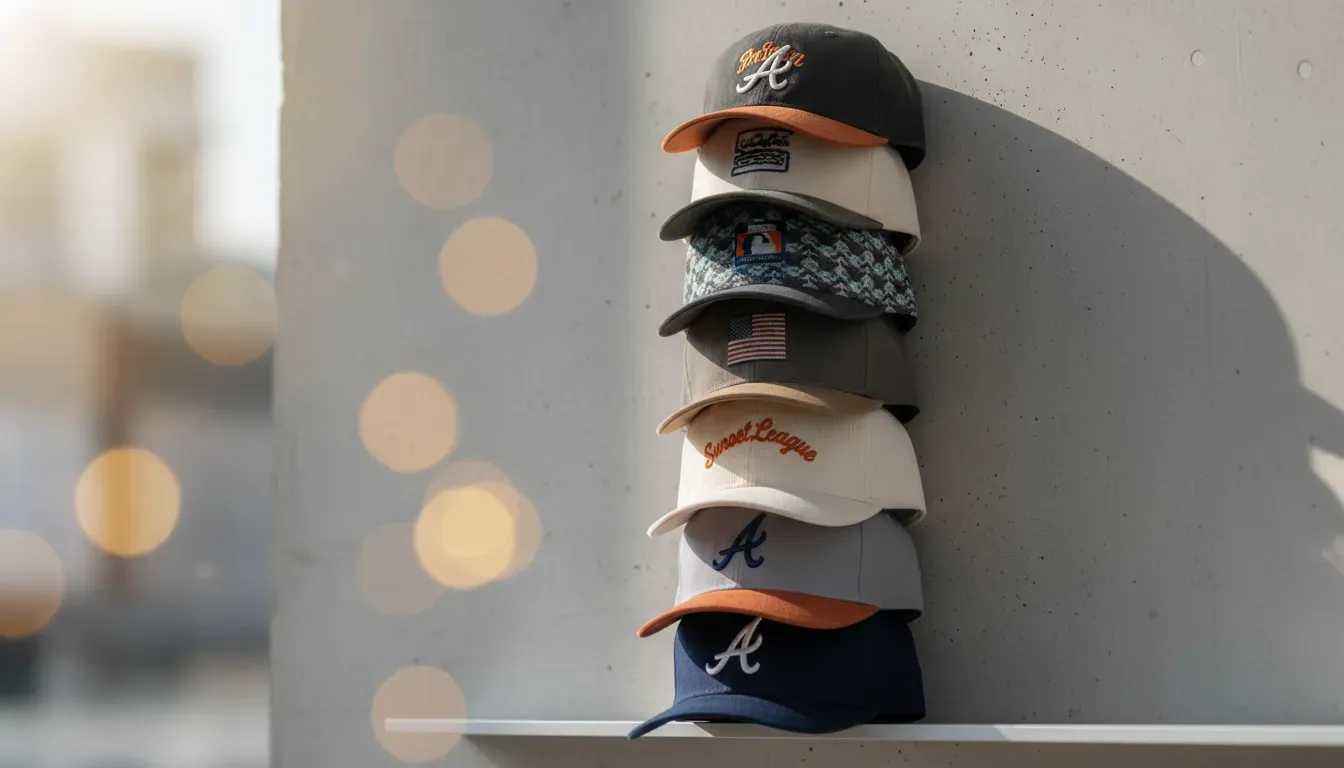
Alternatively, shelving systems that allow the cap to sit flat are superior to any hook. The “waterfall” style racks that stack caps vertically are efficient, but ensure the resting platform is curved, not flat, to support the back of the cap.
Key Takeaway: Never store a fitted cap inside another fitted cap unless they are identical sizes and you have a cardboard shaper inside. Nesting causes the inner cap to shrink and the outer cap to stretch.
DIY: When to Build Instead of Buy
Sometimes, the market doesn’t have the specific dimensions your entryway needs. I’ve seen incredible results with copper piping. Using standard 1/2-inch copper pipes and elbow joints, you can build a custom rail system.
The advantage here is that copper is naturally antimicrobial. As your sweaty hat band touches the copper, the metal works to kill bacteria, reducing odors. It’s a functional benefit that looks incredibly high-end when the copper starts to patina.
Another DIY route is using antique doorknobs. Old porcelain or brass knobs have the perfect “dome” shape for hat preservation. Mounting these on a piece of reclaimed barn wood creates a stunning, functional entryway piece that treats your hats gently.
Maintenance of the Rack and the Hat
We talk about cleaning hats, but rarely about cleaning the rack. Dust is the enemy of felt. If your rack collects dust, and you place a slightly damp hat on it, you are essentially mud-caking the inside of your headwear.
- The Wipe Down: Once a month, remove all hats and wipe the domes or hooks with a microfiber cloth.
- Rotation: Even if you have a “favorite” hat, rotate its position on the rack. If your entryway gets sunlight, the hat closest to the window will fade significantly faster than the others. Rotate the order to ensure even UV exposure (or lack thereof).
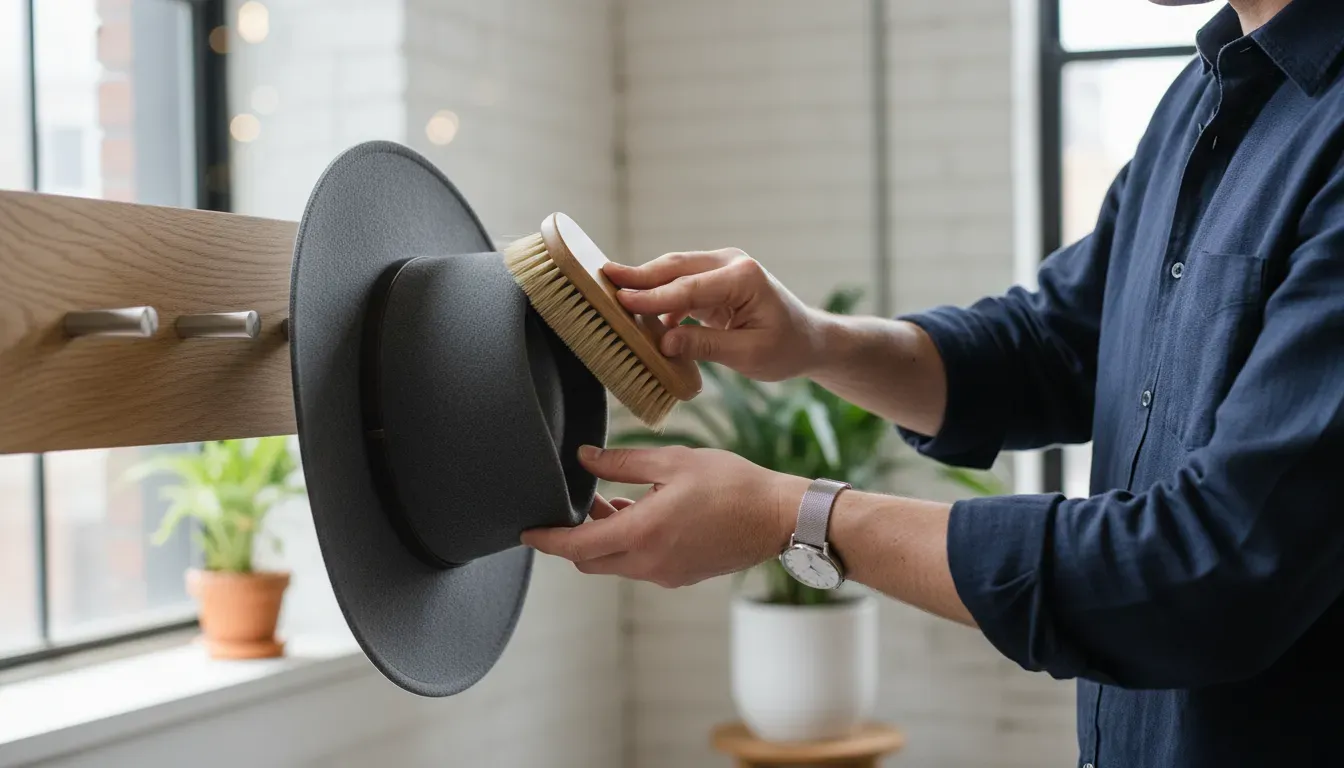
- The Brushing Ritual: Keep a horsehair hat brush on the rack itself. Make it part of the entryway furniture. When you come in, take the hat off, give it a quick brush to remove street dust, and then dock it. This prevents dirt from settling into the felt fibers.
Handling “The Drop”: Behavioral Design
We are creatures of habit. If the specialized rack is difficult to use—if it requires two hands to mount the hat, or if it’s too high—you won’t use it. You’ll revert to tossing the hat on the bench.
When installing, test the ergonomics. Can you remove the hat with one hand while holding a bag of groceries in the other? The best specialized racks offer “passive retention,” meaning you don’t have to fiddle with clips or straps. You simply place the object, and gravity secures it.
This is why I generally advise against racks that require you to thread a strap through a loop for daily drivers. Those are fine for long-term storage, but for an entryway, friction and gravity are your friends.
Preserving the Narrative
Every hat tells a story. The sweat stain on the brim of your fishing hat, the pin on your lapel, the specific crease of your fedora—these are biographical details. When we throw them in a pile, we are disrespecting that history.
A specialized wall-mounted rack transforms your entryway from a chaotic drop zone into a curated gallery of your life. It signals to guests that you value your belongings. It signals to yourself that the transition from “public you” (hat on) to “private you” (hat off) is a moment worth respecting.
By understanding the mechanics of suspension, choosing the right materials, and installing with precision, you ensure that your hats don’t just survive the entryway—they thrive there. Stop replacing hats because of poor storage. Invest in the architecture that keeps them timeless.