
Rental-Friendly Entryway Storage: Non-Damaging Hacks for Small Apartment Spaces
Discover non-damaging, rental-friendly entryway storage hacks to maximize small apartment spaces without sacrificing your security deposit or style.
Feb 1, 2026 - Written by: linda wise

The entryway is the handshake of the home. It is the first space you encounter upon returning after a long day and the last space you see before facing the world. In a sprawling suburban house, the entryway might be a dedicated mudroom with built-in cabinetry and ample square footage. However, for those living in apartments or rental properties, the “entryway” is often a euphemism for a narrow hallway, a small patch of wall behind the door, or simply the immediate transition from the corridor to the living room.
The challenge in these spaces is twofold: distinct lack of physical area and strict lease agreements that prohibit structural modifications. Drilling into studs to mount heavy-duty shelving is rarely an option when a security deposit is on the line. Yet, the necessity for organization remains. Without a designated drop zone, keys vanish, mail accumulates on the dining table, and shoes create tripping hazards that shrink the perceived size of the apartment even further.
Fortunately, constraint breeds creativity. Creating a functional, organized, and aesthetically pleasing entry in a rental does not require power tools or renovation. By leveraging vertical space, utilizing freestanding furniture with slim profiles, and employing modern adhesive technologies, you can curate an entryway that serves your needs without damaging the walls. This comprehensive guide explores the most effective strategies for rental-friendly entryway storage.
Assessing Your Space and Needs
Before purchasing bins or assembling furniture, it is imperative to conduct a thorough assessment of your available space. In small apartments, millimeters matter. Begin by measuring the floor space, but do not stop there. Measure the wall clearance behind the door when it is fully open. Measure the vertical height from floor to ceiling. Identify any architectural quirks, such as baseboards, radiators, or intercom systems, that might obstruct furniture placement.
Next, analyze your daily habits. What items do you actually shed the moment you walk through the door? If you are an avid runner, your shoe storage needs will differ from someone who primarily wears boots. Do you receive significant amounts of physical mail? Do you have a dog that requires a leash and waste bags to be readily accessible? Designing a system around your actual behavior—rather than an idealized version of it—ensures that the organization will stick.
Designing for Flow is essential in tight quarters. Your storage solutions must not impede the natural pathway into the home. If a shoe rack forces you to turn sideways to shimmy past, it is too deep for the space. The goal is to create a friction-free zone where organization feels automatic.
Mastering Tension and Compression
One of the most underutilized tools in the renter’s arsenal is the tension rod. Originally designed for shower curtains, tension technology has evolved into a sophisticated solution for creating storage without screws.
The Vertical Tension Pole
Floor-to-ceiling tension poles are particularly effective in rentals. These units wedge securely between the floor and the ceiling, providing a sturdy backbone for hooks, shelves, or bike racks. Because they rely on vertical compression, they have a minimal footprint, taking up mere inches of floor space while utilizing the full height of the room. This is ideal for hanging coats, bags, and scarves in a way that keeps them visible yet organized.
Nook Utilization
If your entryway features a recessed alcove or a niche, standard horizontal tension rods can transform that dead space into a closet. By installing two or three tension rods at varying heights, you can hang coats on the top rod and use S-hooks on the lower rods for umbrellas and bags. Placing a simple wooden plank across two tension rods can create an instant floating shelf for shoe storage, provided the items are lightweight.
The Power of High-Strength Adhesives
The reputation of adhesive hooks has improved dramatically over the last decade. Modern adhesive technologies now offer significant weight-bearing capacities and clean removal, making them perfect for rental properties.
Strategic Hook Placement
Rather than installing a single coat rack which concentrates bulk in one area, consider staggering individual heavy-duty adhesive hooks. This allows you to customize the layout to fit the wall shape. A lower row of hooks is excellent for bags and purses, while a higher row accommodates long coats. This staggered approach prevents items from bulging outward, keeping the profile of your storage flush against the wall.
When selecting hooks, opt for matte black, brushed nickel, or brass finishes that elevate the look beyond simple utility. The goal is to make the storage look like a deliberate design choice rather than a temporary fix.
Floating Shelves and Ledges
Adhesive-mounted picture ledges are invaluable for creating a “landing strip”—a designated spot for keys, wallets, and sunglasses. Because these ledges are narrow, they do not encroach on the hallway width. Installing a mirror above an adhesive ledge creates a focal point that mimics a traditional console table setup without the footprint.
For those looking to maximize this strategy, consider heavy-duty adhesive options that can support winter coats and heavier bags without failing.
Recommended Product: To ensure your wall-mounted solutions stay put without damaging paint, high-quality adhesive hooks are essential. Check out Heavy Duty Adhesive Wall Hooks on Amazon
Slim-Profile Furniture Solutions
When wall mounting is limited, the furniture you choose must work harder. In narrow entryways, depth is the enemy. Standard cabinets are often 15 to 20 inches deep, which can choke a hallway. The solution lies in pieces specifically engineered for tight spaces.
The Tipping Shoe Cabinet
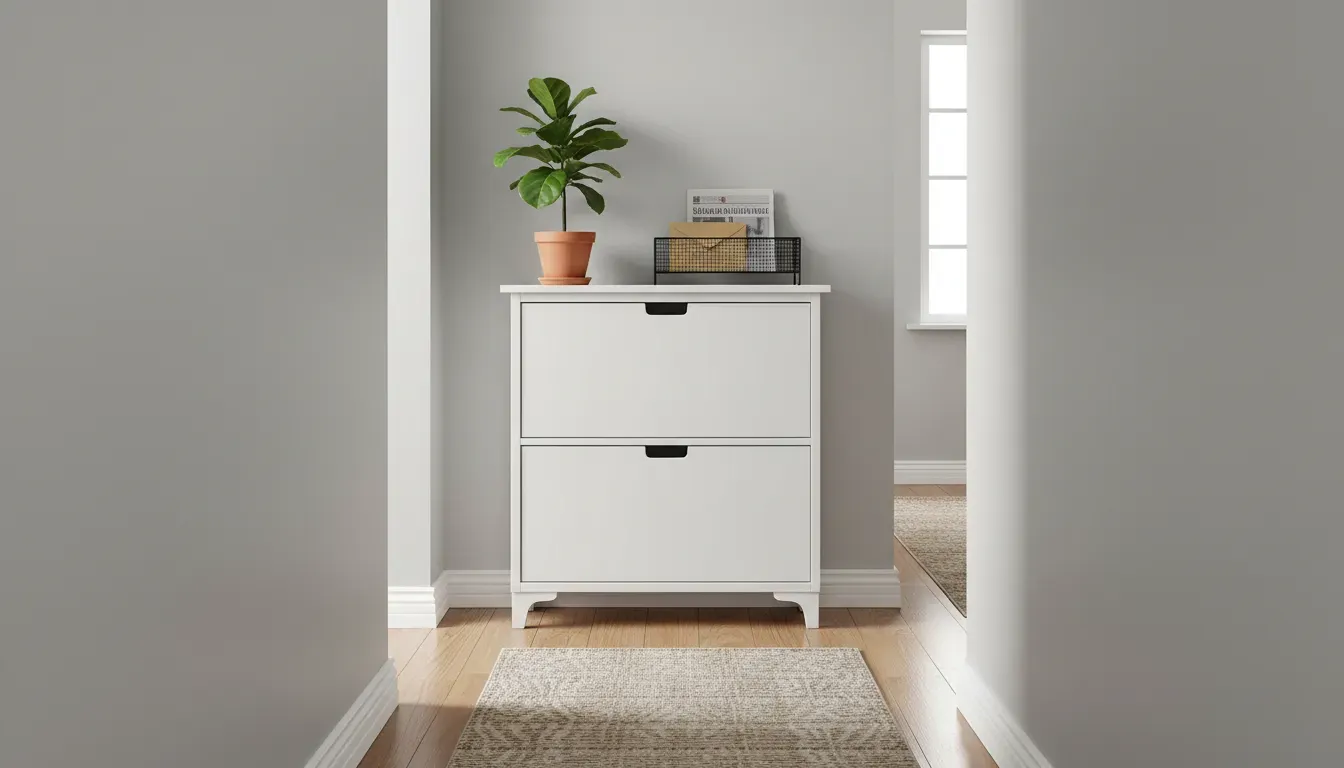
The tipping (or tilting) shoe cabinet is perhaps the single greatest invention for small entryways. Unlike traditional racks where shoes sit flat, these cabinets store shoes vertically in tilting drawers. This design reduces the depth of the furniture to as little as 6 to 10 inches.
Despite their slim profile, these cabinets can swallow a surprising volume of footwear, hiding the visual clutter of sneakers and boots behind a clean, solid facade. The top surface functions as a console table for decor, mail trays, or a lamp. Because they are tall and thin, they draw the eye upward, enhancing the sense of ceiling height.
The Narrow Console Table
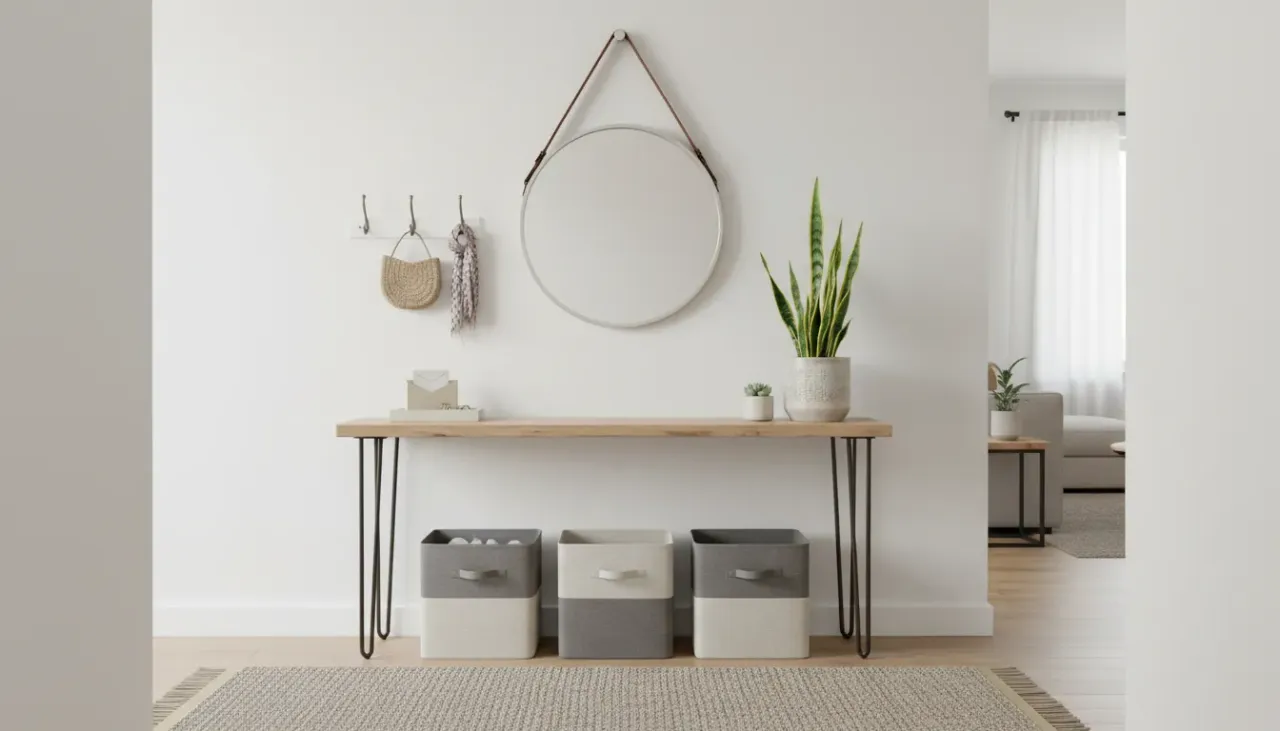
If you prefer open storage or need a surface primarily for decor and keys, look for console tables with “hairpin” legs or open metal frames. These designs have less visual weight than solid wood pieces, making the hallway feel airier. A console table with a lower shelf offers a place to tuck baskets for scarves and gloves, keeping loose items contained but accessible.
Maximizing Door Utility
In many small apartments, the front door itself is a massive, underutilized surface. Over-the-door organizers have graduated from cheap plastic shoe pockets to stylish wire and fabric systems that blend with modern decor.
The Door Valet
A sturdy over-the-door rack with multiple hooks can serve as the primary coat closet for a studio apartment. Look for racks with “flat” hooks that sit flush against the top of the door frame to ensure the door can still close properly. Some advanced models combine hooks with wire baskets, providing a catch-all for mail and accessories right at eye level.
Magnetic Solutions
If you have a metal front door—common in many modern apartment buildings—magnetic storage is a game-changer. High-strength magnetic hooks can hold keys and dog leashes. Magnetic spice racks, typically used on refrigerators, can be repurposed to hold outgoing mail, sunglasses, or wallets. This utilizes the door’s surface without requiring any installation hardware whatsoever.
The Freestanding Hall Tree
For those with slightly more floor space who need a comprehensive solution, a freestanding hall tree offers the functionality of a built-in mudroom. These units typically combine a bench, shoe storage, coat hooks, and high shelving into a single piece of furniture.
The advantage of a hall tree in a rental is that it is self-contained. It does not require wall attachment (though anchoring for safety is always recommended if you have children or pets). Because it utilizes vertical space efficiently, a hall tree can often fit into a corner or a short wall segment, centralizing all entryway clutter in one cohesive zone.
Recommended Product: A freestanding hall tree provides a complete storage solution with hooks, a bench, and shelves, requiring no wall mounting. Check out Freestanding Hall Trees on Amazon
Basket and Bin Strategy
Regardless of the furniture or hooks you employ, small items will always threaten to create clutter. This is where a disciplined container strategy becomes essential. In an entryway, every container should have a specific category.
Textural Hiding Spots
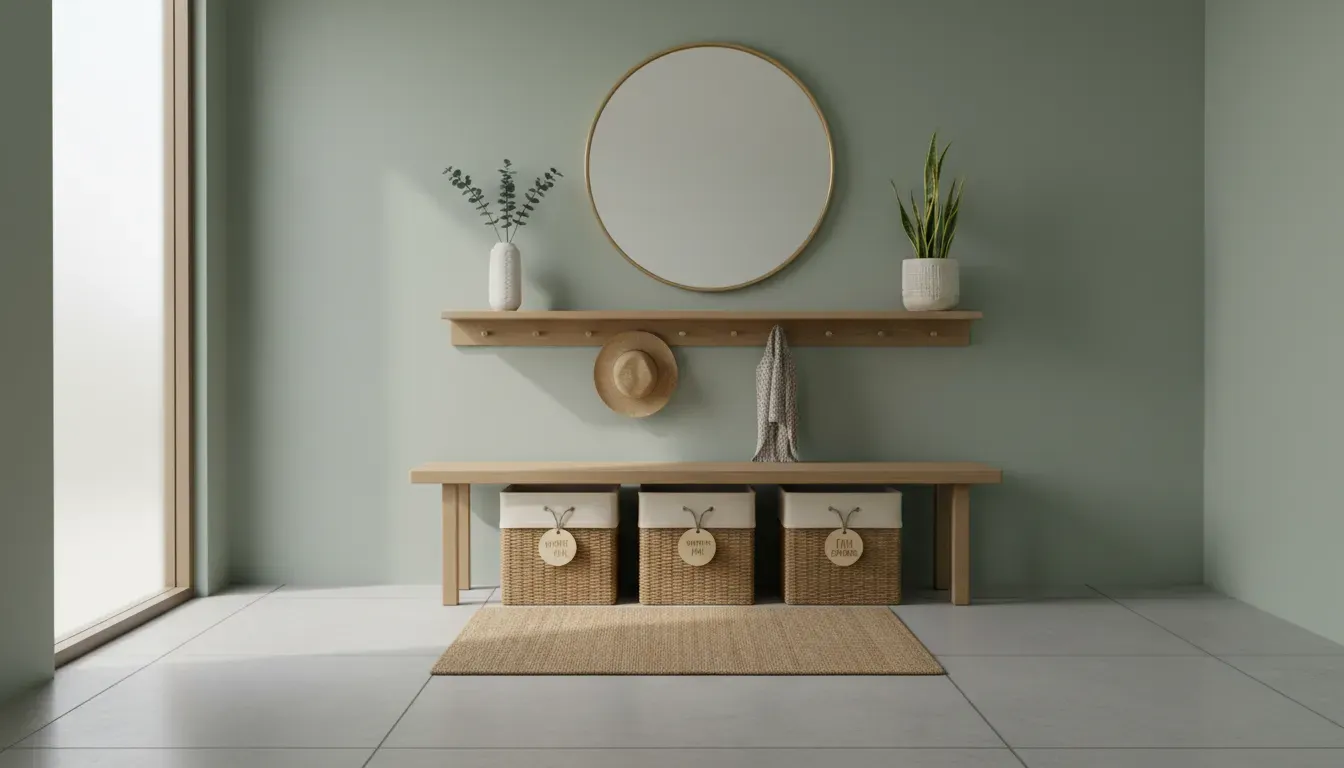
Woven baskets made of seagrass, rattan, or felt add warmth and texture to an apartment, softening the hard lines of walls and doors. Place large, sturdy baskets beneath a console table or a bench to hold shoes that don’t fit in the cabinet, or to store bulky winter gear.
Catch-All Trays
On your surface areas—whether it’s the top of a shoe cabinet or a shelf—use small trays or bowls. A designated vessel for keys prevents them from migrating to the kitchen counter. A small dish for loose change keeps surfaces looking tidy. This concept of “micro-organization” prevents the accumulation of miscellaneous debris that makes a small space feel chaotic.
Visual Expansion Techniques
Storage is about physics, but the feeling of space is about optics. In a small rental, you want to distract the eye from the limited square footage.
Mirrors
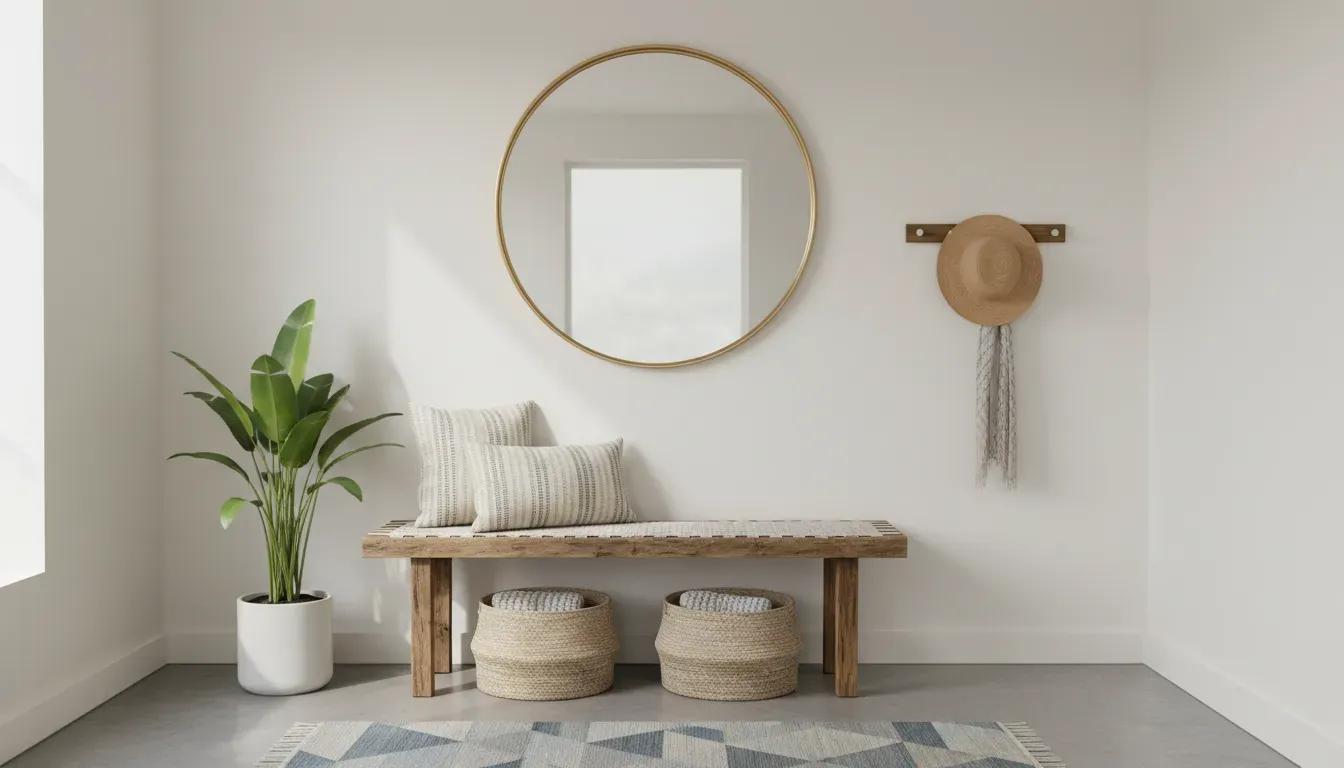
A large mirror is non-negotiable in a small entryway. It serves a functional purpose for last-minute outfit checks, but more importantly, it bounces light around the room and creates the illusion of depth. If you cannot hang a heavy mirror due to wall restrictions, consider a full-length floor mirror leaned safely against the wall, or use lightweight adhesive mirror tiles arranged in a geometric pattern.
Lighting
Entryways in apartment buildings are notoriously dark. Poor lighting makes a space feel cramped and dingy. Since you likely cannot rewire the ceiling fixtures, utilize battery-operated sconces or motion-sensor LED strips.
Puck lights placed under shelves or inside a deep wardrobe illuminate dark corners, making storage easier to access. A battery-operated wall sconce can be mounted with adhesive strips, adding a touch of elegance and ambient light without requiring an electrician.
Rugs and Runners
A runner rug defines the entryway area, separating it visually from the rest of the living space. This psychological separation helps enforce the “shoes off” policy and traps dirt before it enters the main living area. Choose a durable, low-pile rug that can withstand high traffic and allows the door to clear it easily when opening. Vertical stripes on a runner can also elongate the hallway visually.
Maintenance: The One-In, One-Out Rule
No amount of storage hardware can compensate for excessive accumulation. In a small rental, storage real estate is finite. To maintain a functional entryway, you must adopt a strict maintenance philosophy.
Seasonal Rotation
Your entryway does not need to store your entire year’s wardrobe. In the summer, heavy coats and winter boots should be cleaned and relocated to under-bed storage or a back closet. In the winter, sandals and light jackets should be rotated out. By keeping only the current season’s essentials in the entryway, you reduce the volume of items competing for space by 50% or more.
The Daily Reset
Develop a habit of a “daily reset.” This means hanging up the coat that was thrown on the chair, putting shoes back into the cabinet, and sorting the mail immediately. In small spaces, clutter reaches critical mass very quickly. A pile of three coats on a bench in a large house is negligible; in a small apartment, it blocks the hallway.
Organizing Small Spaces requires vigilance. If you buy a new pair of boots, an old pair that is rarely worn should be donated or moved to long-term storage.
DIY Hacks for the Resourceful Renter
If commercial solutions don’t fit your budget or your specific dimensions, DIY solutions can be tailored to fit.
Stacked Crates
Wooden crates, painted or stained to match your decor, can be stacked on their sides to create modular shelving. Secure them together with binder clips or small zip ties for stability. This creates a rustic, flexible shoe rack that can be reconfigured if you move to a new apartment.
Ladder Shelving
A decorative ladder leaned against the wall offers rungs for hanging blankets, scarves, or even heeled shoes. It occupies very little floor space and utilizes vertical height. Because it leans, it requires no wall mounting, though adding rubber stoppers to the feet will prevent slipping and protect the floor.
Recommended Product: Baskets are crucial for hiding clutter. Look for uniform sets to create a cohesive, organized look on shelves or under benches. Check out Decorative Storage Baskets on Amazon
Conclusion
Living in a rental apartment does not mean resigning yourself to a chaotic entryway. By shifting your focus from permanent renovation to flexible, non-damaging solutions, you can carve out a functional foyer in even the smallest of footprints.
The key lies in respecting the vertical plane, utilizing slim and multipurpose furniture, and employing the latest in adhesive and tension technology. Remember that the entryway sets the tone for your entire home. A well-organized entry, regardless of size, provides a sense of calm and order the moment you step through the door. It protects your security deposit while preserving your sanity, proving that you do not need to own the walls to master the space within them.