
Shoe Storage Systems for Garages and Back Entryways
Discover comprehensive shoe storage strategies for garages and back entryways. Optimize your high-traffic zones with durable, organized solutions.
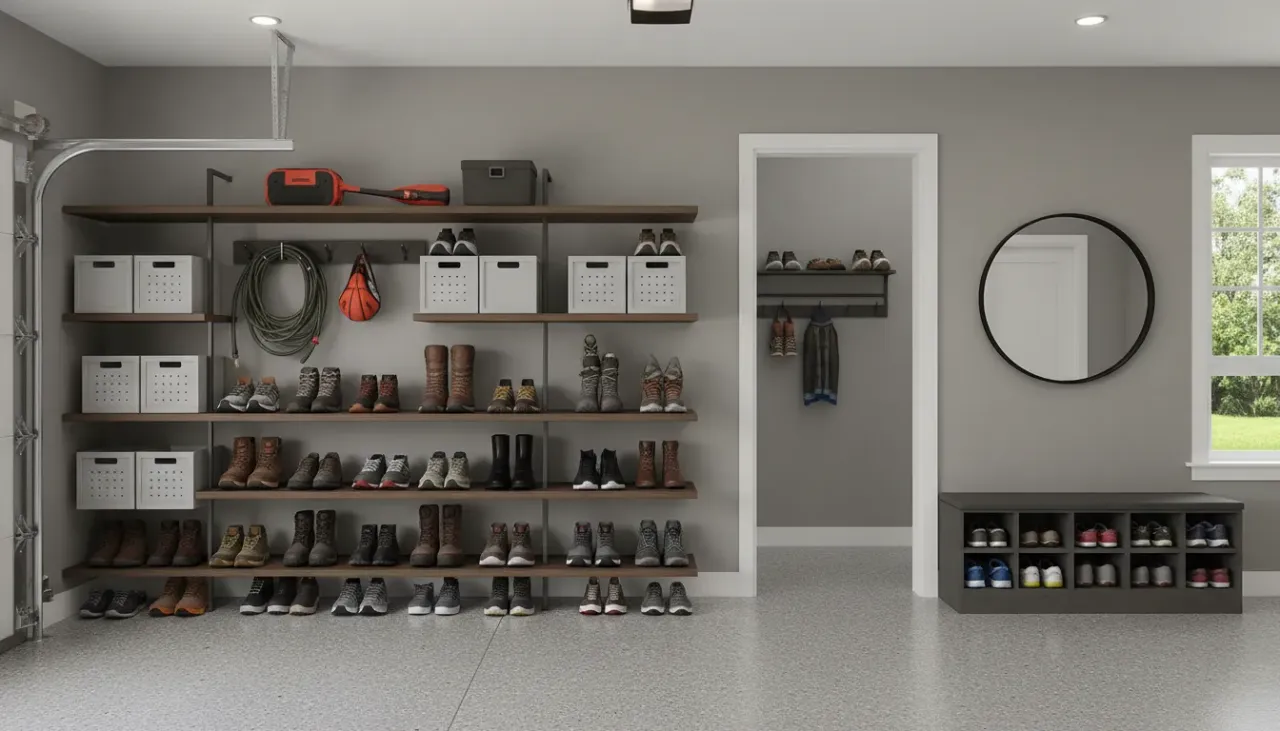
Feb 1, 2026 - Written by: linda wise

The entryway is the handshake of the home, but the back door and garage are its workhorses. These transitional spaces bear the brunt of daily life, witnessing the influx of mud, snow, sand, and the inevitable pileup of footwear that accompanies a busy household. While the front foyer often receives the design budget and aesthetic attention, the garage entry and back door are where the true battle for organization is fought.
Without a robust system in place, these areas quickly devolve into hazardous obstacle courses. This chaotic environment not only creates visual stress but can also damage footwear and track debris further into the main living areas. Implementing a strategic shoe storage system is not merely about tidying up; it is about creating a streamlined transition zone that facilitates the flow of your day. This guide explores high-functioning storage architectures designed specifically for the rugged demands of garages and the high-traffic nature of back entryways.
The Psychology of the Drop Zone
Before purchasing shelving or hiring a carpenter, it is essential to understand the behaviors that create clutter. The garage and back entryway serve as “drop zones.” When family members enter the home, their primary instinct is to unburden themselves immediately. If the storage solution requires too many steps—such as opening a difficult door, untying laces to fit into a small slot, or walking across the room to a closet—the shoes will inevitably end up on the floor.
An effective storage system must offer the path of least resistance. It must be easier to put the shoes away than to leave them out. This principle of “accessible ergonomics” drives the most successful organization strategies. For high-traffic zones, open storage often trumps closed cabinetry for daily-use items, while seasonal items can be tucked away.
Assessing Your Space and Requirements
The first step in designing your system is a rigorous audit of both the physical space and the volume of items requiring storage. Garages and back hallways present unique environmental challenges that differ from interior rooms.
Environmental Considerations
In the garage, temperature fluctuations and humidity are significant factors. A wooden cabinet that thrives in a climate-controlled hallway may warp or mold in a damp garage. Metal, heavy-duty plastic, and treated engineered woods are superior choices for these uncontrolled environments. Furthermore, garage storage must often coexist with vehicles, tools, and lawn equipment, requiring vertical solutions that minimize the footprint on the floor.
Back entryways, while climate-controlled, are often narrow. Here, the depth of the storage unit is the critical dimension. Standard shoe racks can obstruct walkways, creating fire hazards and impeding flow. Slim-profile cabinets and recessed shelving are often the only viable options.
The Volume Assessment
Count the pairs of shoes that actively circulate in your household. Do not count the dress shoes kept in the bedroom closet; focus on sneakers, boots, cleats, and slides that accumulate by the door. A general rule of thumb is to plan for three to four pairs of “active” shoes per family member. Additionally, account for the vertical height required for Wellington boots or heavy winter gear, which cannot fit into standard shelf spacing.
Heavy-Duty Solutions for the Garage
The garage requires utility-focused durability. Aesthetics are secondary to strength and ease of cleaning. Because this area acts as a buffer between the outdoors and the interior, the storage system here should be capable of handling wet, muddy, and gritty footwear without deteriorating.
Industrial Wire Shelving
Chrome or epoxy-coated wire shelving is a gold standard for garage organization. The open-wire design offers two distinct advantages: visibility and ventilation. Air circulation is crucial for drying out damp athletic shoes or rain boots, preventing the buildup of odor-causing bacteria. Furthermore, dirt and debris fall through the wire mesh to the floor below, rather than accumulating on the shelf itself, making cleanup significantly easier.
When selecting a unit, opt for commercial-grade steel that can support significant weight. Many homeowners make the mistake of buying flimsy plastic racks that bow under the weight of work boots. A stationary unit with adjustable leveling feet is safer than a wheeled unit in a garage setting, as it reduces the risk of the rack rolling into a vehicle.
For those seeking a robust, no-nonsense solution that can handle heavy work boots and seasonal gear, consider industrial-grade options.
Recommended Product: Heavy Duty Metal Garage Shoe Rack
Wall-Mounted Track Systems
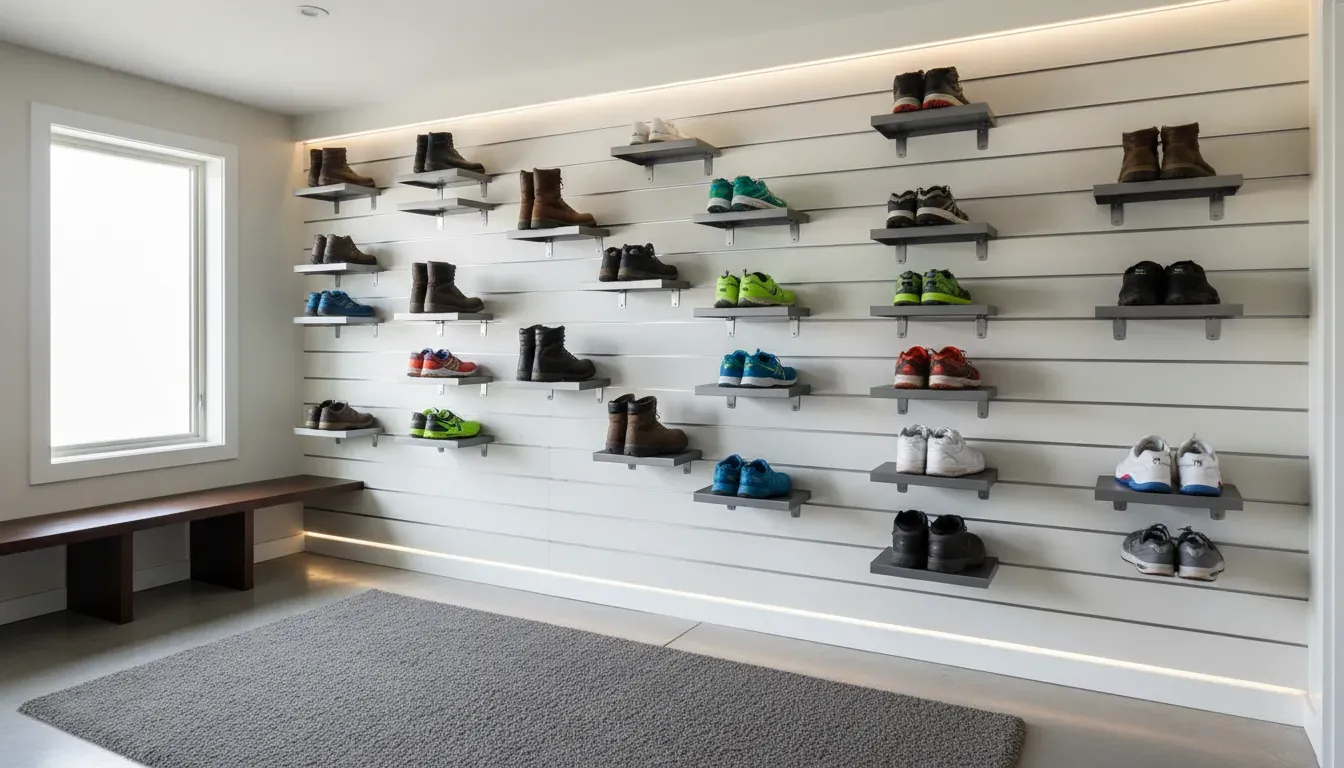
Floor space in a garage is premium real estate. To reclaim the floor for vehicles, look upward. Slatwall panels or rail-based track systems allow you to suspend shoe racks off the ground. This “floating” approach makes sweeping the garage floor incredibly efficient, as there are no table legs to navigate around.
Track systems are highly modular. You can adjust the height of the shelves as your needs change—lowering them for children’s shoes or raising them to accommodate taller boots. Hooks can be added to the same system to hold backpacks, umbrellas, and dog leashes, consolidating all departure gear into one centralized station.
The Mudroom-in-Garage Concept
If your home lacks a dedicated interior mudroom, you can manufacture one in the garage immediately adjacent to the entry door. This involves creating a dedicated landing pad with a sturdy bench for putting on shoes, flanked by tall lockers or shelving towers.
To execute this successfully, elevate the cabinetry on legs made of stainless steel or heavy-duty plastic to prevent water damage from snowmelt off car tires. Use a durable indoor-outdoor rug to define the zone and trap dust before it enters the house. For more ideas on defining these spaces, read our guide on creating distinct zones in open spaces.
Refined Storage for Back Entryways
Moving from the garage to the back entryway, the design language should shift. This area is part of the home’s interior and should reflect your decor style while maintaining high functionality. The goal here is to conceal the clutter without compromising accessibility.
The Power of the Bench
A bench is indispensable in a back entryway. It provides a dedicated place to sit while putting on or taking off shoes, which encourages family members to remove footwear at the door rather than walking through the house.
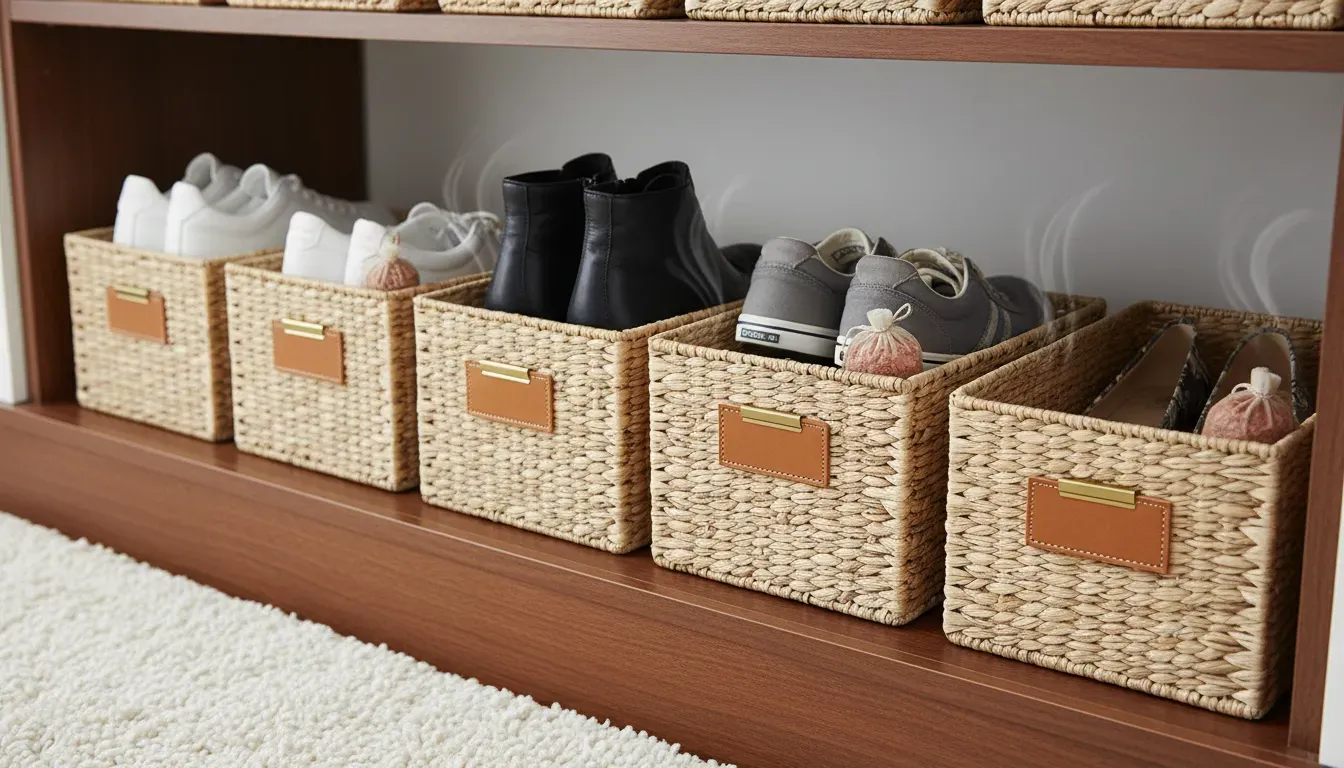
The space beneath the bench is prime storage territory. Open cubbies are excellent for children, as they require zero effort to use. Baskets can be slid into the cubbies to hide visual noise while keeping shoes accessible. For a more polished look, a bench with a flip-top lid offers deep storage, though this is better suited for off-season items rather than daily runners.
Recommended Product: Entryway Storage Bench with Cubbies
Tilt-Out Shoe Cabinets
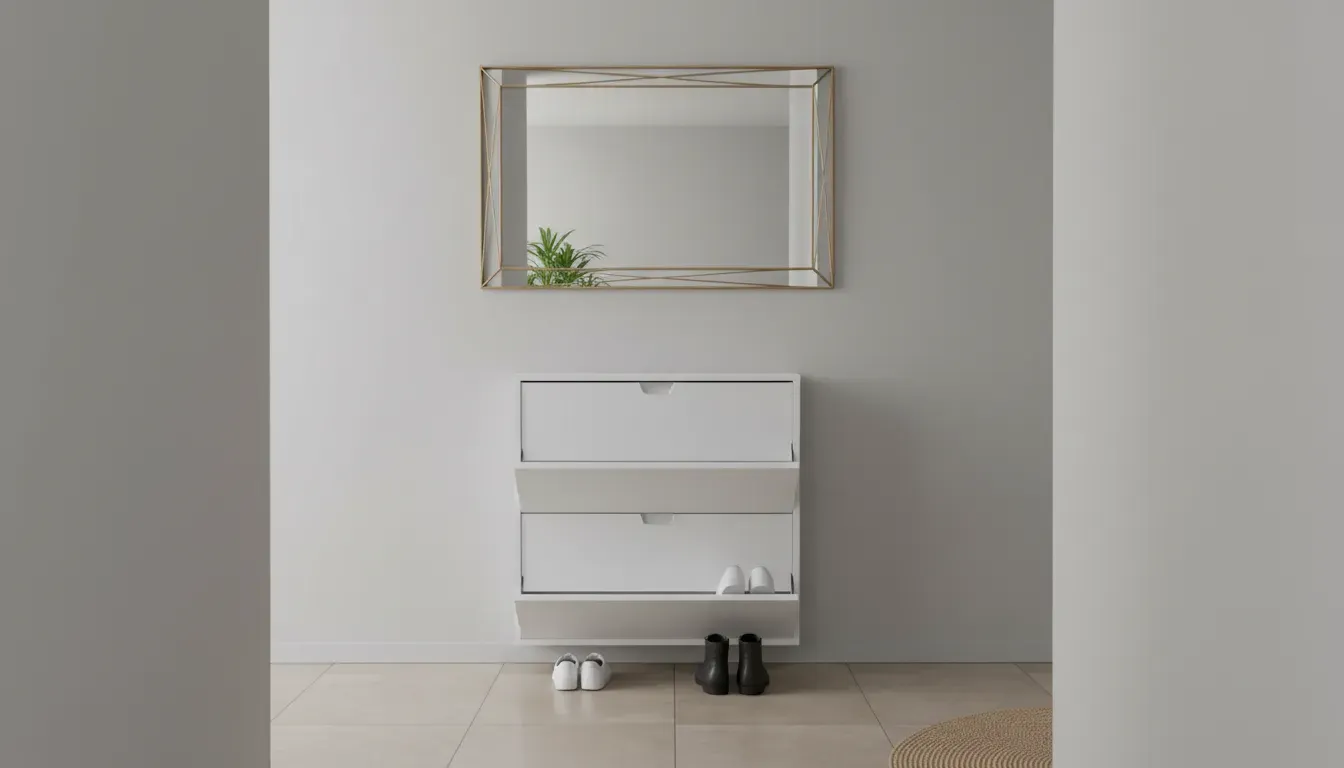
For narrow hallways where depth is an issue, the tilt-out shoe cabinet is a revolutionary solution. These units are often only 10 to 12 inches deep, yet they can store a surprising volume of footwear. The shoes are stored vertically in drop-down drawers, utilizing height rather than floor depth.
These cabinets keep shoes entirely hidden from view, maintaining a clean, minimalist aesthetic. The top surface serves as a console table for keys, mail, and decorative elements. Because they are tall and narrow, it is imperative to anchor these units to the wall to prevent tipping.
Built-In Joinery vs. Freestanding Units
If your budget allows, custom built-ins provide the most seamless integration. Floor-to-ceiling cabinetry maximizes vertical storage, allowing you to keep daily shoes at eye level and seasonal items near the ceiling. A popular configuration is a “locker” style setup, where each family member has a designated vertical section.
However, high-quality freestanding furniture can mimic the look of built-ins at a fraction of the cost. By placing multiple matching tall cabinets side-by-side and adding crown molding, you can achieve a bespoke look.
Handling the Elements: Boots and Wet Gear
Standard shoe racks function well for sneakers, but they fail miserably with tall boots and wet winter gear. Specific interventions are required to handle moisture and height.
Boot Trays and Drip Management
The greatest enemy of entryway flooring is standing water. Snowmelt, often mixed with road salt, can destroy hardwood and stain grout. A boot tray is a non-negotiable accessory for any back entryway or garage.
Look for trays with raised rims (at least one inch high) to contain melting snow. Copper or galvanized steel trays offer a sophisticated industrial look, while heavy-duty rubber mats are practical and slip-resistant. For an elevated DIY solution, fill a boot tray with river rocks. The rocks elevate the boots, allowing air to circulate underneath the soles for faster drying, while the water pools safely below the stones.
Recommended Product: Rubber Boot Tray with Raised Rim
Inverted Storage for Wellingtons
For rain boots and work boots, inverted storage racks are ideal. These typically consist of vertical dowels or pegs. Placing the boot upside down ensures that the shaft maintains its shape and prevents spiders or debris from settling inside the boot—a common concern in garage storage. This orientation also speeds up the drying process.
Material Selection and Durability
The longevity of your storage system depends entirely on selecting the right materials for the environment.
Metal
Metal is the most durable option for garages. It is impervious to pests and, if powder-coated, resistant to rust. However, in coastal areas with high salt air, even coated metal can eventually corrode. Industrial steel pipe is a popular aesthetic choice that marries durability with modern industrial design.
Engineered Wood and Laminates
Melamine and high-pressure laminates are excellent for back entryways. They are easy to wipe down and resist scratches better than painted wood. They are available in a vast array of finishes to match existing home decor. However, the core of these materials is often particleboard, which swells irreversibly if water penetrates the seams. It is vital to use silicone sealant on joints near the floor if you anticipate wet conditions.
Plastic and Resin
High-density polyethylene (plastic) shelving is rust-proof, rot-proof, and incredibly lightweight. While it lacks the aesthetic appeal of wood or metal, it is virtually indestructible in a damp garage environment. It is arguably the most practical choice for the “muddy zone” immediately adjacent to the exterior door.
Organizational Accessories to Enhance the System
A rack alone does not constitute a system. Small accessories are the grease that keeps the machine running smoothly.
Labeling
It may seem excessive, but labeling cubbies or baskets significantly increases compliance, especially with children. When a space is designated “Soccer Cleats,” it is less likely to become a dumping ground for school papers or toys. Use clip-on labels for baskets so they can be changed as needs evolve.
Deodorizers
Shoe storage areas are prone to unpleasant odors. incorporating passive deodorizing solutions is a proactive measure. Cedar inserts naturally repel insects and absorb moisture and odors. Activated charcoal bags can be tucked into the back of cabinets or placed inside boots overnight to neutralize smells without using artificial fragrances.
Lighting
You cannot organize what you cannot see. Garages and back halls are notoriously poorly lit. Installing motion-sensor LED strips inside cabinets or under shelves adds a layer of luxury and functionality. Being able to clearly see the matching pair of black shoes prevents frustration during the morning rush.
Design Principles for Traffic Flow
The physical placement of your storage impacts the utility of the room. A common error is placing the shoe storage immediately behind the door swing. This creates a bottleneck; if the door is open, the storage is inaccessible.
The Landing Strip Concept
Ideally, the storage should be positioned a few steps into the room, creating a “landing strip.” This allows the person to enter, close the door behind them, and then address their footwear. This separation prevents the person entering from colliding with the person putting on shoes.
Vertical Zoning
Utilize the full height of the wall to separate frequency of use.
- Zone 1 (Floor to 18”): Daily footwear, heavy boots, and the “kick-off” zone.
- Zone 2 (18” to 60”): Active rotation shoes, school shoes, and slippers. This is the “easy reach” zone.
- Zone 3 (60” and up): Off-season storage. Sandals in winter, snow boots in summer. These should be stored in clear, lidded bins to prevent dust accumulation.
Maintaining the System
Even the most sophisticated architectural solution requires behavioral maintenance. The “one-in, one-out” rule is particularly relevant for entryways. When a new pair of sneakers enters the rotation, an old pair should be retired, donated, or moved to long-term storage.
Periodically, perhaps with the change of seasons, the entire area should be emptied and cleaned. Grit and gravel act like sandpaper, slowly destroying the finish of shelves and floors. A seasonal vacuum and wipe-down preserves your investment.
Furthermore, address the “overflow.” Determine a hard limit for how many pairs can live at the back door. If the rack holds twelve pairs, the thirteenth pair must go to the bedroom closet. Without this boundary, the overflow will spill onto the floor, negating the purpose of the system. For tips on managing household clutter boundaries, refer to our article on decluttering strategies for busy families.
Conclusion
Transforming your garage or back entryway with a dedicated shoe storage system is one of the most high-impact home improvement projects you can undertake. It reclaims square footage, protects your flooring, and reduces daily friction for every member of the household.
Whether you opt for the rugged utility of industrial garage shelving or the sleek concealment of a tilt-out entryway cabinet, the key lies in matching the material to the environment and the capacity to your lifestyle. By treating these transition zones with the same design consideration as your living room, you elevate the experience of coming home, turning a chaotic drop zone into a welcoming, organized entry.