
small entryway storage
Transform your chaotic, cramped front door area into a streamlined drop zone. Discover expert strategies for maximizing small entryway storage without sacrificing style.
Apr 19, 2026 - Written by: Linda Wise

You open the front door, exhausted from a long day, and immediately punt a stray sneaker across the living room. Your keys clatter onto a nearby kitchen counter because there’s nowhere else to put them, and your winter coat ends up draped over the back of a dining chair.
We’ve all been there. The tiny entryway is a notoriously unforgiving architectural bottleneck. When you have less than ten square feet to transition from the outside world to your private sanctuary, every single inch demands ruthless optimization. You aren’t just dealing with a lack of space; you are battling the daily, inescapable friction of human habit.
I’ve personally found that trying to force standard-sized furniture into a micro-foyer is a recipe for bruised hips and visual chaos. To genuinely conquer a cramped entry zone, you have to stop thinking about buying bulky furniture and start engineering a highly specific, friction-free drop zone. You need systems that intercept your clutter the exact second you cross the threshold.
Before we tear down the anatomy of a perfect small-space vestibule, take a look at a few pieces of hardware that have consistently proven their worth in the tightest of floor plans.
Quick Comparison: Top Picks
| Product | Rating | Check Price |
|---|---|---|
| Slim Tilt-Out Shoe Cabinet | ⭐⭐⭐⭐⭐ | View on Amazon |
| Floating Entryway Organizer | ⭐⭐⭐⭐½ | View on Amazon |
| Minimalist Storage Bench | ⭐⭐⭐⭐ | View on Amazon |
The Anatomy of a High-Functioning Foyer
When you strip away the decorative fluff, an entryway really only serves three fundamental purposes: discarding outerwear, shedding footwear, and dumping pocket debris. That’s it. If your current setup fails at any of these three pillars, the entire system collapses into an unmanageable mess.
Spatial Economy vs. Visual Weight
In tight quarters, physical space and visual space are two entirely different metrics. A solid oak credenza might physically fit against your wall, leaving you a generous thirty inches of walking clearance. But visually? It acts like a black hole, sucking the air out of the room and making the corridor feel claustrophobic.
This is where the concept of visual weight comes into play. You’ll notice that spaces feel larger when you can see more of the floor. Heavy, blocky items anchor the eye downward, creating a sensation of heaviness. By lifting your storage solutions off the ground, you trick the brain into perceiving a much larger footprint.
Pro Tip: If you can slide a broom entirely underneath a piece of entryway furniture without hitting a baseboard, you have successfully minimized its visual weight. Stick to hairpin legs, wall-mounted units, and open-wire baskets to maintain airflow.
Verticality: Your Most Ignored Asset
Look up. Right now. If you are struggling with a lack of square footage on the floor, your salvation lies in the Z-axis. Most people furnish their homes in a strictly horizontal mindset, ignoring the massive tracts of empty drywall hovering at eye level and above.
Wall-Mounted Consoles and Floating Shelves
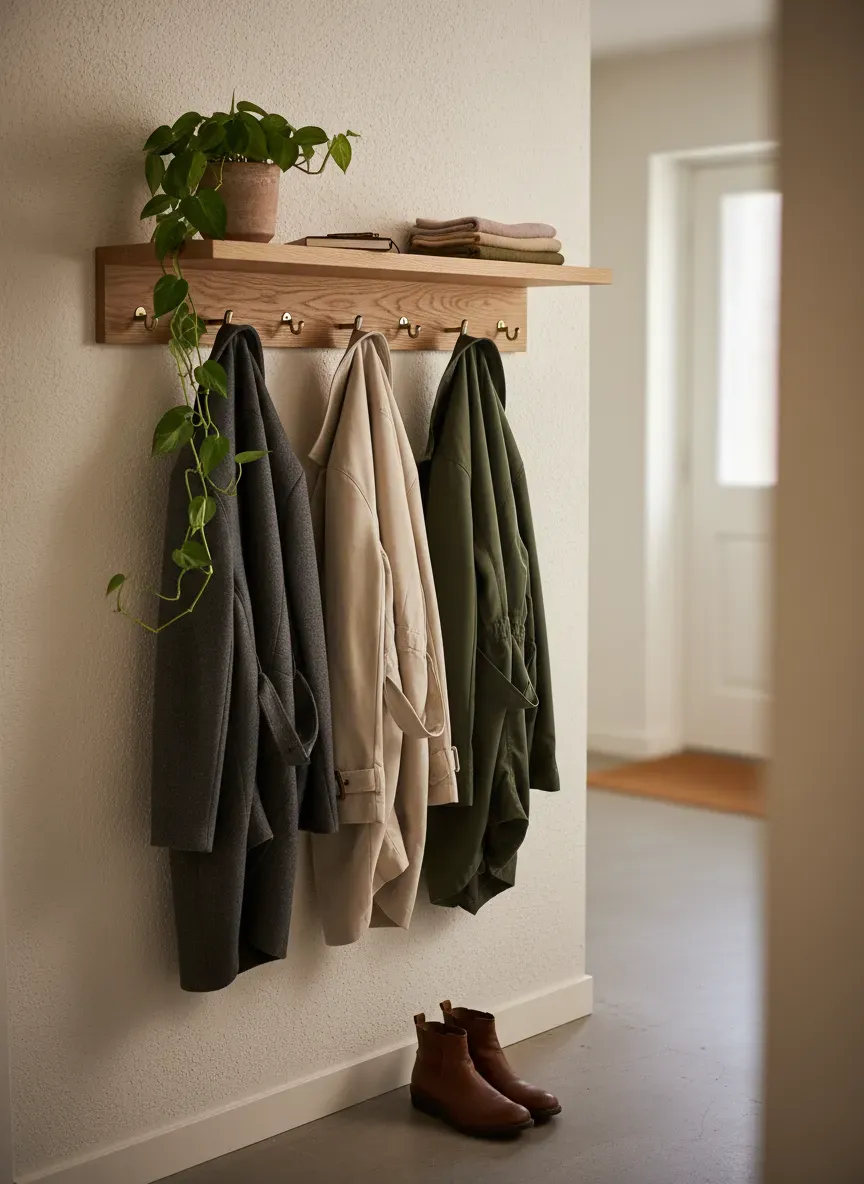
A traditional console table requires four legs and at least twelve inches of depth. A floating shelf requires zero legs and can be as shallow as six inches—just enough surface area to catch your mail, sunglasses, and keys.
When installing floating elements, you have to be obsessive about hardware. Do not trust cheap plastic drywall anchors for a heavily trafficked drop zone. I highly recommend finding the wall studs or, at the very least, upgrading to heavy-duty toggle bolts. An entryway shelf is going to take a beating. People will lean on it, drop heavy bags against it, and overload it with winter gear.
The Frictionless Drop Zone
You have to design for the laziest version of yourself. If putting away a coat requires opening a closet door, pulling out a hanger, arranging the shoulders, and sliding it onto a rod, you aren’t going to do it. You’ll throw the coat on the nearest chair.
Wall hooks eliminate this friction. They offer a one-step, instant-gratification storage solution. When mapping out a hook system, stagger them at different heights. Place a row at standard eye level for adult coats and scarves, and a secondary row much lower for heavy bags, dog leashes, and children’s gear. This dual-tier approach maximizes the vertical plane without making the wall look like a chaotic jumble of overlapping fabrics.
Concealment Strategies for High-Traffic Chaos
Let’s talk about the real enemy of the clean aesthetic: shoes. Footwear is inherently dirty, oddly shaped, and visually loud. A lineup of twelve different pairs of sneakers, boots, and sandals scattered across the floor will instantly degrade the look of your home, no matter how expensive your paint job is.
Shoe Cabinets That Defy Physics
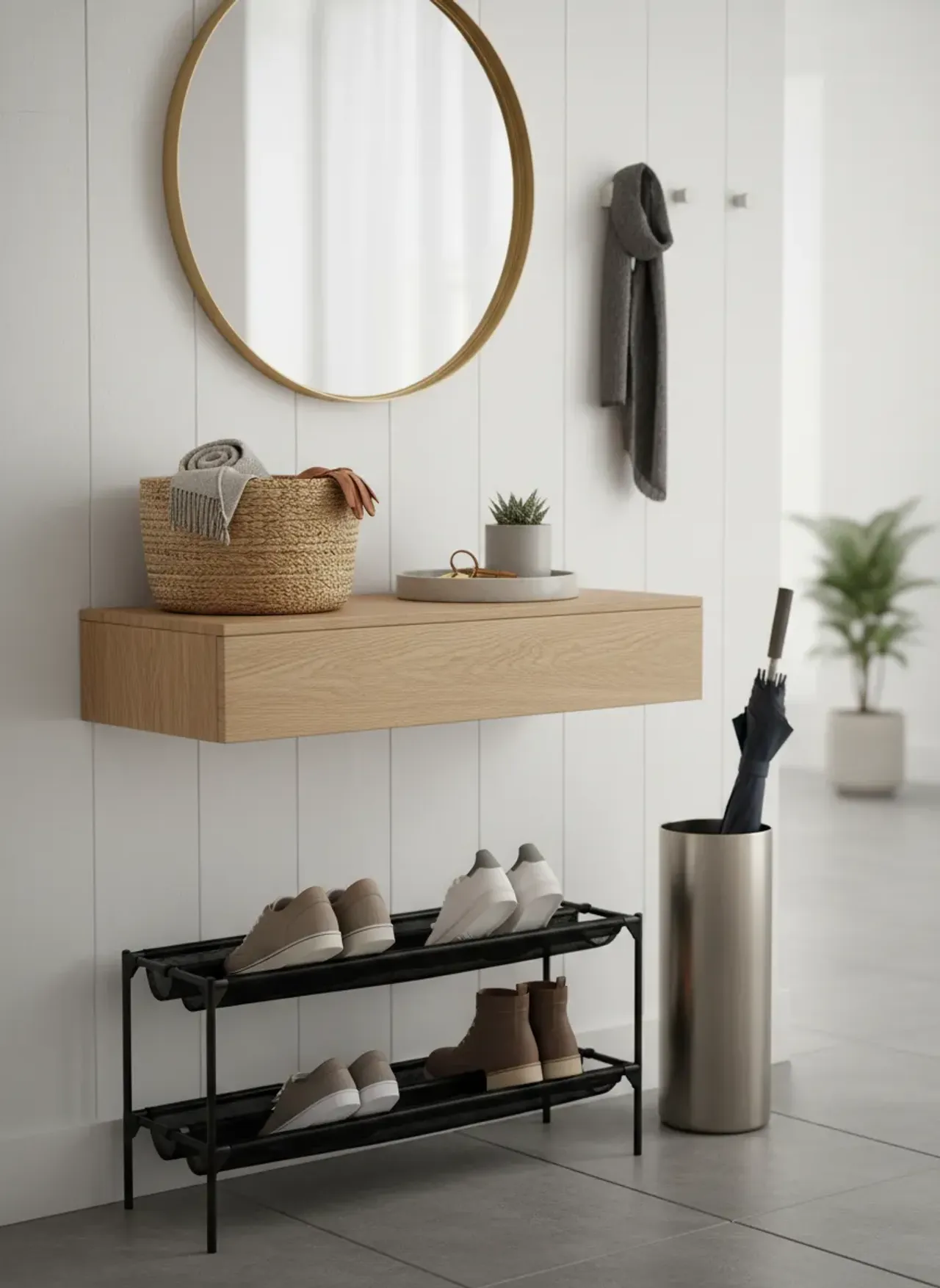
Open shoe racks are a trap. They force you to look at the mess constantly. The absolute best investment you can make for a tiny foyer is a Slim Tilt-Out Shoe Cabinet.
These pieces of engineering brilliance are game-changers. Because the shoes are stored vertically on a hinged, tilt-out door, the overall depth of the cabinet rarely exceeds seven to nine inches. You can practically mount them behind a swinging door without obstructing the arc.
Tilt-Out Mechanisms and Ventilation
When selecting a concealed shoe unit, prioritize ventilation. Wet, muddy boots shoved into a sealed MDF box will warp the wood and create an undeniable odor problem. Look for cabinets with louvered doors, open backs, or discrete ventilation slots.
Furthermore, account for your specific footwear. A standard six-inch deep tilt cabinet will hold low-top sneakers and flats beautifully, but if you regularly wear bulky hiking boots or high-top basketball shoes, you will need to size up to a ten-inch depth or implement a hybrid system where boots stay on a heavy-duty drip tray while everyday shoes go in the cabinet.
Seating That Works Double Duty
Balancing on one foot while wrestling with a stubborn heel is a great way to put a hole through your drywall. You need seating. But in a micro-entryway, a single-purpose chair is an unforgivable waste of real estate.
The Storage Bench Conundrum
The instinct is to buy a massive trunk-style bench where you can lift the lid and dump everything inside. Here’s the real kicker: lid-lift benches are wildly impractical for daily use. If you sit on the bench to put on your shoes, you have to stand up, move your body out of the way, and lift a heavy lid just to access the contents. It creates unnecessary friction.
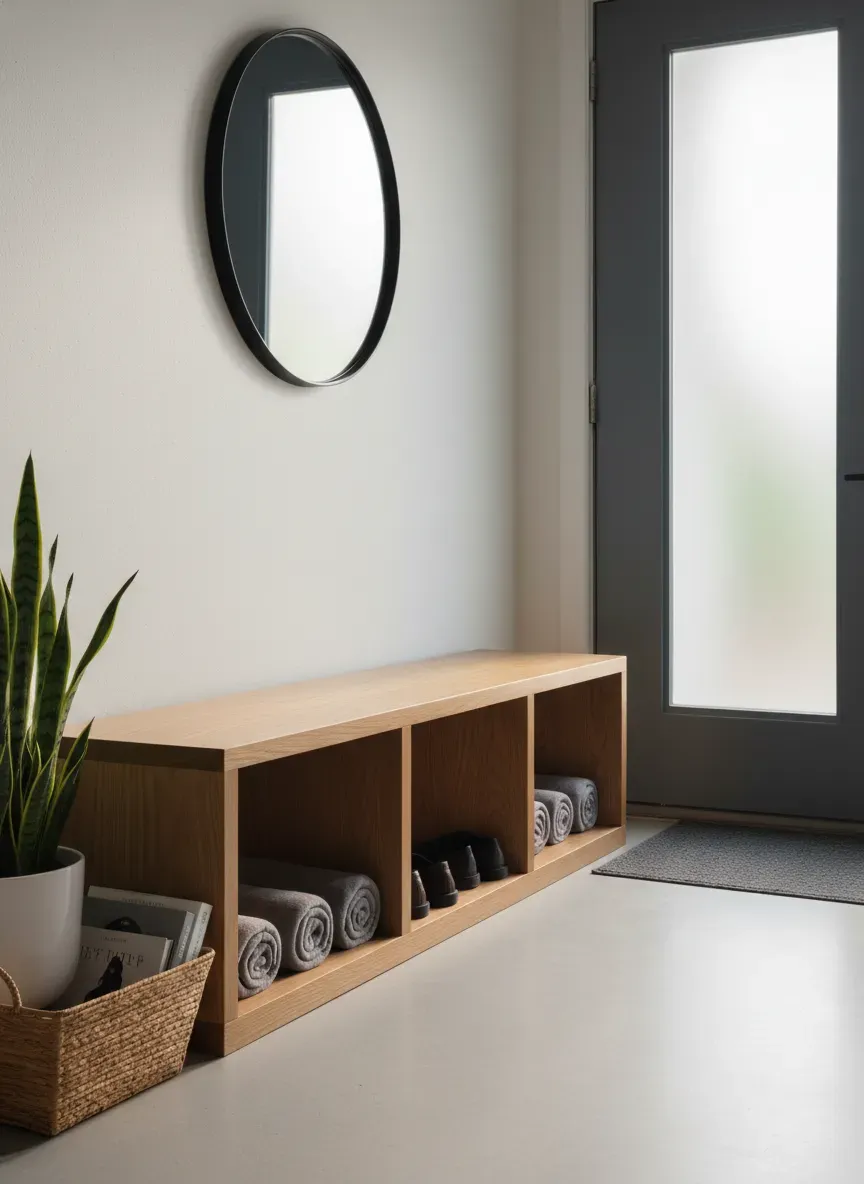
Instead, lean toward a Minimalist Storage Bench with open cubbies or sliding front doors. This allows you to grab a pair of shoes or a folded umbrella without having to disrupt anyone sitting on the cushion.
If your space is so profoundly tight that even a slender bench won’t fit, consider a heavy-duty folding stool mounted to the wall. Originating from marine and RV design, these spring-loaded jump seats fold completely flat against the wall when not in use, taking up virtually zero space while still providing a sturdy perch when necessary.
Pro Tip: If you do utilize under-bench cubbies, buy exact-fit canvas or woven baskets to slide into them. This hides the visual clutter of gloves, hats, and scarves while making it incredibly easy to pull out the entire bin to find what you need.
Micro-Organization: Hooks, Trays, and Baskets
The big pieces of furniture handle the heavy lifting, but it’s the micro-clutter that drives people insane. Mail, receipts, spare change, lip balm, and keys act like a virus, slowly spreading across every available flat surface.
Engineering the Perfect Command Center
To combat this, you need a designated “command center.” This doesn’t mean a massive corkboard taking up half the wall. A highly efficient Floating Entryway Organizer can act as a centralized hub for all outbound and inbound micro-items.
Look for systems that feature a small, raised lip or rail. A completely flat shelf is dangerous; one bump from a heavy coat and your keys will slide off into the abyss behind the shoe cabinet. A tiny brass rail or a recessed wooden tray ensures that small items stay precisely where you dropped them.
Interstitial Storage Opportunities
Don’t ignore the interstitial spaces—the weird, narrow gaps between your door frame and the adjacent wall, or the six inches of clearance between your shoe cabinet and the floor.
- Umbrella Stands: A slim, semi-circular umbrella stand can slide right into a corner, utilizing an awkward radius that would otherwise sit empty.
- Magnetic Key Drops: Instead of a bulky bowl, screw a powerful neodymium magnet directly to the underside of your floating shelf. Your keys will snap instantly to the wood, hovering out of sight.
- Wall-Mounted File Sorters: Repurpose a sleek metal office file sorter by mounting it to the wall beside the door. It is the absolute perfect depth for sorting incoming mail and outgoing letters without eating into your walking path.
Lighting and Mirrors: Expanding the Perceived Space
You can have the most efficient storage system in the world, but if your entryway is dark and dingy, it will still feel like a cramped closet.
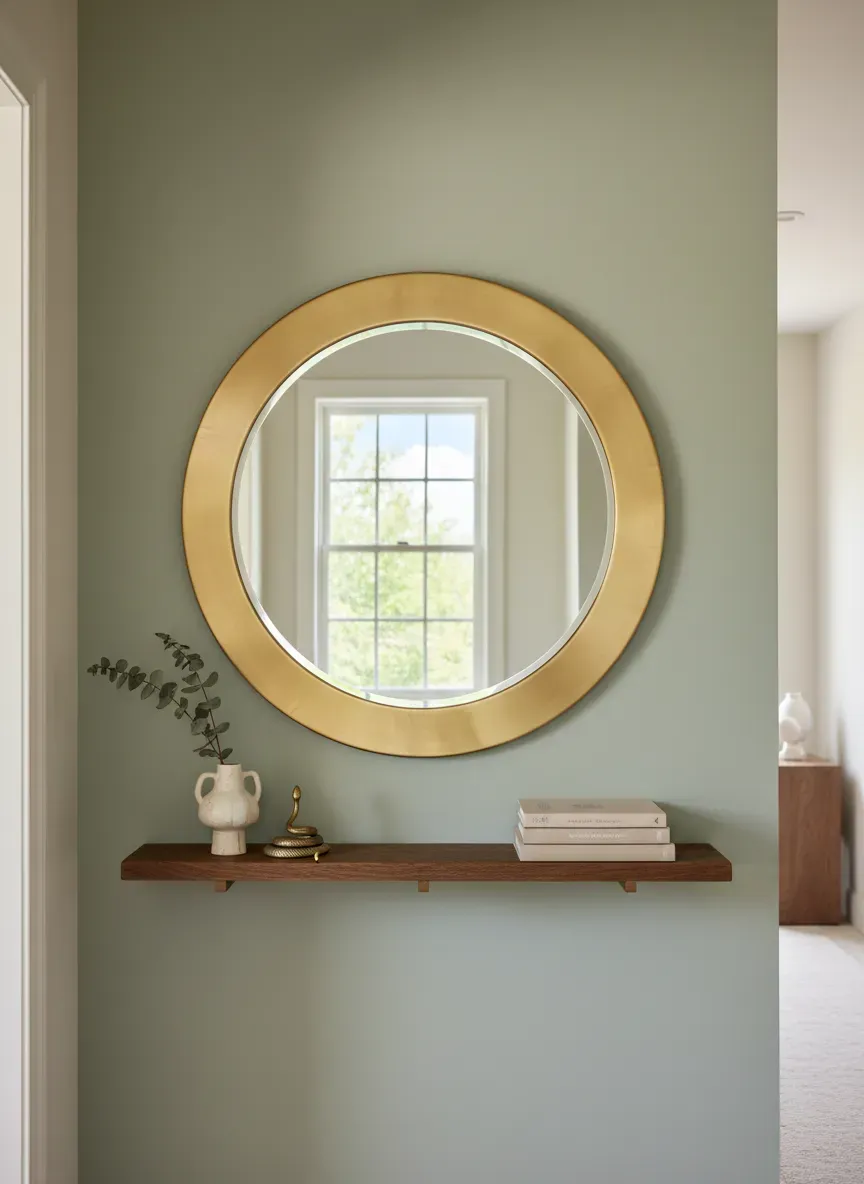
Mirrors are the oldest trick in the interior design playbook for a reason. They bounce whatever available light you have back into the room, effectively doubling the visual depth of the space. In a tight foyer, bypass the small decorative mirrors and opt for the largest piece of reflective glass you can physically fit on the wall. An oversized, frameless mirror or one with an ultra-thin metal bezel will open up the corridor dramatically.
Pair this with strategic lighting. A single overhead flush-mount fixture casts harsh shadows directly downward, highlighting the clutter on the floor. Introduce a small, battery-operated LED sconce or a plug-in picture light above your mirror. Washing the walls with soft, ambient light pushes the boundaries of the room outward.
Common Pitfalls in Entryway Design
Even with the best intentions, it is incredibly easy to accidentally sabotage your front-door space. Avoid these frequent missteps:
- Key Takeaways:
- Ignoring the Door Swing: Always, always measure the arc of your front door. I have seen countless homeowners purchase a beautiful console table only to realize the door smashes into it at a 45-degree angle. Leave a minimum of three inches of clearance beyond the maximum swing radius.
- The Aspirational Trap: Be brutally honest about your habits. If you are not the kind of person who meticulously folds their scarves, do not buy a storage system that relies on perfectly folded scarves to look good. Hide your mess if you know you won’t maintain it.
- Over-Decorating: Every decorative vase or framed photo on your entryway shelf is stealing valuable real estate from functional items. In a micro-space, the storage itself needs to be the decor. Choose pieces with beautiful wood grains, striking hardware, or architectural shapes so you don’t feel compelled to clutter them with knick-knacks.
- Forgetting the Baseboards: When measuring for a flush-mount cabinet, people often measure from wall to wall, forgetting that baseboards protrude up to an inch. This will ruin your installation flush. Always measure from baseboard to baseboard.
The Custom Solution: When Store-Bought Fails
Sometimes, your space is just too weird. Maybe you have an awkwardly placed radiator, a strange jog in the drywall, or a hallway that is precisely 31.5 inches wide, rendering every single retail bench utterly useless.
When you are fighting for literal millimeters, off-the-shelf furniture simply won’t cut it. You have to build it to the exact specifications of your home.
I’ve personally found that building your own perfectly tailored shoe cubby, floating command center, or radiator-cover-bench is incredibly empowering—and much easier than you’d think, provided you have the right blueprints. If you are tired of compromising with generic furniture that doesn’t quite fit, you need to look into Ted’s Woodworking.
The Bottom Line: With over 16,000 highly detailed woodworking plans, you can find the exact schematic to fit your weird, cramped, hyper-specific entryway footprint. You don’t need to be a master carpenter; you just need clear instructions and cut lists. Right now, you can grab a massive 75% discount on the entire database. Stop fighting your floor plan and start building exactly what you need.
Click here to access 16,000 woodworking plans and claim your 75% discount with Ted’s Woodworking.