
How to Source High-Quality (and Affordable) Wood for DIY Benches
Discover expert strategies for finding premium lumber on a budget. Learn how to navigate sawmills, decode board feet, and salvage high-end wood for your next DIY bench project.
Mar 22, 2026 - Written by: Linda Wise
I’ll never forget the first time I walked into a specialty hardwood dealer. I had a sketch of a beautiful, shaker-style entryway bench in my hand, and a naive optimism about my budget. Thirty minutes later, I walked out in a state of mild shock, having realized that enough surfaced walnut to build my project would cost more than my first car.
Sourcing lumber is the unspoken crucible of woodworking. Most tutorials gloss over it, showing you pristine, perfectly straight boards magically appearing on a workbench. The reality? Finding material that boasts stunning grain, structural integrity, and a price tag that won’t induce panic requires a specific set of investigative skills. You have to learn to read the market, understand the hidden geometry of rough stock, and know exactly where the industry hides its best deals.
High-quality wood isn’t inherently expensive; convenience is expensive. When you buy wood that has been jointed, planed, and shrink-wrapped at a retail store, you are paying a massive premium for the labor required to make it look pretty on the shelf. I’ve personally found that by stepping slightly outside the traditional retail ecosystem, you can acquire heirloom-grade materials for pennies on the dollar.
Quick Comparison: Top Picks
| Product | Rating | Check Price |
|---|---|---|
| General Tools Digital Moisture Meter | ⭐⭐⭐⭐⭐ | View on Amazon |
| Suizan Japanese Pull Saw Ryoba | ⭐⭐⭐⭐½ | View on Amazon |
| Titebond III Ultimate Wood Glue | ⭐⭐⭐⭐⭐ | View on Amazon |
The Economics of Lumber: Decoding the Pricing Matrix
Before you even start the car to go buy wood, you need to recalibrate how you measure it. Retail stores sell wood by the “linear foot” or by the piece. This is a trap designed to simplify purchasing for hobbyists while masking the true cost of the material. Hardwood dealers and sawmills operate in a completely different dimension: the Board Foot (BF).
Mastering the Board Foot Calculation
A board foot is a measure of volume, not length. It equals 144 cubic inches of wood—typically visualized as a piece that is 12 inches wide, 12 inches long, and 1 inch thick.
To calculate board footage, you multiply the thickness (in inches) by the width (in inches) by the length (in inches), and divide by 144. (T x W x L) / 144 = BF.
Why does this matter? Because a 2-inch thick slab of maple might seem astronomically expensive if you’re only looking at the length, but when you break it down by volume, you might realize it’s actually cheaper per cubic inch than the flimsy, pre-milled 3/4-inch stock at your local hardware store. Understanding this volumetric pricing empowers you to buy thicker, rougher stock and mill it down yourself, slashing your material costs significantly.
S4S vs. Rough Sawn
When browsing material, you’ll encounter terms like S4S (Surfaced Four Sides) and S2S (Surfaced Two Sides).
S4S lumber is retail-ready. It has been run through a jointer and a planer to create four perfectly flat, parallel sides. You pay a staggering premium for this. If you want to source affordable wood, you must become comfortable buying rough-sawn lumber. Rough stock looks fuzzy, dirty, and uneven. It hides its chatoyance and grain patterns beneath saw marks. But underneath that rough exterior lies the exact same premium hardwood, usually priced 30% to 50% lower than its surfaced counterpart.
Navigating the Supply Chain: Where to Actually Buy
If your only source for lumber is the big box home improvement store, your benches are going to be overwhelmingly crafted from pine, fir, or wildly overpriced red oak. You need to diversify your hunting grounds.
The Local Sawmill Advantage
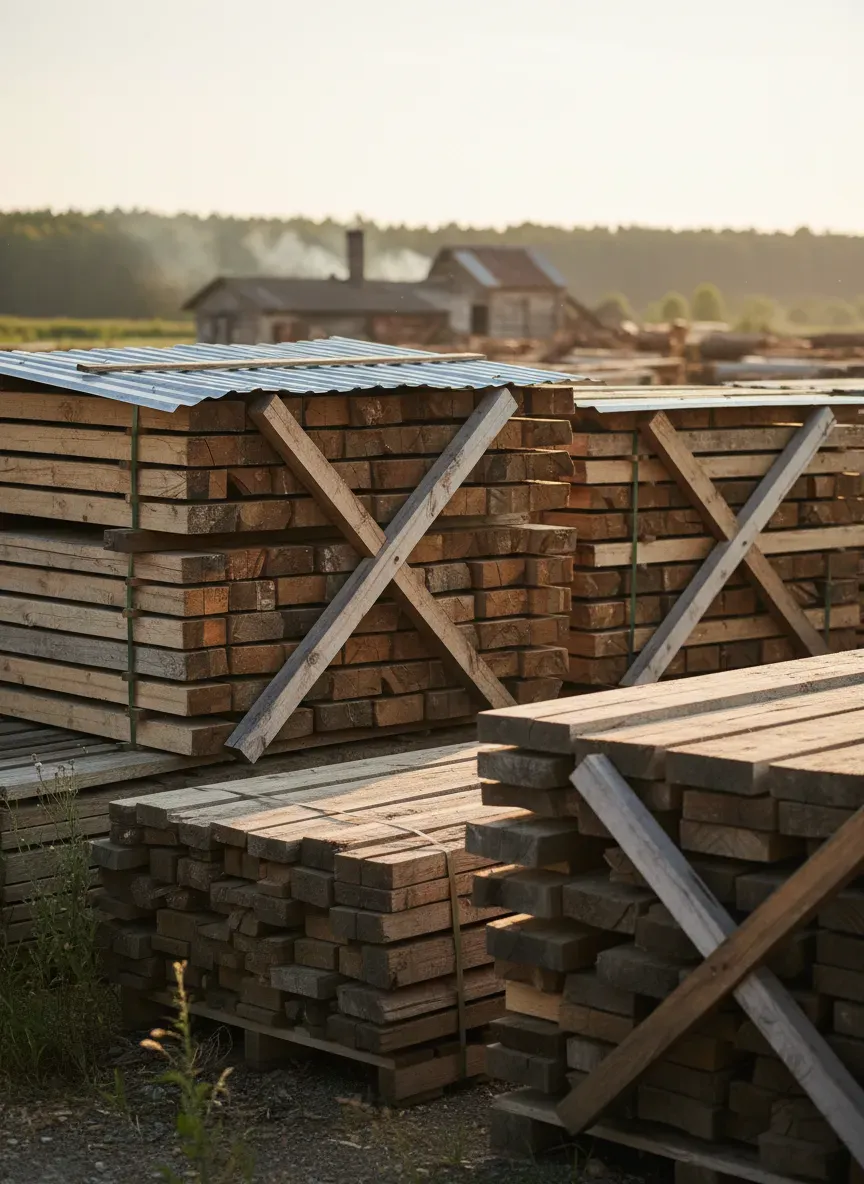
Hidden in rural out-buildings, industrial parks, and farm properties are independent sawmills. These operators buy logs from local arborists and tree services, mill them, and dry them. Because they don’t have massive overhead, corporate marketing budgets, or middlemen, their prices per board foot are aggressively competitive.
You’ll notice that sawmill operators speak a different language. They talk about “flitches,” “boules,” and “crotch grain.” Building a relationship with a local sawyer is the single most lucrative move a DIY builder can make.
Pro Tip: Never walk into a local sawmill demanding perfectly straight, defect-free wood. Sawyers respect builders who understand the natural characteristics of timber. Ask them what they have a surplus of, or if they have any “shorts” (boards under 6 feet). Shorts are notoriously difficult for sawmills to sell to commercial cabinet makers, meaning you can often snatch up premium bench-length boards for a fraction of the standard price.
The Hidden Goldmine of “Off-Cuts”
Commercial cabinetry and furniture shops generate massive amounts of waste. A shop building a 10-foot conference table might cut off three feet of flawless, 8/4 (two-inch thick) cherry simply because it didn’t fit their dimensions. To them, this is scrap. To you, it’s the perfect seat for an entryway bench.
Call local custom woodworking shops. Ask politely if they sell their off-cuts or have a scrap bin you could rummage through for a modest fee. Many shop owners are thrilled to make a few extra dollars off material they were going to throw into a wood stove.
Scavenging and Upcycling: The Frugal Craftsman’s Secret
Sometimes, the most affordable high-quality wood is wood that has already lived a previous life. Reclaimed lumber carries a patina, a history, and a density that modern, fast-growth timber simply cannot match.
Architectural Salvage and Estate Sales
Old houses were framed and finished with old-growth timber. We’re talking about wood with incredibly tight growth rings, making it heavier, stronger, and more dimensionally stable than anything harvested today. When historic homes are remodeled or demolished, architectural salvage yards swoop in.
Look for old solid-wood doors, thick stair treads, or even structural joists. A solid core mahogany door from the 1920s can be ripped down on a table saw to yield incredibly stable, gorgeous stock for a bench frame. If you’re planning to build a stunning bench using mixed materials, reclaiming robust oak from a discarded dining table offers unmatched character without the premium price tag.
Decoding Pallet Wood Safely
The internet is flooded with pallet-wood projects. It’s free, it’s abundant, and it has a rustic charm. But blindly cutting into pallets is a recipe for chemical exposure and ruined saw blades.
Not all pallets are created equal. You must read the stamps on the side of the stringers:
- HT (Heat Treated): This is the holy grail. The wood was heated in a kiln to kill pests. It is entirely safe to cut, sand, and finish.
- MB (Methyl Bromide): Walk away immediately. This pallet was fumigated with a highly toxic pesticide. Never use this for indoor furniture.
- KD (Kiln Dried): Safe to use, similar to HT.
To process pallets efficiently, avoid using a hammer and prybar—you will split the brittle hardwood slats. Instead, use a reciprocating saw with a bi-metal blade to slice straight through the nails holding the slats to the stringers. Once separated, use a punch to tap out the remaining nail heads.
Hardwoods on a Budget: Species to Target
When budget is a primary constraint, you need to abandon the dream of building a bench out of imported Wenge or premium Black Walnut. However, domestic hardwoods offer incredible durability and aesthetic appeal if you know which species to target. Choosing the right species dictates whether your project becomes a fragile showpiece or a built-to-last, rugged DIY mudroom staple.
Ash: The Unsung Hero
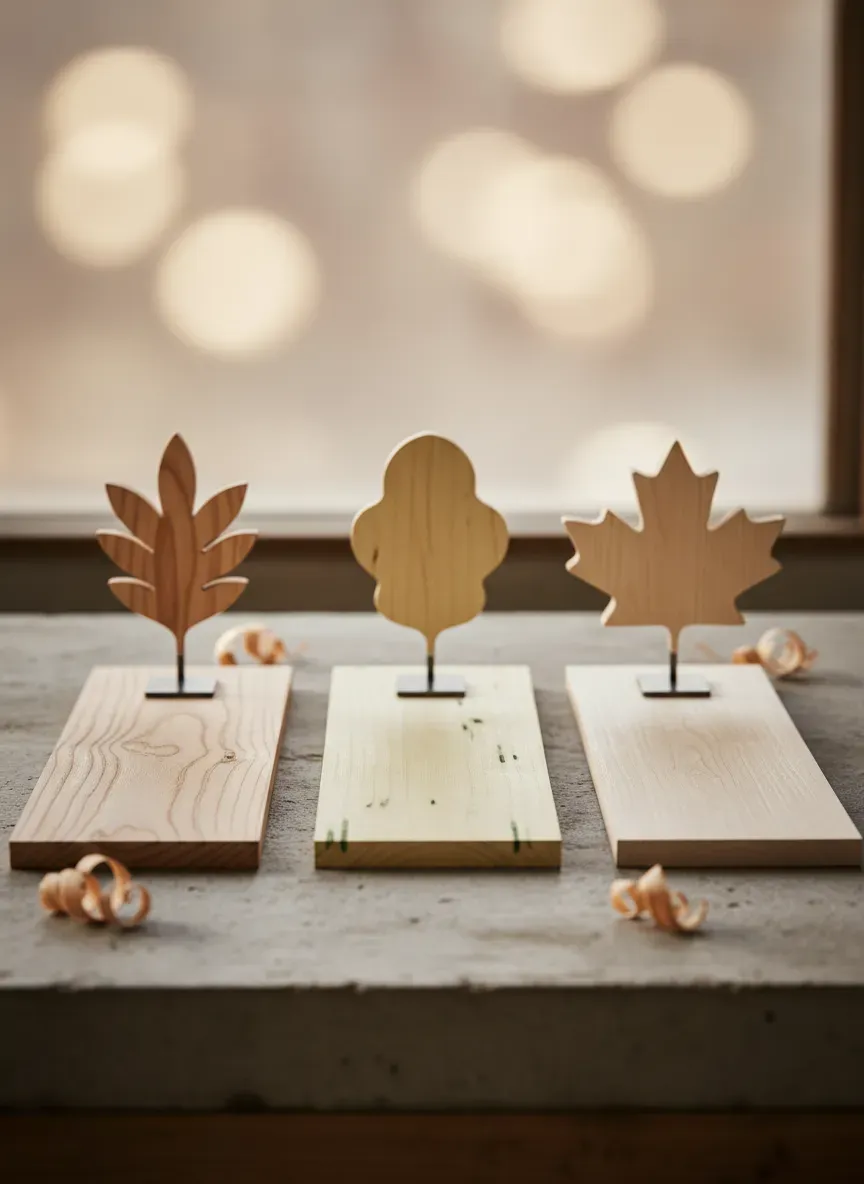
White Ash is currently one of the best bargains in the woodworking world. Due to the tragic spread of the Emerald Ash Borer beetle, thousands of ash trees are being harvested prematurely to prevent rot. This has flooded the market with high-quality ash lumber. It works similarly to oak, bends beautifully, takes stain exceptionally well, and has a striking, pronounced grain.
Poplar: Beyond Paint Grade
Poplar has a reputation as a “paint-grade” wood because its heartwood often features streaks of green, purple, and black. But here’s the real kicker: if you take the time to dig through a stack of poplar, you can easily find boards that are pure, creamy white or pale yellow. These select boards mimic the look of maple for half the price. Furthermore, as poplar ages and is exposed to UV light, those green streaks mellow into a warm, rich brown.
Soft Maple
Don’t let the word “soft” fool you. Soft maple is only soft in comparison to Hard (Sugar) Maple. It is still significantly harder than pine or fir and is perfectly suitable for a bench seat. Soft maple is vastly cheaper than hard maple, machines beautifully, and occasionally features hidden “curly” or “tiger” grain patterns that are highly sought after by luthiers and fine furniture makers.
The Moisture Content Mandate
One of the most catastrophic mistakes a beginner can make is buying cheap, freshly milled wood and immediately turning it into furniture. Wood is a hygroscopic material; it breathes, expanding and contracting as it absorbs and releases moisture from the surrounding air.
Understanding Equilibrium Moisture Content (EMC)
If you buy wood from a sawmill that has been air-drying outdoors, its moisture content might be hovering around 15% to 18%. If you build a bench with this wood and bring it into your climate-controlled home (which typically has an EMC of 6% to 8%), the wood is going to dry rapidly. As it dries, it shrinks. Your perfectly tight joinery will gap, your flat bench seat will cup like a potato chip, and the wood may even check (split) down the center.
This is why investing in a tool like the General Tools Digital Moisture Meter is non-negotiable. Before you buy a board, press the pins into the end grain. If it reads higher than 10%, you cannot build with it immediately.
Acclimation is Free
You can still buy wet, cheap wood! You just have to be patient. Bring the rough stock into the room where the bench will eventually live. “Sticker” the wood by placing small, uniform strips of scrap wood between each board to allow air to flow evenly across all surfaces. Let it sit for a few weeks, checking it periodically with your moisture meter until the internal moisture matches the environment.
Preparation and Milling: Turning Rough Stock into Bench Ready Lumber
So, you’ve sourced an incredibly affordable stack of rough-sawn ash from a local sawyer. Now what? You have to transform it from fuzzy, warped planks into precise, geometric components.
The Jointer and Planer Dance
The traditional method requires two heavy-duty machines. First, the jointer flattens one wide face and squares one adjacent edge. Then, the board goes through the thickness planer, referencing off the newly flattened bottom face to create a perfectly parallel top face. Finally, you rip the final edge on a table saw.
If you don’t own a jointer and a planer, don’t panic. There are incredibly effective budget-friendly workarounds.
The Router Sled Alternative
With a few scraps of plywood or MDF, you can build a router sled. By suspending a standard plunge router over your rough slab and passing a flattening bit back and forth, you can achieve a perfectly flat face on boards that are far too wide or warped for a traditional jointer. It’s dusty and time-consuming, but the financial savings of buying rough stock make the sweat equity entirely worth it.
The Hand Tool Renaissance
Never underestimate the efficiency of a sharp hand plane. A No. 5 Jack Plane can quickly knock down the high spots on a rough board, followed by a No. 7 Jointer plane to create a dead-flat surface. It requires physical exertion, but it connects you to the material in a profoundly satisfying way.
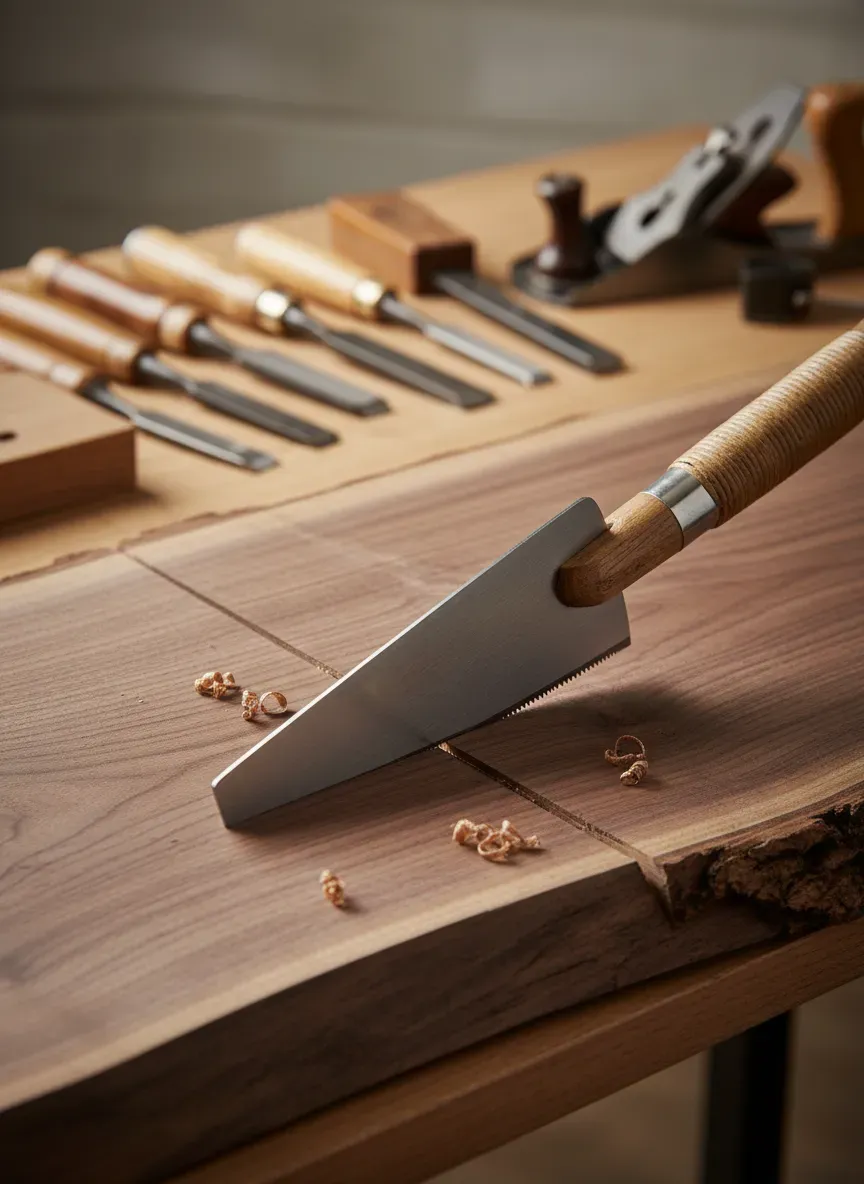
When it comes to cutting your newly milled components to length, precision is paramount. A high-quality hand saw, such as the Suizan Japanese Pull Saw Ryoba, cuts on the pull stroke, requiring less effort and delivering a surgically thin kerf that minimizes waste and prevents tear-out on your budget-friendly hardwoods. By mastering the art of sourcing these discounted shorts and milling them carefully, you transition from merely assembling parts to crafting excellence and building heirloom-quality furniture that rivals high-end retail pieces.
Key Takeaways for Sourcing Wood:
- Calculate in Board Feet: Stop looking at the linear price tag. Assess the total volume of the wood to find the true bargains.
- Hunt for Shorts: Wood under 6 feet long is practically useless to commercial shops but perfect for a 4-foot entryway bench.
- Invest in a Moisture Meter: Cheap wood is only a bargain if it’s dry. Wet wood will destroy your project from the inside out.
- Embrace the Rough: Buy S2S or rough-sawn lumber and mill it yourself. You’ll save up to 50% on material costs.
- Don’t Skimp on the Glue: When edge-joining budget boards to make a wider bench seat, the adhesive is your main structural defense. I always rely on Titebond III Ultimate Wood Glue for its longer open time and waterproof properties.
The Bottom Line
Sourcing premium wood on a budget is not about cutting corners; it’s about cutting out the middleman. By shifting your mindset from a retail consumer to a resourceful artisan, you unlock a world of spectacular materials. You learn to see the stunning figure hidden beneath the rough saw marks of an ash slab, and you discover the history embedded in a reclaimed oak floor joist.
Woodworking is an exercise in patience. Taking the time to hunt down the right sawmill, negotiate for off-cuts, and properly acclimate your lumber ensures that the bench you build will not only look phenomenal but will outlast the very trees it came from.
Now that you know exactly how to secure premium lumber without draining your bank account, the only thing standing between you and a breathtaking custom bench is the right blueprint. I’ve personally found that the biggest hurdle for DIYers isn’t the building process—it’s the planning. Trying to calculate cut lists, angles, and joinery on the fly usually leads to wasted wood and massive frustration.
If you want to bypass the guesswork and get straight to the rewarding part, I highly recommend checking out Ted’s Woodworking. It is an absolute goldmine containing over 16,000 step-by-step woodworking plans, complete with precise schematics, materials lists, and 3D renderings. Whether you want to build a rustic farmhouse bench or a sleek, mid-century modern seating area, the exact plans are waiting for you.
Right now, you can grab the entire 16,000-plan archive at a massive 75% discount. Stop wasting your beautiful, newly sourced lumber on trial-and-error designs. Grab your blueprints today: Click here to get immediate access to Ted’s Woodworking and claim your 75% discount!