
How to Style a Vintage Entryway Table: Pro Tips for a Welcoming Home
Transform your foyer from a chaotic drop-zone into a curated masterpiece. Master the art of styling vintage entryway tables with our expert design principles.
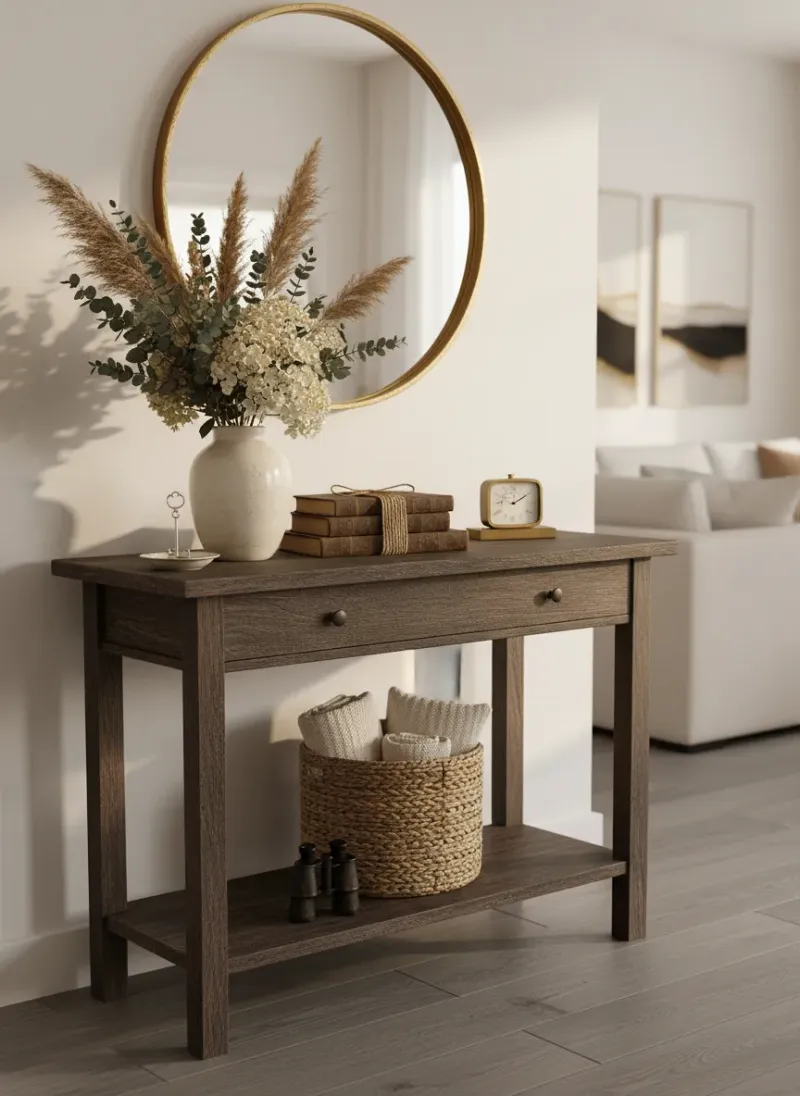
May 13, 2026 · Linda Wise
15 min readThe foyer is the architectural equivalent of a handshake. It sets the immediate tone, establishing the narrative of your home before a guest even removes their coat. I”™ve personally found that relying on big-box store furniture for this critical transitional space often yields a flat, uninspired aesthetic. A vintage entryway table, on the other hand, injects immediate soul, grounding the space with history, texture, and undeniable character.
But acquiring a gorgeous piece of history is only half the battle. A naked antique table looks abandoned; a poorly styled one looks like a yard sale. Mastering how to style a vintage entryway table requires balancing utilitarian needs—a place to dump your mail and keys—with high-level design principles like scale, asymmetry, and visual weight. You want a vignette that feels collected over decades, not hastily assembled from a catalog.
Before we dissect the exact geometry of entryway styling, let’s look at a few foundational tools that will immediately elevate your arrangement.
Understanding the Anatomy of Vintage Casegoods
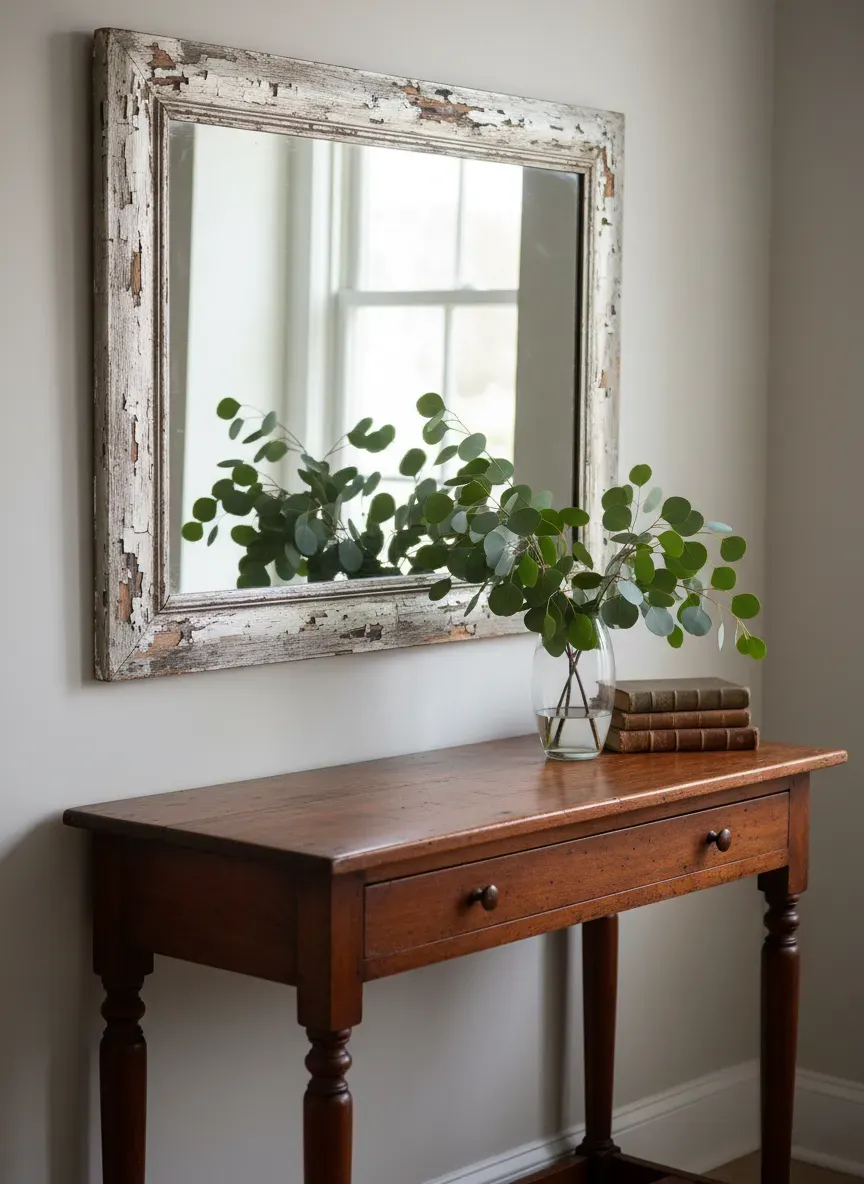
To style a piece effectively, you must first understand its inherent language. Vintage tables are not a monolith. A delicate, spindly-legged Federal period demi-lune dictates a vastly different styling approach than a chunky, heavily carved brutalist credenza from the 1970s.
When you assess your piece, look closely at the patina. Is the wood heavily burled and glossy, or dry and distressed? A highly polished mahogany console demands slightly more relaxed, organic counterpoints—think a rugged terracotta vessel or wild, asymmetrical branches—to prevent the setup from feeling overly formal or stuffy. Conversely, a rustic, weathered oak piece benefits from the sharp, glamorous contrast of polished brass or sleek glass accents.
Scale and Spatial Topography
The most rampant mistake I see in residential foyers is a fundamental misunderstanding of scale. A tiny, floating table on a massive blank wall looks apologetic. A gigantic, oversized console crammed behind a front door creates immediate spatial anxiety.
You need to evaluate the wall your table sits against. The objects you place on the table must interact with the vertical space above it, creating a bridge between the furniture and the ceiling. If your foyer is tight, you might find yourself optimizing narrow console storage to preserve walking clearance. Even with a depth of merely ten inches, vertical scaling remains non-negotiable. You build up, not out.
Pro Tip: If your vintage table feels slightly too small for the expansive wall it sits against, flank it. Place two matching upholstered ottomans or woven baskets on the floor at either end. This immediately extends the visual footprint of the furniture without requiring a new table.
The Foundational Laws of Vignette Construction
Styling is not random. It is governed by invisible geometric laws that the human eye naturally craves. Once you internalize these rules, you can break them intentionally, but you must master the grid first.
The Triangle Principle
Interior stylists rely heavily on the visual triangle. If you draw a line from the highest point of your display down to the edges, it should form an A-line shape. This prevents the “picket fence” effect, where objects of identical height are lined up in a monotonous row.
Your apex (the tip of the triangle) is usually your lighting or a tall floral arrangement. The middle tier consists of your leaning art or medium-sized sculptural objects. The base tier is your horizontal grounding elements: stacked books, trays, and bowls.
The Rule of Odds
The human brain loves to categorize things. When it sees an even number of objects, it instantly divides them into pairs, processing the visual information quickly and then getting bored. Odd numbers—threes, fives, and sevens—force the eye to keep moving around the arrangement.
When grouping items on your vintage table, always group in odds. A stack of three books feels curated. A stack of two feels like you forgot the third. Three distinct objects on a tray (a candle, a match cloche, and a small brass figurine) will always look more dynamic than two.
Balancing Visual Weight
Visual weight has nothing to do with physical pounds; it”™s about how heavy an object looks. A solid, dark, matte ceramic vase has immense visual weight. A transparent, fluted glass vase has very little.
A successful vintage table balances these opposing forces. If you place a heavy, dark lamp on the left side of your console, you cannot put a tiny glass bud vase on the right and expect the table to feel stable. It will look entirely lopsided. You need to counter that heavy lamp with something of equal visual mass on the opposite end, perhaps a large stack of dark-spined coffee table books topped with an iron bowl.
Layering the Entryway: A Step-by-Step Execution
Theory is crucial, but application is where the magic happens. Let”™s break down the exact sequence of building your entryway vignette from scratch. Clear everything off the table. Dust the wood. We start with a blank canvas.
Layer 1: The Anchor
The anchor is the foundational element that connects the table to the wall behind it. Without an anchor, your table floats aimlessly in the room.
Mirrors vs. Art: Mirrors are the traditional choice for foyers, and for good reason. They bounce light around what is typically the darkest room in the house, and they offer a final chance to check your appearance before leaving. When pairing a mirror with a vintage table, avoid matching eras too closely. If you have a mid-century teak console, do not use a mid-century sunburst mirror. It looks themed. Instead, opt for an ornate, gilded Louis Philippe mirror. The friction between the clean lines of the table and the ornate detailing of the mirror is exactly where high-end design lives.
If you opt for art, go large. A massive, oversized abstract canvas resting directly on the tabletop and leaning against the wall feels incredibly modern and relaxed, instantly updating a fussy antique table.
Pro Tip: The bottom edge of a hanging mirror or piece of art should sit roughly 4 to 6 inches above the top of the table. Hanging it any higher severs the relationship between the wall piece and the furniture.
Layer 2: The Illuminator
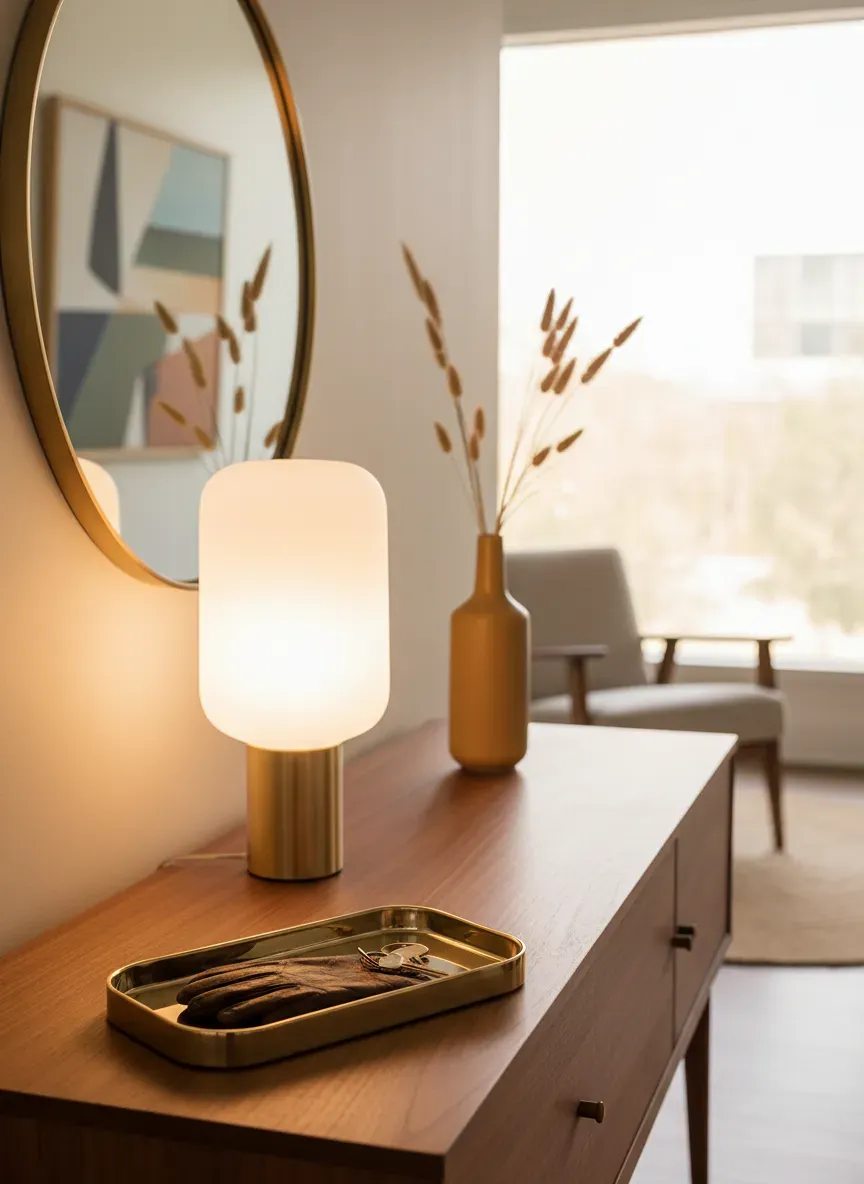
Entryways require layered lighting. Overhead recessed lights cast harsh, unflattering shadows that destroy the moody ambiance of a welcoming home. You need eye-level illumination.
A table lamp serves a dual purpose: it provides crucial ambient light and acts as a major sculptural element. If your vintage table is long enough, a pair of matching lamps on either end creates a stately, formal symmetry. If the table is shorter, an asymmetrical approach with a single, substantial lamp on one side works best.
Look for lamps that offer a contrast in material to your table. Consider a textured Alabaster Table Lamp to contrast with dark walnut, or a sleek, blackened iron lamp to ground a lighter, whitewashed piece.
Layer 3: The Organic Element
A room without organic life feels stagnant. Vintage pieces, by their nature, carry the weight of the past. To bring the vignette firmly into the present, you must introduce something living, or at least something from nature.
This is your opportunity to play with extreme height. A sturdy stoneware crock filled with oversized, forged branches (think oak, cherry blossom, or even dried curly willow) brings incredible drama and architectural shape to the setup.
If branches feel too imposing for your space, consider a low, sprawling bowl of moss, a trailing pothos plant, or a simple, elegant vase of fresh eucalyptus. The key is movement. You want something that breaks the rigid, straight lines of the table and the frames on the wall.
Layer 4: The Utilitarian Base
Here is where the reality of daily life meets aesthetics. The entryway is a high-traffic drop zone. If you do not provide dedicated vessels for clutter, the clutter will simply colonize the entire tabletop.
You need a catchall. But a catchall shouldn’t look like an office supply organizer. Opt for something beautiful that hides the mundane. An Aged Brass Catchall Tray is perfect for corralling keys, sunglasses, and loose change.
To elevate the tray, don’t just place it flat on the wood. Create a pedestal. Stack two or three beautiful design books—like Architectural Digest at 100—and place the tray on top. This elevates the mundane items, making them feel intentional rather than accidental.
Layer 5: The Under-Table Void
People obsess over the tabletop and completely ignore the negative space beneath it. A vintage table with long, spindly legs can look top-heavy if the space underneath is left entirely empty.
Ground the composition by utilizing the floor space.
- Seating: Tuck a pair of vintage stools or a small wooden bench beneath the console. It provides a practical spot to tie shoes while adding visual weight.
- Storage: Large, structured woven baskets are ideal for hiding winter scarves, umbrellas, or dog leashes.
- Sculpture: A large, oversized antique floor urn or a stack of vintage trunks can add immense character to the negative space.
Diagnosing and Curing Common Styling Pitfalls
Even with the best intentions, entryway styling can easily go off the rails. Here are the most common mistakes I encounter, and precisely how to rectify them.
The “Flea Market Dump” Syndrome
It”™s incredibly tempting to display every beautiful small object you”™ve ever thrifted on your entryway table. The result is visual chaos. When there is too much to look at, the eye registers nothing but clutter.
The Cure: Ruthless editing. A vignette needs breathing room. Negative space is just as important as the objects themselves. Group your small items tightly together on a tray to read as a single unit, and leave the rest of the table surface entirely bare.
The Flatline Effect
This happens when a homeowner places a lamp, a frame, and a vase on a table, and they all happen to be roughly fourteen inches tall. The arrangement has no topography. It feels stagnant and lifeless.
The Cure: Force height variations. Put the small frame on top of a stack of books. Swap the medium vase for a massive, tall branch arrangement. Ensure your eye has to travel up and down to take in the entire scene.
Ignoring Cord Management
There is nothing that ruins the illusion of a curated, high-end vintage aesthetic faster than a tangled black electrical cord dangling down the wall behind an elegant console.
The Cure: Zip ties and command hooks. Run the lamp cord directly down the back leg of the vintage table, securing it tightly with zip ties so it is entirely invisible from the front. If the outlet is far away, use a cord cover painted the exact same color as your baseboards to camouflage the run.
Adapting Your Vintage Table to the Seasons
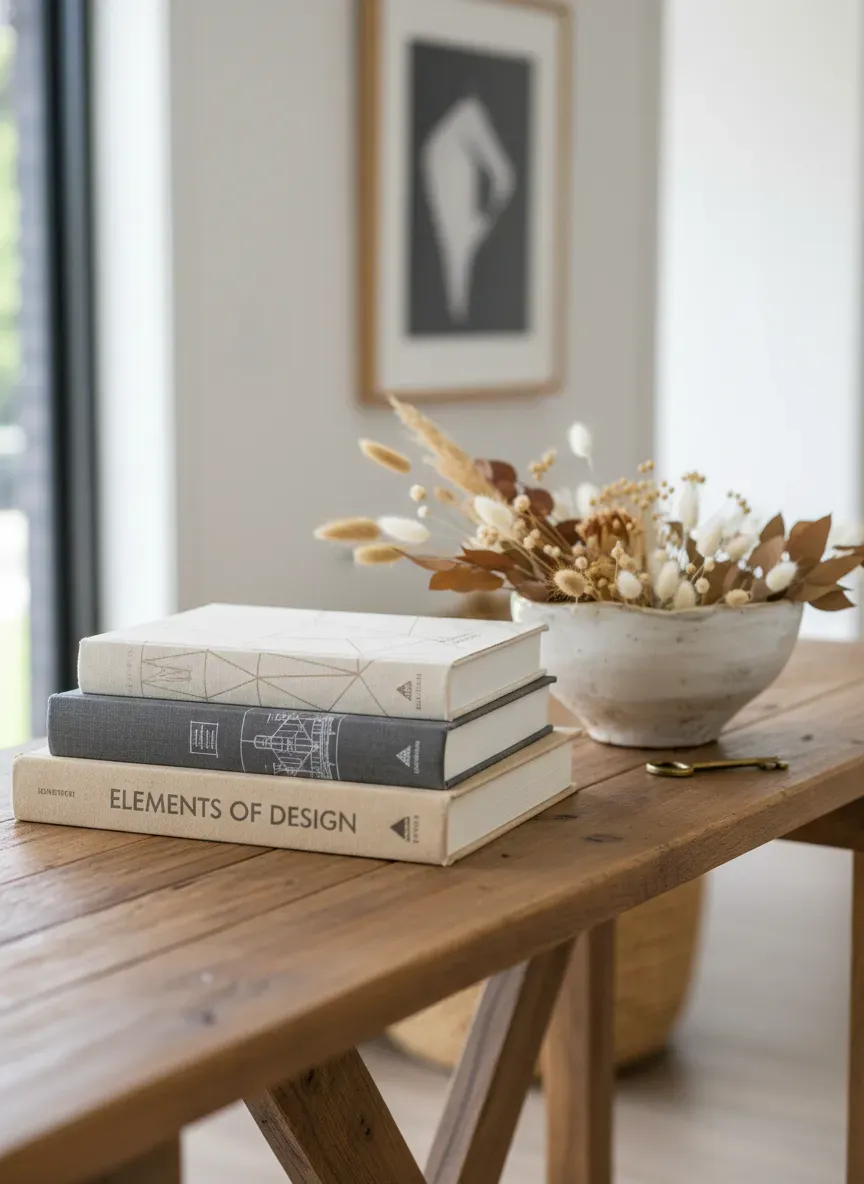
A well-styled home is not a museum exhibit frozen in amber; it breathes and shifts with the calendar. Your entryway table is the most logical place to reflect the changing seasons, but you must do so without resorting to kitsch. Forget the plastic pumpkins and the glittery snowflake scatter. Let nature dictate the seasonal shifts.
Spring and Summer Shifts
As the days lengthen, lighten the visual weight of your table. Swap heavy, dark velvet or wool elements for linen. Replace dried, structural branches with delicate, fresh-cut blooms like lilacs or peonies. If you use scented candles in your vignette, transition from heavy ambers and woods to bright citrus or crisp linen scents. The goal is to make the entryway feel airy and restorative.
Autumn and Winter Transitions
When the temperature drops, the foyer should become a cocoon of warmth. This is the time to bring out the heavier textures. Swap out glass vessels for unglazed ceramics or aged brass. Introduce branches with turning leaves, dried wheat, or dense evergreen boughs. Introduce a tiny, shaded accent lamp with a warm amber bulb to create a cozy, inviting glow that fights off the early evening darkness.
Advanced Techniques: Mixing Eras with Confidence
The true hallmark of an expert eye is the ability to mix historical periods seamlessly. A vintage table should never be surrounded exclusively by items from its own era. That creates a time capsule, not a home.
If you have acquired a highly ornate, heavily carved Victorian console table, pairing it with fringed lamps and doilies will make your home look like a haunted bed and breakfast. You must disrupt the history. Pair that fussy Victorian wood with a sleek, chrome-arched modern lamp. Hang a piece of stark, monochromatic contemporary art above it.
Conversely, if you have a sleek, minimalist Scandinavian mid-century table, soften its harsh, utilitarian angles with a highly textured, hand-thrown wabi-sabi ceramic bowl and an intricately framed antique oil portrait.
This deliberate juxtaposition is the secret weapon of high-end interior designers. It forces the viewer to look at the vintage piece with fresh eyes, stripping away its historical baggage and allowing its pure architectural form to shine.
Maintaining the Integrity of Vintage Wood
Styling is irrelevant if the foundational piece is deteriorating. Vintage casegoods require a specific maintenance protocol to ensure they survive another century of daily use.
Never use aerosol, silicone-based dusting sprays on antique wood. Over time, these chemicals build up, creating a cloudy, sticky film that suffocates the wood grain and destroys the authentic patina.
Instead, establish a routine of dry dusting with a microfiber cloth. Twice a year, feed the wood with a high-quality beeswax polish. Apply it sparingly, let it sit, and buff it out with incredible elbow grease. This nourishes the timber and leaves a soft, historically accurate luster rather than a cheap, artificial shine.
Be fiercely protective of the tabletop surface. Water rings from a carelessly placed vase can ruin a century-old finish in an hour. Always use felt pads under heavy ceramic pots or lamps, and ensure your catchall tray has a protective backing to prevent it from scratching the wood as you toss your keys into it every evening.
Key Takeaways for Flawless Execution
- Respect the Patina: Let the age of the table dictate the contrast of your accessories. Pair rustic wood with sleek accents, and glossy wood with organic textures.
- Scale Vertically: Ensure your mirror or art bridges the gap between the tabletop and the ceiling. Don’t let your table float.
- Build the Triangle: Create a distinct high point (apex) and slope downwards to avoid visual flatlining.
- Group in Odds: Threes and fives create dynamic visual tension; even numbers create stagnant pairs.
- Layer Lighting: Rely on a substantial table lamp for warm, eye-level ambient light, strictly avoiding harsh overheads.
- Corral the Chaos: Utilize an elegant brass or ceramic catchall elevated on design books to manage daily entryway clutter with intention.
The Bottom Line
Styling a vintage entryway table is an ongoing dialogue between form and function, history and modern utility. It requires you to look past the practical necessity of a drop-zone and view the space as an opportunity for architectural storytelling. By mastering scale, manipulating visual weight, and embracing the friction between contrasting eras, you transform a simple piece of old furniture into a profound, welcoming statement. Take your time, edit ruthlessly, and let the vignette evolve organically. The most compelling entryways are never truly finished; they are continually refined.
