
Sustainable Storage: Eco-Friendly and Recycled Materials for Entryway Organizers
Discover how to transform your foyer with sustainable storage. We analyze the best eco-friendly and recycled materials for entryway organizers that combine style with a low carbon footprint.
Feb 10, 2026 - Written by: Linda Wise

The entryway is more than just a transition zone; it is the exhale after a long day. It’s the precise moment you drop your keys, kick off your shoes, and shift from “public mode” to “private sanctuary.” But if your drop zone is cluttered with cheap, plastic bins or flimsy particle board shoe racks that wobble every time you breathe on them, that exhale turns into a sigh of frustration.
We are currently witnessing a massive shift in interior design. We’ve moved past the era of fast furniture—those flat-pack nightmares destined for a landfill within three years—and into an age of conscientious curation. I’ve seen this personally with clients who are no longer just asking, “Does it fit?” but “Where did it come from?” and “What happens to it when I’m done?”
Sustainable storage isn’t just a buzzword; it is a structural philosophy. It’s about selecting entryway organizers made from materials that respect the planet without sacrificing the aesthetic integrity of your home’s first impression.
In this deep dive, we are going to dissect the materials that actually matter. We’ll look past the greenwashing labels and get into the nitty-gritty of reclaimed wood, bamboo nuances, and the surprising durability of recycled polymers.
The Hidden Carbon Footprint of the Foyer
Before we get into the solutions, we have to acknowledge the problem. Most standard entryway furniture is an environmental disaster.
You walk into a big-box store, see a sleek-looking hall tree for $80, and think you’ve scored a deal. But the reality is grim. That unit is likely made of low-grade MDF (Medium Density Fiberboard) bound together with formaldehyde-based resins. It’s covered in a PVC veneer that creates toxic off-gassing in your home. And because the material cannot hold a screw tight after a few moves, it ends up on the curb.
Pro Tip: If you can’t pronounce the chemicals used to bind the wood, you probably don’t want your family breathing them in every time they walk through the door.
Sustainable storage challenges this “buy-and-toss” mentality. It prioritizes longevity, circular lifecycles, and low-toxicity manufacturing.
Defining “Eco-Friendly” in Storage Architecture
Not all green labels are created equal. I’ve spent years analyzing supply chains, and the term “sustainable” is often slapped on anything that isn’t pure plastic. To truly curate an eco-friendly entryway, you need to look for specific markers of integrity.
The Regenerative Power of Bamboo (With a Caveat)
Bamboo is the darling of the sustainable world, and for good reason. It’s not a tree; it’s a grass. This means it grows back with incredible speed—some species shoot up three feet in a single day. Unlike an oak tree that takes decades to mature, bamboo can be harvested every 3-5 years without killing the plant or destroying the root system.
However, here is the kicker that many manufacturers won’t tell you: The processing matters.
Because bamboo stalks are hollow and round, they must be sliced, boiled, and glued together to form flat boards for shoe racks or benches. If the manufacturer uses cheap, high-VOC adhesives, the environmental benefit is negated by the toxicity introduced into your home.
When sourcing bamboo organizers, look for “solid bamboo” rather than bamboo veneer, and check for low-formaldehyde certifications.
The Soul of Reclaimed Wood
If you want your entryway to tell a story, reclaimed wood is the gold standard. We aren’t just talking about saving trees; we are talking about carbon sequestration.
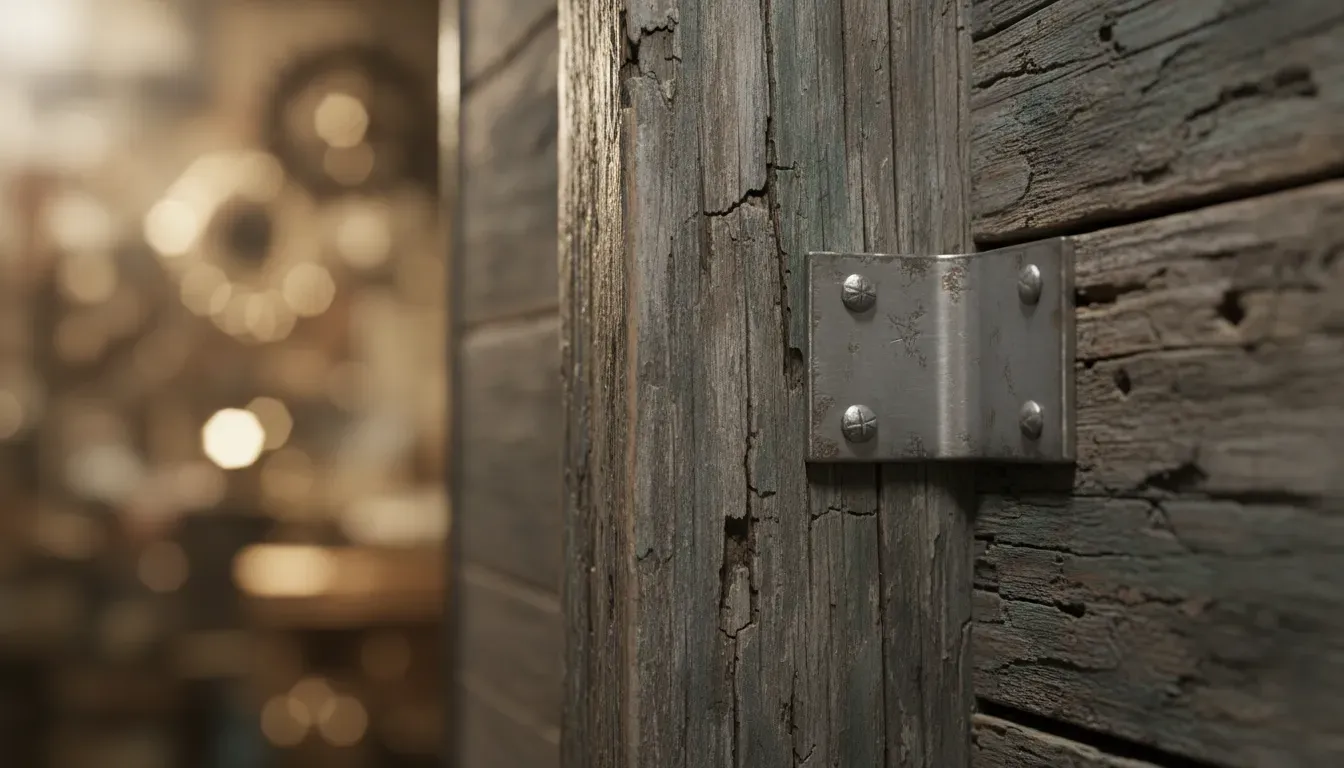
When you buy a bench made from virgin timber, a tree was cut down. When you buy a bench made from reclaimed barn wood or old railway sleepers, you are extending the life of wood that was harvested a century ago. This wood is denser, harder, and more dimensionally stable because it has had decades to dry out and acclimatize.
From a design perspective, the patina of reclaimed wood hides the scuffs and scratches of daily life. A pristine white laminate shelf looks ruined after one muddy boot streak. A reclaimed oak bench? That scratch just adds character.
Recycled Metals and Industrial Chic
Entryway organizers often need to be heavy-duty. Coats are heavy; wet umbrellas are messy. This is where metal shines.
Mining virgin ore for steel and aluminum is incredibly energy-intensive. However, metals are infinitely recyclable without losing their properties. Many modern industrial-style hall trees use recycled steel or iron pipes. These pieces offer a stark, architectural contrast to the warmth of wood and are virtually indestructible.
Material Deep Dive: Selecting the Right Organizer
Now that we understand the philosophy, let’s look at the specific applications for your entryway. The market is flooded with options, but identifying the gems requires a sharp eye.
1. The Shoe Rack: Durability Meets Breathability
Shoes are gross. They track in mud, moisture, and bacteria. Your storage solution needs to handle dampness without warping and allow for airflow to prevent mold.
This is where Bamboo and Recycled Polypropylene excel.
Bamboo is naturally water-resistant (it grows in humid environments, after all). A slat-style bamboo rack allows air to circulate around damp sneakers, drying them out faster than a solid particle-board cubby would.
If you prefer a more modern, utilitarian look, look for high-density recycled plastics. We aren’t talking about flimsy, single-use plastic. We are talking about post-consumer recycled (PCR) plastics that are melted down and reformed into thick, heavy-duty boards. These are waterproof, easy to wipe down, and prevent plastic waste from entering the ocean.
2. The Coat Stand: Structural Integrity
A winter coat can weigh five pounds. Multiply that by four family members, add backpacks and purses, and your entryway organizer is under significant stress.
Avoid hollow aluminum or thin plastic hooks. Instead, seek out FSC-Certified Hardwoods or Recycled Iron.
The Forest Stewardship Council (FSC) certification is the only paper trail I trust completely. It guarantees that the wood was harvested from forests that are responsibly managed, socially beneficial, and economically viable. An FSC-certified walnut or maple coat rack provides the density needed to hold heavy loads without the guilt of deforestation.
3. The Catch-All Console: Natural Fibers
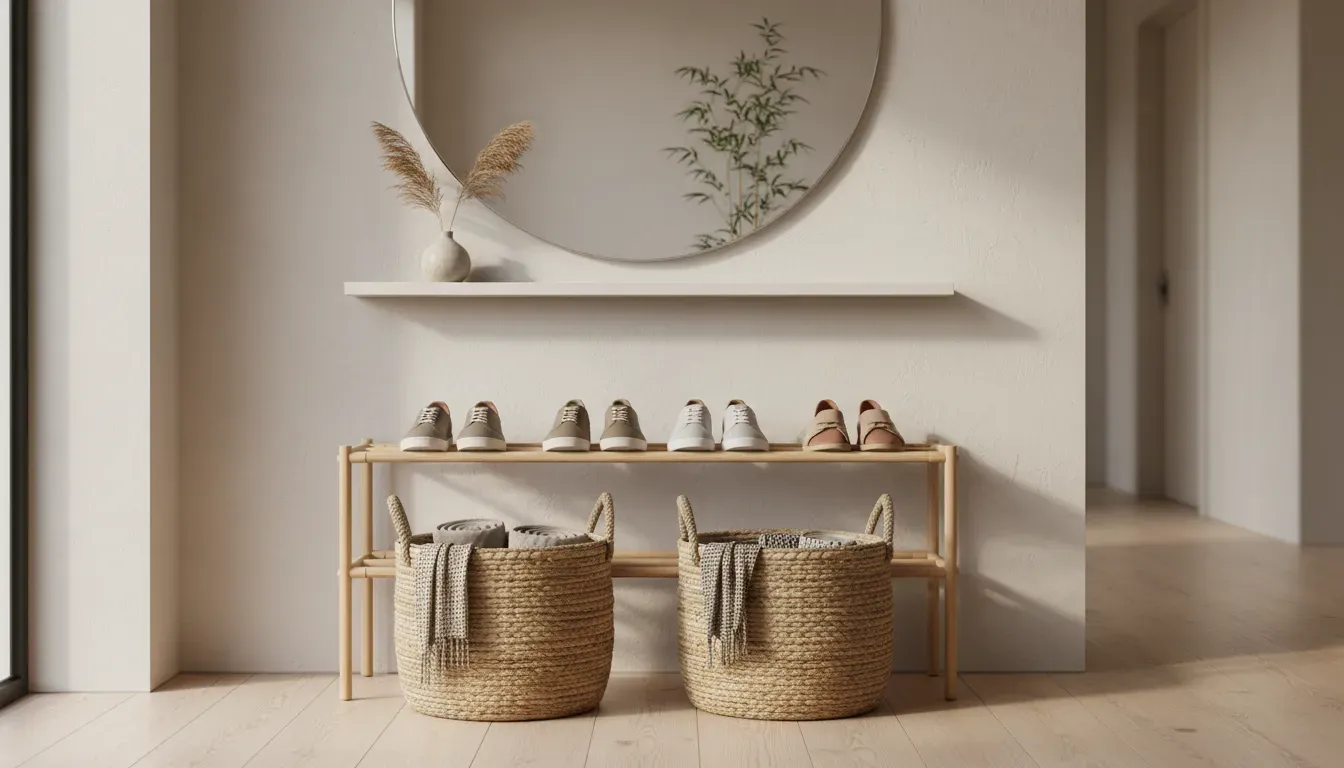
For the smaller items—keys, mail, dog leashes—baskets and bins are essential. This is where you can introduce softness through natural fibers like Rattan, Seagrass, and Water Hyacinth.
These materials are typically hand-woven and rapidly renewable. They add a layer of “biophilic design” to your entryway—the concept that humans have an innate desire to connect with nature. Walking in the door and seeing the organic texture of a woven seagrass basket immediately lowers cortisol levels compared to seeing a sterile plastic bin.
Navigating the Marketplace: Top Recommendations
I am often asked what specific products I would put in my own home. After vetting dozens of manufacturers for material integrity and build quality, there are a few standouts that balance sustainability with functional design.
If you are looking for a foundational piece that handles the bulk of entryway clutter, you need something robust.
For those dealing with a mountain of footwear, I highly recommend the SONGMICS Bamboo Shoe Rack Bench. What I appreciate about this specific unit is the density of the bamboo strips used. It doesn’t feel brittle. It serves a dual purpose as a seating area and a storage unit, which is efficient design—a core tenet of sustainability.
If your style leans more towards the rustic or industrial, and you need vertical storage for coats and bags, check out the VASAGLE Industrial Coat Rack Shoe Bench. While it uses engineered wood, the frame is substantial recycled steel, and the durability means you won’t be replacing it in two years. It maximizes vertical space, which is crucial for smaller apartments.
For the ultimate in eco-luxury and wall-mounted organization, the Rivet Reclaimed Wood Wall Coat Rack is a stellar choice. Because it uses actual reclaimed wood, every single piece has unique grain patterns and knot holes. It turns a functional object into a piece of art, and it keeps floor space clear.
The Upcycling Route: DIY Sustainable Storage
Sometimes, the most sustainable product is the one that already exists. If you are handy with a drill and sandpaper, creating your own entryway organizer is the ultimate eco-move.
The Pallet Transformation
Shipping pallets are the unsung heroes of the DIY world. They are usually made of rough-hewn oak or pine and are heat-treated (look for the “HT” stamp) rather than chemically treated.
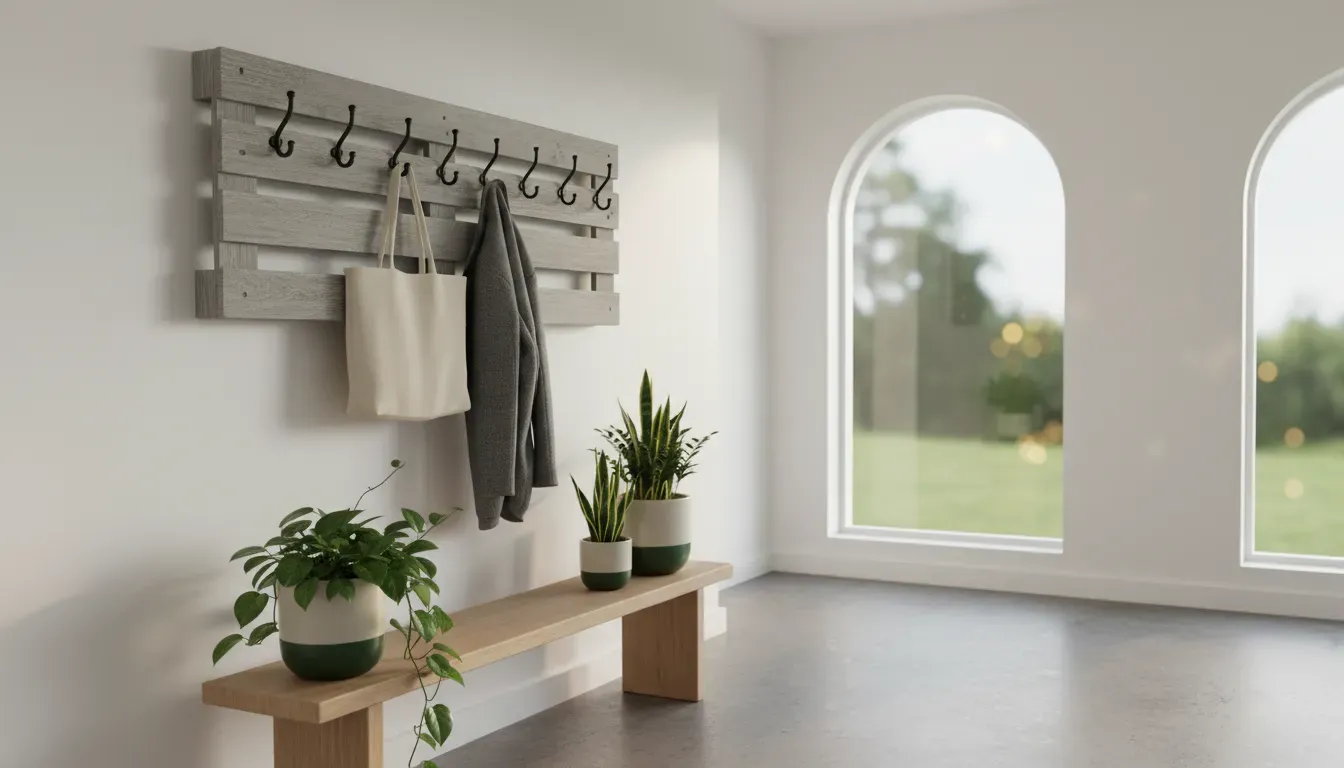
You can disassemble a pallet, sand down the planks to remove splinters, and reassemble them into a rustic, wall-mounted shoe rack or coat hanger. The rough texture creates immediate visual interest, and the cost is usually zero.
Repurposing the Old Dresser
We’ve all seen them at thrift stores: solid wood dressers with broken drawers or outdated finishes.
By removing the bottom drawers and leaving the top one for keys, you can create a hybrid bench/storage unit. Paint it with zero-VOC milk paint, add some new hardware made from recycled brass, and you have a piece of furniture that is totally unique and saved from the landfill.
Greenwashing: What to Avoid
It is crucial to keep your guard up. Marketing teams are smart, and they know that “eco-friendly” sells. Here are the red flags I look for:
- “Eco-Inspired”: This means nothing. It usually refers to a color palette (greens and browns) rather than materials.
- Unspecified “Wood”: If the description just says “wood” without specifying the species (pine, oak, rubberwood), it is almost certainly a composite paste of sawdust and glue.
- Recyclable vs. Recycled: A product that is “recyclable” is great, but a product made from “recycled” materials is better. We need to support the market for recycled goods to close the loop.
Key Takeaway: Always check the specifications section. Look for percentages (e.g., “Made with 80% post-consumer recycled plastic”). If they don’t give you numbers, they are likely hiding something.
The Aesthetics of Eco-Design
There is a misconception that sustainable furniture looks crunchy or unrefined. That might have been true in the 90s, but today, eco-design is at the forefront of modern luxury.
Minimalism and Sustainability
These two concepts are cousins. Minimalism asks us to own less; sustainability asks us to waste less. A sleek, wall-mounted bamboo shelf is the epitome of both. By choosing materials that have inherent beauty—like the grain of solid wood or the weave of rattan—you reduce the need for extraneous decoration. The storage is the decor.
The Biophilic Connection
I touched on this earlier, but it bears repeating. Your entryway sets the emotional tone for your home. Using natural materials creates a sensory transition from the concrete jungle outside to the sanctuary inside.
Plastic feels cold and dead. Wood feels warm and alive. Metal feels grounded and strong. When you combine these, you create a space that feels balanced. A recycled metal rack holding a woven basket on a reclaimed wood shelf hits all those sensory notes.
Maintenance: Making it Last
Sustainability isn’t just about what you buy; it’s about how you maintain it. The longer you keep a piece of furniture, the lower its annualized carbon footprint becomes.
- Wood Care: Reclaimed wood needs nourishment. Once a year, treat it with a natural beeswax or tung oil. This keeps the fibers supple and prevents cracking. Avoid silicone-based polishes, which build up a sticky residue over time.
- Bamboo Care: Bamboo loves humidity but hates standing water. If you have a bamboo shoe rack, wipe up puddles from wet boots immediately.
- Metal Care: If your recycled steel rack gets scratched, don’t toss it. A little bit of steel wool and a fresh coat of metal-safe paint can restore it to brand-new condition. This repairability is a key feature of sustainable goods.
The Bottom Line
Transforming your entryway with sustainable storage is one of the most impactful changes you can make in your home. It is a high-traffic area that demands durability, and it is the first place you can showcase your values to guests.
You don’t have to sacrifice style for ethics. Whether it’s the rapid regenerability of bamboo, the historical charm of reclaimed wood, or the modern resilience of recycled plastic, the options are vast and sophisticated.
Here is the reality: Every dollar you spend is a vote for the kind of world you want to live in. By choosing an entryway organizer made from responsible materials, you are voting against deforestation, against toxic manufacturing, and against the landfill culture.
So, take a look at your foyer. Is it working for you? Is it working for the planet? If not, it might be time to bring in some materials that respect both.
Frequently Asked Questions
Q: Is bamboo furniture actually durable enough for heavy winter coats? A: Absolutely. Solid bamboo has a tensile strength that rivals steel. The key is to ensure the joinery (how the pieces are connected) is high quality. Avoid staples; look for screws and bolts.
Q: How do I know if wood is truly reclaimed? A: Genuine reclaimed wood will have imperfections—nail holes, uneven grain, and color variations. If the “distressing” looks identical on every board, it’s likely factory-made to look old.
Q: Can recycled plastic furniture look high-end? A: Yes. Modern High-Density Polyethylene (HDPE) furniture often mimics the look of painted wood but with a smoother, matte finish that feels substantial and premium.
Q: What is the best eco-material for a humid climate? A: Teak (reclaimed or plantation-grown) and bamboo are your best bets. They naturally resist rot and swelling caused by high humidity.
Q: Does sustainable furniture cost more? A: The upfront cost can be higher than fast furniture, but the “cost per use” is significantly lower because the items last for decades rather than years. You buy it once, rather than three times.