
The Ultimate Guide to Creating a Biophilic Entryway: Mastering the Wood Slat Wall and Indoor Plant Aesthetic
Transform your home's first impression. Discover expert strategies for fusing architectural wood slat walls with lush indoor botany to create a striking, biophilic entryway.
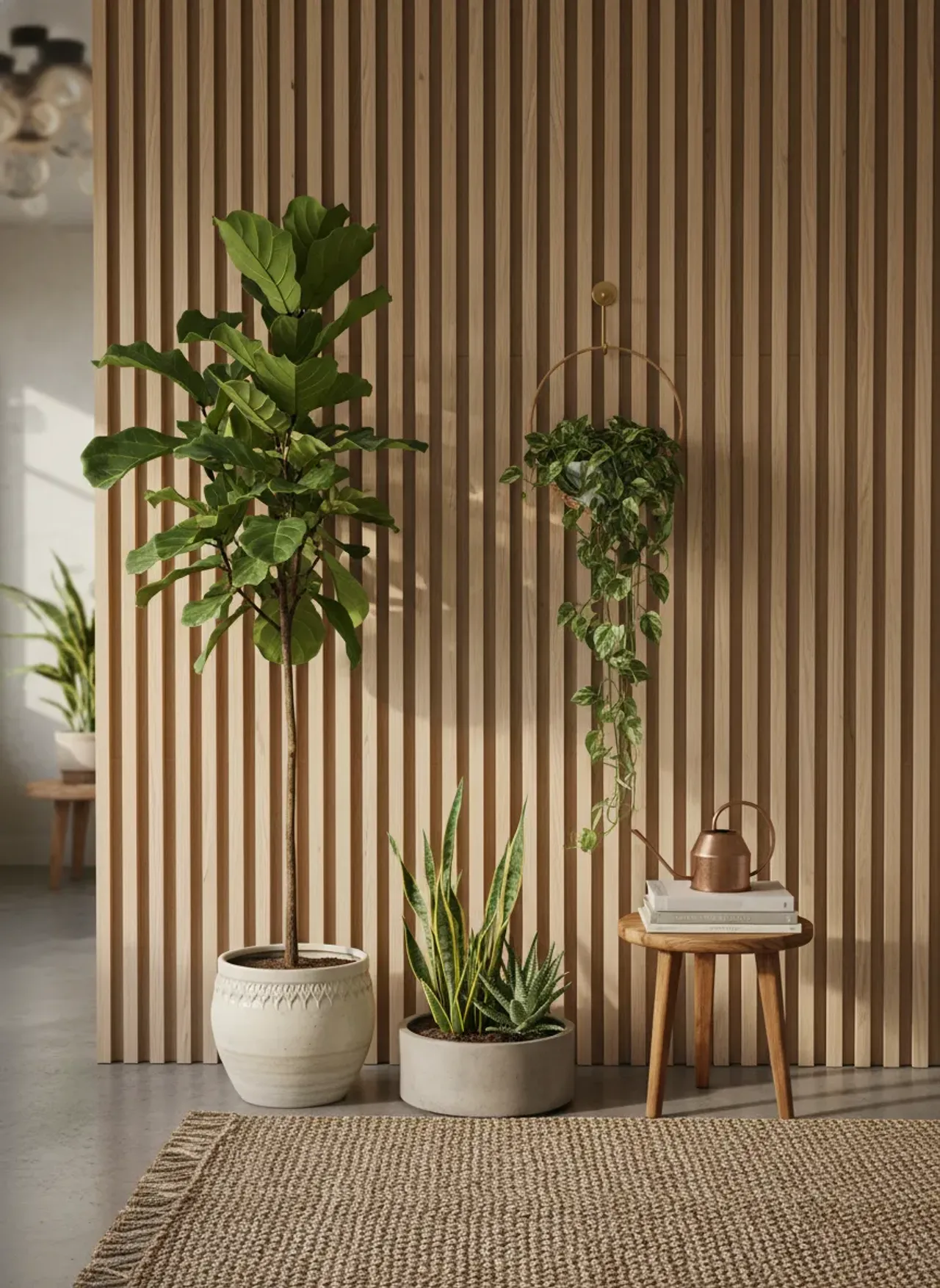
Apr 24, 2026 - Written by: Linda Wise

The entryway is the most psychologically significant square footage in your home. It acts as a liminal space—a literal and metaphorical decompression zone where the chaos of the outside world is shed, and the sanctuary of your personal life begins. I’ve personally found that treating this space as an afterthought is a massive missed architectural opportunity.
When you intentionally design a foyer using biophilic principles, you aren’t just decorating. You are engineering an environment that actively lowers cortisol levels the moment you turn the deadbolt. The most arresting way to achieve this psychological shift? The masterful integration of a rhythmic wood slat wall paired with highly curated, thriving indoor botanicals.
This juxtaposition of rigid, geometric woodwork against the wild, organic unpredictability of foliage creates a visual tension that elite interior designers leverage constantly. It grounds the space. It breathes. It commands attention.
If you are ready to transform a sterile corridor into a tactile, living foyer, you need a granular understanding of both carpentry nuances and horticultural realities. You can’t just nail a few pine boards to the drywall and drop a dying fern in the corner. Executing this aesthetic requires precision.
Before we dissect the anatomy of this design, here are a few structural and botanical elements that serve as the foundational building blocks for this aesthetic.
Quick Comparison: Top Picks
| Product | Rating | Check Price |
|---|---|---|
| Premium Walnut Acoustic Wood Slat Panels | ⭐⭐⭐⭐⭐ | View on Amazon |
| Costa Farms Live Fiddle Leaf Fig | ⭐⭐⭐⭐½ | View on Amazon |
| Mid-Century Modern Ceramic Planter | ⭐⭐⭐⭐⭐ | View on Amazon |
The Psychology of Biophilic Design in Transitional Spaces
Biophilia—the innate human instinct to connect with nature and other living systems—is not a passing design trend. It is a biological imperative. Evolutionary psychologists have long documented our cognitive preference for environments that mimic the natural world.
When you apply this to a transitional space like a foyer, the effects are immediate. A blank painted wall offers zero sensory engagement. A wood slat wall, however, introduces tactile grain and visual rhythm. The repeating vertical lines draw the eye upward, artificially raising the ceiling height, while the negative space between the slats introduces depth and shadow play.
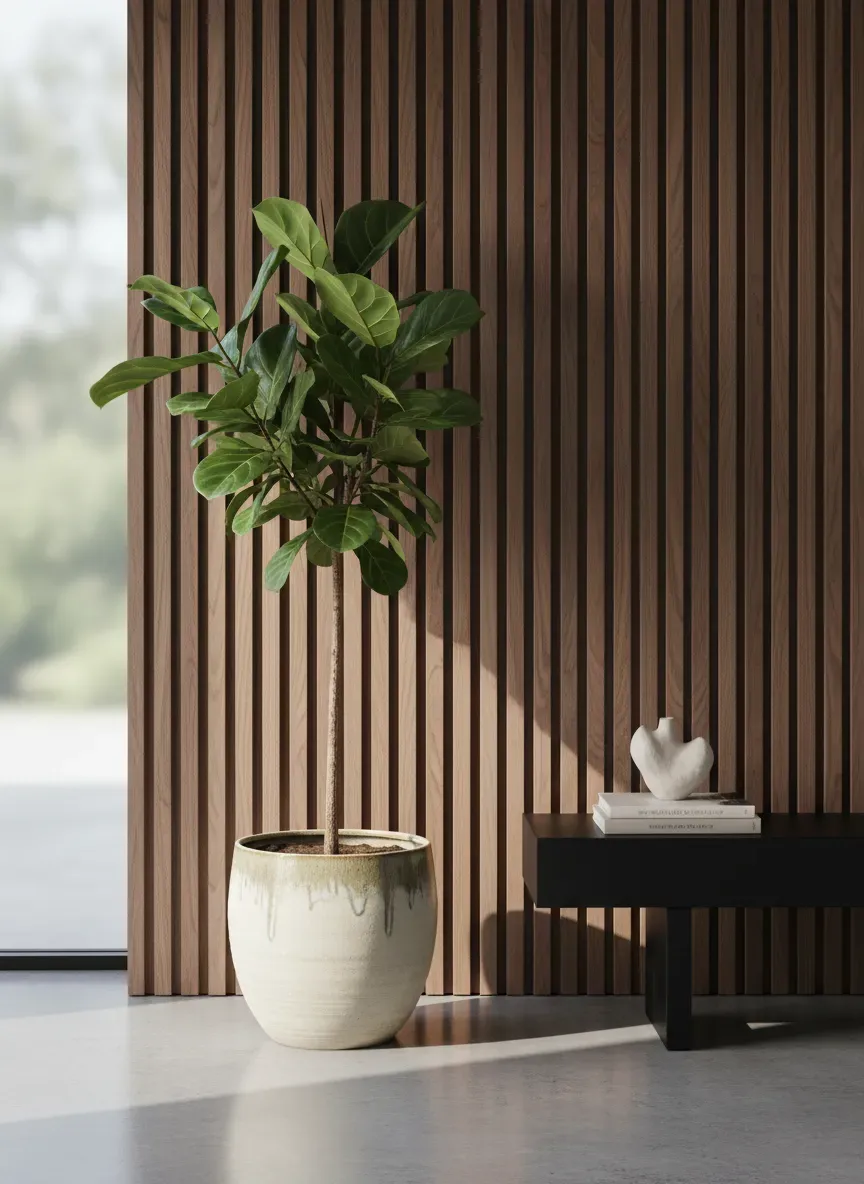
Add living greenery to this equation, and you trigger what environmental psychologists call “soft fascination.” This is a state where the brain is engaged just enough to be present, but relaxed enough to restore depleted cognitive resources. The rich greens of a Monstera or the structural elegance of a Strelitzia (Bird of Paradise) pop against the warm undertones of natural timber.
You’ll notice that high-end spas, boutique hotels, and luxury corporate lobbies universally employ this exact dichotomy. They understand that wood absorbs high-frequency acoustic chatter while plants purify the stagnant air. You are essentially building a micro-climate of calm right at your front door.
Anatomy of the Perfect Wood Slat Wall
Creating the foundational backdrop requires careful consideration. A poorly executed slat wall looks like a cheap 1970s basement remodel. A perfectly executed one looks like custom architectural millwork.
Material Selection: Hardwoods vs. Veneers
The species of wood you choose dictates the entire emotional temperature of the entryway.
- Walnut: Deep, moody, and sophisticated. Walnut features complex grain patterns with rich chocolate and purplish undertones. It pairs exceptionally well with deep green, large-leaf plants.
- White Oak: The darling of the Scandinavian and Japandi design movements. White oak is bright, tight-grained, and optimistic. It works brilliantly in narrower entryways that lack natural light.
- Ash or Maple: Lighter woods that take stain exceptionally well, offering a budget-friendly alternative if you plan to customize the color.
You have the choice between solid wood, which is heavy and expensive, or high-quality wood veneer layered over an MDF core. I highly recommend the veneer over MDF route for wall applications. Solid wood expands and contracts violently with seasonal humidity shifts—especially near a front door where temperature fluctuations are extreme. Veneer over a stable core guarantees your slats will remain perfectly straight.
The Golden Ratio of Spacing
The visual success of a slat wall lies entirely in the spacing. The negative space is just as important as the wood itself.
Pro Tip: The industry standard for high-end acoustic panels is a 1-inch to 1.5-inch face slat with a 0.5-inch gap. This ratio (roughly 2:1 or 3:1) creates profound shadows without making the wall look like a barcode.
If you are building this from scratch rather than buying prefabricated panels, paint the wall behind the slats a deep matte black or charcoal before installation. This dark void between the timber strips creates an illusion of infinite depth, making the wood visually pop off the wall.
Acoustic Felt Backing: The Secret Weapon
Many premium prefabricated slat panels come permanently bonded to a rigid PET acoustic felt backing. Do not overlook this feature. Entryways are notoriously echo-heavy spaces. Hardwood floors, drywall, and glass doors bounce sound waves mercilessly. Introducing a dense, sound-absorbing felt layer behind your timber slats radically dampens the acoustic harshness of the space. When you walk in and shut the door, the resulting auditory “thud” feels incredibly luxurious and grounding.
Installation Nuances
Scribing is your best friend here. No house has perfectly plumb walls or level floors. If you run your slats straight down to an uneven floor, the discrepancy will be glaringly obvious. Always start your installation from the center of the wall and work outward, or use a laser level to establish a perfectly plumb starting line.
If you use prefabricated panels, secure them using black drywall screws driven directly through the black acoustic felt into the wall studs. The screw heads will completely vanish into the felt, leaving the wood face completely unmarred by nail holes or wood filler.
Curating the Indoor Plant Aesthetic
With the architectural backdrop established, the next phase is horticultural curation. You are not just buying plants; you are casting characters for a stage.
Light Mapping Your Entryway
The single biggest mistake people make in biophilic design is ignoring the photon requirements of their botanical selections. A dark, north-facing hallway will ruthlessly murder a Fiddle Leaf Fig, no matter how good it looks against your new oak wall.
Spend a week light mapping your foyer. Does it get direct morning sun? Is it purely ambient, indirect light? Or is it heavily shaded?
For High-Light Entryways (South or West Facing):
- Ficus Lyrata (Fiddle Leaf Fig): The quintessential architectural plant. Its massive, violin-shaped leaves offer incredible contrast against vertical wood slats.
- Strelitzia Nicolai (Giant White Bird of Paradise): Offers dramatic, sweeping height and a tropical, structural presence.
- Ficus Elastica ‘Burgundy’ (Rubber Tree): The deep, almost black-red leaves look astonishingly elegant against lighter woods like ash or white oak.
For Medium-Light Entryways (East Facing or Set Back from Windows):
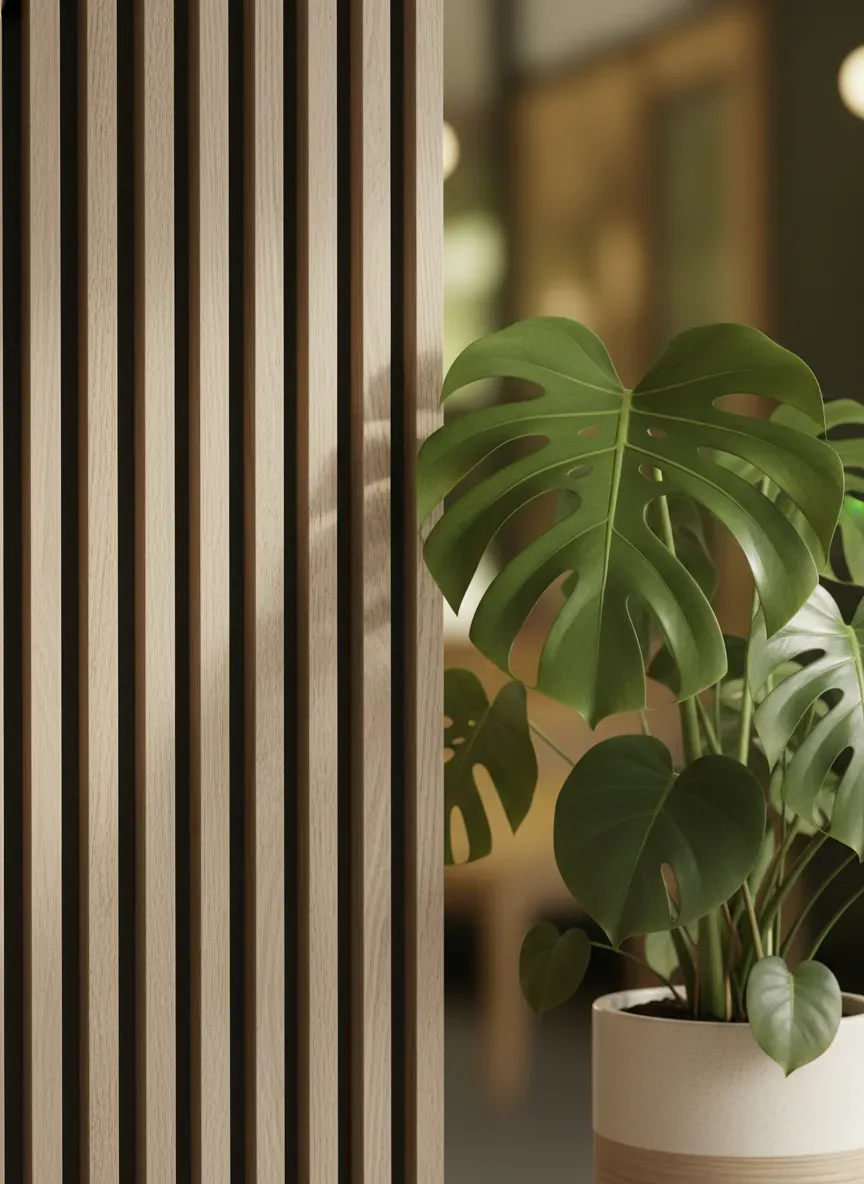
- Monstera Deliciosa: Its fenestrated (split) leaves break up the rigid geometry of the wood slats beautifully.
- Dracaena Marginata: Spiky, structural, and visually dynamic.
- Rhapis Excelsa (Lady Palm): Brings a refined, feathery texture that softens hard architectural lines.
For Low-Light Entryways (North Facing or Windowless):
- Zamioculcas Zamiifolia (ZZ Plant): Practically indestructible with glossy, dark green leaves that reflect ambient light.
- Sansevieria (Snake Plant): Its stiff, vertical sword-like leaves mirror the verticality of the slat wall.
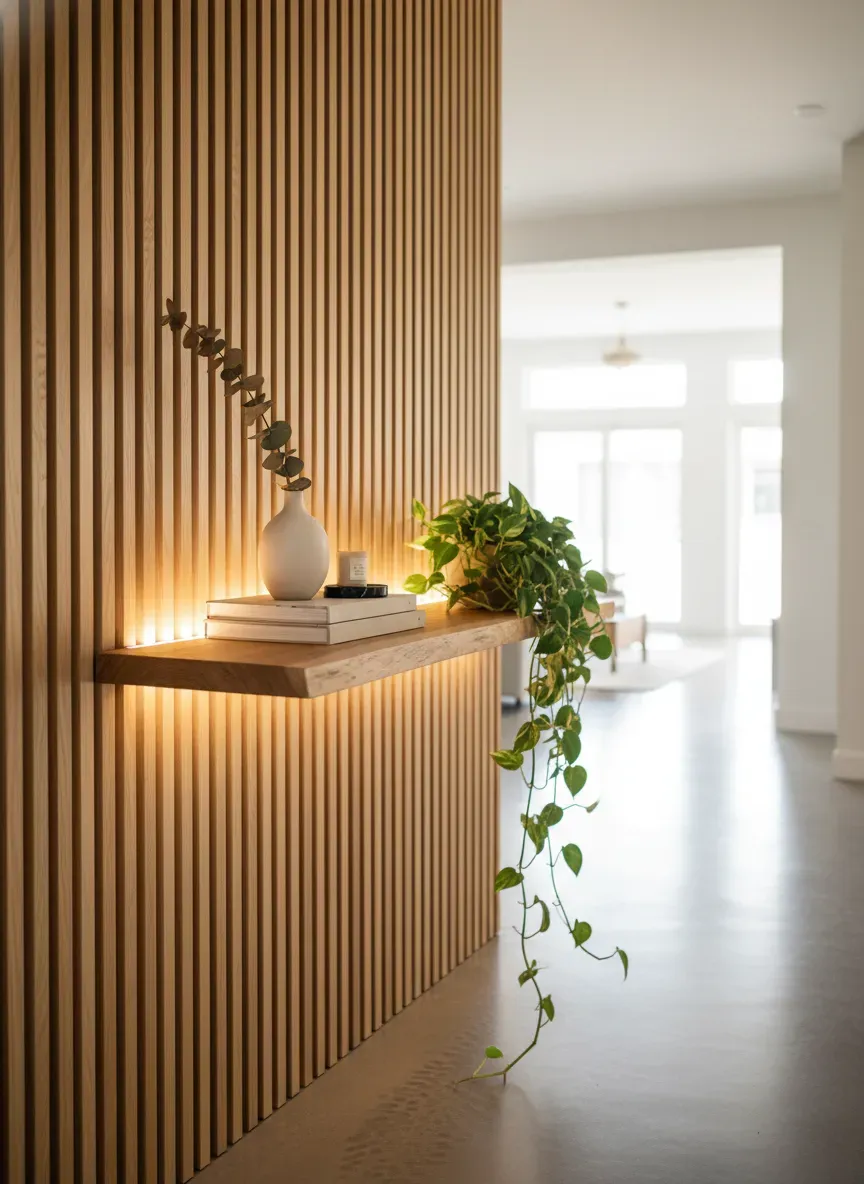
- Epipremnum Aureum (Pothos): Perfect for cascading down from a high shelf mounted directly onto the slat wall.
The Soil Matrix and Planter Selection
Your plants must be housed in containers that elevate the design. Ditch the cheap plastic nursery pots immediately.
Opt for materials that complement the organic nature of the space: raw terracotta, matte ceramic, spun brass, or architectural concrete. A mid-century modern ceramic planter perched on a walnut stand acts as a bridge between the floor and the wall.
Just as critical as the external planter is the internal soil structure. Entryway plants often suffer from poor airflow and inconsistent temperatures. They require highly aerated, well-draining soil to prevent root rot. I highly recommend mixing your standard potting soil with generous amounts of chunky orchid bark, perlite, and horticultural charcoal. This mimics the loose, oxygen-rich environment of a forest floor.
Synthesizing Wood and Flora: The Masterclass
The true magic happens in how you integrate these two elements. They shouldn’t just exist near each other; they should interact.
Structural Integration
Consider building a floating bench or a console shelf directly into the slat wall. By extending a piece of matching timber horizontally out from the vertical slats, you create a seamless architectural feature.
Pro Tip: When mounting heavy items like a floating oak bench or a massive ceramic planter to a slat wall, never rely on the slats themselves or the acoustic felt for structural support. You must use heavy-duty lag bolts that pass through the gaps in the slats and anchor directly into the structural wall studs behind the drywall.
You can also use specialized plant hangers designed to hook invisibly between the wood slats. Trailing plants like a Philodendron Micans or a string of pearls suspended halfway up a walnut wall draw the eye up, emphasizing the height of the space.
The Art of Artificial Illumination
Lighting is the catalyst that brings a biophilic entryway to life at night. Without it, your carefully curated space turns into a gloomy, unreadable cavern after sunset.
Implement grazing lights. A low-profile LED light bar recessed into the ceiling directly above the slat wall will cast light down the face of the wood. This technique, known as wall grazing, catches the edges of the slats and throws deep, dramatic shadows into the gaps, highlighting the 3D texture of the installation.
For the plants, utilize targeted uplighting. A small, discrete spotlight placed at the base of your largest floor plant, pointed upward through the foliage, casts massive, intricate shadows onto the adjacent walls and ceiling. The interplay of the rigid, straight shadows of the wood slats and the organic, shifting shadows of the plant leaves is breathtaking.
Ensure your LED bulbs are in the 2700K to 3000K color temperature range. This warm, golden light mimics late afternoon sun, enhancing the natural warmth of the wood grain and the vividness of the chlorophyll. Anything cooler than 3000K will make the wood look sickly and the plants look artificial.
Avoiding Common Entryway Pitfalls
Even with premium materials, things can go sideways if you lack spatial awareness or horticultural discipline.
The “Jungle Clutter” Effect: More is not always better. Biophilic design relies heavily on negative space. If you cram twelve small, mismatched plants onto a console table in front of your slat wall, you destroy the architectural rhythm. The space becomes visually chaotic. Opt for one massive statement plant (like a mature Ficus) and perhaps one small trailing plant on a shelf. Let the wood breathe.
Moisture Damage to Wood Millwork: Plants require water and humidity; wood despises both. This is a critical conflict. Never mist your plants while they are sitting against a raw or lightly sealed wood slat wall. The atomized water will eventually penetrate the grain, causing the veneer to blister or the wood to warp. Always pull plants away from the wall for maintenance, and ensure your planters are 100% waterproof with absolutely no seepage from the bottom drainage holes. Use deep plastic saucer inserts hidden inside your decorative ceramic pots.
Ignoring Scale and Proportion: A 10-foot tall ceiling paired with a tiny, 2-foot snake plant looks comical. The scale of your botany must match the scale of your architecture. If you have a massive, sweeping slat wall, you need a plant with significant volume and height to anchor it. If your budget doesn’t allow for a mature, 7-foot indoor tree, place a smaller plant on an elevated pedestal or structural stand to artificially boost its visual weight.
Key Takeaways for a Flawless Execution:
- Always map your natural light before purchasing living greenery.
- Use acoustic felt-backed panels to heavily dampen foyer echoes.
- Prioritize warm-toned LED grazing lights to highlight textures.
- Match the scale of your planters to the height of your wall.
- Protect the wood from moisture via careful watering practices and waterproof pot liners.
The Bottom Line
The bottom line is that a biophilic entryway is a masterclass in sensory design. By meticulously pairing the rigid, grounding rhythm of a wood slat wall with the vibrant, organic energy of indoor botanicals, you transcend basic decorating. You build an architectural threshold that genuinely impacts human psychology. It requires precise execution, an understanding of spatial proportions, and respect for horticultural needs, but the resulting aesthetic is nothing short of transformative. It sets an unparalleled tone of sophisticated tranquility for the rest of your home.
Now, here’s the real kicker. While you can certainly buy pre-fabricated wood slat panels or hire an expensive local carpenter to build custom floating entryway benches and integrated planters, you absolutely do not have to drain your savings to achieve this high-end look.
I’ve personally found that tackling these woodworking elements yourself is deeply rewarding and shockingly simple if you have the right blueprints. If you want to build your own custom slat walls, structural plant pedestals, or mid-century modern planter stands, you need to check out Ted’s Woodworking.
They offer an incredibly massive database of over 16,000 step-by-step woodworking plans that take all the guesswork out of the equation. Whether you are a total novice or a seasoned DIYer, these schematics provide exact cut lists, material requirements, and detailed diagrams. Right now, you can grab the entire collection at a massive 75% discount. Stop overpaying for generic store-bought furniture and start crafting bespoke architectural elements for your home.
Click here to get instant access to all 16,000 plans and claim your 75% discount today!