
wall mounted entryway
Master the spatial taxonomy of your home's threshold. Discover expert installation tactics, hardware secrets, and design principles for the ultimate wall mounted entryway.
Apr 19, 2026 - Written by: Linda Wise

The threshold of your home is a highly kinetic, liminal space. It is the exact geographic coordinate where the chaos of the outside world crashes into the sanctuary of your private life. I’ve spent years analyzing residential floor plans, and I see the exact same architectural friction over and over again: the front door opens, and a bomb goes off. Keys are tossed onto dining tables, muddy boots create a sprawling obstacle course, and winter coats get slung over the nearest banister.
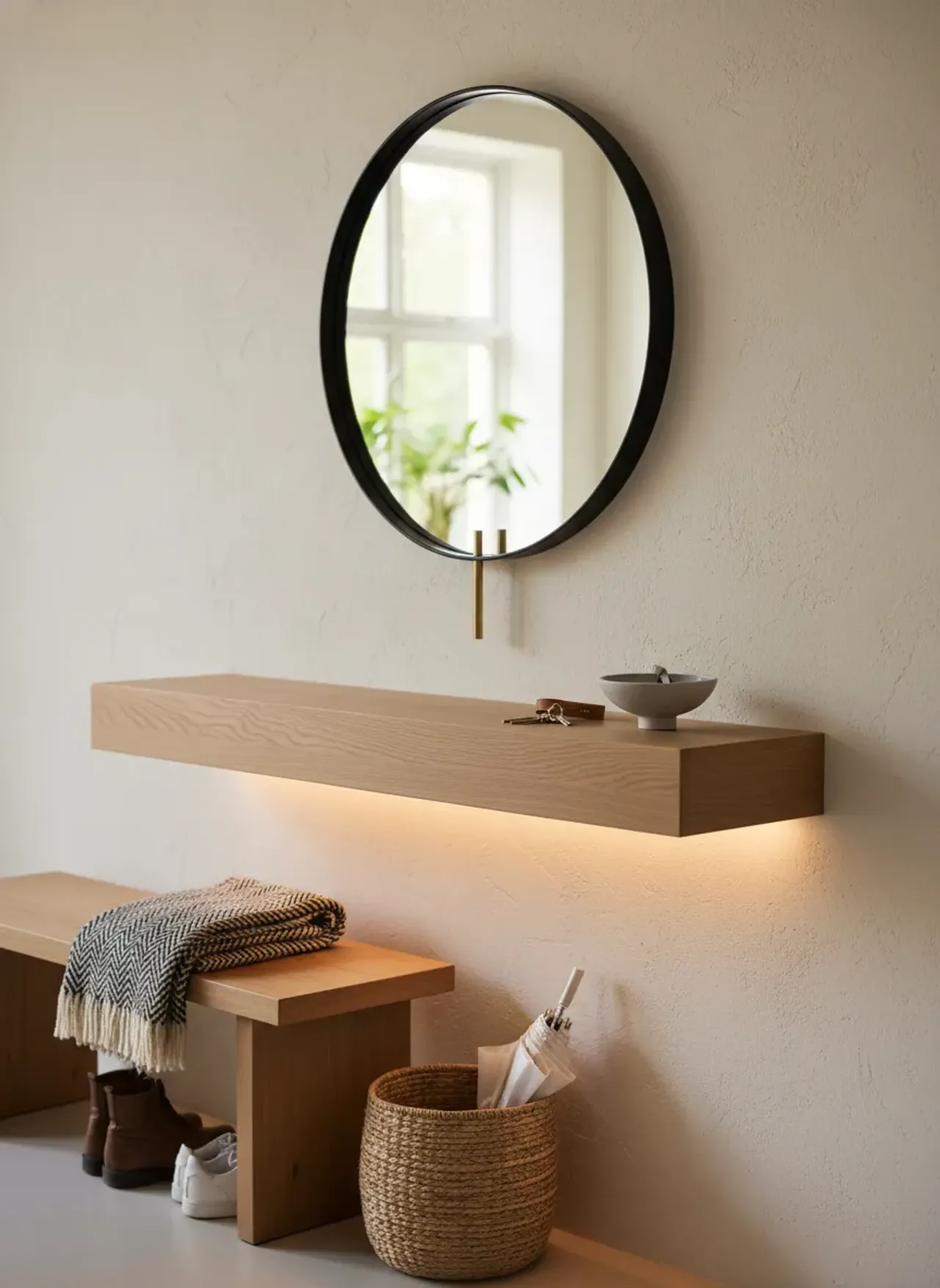
Reclaiming this territory requires more than just buying a generic storage bench. It demands a deliberate spatial taxonomy. By elevating your storage off the floor and utilizing a wall mounted entryway system, you instantly reclaim visual square footage. You create a psychological boundary—a designated “drop zone” that forces organization through sheer convenience.
Floating entryway consoles, cantilevered coat racks, and integrated wall cubbies aren’t just trendy design choices. They are highly efficient machines for living. When you remove furniture legs from the equation, light refracts across the floor uninterrupted, making tight corridors feel twice as expansive.
Before we tear into the mechanics of load-bearing hardware, shear strength, and material selection, let me share a snapshot of the systems that consistently perform out in the wild.
Quick Comparison: Top Picks
| Product | Rating | Check Price |
|---|---|---|
| Prepac Floating Foyer Cabinet | ⭐⭐⭐⭐⭐ | View on Amazon |
| Vasagle Wall Mounted Coat Rack | ⭐⭐⭐⭐½ | View on Amazon |
| Haotian Entryway Storage Shelf | ⭐⭐⭐⭐ | View on Amazon |
The Anatomy of a High-Functioning Foyer
Creating a wall mounted entryway is an exercise in ruthless editing. You cannot store every piece of outerwear your family owns at the front door. The goal is to curate a highly functional capsule of daily necessities.
Spatial Economy vs. Aesthetic Weight
When you mount a piece of furniture directly to the drywall, you are manipulating the visual weight of the room. Floor-standing armoires or heavy credenzas eat up oxygen. They demand a wide berth. A floating drawer unit, however, possesses a distinct architectural cachet. It exists exactly where you need it—typically suspended at a height of 32 to 36 inches off the finished floor—and disappears from your peripheral vision when you look down.
This gap beneath the furniture is critical. It provides clearance for sweeping, accommodates the toe-kick motion of removing shoes, and creates an ideal cavity for nesting a sleek, low-profile shoe rack or a pair of woven storage baskets. You get the storage capacity of a heavy dresser without paying the spatial tax.
Decoding the Drop Zone Psychology
I’ve personally found that organizational systems only work if they map perfectly onto human laziness. If a coat hanger requires a complex maneuvering of a heavy wooden door and a crowded closet rod, a tired human will bypass it and throw the jacket on a chair.
Your wall mounted entryway must feature open, frictionless storage.
A well-designed drop zone addresses three distinct altitudes of interaction:
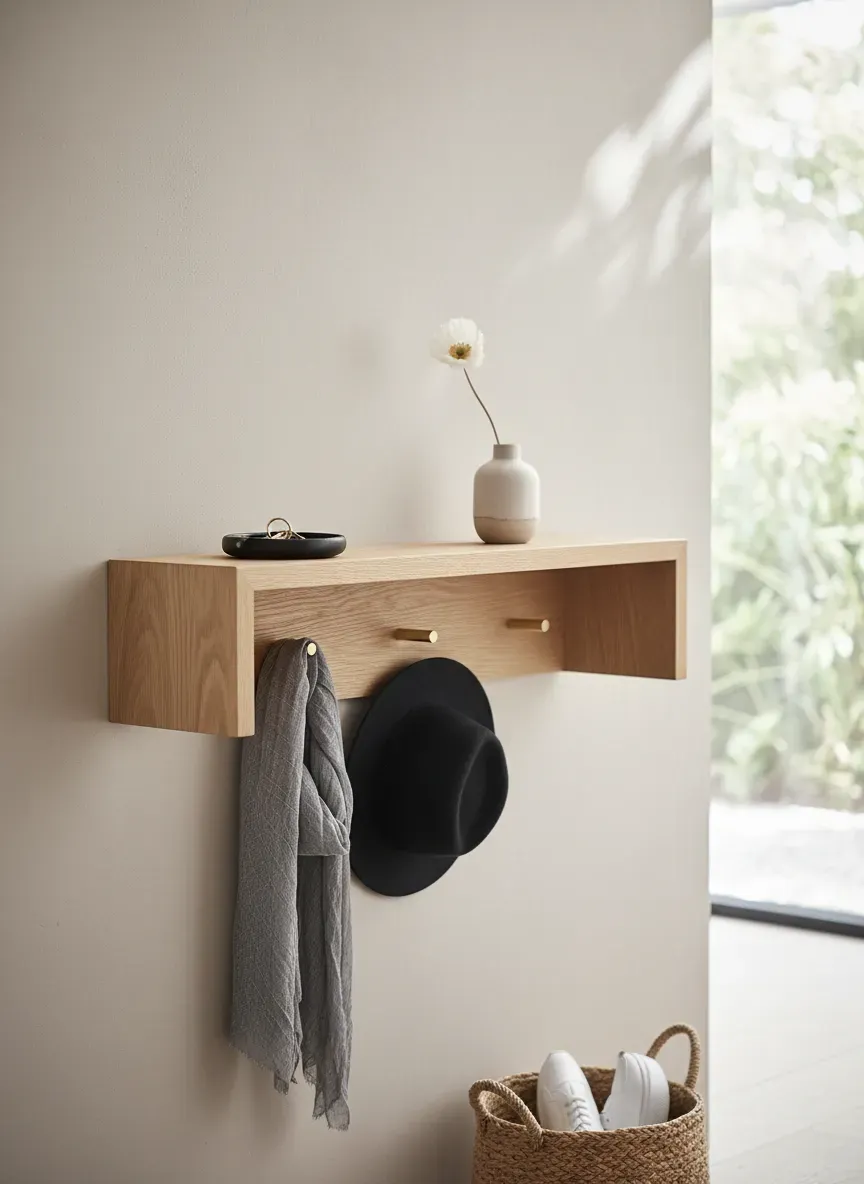
- The Upper Register (Eye Level and Above): Dedicated to high-visibility, quick-grab items. Think sturdy, double-pronged hooks for heavy coats, dog leashes, and canvas tote bags. An upper shelf serves beautifully for hats or display pieces.
- The Mid-Zone (Waist Height): The horizontal plane. This is the landing pad. It requires a flat surface for sorting mail, setting down groceries momentarily, and housing a dedicated catch-all vessel (like a ceramic bowl or leather valet tray) for keys, wallets, and sunglasses.
- The Lower Register (Floor to Knee Height): The muddy zone. While the wall-mounted unit keeps the floor clear, the space directly underneath is prime real estate for a boot tray or floating shoe cubbies.
Foundational Elements of Wall Mounted Entryway Systems
Constructing this setup isn’t about slapping some pine on the wall. You need to understand the structural components that make these systems viable over a decade of heavy use.
The Floating Console: A Case Study in Visual Lightness
The crown jewel of any wall mounted entryway is the floating console. Whether it’s a sleek slab of live-edge walnut or a minimalist matte-black MDF cabinet with push-to-open drawers, the console is the anchor.
When specifying a console, depth is your biggest constraint. A standard hallway is only 36 to 48 inches wide. If your console projects more than 12 to 14 inches from the wall, you are creating a permanent hip-bruising hazard. Look for slim-profile units. A depth of 10 inches is remarkably capable of holding standard mail, standard keys, and most sunglass cases without encroaching on your walking path.
Integrated Coat Racks and Cubbies
Above the console, vertical storage comes into play. You’ll notice that the most striking entryways utilize a unified backing board—often beadboard, shiplap, or a continuous slab of veneer—that visually connects the upper coat rack to the lower console. This backing board isn’t just for aesthetics; it protects your drywall from the inevitable scuffs, wet dog shakes, and damp raincoats that will constantly assault it.
Hardware Considerations for Load-Bearing Installations
Here’s the real kicker: a heavy winter coat, a purse laden with an iPad and water bottle, and a solid wood shelf add up to an immense amount of downward and outward force. The standard drywall anchors included in flat-pack furniture kits are essentially decorative. Relying on them is a fast track to ripped drywall and a shattered console.
To successfully execute a wall mounted entryway, you must understand shear strength (the downward pull) and pull-out strength (the force pulling away from the wall). You need hardware that addresses both vectors aggressively.
Product Spotlight: My Top Three Amazon Picks
If you are looking to bypass the lumber yard and jump straight to assembly, the consumer market has finally caught up to the demand for modular, floating entryway pieces. Here are the three configurations that offer the best structural integrity and aesthetic return.
1. The Heavyweight Champion: Prepac Floating Foyer Cabinet
When clients ask me for a one-and-done solution that handles intense daily traffic, I point them directly to the Prepac Floating Foyer Cabinet. What separates this unit from the flimsy particle-board alternatives is its mounting system.
Prepac utilizes a heavy-duty, two-piece metal hanging rail system (a modified French cleat). You locate your wall studs, secure the metal rail directly into the timber, and the entire cabinet simply hooks onto it. This distributes the weight across the entire width of the unit rather than relying on four isolated screw points. It features varied cubby sizes, allowing you to compartmentalize winter gloves separately from incoming mail.
2. The Minimalist Workhorse: Vasagle Wall Mounted Coat Rack
If your entry point is a cramped apartment hallway, a full cabinet is going to suffocate the space. The Vasagle Wall Mounted Coat Rack strips the entryway down to its barest essentials.
It pairs an upper display shelf with a rigid iron pipe framework, suspending multiple sliding hooks. The industrial aesthetic is grounded by rustic wood tones, making it incredibly forgiving of dust and scratches. Because the hooks slide along the rail, you can dynamically adjust the spacing depending on whether you are hanging bulky down jackets or thin summer windbreakers.
3. The Compact Organizer: Haotian Entryway Storage Shelf
For those tricky, narrow wall returns right behind the front door hinge, the Haotian Entryway Storage Shelf is a brilliant intervention. It bridges the gap between a traditional floating shelf and a cubby system.
It features three distinct compartments perfect for sorting mail by family member, a flat top stage for a small succulent or framed photo, and a robust row of lower hooks. The painted white finish reflects ambient light, which is crucial in foyers that lack dedicated windows.
Advanced Installation Tactics
You can buy the most exquisite piece of Italian-designed floating furniture, but if you botch the installation, it will look cheap and function poorly. The wall mounted entryway lives and dies by the quality of its fastening.
Finding Studs in Unforgiving Drywall
Magnetic stud finders are superior to electronic ones. Period. Electronic finders can be tricked by dense insulation, varied drywall thicknesses, or lath and plaster backing. A powerful magnetic stud finder sweeps the wall to locate the actual metal drywall screws holding the sheetrock to the timber framing. Once you find a vertical column of screws, you have found the dead center of your stud. Mark it with painter’s tape, not a pencil, to keep your walls pristine.
Anchoring Mechanisms: French Cleats vs. Toggle Bolts
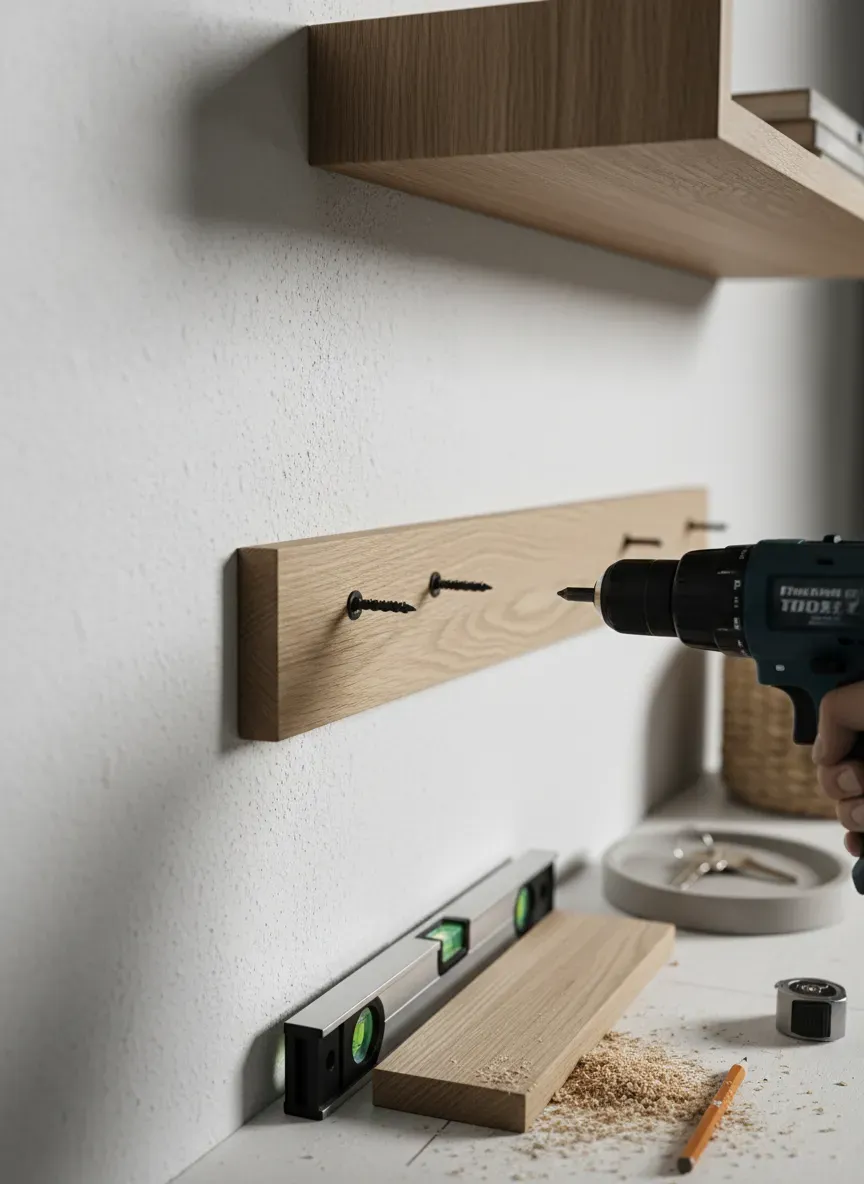
If you want a truly flush, gapless fit against the wall, the French cleat is an unparalleled feat of engineering. It involves two pieces of material cut at opposing 45-degree angles. One is secured to the wall (pointing up), and the other is attached to the back of the entryway unit (pointing down). Gravity pulls the unit down, locking the angles together with immense friction. This system can hold hundreds of pounds safely.
Pro Tip: When installing a French cleat, rub a thin layer of paraffin wax along the 45-degree bevels before mating them. It prevents the wood from binding and allows for micro-adjustments left or right once the unit is hung.
If you absolutely must mount a section of your entryway in a void where no stud exists, abandon cheap plastic expansion anchors. You need toggle bolts or, ideally, snap-toggles (often branded as Snaptoggles). These utilize a metal channel that slips through a drilled hole, flips vertically behind the drywall, and creates a massive surface area to distribute the load when you tighten the machine screw.
Leveling Hacks I’ve Picked Up Over the Years
Do not rely on a short torpedo level. Any slight discrepancy in a 9-inch level will magnify into a massive slope over a 48-inch console. Use at least a 24-inch, or preferably a 48-inch, spirit level.
Furthermore, walls are rarely perfectly flat. When you tighten the bolts, the console might pull inward at the corners, creating an ugly gap in the center. To combat this, use thin plastic horseshoe shims behind the mounting rail where the wall bows inward. Once the unit is mounted, run a thin, barely visible bead of paintable acrylic caulk along the top seam where the console meets the wall. This erases any shadow lines and makes the furniture look built-in and bespoke.
Styling Your Wall-Mounted Entryway
Once the physics are sorted out, the curation begins. The objects you place on your wall mounted entryway serve a dual purpose: aesthetic welcoming and practical triage.
Lighting the Drop Zone
A dark foyer is a depressing foyer. Overhead lighting is often harsh and casts unappealing shadows directly down onto your console. By integrating localized lighting, you elevate the atmosphere immediately.
Hardwiring wall sconces on either side of a central mirror is the gold standard. However, if opening up the drywall to run Romex wire isn’t an option, the market for rechargeable, battery-operated LED sconces has exploded. Alternatively, running a warm-white (2700K to 3000K) LED strip along the rear bottom edge of your floating console creates a gorgeous “wash” of light down the wall, emphasizing the floating illusion of the furniture.
Textural Interplay: Wood, Metal, and Mirror
To prevent the entryway from looking like a sterile mudroom, mix your materials aggressively.
- The Mirror: A wall mounted entryway practically demands a mirror. It allows for a final appearance check before leaving the house, but more importantly, it bounces ambient light back into the hallway, doubling the visual depth of the space.
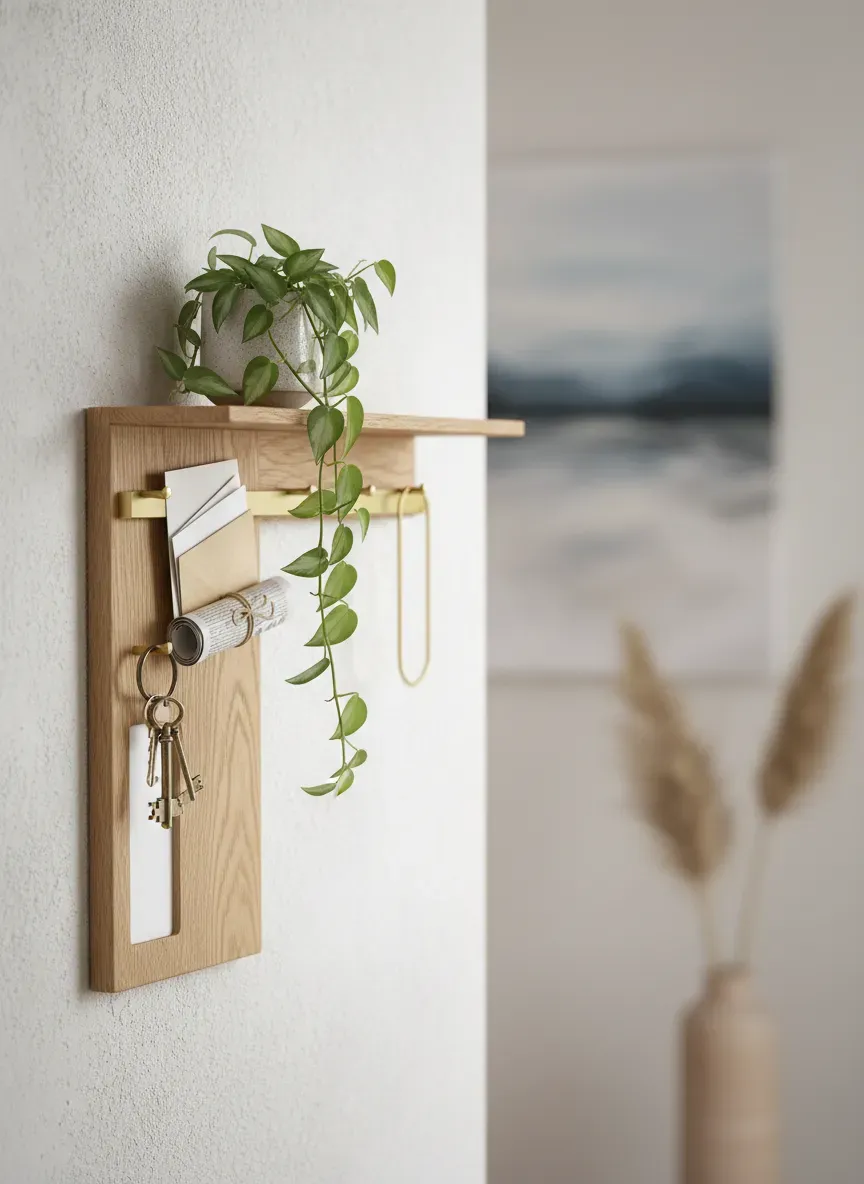
- The Softscaping: Introduce organic shapes to break up the rigid right angles of the console and cubbies. A trailing pothos plant cascading off the top shelf, a woven seagrass basket tucked into an open cubby, or a heavily textured ceramic bowl for keys softens the harshness of metal hooks and sharp wood corners.
Avoiding the “Clutter Magnet” Trap
Building the perfect drop zone is only half the battle. The other half is behavioral. A flat, waist-high surface near a doorway is a vacuum for household detritus. If left unchecked, your stunning minimalist console will disappear beneath a mountain of junk mail, half-empty Amazon boxes, and dog toys.
Key Takeaways for Entryway Maintenance:
- The One-In, One-Out Rule: The hooks are strictly for current, in-season outerwear. When spring arrives, the heavy wool peacoats must be banished to the primary bedroom closet to make way for light denim jackets.
- Immediate Mail Triage: Do not let mail accumulate on the console surface. Mount a slim wire basket or designated wooden slot directly to the wall. Junk mail goes straight into a hidden recycling bin beneath the console; bills go into the designated slot.
- Concealed Chaos: If you have items that are ugly but necessary (lint rollers, spare dog waste bags, reflective running gear), ensure your chosen system has at least one closed-door compartment or opaque storage basket.
The Bottom Line: A wall mounted entryway is an exercise in intentional living. By carefully selecting the right hardware, optimizing your vertical plane, and strictly editing what belongs at the door, you transform an anxiety-inducing bottleneck into a seamless, welcoming transition into your home.
Crafting Your Own Masterpiece
While off-the-shelf solutions are fantastic, I’ve always firmly believed that every home has unique quirks—a weirdly placed thermostat, custom wainscoting, or a highly specific width requirement. Sometimes, trying to force an Amazon flat-pack into your unique architectural footprint is an exercise in frustration.
If you truly want to maximize your threshold, building a custom wall mounted entryway tailored to the exact millimeter of your space is the ultimate power move. You get to control the lumber quality, the exact stain profile, and the heavy-duty joinery.
You don’t need a massive workshop to pull this off. What you need are precise, idiot-proof blueprints. I highly recommend tapping into the definitive vault of woodworking schematics: Ted’s Woodworking. With over 16,000 highly detailed, step-by-step woodworking plans, you can bypass the grueling trial-and-error phase of furniture design. Whether you want a complex, mid-century modern floating credenza or a rustic, farmhouse-style shiplap coat rack, the exact blueprint—with cut lists and material break-downs—is already waiting for you.
Right now, you can lock in a massive 75% discount on the entire database. Stop settling for wobbly particle board and start building generational pieces that command the room the second you walk through the front door.
Check out the blueprints and grab the discount here: https://a730c6qdqz1iyu9qn8tewytpf2.hop.clickbank.net