
Wall-Mounted Mail Sorters and Entryway Storage: Keeping Paper Clutter Off Flat Surfaces
Discover how wall-mounted mail sorters reclaim your entryway. Learn to eliminate paper clutter, optimize vertical space, and establish an organized drop zone.
Feb 2, 2026 - Written by: linda wise

The entryway sets the tone for the entire home. It is the transitional threshold between the chaotic, demanding outside world and the private sanctuary of your living space. Yet, for many households, this critical area becomes a bottleneck of accumulation. The primary culprit is rarely bulky coats or muddy shoes; rather, it is the insidious accumulation of paper clutter.
Flat surfaces—console tables, benches, and shelves—act as magnets for mail, flyers, school permission slips, and receipts. This phenomenon, often referred to as “horizontal piling,” creates visual noise that increases cognitive load the moment you walk through the door. The most effective remedy for this issue is a shift in spatial philosophy: moving from horizontal surfaces to vertical systems.
Wall-mounted mail sorters and comprehensive entryway storage solutions are not merely decorative accents; they are functional tools designed to enforce organization. By utilizing vertical wall space, homeowners can reclaim their tabletops for intentional decor rather than unintended storage. This comprehensive guide explores the mechanics of vertical organization, the selection of appropriate fixtures, and the behavioral changes necessary to maintain a clutter-free entry.
The Physics of Clutter: Why Flat Surfaces Fail
To understand why wall-mounted solutions are superior, one must first analyze why flat surfaces fail as storage mechanisms for paper. A console table or entryway shelf presents a path of least resistance. When one enters the home with hands full, the natural inclination is to drop items on the nearest horizontal plane.
While this action is convenient in the immediate moment, it creates a “deferred decision” pile. The mail is not sorted; it is merely relocated. As new layers of paper are added daily, the items at the bottom of the stack are forgotten, leading to unpaid bills, missed invitations, and lost documents.
Vertical storage changes this dynamic. A wall-mounted sorter with designated slots forces a micro-interaction. You must look at the item and decide which slot it belongs in. This split-second categorization prevents the amalgamation of trash and treasure. Furthermore, vertical storage limits capacity. Unlike a table, which can hold an indefinite mountain of paper, a wall pocket has a finite depth, forcing regular purging and maintenance.
Architectural and Aesthetic Considerations
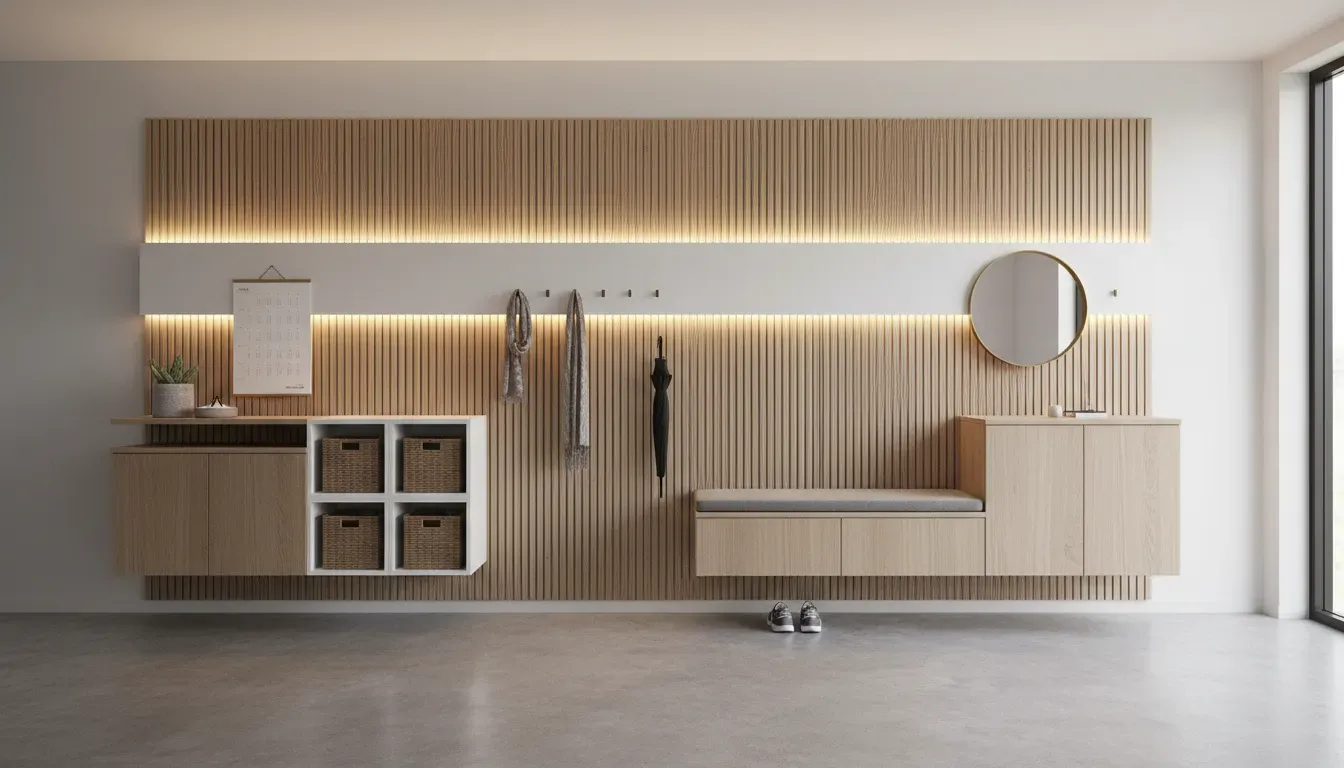
Implementing wall-mounted storage requires a balance between utilitarian function and interior design. The entryway is a high-traffic area, often visible from the main living spaces. Therefore, the hardware chosen must harmonize with the home’s existing architectural language.
Material Selection and Durability
The durability of the material is paramount, as these units will endure daily interaction.
- Solid Hardwoods: Oak, walnut, and maple offer longevity and warmth. They are ideal for traditional, farmhouse, or mid-century modern aesthetics. Wood can be stained to match flooring or painted to blend with the wall for a seamless look.
- Metal and Wire: Steel, iron, and brass provide a sleek, industrial, or contemporary edge. Metal mesh allows for visibility, ensuring that smaller items do not get lost at the bottom of a pocket. However, the open nature of wire means the contents are always on display, requiring a higher degree of tidiness.
- Acrylic and Glass: For minimalists and small spaces, clear acrylic sorters take up zero visual weight. They allow the wall color to show through, preventing the entryway from feeling closed in or cluttered with heavy furniture.
Scale and Proportion
The size of the unit must be proportional to the wall space available. A small key rack looks lost on a large wall, while a massive command center can overwhelm a narrow hallway.
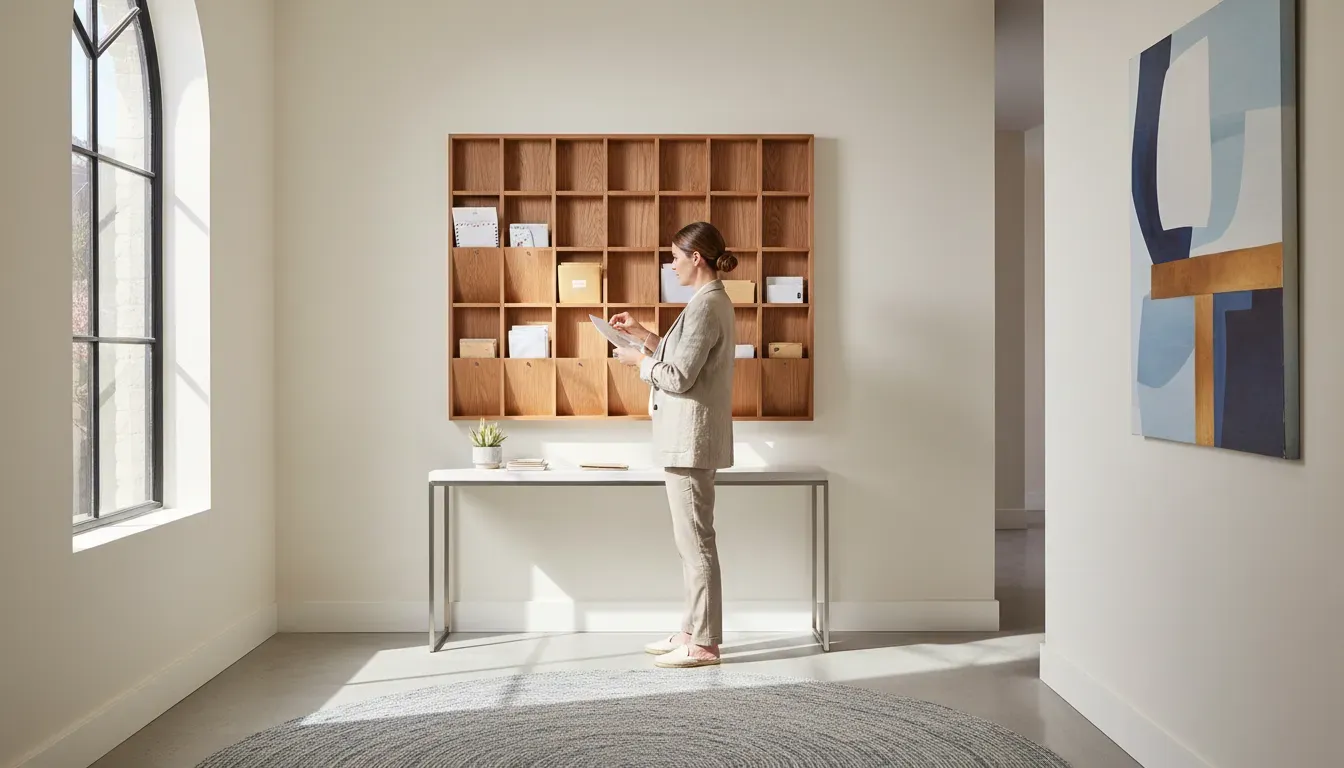
Measure the available wall space and aim to center the unit at eye level—generally about 60 inches from the floor to the center of the piece. If placing the unit above a console table, leave at least 8 to 12 inches of clearance between the table surface and the bottom of the sorter to allow for decorative items like lamps or vases.
Core Features of Effective Wall Organizers
Not all wall organizers are created equal. The most effective units are multi-functional, addressing the various categories of clutter that enter the home.
1. Dedicated Mail Slots
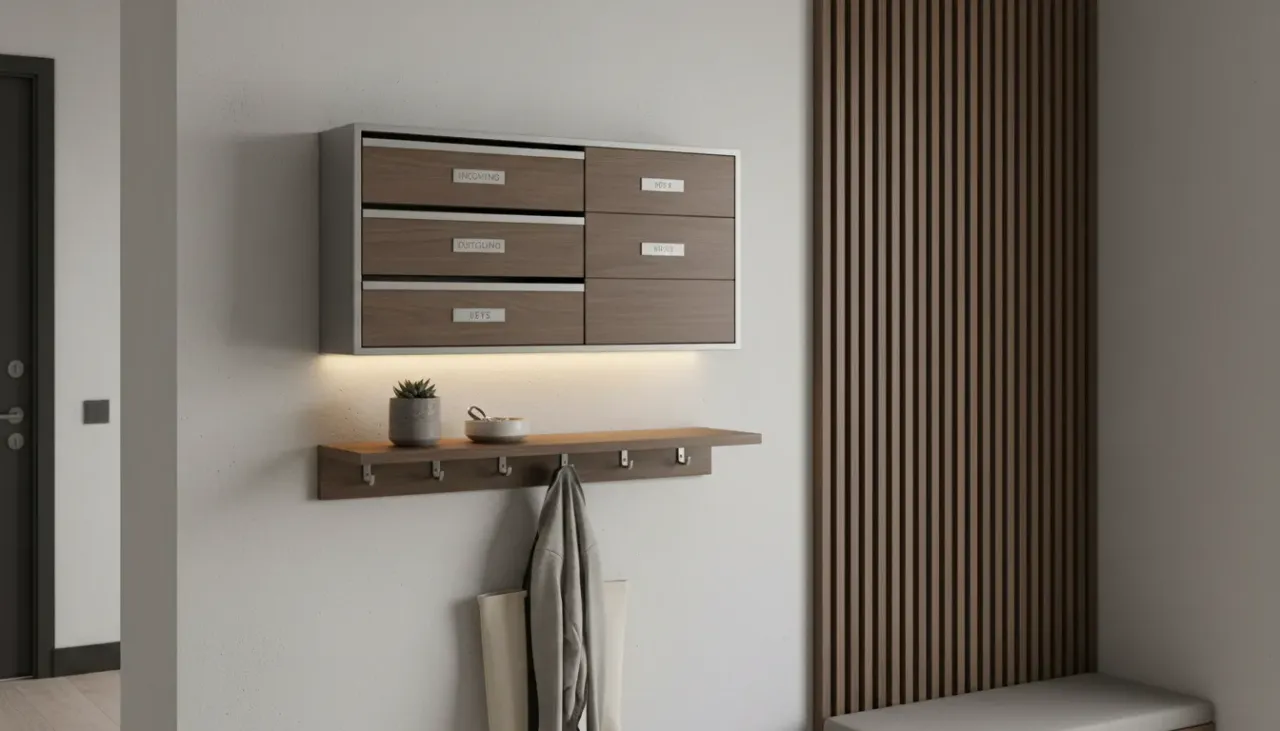
The primary function is paper management. Ideally, a unit should have at least two distinct slots: “In” and “Out.” Larger households may benefit from individual slots for each family member. The depth of the pocket matters; it should be deep enough to hold standard envelopes securely but shallow enough that items do not disappear entirely.
2. Integrated Key Storage
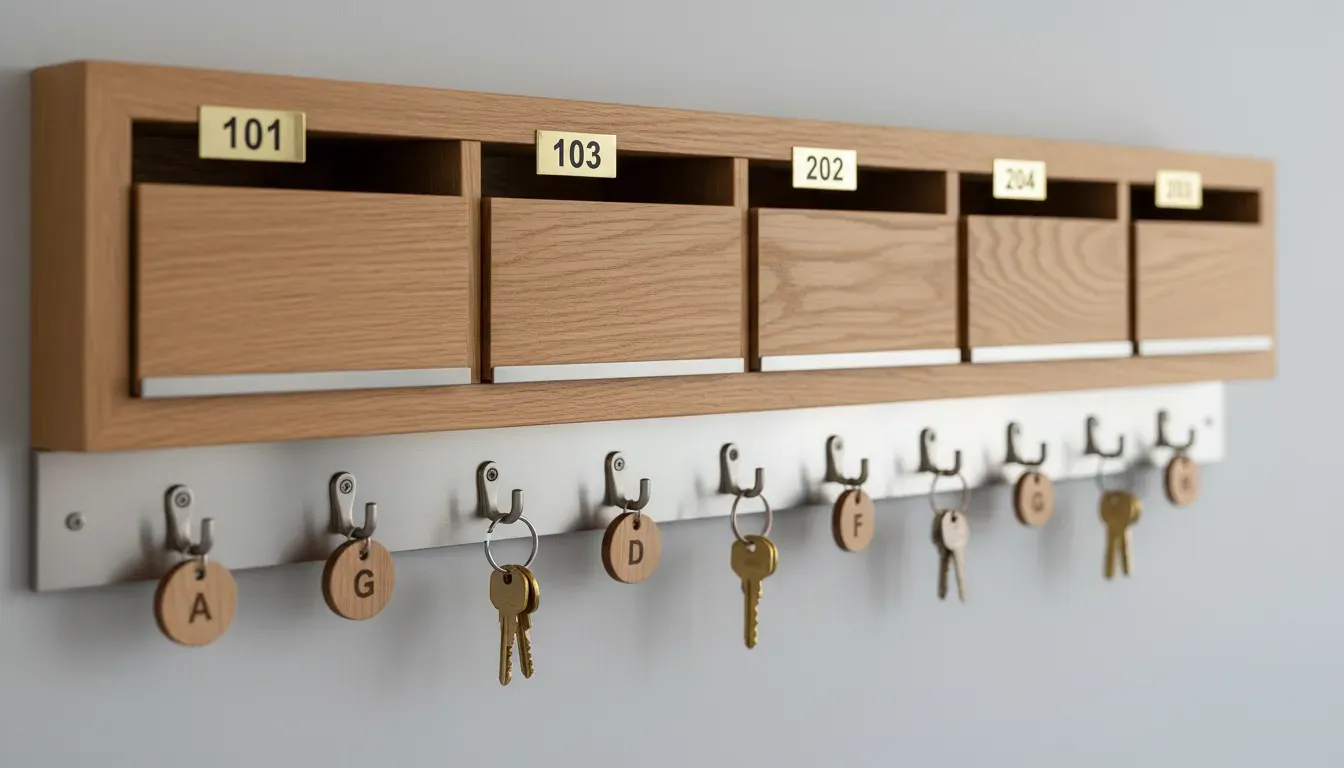
Keys are the second most common source of entryway frustration. Searching for keys disrupts the morning routine and increases stress. Wall-mounted units with integrated hooks ensure keys always have a home. Look for durable metal hooks that can support the weight of heavy keychains without bending.
For those looking for a robust solution that combines these elements seamlessly, consider investigating versatile wooden organizers.
Browse Rustic Wood Mail Organizers on Amazon
3. Utility Shelving and Compartments
Beyond paper and keys, entryways collect sunglasses, wallets, and loose change. A sorter with a small integrated shelf or cubby provides a specific “landing pad” for these three-dimensional objects, keeping them off the console table.
Implementing the Command Center Strategy
For busy families, a simple mail sorter may be insufficient. In these instances, expanding the concept into a full “Family Command Center” is advisable. This involves grouping several wall-mounted elements to create a central hub for household management.
Components of a Command Center
- The Sorter: The central element for processing incoming mail.
- The Calendar: A dry-erase or chalk calendar for tracking appointments and school events.
- The Memo Board: Cork or magnetic surfaces for pinning invitations, tickets, or important reminders that require immediate visual attention.
- The Writing Station: A small ledge or cup for pens ensures that writing instruments are always available for signing receipts or jotting down notes.
If your aesthetic leans toward the modern and industrial, metal command centers often offer modular flexibility.
Explore Modern Metal Entryway Organizers on Amazon
The Psychology of the “Drop Zone” Workflow
Installing the hardware is only half the battle; the other half is behavioral modification. Without a system, a wall sorter simply becomes a vertical junk drawer. To truly keep paper clutter off flat surfaces, one must adopt the “Touch It Once” philosophy.
The Triage Method
When you walk through the door with mail in hand, perform an immediate triage directly at the trash or recycling bin, which should be located near the entryway.
- Immediate Disposal: Junk mail, flyers, and empty envelopes go directly into recycling. They never touch the wall sorter or the table.
- Action Items: Bills, forms requiring signatures, and invitations go into the “Action” slot of the wall sorter.
- Filing: Bank statements or documents that need to be kept but require no immediate action go into a “File” slot (or are taken immediately to the home office).
By filtering out the 80% of mail that is essentially waste before it lands, the wall sorter remains manageable.
Installation Guide: Securing Your Storage
Given that these units will hold weight and endure the friction of daily use (inserting mail, grabbing keys), secure installation is non-negotiable. Using adhesive strips is generally discouraged for anything heavier than a plastic hook.
Locating Studs
Whenever possible, anchor at least one side of the mail sorter into a wall stud. Use a magnetic or electronic stud finder to locate the framing behind the drywall. Wood screws driven directly into the stud provide the highest level of security.
Using Drywall Anchors
If the placement does not align with studs, high-quality drywall anchors are essential. Avoid the cheap plastic conical anchors often included with hardware. Instead, opt for toggle bolts or threaded self-drilling anchors. These expand behind the drywall to distribute the weight and prevent the unit from pulling away from the wall over time.
Design Styles and Product Integration
Your entryway storage should act as an extension of your interior design. Here is how to match sorters to popular design archetypes.
Modern Farmhouse
The farmhouse aesthetic relies on natural textures and rustic finishes. Look for sorters made of reclaimed wood, perhaps with chicken wire accents or galvanized metal pockets. Distressed white or grey stains work well here.
Mid-Century Modern
This style favors clean lines, geometric shapes, and warm wood tones like teak or walnut. A sorter with a sleek, flat profile and no decorative molding fits best. Look for mixed materials, such as walnut wood paired with matte black metal hooks.
Industrial Minimalist
For urban lofts or modern apartments, raw materials shine. Exposed steel, matte black finishes, and simple grid patterns are ideal. An all-metal magnetic organization board can serve as a highly functional, modular solution.
Check out Magnetic Chalkboard Mail Centers on Amazon
Scandi-Boho
This style combines the clean functionality of Scandinavian design with the warmth of Bohemian decor. Light woods like birch or pine, paired with macramé accents or rounded edges, create a soft, welcoming vibe.
Addressing Non-Paper Clutter
While paper is the primary focus, wall-mounted storage can also mitigate other forms of entryway clutter.
Pet Accessories
Leashes, collars, and waste bag dispensers often end up tangled on tables. Dedicating a specific hook on your wall unit for pet gear keeps these items accessible but tidy. If your wall sorter has a deep enough pocket or shelf, it can also hold a small jar of treats.
Seasonal Accessories
In colder months, hats and gloves can overwhelm an entryway. While a mail sorter cannot hold heavy coats, adding a row of shaker pegs below the mail unit can accommodate scarves and light accessories, keeping the area uniform. For heavier items, consider reading our guide on maximizing small closet spaces to keep the bulkier gear out of sight.
Maintenance: The Weekly Reset
Even the best systems require maintenance. A wall pocket has finite space. If it is not purged, it will overflow, and the cycle of clutter will return to the flat surfaces.
Schedule a “Weekly Reset.” This is a five-minute task, ideally performed on the weekend.
- Empty the “Action” slot.
- Pay the bills, sign the forms, and file the documents.
- Check the “Out” slot for anything that needs to be mailed.
- Wipe down the unit to remove dust.
This ritual prevents the backlog that causes anxiety and ensures the entryway remains a functional passageway rather than a storage unit.
Conclusion: reclaiming Your Entryway
The battle against paper clutter is won or lost at the threshold of your home. By allowing mail and documents to settle on flat surfaces, you surrender your living space to the entropy of the outside world. Wall-mounted mail sorters and entryway storage systems offer a strategic fortification against this disorder.
They provide a designated home for the transient items of daily life, clearing the way for a more peaceful, organized home environment. Whether you choose a rustic wooden organizer or a sleek metal command center, the investment in vertical storage yields dividends in saved time, reduced stress, and an elevated aesthetic.
Moving your organization from the table to the wall is not just a spatial decision; it is a commitment to a streamlined lifestyle. With the right tools and a consistent routine, your entryway can transform from a cluttered drop zone into a welcoming, curated introduction to your home. For further inspiration on organizing difficult areas, explore our tips on mudroom storage solutions. By taking control of the entry, you take control of the home.