
10 Genius Over-the-Door Entryway Storage Solutions for Apartment Dwellers
Transform your cramped apartment entrance with these sophisticated over-the-door storage solutions designed to maximize vertical space without losing your deposit.
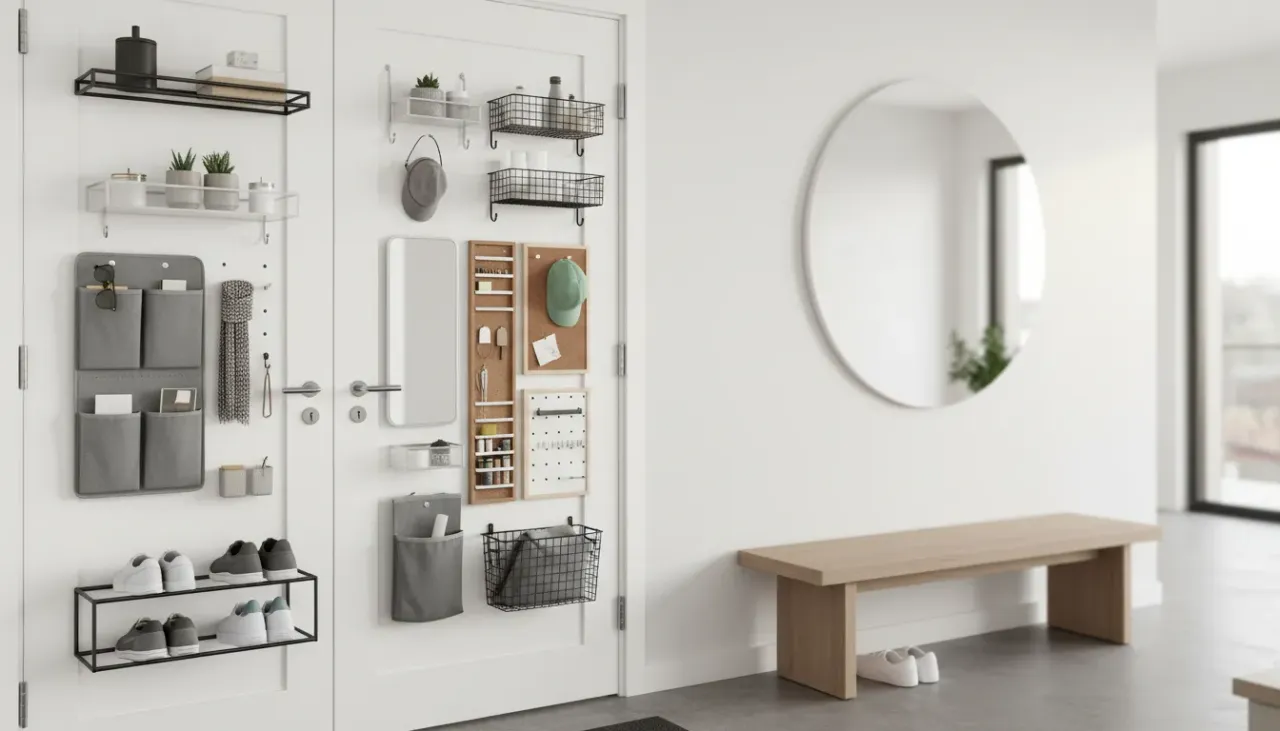
Feb 1, 2026 - Written by: linda wise

The entryway is arguably the most critical juncture in any home. It is the transition point between the chaotic outside world and your personal sanctuary. However, for apartment dwellers, this transition zone is often nonexistent. You open the front door and are immediately standing in the living room, or perhaps a narrow hallway that barely accommodates a welcome mat. When square footage is at a premium, floor space becomes sacred territory that cannot be sacrificed for bulky console tables or sprawling coat trees.
This spatial limitation creates a distinct logistical problem: the “landing strip” clutter. Without a designated drop zone, keys vanish into sofa cushions, mail accumulates on dining tables, and coats are draped over the backs of chairs, creating a sense of visual noise that disrupts the calm of your home.
The solution lies not in expanding the footprint of your apartment, but in capitalizing on the underutilized vertical real estate that already exists: the back of your door. Over-the-door storage is often dismissed as a utilitarian fix reserved for college dorms or pantries, but modern design has evolved significantly. Today’s solutions offer sophisticated, high-capacity organization that respects the aesthetic of a curated home while strictly adhering to rental agreements.
In this comprehensive guide, we will explore ten ingenious over-the-door storage solutions that blend functionality with design, specifically curated for the apartment dweller who refuses to compromise on style or security deposits.
The Philosophy of Vertical Efficiency in Rentals
Before diving into specific products, it is essential to understand the mechanics of small-space organization. In a micro-apartment or a studio, every horizontal surface eventually becomes a storage surface unless vertical alternatives are provided. The door represents roughly 15 to 20 square feet of vertical space that is frequently ignored.
For renters, the “no-drill” requirement is paramount. Standard shelving requires anchors, screws, and subsequent patching and painting upon move-out. Over-the-door systems utilize gravity and tension, requiring zero structural alteration to the property. By shifting the storage burden to the door, you free up floor space for traffic flow and furniture, effectively expanding the usable size of your room.
Furthermore, leveraging the back of the entry door keeps clutter hidden when the door is open (which is most of the time you are home), yet immediately accessible the moment you prepare to leave. It is the epitome of “out of sight, out of mind” organization.
1. The Multi-Tiered Basket System
The first solution addresses the problem of loose items that cannot hang on a hook. Scarves, gloves, winter beanies, and dog leashes often defy traditional hanging methods. A multi-tiered basket system transforms the back of your door into a vertical shelving unit.
Unlike open wire racks which can look industrial or messy, modern basket systems often come in woven materials, felt, or tight metal mesh that obscures the contents. This is crucial for maintaining a clean visual palette. By assigning specific tiers to specific categories—top tier for rarely used items, middle tier for daily accessories, bottom tier for pet supplies—you create a logical workflow.
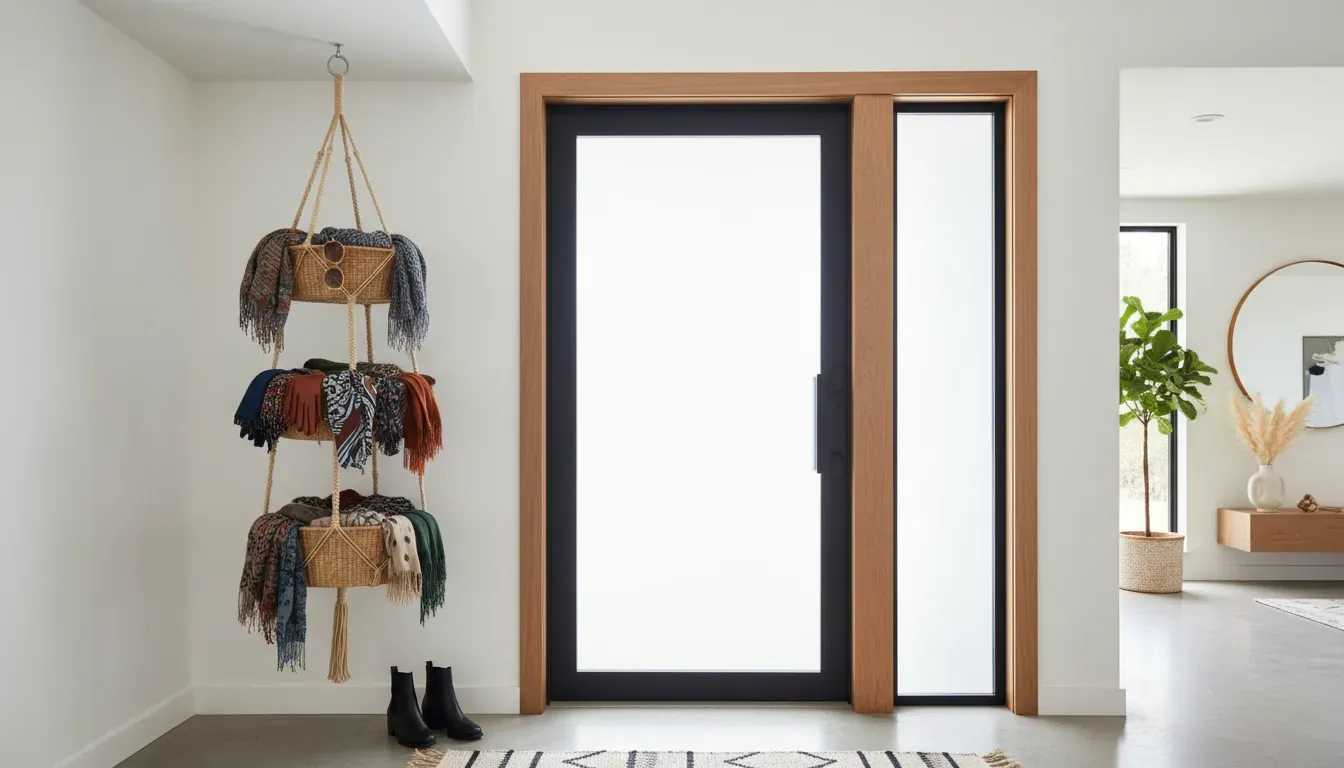
When selecting a basket system, prioritize depth. Shallow baskets often result in items spilling out when the door is swung shut. A depth of four to six inches is ideal for securing contents without protruding too far into the hallway space.
2. The Mirror-Storage Hybrid Valet
In a small entryway, a mirror is non-negotiable. It allows for a final appearance check before departure and reflects light to make the cramped space feel larger. However, hanging a mirror and a separate storage rack often looks cluttered.
The hybrid valet combines a full-length or half-length mirror with integrated storage hooks or a small shelf at the base. These units typically hang over the door via sturdy brackets, presenting a clean glass surface to the room while concealing hooks on the sides or bottom. This consolidation of function is a hallmark of intelligent apartment design. It serves as a focal point rather than just a storage utility, elevating the perception of the entryway.
For those interested in maximizing light while organizing, consider reading our guide on small entryway lighting ideas to complement your mirrored storage.
3. The Reimagined Shoe Organizer
The classic vinyl shoe organizer with clear pockets is a staple, but for a sophisticated apartment, it requires an upgrade. We are not talking about the flimsy plastic versions found in discount bins. High-end fabric shoe organizers, constructed from durable canvas or linen-blend materials, offer a much more refined aesthetic.
While designed for footwear, these pocketed systems are arguably the most versatile tools for an entryway. The pockets are perfectly sized for:
- Compact umbrellas
- Lint rollers
- Sunglasses cases
- Flashlights
- Outgoing mail
- Reusable shopping bags
If you are strictly using it for shoes, look for systems with reinforced bases to prevent sagging. For a highly rated, durable option that maintains its shape, we recommend this robust model:
https://www.amazon.com/s?k=over+the+door+shoe+organizer+linen&tag=hats0f8-20
4. The Modular Grid Panel
Borrowing from industrial retail design, the wire grid panel is a fully customizable solution. A metal grid hangs from over-the-door hooks, acting as a blank canvas. You then attach various accessories to the grid: S-hooks for keys, small baskets for mail, clips for reminders or photos, and shelves for sunglasses.
The beauty of the grid system is its adaptability. As seasons change, so do your storage needs. In winter, you might need more heavy-duty hooks for coats. In summer, you might switch to baskets for sunscreen and hats. The grid allows you to reconfigure the layout without removing the base unit.
Aesthetically, grid panels fit perfectly into modern, industrial, or minimalist decor schemes. They avoid the “bulky” look of solid organizers, keeping the entryway feeling airy and open.
5. The Heavy-Duty Coat Rack
Sometimes, the simplest solution is the best, provided it is executed with quality. A standard coat rack often fails because the hooks are too small, too close together, or the bracket bends under the weight of a wool trench coat.
A “genius” coat rack for an apartment must be heavy-duty. Look for units made of solid steel or iron, not hollow aluminum or plastic. The spacing between hooks is critical; there should be at least four to six inches between pegs to allow bulky coats to hang without overlapping and falling off.
Additionally, seek out racks with “double hooks” (one upper, one lower) to maximize capacity. The upper hook takes the coat, while the lower hook secures a purse or backpack.
6. The “Hidden” Pocket Organizer
For the ultra-minimalist, visual clutter is the enemy. Even organized clutter is still clutter. The “hidden” pocket organizer is designed to be slim and discreet. Often made of rigid felt or stiff fabric, these organizers lay flat against the door and feature slanted pockets.
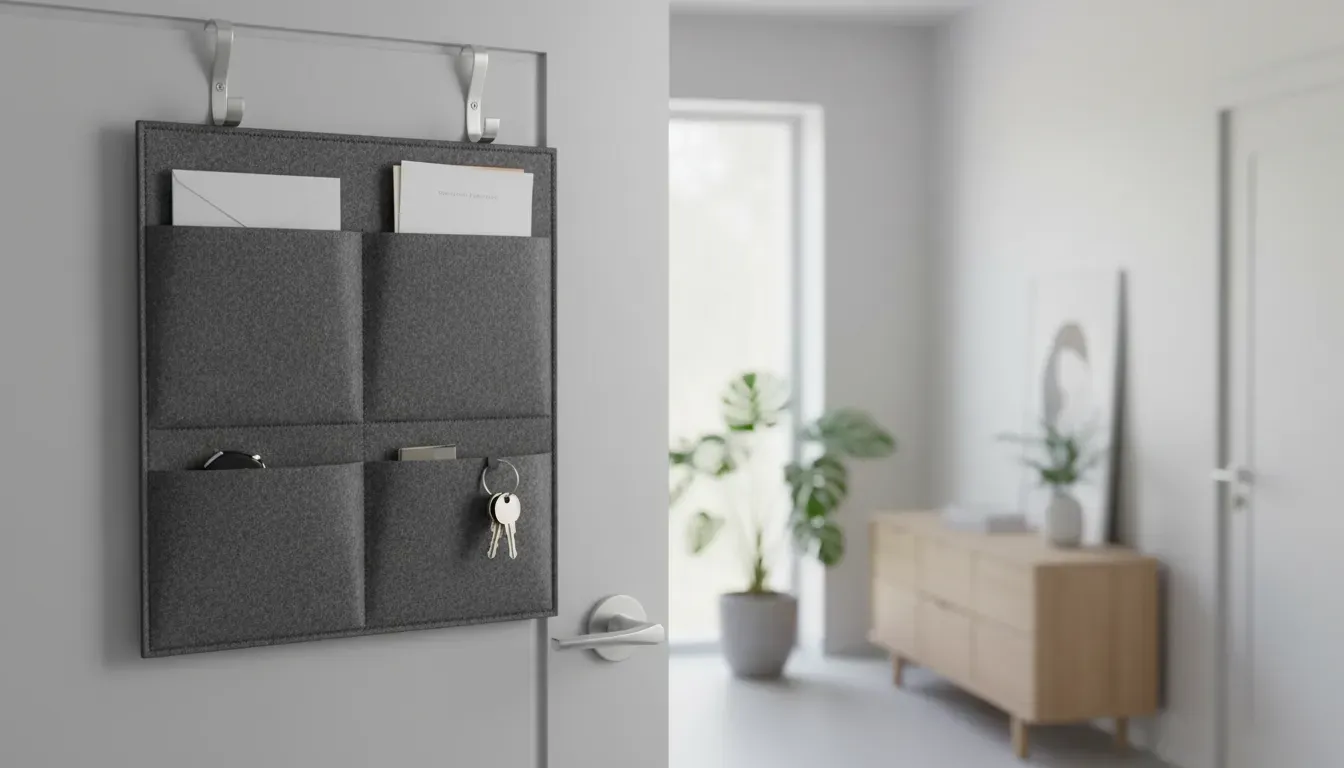
This design is particularly excellent for mail sorting (incoming vs. outgoing) and document storage. It prevents the dreaded “mail mountain” on your kitchen counter. Because they are flat, they interfere minimally with the door’s operation and allow the door to open fully against a wall if there is a doorstop present.
7. The Pantry-Style Rack for Bulk Items
While typically marketed for kitchen use, metal pantry racks are a secret weapon for entryways, particularly for families or pet owners. These deep, adjustable metal shelving units hang over the door and provide substantial storage capacity.
In an entryway context, these are perfect for:
- Bike helmets and gear
- Large bags of dog food or treats (decanted into stylish bins)
- Bulk winter gear for the whole household
- Cleaning supplies for the front of the house
The key to making this look “entryway appropriate” and not “kitchen utility” is in the curation. Use matching woven bins on the metal shelves to hide the contents. This provides the structure of a heavy-duty rack with the softness of a decorative piece.
For a rack that offers adjustable shelf heights to accommodate boots or tall bags, this option is exceptional:
https://www.amazon.com/s?k=adjustable+over+the+door+pantry+organizer&tag=hats0f8-20
8. The Horizontal Bar Valet
A departure from hooks and pockets, the horizontal bar valet mimics the functionality of a closet rod. This unit projects out from the door slightly and provides a horizontal rail. This allows you to use standard clothes hangers.
This is a game-changer for maintaining the shape of structured coats, blazers, or delicate fabrics that might become misshapen on a sharp hook. It also allows you to hang many more items in a compressed space, similar to how clothes are racked in a boutique.
This solution is best for entryways where the door does not open flush against a wall, as the hanger depth requires about 10 to 12 inches of clearance. It brings a boutique hotel vibe to an apartment rental.
9. The Pegboard System
Similar to the grid panel but with a more solid, architectural look, the over-the-door pegboard offers distinct advantages. Pegboards obscure the door surface completely, which can be a design benefit if your rental door is unsightly or damaged.
Using standard pegboard accessories, you can create a highly specific organization map. You can install small dowels for keys, shelves for decor, and bungee cords to hold mail. Pegboards can also be painted. If you want the storage to blend in, paint the pegboard the same color as your door. If you want a pop of color, choose a contrasting accent hue.
10. The Utility Rail with Sliding Hooks
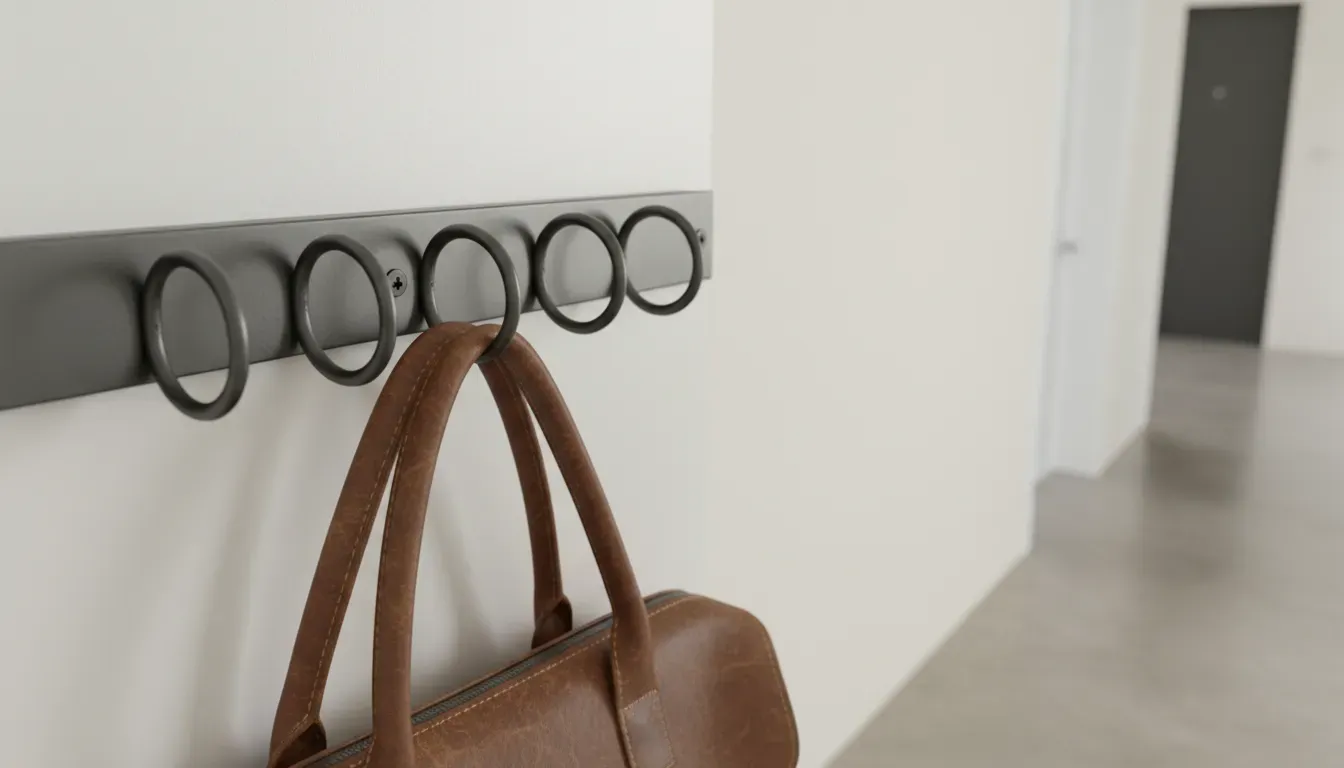
Flexibility is the ultimate luxury in a small space. A utility rail system features a horizontal track with hooks that slide back and forth. unlike fixed hooks, sliding hooks allow you to adjust the spacing based on what is currently hanging.
If you have a wide tote bag, you can slide the adjacent hooks away to give it room. If you only have slim umbrellas, you can group the hooks closely together. This dynamic adjustment capability ensures that no space on the rail is wasted.
For a sleek, modern rail that supports substantial weight without bending, consider this model:
https://www.amazon.com/s?k=over+the+door+hook+rail+heavy+duty&tag=hats0f8-20
Technical Considerations: Protecting Your Rental
Identifying the right storage solution is only half the battle. To ensure you get your security deposit back, you must consider the installation mechanics.
The “Nickel Test”
Before purchasing any over-the-door organizer, perform the nickel test. Place a nickel on top of your door and try to close it. If the nickel gets pushed off or the door jams, the gap between your door and the frame is too tight for most standard brackets. You will need to look for “zero-clearance” brackets or ultra-thin metal clips specifically designed for tight jambs.
Weight Distribution
Standard interior hollow-core doors—common in apartments—are not designed to hold immense weight. While the brackets might be rated for 50 pounds, your door hinges might not be. Limit the load on hollow-core doors to roughly 15-20 pounds. If you have a solid wood exterior door, you can safely load it with heavier items like winter coats and boots.
Surface Protection
Metal brackets rubbing against painted wood will eventually cause scratches or chipping. To prevent this:
- Felt Pads: Apply small adhesive felt pads to the back of the organizer where it touches the door face.
- Foam Tape: Line the inside of the over-the-door bracket with thin foam tape to cushion the contact point with the top of the door.
- Stability: Use command strips on the bottom of the organizer to adhere it to the door. This prevents the unit from banging against the door every time you open or close it, reducing noise and damage.
Aesthetics: Avoiding the “Dorm Room” Look
The biggest hesitation people have with over-the-door storage is the fear that it will look juvenile or temporary. To elevate the look, follow these design principles:
- Material Cohesion: Match the material of the organizer to the other hardware in your home. If you have matte black door handles, choose a matte black organizer. If you have warm wood furniture, look for wood-accented hooks.
- The Rule of Three: Don’t overcrowd the rack. Leave empty space. A packed rack looks like clutter; a curated rack looks like organization.
- Decanting: As mentioned with the pantry rack, never store branded packaging (like boxes of masks or dog treats) visibly. Place loose items in uniform pouches or baskets that fit the organizer.
- Color Blocking: Try to hang items of similar color families together. A row of neutral coats looks significantly calmer than a mix of neon raincoats and patterned scarves.
Installation and Maintenance
Installation of these units is generally tool-free, but “set it and forget it” is a recipe for disaster. Every few months, check the brackets. Gravity and the motion of the door can sometimes cause brackets to shift or bend slightly. Ensure the door is still closing properly without rubbing against the frame.
Cleaning is also vital. Entryway storage collects dust, pollen from outside, and street grime. Wipe down the hooks and wash fabric pockets regularly to prevent your clean coats from picking up dust.
For more tips on maintaining a pristine entrance, you might find our article on entryway cleaning schedules helpful.
Conclusion
Living in an apartment requires a shift in perspective. You must view boundaries not as limitations, but as parameters for creative problem-solving. Over-the-door storage is the unsung hero of the small entryway, providing a high-capacity solution that requires zero floor space and zero drills.
By selecting the right system—whether it is a sophisticated mirror valet, a heavy-duty coat rack, or a customizable grid—you reclaim your entryway. You transform it from a stress-inducing bottleneck into a functional, organized, and welcoming threshold. The transition from the world to your home becomes smoother, cleaner, and infinitely more stylish.