
12 to 24 Inches: Finding the Ideal Mudroom Locker Depth for Every Space
From narrow 12-inch hooks to deep 24-inch cabinetry, discover the exact mudroom locker depth you need to maximize storage without sacrificing flow.
Feb 26, 2026 - Written by: Linda Wise

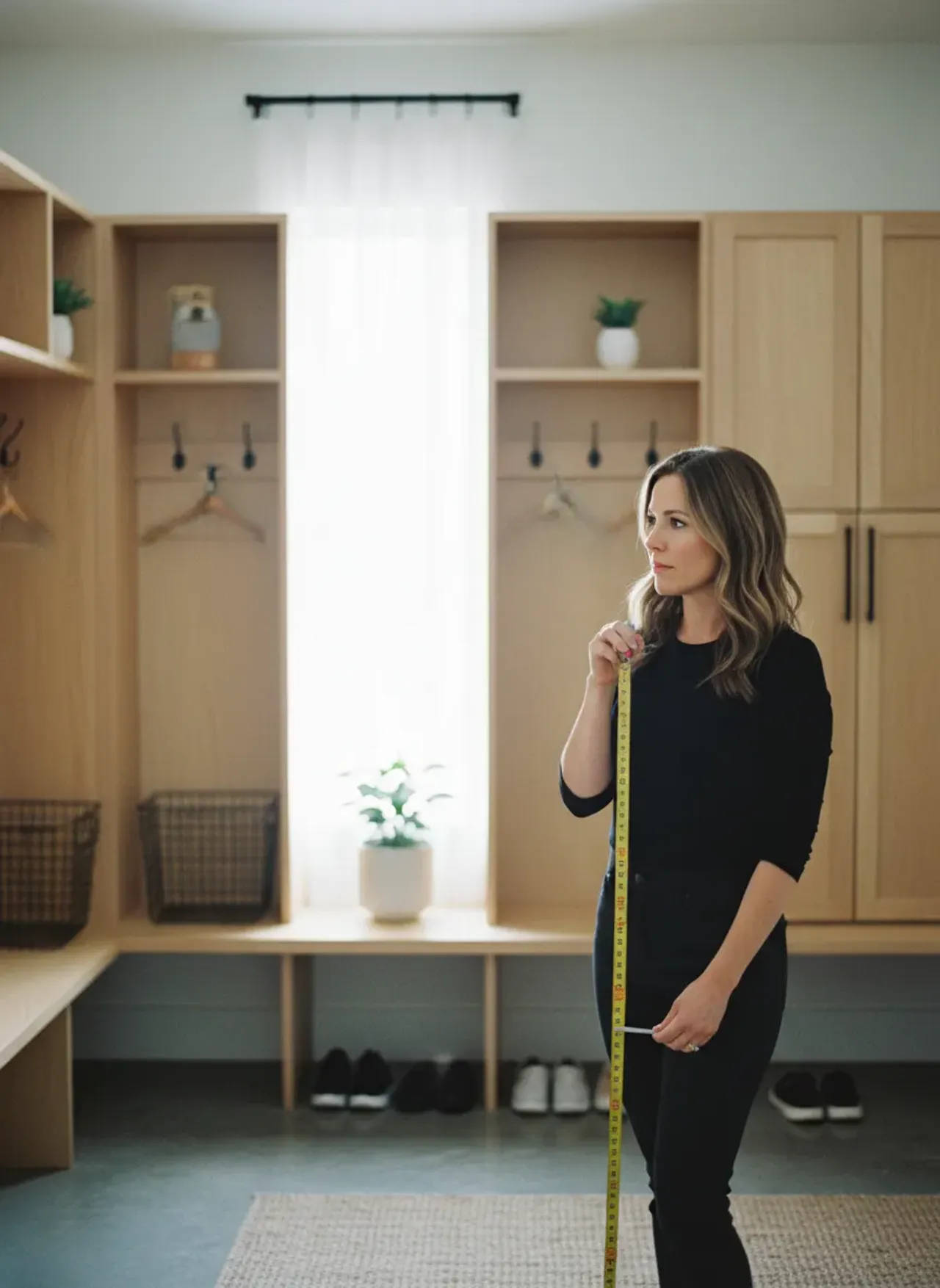
You know that feeling when you walk through the door, arms full of groceries, and immediately trip over a rogue sneaker? Or perhaps you’ve experienced the frustration of buying a “standard” storage unit only to realize your winter parka prevents the cabinet door from closing.
These aren’t just organizational failures; they are geometric ones.
When designing a mudroom, most people obsess over height (floor-to-ceiling looks expensive) or width (how many kids can we fit?). But after years of designing entryways and troubleshooting DIY disasters, I can tell you that depth is the silent killer of functionality.
The difference between 12 inches and 24 inches is not just a foot of space; it’s the difference between a sleek hook strip and a cavernous closet. It dictates whether you use hangers or hooks, open cubbies or closed doors, and ultimately, whether your mudroom feels like a sanctuary or a bottleneck.
We are going to tear apart the dimensions, inch by inch, to find the exact calibration for your lifestyle.
The Ergonomics of Entry: Why Depth Rules All
Before we start pulling tape measures, you have to understand the spatial “cost” of depth. In a hallway or mudroom, floor space is premium real estate. Every inch of locker depth is an inch subtracted from your circulation path.
If you go too deep in a narrow room, you create a “tunnel effect” that makes the space feel claustrophobic. If you go too shallow, you end up with “backpack spillover,” where the contents of the locker vomit onto the floor, defeating the purpose of the locker entirely.
Pro Tip: Always maintain a minimum of 36 inches of clear walking space in front of your lockers. If you have cabinet doors that swing out, aim for 42 to 48 inches to allow a person to stand there comfortably while the door is open.
The “Usable” vs. “Actual” Trap
Here is a nuance that catches many homeowners off guard. The exterior dimension of a unit is not its interior storage capacity.
If you buy a locker system listed at 15 inches deep:
- Subtract 0.75 inches for the back panel and mounting cleat.
- Subtract 0.75 inches for the face frame or door thickness.
- Result: You’re left with barely 13.5 inches of usable shelf depth.
Always calculate based on the internal clear space, especially if you plan on storing rigid items like plastic bins or hard-shell luggage.
The 12-Inch Standard: The “Slim Fit” Solution
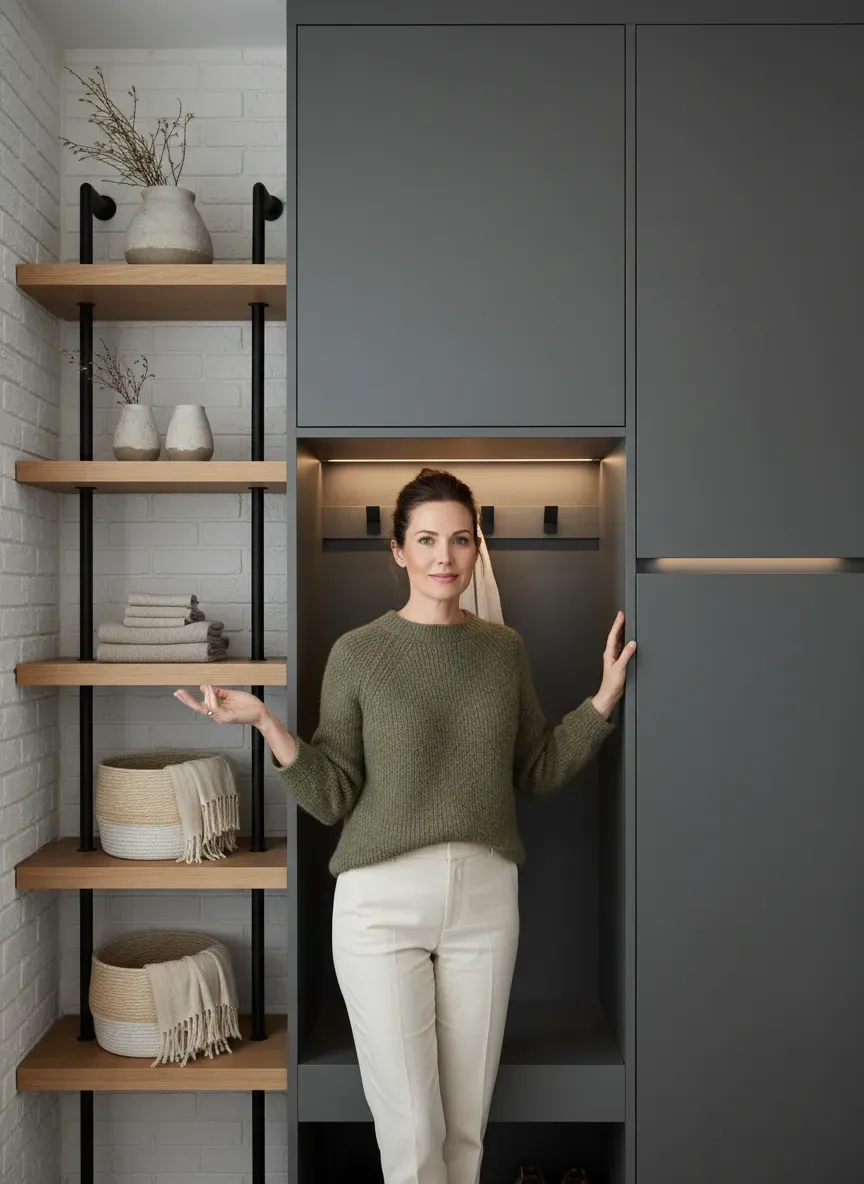
Let’s start at the shallow end of the pool. Twelve inches is incredibly narrow for a locker, yet it remains one of the most requested dimensions for retrofits in existing hallways.
When to Use 12 Inches
This depth is strictly for “grab-and-go” zones. You are not hiding mess here; you are staging it. This depth works best in corridors that are 4 feet wide or less, where a standard cabinet would block traffic.
The Reality of 12-Inch Depth:
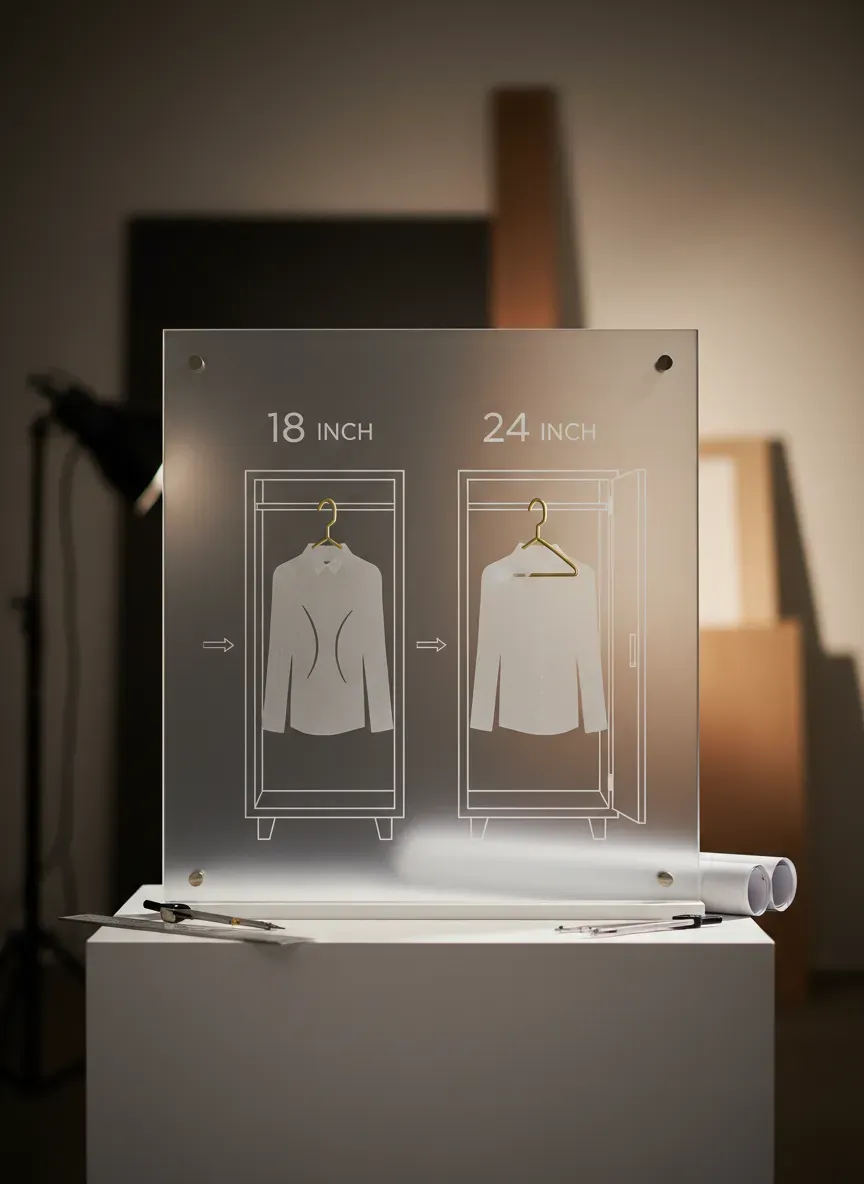
- Coat Storage: You cannot use a standard hanger rod. A standard hanger is 17-18 inches wide. It simply won’t fit. You must use hooks (double prong or tri-hook) mounted on the back or side walls.
- Shoe Storage: This is the danger zone for adults. A men’s size 11 shoe is roughly 12 inches long. If you have a 12-inch deep locker with a back panel, larger shoes will overhang the shelf. You’ll need to store shoes at an angle or utilize a tilt-out mechanism.
- Backpacks: A fully loaded high school backpack will stick out.
However, 12 inches is fantastic for visual lightness. It doesn’t loom over you. If you are working with a tight corridor, I highly recommend looking at the Prepac Wide Hall Tree. It’s designed specifically to hug the wall without encroaching on your walking path, utilizing that shallow depth effectively with well-placed hooks rather than impossible shelves.
The “Bookcase” Approach
At 12 inches, think of your lockers more like bookcases. They are perfect for bins of hats and gloves, folded scarves, and mail drops. If you treat a 12-inch locker like a closet, you will fail. If you treat it like a 3D hook rail, you will win.
The 15-to-18 Inch Zone: The “Goldilocks” Hybrid
This range is where the vast majority of semi-custom and DIY mudrooms land. It feels substantial enough to hold gear but doesn’t eat up the entire room.
The Hanger Dilemma
I see this mistake constantly. A homeowner builds a beautiful 16-inch deep unit and installs a chrome rod across the top. Then they try to hang a coat.
Result: The coat shoulder hits the back wall, and the sleeve smashes against the door (or sticks out of the open cubby).
Key Takeaway: If you want a traditional hanging rod (side-to-side), you generally need 20 inches minimum (22+ for bulky winter coats).
For 15 to 18 inches, you have two smart options:
- Hooks: You can layer hooks—one high, one low—because you have enough depth for a coat to drape without puffing out too far.
- Pull-Out Valet Rods: These are bars that run front-to-back. You pull the rod out toward you to access items. This allows you to store coats “face forward” rather than sideways.
The Bench Benefit
This depth is ideal for the seating portion of your mudroom. An 18-inch deep bench is comfortable for an adult to sit on to tie shoes. It allows your knees to bend naturally without feeling like you’re perched on a narrow ledge.
If you are mixing depths—say, a 12-inch upper locker and an 18-inch lower bench—this creates a lovely visual step-back that prevents the unit from feeling top-heavy.
Before committing to a custom build, you should familiarise yourself with standard depth and height measurements to see where the industry sets the bar, particularly regarding how bench depth interacts with upper cabinet clearance.
The 20-to-24 Inch Behemoth: The “Heavy Duty” Closet
Now we enter the realm of true cabinetry. At 24 inches deep, you are essentially building a standard reach-in closet without the drywall.
Who Needs 24 Inches?
- Hockey Families: I’m not joking. Hockey bags are massive. Lacrosse gear is long. If your kids play equipment-heavy sports, anything less than 20 inches is a waste of wood.
- The “Hide Everything” Aesthetic: If you want doors on your lockers to completely conceal the chaos, you need depth. Bulky winter coats, when hung on a rod, need 22 to 24 inches to allow a door to close without rubbing against the fabric.
- Utility Storage: Vacuums, carpet cleaners, and Costco-sized paper towel packs fit perfectly in 24-inch lowers.
The Visual Weight Problem
The downside of the 24-inch depth is that it is physically imposing. A wall of 24-inch deep cabinetry can make a room feel dark and small.
How to Mitigate the Bulk:
- Open Bottoms: Leave the bottom 12 inches open (legs instead of a solid plinth base). Seeing the floor run under the locker tricks the eye into thinking the room is bigger.
- Lighter Colors: White, cream, or pale gray will reflect light. A 24-inch deep matte black locker will look like a black hole.
- Chamfered Corners: If the locker unit ends near a doorway, angle the corner unit back to 12 inches to soften the transition.
For those ready to commit to a deep, robust system that handles heavy loads, I’ve found the Sauder HomePlus Storage Cabinet to be a surprisingly versatile option. While technically a utility cabinet, its depth and shelf strength make it a prime candidate for a closed-door mudroom setup.
The Backpack Factor: A Modern Measurement
Let’s talk about the elephant in the room: the modern school backpack.
Twenty years ago, kids carried a couple of books. Today, between Chromebooks, water bottles, gym kits, and lunch boxes, backpacks are enormous.
I measured a fully loaded high school backpack recently. It sat 14 inches deep from the straps to the outer pocket.
If you build a 12-inch open cubby, that bag is falling out. Every. Single. Time.
If your primary goal is backpack containment, 15 inches is your absolute minimum, but 18 inches is the sweet spot. This allows the bag to be thrown in casually without needing to be “shoved” into place.
Shoe Storage Dynamics by Depth
Your locker depth dictates your shoe strategy. This is where most mudrooms get messy—the pile-up at the bottom.
- 12-14 Inches: You need flat shelves, but adult shoes might hang over. Consider “fences” (small lips) on the front of shelves to keep shoes from sliding off, or use angled shelves with a heel catch.
- 15-18 Inches: Perfect for wire baskets or pull-out drawers. You can store shoes two-deep (one behind the other) if you are organizing kids’ shoes, or one pair of large adult boots per section.
- 20-24 Inches: This is deep enough for a specialized pull-out shoe tower. However, deep shelves for shoes can be annoying because you lose visibility of the pair in the back. If you go this deep, install pull-out shelves (glides).
Pro Tip: If you have a 24-inch deep bench, do not just leave an open cavern underneath. You will lose shoes in the “back abyss.” Install a drawer on heavy-duty slides. It makes the entire depth accessible.
The Material Impact on Dimensions
When you are planning your depth, are you accounting for the material thickness?
If you are using 3/4-inch plywood (the industry standard for custom cabinetry), your side walls consume 1.5 inches of your total width, but the back panel is what steals your depth.
- Inset vs. Overlay Doors:
- Overlay: The door sits on top of the frame. It adds depth to the overall footprint but doesn’t eat into the storage space.
- Inset: The door sits inside the frame. This looks high-end and custom, but it steals 0.75 inches of internal storage depth. If you want inset doors and need to hang coats on a rod, you essentially need a 25-inch deep cabinet exterior to get that 23-inch internal clearance.
Customizing for Odd Spaces: The Taper Trick
I worked on a project recently where the mudroom was triangular—wide at the entrance, narrowing toward the kitchen.
We couldn’t pick one depth. So, we stepped it.
We started with a 24-inch deep “tall locker” for the dad’s hockey gear. Next to it, an 18-inch unit for the mom’s coats. Then, two 15-inch units for the kids. Finally, a 12-inch angled shelf unit for keys and mail.
It created a cascading effect that guided traffic through the room.
Key Takeaway: You don’t have to pick one depth for the entire wall. Mixing depths adds visual interest and solves ergonomic problems.
The Bottom Line
There is no “standard” depth, only the right depth for your gear.
- Choose 12-14 Inches if: You have a narrow hallway, you only use hooks, and you want a place to drop keys and mail.
- Choose 15-18 Inches if: You want a bench to sit on, you are okay with hooks instead of rods, and you want to contain backpacks without them tumbling out.
- Choose 20-24 Inches if: You need to hide mess behind doors, you hang heavy coats on rods, or you store large sports equipment.
If you are looking for a robust hook solution that can handle the weight of heavy bags regardless of your locker depth, I personally rely on Skylark Heavy Duty Coat Hooks. They have the projection needed to hold multiple items, making them a savior for shallower 12-15 inch units where horizontal rod hanging isn’t an option.
Final Reality Check
Before you cut a single piece of wood or buy a single cabinet, do the “Cardboard Test.”
Get some old shipping boxes. Tape them together to simulate the depth of the lockers you are considering. Place them in your mudroom or hallway.
Now, walk past them carrying a laundry basket. Put your winter coat on and try to sit on your imaginary bench.
You will know instantly if 24 inches feels too imposing or if 12 inches feels too flimsy. Your body has an innate sense of spatial awareness that a blueprint cannot replicate. Trust that feeling. It’s the difference between a mudroom that looks good on Pinterest and one that actually works on a rainy Tuesday morning.