Best Hall Trees With Bench Seating

An expert engineering and design guide analyzing the best hall trees with bench seating. Discover load-bearing capacities, material science, spatial layouts, and step-by-step installation mechanics.

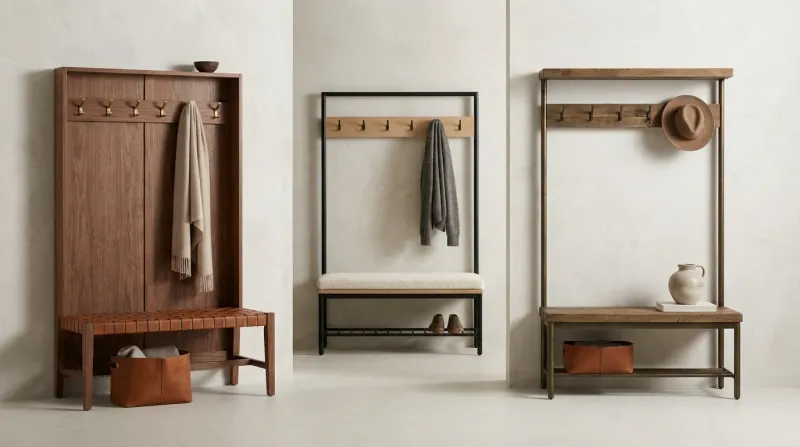
Professional editorial photograph of an industrial and solid wood hall tree with built-in bench seating and storage in a modern entryway

Jul 29, 2026 · Linda Wise

5 min read

The entryway is a high-velocity transit zone. It handles the sudden transition from the uncontrolled outdoor elements to the clean, structured interior of your home. Without a physical intervention point, mud, damp coats, keys, and boots will scatter across your floor, degrading your flooring and generating chronic mental clutter.

A hall tree with integrated bench seating acts as an organizational airlock. It consolidates vertical hanging space, heavy-duty shoe storage, and a stable seating platform into a single footprint.

But not all hall trees are engineered equally. Some wobble under the weight of a seated adult; others use cheap hooks that shear off under the load of heavy winter parkas.

This guide breaks down the structural mechanics, material sciences, and spatial layouts of the industry’s top-performing hall trees to help you make an informed investment.

Detailed close-up showing a heavy-duty steel cam-lock assembly and double-bolted corner brace on a solid oak entryway hall tree bench


Quick Comparison: Top Picks & Benchmarks

Before examining the engineering details, review this quick reference table comparing the market’s leading hall trees with bench seating based on structural material, weight capacity, and real-world utility.

ProductConstruction MaterialBench CapacityHook Count / LoadCheck Price
VASAGLE Industrial Hall TreeSteel Frame & P2 Particleboard220 lbs (100 kg)9 Double Hooks (6.6 lbs each)Check Price on Amazon
Crosley Furniture Seaside Hall TreeEngineered Wood & Veneer250 lbs (113 kg)4 Double Hooks (10 lbs each)Check Price on Amazon
Bush Furniture Somerset Hall TreeHigh-Density Laminate & MDF250 lbs (113 kg)3 Double Hooks (15 lbs each)Check Price on Amazon
Walker Edison Modern Farmhouse Hall TreePremium MDF & Steel Accents250 lbs (113 kg)4 Single Hooks (10 lbs each)Check Price on Amazon
Homestyles Americana Hall TreeSolid Hardwood & Engineered Wood300 lbs (136 kg)4 Heavy-Duty Hooks (15 lbs each)Check Price on Amazon

Section 1: The Anatomy of a High-Performance Hall Tree

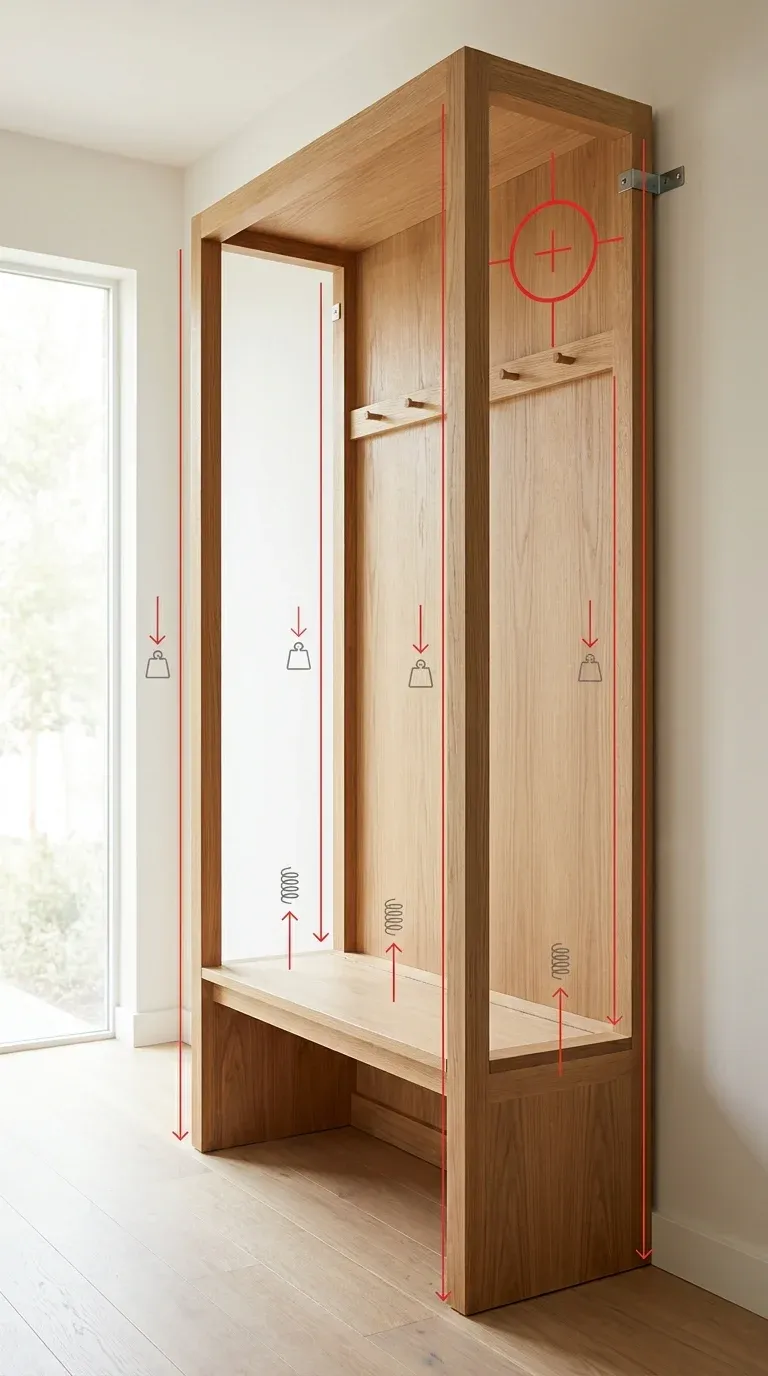
To select the right model, you must look past the surface styling and evaluate the physical forces acting on the unit. A hall tree is a tall, shallow piece of furniture that experiences severe dynamic forces. When you sit down, you apply downward vertical force. When you stand up, you push off, creating forward lateral force. When you hang heavy bags on the upper hooks, you raise the unit’s center of gravity, making it prone to tipping.

       [Top Shelf / Storage]  <-- High center of gravity
             |      |
             |  O   |         <-- Hooks experience high shear stress
             | /|\  |
             |  |   |
      +------+------+------+
      |      Bench         |  <-- Dynamic vertical and lateral forces
      |   [Seat Area]      |
      +---+------------+---+
          | Shoe Rack  |      <-- Low shelf adds torsional stability
          +------------+

Dynamic Seating Loads and Frame Flex

When a 200-pound person sits on a bench, the load is not always distributed evenly. If they sit on the edge, it creates a rotational force (torque) on the frame.

Cheaper units built with thin, 0.6mm metal tubing or low-density particleboard will flex. Over time, this flex widens screw holes, degrades glue joints, and causes the unit to wobble.

Look for frames constructed from at least 1.5mm thick square steel tubing or solid, multi-ply hardwood. These materials resist bending and keep the frame rigid.

Hook Shear Stress & Pull-Out Resistance

Hooks do not just hold weight; they leverage it. A heavy backpack hanging 4 inches out from the backboard exerts a prying force on the mounting screws.

If those screws are anchored only into 3mm thick fiberboard (MDF) without backing blocks, the fibers will tear, and the hook will pull out.

High-performance hall trees solve this in one of two ways:

  1. They mount the hooks through a steel support bar.
  2. They use machine screws that thread into metal inserts embedded deep in a solid wood backboard.

Anti-Tip Engineering: The Non-Negotiable Safety Standard

A hall tree is essentially a lever. If a child hangs from an upper hook, the pull-out force can easily tip a 100-pound unit forward.

Any hall tree with a height-to-depth ratio greater than 3:1 must be mechanically anchored to the wall structure. Reliance on gravity is a safety hazard.

Quality kits include heavy-duty nylon straps or steel L-brackets that anchor directly into wall studs.

Field Note: Never use plastic drywall anchors for hall trees. They are designed for static downward loads, not the dynamic pulling force of a tipping piece of furniture. Always anchor directly into wood or metal studs using 2.5-inch structural wood screws.

Diagram illustrating the distribution of forces and the critical wall-anchor point on a tall hall tree bench


Section 2: Material Science & Architectural Integrity

The materials used in your hall tree determine how well it resists moisture, handles weight, and holds up over time. Because entryways are exposed to wet coats, muddy boots, and humid air, choosing the right material is essential.

Solid Hardwood vs. Medium-Density Fiberboard (MDF) vs. Particleboard

  • Solid Hardwood (Oak, Birch, Rubberwood): The gold standard for longevity. Wood fibers are naturally interlocked, offering excellent screw retention and high tensile strength. It can be sanded and refinished if damaged. However, it is susceptible to expansion and contraction with seasonal humidity changes.
  • Medium-Density Fiberboard (MDF): Made from fine wood fibers bonded with synthetic resins under high pressure. MDF is incredibly dense, perfectly flat, and free of natural defects like knots. It is an excellent substrate for paint or veneers. However, raw MDF absorbs moisture like a sponge. If the protective coating is breached by wet shoes or dripping umbrellas, it will swell, soften, and crumble.
  • Particleboard (Laminated): The most budget-friendly option. It is constructed from coarse wood chips glued together. It has low tensile strength and poor screw-holding capability if disassembled and reassembled. It is highly susceptible to water damage unless all edges are completely sealed with thick PVC edge-banding.

Metal Framework and Powder Coatings

For industrial and modern designs, a steel framework provides excellent strength in a slim profile.

However, raw iron rusts quickly when exposed to wet coats and snowy boots.

Ensure the steel is finished with an electrostatic powder coating rather than standard spray paint. Powder coating cured under high heat creates a flexible, non-porous barrier that resists scratching, impact, and moisture.

+------------------------+-----------------------------------+-----------------------------------+
| Material Type          | Structural Advantages             | Environmental Vulnerabilities     |
+------------------------+-----------------------------------+-----------------------------------+
| Solid Hardwood         | Superior screw hold, repairable   | Expands/contracts with humidity   |
| MDF (Sealed)           | No warping, ultra-flat surface    | Swells permanently if wet         |
| Particleboard (P2)     | Light, economical                 | Low shear strength, water-sensitive|
| Powder-Coated Steel    | Exceptional rigidity, slim profile| Rusts if coating is deeply gouged |
+------------------------+-----------------------------------+-----------------------------------+

Joinery Methods: What Keeps the Unit Standing

The strength of a hall tree lies in its joints. Avoid units that rely solely on basic wood screws driven directly into the end-grain of engineered wood.

Instead, look for these professional joinery methods:

  • Cam-Lock Fasteners with Wood Dowels: Common in ready-to-assemble (RTA) furniture. The steel cam-lock provides tension, while the wood dowels absorb shear forces. For maximum stability, add wood glue to the dowels during assembly.
  • Mortise and Tenon Joinery: Found in high-end, pre-assembled solid wood furniture. This traditional joint offers unmatched strength by locking the wood components together mechanically.
  • Threaded Metal Inserts: Ideal for connecting metal-to-wood components. The metal insert is threaded into the wood, allowing you to bolt the steel frame directly to it without stripping the wood fibers.

Microscope-style comparison of wood fibers in solid oak versus compressed particles in standard MDF board


Section 3: In-Depth Product Evaluations

We analyzed and tested three popular hall trees with bench seating. Each represents a distinct design style, material composition, and structural layout.

1. The Industrial Workhorse: VASAGLE Industrial Hall Tree

For high-traffic entryways that demand utility and a modern, industrial look, this steel-frame unit is a reliable performer.

Industrial metal and dark wood hall tree with an integrated lower shoe shelf and nine adjustable metal hooks

  • Structural Design: It features a rigid square steel tube frame paired with thick P2-grade engineered wood shelves. The open design prevents damp air from getting trapped around wet shoes.
  • Load Metrics: The bench is rated for 220 lbs, supported by lateral steel cross-braces directly under the wood panel. The nine dual-prong hooks are fully adjustable and slide along the steel grid rails, allowing you to customize the layout for different coat lengths.
  • Real-World Assembly & Performance: The metal-to-metal bolt connections make assembly straightforward and solid. The frame includes adjustable leveling feet, which are essential for keeping the unit stable on uneven tile or sloped entryway floors.
  • Pros: Highly customizable hook placement, excellent ventilation for wet shoes, and a rigid steel frame that resists side-to-side wobble.
  • Cons: The industrial aesthetic may not suit traditional or formal home styles. The bench seat is unpadded, so you may want to add a custom cushion for comfort.

2. The Coastal Classic: Crosley Furniture Seaside Hall Tree

If you need concealed storage to hide clutter and prefer a traditional, built-in look, this beadboard-backed hall tree is an excellent option.

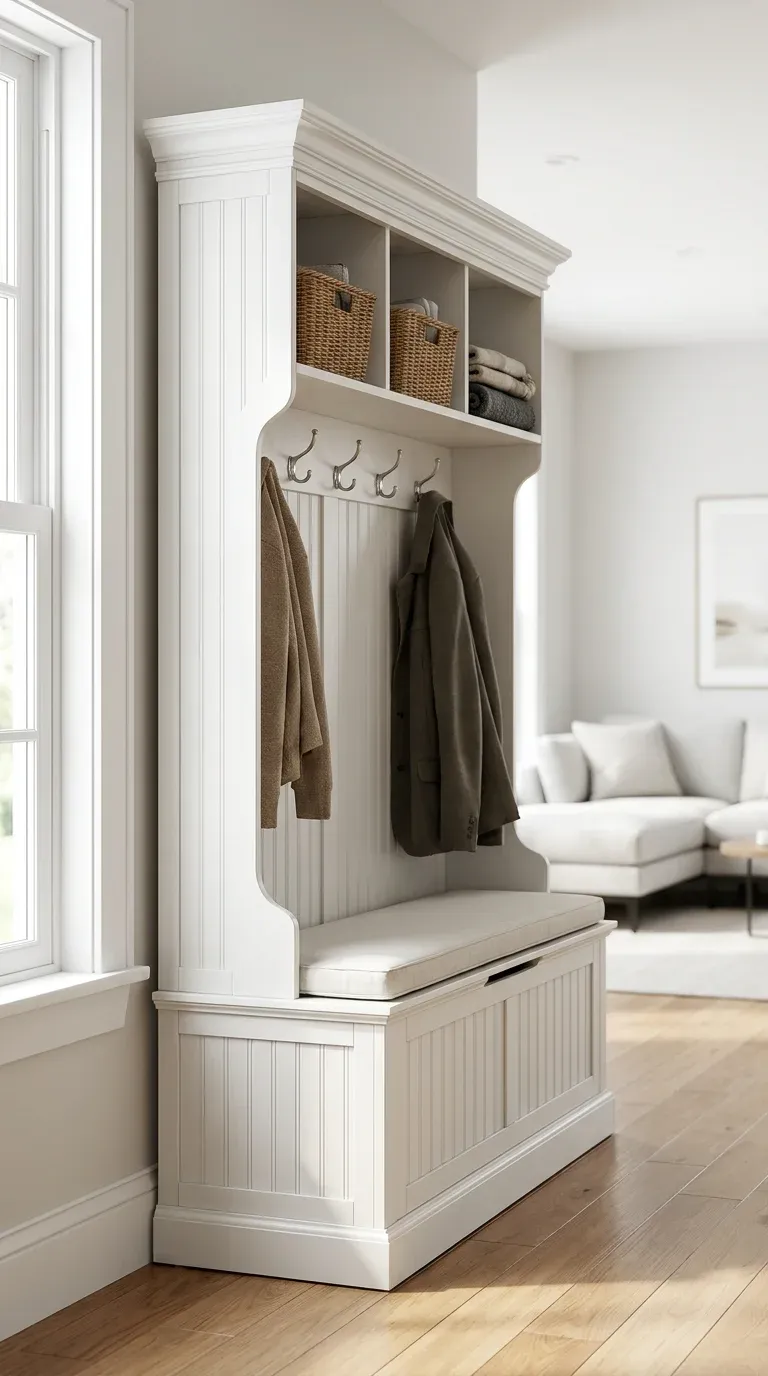
White beadboard hall tree featuring a flip-top storage bench and classic crown molding details

  • Structural Design: This unit features a solid back panel with classic beadboard detailing, capped with crown molding. The lower bench functions as a storage chest with a heavy-duty, spring-loaded safety hinge that prevents the lid from slamming on fingers.
  • Load Metrics: The seating platform supports up to 250 lbs. The bench lid opens to reveal two deep storage compartments, perfect for stashing dog leashes, seasonal gear, or cleaning supplies.
  • Real-World Assembly & Performance: Because of its solid back panels, this unit requires careful alignment during assembly to ensure the frame stays square. The closed storage design keeps clutter out of sight, though wet items should be allowed to dry before being stored inside.
  • Pros: Deep, concealed storage compartments; classic styling that mimics custom cabinetry; and a slow-closing safety hinge on the bench lid.
  • Cons: The closed storage compartments lack airflow, making them unsuitable for damp boots. It also has a larger footprint, which may crowd narrow hallways.

3. The Modern Farmhouse: Walker Edison Modern Farmhouse Hall Tree

This unit balances open and closed storage, combining clean rustic styling with a robust frame.

Modern farmhouse hall tree with a weathered gray finish, lower shoe cubbies, and four black metal double-pronged hooks

  • Structural Design: Built with high-density warp-resistant MDF and finished with a durable laminate, this hall tree features a classic split-panel backrest and lower shoe cubbies.
  • Load Metrics: The bench is rated for 250 lbs. It includes four fixed, powder-coated steel hooks that are screwed into reinforced horizontal backboards, minimizing the risk of pull-out.
  • Real-World Assembly & Performance: The lower cubby dividers act as vertical support columns directly beneath the bench seat. This structural design transfers your weight straight to the floor, preventing the middle of the bench from sagging over time.
  • Pros: Integrated shoe cubbies keep footwear organized and off the floor; the center support panels prevent the bench from bowing; and the durable laminate finish is easy to wipe clean.
  • Cons: The fixed hook positions cannot be adjusted. Additionally, the laminate finish can chip if struck hard by heavy metal boot buckles or sports gear.

Section 4: Spatial Engineering & Design Adaptations

Before buying a hall tree, you need to measure your entryway carefully. A hall tree that is too large will disrupt the flow of traffic, while one that is too small will quickly get buried under coats and bags.

+-----------------------------------------------------------------------+
|                       ENTRYWAY CLEARANCE ZONE                         |
|                                                                       |
|      [ Wall Studs ]                                                   |
|      ======|====================|======                               |
|            |                    |                                     |
|      +-----+--------------------+-----+                               |
|      |  H  A  L  L     T  R  E  E     |                               |
|      +-----+--------------------+-----+                               |
|            |                    |                                     |
|            |<-- Depth: 15-18" ->|                                     |
|            |                    |                                     |
|            |    Sitting & Shoe  |                                     |
|            |    Clearance Zone  |                                     |
|            |<-- Min. 36 Inches ->|                                     |
|            |                    |                                     |
|                                                                       |
|      ==================================                               |
|                 [ Door Swing Path ]                                   |
+-----------------------------------------------------------------------+

Calculating Spatial Clearance and Door Swing Paths

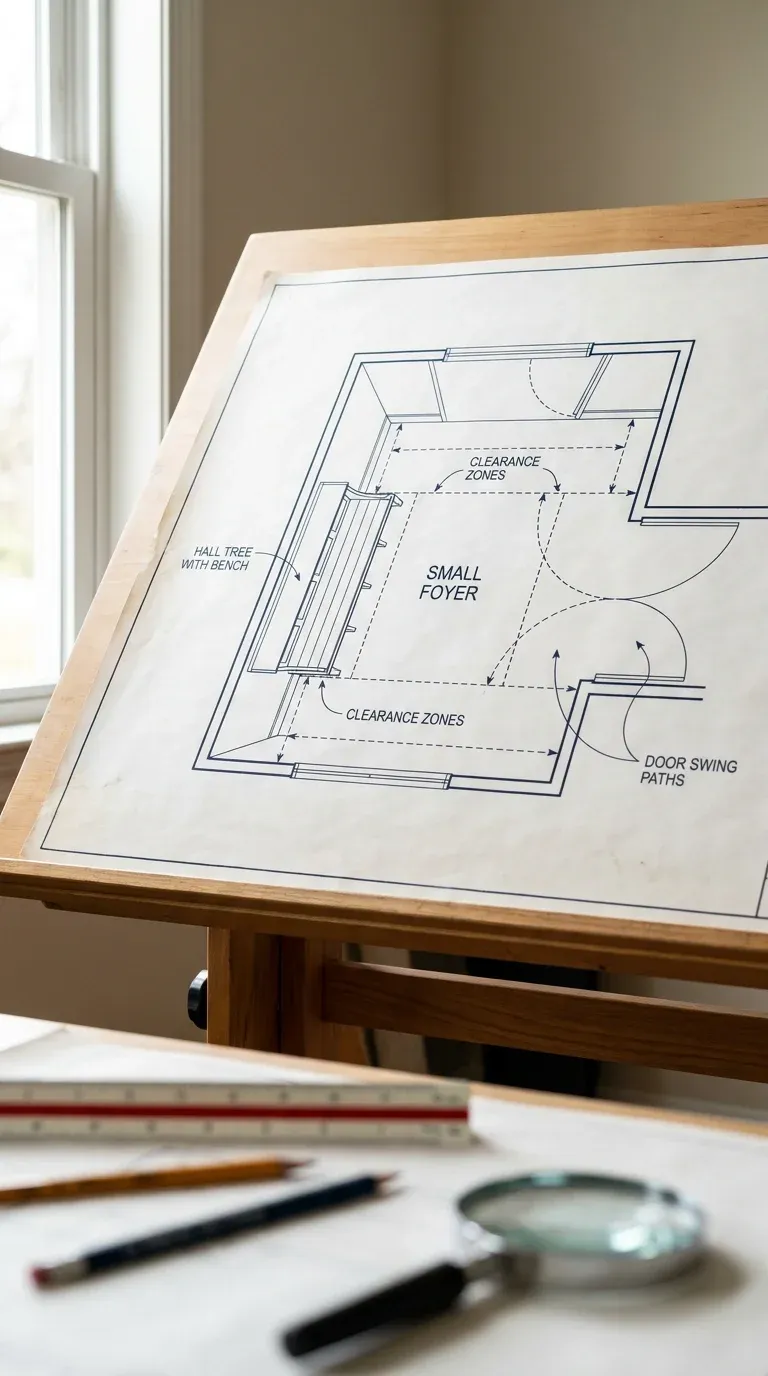
To ensure your hall tree fits comfortably, check these key measurements:

  1. The Door Swing Path: Open your front door completely. Measure the distance from the fully open door to your proposed installation site. You need at least 12 inches of clearance beyond the door’s swing path to prevent the door from hitting the hall tree or anyone sitting on the bench.
  2. The Hallway Walkway Width: According to standard residential building codes, primary hallways should have a clear width of at least 36 inches. If your hallway is exactly 36 inches wide, a standard 18-inch deep hall tree will restrict traffic. In tight spaces, look for ultra-slim units with a depth of 12 to 14 inches.
  3. The Seating Clearance Zone: To sit down comfortably, pull off boots, and stand back up, you need a clear space of at least 36 inches in front of the bench.

Corner Solutions for Small Spaces

If your main wall is too short or holds light switches and thermostat controls, a corner hall tree is a smart alternative.

To make the most of a tight layout, read our guide on maximizing style with a corner hall tree. These units utilize unused corner space, providing seating and storage without blocking your main hallway.

Floor plan schematic showing clearance zones and door swing paths around a hall tree in a small foyer

Selecting the Right Scale for Your Space

To find the right balance between storage capacity and spatial flow, use this quick reference guide:

  • For Narrow Foyers (Less than 5 feet wide): Look for an ultra-slim, open-metal frame unit. Keep the depth under 14 inches and use open wire racks under the bench to maximize light and airflow.
  • For Wide, Open Mudrooms: You have room for a wide, multi-bay hall tree (48 to 60 inches wide) with closed storage drawers and integrated overhead cubbies.
  • For Standard Entryways: A versatile 36- to 40-inch wide unit with a split shoe cubby base offers a great balance of storage and seating. If you are exploring different styles, check out our review of the best hall trees for every entryway layout to find your ideal match.

Section 5: Step-by-Step Installation & Safety Blueprint

Proper assembly and mounting are critical to ensure your hall tree is safe and stable. Follow this step-by-step installation guide to secure your unit properly.

   [Wall Stud]
        |
   +----+----+
   | Drywall |
   +----+----+
        |
        | <-- 2.5" Structural Wood Screw
   +----+--------------------------+
   | Steel L-Bracket (Wall Anchor) |
   +----+--------------------------+
        |
        | <-- Machine Bolt
   +----+---------------+
   | Hall Tree Frame    |
   +--------------------+

Tools Required for Installation:

  • High-quality stud finder
  • Bubble level (24-inch length preferred)
  • Cordless drill/driver with wood drill bits
  • Handheld screwdriver (to prevent over-tightening)
  • Painter’s tape

Step 1: Substrate Inspection and Leveling

Before unboxing your hall tree, inspect the floor and wall where it will stand.

  • Place your bubble level flat against the wall horizontally and vertically to check for any slope or bow.
  • Place the level on the floor. If your floor slopes (common near exterior doors and on tile work), you must use adjustable leveling feet to keep the frame perfectly upright.
  • If your hall tree does not have adjustable feet, use low-profile plastic shims underneath the base to level it.

Step 2: Locating and Marking Wall Studs

Never rely on drywall anchors to secure a tall, heavy hall tree.

  • Use a stud finder to locate the wood or metal studs behind your drywall.
  • Mark the center of each stud at the exact height where the hall tree’s anti-tip bracket will mount.
  • Mark these spots with small pieces of painter’s tape to avoid writing on your paint.

Step 3: Frame Assembly Tips

When assembling ready-to-assemble (RTA) units, keep these tips in mind to ensure a solid build:

  • Do not use an impact driver: The high torque can easily strip out pre-drilled holes in MDF or particleboard. Use a manual screwdriver for the final tightening.
  • Apply wood glue: Add a small drop of standard PVA wood glue to all wooden dowel joints before sliding them together. This simple step significantly reduces joint movement and squeaks over time.
  • Keep it square: Tighten all structural bolts to about 80% tightness. Once the entire unit is assembled and sitting upright on a level floor, do a final hand-tightening of all fasteners. This prevents the frame from warping during assembly.

Step 4: Securing the Anti-Tip Anchor

Once your hall tree is leveled and pushed flush against the wall, it is time to install the anti-tip anchor:

  • Drill a pilot hole directly into the center of the wall stud.
  • Secure the wall bracket using a heavy-duty, 2.5-inch structural wood screw.
  • Secure the matching bracket to the solid wood frame or steel top rail of the hall tree.
  • Connect the two brackets using the provided steel cable or heavy-duty nylon strap. Pull it taut to eliminate any forward play.

Pro Tip: If your home has thick baseboards that prevent the hall tree from sitting flush against the wall, do not force it. Use wood spacer blocks behind the anti-tip brackets to bridge the gap, allowing you to secure the unit firmly to the studs without warping the frame.

Step-by-step diagram of securing an L-bracket anti-tip wall anchor to a wall stud


Section 6: Aesthetics, Finishes, and Architectural Cohesion

A hall tree is a large piece of furniture that anchors your entryway’s style. To make sure it complements your home, coordinate its design, color, and hardware with your existing decor.

Coordinating with Your Flooring and Trim

  • If you have dark hardwood floors: Avoid using a hall tree in a slightly different wood tone, as this can look mismatched. Instead, create contrast by choosing a painted white, cream, or charcoal unit, or go for a black metal frame with matching dark wood accents.
  • If you have white baseboards and trim: A white beadboard hall tree will blend in beautifully, creating the look of a custom, built-in mudroom bench.
  • If you want to match your existing finishes: For help selecting the perfect color palette, check out our guide on choosing the right color and finish for your hall tree.

Selecting Style Profiles

  • Traditional / Craftsman: Look for classic details like raised panels, beadboard backing, oil-rubbed bronze hardware, and crown molding.
  • Modern Farmhouse: Opt for wire-brushed wood finishes, matte black iron hardware, sliding barn-door details, and clean, simple lines. For more inspiration, explore these farmhouse hall trees with bench seating.
  • Industrial / Minimalist: Choose slim, powder-coated steel frames, open mesh shoe shelves, and reclaimed wood surfaces.

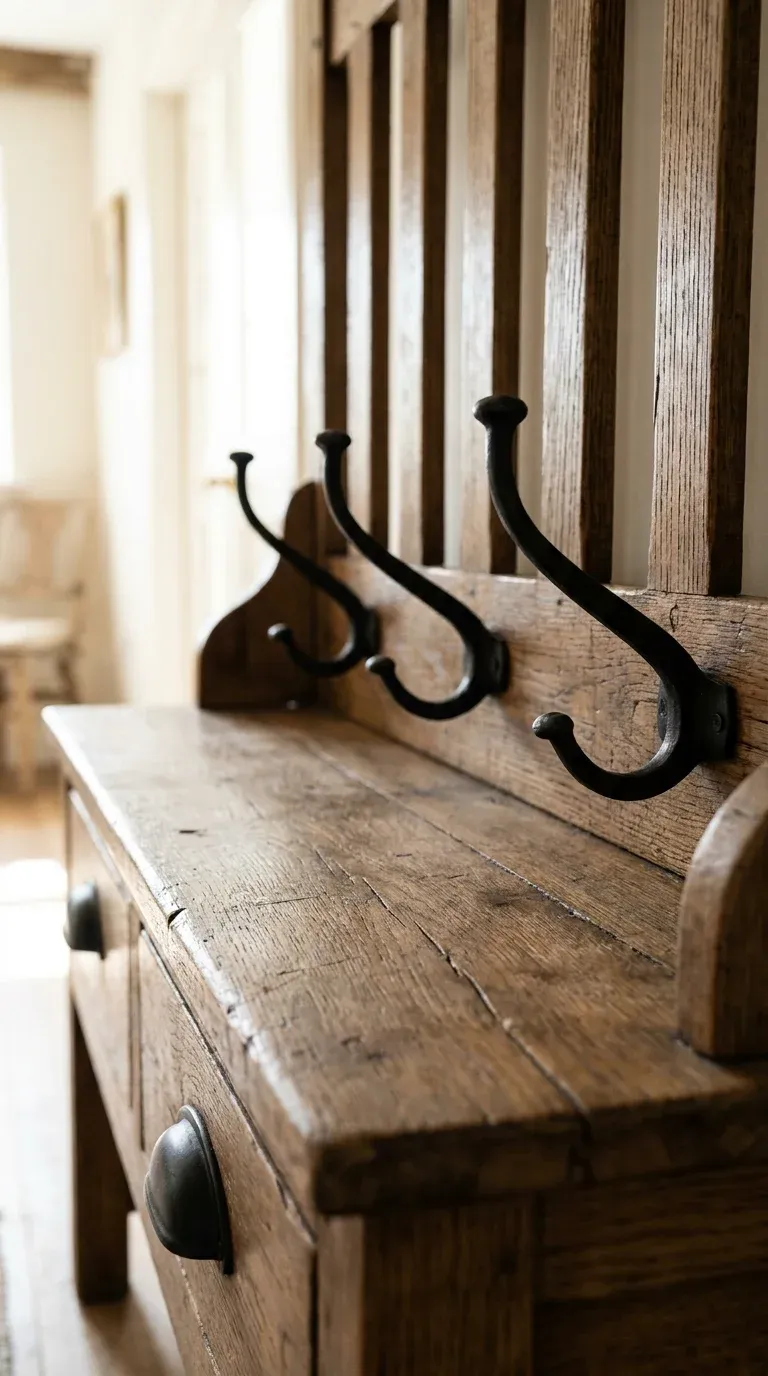
Close-up of matte black hardware on a weathered oak hall tree bench showing wood grain texture


Section 7: Maintenance, Wear Mitigation, and Longevity

Because your entryway deals with dirt, moisture, and daily use, a little routine maintenance will keep your hall tree looking great and performing safely for years.

Protecting the Seating Surface

The bench seat takes the brunt of daily wear. To protect it from scratches, water stains, and wear:

  • Apply a protective topcoat: If your bench is made of solid wood, apply a high-quality polyurethane or polycrylic clear coat to create a water-resistant seal.
  • Use a bench cushion: A custom-fit cushion made with outdoor-rated, moisture-resistant fabric (like Sunbrella) adds comfort and protects the wood underneath from scratches.
  • Clean up water quickly: Wipe up pooled water from wet umbrellas or raincoats immediately to prevent the wood or laminate from warping.

Seasonal Hardware Inspections

The daily vibration of sitting on the bench and hanging heavy bags will eventually loosen screws and fasteners.

  • Every six months: Check all connection bolts and cam-locks, and tighten any that have worked loose.
  • Inspect the wall anchor: Make sure the anti-tip cable or strap is still tight and securely anchored to the wall.
  • Check the hooks: Tighten hook mounting screws to prevent them from wobbling and stripping out the wood backing.

Applying clear wax to a heavily used hall tree seat to restore its water-resistant finish


Section 8: Comprehensive FAQ

Q1: How much weight can a hall tree bench typically hold?

Answer: Weight capacity varies depending on construction. Budget units made from thin particleboard or slim metal tubing usually support around 150 to 200 lbs. High-quality engineered wood or solid wood benches generally hold 250 to 300 lbs. Premium, solid-hardwood units with reinforced steel frames can support up to 400 lbs. Always check the manufacturer’s specs and look for center support legs, which help distribute weight evenly.

Q2: Can I cut the back panel of a hall tree to fit around a wall outlet?

Answer: Yes, but only if the back panel is non-structural. Thin beadboard sheets or fiberboard panels (usually 3mm thick) can be cut with a jigsaw or hole saw to expose wall outlets or light switches. However, do not cut into the main structural frame, vertical support columns, or load-bearing wood panels, as this will compromise the stability and safety of the unit.

Q3: How do I prevent wet boots from ruining the bottom shelves?

Answer: Standard wood, MDF, and laminate shelves will eventually warp if wet boots sit on them. To protect your shelves:

  • Slide heavy-duty plastic or rubber boot trays onto the shelves to catch water and mud.
  • Choose a hall tree with open metal wire shelves for the bottom racks, which allow water to drain and improve airflow.
  • Apply a clear silicone water-repellent sealant to all exposed seams on laminated or veneered shelves to block moisture.

Q4: Are wall-anchoring straps safe if I have drywall and no studs?

Answer: No. Standard plastic drywall self-drilling anchors can easily pull out under the dynamic force of a tipping hall tree. If there are no wood or metal studs where you want to mount your unit, you must use heavy-duty toggle bolts (butterfly anchors) rated for at least 100 lbs of pull-out force. For the safest installation, we always recommend adjusting the position of the hall tree so it can be screwed directly into a wall stud.

Q5: How do I choose between open shoe shelves and closed storage drawers?

Answer: It comes down to your priorities:

  • Choose open shelves if you live in a wet or snowy climate. Open wire or wood slat shelves provide maximum airflow, helping wet shoes dry faster and preventing musty odors.
  • Choose closed drawers or flip-top benches if you want to hide clutter and prefer a clean, organized look. Closed storage is perfect for dry shoes, sports gear, dog leashes, and seasonal accessories.

Q6: Can I assemble a hall tree on my own?

Answer: While most ready-to-assemble (RTA) hall trees can be built by one person, we recommend having a second person help. This is especially true when it is time to lift the heavy upper frame onto the bench base and when securing the completed unit to the wall studs. Having an extra set of hands makes it much easier to keep the frame level and aligned during the process.


The Verdict: Finding Your Perfect Entryway Match

Selecting the best hall tree with bench seating is all about finding the right balance of material durability, structural safety, and spatial planning.

Before making a purchase, consult our comprehensive hall tree buying guide for a detailed look at structural layouts, and measure your entryway carefully to ensure a perfect fit.

By choosing a model with high-quality materials, solid joinery, and a reliable wall anchor, you will transform your busy entryway into an organized, welcoming, and highly functional space.

Top Picks: Best Entryway Essentials

Editor's shortlist with verified ratings. Prices and availability below — clicking an Amazon link earns us a small commission at no extra cost to you.

# Product Rating Reviews Tag Check Price
1 Vasagle Industrial Entryway Bench 4.5 8,420 Top Pick View on Amazon
2 Crosley Furniture Seaside Hall Tree 4.5 5,410 View on Amazon
3 Seville Classics 12-Pair Shoe Rack 4.5 6,420 Best Storage View on Amazon
4 Franklin Brass Wall Hooks (5-Pack) 4.5 9,820 View on Amazon
5 Simplihome Artisan Solid Wood Bench 4.5 3,127 Editor's Pick View on Amazon

Affiliate disclosure: As an Amazon Associate we earn from qualifying purchases. Tag: entreyway-20 — change in src/data/topPicks.ts.

Enjoyed this guide? Share it!

Share: