
Beyond the Box: Why Stepped-Depth Mudroom Lockers are the 2026 Storage Essential
Discover why uniform lockers are out and stepped-depth designs are the 2026 standard. We break down the ergonomics, aesthetics, and build details of this high-end entryway shift.
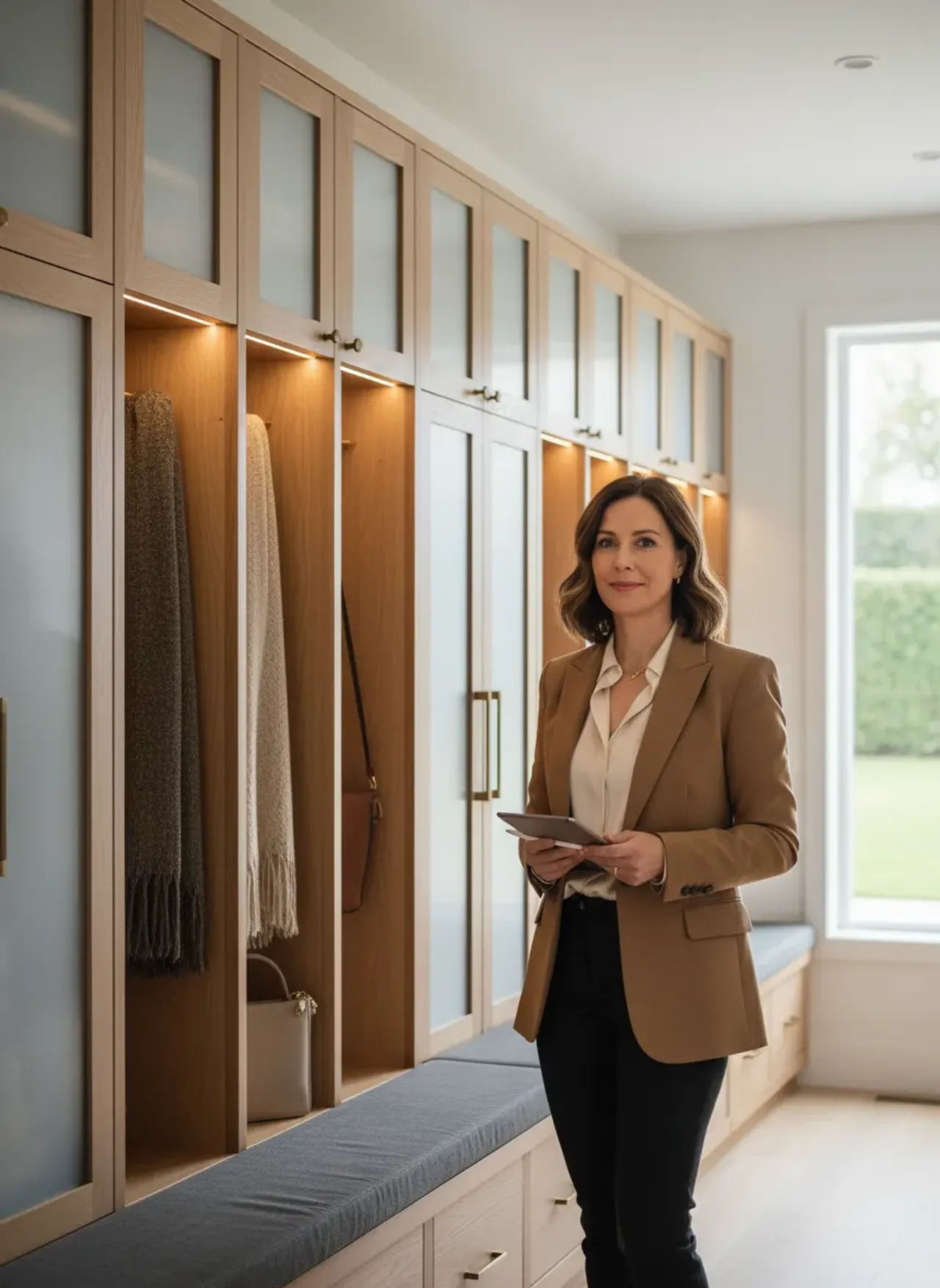
Feb 26, 2026 - Written by: Linda Wise

You know that feeling when you walk into a beautifully photographed mudroom, but something feels… oppressive? It’s subtle. The cabinetry is gorgeous, the paint color is trendy, but the space feels like a canyon. You sit on the bench to tie your shoes, and you instinctively hunch forward because a heavy, 24-inch deep cabinet is looming directly over your head.
For years, the “wall of lockers” has been the gold standard in entryway design. Floor-to-ceiling, uniform depth, massive storage capacity. But as we barrel toward 2026, I’ve noticed a definitive shift in high-end millwork that is trickling down to DIY renovations and semi-custom builds.
We are moving away from the monolith.
The future of functional entryways is the Stepped-Depth Locker. This isn’t just an aesthetic tweak; it’s an ergonomic correction that solves the biggest complaints homeowners have about their mudrooms, even if they couldn’t previously articulate them.
If you are planning a build or a remodel, you need to understand why varying your depths is the secret to a space that feels as expensive as it looks.

The Anatomy of a Stepped-Depth Design
Let’s strip away the jargon and look at the geometry. In a standard “big box” locker setup, the bench, the coat hook section, and the upper cubbies are all the same depth—typically around 18 to 22 inches.
A stepped-depth design breaks this vertical plane.
Usually, this involves a deep base (the bench section) generally set at 20–24 inches deep, paired with a significantly shallower upper section (the lockers and upper cubbies), usually set at 12–14 inches deep.
The Visual Relief Factor
The immediate impact is visual weight. When you have a solid 22-inch deep cabinet running from floor to ceiling, it sucks the air out of a narrow hallway or laundry room. It creates a tunnel effect.
By stepping the upper section back by 8 to 10 inches, you reclaim that airspace. The room instantly feels wider. The cabinetry looks less like a row of gym lockers and more like a piece of bespoke furniture, reminiscent of a traditional hutch or a Welsh dresser. It adds architectural interest by creating shadow lines and depth variations that a flat facade simply cannot offer.
The “Lean Back” Test
This is where the rubber meets the road. I can’t tell you how many clients I’ve worked with who hate their expensive custom mudrooms for one simple reason: they can’t sit comfortably.
Pro Tip: If your upper cabinets are the same depth as your bench, you cannot lean back. You are forced to perch on the edge of the seat like a bird on a wire.
With a stepped design, the upper cabinetry is recessed. This leaves you with visible “headroom” above the bench. You can sit down, lean back against the beadboard or paneling, and put your boots on without fear of concussing yourself on the cabinet above. It transforms the bench from a decorative shelf into actual, usable seating.
Mastering the Dimensions: 2026 Standards
Getting the proportions right is a game of millimeters. If the step is too shallow, it looks like a mistake. If it’s too deep, you lose functional storage in the uppers.
I usually adhere to a “Golden Ratio” for mudrooms. If your base bench is 22 inches deep (which is ideal for hiding large baskets or shoe drawers underneath), your uppers should ideally be 13 inches deep.
Why 13 inches? Because standard dinner plates are 11-12 inches, and while you aren’t storing china in the mudroom, standard bins and organization cubes often follow kitchen sizing standards. A 13-inch depth ensures you can still fit standard organization bins without them hanging over the edge.
However, getting these numbers to align with your specific ceiling height and room width requires a solid grasp of standard depth and height measurements to ensure the transition points hit the right visual markers.
The Open Hook Debate
One of the key drivers for this trend is the resurgence of visible storage. For a decade, we wanted everything hidden behind doors. Now, we want “curated clutter.”
In a deep, uniform locker, hooks are often buried 22 inches back in a dark cave. You practically have to crawl inside to retrieve a jacket. In a stepped-depth design, the hooks are mounted on the back panel, but because the side panels (if you have them) or the upper cabinets are shallower, the light hits the hooks. They are accessible.
If you are going for this open look, the hardware becomes jewelry. You don’t want cheap, bendable zinc. I’ve installed the Amerock Monument Hook in three recent projects because the heavy, geometric lines complement the architectural step of the cabinetry perfectly. They hold the weight of a damp wool coat without flinching.
Constructing the Transition
Here is where DIYers often panic, and where professionals earn their keep. How do you handle the transition where the deep bench meets the shallow upper?
You have two main aesthetic paths here: The “Countertop” Approach or the “Tower” Approach.
The “Countertop” Approach
This is the most common for 2026. You install a solid surface—be it butcher block, quartz, or painted MDF—on top of the deep base cabinets. This creates a functional shelf or “deck” behind the seating area.
The shallow upper cabinets then sit on top of this deck.
The beauty of this method is utility. That 8-10 inch strip of countertop that remains visible in front of the uppers becomes a drop zone. It’s the perfect place for phones, keys, or charging stations. It separates the “dirty” zone (shoes on the floor) from the “clean” zone (upper storage).
The “Tower” Approach
In this configuration, you might have tall, deep lockers on the far left and right ends (towers) to frame the unit, with the stepped-depth section occurring only in the middle.
This creates a cozy “nook” effect. It’s brilliant for breaking up a long wall. The towers provide the deep storage needed for bulky items like vacuum cleaners or hockey bags, while the center stepped section offers the ergonomic seating benefits.
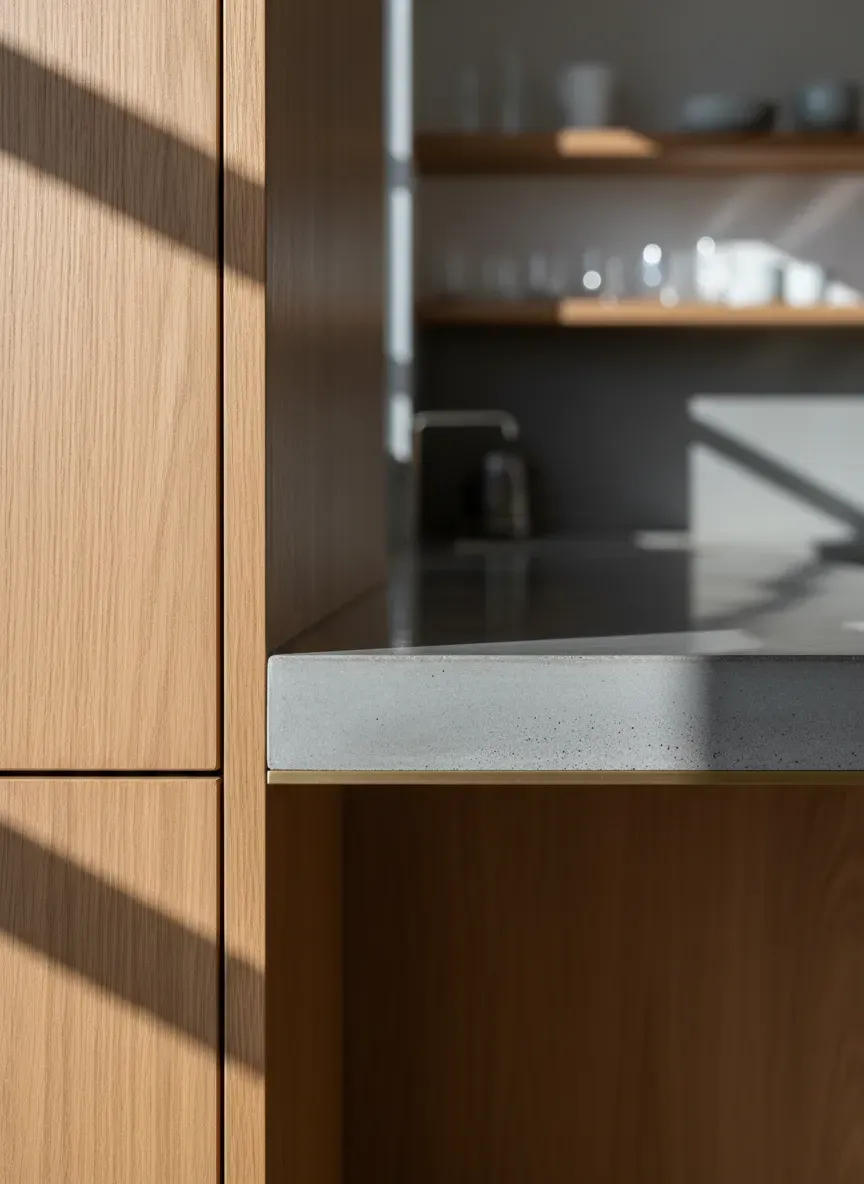
Lighting: The Secret Weapon of Stepped Design
Because you have created a physical overhang (the upper cabinets) and a recessed back plane, you have accidentally created the perfect lighting scenario.
In a flat, floor-to-ceiling locker, there is nowhere to hide lights that will effectively illuminate the bench. But with stepped-depth, the underside of the upper cabinet is the perfect spot for puck lights or LED tape.
This isn’t just about finding your keys. It’s about ambiance. A mudroom is often the first thing you see when you come home. Having a soft, warm glow washing down the back panel changes the mood of the entire house.
For a seamless look without hiring an electrician to run new hardwiring, I often recommend the Wobane Under Cabinet Lighting Kit. It’s surprisingly robust for a plug-in system, and the color temperature is warm enough to avoid that sterile “operating room” feel.
Materiality and the “Bespoke” Look
The 2026 aesthetic is textured. We are seeing a move away from stark white melamine and toward rich woods, two-tone paint jobs, and mixed metals.
Stepped-depth lockers lend themselves beautifully to two-tone designs.
- The Bench: Paint it a dark, grounding color (Charcoal, Navy, Forest Green) or use a natural stained wood like White Oak or Walnut.
- The Uppers: Keep them lighter or match the wall color to make them recede even further visually.
This visual trick enhances the “step” effect. It makes the base feel like a solid foundation and the uppers feel airy.
Handling the Crown Molding
This is a specific technical detail that trips people up. If your uppers are shallower than your lowers, and you have tall “towers” on the sides, your crown molding path becomes complex.
You have to wrap the molding around the corners of the deep towers and back against the wall or across the shallow uppers. This “jog” in the molding is a hallmark of high-end carpentry. It looks expensive because it is harder to do. It requires precise miter cuts and a good understanding of geometry. But the result is a ceiling line that has rhythm and interest, rather than a flat, boring stripe.
The Organization Strategy
A shallower upper cabinet (12-14 inches) changes how you organize. You can no longer throw a sleeping bag up there and hope for the best. These spaces become prime real estate for seasonal rotation.
Because the depth is reduced, things don’t get lost in the back. It is the perfect depth for single-row bin storage.
Key Takeaways for Shallow Storage:
- Visibility: You can see everything at a glance.
- Accessibility: Easier to reach the back of the shelf without a step stool.
- Constraint: Prevents hoarding of items you never use.
To maximize this vertical space, you need rigid, square-sided baskets. Soft, round baskets waste the corners. I’ve had great success organizing these narrower shelves with Granosi Wire Storage Baskets. They are sturdy enough to slide in and out without scratching the paint, and the wire mesh allows you to see what’s inside without it looking messy.
Addressing the “Gap” Anxiety
One question I hear constantly when pitching this design: “Won’t the ledge behind the bench just collect dust and junk?”
Yes. It will.
But let’s be real—every flat surface in your home collects dust. The trade-off is functionality. That ledge allows for the “lean back.” It allows for the visual break. And frankly, a quick swipe with a duster once a week is a small price to pay for a mudroom that doesn’t feel like a locker room at a public pool.
If you are truly terrified of the dust ledge, you can use a steeper angle or a “chamfered” transition, but this often looks dated and weirdly commercial. Embrace the ledge. Style it with a few sturdy items or leave it clear for the daily mail drop.
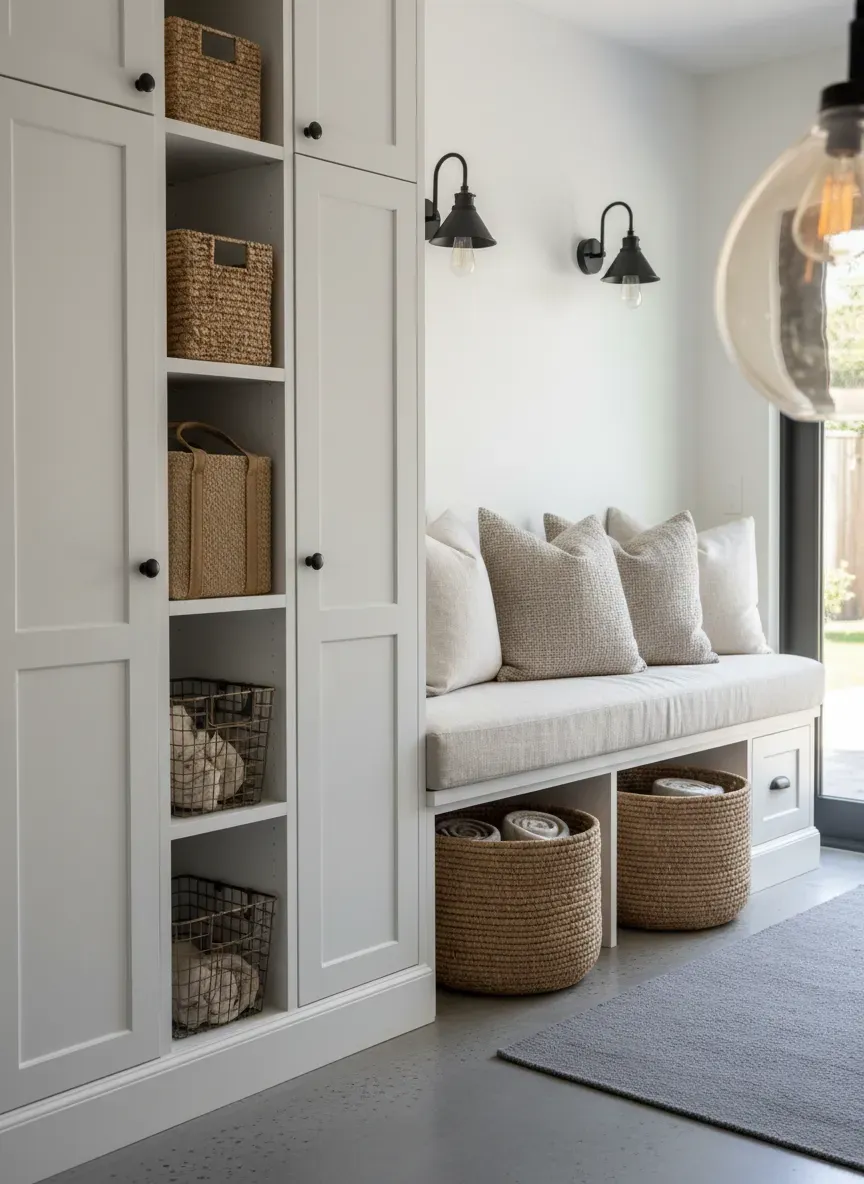
Future-Proofing and Resale Value
We have to talk about the market. Real estate trends are favoring homes that feel “custom” over homes that feel “flipped.”
A standard, flat-pack mudroom locker system screams “I bought this online and screwed it to the wall.” A stepped-depth system, because of the necessary trim work and countertop integration, implies “This was built for this house.”
That perception of permanence adds value. It signals to a buyer that the home was thoughtfully designed, not just patched together. As we look toward 2026, buyers are becoming more sophisticated. They recognize the difference between millwork and furniture. Stepped-depth lockers bridge that gap perfectly.
The Bottom Line: The era of the monolithic storage wall is fading. We are entering a phase of design where ergonomics and aesthetics are finally shaking hands. By stepping back your upper cabinets, you gain visual space, physical comfort, and a design feature that elevates the humble mudroom into a genuine architectural asset.
Don’t be afraid to mix your depths. Your forehead (and your resale value) will thank you.