
Beyond Shabby Chic: The Rise of the Architectural Minimalist Farmhouse Bench
Forget distressed paint. Discover why architectural lines and honest materials are defining the new era of farmhouse benches.
Feb 22, 2026 - Written by: Linda Wise

Put down the sandpaper and step away from the chalk paint.
For the better part of a decade, “Farmhouse” style was synonymous with artificial aging. We spent weekends distressing perfectly good lumber to make it look like it survived a century in a barn, covering everything in layers of whitewash until the wood’s soul was suffocated. It was cozy, sure, but it was also chaotic. It was visual noise.
But the winds have shifted. If you’ve been tracking high-end interior design portfolios or scrolling through the feeds of architects who actually live in the countryside, you’ve likely noticed a distinct pivot. The clutter is gone. The chipped paint is history.
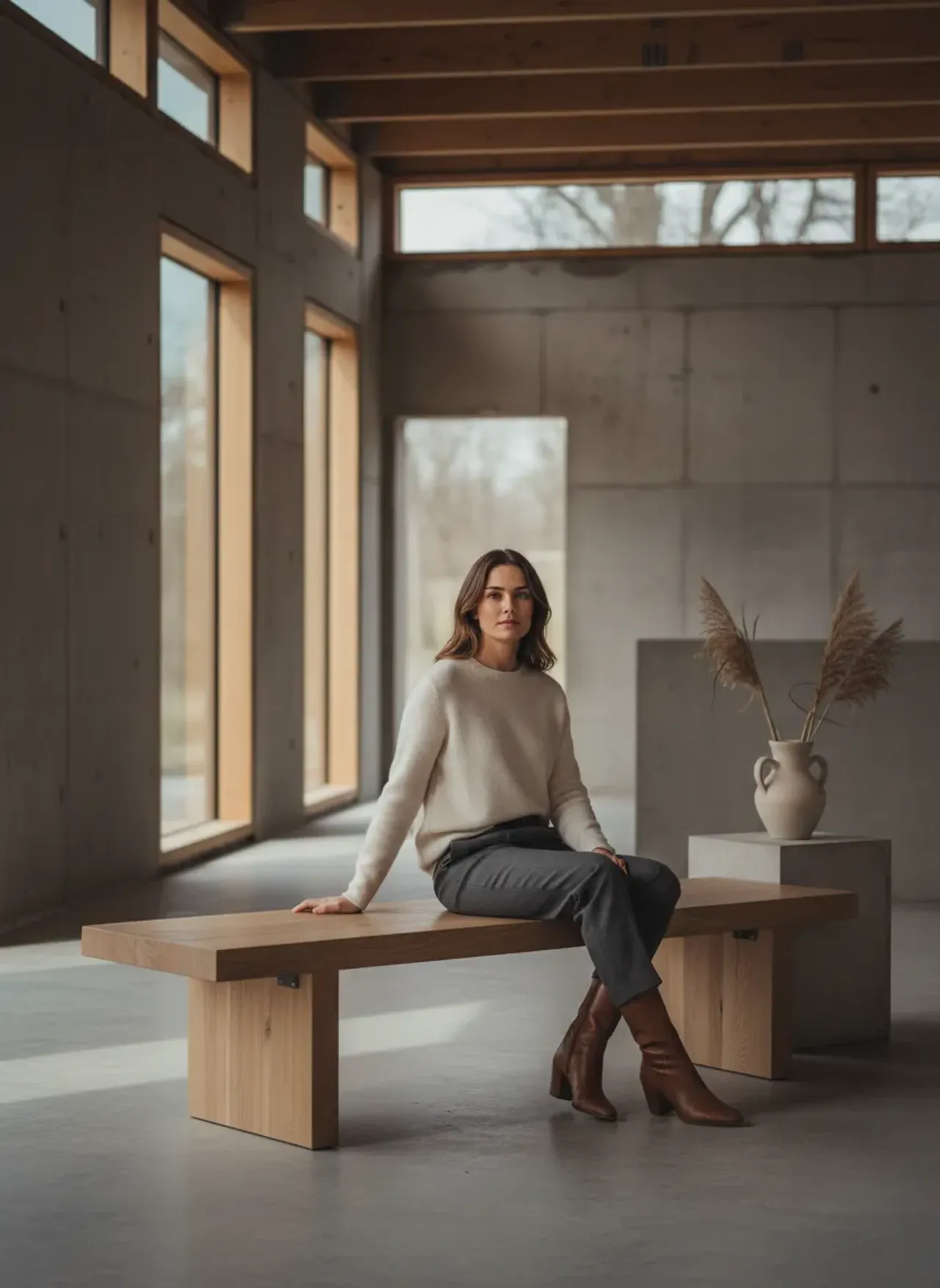
We are witnessing the rise of the Architectural Minimalist Farmhouse Bench. This isn’t about looking old; it’s about looking honest. It’s a design philosophy that prioritizes structural integrity, raw materials, and rectilinear forms over decorative fluff. It borrows the warmth of the farm but applies the discipline of modernism.
I’m going to walk you through exactly why this shift is happening, how to identify true architectural quality, and how to integrate this sophisticated aesthetic into your home without it feeling cold.
The Evolution: Why We Ditched the Distressed
To understand where we are going, we have to acknowledge where we’ve been. The Shabby Chic movement was a reaction to the sterile, glossy interiors of the early 2000s. We craved texture. We wanted homes that felt lived-in. But eventually, the pendulum swung too far. The “lived-in” look became synonymous with “falling apart.”
The fatigue set in around 2018. Homeowners realized that fake patina is just that—fake.
The Shift to “Honest” Materials
The Architectural Minimalist movement is grounded in what I call “material honesty.” If a bench is made of White Oak, let it look like White Oak. Don’t stain it to look like Walnut, and certainly don’t paint it teal and sand the edges.
This new wave of farmhouse benches relies on the inherent beauty of the grain. We are seeing matte sealers that protect the wood without adding an artificial sheen. The luxury is in the tactility of the material, not the ornamentation.
Pro Tip: When shopping for this aesthetic, look for descriptions like “unfiltered,” “matte clear coat,” or “raw finish.” If the product description boasts about a “distressed antique finish,” you’re looking at yesterday’s trend.
Deconstructing the Look: Anatomy of the New Farmhouse Bench
So, what does this actually look like? If you strip away the turned legs and the heart cutouts, what is left?
1. The Monolithic Silhouette
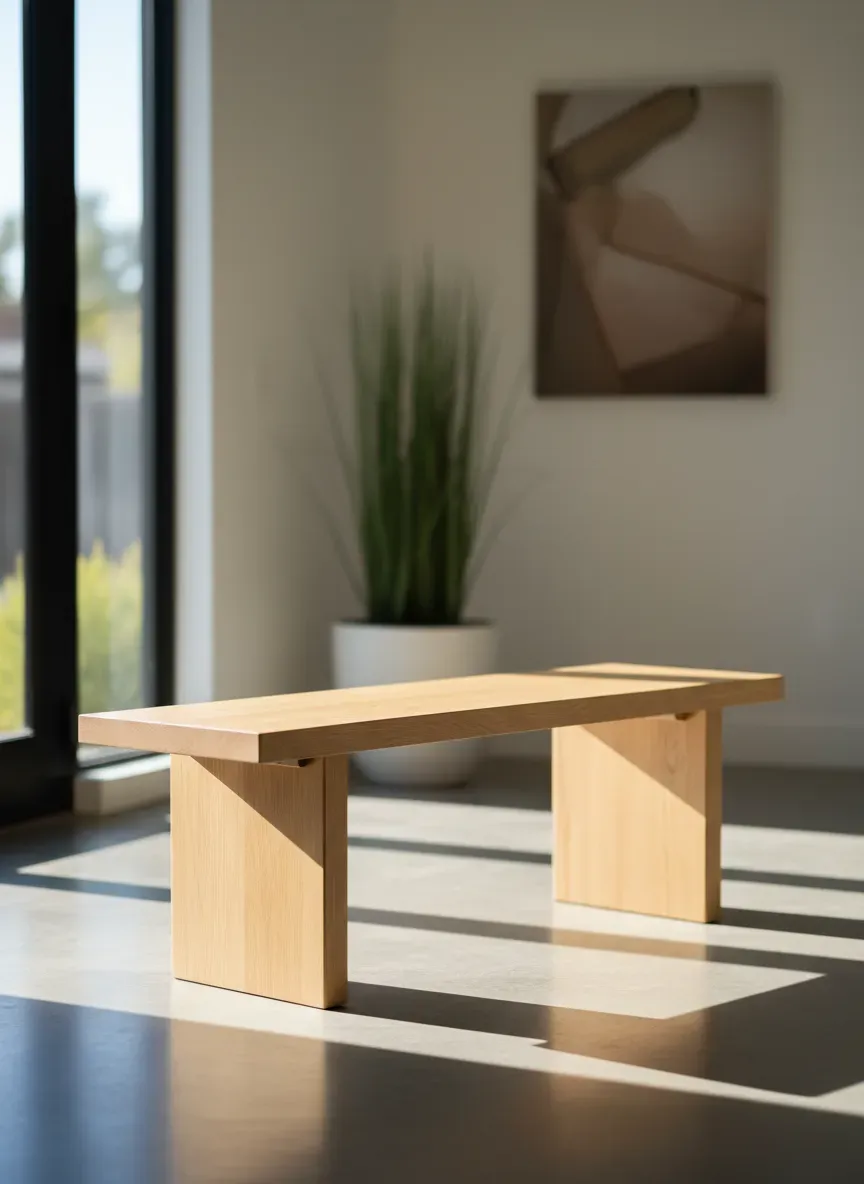
The defining characteristic of the architectural bench is weight. These pieces often feature “waterfall” edges (where the grain flows continuously from the top down the side) or chunky, block legs that sit flush with the corners of the seat.
It creates a sense of permanence. When you place a bench like this in an entryway, it acts as an anchor. It grounds the space.
2. Joinery as Decor
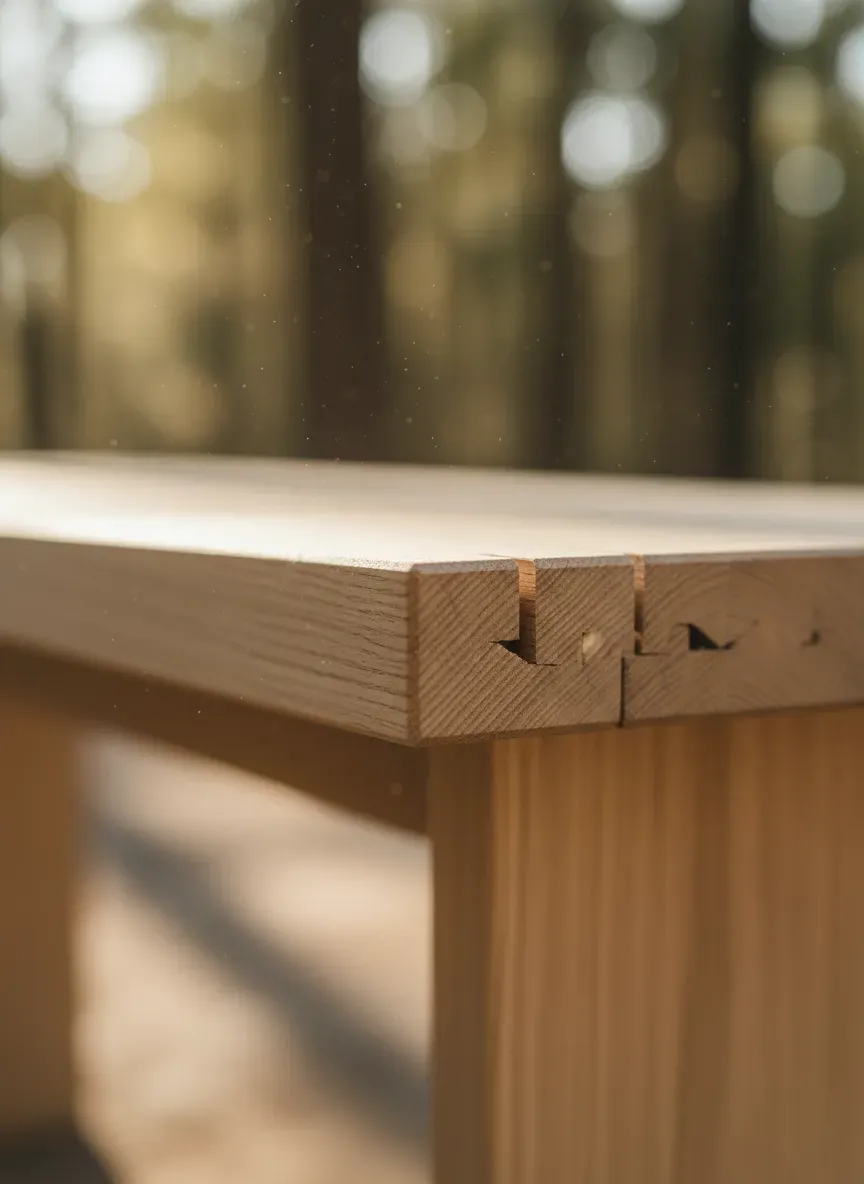
In the absence of carving, the construction method becomes the decoration. You’ll notice exposed through-tenons, dovetail keys on the corners, or visible box joints. This is a celebration of craftsmanship. It tells the viewer, “A human made this, and they did it well.”
3. Negative Space
Shabby Chic cluttered the eye. Architectural Minimalism guides it. These benches often have open bottoms—no lower shelves cluttered with mismatched shoes. The open space beneath the bench is just as important as the wood itself. It allows light to travel through the room, making tight hallways feel expansive rather than claustrophobic.
If you are dealing with a particularly narrow area, finding solutions for tight vestibules that maintain this open, airy feel is critical to nailing the look.
The Mid-Century Intersection
Here is the real kicker: The new farmhouse aesthetic is actually the love child of American rural design and Mid-Century Modernism.
Designers like Amber Lewis and Shea McGee have popularized this blend. They take the warmth of the farm—the organic textures, the neutral palettes—and apply mid-century design principles regarding leg tapers and low profiles.
The Japandi Influence
We cannot talk about minimalism without nodding to “Japandi” (Japan + Scandi). The Architectural Farmhouse bench fits perfectly here. It shares the Japanese appreciation for imperfection (Wabi-Sabi)—not the fake imperfection of chipped paint, but the natural imperfection of a knot in the wood or a variation in the grain pattern.
If you want the best experience blending these styles, I highly recommend checking out the Poly and Bark Napa Bench. It captures that low-profile, high-texture aesthetic perfectly without drifting into “retro” territory.
Sourcing and Sustainability: The Wood Matters
I’ve personally found that the species of wood dictates the vibe more than the shape of the furniture. In the Shabby Chic era, Pine was king because it was cheap and easy to distress.
For the Architectural Minimalist look, we are graduating to hardwoods.
- White Oak: The gold standard. It has a tight grain and a neutral, slightly grey-brown tone that fits modern palettes.
- Walnut: For a moodier, more masculine entryway.
- Ash: A fantastic, durable alternative to Oak that takes matte finishes beautifully.
Identifying Quality
Because the design is simple, there is nowhere for poor quality to hide. A wobbly leg or a bad veneer stands out like a sore thumb.
Key Takeaways for Assessing Quality:
- Check the Weight: Solid hardwood is heavy. If you lift one end and it flies up, it’s likely hollow core or particle board with a veneer.
- Look Underneath: Flip the bench (or look at underside photos). Are there corner blocks reinforcing the legs?
- The Knock Test: Rap your knuckles on the center of the seat. A dull thud indicates solidity; a hollow ring indicates cheap construction.
For a piece that balances accessibility with that solid wood feel, take a look at the Signature Design by Ashley Kisper Bench. It offers that clean, architectural line without the custom-furniture price tag.
Practical Application in the Entryway
Theory is great, but you have to live with this furniture. The entryway is a high-traffic combat zone of mud, backpacks, and groceries.
Function Meets Form
The challenge with minimalism is that it often strips away utility. A sleek bench with no shelf looks great, but where do the shoes go?
The solution is “contained chaos.” Instead of open shelves where clutter is visible, the Architectural Farmhouse approach pairs the bench with large, structural baskets. We are talking oversized woven seagrass or stiff felt bins that slide completely underneath.
This maintains the clean lines of the bench while hiding the mess. If you have a larger family and need serious organization, you might need to look into comprehensive farmhouse storage strategies that incorporate hidden compartments or lift-top functionality without sacrificing the silhouette.
Styling the “Stark” Bench
A block of wood can look severe. Softening it is an art form.
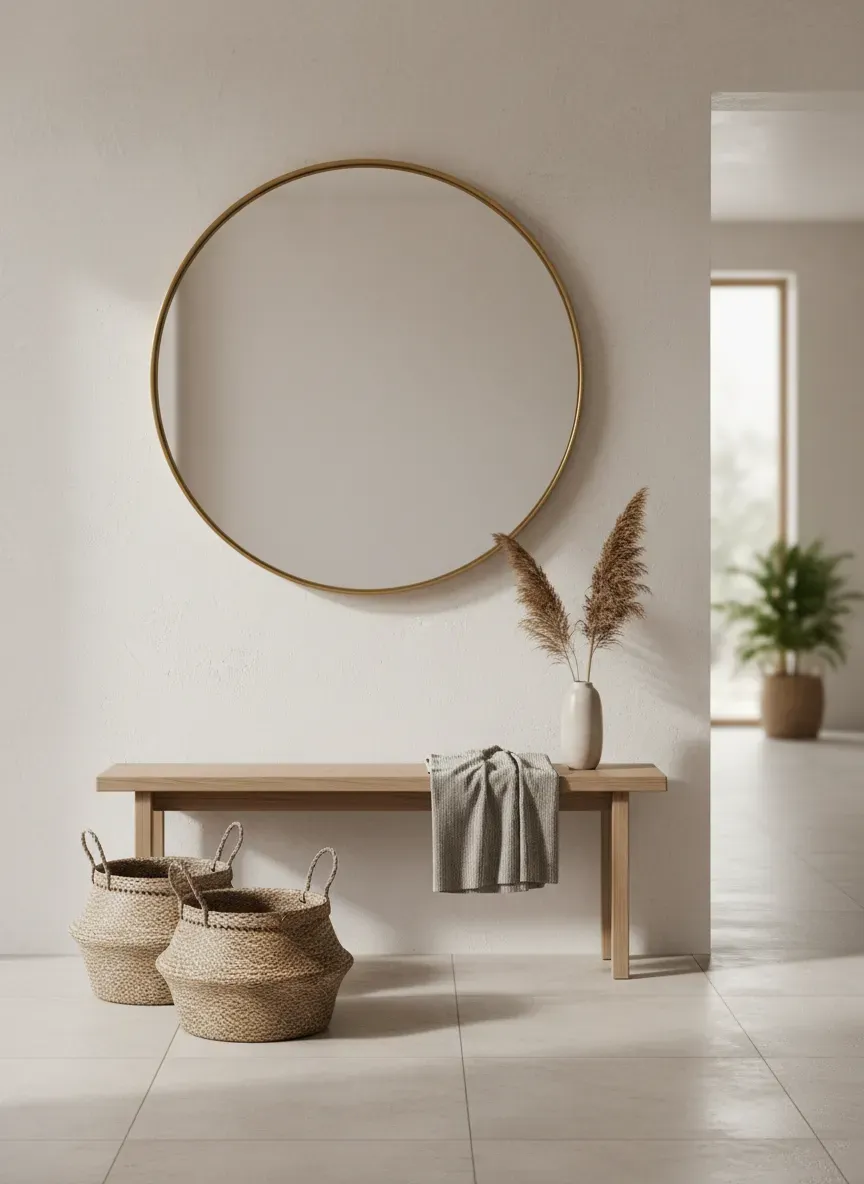
- Textiles: Drape a sheepskin or a heavy knit throw over one third of the bench. Asymmetry is key here.
- Wall Anchors: Because the bench is low and horizontal, you need verticality above it. A large round mirror or an oversized piece of abstract art connects the bench to the rest of the room.
- Organic Elements: A tall ceramic vase with dried branches (not faux flowers) sitting next to the bench bridges the gap between the floor and the seat.
Pro Tip: Avoid matching sets. Your bench should not match your coat rack, which should not match your mirror frame. Curate, don’t catalog.
Avoiding Design Pitfalls
I see people get this wrong all the time. They buy the right bench, but the context kills it.
The “Too Matchy-Matchy” Trap
I alluded to this above, but it bears repeating. If your floors are White Oak and your bench is White Oak and your console table is White Oak, your room will look like a lumber yard.
You need contrast. If you have light floors, go for a Walnut bench or a black-stained oak bench. If you have dark floors, a bleached oak bench provides necessary relief.
Ignoring Scale
An architectural bench is usually visually heavy. If you place it under a tiny piece of art or next to a spindly coat rack, the scale will feel off. The bench will look like a bully in the room. Pair substantial furniture with substantial decor.
To help manage the visual weight under the bench, I recommend using the GoodPick Woven Rope Basket. The texture softens the hard lines of the wood, and they are pliable enough to stuff with pillows or shoes.
Future Forecasting: Is This a Fad?
It is fair to ask if we will look back on Architectural Minimalism with the same cringe we now have for “Live Laugh Love” signs.
I don’t believe so. Here is why: It is rooted in the fundamentals of design.
Trends that rely on superficial decoration (like distressing or heavy patterns) tend to age poorly because they are tied to a specific moment in fashion. Trends that rely on proportion, quality materials, and simple geometry tend to become classics. Think of the Eames Chair or the Shaker cabinet. They persist because they make sense.
This shift toward the architectural bench represents a maturation of the American aesthetic. We are moving away from the fast-fashion equivalent of furniture toward pieces that can actually be handed down.
The Bottom Line
The Architectural Minimalist Farmhouse Bench is not just a seat; it is a statement of intent.
It says that you value quality over quantity. It says that you don’t need tricks or distressing to find beauty in wood. It is a cleaner, calmer way to welcome people into your home.
As you look to update your space, remember that the goal is not to recreate a farmhouse from 1900, nor a loft from 2020, but to create a space that feels timeless, grounded, and undeniably yours. Focus on the lines, invest in the wood, and let the architecture speak for itself.