
Breezy Coastal Mudrooms
Transform your chaotic entryway into a serene, sand-free sanctuary. Discover expert strategies for designing coastal mudrooms that blend utility with effortless seaside elegance.
Mar 29, 2026 · Linda Wise
15 min readThere is a specific, undeniable chaos that accompanies living near the water—or even just maintaining a household that loves the outdoors. Sand is relentless. It infiltrates the grooves of your favorite sneakers, hitches a ride on damp beach towels, and stubbornly disperses across your hardwood floors. Damp raincoats smell faintly of marsh and salt. Flip-flops multiply in shadowy corners.
You need a drop zone. But not just any sterile, utilitarian holding pen.
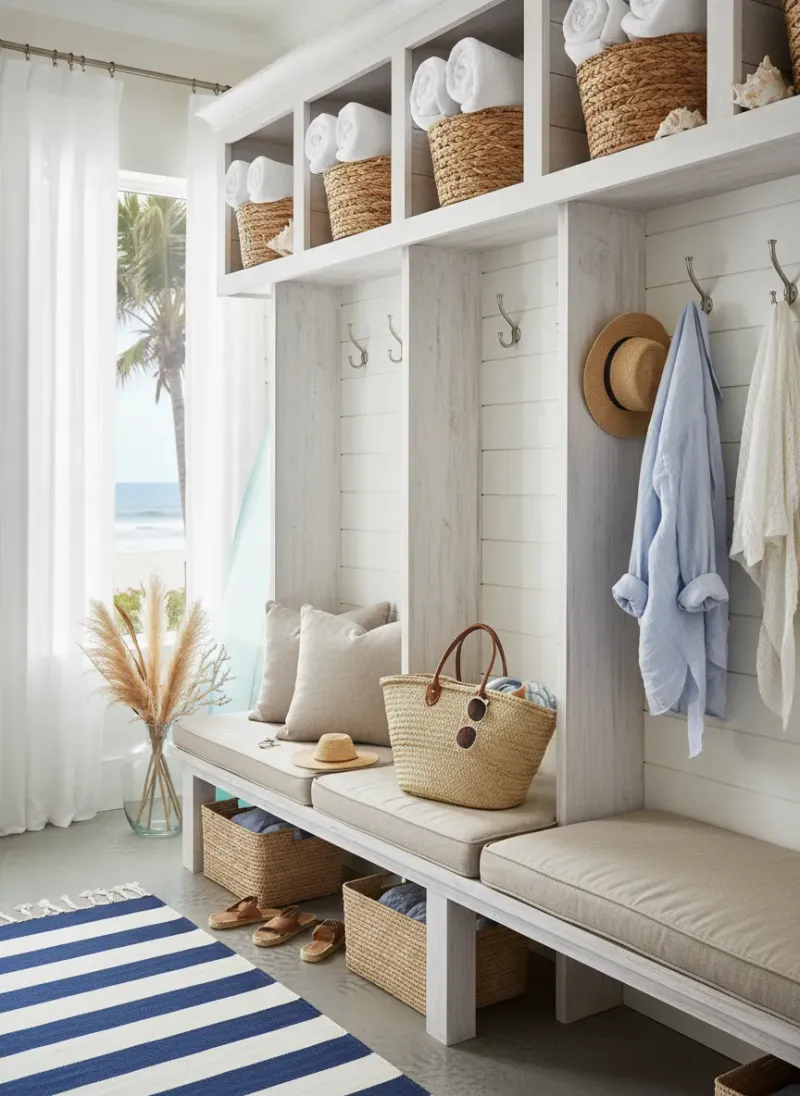
I’ve personally found that the most effective entryways don’t just capture clutter; they actively transition your psychological state from the wildness of the outdoors to the sanctuary of the home. That is the magic of breezy coastal mudrooms. By integrating beach-style cubbies into your architecture, you engineer a space that feels incredibly light and organic, yet functions like a highly disciplined maritime vessel.
Before we dissect the architectural nuances, material selections, and specific dimensions required to pull off this aesthetic, let’s establish a baseline of what actually works in the real world.
The Anatomy of the Coastal Aesthetic
When most people hear “coastal design,” they suffer traumatic flashbacks to 1990s beach house rentals. You know the look. Plaster starfish glued to picture frames, aggressive navy-and-white cabana stripes, and signs pointing “To The Beach.”
We are avoiding that theme-park trap entirely.
True coastal vernacular relies on texture, light, and a halcyon color palette. It mimics the natural environment rather than caricaturing it. The goal is biophilic continuity. When designing beach-style cubbies, the structure itself must evoke the weathered resilience of a boardwalk or the crisp, clean lines of a sailing yacht’s interior.
Material Selection: Weathering the Elements
A mudroom is a high-friction zone. If your entryway is actively intercepting wet bathing suits, muddy golden retrievers, and sandy boogie boards, delicate materials will fail spectacularly.
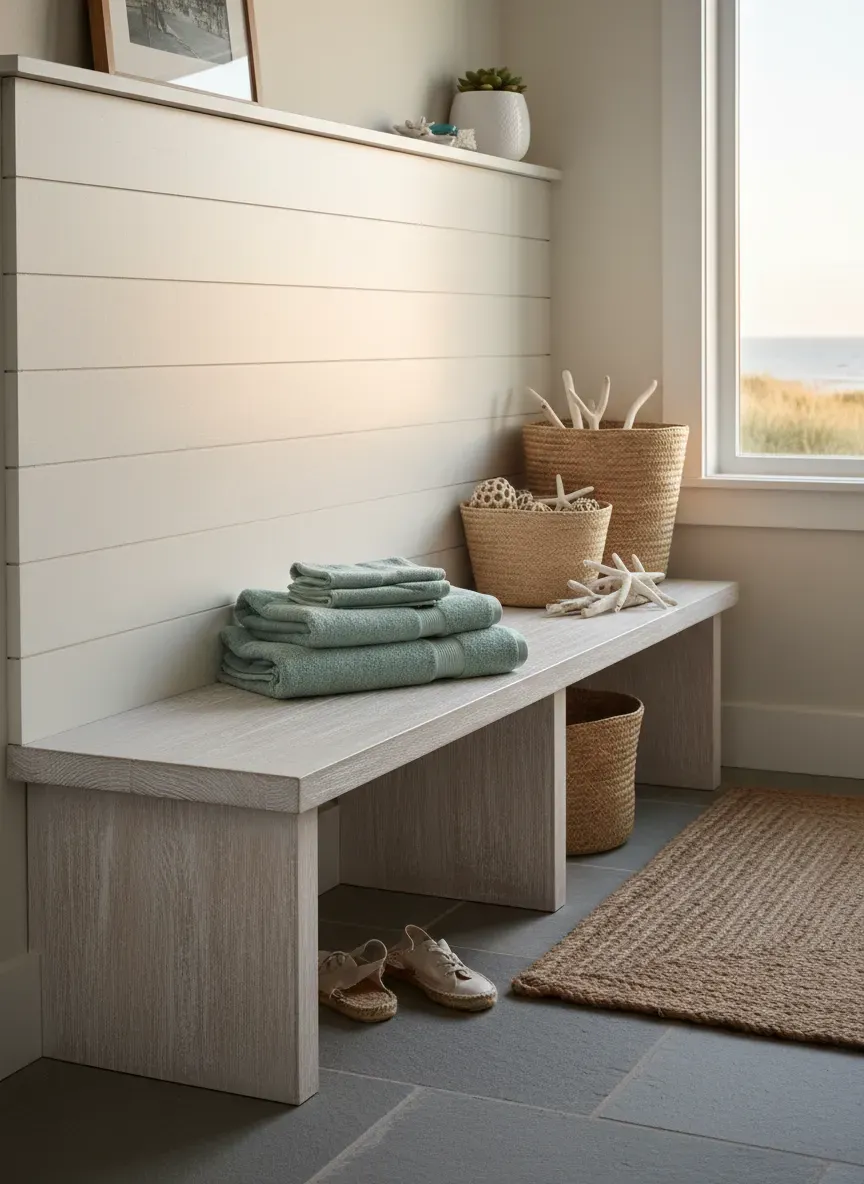
White Oak and Teak I heavily favor cerused white oak for seating surfaces in coastal mudrooms. The cerusing process (where wire brushes open the wood grain and white pigment is rubbed in) highlights the organic texture of the wood while hiding superficial scratches. Teak is another phenomenal, albeit pricier, option. Because of its high natural oil content, teak is hydroscopic and practically impervious to rot. If a wet towel sits on a teak bench overnight, you simply wipe it down the next morning.
Shiplap and Beadboard Backings The vertical backing behind your cubbies dictates the room’s entire visual rhythm. Standard drywall gets battered by heavy coats and backpacks. Installing a textured wood backing not only protects the wall but instantly injects that maritime flavor.
- V-Groove Beadboard: Offers a tighter, more traditional cottage feel.
- Nickel-Gap Shiplap: Provides clean, horizontal lines that visually widen a narrow hallway and feel slightly more modern.
If you’re tackling this from scratch, mastering the foundation is critical—I highly recommend looking into the mechanics of building a simple mudroom bench before framing out your vertical partitions. The bench acts as your structural anchor; everything else is built upward from that datum line.
Defining the Geometry: Cubby Dimensions and Flow
The biggest mistake DIYers and novice designers make is ignoring human ergonomics. A cubby that is too shallow becomes a dumping ground rather than an organizational tool. A bench that is too high cuts off circulation to the back of the thighs while you struggle to untie wet boots.
The Mathematics of Entry
Here is the real kicker about entryway geometry: millimeter precision matters.
- The Bench Height: Standard seating sits at 18 inches off the floor. However, in a mudroom, you must account for upholstery. I always frame my benches at 16.5 inches. Once you add a two-inch, outdoor-grade Sunbrella cushion, you hit that perfect ergonomic sweet spot.
- Shoe Cubbies: Keep the bottom cubbies at least 14 inches deep and 10 inches high. Anything shorter, and winter boots won’t fit. Anything shallower, and men’s sneakers will protrude into the walking path, creating a tripping hazard.
- Vertical Lockers: The individual vertical spaces for hanging coats should be a minimum of 18 inches wide. If you squeeze them to 15 inches to fit an extra cubby into the row, winter coats will bulge out, making the space look perpetually cluttered.
- Upper Baskets: Reserve the highest echelon of your built-in for seasonal storage. Cubbies perched 72 inches or higher are perfect for woven baskets holding winter scarves during the summer, or beach hats during the winter.
Pro Tip: Never build shoe cubbies directly on the floor. Always incorporate a 3-inch to 4-inch recessed toe-kick at the base of your mudroom unit. This allows you to stand flush against the bench while reaching for upper items without stubbing your toes.
Palette and Patina: Painting the Seaside Mudroom
Color psychology plays a massive role in how a space “feels.” To achieve that breezy, refreshing atmosphere, we need to manipulate light.
Beyond Basic White
While “Chantilly Lace” or “Simply White” are excellent default choices for coastal architecture, relying entirely on stark white can make a mudroom feel clinical. You want the space to feel like a deep exhale.
I prefer to ground the lower half of the cubbies with subdued, earthy tones drawn directly from the shoreline. Think about the color of wet sand, sea glass, or a foggy coastal morning.
- Faded Celadon: A highly desaturated green-blue that pairs beautifully with natural wicker.
- Driftwood Greige: A warm, taupe-heavy gray that hides dirt incredibly well.
- Navy’s Softer Cousin: Instead of harsh maritime navy, look toward slate blues or slate grays with blue undertones.
The Importance of Sheen
Paint sheen is a functional decision, not just an aesthetic one. Flat paint in a mudroom is a death sentence; you will spend your weekends scrubbing scuff marks with a magic eraser until you wear down to the primer.
Use a satin or semi-gloss finish for the cubbies and bench. For the ultimate durability, seek out a water-based alkyd urethane enamel. It applies like standard latex but cures to a hard, cabinet-grade finish that resists chipping from thrown keys or swinging backpack hardware.
Hardware: The Unsung Heroes of the Entryway
Hardware is the jewelry of your mudroom. It is also the primary point of physical interaction.
In a coastal environment (or one mimicking a coastal environment), you have to consider the oxidation of metals. Salty, humid air destroys cheap finishes in a single season.
Living Finishes vs. Lacquered Finishes A “living finish” is unlacquered metal—usually brass or copper—designed to oxidize, tarnish, and develop a unique patina over time based on the oils in your hands and the moisture in the air. Unlacquered brass hooks mounted on crisp white beadboard create an undeniably sophisticated nautical vibe. As the years pass, the brass dulls to a rich, burnished gold that looks historic and intentional.
If you despise tarnish and want your hardware to look identical on day one thousand as it did on day one, opt for brushed nickel or matte black powder-coated iron.
Hook Placement Strategy Do not skimp on hooks. A single double-prong hook per cubby is woefully inadequate. I use a staggered approach: one heavy-duty double hook on the back wall of the cubby for heavy coats, and two single hooks on the side panels for lighter items like dog leashes, tote bags, or hats.
Tackling Sand and Moisture: Flooring and Textiles
You can build the most stunning beach-style cubbies in the world, but if the floor beneath them is a slippery, rotting mess, the room is a failure.
Flooring Solutions
Solid hardwood floors are gorgeous, but they despise standing water. If your mudroom is the primary entrance from a pool or beach, wood will eventually cup, warp, or stain.
- Slate Tile: The absolute gold standard for mudrooms. Slate is naturally slip-resistant due to its cleft texture. A dark charcoal slate hides dirt, sand, and water spots effortlessly.
- Porcelain Wood-Look Planks: If you desperately want the continuous look of wood from your kitchen into your mudroom, use high-quality, rectified porcelain tile that mimics bleached oak. It offers the coastal aesthetic with zero anxiety about wet feet.
- Brick Pavers: Sliced brick laid in a herringbone pattern offers incredible traction and a rugged, historic coastal aesthetic that pairs beautifully with soft, breezy cabinetry.
Textiles and Rugs
The rug you choose acts as your first line of defense. It needs to act like a scrub brush for your shoes. Sisal, jute, and seagrass runners are visually perfect for a coastal mudroom. They bring incredible organic texture to the space. However, be warned: natural jute holds onto water and can mildew if left soaking wet.
If your entryway sees heavy water traffic, invest in a synthetic indoor/outdoor rug made from recycled PET (polyethylene terephthalate). Modern manufacturing has evolved so much that these plastic-bottle-derived rugs feel remarkably similar to natural wool or sisal, but you can literally drag them outside and hit them with a pressure washer when they get dirty.
Integrating Ready-Made Coastal Solutions
Custom built-ins are an investment of both time and capital. If you need an immediate drop-zone solution without ripping open drywall or firing up a table saw, several modular pieces can achieve this breezy aesthetic beautifully.
The Bush Furniture Salinas Hall Tree is a phenomenal anchor piece if you are working with a blank wall. Its slightly distressed finish and beadboard detailing bypass the sterile look of most flat-pack furniture. It offers vertical storage, a seating surface, and lower cubbies in a footprint that won’t overwhelm a narrow hallway. You can instantly elevate a piece like this by swapping out the factory hardware for heavy cast-iron or unlacquered brass hooks.
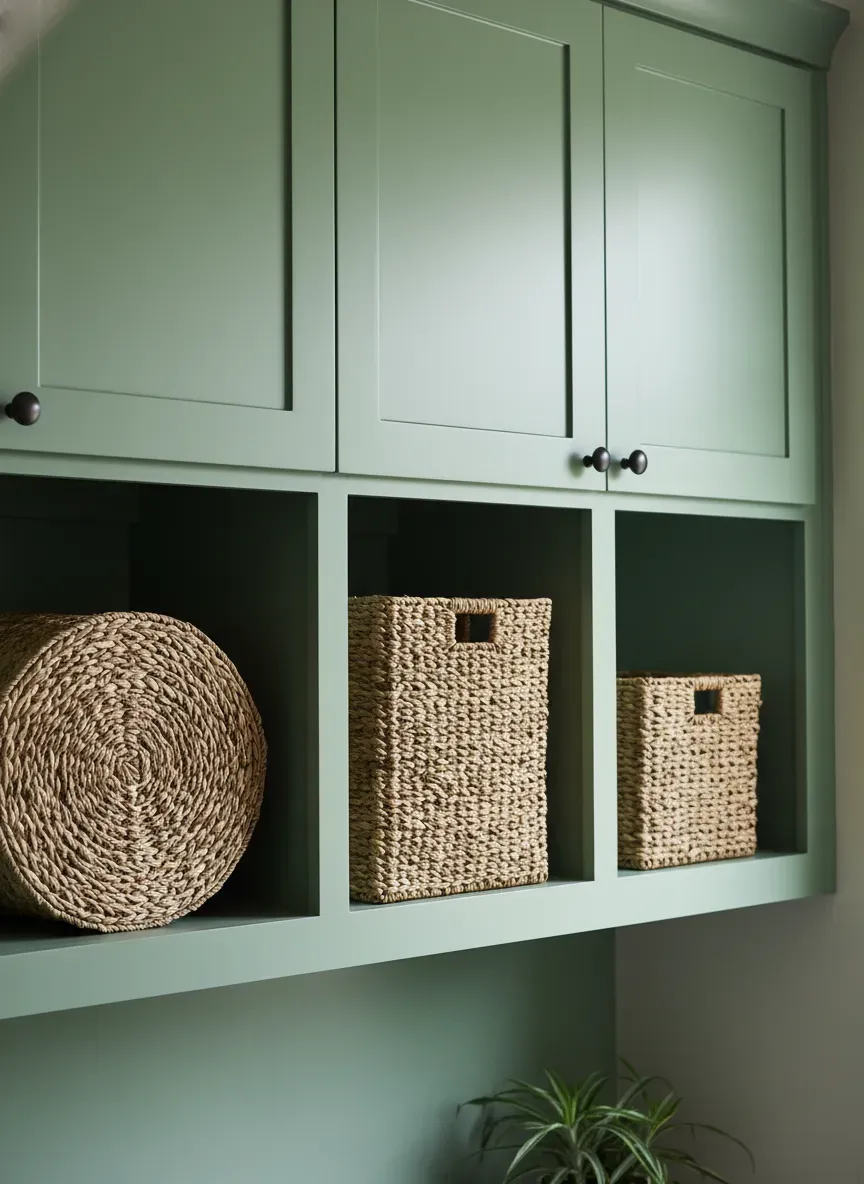
To manage the visual clutter inside open cubbies, you must use containment. Shoving loose flip-flops and sunscreen bottles into a hole looks messy, no matter how nice the woodwork is. I rely heavily on Household Essentials Wicker Baskets. The woven water hyacinth brings that crucial tactile, natural element into the space. They fit perfectly into standard cubby dimensions and hide a multitude of sins.
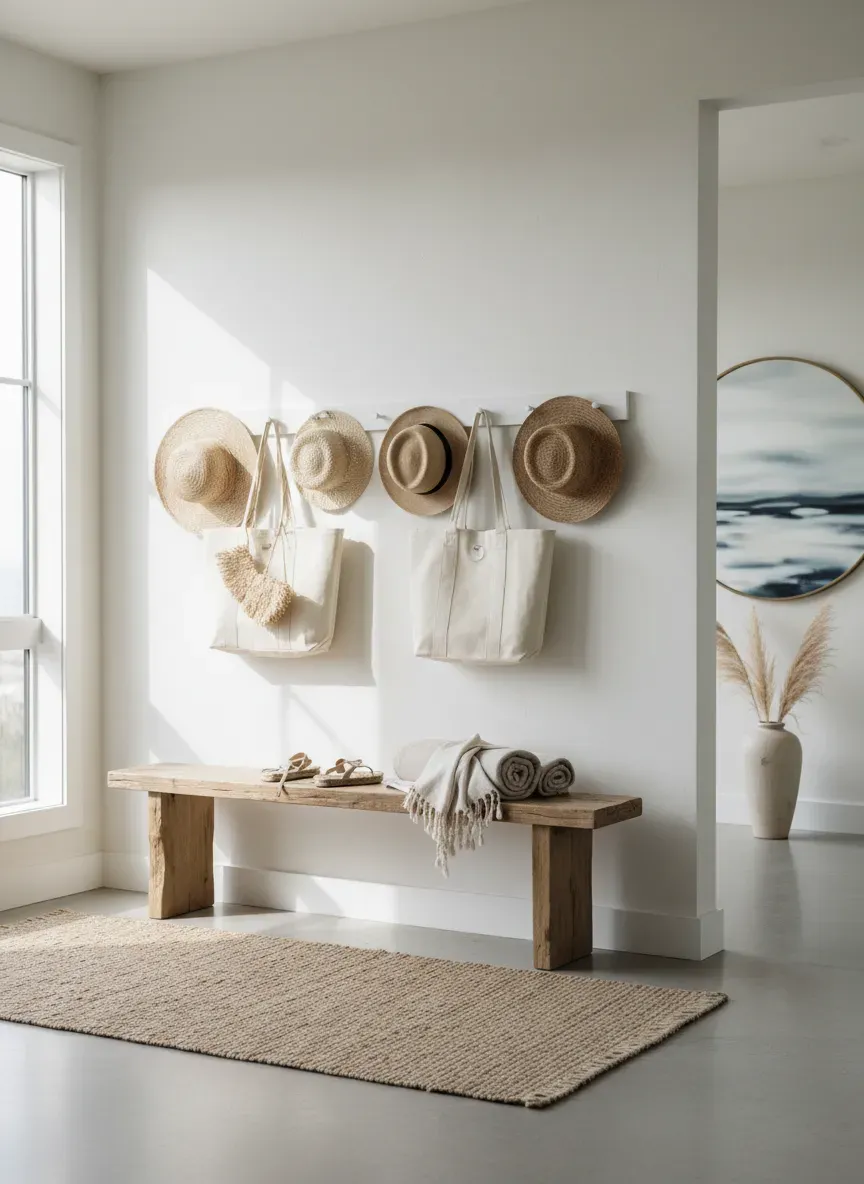
If your entryway lacks the square footage for a massive, towering hall tree, keep the sightlines open. Use a low-profile seating option like the Linon Home Decor Weathered Bench and install a simple shaker-peg rail on the wall above it. This shaker-style approach to coastal design is minimalist, highly functional, and allows the natural light of the room to bounce around unimpeded by heavy, tall cabinetry.
Common Pitfalls in Coastal Entryway Design
Even with the best intentions, things can go sideways. Designing a mudroom requires balancing rugged utility with aesthetic lightness. Here are the most frequent missteps when planning and outfitting these spaces.
The “Theme-Park” Trap
We touched on this earlier, but it bears repeating. Verisimilitude is your enemy here. Do not literally spell out the theme. If you have anchor wallpaper, an oarsman’s mirror, and a sign that says “Life’s a Beach,” the room stops feeling like a serene home and starts feeling like a seafood restaurant bathroom. Restraint is the hallmark of elite design. Let the textures (wood, woven grass, canvas, brass) do the talking.
Sacrificing Utility for Looks
A mudroom that requires you to be careful is not a mudroom. I’ve seen homeowners install gorgeous, delicate grasscloth wallpaper inside the coat cubbies. Within three months, the friction from zippers and damp raincoats shreds the paper to ribbons. Keep the rugged materials where the action happens. Save the delicate wallpapers or art pieces for the upper walls, well out of the splash zone.
Inadequate Ventilation
Wet things smell. If you design closed cabinets or lockers for a coastal mudroom, you must plan for airflow. Solid slab doors will trap moisture, leading to a permanent locker-room odor and potential mold growth.
If you prefer doors over open cubbies to hide the mess, use louvered panels or doors with cane webbing inserts. These historic coastal details look incredibly chic while allowing cross-ventilation to dry out damp gear.
Ignoring the Lighting Plan
Mudrooms are frequently relegated to windowless corridors or converted garage transitions. Coastal style, by definition, requires a feeling of airiness and light. If you lack natural sunlight, you must synthesize it.
- Layered Lighting: Do not rely on a single, harsh overhead dome light. Install a beautiful, nautical-inspired flush mount (perhaps seeded glass with a brass cage) for general illumination, but supplement it.
- Cabinet Lighting: Running a simple, warm LED tape light inside the upper cubbies or recessed into the toe-kick at the floor creates a soft, ambient glow that instantly makes the space feel like a high-end coastal boutique rather than a utility closet. Ensure the bulb temperature hovers around 3000K—anything cooler (4000K+) will render your soft blues and greens in a harsh, clinical light.
Key Takeaways for Your Coastal Entryway
- Texture Over Theme: Rely on cerused woods, beadboard, woven baskets, and natural stone rather than literal beach-themed décor.
- Ergonomics First: Stick to the golden measurements—16.5-inch bench heights (before cushions) and minimum 14-inch depths for shoe cubbies.
- Bulletproof Finishes: Use cabinet-grade urethane enamels for painted surfaces to resist the constant friction of coats and bags.
- Breathability: If enclosing spaces, use louvered or caned doors to prevent moisture buildup and mildew.
- Living Hardware: Consider unlacquered brass for hooks and pulls to introduce an authentic, evolving patina.
The Bottom Line
A well-executed breezy coastal mudroom is a masterclass in disguised utility. To the casual observer walking through your front door, it appears as a serene, beautifully textured architectural feature. Behind the scenes, it is a high-performance machine engineered to catch sand, dry towels, organize chaos, and preserve the sanctity of the rest of your home.
You don’t need to live within earshot of the surf to benefit from this design philosophy. The coastal aesthetic is ultimately about bringing light, organic texture, and a sense of calm into our daily transitions. By carefully selecting your materials, dialing in your dimensions, and avoiding kitschy clichés, you can build an entryway that makes coming home feel exactly like a deep breath of salt air.

Stop Guessing Measurements. Build Your Dream Entryway with Confidence.
Transform awkward hallways, cramped foyers, and cluttered mudrooms into organized sanctuaries. Includes 20 measured floor plans, facing photo spreads, the 36-inch planning rule, the shoe pairs formula, and 7 printable worksheets.
Core Edition ($17.99) · Flagship Photo Edition v5 ($39.99) — compare editions
