
Child-Proofing Your Entryway Benches with Storage: Safety Tips for Families
Discover essential safety strategies for child-proofing entryway storage benches, from installing soft-close hinges to securing furniture against tip-overs.
Feb 3, 2026 - Written by: linda wise

The entryway is the central nervous system of a family home. It is the transition zone where the chaos of the outside world meets the sanctuary of your living space. For families with young children, this area must be highly functional, capable of absorbing muddy boots, backpacks, and an endless stream of seasonal gear. The storage bench is often the hero of this space, providing a place to sit while putting on shoes and a cavernous interior to hide away clutter. However, without proper precautions, this seemingly benign piece of furniture can present significant hazards to curious toddlers and energetic children.
While we often prioritize baby-proofing kitchens and staircases, the entryway bench is frequently overlooked until an accident occurs. Heavy lids that can slam shut, sharp corners at eye level, and the risk of tipping over are all potential dangers lurking in the foyer. Transforming your entryway into a safe zone does not require sacrificing style or utility. By implementing strategic safety measures, selecting the right hardware, and organizing with intent, you can ensure your storage solutions support your family’s lifestyle without compromising their well-being.
This comprehensive guide will explore the mechanics of bench safety, from advanced hinge technologies to structural stability, ensuring your entryway remains a welcoming and secure environment for everyone.
The Hidden Anatomy of Danger: Understanding Bench Risks
Before diving into solutions, it is crucial to understand exactly why storage benches pose a risk to children. Unlike standard chairs or sofas, storage benches involve moving parts and often have a shifting center of gravity. Children see these pieces of furniture differently than adults do; to a child, a storage bench is a treasure chest to be opened, a stage to stand on, or a fortress to hide inside.
The Guillotine Effect: Heavy Lids
The most prevalent injury associated with top-opening storage benches is finger entrapment or crushing. Traditional hinges allow a lid to move freely. If a child lifts a heavy wooden seat to retrieve a toy and their grip slips, gravity takes over instantly. The force of a solid wood lid slamming down can cause severe damage to small fingers and hands. Furthermore, if a child is leaning into the bench when the lid falls, the impact can strike the head or neck.
Stability and Tip-Over Potential
We often assume that because a bench is low to the ground, it is stable. However, storage benches can be deceptive. When the lid is open, the center of gravity shifts backward and upward. If a child climbs onto the open edge or pulls down on the open lid, the entire unit can tip over. This risk is amplified if the bench is empty or if heavy items are stored in the lid itself (such as in an attached pocket organizer).
Entrapment and Suffocation
Deep storage benches can be inviting hiding spots during a game of hide-and-seek. If a bench lacks adequate ventilation or features a locking mechanism that can engage from the outside, a child climbing inside faces a serious risk of suffocation or entrapment. Even without a lock, a heavy lid may be too difficult for a small child to push open from the inside, trapping them in the dark.
Impact Injuries from Hard Edges
Entryway benches are typically constructed from wood or metal to withstand daily wear. Consequently, they possess hard, sharp corners. For a toddler learning to walk or a child running through the house to greet a guest, these corners are often situated perfectly at temple or eye level.
Securing the Lid: The First Line of Defense
The mechanism that controls the lid is the most critical safety component of any top-opening storage bench. If you have purchased a vintage piece or a budget-friendly model, it likely utilizes standard butt hinges or simple piano hinges. These provide no resistance against gravity. Retrofitting your bench with safety hardware is an essential upgrade.
Soft-Close Torsion Hinges
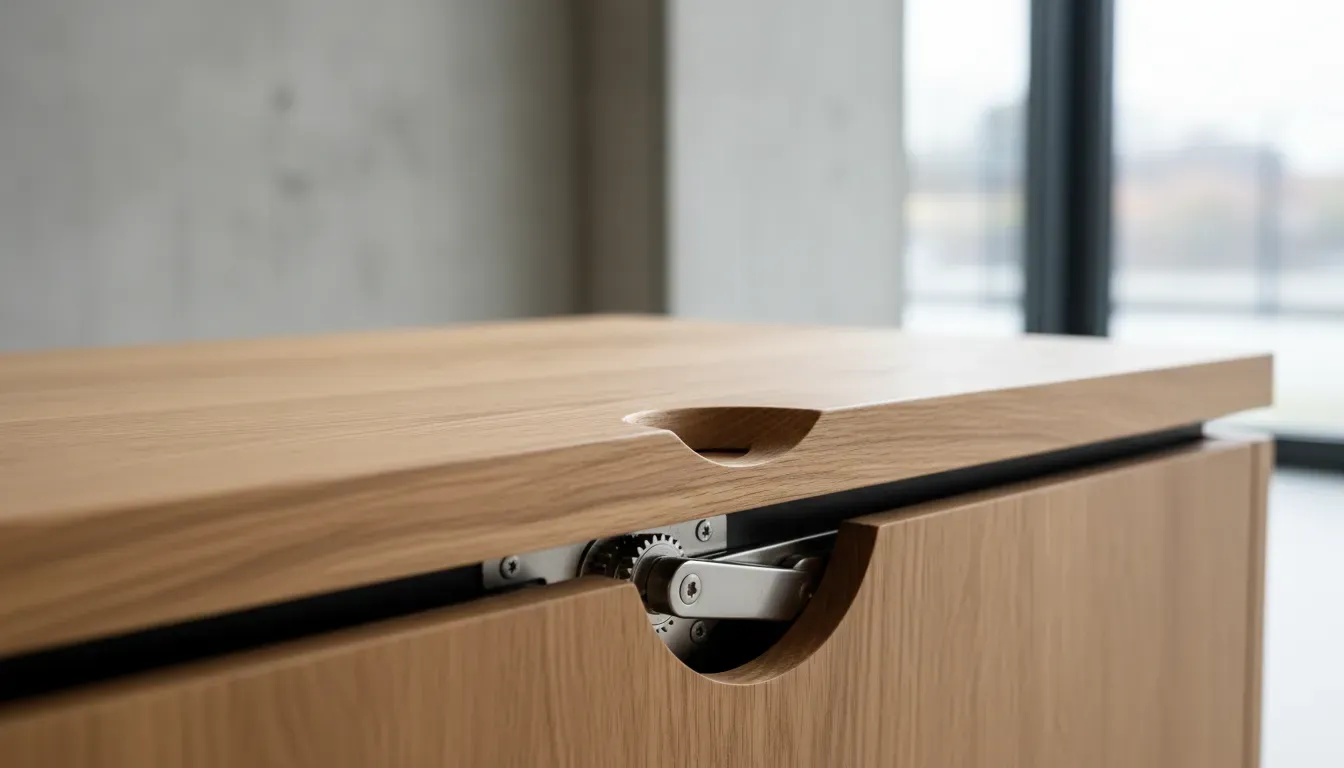
Torsion hinges are engineered to hold a lid open at any angle and require force to close, preventing the lid from slamming shut. These hinges use internal friction to counteract the weight of the lid. When selecting torsion hinges, you must calculate the torque required based on the lid’s weight and dimensions. Installing a hinge that is too weak will not prevent slamming, while one that is too strong will make the bench difficult for a child to open at all.
Hydraulic Gas Struts and Dampers
For heavier lids, hydraulic gas struts are the industry standard for safety. These pistons actively push against the closing motion, ensuring the lid descends slowly and softly, regardless of how hard it is pushed. This technology virtually eliminates the risk of crushed fingers.
When retrofitting a bench, look for adjustable soft-close support hinges. These allow you to fine-tune the closing speed. It is advisable to install two supports—one on each side—to prevent the lid from warping over time and to ensure redundant safety should one mechanism fail.
Recommended Solution: To secure your bench lid effectively, consider high-quality support hinges designed specifically for toy boxes and heavy chests. Check out Soft Close Safety Hinges on Amazon
Ventilation and Finger Cut-Outs
A safety hinge prevents slamming, but a finger cut-out creates a physical gap that ensures the lid never closes flush against the box frame. This gap serves two purposes: it provides a permanent space for fingers to remain safe even if the lid closes fully, and it allows for airflow into the bench, mitigating suffocation risks if a child climbs inside. If your bench does not have this feature, you can modify it by installing rubber bumpers on the inside rim to maintain a permanent half-inch gap.
Anchoring and Stability: Preventing Catastrophic Tip-Overs
Furniture tip-overs send thousands of children to the emergency room every year. While tall dressers and bookshelves are the usual suspects, entryway benches—particularly those with high backs or hall trees with attached hooks—are equally vulnerable.
The Physics of the Climb
Children are natural climbers. An entryway bench often serves as a ladder to reach items on a coat rack or a shelf above. When a child steps onto the front edge of a bench or pulls on the upper hooks of a hall tree, they create a fulcrum effect. If the unit is not secured to the wall, the weight of the child can easily topple the structure.
Securing to the Wall
The only fail-safe method to prevent tipping is anchoring the furniture to the structural studs of your home. Do not rely on drywall anchors for heavy furniture; they can pull out under the dynamic load of a falling bench.
- Locate the Studs: Use a stud finder to mark the framing behind the bench.
- Use L-Brackets or Straps: Metal L-brackets are the most secure, but heavy-duty furniture straps offer flexibility if you have thick baseboards that prevent the bench from sitting flush against the wall.
- Secure the Bench: Attach one end of the anchor to the solid wood frame of the bench (not the thin backing panel) and the other to the wall stud.
For families renting their homes or those unable to drill into walls, the risk must be mitigated by choosing benches with a low center of gravity and avoiding “hall tree” styles that combine a bench with a tall back panel.
Recommended Solution: Ensure your entryway furniture stays upright with heavy-duty anti-tip kits. Check out Metal Furniture Anchors on Amazon
Mitigating Impact: Edge Protection and Cushioning
The entryway is a high-traffic zone. Rushing out the door for school or welcoming guests often involves hurried movement, increasing the likelihood of trips and falls. Sharp corners on wooden or metal benches can turn a minor stumble into a significant injury.
Aesthetic Corner Guarding
Historically, corner guards were bulky, unsightly foam pads that ruined the aesthetic of a carefully curated room. Modern safety solutions are far more discreet. Clear silicone corner guards blend with the furniture finish while providing necessary shock absorption. For a more integrated look, consider using corner guards that match the metal or wood tone of your bench.
The Role of Upholstery
One of the most effective ways to child-proof a storage bench is to opt for an upholstered model or add a custom cushion. A bench topped with high-density foam and durable fabric creates a soft landing zone.
If you are building a custom bench or modifying an existing one, consider wrapping the entire lid in batting and fabric. This “soft lid” approach eliminates hard edges entirely on the movable part of the bench. If adding a loose cushion, ensure it is secured with non-slip backing or ties. A sliding cushion can be a hazard in itself, causing a child to slip off the bench when they attempt to sit.
Recommended Solution: Protect little heads from sharp corners without compromising your decor. Check out Clear Corner Protectors on Amazon
Organizing for Safety: Internal Storage Strategy
Safety extends beyond the physical structure of the bench to the items stored within it. The contents of an entryway bench are often easily accessible to children, which means you must curate what resides at ground level.
Chemical and Sharps Hazards
Entryways are common drop zones for items that should be kept out of reach. Shoe polish, waterproofing sprays, and leather cleaners contain toxic chemicals and should never be stored in a low, accessible bench. Similarly, umbrellas with pointed metal tips, heavy flashlights, or tools often find their way into these bins.
Adopt a “high-low” storage philosophy. Use the bench storage for soft, non-hazardous items like blankets, winter hats, scarves, and children’s shoes. Move chemicals, keys, and heavy tools to upper cabinets or locked closets.
Preventing “The Dive”
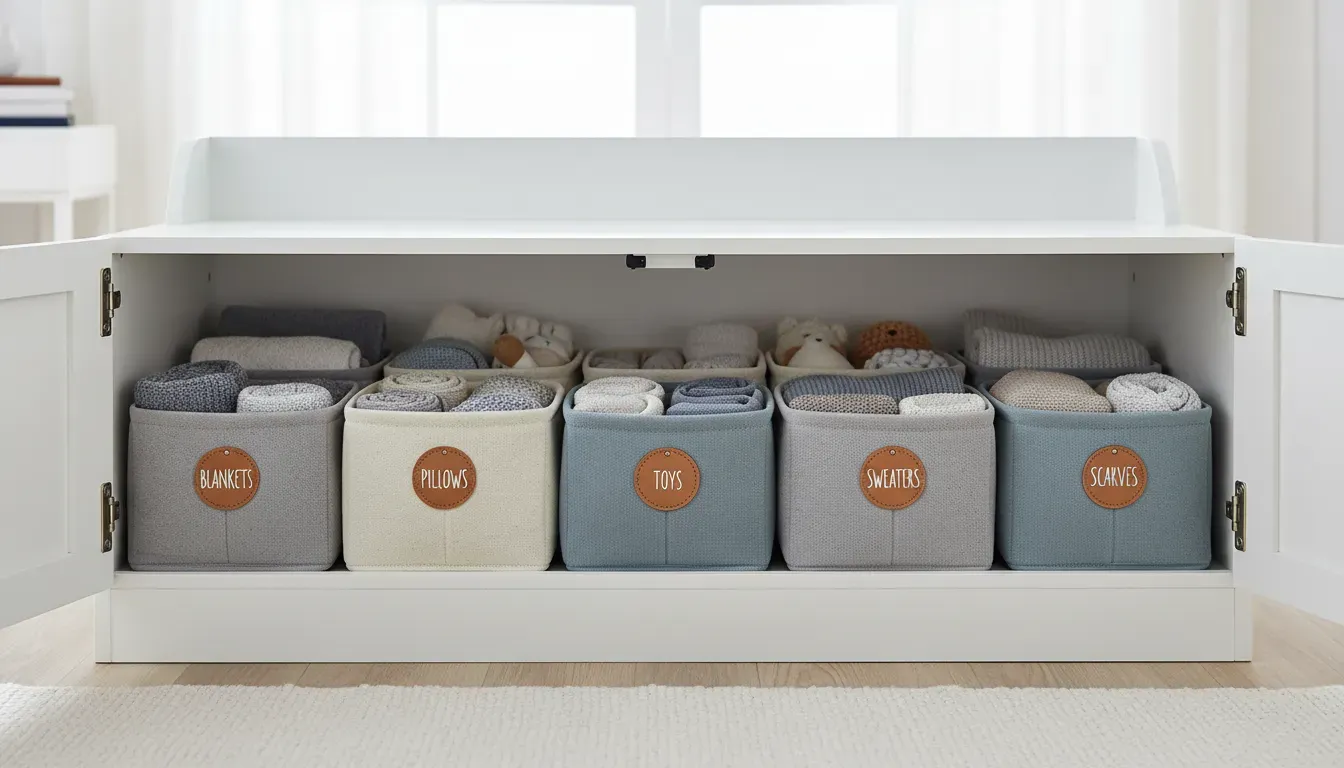
Deep toy boxes or benches can be difficult for small children to reach the bottom of, leading them to lean precariously over the edge. To prevent children from falling in while reaching for an item, use internal organization bins.
By compartmentalizing the interior of the bench with smaller, removable bins, you make it easier to retrieve items without deep diving. This also helps with organizing small entryways by keeping winter gear sorted by family member.
Material Safety: Toxicity and Durability
When selecting or refurbishing a bench, the materials matter as much as the mechanics. Entryway furniture endures moisture, mud, and frequent cleaning, but it also comes into close contact with skin.
Lead and VOCs
Vintage and antique benches add character to a home, but those manufactured before 1978 may carry the risk of lead paint. If you are using an heirloom piece, use a lead testing kit to ensure the finish is safe. If lead is detected, the piece should be professionally stripped or sealed with a specialized encapsulant—though removal from a child-centric area is the safest option.
For new furniture, be mindful of Volatile Organic Compounds (VOCs). Composite woods like MDF and particleboard are often bound with formaldehyde-based glues that can off-gas for months. Look for certifications such as GREENGUARD Gold, which indicate low chemical emissions. Solid wood is generally the safest option, provided it is finished with non-toxic stains or sealants.
Durability Against Wear
Child-proofing also involves protecting the furniture from the child. Entryway benches will face muddy boots and wet raincoats. Choose finishes that are easy to clean and resistant to moisture. For upholstered benches, performance fabrics like Crypton or Sunbrella offer stain resistance and cleanability without the use of harmful chemical coatings often found in cheaper treatments.
DIY Retrofitting vs. Buying New
Deciding whether to child-proof an existing piece or invest in a new, safety-forward bench depends on your budget and the specific hazards of your current furniture.
When to Retrofit
If you possess a high-quality solid wood bench that fits your space perfectly but lacks safety hinges, retrofitting is the ideal path. Installing gas struts and securing the unit to the wall is a weekend project that transforms a dangerous item into a safe one.
- Check the wood condition: Screws for heavy-duty hinges require solid wood to bite into. If your bench is made of thin particleboard, it may not hold the tension of a gas strut.
- Add ventilation: If the bench is a solid box, drilling holes in the back panel (facing the wall) or installing a decorative vent cover can solve airflow issues without ruining the front-facing aesthetic.
When to Buy New
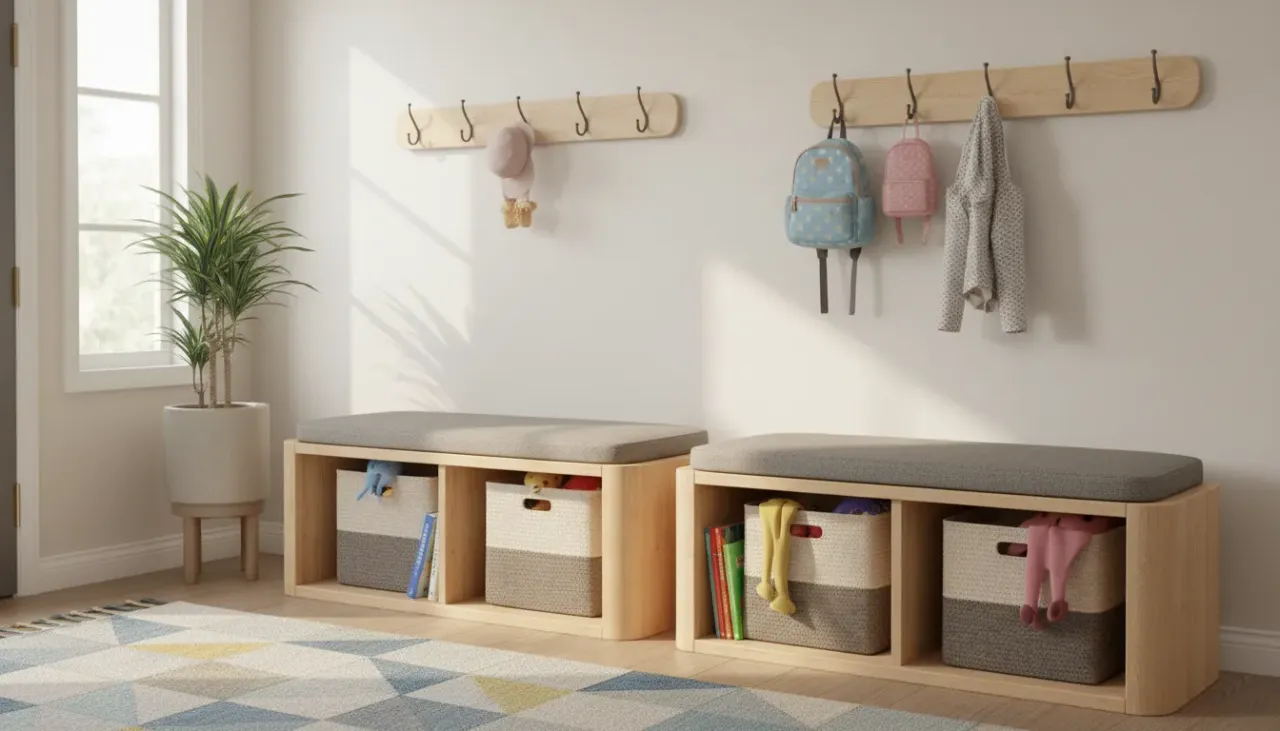
If your current bench has a heavy lid that cannot be easily modified, or if it is a lightweight, tall structure that is difficult to anchor, purchasing a new model designed with families in mind is safer. Look for “shoe benches” with open cubbies rather than top-opening lids. Open cubbies eliminate the lid risk entirely and are often more practical for children to use independently, fostering good habits in tidying up daily clutter.
Teaching Entryway Safety: The Behavioral Component
Hardware solutions are essential, but they are not a substitute for supervision and education. The entryway is a transitional space, often associated with the excitement of leaving or the relief of coming home. This energy can lead to unsafe behaviors.
Establishing “No-Play” Zones
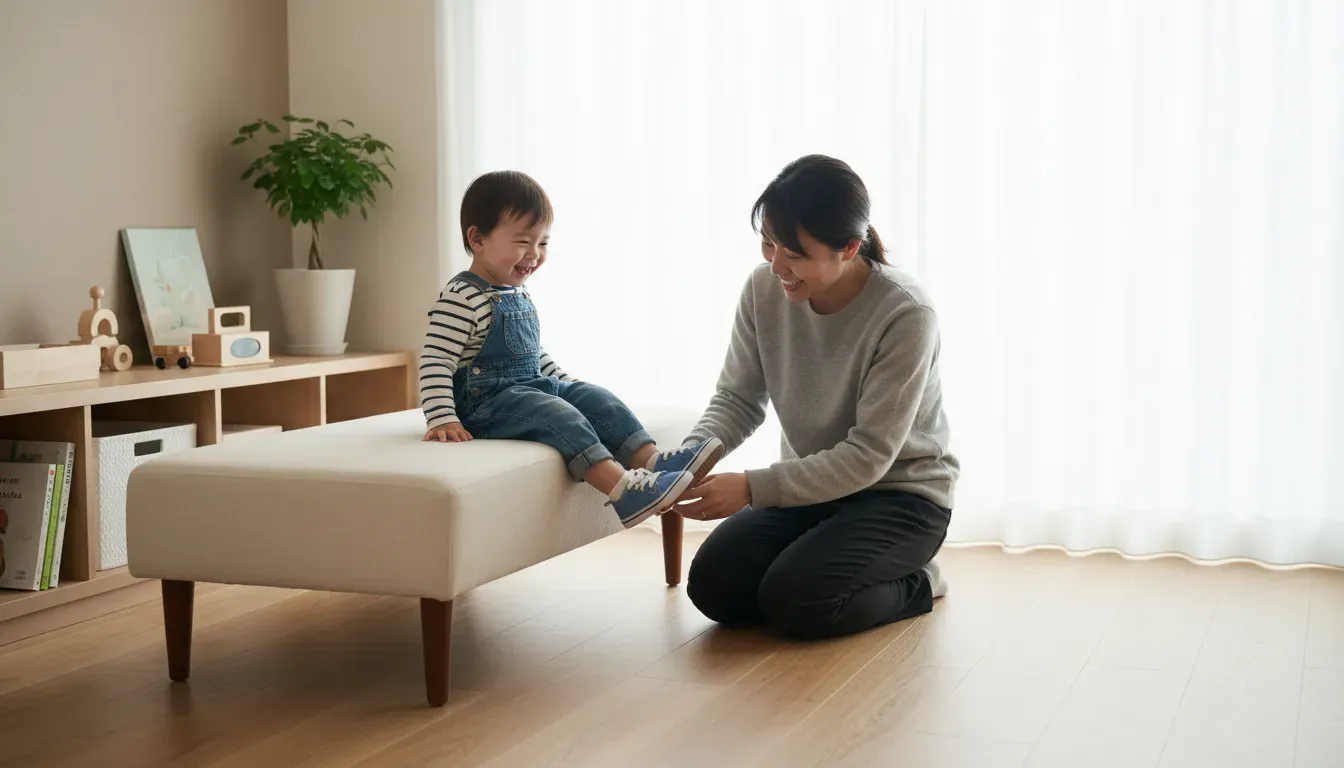
Teach children that the entryway bench is for sitting, not for climbing or jumping. While a sturdy bench might withstand a jump, the risk of slipping on a rug or hitting a door frame is high. Consistently reinforcing that the bench is a “shoes on/shoes off” station helps demystify it as a piece of play equipment.
The Hide-and-Seek Rule
Explicitly forbid hiding inside storage furniture. While you may have installed ventilation and non-locking lids, the habit of climbing into confined spaces is dangerous if transferred to other appliances or furniture (like old freezers or trunks at a relative’s house) that may not be child-proofed.
Routine Maintenance: The Safety Audit
Child-proofing is not a “one and done” task. Hardware loosens, materials wear, and children grow stronger and more capable of defeating safety locks.
Monthly Hinge Check
The constant opening and closing of a storage bench can loosen the screws holding the hinges in place. Once a month, inspect the hinges. If a screw is loose, tighten it immediately. If the screw hole has become stripped, you will need to repair it with wood filler or move the hinge slightly to find fresh wood.
Anchor Integrity
Periodically check your wall anchors. Give the bench a firm tug to ensure the strap hasn’t become brittle or the bracket hasn’t pulled away from the wall. This is especially important after a change in seasons when humidity shifts can cause wood to expand and contract.
Cushion Inspection
Check any added cushions for loose ties or fraying seams that could become strangulation hazards. If you use non-slip pads under a loose cushion, ensure they are still tacky and effective; dust accumulation can render them useless, turning the cushion into a sled.
Conclusion
The entryway sets the tone for your entire home. It should be a space of welcome and organization, not a source of anxiety. By addressing the specific mechanics of storage benches—taming heavy lids with hydraulic supports, anchoring unstable frames to the wall, and softening hard edges—you create a buffer of safety that protects your children.
Investing time in child-proofing your entryway benches does more than prevent injuries; it fosters independence. When a child can safely open a bench to retrieve their own boots or sit securely to tie their laces, they take ownership of their routine. Safety, in this context, is the foundation of autonomy. As you implement these tips, you can rest assured that your entryway is ready for everything family life brings through the door.